


5,99 €
Mehr erfahren.
- Herausgeber: Hubbard House
- Kategorie: Abenteuer, Thriller, Horror
- Sprache: Englisch
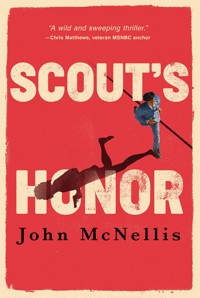
"Scout's Honor is riveting. John McNellis writes with an unstoppable drive, paving the way with telling details about places and people. A story about how the past is never the past, Ross MacDonald could not have done it any better. I very much enjoyed this novel." —Michael Connelly, #1 New York Times bestselling author of The Lincoln Lawyer and the Harry Bosch series
A Vietnam Veteran's Journey from the Battlefield to Real Estate Empire
After losing everything but his life, a young man forges a new identity in the dangerous jungles of Vietnam and rises to become a real estate magnate in New York City in this epic tale of redemption.
From desperate drug smuggler to decorated Marine to Manhattan real estate tycoon—one man's extraordinary journey to reclaim his honor
It's 1969. Devastated by the loss of his parents, 19-year-old Eddie Kawadsky finds himself alone and penniless, his dream of becoming a navy pilot shattered. In desperation, Eddie falls in with the charismatic Roy Cross, who persuades him to smuggle drugs across the Mexican border—a decision that will haunt him for decades.
Double-crossed and hunted by vengeful narcotraficantes, Eddie flees for his life, changes his identity, and—as Richard Austen—joins the Marines. Through two heroic combat tours in Vietnam, he discovers a courage and resilience he never knew he possessed.
Returning from war with hard-earned discipline and grit, Eddie builds an empire in Manhattan's competitive real estate market, transforming himself from a scared kid into one of New York's wealthiest developers. But no matter how high he climbs, Eddie remains haunted by his sins and secrets.
When a long-dreaded visitor finally appears to extort hush money, Eddie must confront his past. To save his own life and protect the beautiful wife he adores, he'll sacrifice nearly everything—but will it be enough to redeem the honor he lost so long ago?
A remarkable journey perfect for readers who love:
- Authentic Vietnam War fiction with richly detailed combat scenes
- Rags-to-riches stories of ambition and real estate empire-building
- Gritty historical thrillers spanning tumultuous decades
- Complex characters seeking redemption from their past mistakes
- High-stakes moral dilemmas with unexpected twists
Das E-Book können Sie in Legimi-Apps oder einer beliebigen App lesen, die das folgende Format unterstützen:
Veröffentlichungsjahr: 2024
Ähnliche



















More Praise for Scout’s Honor
“Eddie Kawadsky’s teenage dream of becoming a heroic navy pilot turns into a nightmare when he reluctantly agrees to run drugs across the Mexican border. Running for his life, he takes a new name, joins the Marines, then lands in New York where he chases a new dream. As a brash real estate developer, he turns stolen cocaine into high-rise buildings and his awkward charm into finding the right woman. Yet holding fast to the guardrails of old friendship, true love and a Boy Scout’s honor, Eddie discovers a greater truth about life and morality.
“In this wild and sweeping thriller, John McNellis puts his mastery of commercial real estate on full display. Scout’s Honor opened up new worlds for me.”
—Chris Matthews, veteran MSNBC anchor, Host of Hardball, bestselling author of Jack Kennedy: Elusive Hero
“Fast-paced, engaging. A story of personal redemption; timeless, even mythical in the opportunity offered by the Marine Corps—an opportunity Eddie Kawadsky takes—with the lessons and bonds that form the foundation of a new, redeemed life.”
—Mel Spiese, Major General USMC (Ret)
“Prepare to stay up late! Scout’s Honor will keep you on the edge of your seat rooting for its protagonist while trying to guess what happens next.”
—John J. Geoghegan, bestselling author
“Scout’s Honor is a gripping tale of a man tricked into smuggling drugs followed by his betrayal and violence. Yet, it is also a story of the ability to rise above one’s past to carve a path of honor and selflessness, a testament to the indomitable human spirit and the power of redemption. A must-read for those seeking an enthralling narrative that explores the depths of human experience.”
—James Doty, New York Times and international bestselling author of Into the Magic Shop: A Neurosurgeon’s Quest to Discover the Mysteries of the Brain and the Secrets of the Heart
“Scout’s Honor is the thrilling tale of a New York real estate developer haunted by his criminal youth. The galloping narrative contrasts the protagonist’s wild success with his eternal struggle to keep his crimes hidden, exploring themes of redemption, identity, and the power of secrets. Set against the competitive backdrop of Manhattan’s real estate scene, the novel dives deep into the protagonist’s dual life, filled with tension, moral dilemmas, and the relentless pursuit of a legacy untainted by his past. McNellis’s vivid portrayal of the city and its cutthroat industry, alongside his hero’s complex and admittedly flawed character, make the compelling case that no one can truly escape his past.”
—Vladimir Bosanac, Co-founder & Publisher, THEREGISTRY
“A fascinating character study of a man who changes in nearly every respect except for his drive to succeed and his capacity for love. Scout’s Honor is a compelling page turner with twists you will never expect.”
—Hannah Wood, author of Gary the Lion
Scout’s Honor
John McNellis
© 2024 John McNellis
All rights reserved. No part of this publication may be reproduced, stored in a retrieval system or transmitted in any form or by any means, electronic, mechanical, photocopying, recording or otherwise without the prior permission of the publisher or in accordance with the provisions of the Copyright, Designs and Patents Act 1988 or under the terms of any license permitting limited copying issued by the Copyright Licensing Agency.
This is a work of fiction. Names, characters, business, events and incidents are the products of the author’s imagination. Any resemblance to actual persons, living or dead, or actual events is purely coincidental.
Published by: Hubbard House
Paperback ISBN-13: 978-1-7363525-4-0
Ebook ISBN-13: 978-1-7363525-5-7
For information on distribution and reprint rights, please visit www.johnmcnellis.com or email [email protected].
Dedication
For Jamie, Jenny and Courtney
Chapter 1
Summer of ‘69
Eddie Kawadsky gripped his VW van’s wheel as if it meant his life. Spying Roy’s Marlboros, he jerked one from the crumpled pack, tried to light it as he drove north in the battered van toward Tijuana, fifty kilograms of cocaine beneath the surfboards in back. His hands shook. He tried again, and again, but his trembling fingers failed him. He somehow lit the fourth match, burning his forefinger. Then he remembered the van’s cigarette lighter and jabbed the knob. Only nineteen, he’d never had a cigarette in his life. He coughed hard, struggling to hold the smoke down, inhaling again, coughing more, ransacking his memory for someone he could trust, prayer on the edge of his scattered thoughts. In his rising panic, he was blind to the yellowing brown hills soft in the late afternoon light, the wretched trailer parks scarring Mexico’s coastline, and the roadside taco stands.
As his coughing subsided, he felt dizzy, but calmer. Once more, he struggled to bottle his despair and plan his way out. He punched the dashboard and swore. How had he ever let Roy Cross talk him into smuggling marijuana across the Mexican border? He had known all along the idiot’s foolproof plan was worm-riddled. Yet Eddie hadn’t known until that afternoon—while the pair lolled at the beach called K-39—that Roy was smuggling a fortune in cocaine, not a couple pounds of pot. And what doomsayer could have foretold the halfwit Roy’s arrest in Rosarito hours before their return, leaving Eddie alone, holding the cocaine in his van? He couldn’t stay in Mexico. No American car was ever safe there. And, if the shipment were stolen, he was dead.
He had to follow Roy’s plan, cross the border at the appointed hour, pray Roy’s bribed customs inspector was in the right line, and that the secondary inspection unit would ignore him. Even if he made it across, what next? Eddie had no idea who Roy’s customers were, no way of contacting them or an inkling as to where to deliver the shipment. No matter their identity, Eddie knew what happened to those who disappointed drug lords. He had to cross the border, stash the drugs, race back to Rosarito, bail out Roy, then pray the narcotraficantes wouldn’t blame him for the delay. His head swam from the nicotine, his stomach roiled from his anxiety. He pounded the plastic steering wheel.
Eddie played out scenarios—all bad—as he approached Tijuana in the humble VW van that had doubled as his home since he finished high school. He stopped outside a tumbledown tienda a half-mile from the border, locked the van, sprang inside the small shop that reeked of fried corn oil, bought a Coke, and hustled back. Forced to await his crossing’s appointed hour, he frittered, opening the van’s sliding door and rearranging his scant belongings: foam pad, sleeping bag, clothing, toiletries, and his books. He jammed the duffel bags further beneath the patched surfboards. He set his hamper—his father’s canvas flight bag—on top, the stenciled “Lt. Commander Paul J. Kawadsky US Navy” facing the door.
Eddie relocked the van, lit another Marlboro, and stood outside, guarding it, straining to appear nonchalant, watching the cart-pushers stream by peddling everything from sombreros to fireworks to pharmaceuticals of questionable provenance. When his chaotic thoughts flashed by his father, Eddie was almost glad he’d been killed in Vietnam, certain the hard man’s disgust over his son’s drug-running would have been unbearable. The commander would have dismissed Eddie’s need for college money with his favorite word: bullshit. Checking his nerves, he failed his father’s test, his outstretched hand trembling. He tried pushing his plight from his mind, filling it with happier memories. He found one: the warm Saturday his father took him to Edwards Air Force Base to get a peek at Lockheed’s secret SR-71. When they were turned away at the gate, they drove to the Antelope Valley Soaring Club, his father rented a two-seater Schweizer sailplane, and thrilled Eddie with an hour of soaring—gliding in primordial silence—wheeling above El Mirage, seeking thermals on which to rise like gods. The overwhelmed fourteen-year-old was hooked within moments after his father let him take the stick, knowing he too would become a Navy pilot. The boy had never wanted anything so much in his life.
A toothless Indian woman selling chewing gum interrupted his reverie with a beseeching por favor. He fished in his pocket, gave her a dollar for luck, then another, but waved off the gum. A gold-toothed cab driver ghosted by, pimping the beauty of his señoritas. Eddie shook his head, but the thought of sex briefly snagged him. Then he prayed Tommy Mahoney, the crooked inspector, would be in the promised lane. Please God, let him be in Lane 7.
The fading light was smog-dust orange when he turned the ignition. Within minutes, traffic merged into a clogged artery pulsing slowly toward the border. Eddie had donned his NAVY sweatshirt and stuffed his long hair inside a baseball cap that read “Fightertown USA”. He eased the van a few lanes to the left to align himself with 7, the lane Roy’s foolproof plan had Tommy Mahoney in starting at 8 p.m. Six cars back he saw a middle-aged man peer out of its booth. No Tommy. “Oh, shit, shit, shit,” he shouted, drawing a puzzled look from a Mexican in a rattling Plymouth across from him. “I’m so fucked.”
Chapter 2
Two Weeks Earlier
“Edward, look at you. Go wash up. We’re leaving in two minutes,” said beautiful Jonnie Collins, stepping from the front door of the Riviera Inn, shaking her head. Eddie had delivered on his promise to change her new Cadillac’s tire in ten minutes flat. Grinning, he held the tire iron aloft—pumping it like a trophy—then dashed toward the lobby’s restrooms, gleeful in his triumph.
Awaiting his return, Jonnie winced at her crumbling parking lot and the sparse desert landscaping. She ran the Riviera Inn—a weight-reducing spa on San Diego’s Coronado Island that she’d founded with her husband ten years earlier—but seldom ventured outside its buildings. Her two assistants handled the small resort’s day-to-day operations, while Jonnie comforted the heavyset women who struggled against its draconian diet plan. She tried her best to leaven her guests’ stays with fun, teaching the resort staff—her boys—the art of pretending the Inn itself was fun, their special clubhouse. She showed her more talented boys how to clown just so during the aquatics classes, the jazzercise, the announcements, and the sing-alongs after the so-called dinner. Eddie Kawadsky was her brightest star—the tall, lanky, nineteen-year-old she envisioned running the Inn one day, knowing he had a head for figures and a riptide of ambition. She could have driven herself to her appointment with this new psychiatrist in Newport Beach, but she had a better use of her time: she could tutor her pupil.
“Let me give you some advice, Edward. Never do it again.” Jonnie flicked out a fresh Kool as he eased the sapphire blue Cadillac onto northbound Highway 5.
“Do what?” Eddie glanced at her, taking in her blonde bouffant hairdo, lingering over her tanned arms and coltish legs. At forty-two, Jonnie looked like a mature fashion model. He swallowed dry, thinking her stunning. He had never admitted—even to himself—how smitten he was.
“Tires. Don’t change tires or unclog sinks or toilets. You need a handyman, hire one. Do you think a millionaire knows a screwdriver from a flyswatter? No. He works with people, with ideas. Never work with your hands.”
“OK.” Chortling, Eddie pressed his left thigh up against the blue steering wheel and let go with his hands.
“What the hell are you doing?” she cried.
“You said not to work with my hands.” He laughed. Fresh from his triumph over the flat tire, thrilled by Jonnie’s undivided attention, he was happier than he’d been in weeks.
“Grab that goddamn wheel. Don’t be a wiseass, young man.”
Eddie drove north, along Southern California’s sprawling beach towns, occasionally nodding at Jonnie’s anecdote-larded lecture, leaning away from her cigarette smoke. He’d heard about her older brother—gifted with his hands, but flat broke—often enough that her epistle required little attention, especially because he knew she was wrong. Real men worked with their hands. Yet forgiving the enchanting Jonnie her mistakes was easy.
“But don’t try to become a millionaire, either—they’re all crooked,” she persisted. “Every other one is a criminal.”
“OK, got it. Work smart and get rich, but not too rich. The not-too-rich part should be a piece of cake,” he joked. “Is that the building past this signal?”
“Right in here.” She checked her makeup in the rear-view mirror for a third time and re-perfumed herself with Youth Dew. She waited a moment, then sighing theatrically, turned an inquiring gaze to Eddie.
“Oh, right, sorry.” He scrambled out of the car and opened her door with an exaggerated bow.
“What did I say about being a smart-ass?” With a nod toward the books in the backseat, she said, “You going to study all that?”
“Yes, it’s my calculus homework.”
“Books are fine, Edward, but they’ll only get you so far. To learn life, you have to live it. You need to live a little more, kiddo. Have some fun.”
Eddie watched her disappear inside the garden-style medical building, wondering why she had to visit a psychiatrist—she was totally normal, practically perfect—and what she could possibly talk about for a whole hour? He thought Jonnie beautiful, exciting, and sometimes outrageous. He knew she liked to shock people with her wild commentary, and could usually tell when she was serious and when she expected nothing but laughter in response, yet this morning’s lecture had hit home. She had to be wrong. But his father would be alive if he’d been in procurement instead of a fighter pilot. Would his grandfather be enjoying his old age if he hadn’t worn himself out fixing toilets? Eddie opened his book and tried to concentrate, but drifted away from the equations, pulled by her words. No, she was wrong. If no one ever checked the oil, the world would literally grind to a halt. At length, he abandoned the universe of small numbers, switched on the engine, popped the hood, and slid out the dipstick with a practiced hand.
Her laugh spun him around.
“If I wanted to be ignored, I could have talked to my own children.” Jonnie’s wig was slightly bent, her eyes happy, gleaming. The appointment had gone better than she’d hoped.
“No, ma’am, I just wanted to—”
She smiled, shook her head, cigarette smoke trailing her, and walked to the passenger side. He hurried to her door and opened it, again with an awkward courtier’s flair.
Jonnie’s thoughts danced from her marvelous session with the doctor to the young man behind the wheel, examining him with sly sidelong glances. If she squinted, he was almost handsome. She was struck by his eyes, the bright, comprehending eyes of a gifted child wanting to please. She wished she knew more about his background. She knew he’d found himself alone on the streets at sixteen, and fretted again over how that scarred him. She had to help him. “Guess how many of our guests have had nose jobs.”
“The good-looking ones?” he asked, chuckling.
“Oy, all of them.” She laughed. The daughter of a pious Methodist minister, Jonnie had cheerfully stolen the slang, phrasings, and intonations of her largely Jewish clientele. “Anyway, do I know from great plastic surgeons or what? And your poor nose. Come on, don’t look at me like that. Whoever broke it should be in jail. Fixing it would make you so gorgeous.”
“No, I don’t want to talk about that again. I need to save money for college.”
“College is where the bright kids go to have the fun the dumb ones had in high school. The bigshots—the millionaires—they never went to college. You learn how to run a business on the job, not from some book. Hell, you already know almost enough to run the Inn.”
“I don’t know about that,” Eddie said, swelling at the high praise, cocking his head to the side. But he did know how to handle the guests.
“You do need a little fun… but not with any of the girls at the Inn.” She cackled. “The last thing I need is you schtupping someone’s daughter.”
He reddened, concentrating on the wing mirror. The last thing he would ever admit to Jonnie was how badly he wanted to schtupp someone’s daughter. Deflecting her, he asked what she thought of a career as a pilot.
“I’d rather be a bus driver. They go home at night.”
“What? But flying in the Navy? That’s a good idea, isn’t it? I have to go to Vietnam anyway. That’s not bus driving.” Eddie had been raised on air shows and pilot swagger. Standing at his father’s side, he saw—no, felt—the awed deference lavished on the Navy’s warriors. He knew second-hand the terrifying thrill of landing an F-4 on a night-blackened roiling carrier deck, the intoxicating smell of jet fuel. Nothing could touch being a Navy flyer. Nothing could touch being a hero.
“It’s worse. It’s driving a hell-bound bus while people are trying to kill you. Edward, you don’t have to go to Vietnam. I can get you in the National Guard. Look what I wangled for Jerry—two years of caddying for generals in San Antonio.”
Eddie nodded without assent. “What percentage of our guests come from Beverly Hills?”
“All of them,” Jonnie crowed.
“Half?” He pressed.
“Probably more, why?”
“Because it’s a pain driving just to Newport and—what?—another hour to Beverly Hills?”
“So?”
“So, in the off-season, we should run a weekly shuttle to Beverly Hills, offering a free pickup and return as part of a holiday package. Maybe meet them at the Century Plaza. If we take the drive out of it, I bet we could fill an extra ten rooms.”
Jonnie laughed in delight. “Hell, we have the van—half my boys hide all afternoon anyway—it would cost us nothing but gas.” She leaned over and kissed his cheek. “You’re so clever.”
He blushed and touched his cheek, her red lipstick coloring his fingertips. She leaned back, and their conversation faded as they drove south, allowing him to reflect. He trampled Jonnie’s seedling doubts and mulled his destiny as a Navy pilot. Money was the issue: to be an officer—to fly—he needed to finish college, and to attend full-time. He’d banked nearly $3,000 after eighteen months of sleeping in his van and cadging food (such as it was) from the Inn’s kitchen staff. He was inching closer; he’d work another year, take night classes, and then apply to the university.
Chapter 3
The Fall Guy
Roy Cross sauntered into the Denny’s, nodding at the tired restaurant as if he owned the place. He cooed “hey baby” to the frowzy hostess twice his age and chucked her under the chin when she giggled her delight. He spied Tommy Mahoney in the far booth, head down on the table like a napping kindergartner. Strolling back, Roy eased himself onto the warped plastic banquette, flipped up his Ray-Bans, and shook his shoulder-length hair into place. He lit a Marlboro with a gold lighter. A pretty teenage waitress appeared at his side before his first smoke ring drifted away. Pointing at his sleeping friend, Roy shushed her with a finger to his lips, mouthing the word “coffee.” The teenager gawked at him, then fluttered off to make a fresh pot.
The cigarette dangling from his lips, he leaned back, clasping his bare arms behind his head. He knew why Tommy had demanded the meeting. A month ago, Roy would have been desperate at the thought of his partner bailing on him, but now the score of a lifetime was a mere handhold away. He only needed a little more time. Juan Sierra was on the verge of entrusting him with serious weight, the crooked cop Schmidt was circling the bait, and he’d figured out the perfect fall guy. Someone he hadn’t seen in years, someone he couldn’t be connected with, someone few would miss.
A few more smoke rings lazed upward before Roy softly patted Tommy’s shoulder.
“What?” Tommy whimpered in his sleep. Groggy, the pudgy twenty-four-year-old sat up blinking. He groped for his thick glasses, shook himself awake, but couldn’t shake his firing squad nightmare. Awake, his terrifying visions were more realistic: Roy fingering him as the genius behind their drug smuggling, a federal judge decreeing that Tommy had betrayed his sacred trust as a U.S. Customs inspector.
“Music Man, what’s with the siesta?” Roy asked.
“I can’t sleep any more. You’re late, Roy, you’re always late. How did they even let you in here without a shirt?” Tommy snapped, pointing at the black leather vest that covered little of Roy’s lithe chest and muscle-rippled stomach. “Jesus, you get away with everything.”
Roy chuckled, nodding in apparent agreement. “T, you know the difference between lunch and a blow job?”
“For Christ’s sake. No.”
“Great, meet me here tomorrow at noon.” Roy laughed. The short-skirted waitress hustled back with coffee and a half dozen tiny plastic creamers, gushing to Roy about his boots. Tommy hesitated, looked under the table, and rolled his eyes. Roy was wearing skin-tight black leather pants and black cowboy boots. The pants’ seams were adorned with silver conches and the boots with anklets of silver stars. Tommy blanched.
“OK, dude,” said Roy, slurping the coffee. “You called this meeting, what’s so important you had to get me up at, like, the crack of dawn? Hey, maybe I’d get it up for Dawn’s crack.”
“I quit,” he said, ignoring the meager jest. Tommy had long since realized that Roy used humor like a safecracker’s tools, a way to break in.
“What?” cried Roy, his surprise feigned.
“You heard me, I quit my job. We’re done. No more runs. Finito.” Tommy was so determined to get out, to flee San Diego—to hide somewhere Roy could never find him—he’d walked into the chief inspector’s office and resigned, declaring that the border traffic’s endless exhaust was fueling his asthma, killing him. He’d added that he’d been accepted at some East Coast music school he’d seen an ad for in Guitar Player magazine. “I mean it. I’m done.” Tommy ran his fingers through his unruly copper-colored hair and thrust out his soft chin, working on his defiance, wishing he’d defied Roy from the start, wishing he’d never met him.
“You, like, quit already?”
“I had to give two weeks’ notice. Dolores and I are out of here the Friday after next. The moment I get off work.”
“Dude, think of all that dinero you’ll be losing.”
“I’d leave tonight if I could, King.” Tommy held a trembling thumb and forefinger a dime’s width apart. “You and I are this close to getting caught.” “How many more times do I wave you through before Secondary stops you and fries us both?” He’d met Roy at a party a couple years earlier. Roy and a handful of his friends—two had actually finished high school—had thrown a wild class of ‘67 graduation party. The cops were called three times. Tommy’s garage band was the entertainment, everyone was high, and Roy’s extravagant praise of his wicked guitar had Tommy insisting he wasn’t a rock star, just a customs inspector at the Tijuana border. Almost overnight, Roy was winking at him as he rolled across the border with sacks of marijuana. The more runs he made—the more he pocketed—the more outlandish his dress, his muscle cars, and his behavior had become. Now Roy stood out like a peacock on a turkey farm, begging to be slaughtered. Was he ever sober? Tommy knew his imperfect system for knowing his line assignment in advance—the trick to Roy’s smuggling—only had to fail once for them to be imprisoned.
“OK,” Roy said. Grinning, he banged out a drum roll on the table, and shot Tommy with a finger pistol. “OK.”
“OK? OK what? You’re really cool with that?” Tommy asked, incredulous. Having steeled himself for battle, Roy’s indifference was astonishing.
“OK, T. I get it. We’re cool. You’re not cut out for a life of crime.” He laughed so hard the waitress giggled from behind the pick-up counter. A blue-haired pair looked up from their waffles.
“Roy, please. Everyone can hear us,” Tommy begged.
Roy raised his hands in a papal gesture and smiled, the picture of benevolence. He’d been expecting the breakup for months, since he’d first noticed his chubby partner losing weight. But he thought he’d have more time to polish his scheme—the last run where he’d rip off the Colombians. If it worked, Roy’s beach party would be endless; the twenty-one-year-old’s life would be one wave, one high, and one girl after another.
“Tranquilo, T,” Roy said, chuckling. He set his cigarette on the table and again folded his arms behind his head, contemplating his useful friend. He was glad Tommy was leaving town. Not that he really cared about him—or anyone for that matter—but the music man had made him a boatload of money (if only he hadn’t pissed it all away) and had been true to his word. His plan was foolproof, but nothing wrong with Tommy out of harm’s way.
Roy remembered he was hungry. The joint he’d smoked on the drive over had him craving something sweet. “Let’s celebrate. Let’s get some pie. Yeah, baby, some banana cream pie. Then let’s talk about one last run… for old time’s sake. I’ve got a dude I want you to meet,” Roy crooned, reflecting on his fall guy. “I guarantee he’ll take all the worry out of it for you. The guy’s such a wuss he washes his cock before he takes a piss.”
He beckoned the waitress with a smile, and the eager teenager trotted over with her pad and pencil in hand. She stood close to him, pressing against the table. Roy leaned forward, dragged on his cigarette, insisting Tommy try the apple pie. Meanwhile, he trailed his free hand up the back of the girl’s thigh, stroking it. She sucked in her breath as he toyed with her panties’ elastic band. He laughed, softly this time.
Chapter 4
The Catch
The afternoon was warm: golden on the beach and lazy in the coffee shop where the Riviera Inn’s guests played bridge, swapping diets like recipes, smoking, reminiscing of foods past, gossiping. But for the professional scale against the back wall, the restaurant contained little to suggest a weight-reducing spa, furnished as it was with holdover Polynesian decorations from the Inn’s prior life as the Tiki-Palms Lodge. The picture-windows looked onto the pool where an ill-attended aquacise class was underway. A large woman was weighing herself for the fifth time that day, while a girl of perhaps nineteen sat cross-legged at a booth writing a letter, aloof from the tables of bridge players, pretending not to devour their bawdy conversations.
The talk ceased when a stunning young man entered, promenaded to the nearest table, and, with an easy smile, asked if Eddie Kawadsky were around. Eight players and one kibitzer answered at once, contradicting and dismissing each other.
Roy Cross flashed a perfect smile. “Is this, like, a multiple-choice quiz?”
“His van’s parked behind the kitchen,” the letter-writing girl said. “You might find him there.”
Eddie heard rock blasting from the parking lot. Striding through the breezeway between the coffee shop and the indoor pool, he saw his boyhood hero Roy Cross preening against the hood of a new Malibu convertible—top down, its car wax glistening circular in the slanting afternoon sunlight. Roy sang along with the Doors, seemingly unaware his singing voice suggested strep throat. Eddie walked around the convertible, admiring the chromed racing wheels, tracing a finger against the fat tires. “Jesus, Roy, you must be dealing a ton to afford this.”
“King. Roy is French for King. Everyone calls me King now.”
“King’s a dog’s name,” Eddie said, stifling a laugh. Delighted as he was with his one-time idol’s visit, his guard was up. He’d instantly—irrationally—hoped Roy missed him, but knew better. The young men hadn’t been close for years, ever since Roy began his reign as the dope-smoking clown prince of junior high. Living three doors apart, the boys had been inseparable when Eddie was six and Roy eight, but their paths had branched far from one another. As the years passed, Roy had come to view Eddie as a playmate of last resort, almost never seeking him out. Eddie had been saddened by the loss, but understood he had no place in Roy’s sybaritic beach life.
“Good to see you, dude.” Sliding off the hood, Roy frowned. “Whoa, I used to be way taller than you. What are you? 6’2?”
“6’3.”. What are you doing here, King?”
“Did you hear the one about the dumb priest who goes to the head nun, ‘Sister, what’s a blow job?’ She goes, ‘Ten bucks, same as downtown.’”
Eddie shook his head at the old joke, chuckled at Roy’s full-throated laughter, warming despite himself to his old friend’s vulgar charm.
“You want to catch some waves?” Roy asked. “Come on.”
“No, I’ve got to study.” But Jonnie’s words tugged at him. He should have more fun.
“Come on, Wad, you know you want to,” said Roy, using the nickname he’d saddled Eddie with years earlier.
Eddie had an hour before he had to set up the Sea Grotto bar for the nightly cocktail hour, the hour he served sliced vegetables and diet drinks to the ravenous guests. He grinned and said OK. He stepped behind his van, snapped off his tie, pulled his shirt over his head, dropped his slacks, and slipped on his trunks. He grabbed his fins and a tattered Inn towel.
They picked their way through the dunes onto the apron of gray-speckled sand. The beach was alive with vacationers, locals with night jobs, ankle-deep parents watching their toddlers play tag with the tide, soaked children shrieking with delight, teenagers entwined on blankets. Smells of mustard, chili dogs, and Coppertone carried on the breezes as the gently rumbling surf muffled sounds of ball games and rock and roll. A pack of boys played touch football amid a volley of Frisbees.
“What’s doing with you, Wad? You must be getting it night and day with all those lonely, starving chicks moping around. You just go, ‘Whoa, babe, this sausage ain’t fattening.’”
“I’m working full time, going to school at night,” Eddie said glumly, knowing he was the ant to Roy’s grasshopper in Aesop’s fable, perhaps wishing the industrious ant wasn’t such a stiff.
Roy took off running at the water’s edge, seeking to reestablish his dominance over the neighborhood boy he’d always envied. Each time Roy’s father told him he should be more like Eddie—more respectful and hardworking—his resentment hardened. The father who’d never loved him thought the world of Eddie Kawadsky.
“Want to get high?” Roy asked.
“No, I have to be back at work in an hour.”
“Then let’s hit the waves.”
An excellent swimmer, Eddie loved bodysurfing. He had been an all-conference water polo player, and had his world not imploded at the beginning of his senior year, he might have been offered a scholarship to a lesser university. He powered through the small swells like a cormorant chasing fish. With a gap-toothed grin, he jumped a wave, raced ahead of its break, and—popping up in the foam—shook his long, curly brown hair and looked about for Roy. Eddie saw the back of his head, hidden at first behind the following swell, about thirty yards out—beyond the break—and swam to him. Just as he reached him, Roy spun around and blew a cloud of smoke in his face.
“Want a hit, man?”
Startled, Eddie took the joint, if only to keep it dry. “How did you do it?”
“Toke first. Talk later.”
Laughing at Roy’s trick, Eddie took a hit, but didn’t inhale. He handed the joint back, treading water effortlessly. Roy sucked down a monster hit and insisted he take another. Inhaling for real, Eddie fumbled the joint on his hand-off.
“Sorry, Roy, I mean, your Highness.” Eddie laughed, his thoughts loosening. “Get it, King? Highness? Tell me how you did it? How you kept it dry?”
Roy fished his hand below the surface and brought forth a thumb-sized steel cylinder, a waterproof match container. “Thought you were the only Boy Scout, dude? Be prepared. Always keep it in my suit—makes my dick look bigger.”
Twenty minutes later, the two lay on the warm sand, Eddie unraveled by the pot, lost in a daydream.
“This is a blast, man. Just like old times, Wad, old times,” Roy gushed, as he sat up to brush out his blond hair. He had to sell Eddie fast. “We should do this again soon. Hey, I have an idea. We go down to Mexico, do some real waves, not this chickenshit soup. 39 has the righteous waves. Yeah? That’d be cool. If we take your van, we camp right there. A little bonfire, fish tacos, some smoke, and the Mexican stars are like a light show. I’ll score a couple señoritas for us. Cool, huh? You listening, Wad?”
Eddie was wiggling his toes in the sand—thinking the unthinkable—dreaming about screwing a woman his mother’s age, the youth of no experience aching to touch her long limbs. Roy’s purring was distant, indistinguishable, another instrument in the shoreline’s symphony.
“You know what sucks?” Roy asked, pressing a little harder. He knew his pitch was perfect, but Eddie wasn’t catching. “Some Mex charges a buck and half if you leave your car at 39 overnight. Does that suck or what? Let’s do it, bud. I’ll pop for the buck fifty.”
Eddie lay scrunched down, face on the towel, hands shaping and cupping warm sand breasts, the leggy Jonnie panting beneath him. He heard Roy from far away.
“Are you listening, man? What do you say? Mexico—let’s do it. You and me, the dynamic duo together again.” Irritated, unaccustomed to being ignored, Roy shifted his position, reminding himself to work his tan. Eddie had to come to Mexico—everything depended on it—but now the dick was too cool to answer him. Roy nursed his useful resentment: Eddie was now taller, better muscled, and on his way. Frowning, Roy slunk to the water’s edge, needing to think. He had spent his life on the beach, from sunrise to sundown, waxing his board, acting older to fit in. He’d been prized first as a mascot, then as a leader, smoking cigarettes, dope, taking pills, drinking beer, wine, anything wet. And always surfing, always partying. The beach party would be endless if he saw his plan through. In his dreams, Roy acquired wealth with ease, winning big in Vegas or tripping over an egg-sized diamond. He scuffed at the packed, wet sand. Something was off. The score of a lifetime was only days away, yet his stomach ached. Was it the backwash of happy memories, simple times playing together as kids? Could he really set up Wad to take the fall? He consoled himself with the thought that the Eagle Scout with his unblemished record wouldn’t do more than a couple years of hard time. Despite the day’s warmth, Roy shivered, flicked his golden hair, and padded up the beach.
“C’mon, Wad,” he said, returning to Eddie. “My dope’s not that good. Don’t you have to be back at Fat City?”
“What? What time is it? Oh, shit. I’m late.” Eddie staggered to his feet and sprinted toward the public showers with Roy chasing after him. He stood beneath the corroded shower tree’s miserable trickle, wiping away the sand with one hand while holding the shower chain down with the other. He pulled his trunks from his flat stomach to let the water run down his crotch, flushing out the sand.
“Are you in? Two days of K-39, no ties, no fat chicks, just righteous times. Let’s do it, man.”
“I can’t.”
“OK, Wad, time to pull out the big guns: You owe me. Where’d you stay after you ended up on the street? Whose mother fed you and did your laundry? She even nursed you through the flu.”
“I owe your mom, not you,” said Eddie. He did owe him, he thought, even if Roy had barely acknowledged him during the two months he’d lived in the Crosses’ spare bedroom. Contemplating their shared past and his debt, he sighed. “What’s the catch?”
“No catch, man.”
“My ass,” Eddie called, laughing over his shoulder. There was always a catch with Roy. He still shuddered over the time when, as a ten-year-old, he’d been caught shoplifting a couple candy bars at the Thrifty Drug Store, a crime he’d committed at Roy’s urging.
“OK. OK. The catch is we take your van. The Malibu would be toast if we took it. Fucking Mexicans. Besides, it’s easier to pop the boards in this old dude.” He patted the van like a dog.
“Tell me the truth, Roy. I’m not running any dope. No bullshit.”
“It’s King. OK, no bullshit. Absolutely no risk and you get, like…” He paused to consider pricing. “… a grand for surfing. A thousand bucks for driving—”
“No way. Oh, shit, shit, shit,” Eddie said, strapping on his Timex. “Jonnie will kill me.”
“What’s wrong?” Roy asked, telling himself to stay cool. Wad would buy in.
“What’s wrong is doing some crazy dope deal with you.” Eddie clipped on his polyester tie.
“But this is two hundred percent safe.” Roy explained that his partner Tommy Mahoney was a customs inspector who checked cars coming in from Tijuana and how Roy sailed right past him every time with a load. Now Tommy was getting weird—turning into an old lady—thinking Roy too flashy and his cars too wild, so he needed a new driver. “The dude is paranoid, man, but he calls the shots. I’ve got to use his lane. His freaking out is your gain.”
“It can’t be that easy.” Eddie remembered the border’s long lines, the exhaust-fueled smog, the stooped peddlers wandering among the cars with their serapes and velvet-painted bullfight scenes.
“Promise you won’t tell anybody, ever. Promise?” Roy urged. He could sell crows to a farmer.
“Yeah,” said Eddie.
“These guards rotate all day long, every hour, and it’s supposed to be anonymous, but Tommy broke the code and he can figure out which lanes he’ll get. Don’t trust me, don’t believe one word, just meet Tommy. OK? We’ll go to the A&W tomorrow? If you just meet Tommy, you don’t owe me a thing. We’d be totally cool. Deal?”
“And you’ll never ask me another favor?”
“Swear to god.” Roy hesitated a moment, flashed his shark smile, and pulled a roll of bills from a blue Maxwell House coffee can under the driver’s seat. “Do me this favor—take an advance.”
“No. Put that away. I’m not doing it.”
“Come on, you know you want it.” He twisted a rubber band off the roll and peeled off bills. “If you don’t go, you can pay me back when you feel like it. This can’s jammed anyway.” Roy savored this fleeting self-image, giving money outright, his generosity softening the torment that had seized him on the beach.
Eddie grabbed his hand. “Put that goddamn money away.”
“Cool, no problemo. But you can at least do this for me… for old time’s sake.”
“What?” Eddie shoved his hands deep into his pockets, as if that could thwart temptation.
“Take the Malibu.” He tossed the keys. “I got to look at a car I might buy. Maybe have to drive it home. Tommy can bring me tomorrow. It’d be a big favor.”
Eddie rolled the keys in his hand. “OK, but I won’t drive it. I mean, I’ll drive it to meet you, but that’s it.”
“Whatever, dude. Take it to Frisco or let it rust. Later.” With a flip of his hair, Roy turned toward Orange Avenue, swinging the Maxwell can, wondering whether he really should buy another car. He assumed a hitchhiker’s stance at the curb, yet left his thumbs hooked through his belt loops, a study in surfer nonchalance. He remembered he had to talk to the crooked cop Schmidt, shivering at the thought. He still had plenty of time—tomorrow would be better. He’d have to get really high first, dealing with that dick was such a bummer. A Ford Fairlane braked a few yards past him. Roy nodded and sauntered toward it.
Chapter 5
Piece of Cake
Behind the wheel of Roy’s tricked-out Malibu, Eddie pulled into the A&W the next day, thinking—hoping—he looked pretty cool for once. The burger joint was mobbed, cars circling the lot for a parking spot beneath its sagging orange canopy. Teenagers slouched across the picnic tables near the front door, catching the last of the July sun. A couple twelve-year-olds rode past Eddie on their Schwinns, popping acrobatic wheelies no one noticed. He looked for a salt-rusted, red Toyota, and was relieved when he failed to see it. Maybe the deal was off. Maybe he was truly done with Roy Cross. Eddie turned up the car radio, jamming his misgivings about running marijuana. A moment later, he spied the tattered Toyota behind a camper, eased into a tight spot, and waved the pair toward him, curious about the Customs guy.
“There he is, Music Man,” Roy said. “Does he look normal or what? Now you can decide for yourself about the easiest ten grand you’ll ever make.” Barbiturate calm from a red, he’d been selling Eddie Kawadsky to the dubious Tommy for the better part of an hour, retailing his boyhood friend as another Tommy: someone so bland, so banal no inspector would ever look twice at him. Roy lit a cigarette with his Dunhill lighter, grabbed a greasy white paper bag, stepped out of the sedan and stretched. He put his arm around Tommy’s shoulder. “You know, T, what if we not even call it coke when we talk to Eddie or maybe just call it the shit? In case somebody’s trying to overlook our conversation.”
“Sure, that’s a good idea,” Tommy said, as shocked as he was pleased by Roy’s newfound caution.
“Yo, Wad,” Roy called from a couple cars away, pulling a joint from behind his ear. “Let’s toke up. It’ll make this shit taste delicious.” He waved the paper bag.
“Damn it, Roy.” Tommy pleaded. “Hide that. There’s like a hundred people here. Come on.”
“It’s cool.” Roy shrugged. “I got you a cheeseburger and a root beer float, Wad. What’d you think about the ride?”
“Whoa, it’s like flying. I ran it up to La Jolla in nothing flat. My van’s a wagon compared to this rocket.” Eddie caught himself before claiming it was better than sex, certain he wore his virginity like a merit badge. He raved about the car, the looks it drew, the way it cornered, the chromed rims—everything down to the 8-track tape deck—until he realized that Roy, intent on selling him, would let him prattle on forever. He sighed. Changing gears, he glanced about, appraising the A&W. “This place could double its business if they paved that dirt lot. They could add twenty parking spots.”
“Dude, what about our business? Let’s double that,” Roy said.
“Tell me about your setup.”
“It’s pretty simple,” said Tommy. “There’s nineteen lines—you say lanes, we say lines— at the border. Each day, the shift supervisor has to figure out a random schedule for us so…,” he paused, glanced at his ragged sneakers, sighed. “So we can’t collude with, you know, smugglers. So we start in a random booth, then each hour we move to the next one, the guy who starts in Line 1 moves to Line 2, then to 3 and so on. Simple rotation. With me?”
“Yep. The boss picks the opening slots out of a hat and after that everyone goes in order.”
“Bingo.” Tommy was surprised again, this time that Roy could have a friend so quick. Maybe one last deal—ten thousand was a fortune. “Except our bosses don’t use hats and some of them have been doing it so long their random isn’t that random. I figured out one old guy’s system, uses the first letters of his family’s names for line numbers. So we make sure he’s on when King comes through with the stuff.”
“What if he’s not on duty?” Eddie’s thoughts sprinted from picking the plan apart to wondering whether marijuana should even be illegal to Roy’s proven unreliability and then to the money. The money. The money that would allow him to attend the university full-time and be flying years sooner. Everyone smoked pot. Everyone knew it was better for you than alcohol and that it’d been the liquor industry alone that had it outlawed. Yes, it made you stupid and hungry, but where was the harm in that? Was sneaking an innocuous drug across the border really a sin? How risky was it? Roy wasn’t a total moron and he’d been running pot for years. And the money would free him. Instead of coddling the Inn’s neurotic rich, he could be his own man.
“We only plan it for shifts he’s working. Like Monday night.”
“But what if he gets sick or forgets his own system, or traffic’s too heavy and you have to switch lines or go on break before we get there? It’s not guaranteed, is it?” Eddie quizzed, watching Tommy’s reaction, ignoring Roy. The greasy burger dripping in his hands was the only free lunch he’d ever get from Roy Cross.
“There’s always a traffic jam, always some wait,” Tommy said, improvising. “While you’re sitting there idling, you can hop out, walk over to the pedestrian Customs, you know, on the right-hand side, and get close enough to see if I’m in the booth. If I’m there, go back to the car. If not, make Roy drive through alone and bus it home.”
“Way to go, T,” Roy hooted. “Wad, you see Tommy, you drive home; if you don’t, you take the ‘Hound.’”
Eddie bit off a chunk of burger and chewed slowly, giving himself a chance to think. This was way too good to be true. “What about my van? If Roy gets arrested, they’ll keep it, won’t they?”
“Yeah, they’d impound it.”
“Whoa, whoa, whoa.” Roy slammed the dashboard. “The King goes down and you’re worried about that piece of crap? Fuck it, make it two grand. Deal?”
“How much, how many pounds of—”
“You don’t want to know, man,” Roy snapped. “You know what you want to know? Nothing. More insurance. Anyone ever asks you, you don’t have clue one. You’re clean.” Roy’s fingers trembled. He regretted not taking the other red. He lit a fresh cigarette, sucking the smoke deep, fearing the deal might blow, wondering whether to throw more money at Eddie.
“Two thousand in cash before we leave the Riviera and if I don’t see Tom in the right line, I walk to the bus station? That’s your offer?”
“I’m shaking on it,” Roy said, extending his hand.
“I don’t get it.” Eddie was struggling against his judgment. Something must be wrong. Roy was offering too much. But he’d begun aching for it, the money that would launch him off the carrier deck. “If it works like you said, you don’t need me. Why pay me so much?”
“I wouldn’t pay anyone else that much,” Roy said, “but we’re old buds and I kind of, like, owe you for before—”




