


Erhalten Sie Zugang zu diesem und mehr als 300000 Büchern ab EUR 5,99 monatlich.
- Herausgeber: Titan Books
- Kategorie: Abenteuer, Thriller, Horror
- Sprache: Englisch
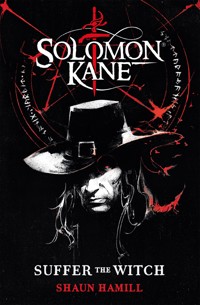
The first novel based on Robert E. Howard's uncompromising Puritan anti-hero. A haunting and intense Gothic mystery for readers of Christopher Buehlman, John Langan and Brom. Puritan. Fiend. Fanatic. Solomon Kane. In the wake of several grisly murders, Solomon Kane has been summoned to Windsend, England, to determine a woman's guilt. Is Sybil Eastey a witch? And is she behind these gruesome crimes? His first night in Windsend, Kane awakens from horrific nightmares only to witness a man being torn asunder. Fear quickly turns to something more sinister and the villagers are ready to lynch Sybil before Kane intervenes. Kane must establish Sybil's true nature and solve the macabre mystery before more blood is spilt. However, nothing is what it seems in Windsend.
Sie lesen das E-Book in den Legimi-Apps auf:
Seitenzahl: 477
Veröffentlichungsjahr: 2026
Das E-Book (TTS) können Sie hören im Abo „Legimi Premium” in Legimi-Apps auf:
Ähnliche

















Contents
Cover
Also Available from Titan Books
Title Page
Leave us a Review
Copyright
Dedication
Prologue
1:Lightning Over the Black Forest
2:Dream Palaver
3:Windsend
4:Screams in the Night
5:Catherine Archer
6:Sybil Eastey
7:The Woods
8:The Funeral
9:Fencing Lessons
10:Elders
11:Esther Kidby
12:Le Loup
13:Cheesebrough
14:The Testimony of Joy Lockwood
15:The Testimonies of Roger Kidby and Doctor Calvin Cheesebrough
16:A Short Recess
17:The Testimony of Solomon Kane
18:Accused
19:Sybil’s Tale
20:Sleeping Arrangements
21:Skulls in the Stars
22:Justice
23:Counsel
24:Return to the Woods
25:Back into the Dark
26:The Descent
27:Laughter of the Dead
28:At the Bottom of the World
29:Battle Before the Temple
30:In the Temple
31:Surgery
32:Rhiannon’s Tale
33:A Goddess’s Request
34:A Bargain
35:The Final Descent
36:The Deep God
37:The Blue
38:The Trial of Solomon Kane
39:Collapse
40:Providence
41:Return
42:Departure
Acknowledgments
About the Author
ALSO AVAILABLEFROM TITAN BOOKS
Conan: Blood of the Serpent
Conan the Barbarian: The OfficialMotion Picture Adaptation
Conan: City of the Dead
Conan: Cult of the Obsidian Moon
Conan: Songs of the Slain
Conan: Spawn of the Serpent God
LEAVE US A REVIEW
We hope you enjoy this book – if you did we would really appreciate it if you can write a short review. Your ratings really make a difference for the authors, helping the books you love reach more people.
You can rate this book, or leave a short review here:
Amazon.com,
Amazon.co.uk,
Goodreads,
Barnes & Noble,
Waterstones,
or your preferred retailer.
Solomon Kane: Suffer the Witch
Print edition ISBN: 9781835411865
E-book edition ISBN: 9781835411872
Published by Titan Books
A division of Titan Publishing Group Ltd
144 Southwark Street, London SE1 0UP
www.titanbooks.com
First edition: January 2026
10 9 8 7 6 5 4 3 2 1
This is a work of fiction. All of the characters, organizations, and events portrayed in this novel are either products of the author’s imagination or are used fictitiously. Any resemblance to actual persons, living or dead (except for satirical purposes), is entirely coincidental.
© 2026 Robert E. Howard Properties LLC (“REHP”). SOLOMON KANE, ROBERT E. HOWARD, and related logos, names and character likenesses thereof are trademarks or registered trademarks of REHP. Heroic Signatures is a trademark of Cabinet Licensing LLC.
Shaun Hamill asserts the moral right to be identified as the author of this work.
No part of this publication may be reproduced, stored in a retrieval system, or transmitted, in any form or by any means without the prior written permission of the publisher, nor be otherwise circulated in any form of binding or cover other than that in which it is published and without a similar condition being imposed on the subsequent purchaser.
A CIP catalogue record for this title is available from the British Library.
EU RP (for authorities only)eucomply OÜ, Pärnu mnt. 139b-14, 11317 Tallinn, [email protected], +3375690241
Dedicated to Robert E. Howard (1906–1936):that starry-eyed dreamer from Texas,whose dreams we’re all still dreaming.
PROLOGUE
“Thou shalt not suffer a witch to live.”
–EXODUS 22:18
“And if a man or woman have a spirit of divination, or soothsaying in them, they shall die the death: they shall stone them to death, their blood shall be upon them.”
–LEVITICUS 20:27
“What is divine is full of Providence. Even chance is not divorced from nature, from the interweaving and enfolding of things governed by Providence. Everything proceeds from it.”
–MARCUS AURELIUS, THE MEDITATIONS
Lightning Over the Black Forest
On a stormy night in late September, Solomon Kane soared high above the treetops of the Black Forest, sure he was going to die.
The sky above was pitch black, the stars and moon obscured by heavy storm clouds. The air around him was an endless sheet of brutal, relentless rain. It fell hard and stinging and cold against his exposed skin.
Kane did none of the flying himself, but instead clung to the neck of a great winged beast with his right arm. In his left, he gripped a staff almost as tall as himself. Its bottom was pointed and sharp, and it was topped with a strange carving of a cat’s head.
Lightning slashed the night sky, momentarily filling the world with light, and Kane got his first good look at the beast. In the darkness of the forest below, it had seemed similar in shape to a great black horse, but the light made clear several differences. First were its eyes, which burned red like coals. Second, when its lips parted, it had not the large, flat teeth a man could expect in a horse’s mouth, but several rows of razor-sharp teeth, perfect for rending flesh from bone. Third, of course, Kane had needed no extraordinary light to see: the great skeletal wings sprouting from the creature’s back, which now carried it, whinnying and huffing, through the night sky.
The beast’s hide was not soft and smooth, like a horse’s, but cold and repulsive to the touch, almost like the skin of a lizard. Its flesh was slippery as well, and the only thing between Kane and a steep drop was his grip upon the demon-steed’s oily black mane. Even now, he could feel the greasy black hair slipping between his fingers.
He looked down and experienced a moment of wooziness as he realized just how high he was, then looked back up at the demon-steed. He needed to act quickly, if he was to survive this. With his strength divided between the staff and the creature’s mane, he could not swing himself up onto its back and ride it. Nor could he hang on for more than another moment or two.
Death was inevitable, then. But would he die falling, letting this beast get away? Or would he try to stop it once and for all, and make a noble end for himself?
Kane lifted the staff in his left arm. To the unlearned observer, it would appear to be a handsome wooden stave—but the wood was older and stranger than any still found upon this earth. It was hard and strong as iron, and possessed of powerful magic.
He shifted it so that his grip fell nearer the middle than the top, pointed its sharp bottom end at his opponent, and drove the weapon into the beast’s side.
The beast screamed, and dropped a dozen feet through the air. The jolt and fall caused Kane to lose his grip upon the demon-steed’s mane, leaving him hanging only by his staff, impaled into the beast.
He raised his right arm and gripped the staff in both hands. The extra weight caused its sharp end to grind upward through the beast’s innards. It screamed again and lost more altitude. Below, the treetops grew alarmingly close.
Using his grip upon the staff as leverage, Kane swung back and then forward, up into the air. For a second, he felt as if he were flying himself. Then he landed upon the beast’s back, and gasped as most of the air was knocked from his lungs. His body, operating almost on instinct now, leaned forward and wrapped arms about the demon-steed’s neck. As his mount fell out of the sky, the treetops flew up at him. He closed his eyes and braced himself. This was going to hurt.
Hurt it did.
They crashed into the trees. Pine needles and sharp branches stabbed and scraped at Kane’s exposed face and hands. Their descent slowed as the demon-steed’s wings tangled in the branches—and then the beast, blind with pain and panic, trying to free itself lunged forward, and slammed face-first into the thick trunk of a huge fir. Kane was dully aware of a great cracking sound. Had that been the tree? The beast’s skull? Perhaps both?
He had no time to ponder, because the beast’s body flailed about once more, tossing him off, and then he was falling once more. The forest floor smashed into him, knocked the air from his lungs all once more, and the entire world went gray around him.
* * *
The call to action had been simple enough. Lately, Kane had been moving through Europe, tracking a coven of vampires, who seemed to be perpetually one step, one move ahead of him. While stopped for supplies in a small German town, he had overheard tavern talk about a great black horse and rider running other riders off the road.
The story reminded Kane of a similar incident from his own younger days. Many years before, he himself had encountered such a horse and rider in the Black Forest. They had almost run Kane and his horse off the road, but instead of a painful collision, the figures had passed right through Kane.
The event had set young Kane’s mind spinning, but as the phantoms had done him no injury, and he had already been about on urgent business, he had moved on. But there in the tavern, years later, he had at last seen an opportunity to revisit an old mystery. The talk had changed—it seemed that the horse and rider no longer passed through travelers on the road, but instead were taking on physical weight and dimensions, and were maiming and killing other travelers.
Kane had paused his vampire hunt to come to the Black Forest, hunting the beast and its rider. His quarry made no effort to hide. Soon after the sun had set, Kane entered the forest, and found himself shortly set upon. There had followed a short battle with the rider. Kane had managed to unseat the hooded figure, and run him through with a sword, whereupon the rider screamed and burst into smoke. The demon-steed, however, had proved a far more difficult matter.
* * *
The world gradually filled itself back in around Kane now: the forest floor, covered in fir needles; the trees standing about him like a gawking crowd; the rain falling from above, pelting his exposed face; and the sound of his own wheezing breath, as his body tried to fill itself with air once more.
He sat up with a groan and looked about. In the darkness of the wood, he heard no whinnying or neighing, or sounds of struggle; nor did he see any remains of the demon-steed. His staff lay nearby. It seemed unsullied, despite having recently been used to stab a monster. The monster itself must have burst into smoke and vanished. So it was dead, then.
And you, somehow, are still alive, he thought.
He ran his hands over his body, looking for broken bones or other injuries. Miraculously, he seemed unhurt.
Once his breathing returned to normal, he tried to stand, but as he did so, his right knee barked with pain, and sent him right back to the ground. He grunted as the pained knee struck the earth and sent a fresh wave of agony through his leg.
He crawled over to his staff, a few feet away on the ground. He drove the pointed end into the earth, and leaned upon it for support as he tried to stand once more. This time he managed it, but only barely.
He grinned through gritted teeth. This pain in his right knee had started a year ago, occasional flares of discomfort in his right leg. Pain when walking or putting weight upon it. While it occurred seldom at first, it had slowly increased in frequency and intensity, like an unwanted guest who decides to move into your home. Still he ought not complain. He was relatively spry for a man in his fifties and retained most of his strength and skill.
He put his fingers to his lips, and whistled. The rain seemed to dampen the sound, and he briefly worried that it would go unheard, but his concern proved baseless, as, a moment later, a spotted gray destrier clopped out from between the trees and to Kane.
“Inglewood,” Kane murmured, speaking the horse’s name as he patted her neck.
The horse snorted gently and nudged Kane with her snout. Kane limped over to the saddlebag, removed an apple, and offered it to her. It disappeared from his hand in a single bite. He stroked her snout twice more, and then strapped the staff to the saddle and mounted the horse, groaning with the effort. He picked up the reins and, after a moment’s indecision—God above, it was difficult to determine directions in all this darkness and rain—started back toward the road.
Dream Palaver
Kane was thoroughly lost, but Inglewood seemed to have an unerring sense of the direction they needed to go. She found the road, and brought them back to the village of Baumstadt, where Kane was staying.
It was a tiny place, nestled deep in the Black Forest, and on a rainy night like tonight, it was shut up tight against the elements. Windows glowed orange with hearth light, and Kane found himself eager to be back indoors.
Inglewood went straight to the barn. Kane found no hands to help him stable his horse, so he did it himself, unsaddling her, brushing her mane, and feeding her, before hobbling across the muddy yard and into the inn. He had to knock and give his name before the door was opened to him.
The common room was warm and cozy, full of the smells of fire and good food. The innkeeper, a gaunt little man, was bent over a table, setting out bowls of stew for two men. His daughters were likewise serving other tables with tankards of beer and plates of bread.
Kane limped to the nearest empty table, and sat down heavily upon one of the benches. He felt, rather than saw, the innkeeper approach. His name was Lauderman, and he was the one who had reported the black horse and rider to Kane earlier today.
“Good evening, Herr Kane,” Lauderman said, in heavily accented English. “How do you fare?”
“I am tired and hungry, Herr Lauderman,” Kane said. “But your demon-steed and its rider are dead.”
“Oh?” Lauderman asked. He stood up straight, and Kane lifted his head to look the innkeeper in the eye. The old man was clearly surprised.
“Aye,” Kane said. “I slew them. Or sent them back to Hell, since I am not sure such a thing can be killed. I would have brought you proof or a trophy, but both corpses vanished upon their defeat.”
“I suppose it is just as well,” Lauderman said. “I would not want such a cursed thing in my home. But I must tell you, Herr Kane—it will be difficult to prove to the rest of the village that you have done this thing. I know they have offered a reward, but without proof…”
“The proof will come in the days and months to come, as travelers will traverse the roads outside this village unharried by Hell’s own minions,” Kane said. “But worry not about your gold. I did it not for the reward.”
“So noble,” Lauderman said. “Perhaps it is true what people say about you. That you are God’s vengeance made human. His angry right hand.”
“People say many things,” Kane said.
But even as he discounted the compliment, he felt it warm his breast. The innkeeper had spoken to Kane’s secret feeling about himself. That he had been chosen by God to travel the world, right wrongs, and punish evildoers. That it was God’s own Providence that guided Kane’s steps, and His righteous fury that directed Kane’s sword, gun, and staff.
“You will have the undying gratitude of this village, I am sure,” Lauderman said. “I shall see to your supper at once.”
He took a few steps away before he stopped and snapped his fingers.
“I almost forgot,” Lauderman said, returning to the table. “A courier arrived while you were out. Said he’d been chasing you all across Europe, and was very relieved to find out you were staying with us.”
He reached into his apron and removed a battered envelope, which he offered to Kane. Kane took it and nodded his thanks to the innkeeper. He waited until Lauderman had left to turn the envelope right-side-up and read it. It was addressed to an inn in France where Kane had been staying for several weeks. He thought he recognized the small, neat hand in which it was written.
Kane broke the wax seal, removed the letter inside, and unfolded it upon the table to read:
Dearest Solomon,
I know it has been quite some time since we last spoke. I hope you will forgive me dispensing with the usual courtesies of asking about your health and latest adventures. The situation is dire, and I must be quick.
I write to you from my home in the village of Windsend. We are a young settlement, less than five years old, and several miles from the hamlet where you and I grew up in Devonshire. My husband Enoch and I were among the group of Puritans who helped found the town, which sits in a valley outside of a dark wood. Here we hoped to make an Eden, a paradise on Earth that the Lord would look upon with favor.
Unfortunately, life in Windsend has been difficult. Our crops fail. Our livestock ails. Our children are often born sickly, and we lose too many babes and mothers in childbirth. We have struggled and fought for everything we have in this valley. Each victory is hard-won.
I do not tell you this to garner your sympathy. You know as well as anythat life is hard, and ease is not guaranteed. The Lord has His plans and we but move within them. I tell you these things because I want you to understand the mindset of my neighbors. We have lived five years of unceasing hardship. We are all tired, and scared, and we now face a new problem.
Men in town have begun to die in horrible ways. All have been prominent leaders—town elders and businessmen and the like. The deaths only seem to occur at night. Sometimes we hear the screams of the victims. Sometimes we do not. There have not yet been witnesses to any of the deaths, but too many of us have discovered the aftermath. Ruined human bodies, mutilated in ways that no Christian should ever see.
The people of the town—including my own husband, Enoch—are convinced that something inhuman and unnatural is committing these murders. The focus of this suspicion seems to be coalescing about my friend Sybil Eastey, the local midwife. She lives just outside the village, and is one of the only members of our community who is not of the Puritan faith.
Rumblings of witchcraft have already begun. They suspect her of plotting against the town. A few now openly accuse her—of the killings, yes, but also the poor harvests, the dying livestock, and worst, the sickly children. They are convinced that she is the root of our problems here.
Enoch and the town leaders have not yet made an arrest, but the talk grows louder. I fear it is only a matter of time now.
Sybil has been a good and true friend to me—the only one I have in Windsend. She delivered my youngest son, Isaac, through a difficult birth—a birth many women and children might not have survived. I now fear for Sybil’s safety. I do not believe her capable of this evil, but I know that my perspective is skewed by my love and gratitude.
If anyone can discover the truth at the root of our woes, and pronounce Sybil innocent or guilty, I know it will be you, Solomon. You are among my oldest and truest friends. I implore you to return to England, and help me if you can.
Please hurry.
Your sister in Christ,Catherine Archer
Kane ran a thumb over the signature. Your sister in Christ. There was a time when he and Catherine Archer (née Hyland) might have been more. They had grown up together, and gotten along well. If not for Bess, Catherine would have been the obvious choice. But then life had unfolded as God had willed. Kane had left home young, and set upon a life of adventure—a path that had guided his footsteps up until this very moment.
He read over the letter thrice more while he ate his supper, and carried it up to his room after he’d finished eating. The stairs were a trial, his knee crying out with each step. Thankfully, Kane’s room was close to the top of the stairs.
He suppressed a groan of relief as he latched his door behind himself and sat upon the room’s narrow bed, where he glared at his traitorous knee.
This was only the latest betrayal of his aging body. On the rare occasions when he looked into a mirror or saw his reflection in a body of water, he scarcely recognized himself. Silver now threaded his dark hair, and his gaunt face was marred with heavy lines. The image in the reflection told the truth: he was growing old. And old men’s bodies failed.
After a moment’s rest, he rose, set Catherine’s letter on his nightstand, then washed his face in the room’s little basin. He stripped his cloak, hat, and weapon belts, hanging them on the wall, pulled off his boots and stockings, and lay down upon the bed, staff in one hand, pistol in the other. The pistol he slept with every night, as a precaution. The staff he only brought to bed on the nights when he needed to speak with N’Longa.
* * *
Sleep came quickly, as it usually did for Kane. One moment, he was setting his head upon his meager pillow, and the next he found himself in an empty white space, facing N’Longa.
Kane had known N’Longa many years. He had met the African priest as a young man, during one of his first trips to that distant continent. N’Longa had helped Kane defeat a rogue murderer named Le Loup, and thereafter the two considered themselves blood brothers. They had met several times during Kane’s subsequent travels in Africa, and had worked together quite successfully. It had been N’Longa who had given Kane his staff, which was made of a wood no longer found upon this earth. The staff had helped Kane to defeat an ancient city full of vampires, but it had also allowed Kane to communicate with N’Longa across vast distances in dreams.
Kane had availed himself of this second power often of late. He and N’Longa had been working together to wipe out nests of vampires across the world. N’Longa, a powerful sorcerer, could see much, and had proved an able guide to Kane, setting upon the path in Africa, but lately sending him after a mobile coven traveling across Europe, leaving a trail of dead bodies and vampire fledglings in their wake. Kane had put down many confused fledglings in the last several months, although it gave him no pleasure to do so.
In the vast whiteness of the dreamscape, N’Longa sat upon a log, near a crackling fire. He looked up at Kane and smiled, his wrinkled face breaking into a thousand small lines.
Kane nodded a greeting as he sat down on a log opposite N’Longa’s. Around them, a dark and dense jungle began to sketch itself in.
“You have been busy,” N’Longa said. In the dreams, he spoke perfect English, a far cry from the more accented trade language he and Kane spoke to one another in person.
“Very,” Kane agreed.
“But not with our business, I see,” N’Longa said.
“I still hunt the coven,” Kane said. “But the people in Baumstadt needed help. I could not abandon them in their hour of need.”
“Mm,” N’Longa said. “Perhaps Le Loup had the right of it, when he teased you. Monsieur Galahad, he called you. A famous knight of legend in your land, was he not?”
“He was,” Kane said.
“And now I sense you plan to delay our work once more,” N’Longa said.
Kane shifted upon the log. “An old friend in England has asked for my help. I cannot ignore her.”
“No, indeed,” N’Longa said. “You stop to investigate every stray cry, and right every wrong upon your path. And as you do, our prey gets further away.”
“I am not asking your permission, N’Longa,” Kane said.
“I know,” N’Longa said, and sighed. “And I know that what I say next will not affect your decision, but I will say it anyway. You were closing in on the coven before you stopped for this ghost horse business. The coven have gained ground since then. England—where you plan to return—is over seven hundred miles from the place where you sleep tonight. You will give our quarry ample opportunity to do more harm while you travel, and tarry in England.”
“Do what you can to mitigate it,” Kane said. “Send dreams to the people. Put them on alert. We might not be able to stop these villains yet, but mayhap we can make them go hungry for a time and lose speed.”
“I will do what I can,” N’Longa said. “But you must understand—right now, the coven are unaware of our pursuit. If I do too good a job, they may catch wind of us, and our task will become much more difficult.”
Kane nodded his understanding. N’Longa would try to save some, but would not be able to save all, of the coven’s intended victims.
“It may be you can speed my own work,” Kane said. “I am bound for the village of Windsend, where a great many murders are taking place. A local midwife is suspected of using witchcraft to commit the murders. Can you see the truth of it from here?”
N’Longa took a deep breath and closed his eyes. His face was placid for a moment as he reached out with his powers, trying to see what Kane asked for. His calm was broken by a frown a moment later, and he grunted with surprise.
“What is wrong?” Kane said.
“It is strange,” N’Longa said, keeping his eyes closed. “I can… almost see the village. But it refuses to come into focus. It is almost as if…” he shook his head.
“Almost as if what?” Kane said.
“Almost as if something there is blocking my magic. Obscuring my sight.” He opened his eyes. “I have never seen anything like this, Solomon Kane.”
“All the more reason for me to set off at once, then.”
Windsend
Kane woke early the next morning. He left the innkeeper more than enough gold to settle his bill, then went to the stable to retrieve Inglewood.
The hard rains of the night before had continued through the predawn hours and forced Kane to keep Inglewood to a canter as they left the town and entered the woods once more.
The rains remained heavy but Inglewood seemed to intuit her master’s impatience, and picked up speed as they rode, stretching her neck forward and galloping down the road. Trees flew past on either side. Some clung to their last leaves, but most were bare, their branches like dark, gnarled arms reaching for Kane from either side. The road squelched and splashed beneath the horse, spattering her coat and Kane’s pants with mud and puddled rainwater. Fallen leaves gathered in Inglewood’s wake, creating a nimbus of brown and gold amid the gray and brown of the road and trees.
Each of Inglewood’s strides jostled Kane’s bad knee. He gritted his teeth and leaned forward until his own neck was extended almost parallel to the horse’s. Rain pelted his slouch hat and ran down his face, while the wind tried to snatch the hat off his head. Kane ignored it and kept this eyes on the furthest point visible to him at any moment—be it a bend in the road, a signpost, or, when they emerged from the woods onto a wide, grassy plan, the horizon itself.
* * *
It went this way for several days. Kane knew the muddy road made the going more difficult for his mount, so he tried to enforce frequent breaks, and to travel no more than twenty-five to thirty miles a day.
Perhaps N’Longa was aiding Inglewood, or perhaps the horse was one of those rare beasts that outperforms all others of its kind through accidents of birth and chance. Whatever the reason, she seemed to move faster, and need less rest than expected, and they made it out of Germany and into France ahead of schedule.
In Calais, Kane reluctantly sold Inglewood to a stable, and bought passage on a merchant vessel across the channel to England. In his native country, he bought another horse, Holiday, and started the long overland journey from Dover.
This part of the journey lasted a fortnight, with the heavy rains seeming to follow Kane, and Holiday proving a slower mount than Inglewood.
As they approached Windsend, Kane found himself entering yet another dense wood, and here, Holiday slowed further. He could feel her weariness, and considering stopping for the night, making camp one last time before arrival. It would be a cold and miserable night, but if Holiday was at the end of her rope, it might be for the best.
Before he could make up his mind, however, horse and rider emerged from the woods and back into the open air. Kane found himself looking down into a steep valley. In the dark of night, it was hard to see what was below, but Kane thought he could make out another forest—and abutting that, a small group of buildings. A few lanterns were lit here and there, giving vague shape to a village.
This must be it. He’d arrived in Windsend.
Kane dismounted Holiday at the lip of the valley, held her reins and gently led her down the path. He kept his lantern high, and watched his step. He would have liked to use his staff to support his weight, but with the reins in his right hand and the lantern in his left, he had no way to hold it. So he trod slowly and carefully. The path was probably treacherous in fair weather; in this storm, it was all the more dangerous.
With a bit of extra care, however, Kane and Holiday made it into the valley unharmed, and crossed a wide field into the village of Windsend. As they approached the small clump of buildings against the woods, four lanterns wobbled toward them in the distance. These lights grew larger and brighter, eventually giving shape to their carriers: four men in the black garments of Puritans, carrying muskets over their shoulders.
“Halt!” one of the men called.
Kane came to a stop. He continued to hold his lantern aloft, to let the men get a good look at his face.
“You need no weapons,” he said. “I am no threat.”
“Name yourself, stranger.” It was the same man who had spoken before. He was small, with narrow shoulders, a red beard, and a pinched, unhappy face.
“My name is Solomon Kane, and I come to Windsend as a friend.”
The men exchanged glances. All three of the others seemed to defer to the little red-haired man, who turned back to Kane with a less suspicious expression. He handed his musket to one of his companions, and came forward to offer Kane his hand.
“Master Kane,” he said, as they shook. “We were told you might be coming, but…” He trailed off, then seemed to remember his manners. “My name is Nehemiah Lockwood. I am the town carpenter.”
“It is late,” Kane said. “What business keeps a carpenter out of bed at this hour?”
Lockwood frowned. “If you have come, I assume you have received Goodwife Archer’s letter, and know how things are in our village. I have fashioned too many coffins in the last few months. We have set a watch to patrol the village and protect her citizens.”
“So the matter of the killings is not yet resolved,” Kane said.
“That remains to be seen,” Lockwood said. “The local midwife—an awful woman named Sybil Eastey—was arrested earlier this week, after the mayor was killed. There have been no more killings since her arrest, but we expect you, with your expertise, will be able to discover the truth at the heart of our woes.”
“I shall do all in my power,” Kane said. “But I am weary tonight. Is there an inn where I might rent a room?”
“Of course,” Lockwood said. “Please, come with us. We will show you the way.”
Kane stashed his lantern and took up his staff, allowing the men to lead him. On the way, he was introduced to Lockwood’s companions—Thomas Blackwell, a merchant, as well as Edwin Wilton and John Howlett, both farmers. They passed several locations, which Kane marked but did not remark upon, including the village’s cemetery, which seemed large for such a young village. Life must have been difficult here indeed.
The village had only one inn. A sign hung from the eave, featuring a crude painting of a comet streaking across the night sky, and beneath this image, the inn’s name: The Falling Star.
Lockwood went inside while Kane waited in the street. A moment later, Lockwood returned in the company of a young man with curly dark hair, bushy eyebrows, and a broad, round face. He had heavy-lidded eyes, as if he had just woken from a deep sleep, and he wore his nightclothes.
“Master Kane,” Lockwood said, gesturing to the sleepy young man. “This is Roger Kidby. His father, George, owns the inn.”
Roger seemed to come fully awake upon hearing Kane’s name. “A pleasure to meet you, Master Kane,” he said, shaking Kane’s hand perhaps too vigorously, and for too long.
He was still shaking Kane’s hand in both of his own when Kane said, “I need a room, and a stable for my horse, if you have them.”
“Of course,” Roger said, releasing Kane’s hand. “I can see to your horse, if you would like to go inside.”
Kane thanked the young man, and allowed Nehemiah to lead him into the inn.
The sight that greeted Kane was almost the perfect picture of an inn: a wide room lined with wooden benches and tables, all arranged before a stone hearth. To the right stood a bar with its stools, and to the left, a staircase led up to a second floor, presumably with rooms for guests. The only things missing were a roaring fire, a cheerful crowd, and the smell of fresh meat and bread.
An older man emerged from a doorway behind the bar. He wore night clothes as well, but had fastened an apron around his considerable middle. He had a ruddy face, and wispy white hair.
“Welcome, sir,” he said. “My name is George Kidby, and this is my inn. I apologize we have not a warmer welcome for you, but we are unaccustomed to late visitors here.”
“I apologize for waking you,” Kane said.
Kidby waved the apology away. “My wife is not well, so I am up late most nights caring for her—but I admit you caught me unprepared. I might be able to find some cold meat, bread, and beer, if you would like to eat before you retire.”
Kane’s stomach rumbled at the thought of food, but his prevailing exhaustion was stronger.
“Thank you, no,” he said. “I would find a bed as soon as possible, so I might rise early. I would take some water, if you have it.”
“Of course,” Kidby said. He disappeared for a moment, then returned with an earthenware pitcher in one hand. He came out from behind the bar and headed for the stairs on the opposite side of the room.
Kane thanked Lockwood and the watch for their assistance.
“We are happy you have come, Master Kane,” Lockwood said. “Perhaps our long nightmare is finally at an end.”
* * *
At the top of the stairs, Kidby lit two candles, one of which he gave to Kane.
“You have your choice of rooms at the moment,” Kidby said. “Not many visitors these days. And those we do have tend to stay with family when they come. But we keep the rooms and bedding clean, just in case.”
Kane took the room closest to the stairs. He had experienced his fair share of misadventures at inns (he shuddered to think of his night at the Cleft Skull tavern), and wanted the quickest means of egress, should evil befall in the night. He thanked Kidby and offered the man some coin from his purse.
Kidby looked at the coins and raised a hand, which froze between his body and the proffered money. He sighed as he accepted it, and it disappeared into his apron.
“Normally I would not ask for payment until you leave,” he said. “But things are… difficult right now. My wife is sick. Our midwife—Sybil Eastey—used to brew a concoction for her, one that soothed her pain, and helped her rest, even if it could not cure her ailment. But now that Sybil is in jail, we are forced to buy medicine from the traveling physician. Cheesebrough is a godly man, but his medicine does not work as well as Sybil’s, and seems to run out faster. He will be here in the next few days, if he keeps to his regular schedule. Having the money to pay for his wares will be a blessing.”
He seemed to realize that he was sharing private concerns with a stranger and waved all of it away, handing Kane the pitcher of water.
“I talk too much,” he said, with a small smile. “Goodnight, Master Kane. I hope your dreams are… tolerable.”
Kane noted the odd turn of phrase, but did not question it. Instead, he nodded his thanks and let himself into his room. It was small but cozy, and surprisingly well-appointed: a wide bed sat against the far wall, with a table set beside it. On the nearest wall stood a wardrobe, and to Kane’s right stood a small washbasin on a stand.
He limped over to the bed. He set the candle on the table, dropped his bag on the bed, and leaned his staff against the wall, between bed and table. He unstrapped his slouch hat and hung it on the hook by the door. He undressed, hanging his gun and sword belts in the wardrobe, but not before pulling one of the pistols from the belt and setting it upon the table by the bed. He washed himself with cold water in the room’s little basin, then limped to the bed, pulled back the blankets, and lowered himself onto the mattress with a grateful sigh. He picked up the pistol off the bed and put it in his right hand as he closed his eyes.
Kane was asleep almost as soon as his head hit the pillow.
Screams in the Night
Kane wandered through a dark, narrow place, lit only by the wavering flame of the torch in his left hand. In his right, he carried one of his pistols. Although his rapier hung at his side, he did not carry his staff. Moreover, his knee did not hurt. His steps were as steady and easy as they had ever been.
The floor beneath him was stone, as were the walls and low ceiling above him. It felt like a cave, but was lined with flat, regular blocks, which had clearly been placed with intention. Kane stopped for a closer look at the stones, which appeared marked or marred. As he leaned forward, he realized he was looking at etchings, carved into the walls.
As Kane examined these carvings, a great wind swept in from the gaping dark. The blast and force were so great that Kane staggered, and his torch blew out like a candle.
Out of the dark came a chittering, skittering sound. It reminded Kane of the roar of jungle insects magnified a thousand-fold in both volume and size. He cocked his pistol and closed his eyes, trying to pinpoint the origin of the sound, which seemed to come from everywhere at once.
He dropped the torch, useless now as anything but a club, and reached for his rapier, only to find it missing. How could that be? He had seen it at his belt only a moment before. He cursed himself for the worst sort of fool, as the sound grew louder, and louder—
* * *
Kane opened his eyes with a sharp intake of breath. He found himself looking at his own extended right arm, pointing his pistol, not into a strange narrow corridor, but rather into a small, unfamiliar room. He was not standing, but lying down in a bed.
His memory finally caught up to his reflexes. He was in his room at the Falling Star Inn, in Windsend. He had come to see Catherine. But he saw no light leaking through the closed window shutters, and smelled no aromas of breakfast cooking below. It must be the middle of the night. Why was he awake now?
He heard the sounds of people in the street outside—unusual for this time of night, especially in a small Puritan village—and then a great scream rent the night. Kane launched himself out of bed and across the small room. He barreled through the door, not bothering with shoes, cloak, or hat, pausing only long enough to grab his weapon belt, which he tossed over one shoulder as he stormed down the stairs, across the common room, and out the front door of the inn and into the street.
He was only dimly aware of the earth beneath his naked feet, wet, cold, and soft from the rains. Mud squelched between his toes as he came to a stop at the bottom of the inn steps, and took in the scene before him.
A crowd had gathered in the street outside the inn. Kane saw the members of the night watch he had already met, now joined by several men and women in their night clothes. None of them seemed to mark Kane’s arrival. Their faces were turned toward the sky, as if stargazing. Kane followed looked up to see what they were staring at.
It was George Kidby, the innkeeper who had so recently wished Kane a good night’s rest. His body hung suspended a dozen feet in the air, facing the crowd, his back to Kane. His arms were stretched out to either side. His feet dangled, toes pointed down. The image put Kane in mind of the crucified Christ, missing only a cross. There were jagged tears in the back and sleeves of Kidby’s white shirt, which was darkening with blood.
The gathered onlookers murmured among themselves. One woman pressed an alabaster hand to her mouth, eyes wide with terror, as Kidby whimpered and cried like a babe. Kane experienced a moment of disgust, which he forced out and replaced with pity. He was not in the company of fellow hard men and adventurers here, but among civilized men. Innocents who should never have to expect or fear a fate like this.
“George?” called one of the night watchmen. This was John Howlett, the farmer. “What is happening?”
“I—I do not know!” Kidby shouted back. “It hurts! Please, someone help me! Lord God, deliver me!”
The innkeeper had barely finished speaking before he began to scream again. His arms stretched further away from his body, and his back arched. He threw his head back to the sky and wailed, his agony loud and ugly.
As he watched, Kane became aware of a smell, almost hidden among the bouquet of an English village in October. Amid the smells of fire, wood, earth, rain, and animal scat, there was also a sulfurous stench on the night’s chilly breeze—a stink that seemed to come from Kidby himself.
“Master Kane!” This came from Nehemiah Lockwood, standing at the front of the crowd. “Can you not help him?”
“I am not sure what is happening, Master Lockwood,” Kane called back. “What would you have me do? Fire a gun into the air? Anything I do now would be as likely to harm as help.”
“We cannot do nothing!” Lockwood shouted, over Kidby’s screams.
Kane understood Lockwood’s panic but was unsure what he could do.
The staff, he realized. Perhaps my staff could reveal the source of this devilry. But he had left his staff up in his room.
He was about to turn back, to run upstairs and retrieve it, when Kidby’s screams grew louder. These cries were more than fear and pain—this was life-ending agony. Kane had heard it before, too many times. He forced himself to remain still, and witness the sight. It was all he could do for Kidby now.
As the innkeeper paused for breath between screams, there came a small popping sound, as if something had been freed from its socket deep in his body. This was followed by a tearing, not unlike what one might hear when pulling a leg off a roasted chicken.
Half a second later, the visual followed, as the innkeeper was ripped apart like a rack of lamb thrown to a pack of wild dogs. His arms, extended past their limits, came off his torso, unleashing freshets of blood into the air. Crimson droplets sprayed the faces of the crowd below. A couple of the women screamed. A few of the men did, too. Edwin Wilton dropped in a faint.
Kidby’s remains hung in the air for another second, then dropped back to earth in a quick series of thumps, where they continued to gush blood into the mud. The crowd cried out, but Kane kept his eyes up to the place where the innkeeper had hovered a moment before. He could see nothing, but that hellish stench of sulfur remained, and… was there a sound? Something soft, like a chittering?
Lockwood gestured at the body on the ground, opening and closing his mouth. “You see,” he said to Kane.
“I do,” Kane said.
“Nothing in God’s creation can commit such atrocities,” Lockwood said, and although it was a statement, it had a hint of the question. Like a child looking for reassurance. “It must be witchcraft.”
Kane did not answer right away, but looked from the corpse back into the air. He took a deep breath. The sulfurous smell was fading, and the chittering sound was gone—if indeed it had ever been there to begin with.
“I agree that something evil is afoot,” Kane said. “But if it is witchcraft, it is like none I have seen before.”
“Will you not come to see Sybil Eastey now, then?” Lockwood said. “Interview her. Ascertain her guilt or innocence.”
Kane shook his head. “Nay. I will speak to her in the morning.”
“We cannot let these evils continue,” Lockwood insisted.
“And yet I shall speak to her in the morning, whether you like it or not,” Kane said.
“Why?” Lockwood demanded. “Why not now?”
“Because I need my rest, Master Lockwood,” Kane said. “I have had a long road, and will need all my wits for the interview. I must be sure of this woman. If you are truly interested in the truth, you must trust my methods and counsel.”
“If you will not interview her tonight,” Lockwood said, “I will lead the men of the town to the jailhouse and execute her right now. We cannot risk another death!”
“So, you will ensure one?”
“To save my people? Yes.”
“And if Mistress Eastey is innocent?” Kane demanded. “What then? What happens if you execute her, and the killings continue? Will you sleep easily, knowing you have added another undeserving body to the pile?”
Lockwood’s jaw worked, and his nostrils flared. He did not like what Kane said but heard the wisdom in it.
“What has happened here is a tragedy,” Kane said. “But tonight, you and your watch should clean this mess out of the street, and see to the young man and widow that Master Kidby left behind.”
Lockwood glanced at something behind Kane. Kane turned to see Roger Kidby, the innkeeper’s son, standing on the porch, one hand to his mouth, eyes wide. Kane knew this look, too. This was not terror, but shock. Disbelief. The lad’s mind could not understand what his eyes showed him.
As Kane mounted the steps back into the inn, he put a hand on Roger’s shoulder.
“You will need to be strong now, for your mother’s sake,” he said.
Roger stared at his father’s body in the darkened street for another moment, before looking back at Kane. He blinked slowly, like a small child waking from a dream. Kane tried to guess the lad’s age. He could be no older than seventeen. Eighteen at most.
“Yes,” Roger said. “Mother is sick.”
“Let her rest, while she may,” Kane said. “This ill news can wait until tomorrow.”
“Yes,” Roger agreed. “Tomorrow.” His gaze went back to the scene in the street. Kane squeezed the boy’s shoulder once more and went back inside.
Up in his room, he hung up his belt, cleaned the mud off his feet as well as he could, then returned to bed, and his uneasy night’s rest.
Catherine Archer
Kane’s dreams returned him to that dark corridor, full of strange sounds, and they stayed with him until he woke.
This time the waking happened without great ado. No cocked pistol, no screams in the street. Just the natural return to consciousness—awareness of light seeping through the window shutters; the sounds of bustle in the common room below; the smells of hot food.
He sat up and set his pistol on the nightstand. He used both hands to rub his face, and groaned softly into his palms. He felt all the miles of his long journey this morning, and the interruption of his rest the night before.
The memory came back: Kidby, the innkeeper, torn apart in the air in front of his home. Roger, the innkeeper’s son, had seen at least some of it. He would be downstairs now, working. Kane ought to check on the boy, and then get about his own business.
He stood, testing his knee. It was sore, but less so today than yesterday. He paced the length of his room a few times, and found the process uncomfortable, but by no means intolerable. He could live with discomfort.
He washed in the room’s basin, using the rest of the water George Kidby had given him the night before. Then he dressed, strapped on his weapons, grabbed his staff, and snatched his hat from the hook by the door.
Downstairs, he found Roger Kidby working a much livelier common room than the one Kane had observed the night before. There was a roaring fire in the hearth, and clumps of villagers were gathered at tables about the room, talking, smoking their pipes, and enjoying breakfast.
Their conversations came to an abrupt stop when Kane reached the bottom of the stairs. He was used to this. In other places in the world, his Puritan garb often caught the attention of strangers. They were often curious, and occasionally hostile. It was strange to receive such a welcome in a Puritan village, however. All the men here were dressed like Kane. Their clothes were less road-worn, but the types of garment—the black trousers and shirts—were the same.
Despite their similarities of dress, Kane treated these men as he would any other strangers. He gave them a curt nod and a “Good morrow,” as he crossed the room to the bar, where Roger Kidby worked, looking harried.
Roger gave Kane a tired smile upon his approach. He was so damnably young. There was a light in his eyes, which Kane associated with youth. The only things marring the lad’s broad, pleasant countenance were the dark bags beneath his eyes.
“Good morrow, Master Kane,” Roger said. “How was your sleep?”
Kane noticed that the room behind them remained silent, aside from the crackling fire in the hearth. The other customers were listening to this conversation as well.
“It was fine,” Kane lied. “How are you?”
Roger’s tired smile became a grimace. “The watchmen took my… took the… the mess away, after you went back to bed,” Roger said. “Master Lockwood is building a coffin for what’s left of the body. We will bury him later today. My mother…” Here he looked down at the bar, rather than at Kane. “I fear she will not be well enough to attend the funeral.”
“You have a trial before you,” Kane said. “One I do not envy. But also know that the Lord has chosen it for you. It is all in His plan. It may be difficult to accept, or understand, but remember that all things serve Him. This is divine Providence at work.”
Roger gave a short nod of his own. “Of course, Master Kane. You are right. I will pray for guidance.” He stared down for another moment before shaking himself back to the present moment to look at Kane.
“Would you like some breakfast?” he asked.
Kane allowed that he would, and Roger fetched him a plate of bread and a tankard of milk. Kane quickly consumed both, then asked for directions to the Archer home, which Roger eagerly provided.
Kane strapped on his hat and set off. The rain had stopped, but the skies remained gray and foreboding. The air held an unpleasant chill. The earth squelched beneath his boots as he walked. He did his best to avoid the worst of the mire, but it was difficult, and he arrived at the Archer residence with new spatters on his already dirty boots, pants, and cloak.
The Archers lived in a small house that abutted a smithy. Catherine’s husband, Enoch, was a blacksmith. As Kane paused before the front door to gather himself, he heard Enoch hammering away at the day’s work.
Kane knocked on the door. A moment later, it flew open, and Kane found himself looking down at a pale boy, probably no older than nine or ten. His breathing was loud, and labored, and he had heavy bags under bright blue eyes. Those eyes looked identical to those of the boy’s mother. Kane found himself transported, for a moment, back to his own boyhood in Devon. He might have been staring at Catherine’s sickly twin.
“Who are you?” the boy said.
Kane tipped his hat to the lad. “I am Solomon Kane, young master. And I come seeking the lady of the house.”
The boy turned his head. “Mother!” he shouted, in a high shrill voice. “You have a visitor!”
A few seconds later, Catherine appeared in the doorway, and Kane stood up a little straighter.
He had not seen her in many years. Much was the same—the alabaster skin that seemed to glow from within; those bright, merry blue eyes; the brown hair so dark it was almost black. But other things had changed. She had given birth to four children, and the shape of her body showed it. She was wider at the hips and bust. There were lines around her mouth and eyes. And although her hair was mostly tucked under a coif, what Kane could see now showed gray at the roots, like his own. Time had marked them both.
Catherine put a hand on the boy’s shoulder. “Isaac,” she said. “Is that how we greet a visitor?” She wore a hint of a smile as she said it, as though charmed by her son’s spirit, even as she corrected his behavior.
“Sorry,” the boy mumbled.
“What do we say?”
“Good morrow, master,” the boy said, eyes downcast. “How may I help you, sir?”
“Good morrow, young master,” Kane said. “You have helped me plenty, young Isaac, and I thank you.”
Isaac, recovering a bit of his spirit, looked up at Kane. “Are you the adventurer mother told me about?”
Before Kane could answer, Catherine used her grip on the boy’s shoulder to turn him about and direct him back into the house.
“Go help your sisters finish cleaning the table,” she said.
“Yes, Mother,” Isaac said. He disappeared into the house, leaving Kane and Catherine alone in the doorway. She smiled down at him from the porch, and he felt that strange movement back through the years.
“Hello, Catherine,” Kane said. “It has been long.”
Catherine surprised him by stepping out of the doorway and into the street, where she wrapped Kane in a tight embrace. Kane was shocked by the lack of decorum, but, after a moment, returned the hug.
“I am so grateful you came,” she said.
* * *




