


Erhalten Sie Zugang zu diesem und mehr als 300000 Büchern ab EUR 5,99 monatlich.
- Herausgeber: Atlantic Books
- Kategorie: Abenteuer, Thriller, Horror
- Sprache: Englisch
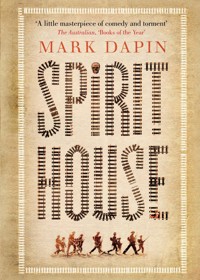
SHORTLISTED FOR THE 2014 ONDAATJE PRIZE LONGLISTED FOR THE MILES FRANKLIN AWARD SHORTLISTED FOR THE AGE BOOK OF THE YEAR AWARD David is thirteen and confused. His mum has left with her lover and dumped David on his grandparents. David's grandfather, Jimmy, is seventy. He spends his days at the social club grumbling with his three best friends, all of them Jewish-Australian survivors of the enforced labour camps of the WWII Thai-Burma Railroad. But behind their playful backbiting and irresistible wit, Jimmy and his friends are haunted by the ghosts of long-dead comrades, and the only person Jimmy can confide in is a thirteen-year-old from a different world...
Sie lesen das E-Book in den Legimi-Apps auf:
Seitenzahl: 529
Veröffentlichungsjahr: 2013
Das E-Book (TTS) können Sie hören im Abo „Legimi Premium” in Legimi-Apps auf:
Ähnliche



















First published in Australia in 2011 by Pan Macmillan Australia.
First published in Great Britain in 2013 by Tuskar Rock Press, an imprint of Atlantic Books Ltd.
Copyright © Mark Dapin, 2011
The moral right of Mark Dapin to be identified as the author of this work has been asserted by him in accordance with the Copyright, Designs and Patents Act of 1988.
All rights reserved. No part of this publication may be reproduced, stored in a retrieval system or transmitted in any form or by any means, electronic, mechanical, photocopying, recording or otherwise, without the prior permission of both the copyright owner and the above publisher of this book.
This novel is entirely a work of fiction. The names, characters and incidents portrayed in it are the work of the author’s imagination and not to be construed as real. Any resemblance to actual persons, living or dead, events or localities, is entirely coincidental.
10 9 8 7 6 5 4 3 2 1
A CIP catalogue record for this book is available from the British Library.
Trade paperback ISBN: 978 1 78239 087 9 EBook ISBN: 978 1 78239 110 4
Printed in Great Britain
Tuskar Rock Press An imprint of Atlantic Books Ltd Ormond House 26–27 Boswell Street London WC1N 3JZ
www.atlantic-books.co.uk
To Jimmy and Frida Benjamin ava ashalom
Contents
SIAM DIARY: MAY 1944
BONDI: WEDNESDAY 18 APRIL 1990
BONDI: THURSDAY 19 APRIL 1990
BONDI: FRIDAY 20 APRIL 1990
BONDI: SUNDAY 22 APRIL 1990
BONDI: TUESDAY 24 APRIL 1990
SYDNEY DIARY: DECEMBER 1941
BONDI: WEDNESDAY 25 APRIL 1990
BONDI: THURSDAY 26 APRIL 1990
BONDI: FRIDAY 27 APRIL 1990
CHANGI DIARY: MAY 1942
BONDI: FRIDAY 27 APRIL 1990
BONDI: SATURDAY 28 APRIL 1990
BONDI: SATURDAY 28 APRIL 1990
BONDI: SUNDAY 29 APRIL 1990
BONDI: MONDAY 30 APRIL 1990
SIAM DIARY: 1944
BONDI: TUESDAY 1 MAY 1990
BONDI: WEDNESDAY 2 MAY 1990
BONDI: THURSDAY 3 MAY 1990
BONDI: SATURDAY 5 MAY 1990
BONDI: SATURDAY 12 MAY 1990
BONDI: TUESDAY 15 MAY 1990
BONDI: SUNDAY 20 MAY 1990
BOTANY CEMETERY: WEDNESDAY 23 MAY 1990
SYDNEY DIARY: APRIL 1949
REDFERN: SATURDAY 26 MAY 1990
SIAM DIARY
MAY 1944
There are ways of escape without tunnels or disguises, boatmen or barges, partisans or guns. On torpid afternoons, when the work is slow and futile, and our guards lie in the webbed shade of trees – sleeping children with flat mustard faces, rifles propped against their thighs like toys in the nursery – the spirits of the heat haze dance in puddles in the air, beckoning me up the hill.
They only sing when the path is safe and I can pad past the Koreans into the jungle, grappling the vines and arching through the undergrowth, my soles and toes hardened to jagged rocks and thorns. I keep my own private name for the mountain – I hide a secret word for everything – and the various stages where I rest on my way to the peak. I have lost the energy of the days before the war. This squat hill is my Everest, but also my Olympus. I never understood Norman Lindsay back home in Sydney, among the paperbarks and gums. To me, he was a pornographer and worse. But here I can almost see the country through his heathen eyes. There are souls in the soil, older than man, and they spell out the names of God in the petals of hibiscus and the shadows of the sun.
Beneath the brow of the cliff face is the mouth of a cave. Its palate is cool and dry, watched over by a painted idol carved from hardwood. I visit the Buddha to remind myself that man can put his imagination to some other purpose than war. Beyond the lips of the cave, and behind its gums, sits a craftsman’s shrine, a timber house on legs of knotted bamboo. Its roof follows the curves of the temples we saw from the rice trains that carried us from Singapore. Inside the shrine sits a tiny altar planted with incense and decked with gifts to placate the spirits of the cave. There are no Siamese in the camp, and the peasants in the native village are starving, but somebody climbs here before dawn each day to freshen the offerings, to leave the ghosts a segment of jackfruit, the stub of a coarse cigarette, a thimble of green tea. And although my stomach, a beehive, begs for food, and my bamboo fingers tremble for tobacco, I never disturb the setting because the cave is my escape. When I’m here with the Buddha, I’m no longer in jail. It is the only time I think of women.
The first girl I bedded had fallen fair hair, like the model for Lindsay’s Desire, and her breath tasted of hot milk. She grasped my hand tightly, crushed it against her own magpie bones. I loved her for her generosity, her carelessness. The others I remember for their grace or their carriage, their breasts or their drinking, their laughter or their thighs.
I recall old schoolfriends, and the kind of love I once felt for boys with downy lips and crackling voices, young muscles tautened by sport, strong wills hardened by the strap. And I wonder how many of them are dead.
This afternoon there was no gunso to supervise the Korean guards. He left at lunch, when we had thirty minutes crouched like coolies to eat half a pint of rice. His men were at first wary, then they began to relax. They like to sleep, to dream of their grandfathers’ fields, of bull carts and oxen and a good year’s harvest. They don’t care if we never build anything in this jungle. It doesn’t matter to them who wins the war, as long as they get back to the farmyard shacks where they were born, to torture their pigs and behead their chickens and beat their wives like dogs and mount their dogs like women.
I heard the call of the spirits – one day, when I get back to my studio, I’d like to paint their song – and they led me in safety past the brutish swain, through the garden of bush graves and up the pathway to my cave. I knelt before the Buddha in his garland of flowering jasmine, and prostrated myself like a Mohammedan then crossed my legs, peered up past his rounded chin and gazed on his nigger smile.
The mountains crumbled, the jungle canopy collapsed, Siam slipped back into the sea and the Japs and Koreans drowned screaming, and all that was left were we prisoners – free men now – floating on the Horae’s clouds, watching whirlpools suck away the land.
Pagan legend holds that the Buddha lived for weeks without food or sleep. I have seen statues of the fasting Bodhisattva: his knees, like mine, the heads of hammers, his ribs a corset of chopsticks. I could look at my body and see only abrasions, wounds and scars, but I contemplated instead the grandeur in the contours of our cave, the arabesques cut by oceans into the walls. I breathed low and deep, bloating my lungs with air to slow my pulse, closed my eyes and melted away.
I felt filled with God. His glow was inside me and radiating like sunshine from my tortured skin. I walked lightly, unburdened, down the track back to the worksite. I stood for a moment on a lower ridge, saw butterflies quake in the air, a sky by Botticelli, a sun by Turner, a heaven by Fra Angelico. I looked down on the Koreans and felt a kind of love for them because they, like everything else, were a part of this perfect world. I saw the gunso – the one they called ‘Lucy’, for Lucifer – parading up from the camp, followed by two uniformed men and another in rags, walking taller than the rest. The big man was joking with the soldiers; I could tell by the loose, friendly way he moved. He seemed relaxed, untroubled, a sportsman out for his afternoon stroll. I imagined him exercising a greyhound, whistling a popular song.
When the men laying the foundations noticed the gunso, they began lifting rocks that need not have been moved and carrying them to places where they would serve no purpose. The Koreans barked and growled. The brute with the drooping eye, the closest man to a beast, lashed out with his cane and felled a blameless prisoner with a blow to the spine. The enemy have a theory that the way to make a man work harder is to beat him until he can work no longer.
I crouched behind a bush, close enough to hear the Japs. My command of Japanese is limited – it is limited to commands – but I understood when the gunso called for volunteers, and the Korean beast stepped forward with two of his attendants, and then other damned souls abandoned their sentry duties to whisper and plot and slap their bamboo canes against their palms.
The tall man stood apart from it all and smiled. I saw his hands were tied behind his back. Another Australian approached him and tried to pass over a gift from the world of the living, but a Korean batted him aside. I did not know it was supposed to happen now. They never told me it would be today.
The gunso motioned the tall man to his knees, and the tall man laughed and shook his head. He would not bow, he would not kneel. They would have to take his legs from under him. I started to pray.
The gunso marched behind the tall man and kicked him with his split-toed boot in the back of the knee. The prisoner buckled but held. The gunso struck him again, and the tall man grunted, only grunted, then dropped. Now his head was level with the weapons of his guards. His eyes were aligned with their canes. His lips were moving furiously. I wondered if he, too, were praying, then I understood he was swearing.
He was cursing them, shaming them, goading them.
The gunso beat him first, smashing him across the back of the neck, then Lucy stepped back and kicked him in the face, a drop punt, aimed to meet the head as it came down.
There was only one victim, so each executioner had to take his turn. The valley was silent but for the sounds of the beating, deliberate and ordered, like the labour of a team on the hammer and tap, lining up to drive in the stakes. The tall man shook and sometimes jerked. He shied from blows when he saw them coming, tried to roll with kicks when he could, but he would not call out. Blood oozed from his mouth, from his ears, from his eyes. His body went into spasms, as if he were possessed. His movements, even bound, became unpredictable, and they had to hold him to hit him. One man grabbed his hair to pull him back and part of the scalp came away in his hand. The Koreans laughed, because they had never before seen a piece of skin and hair peel from a head. The others wanted to tear him too, so they could boast around their campfire, tell the story about how they had each played their part. But the gunso thought this a distraction. He screamed they should knock out the tall man’s teeth, leave them scattered like pebbles.
The gunso commanded the prisoners to watch, and they did, at first, with courage and strength, but they began to feel complicit, as if their witness implied consent, and one by one they turned their backs. The gunso yelled at them to face the punishment squad, but instead they stared up at the trees, away into the hills, through the clouds in the sky, searching for a way of escape without compasses or scythes, hideouts or bribes, or longtail boats navigated by night.
BONDI
WEDNESDAY 18 APRIL 1990
A glass bead curtain hung like frozen rainfall from the front door of my grandmother’s house in Bondi. I sat on the doorstep in the cold sunshine, waiting for Jimmy to stumble back from the RSL, watching the frummers hurry to the yeshiva and Maori women glide by with bags of pork bones and potatoes.
Grandma called me into the kitchen and told me about the Christmas Day in 1949 when Jimmy had not come home from the Club. The house was dark because my grandparents didn’t like to use electricity. Their mantelpiece and sideboard were crowded with Kiddush cups and candlesticks, and photographs of children and grandchildren, birthdays and weddings. I felt like I belonged here, in the weatherboard cottage where Mum and her three sisters had grown up after the war, when men wore suits and hats and the world was black and white.
Grandma peeled potatoes over the big iron sink. The chicken for tomorrow’s baked dinner floated in a bucket of saltwater, to draw out the blood. Grandma was small and round with a flattened nose. She had dark and beautiful eyes that peered at me through spectacles smeared with grease.
‘Your mother phoned this morning,’ she said. ‘She wants you to stay the whole week.’
I shrugged.
‘She told me to give you five dollars,’ said Grandma, ‘from her.’
My eyes followed the patterns on the lino.
‘Five dollars is five dollars,’ said Grandma. ‘It’s nothing to be sneezed at.’
‘I’m not sneezing,’ I told her.
I was crying.
Day after day, Mum chose the Dark Man over me.
The glass beads jingled as Jimmy tumbled into the living room, flooding the house with the smells of beer and smoke. He wore a cream shirt and white shorts, and a white cap to keep off the sun. He smiled false teeth at me, and banged his knee into the sideboard. Photographs of my aunties’ weddings shuddered.
‘Well,’ said Grandma, ‘look what the Club threw out.’
Jimmy danced across the room and into the kitchen, took her in his arms and pushed his purple nose into her ear.
‘Daisy, Daisy,’ sang Jimmy, ‘give me your answer, do . . .’
He waltzed over the lino, with Grandma hanging from his arm like a dishcloth.
‘Let me go,’ she said. ‘I’ll burn your dinner.’
Jimmy was hungry. He rubbed his belly.
‘Have we got any challah?’ he asked.
‘Have you got any eyes?’ asked Grandma. ‘Look for yourself.’
He stumbled around, opening boxes, lids and cupboard doors.
‘Why is there matzo in the bread bin,’ asked Jimmy, ‘but no bread?’
‘Why is there hair in your ears,’ snapped Grandma, ‘but none on your head?’
Jimmy lifted his cap and patted his scalp.
‘There’s younger men than me with a damn sight less hair,’ he said.
‘And a damn sight more brains,’ said Grandma.
‘Pesach is out,’ said Jimmy. ‘We can have chametz in the house again.’
Grandma showed him her sharp yellow teeth.
‘I bought a challah from Stark’s,’ she said. ‘Last night, you buried it in the yard, like a dog hides his bone.’
Jimmy hunched his shoulders and withdrew to his armchair in the living room. Jimmy had been a cabinet maker at work and an infantryman in the war. He did not know what to do with his retirement. He studied the newspaper, read history, drank beer for lunch and dinner, and buried things in holes in the yard. He had always worked with wood and had begun to look like a tree, with deep lines and twisted branches, and a feeling of age and sadness. I could see now that he wouldn’t always be here, smiling and swearing and banging on machinery with the side of his fist.
I’d always called him ‘Jimmy’. He hated rank, and any title – even ‘grandad’ – reminded him of captains and kings.
He picked up the Daily Telegraph and folded it open at the racing pages, but in a moment he was snoring like a leaf blower.
Grandma looked over her shoulder at him, then creaked to her knees. She coaxed the challah out of its hiding place under the sink, where it sat, safe from Jimmy, with the scouring pads and bleaches.
Grandma had a small fridge with a rounded door and a freezer compartment the size of a shoebox. She reached in and pulled out a bag of flathead fillets, then beat an egg in a bowl to make batter.
‘The Jews invented fish and chips,’ she told me.
‘Nobody invented fish,’ I said.
‘The Jews invented frying it,’ said Grandma.
She rolled a white fillet in salted four and dipped it into the egg mix.
‘Jimmy doesn’t like my fish any more,’ said Grandma, ‘but he eats fish at the Club, and it’s rectangular. What kind of fish is rectangular?’
‘A hammerhead shark,’ I said.
Grandma fried the fish in one pan of waxy dripping, and the chips in another, while I set the table with fish knifes and forks, around doilies for placemats. Jimmy had built the furniture in his workshop and Grandma had knitted the doilies for Brievermann’s House of Lace, which was now a Chinese gambling club. Many of the things they had in their home, my grandparents had made for themselves.
Grandma carried the plates into the living room on a tray painted with roses. She stroked Jimmy’s arm and whispered, ‘Wake up, you drunken sod.’
He looked around carefully, then climbed out of his armchair and groped along the TV cabinet to his seat.
‘Food, glorious food,’ he said. ‘A yiddisher fella wrote that song.’
Jimmy showered his lunch in malt vinegar and ate it methodically, starting at the top of the plate and working his way down. When he’d finished all the fish, he wrapped the left-over chips in slices of challah and ate it as a sandwich.
‘You’ve left your peas,’ he said to me.
I gave him my plate. He speared each pea with his fork and popped it into his mouth like a lolly.
Jimmy went to the bathroom and didn’t come back. I found him standing outside the door.
‘He’s in there again,’ said Jimmy. ‘He’s always got to get the jump on everyone else.’
I tried to push past and turn the door handle. Jimmy gripped my shoulder.
‘They say he’ll be out by Christmas,’ he said, and laughed.
‘I have to pee,’ I told Jimmy.
‘Go on the vegetable patch,’ he said.
‘You haven’t got one,’ I said.
I squeezed my legs together.
‘Have you heard any furphies?’ asked Jimmy.
‘I don’t know what they are,’ I said.
He looked down at me, as I held onto my pants.
‘Rice balls,’ he said, and he scratched himself.
I hopped out of the house and emptied myself against the back fence.
*
At five o’clock Jimmy and I went to the RSL to meet Solomon the tailor, Myer the optician, and Katz, who was once a war artist. When I was very young, I used to think the three were one person, Sollykatzanmyer. Solomon, big and red, like a fat plastic tomato, gave him the belly. Katz, a sad Shabbes candle with his features melted down his face, lent his long, bony nose. Myer, small and neat, with slicked-back hair and yellow teeth, provided the eyebrows and the hedges in his ears.
Grandma called Jimmy’s friends ‘the Three Stooges’ or, when she talked about the Christmas Day in 1953, ‘that Pack of Drunken Bums’.
Mum once said they were ‘the Three Wise Monkeys’.
‘The Three Prize Flunkeys, more like,’ said Jimmy. ‘ “Earn No Money”, “Save No Money” and “Spend No Money”.’
‘And which are you?’ asked Mum.
‘Just “No Money”,’ said Jimmy.
I loved the RSL, its bingo and keno and glass cabinet filled with regimental plaques and samurai swords. Jimmy signed me in and we walked into the bar like men. I was only thirteen, but I was allowed to sit near the bistro, where Jimmy sometimes bought his rectangular fish. Behind us were the banks of singing poker machines, but we took a table with our mates because we came for the conversation, not the gambling. Katz (‘Earn No Money’) slipped a packet of lollies into my hand. Myer (‘Save No Money’) tweaked my ear. Solomon (‘Spend No Money’) lifted his empty glass.
‘Are you familiar with the “shouts” or “rounds” system of drinks procurement?’ Katz asked Solomon. ‘Otherwise known as the “rotating purchase method”?’
‘I’ll rotate you,’ said Solomon, ‘if you don’t watch it.’
‘It’s an ancient arrangement,’ said Katz, ‘and nobody knows when it was first adopted, but archaeologists and historians agree that it emerged in an attempt to stop tight-arsed trombeniks bludging off their more generously inclined peers.’
‘What’s he on about?’ Solomon asked.
‘I knew it,’ said Katz. ‘He’s never even heard of it.’
Katz pulled his spectacles down his nose and looked up at Solomon like a kindly teacher.
‘According to the conventions of the shouts or rounds system,’ he explained, ‘when one member of the circle or “school” finishes his middy, another member purchases a further drink for every person at the table.’
Solomon relented, disappeared for a moment and returned with a jug of Old.
‘Tonight is the night that jugs are cheap,’ said Solomon. ‘They call it “Cheap Jug Night”.’
‘I wonder who came up with that name,’ said Katz.
‘The same bloke who writes this,’ said Myer, peeling the Club newsletter from the table. It was called Newsletter.
‘Who’s deceased?’ asked Solomon.
‘The Last Post,’ read Myer. ‘Life member Fred Linderman passed away in the war vets’ hospital in Narrabeen.’
‘I don’t remember him,’ said Solomon.
‘He was the unknown soldier,’ said Jimmy.
The men took off their hats, poured black beer from the jug and raised their glasses to Fred Linderman.
‘Rest in peace, dig,’ said Solomon.
‘By the going down of the sun, we won’t remember him,’ said Myer.
I smelled soft lavender through the old men’s aftershave and hair cream as a woman a little older than Mum showed Sollykatzanmyer a book of cloakroom tickets. She had hazel eyes and bare brown arms.
‘Can I interest you gentlemen in the meat raffe?’ she asked, and she pushed back her hair with her hand.
‘I’ve got enough meat for any man,’ said Solomon.
She pretended he hadn’t spoken.
‘It’s for the Ladies’ Auxiliary,’ she said.
‘It is indeed,’ agreed Solomon, and pulled out his wallet.
‘Ach du lieber Gott!’ said Myer.
‘What on earth is that?’ asked Katz. ‘It looks like a relic from some bygone age.’
Solomon took out ten dollars and bought five tickets.
‘Who’s that on his banknote?’ asked Myer.
‘It’s Edward the Seventh!’ said Katz.
As the woman hurried politely away, the men watched her buttocks wobble in her blue crocheted dress. Her perfume hung in the air like potpourri. The sight of her thighs reminded Solomon of girls he’d known during the war, and Myer of the handjob he’d got from a blonde shiksa at the National Association of Jewish Ex-Servicemen’s Anzac Day march in 1951.
‘It’s coming up again,’ said Myer.
‘You’re kidding yourself, mate,’ said Katz.
‘Not this bloody deserter,’ said Myer, prodding his crotch. ‘Anzac Day.’
Myer pointed to an announcement on the back of Newsletter: minibuses were leaving the Club for the war memorial in Martin Place at 3.30 am on 25 April.
‘I’ll be on the march,’ said Solomon.
‘He didn’t march enough in the army,’ said Jimmy.
Katz said he was never in the army, so he would stay at home and think about his mates who’d died. Solomon punched him on the arm.
‘This one never used to miss a chance to march,’ Solomon told me. ‘He marched against the bomb, against the Vietnam War, against Apartheid in South Africa, against Aboriginal rights.’
‘That was for Aboriginal rights,’ said Katz.
‘Whatever,’ said Solomon. ‘If the commos ever needed somebody to walk from one place to another, they could rely on Ernie Katz, the hiking kike.’
‘I stood up for what I believe in,’ said Katz.
‘You stood up, and you walked a bit, and then you stood somewhere else,’ said Solomon. ‘Nobody can take that away from you.’
Solomon hooked his thumbs into the lapels of his pinstriped jacket.
‘Who will join me on the march?’ he asked.
Jimmy looked into his glass. Myer tapped his bad leg.
I liked war, all the guns and tanks and uniforms – especially the helmets – and boots and knives and mines. I loved to look at pictures of my dad when he was a nasho, lined up with his mates, with the tallest standing at the back, like they were posing for a class photo. Dad never went to Vietnam, but I knew Jimmy had shipped out to fight the Japs in 1941.
‘I’ll go,’ I said.
Solomon grinned and patted my head.
‘Listen to the little soldier,’ he said.
‘Listen to the fat idiot,’ said Jimmy.
But nobody listed to anyone.
‘He wants a handjob,’ said Myer.
‘Let the boy come with me,’ said Solomon. ‘We can march together.’
Jimmy shrugged.
‘The boy can do what he likes,’ he said.
‘The grandkids are allowed to wear your medals,’ said Solomon.
‘He’s welcome to,’ said Jimmy, ‘if he can find them.’
‘They’re in the drawer under the TV,’ I said.
‘I know where they bloody are,’ said Jimmy.
There was a silence at the table while the old men searched for something else to fight about. Solomon pulled on Katz’s sleeve to expose the paperback in his liver-spotted hand.
Katz always carried a book to read on the train between Bondi Junction and Kings Cross. Tonight, it was Herodotus: The Histories.
Solomon snatched it from him and held it in the air.
‘Ernie Katz,’ said Solomon, ‘is a cultured man, an artist, a tortured soul. He is like our haimisher Vincent Van Gogh, in that he has sold no paintings and remained unrecognised during his lifetime. Am I right, Ernie?’
Katz looked at Solomon with brutal pity.
‘The day he is right,’ he said to me, ‘this man, Solomon Solomons – or, to give him his full title, “Solomon Solomons of Solomon Solomons & Sons, continental tailors to the wealthy and discerning citizens of Darlinghurst Road, such as various drug addicts, pimps, hoons, child molesters and pornographers, including Mr Sin, the King of the Cross, Jake ‘The Take’ Mendoza himself” – the day he is right, I will eat my kippah wrapped in bacon, rolled in pork and topped with cheese.’
‘What kind of cheese?’ asked Solomon.
‘The cock cheese of the uncircumcised,’ said Katz.
Jimmy thumped the table.
‘Watch your language,’ he said. ‘He’s only a boy.’
‘Bullshit,’ said Solomon, patting my head. ‘I went to his bar mitzvah nearly one year ago. It was a wondrous, moving event, marred solely by the drunken, lecherous behaviour of his maternal grandfather, who would’ve been knocked down by every husband in the Hakoah Club had he, of course, been able to stand up in the first place.’
‘He’s my grandson,’ said Jimmy. ‘I drink because I am proud. He can read Hebrew. He sings like a songbird. The shiksas will flock to him like homeless people with the need to urinate flock to Solomon’s awnings in the early hours of the morning.’
‘He has a voice that would charm the birds out of the bees,’ said Myer.
Solomon tried to silence the others by spreading his arms.
‘The point I am trying to make,’ he said, ‘is that Katz is an artist. He studied art, while the rest of us went out to work to give something back to the parents who’d raised us. He is well versed in the history of art, and God knows that’s exactly what you need when you’re seventy years old and spend every day in the RSL. Yes, Katz may be an artist, but I’ve never seen him with a pencil or a sketchbook, let alone paints or an easel.’
Katz yawned, throwing back his head and opening his mouth like a bird waiting for a worm, and looked from side to side, as if trying to find someone more interesting to listen to in the pokies lounge or in Myer’s ear.
Solomon flicked through the coffee-stained pages of The Histories, searching for evidence against his friend.
‘Ernie Katz,’ he declared eventually, ‘is a classicist. He has the inside word on events that occurred in both ancient Greece and ancient Rome, and often notes parallels between these occurrences and apparently similar happenings in modern times. He is able to do this because he was schooled at Fort Street High, a selective school that was not, nonetheless, sufficiently selective to screen out the Yidden. At Fort Street, Ernie Katz learned of the lives of emperors, the strategies of generals, and the myths and legends of the great goyim who invented civilisation. This set him in good stead for his later life, when he became a sign-writer of some local renown, responsible for both the design and typography of such famous artistic landmarks as the for-sale sign used throughout the 1950s by Gilbert Levy Real Estate, and the no-entry sign at the bottom of the Hakoah Club steps.’
Katz lightly lifted the tail of Solomon’s wide maroon tie, and gently rubbed it in a small puddle of spilt beer on the table. When Solomon didn’t notice, Katz dipped the dampened, darkened tip into the ashtray.
‘Ernie Katz is an aesthete,’ Solomon carried on regardless. ‘This means he doesn’t believe in God.’
‘You’re thinking of an anaesthetist,’ said Myer.
‘Ernie Katz is anathema,’ said Solomon, ‘to polite society. When he trained as a painter, a painter was a rogue who only got into the game to get into the life models. Women like an aesthete, because they believe he is a poof, so they allow him to watch them undress, a process which took a lot longer in those days than it does today, I might add. It is a sad thing for a tailor that the youth have largely abandoned wearing clothes – but a good thing for an old perv.
‘Ernie Katz chose to be a figurative painter in the days of abstraction. He would have you believe this was a political decision, brought on by his commitment to social realism, but I would point out that an abstract painter has no need for models, whereas a realist must spend his mornings gazing at a young woman’s breasts in order to secure his inspiration.’
‘You know what?’ said Katz. ‘Fuck you.’
He stalked off to the bathroom on his drainpipe legs.
‘What did I say?’ asked Solomon, turning his palms to God.
‘You called him an amateur,’ said Jimmy.
‘Perhaps he’s just an agnostic,’ said Solomon.
Jimmy raised his eyebrows, put a finger across his upper lip and twisted his mouth as if he were chewing a cigar.
‘What do you get when you cross an insomniac, an agnostic and a dyslexic?’ he asked.
Myer shook his head.
‘Someone who stays up all night wondering if there is a dog,’ said Jimmy.
He pronounced dog as ‘doig’, because he was imitating Groucho Marx.
‘During the war,’ Myer told me, ‘we used to call Jimmy “the Man of a Thousand Voices”. Even though he only had three.’
Jimmy liked to impersonate the Marx Brothers, the Three Stooges and Al Jolson. I had no idea who any of them were.
‘We were always making something out of nothing in those days,’ said Myer.
When Katz returned, he pulled his book out of Solomon’s hands.
‘Katz knows his history,’ said Myer.
‘Katz’s nose is history,’ said Solomon, leaning over to grab it. Katz pushed him aside.
‘Look,’ said Solomon, ‘that bright, meandering vein on the north face of his schnozzle maps the wanderings of the children of Israel through the desert – where they invented, among other things, fish and chips – and onwards to the Promised Land.’
‘I thought his nose was the Great Pyramid,’ said Myer.
‘From one nostril alone hang the gardens of Babylon,’ said Solomon. ‘Yes, Katz is a historian, but the question remains: what mark will Katz himself leave on history? If he had stuck with his vocation, he could’ve been a minor Australian painter, spoken of today in the same breath as Herbert McClintock and Rod Shaw, who are never spoken of today. But in the absence of an oeuvre, will he be remembered for his pants, which he always wore an inch too short, giving the unusual impression of an adult male who had somehow grown taller in his dotage?’
‘Will he be remembered for his shirt?’ asked Myer.
‘An item which, I believe, I sold to him in 1973,’ said Solomon, ‘at cost price, when such generous collars were highly fashionable and cheesecloth was la fabrique du jour – modelled by the stars of stage and screen – as opposed to today, when the few surviving examples of cheesecloth shirts can only been seen on homeless people and the mentally ill, or purchased from the WIZO thrift shop on Bondi Road.’
Jimmy rose from his seat.
‘A tailor is a faygeleh,’ he said. ‘An artist is a faygeleh. A man who comments on another man’s shirt is a faygeleh.’
He clapped his hands over my ears and picked me up by my head.
‘ “A Jew”, as they say in France,’ said Jimmy to his mates.
*
Jimmy and I walked home through Bondi Junction. It was the only time I spent in the adult world at night, where people smoked and laughed and careened across the pavement, and I wished I was older and taller and stronger. I wanted to grow up to be like the surfers with their fringes in their eyes, and the women who swayed and stumbled and caught their high heels in the cracks in the pavement. But I worried I wasn’t tough enough, that my parents hadn’t taught me what I needed to know to survive. At school I was sometimes baffled by the slang and the swearing, and always surprised at the jabs and slaps that came from nowhere, the wrestling holds suddenly fixed on me by the boys on the back seat of the bus. There had been nothing like this in my life, no violence to learn from, only hot tears and Yiddish and a sticky kind of love.
BONDI
THURSDAY 19 APRIL 1990
My grandmother’s house was falling down around her ears she said, but I thought it was cracking up under her feet. The floorboards rasped and groaned, as if Jimmy kept a monster chained under the house. But everything else was wrong as well. Pastel-blue paint had peeled from the kitchen walls, leaving holes the shape of faces with long trailing tongues. The door handles hung loosely in their mountings. The lounge had lost a wheel and the wardrobe in the spare room was missing a door.
Jimmy had added a third bedroom to the house when Deborah Who Lives in Israel turned twenty and refused to share a room with her younger sisters. He built the extension out of timber, not fibro, and tacked in onto the back wall. Deborah Who Lives in Israel’s room had a small deck that looked out onto the paved backyard, but to reach it from inside the house you had to walk through the bathroom. As soon as it was finished, Deborah Who Lives in Israel moved to Haifa. It was the last piece of work Jimmy did on the house, in 1969. He had been driven to finish the job by the space race, because Grandma said they’d land a man on the moon before Jimmy made his daughter a room of her own. A month later, Neil Armstrong and Buzz Aldrin planted an American flag in the Sea of Tranquillity.
The bead curtain jangled as Jimmy came in from the narrow strip of lawn between the front wall and the fence, where he’d been keeping an eye on the neighbours.
‘I don’t know why you bother going outside,’ said Grandma. ‘There’s cracks in the door you could see an elephant through.’
Jimmy crouched behind the closed door and pressed his eye against the splintering timber.
‘There’s no elephants,’ he said. ‘They mustn’t be working. It’s a yasumi day for the mahouts.’
‘Either that or there’s no elephants in Bondi,’ said Grandma.
‘They need elephants to clear the tree stumps,’ said Jimmy. ‘This place is inaccessible by road.’
‘No, it isn’t,’ said Grandma. ‘Unless you’ve dug up the tarmac again. Lieber Gott, you haven’t, have you?’
She pushed him aside, got down on all fours and peered through the crack.
‘Okay, the road is smooth and flat,’ she said, ‘but the bath is full of water.’
‘And the sky is full of clouds,’ said Jimmy. ‘Who knew?’
‘But it was you that filled the bath,’ said Grandma.
‘No,’ said Jimmy, ‘it was him.’
‘It’s not me,’ I said. ‘I don’t even have baths.’
‘I’m getting tired of this mishegas,’ said Grandma. ‘Why don’t you just empty the bath after you’ve filled it and not got into it?’
‘Because I didn’t fill it,’ said Jimmy.
*
The frummers were standing outside their home, where Jimmy hadn’t seen an elephant. There were eight religious students living in one cottage opposite my grandmother’s house. Their front window was broken but they had patched it over with a poster that said, Moshiach now!
The frummers dressed in black coats and black pants, with white shirts and black hats. They looked like the bad guys from a Western, who had disguised themselves with stick-on beards so as not to be identified from their wanted posters. Like cowboys, most of the frummers were American, but there was one Australian, whose teeth were all different sizes. His name was Barry Dick, and he was the son of Sid Dick from Dad’s poker game. Barry had run away from home to become a Buddhist, then shaved his head and joined the Hare Krishnas, but now he was a Jew again.
‘And what are you doing this morning, Mr Rubens?’ asked the frummer.
‘We’re going to the Club,’ said Jimmy. ‘And what’re you doing? Waiting for Moshiach?’
‘That’s right,’ said Barry Dick, pleased.
Jimmy shook his head and walked into the shade of the crumbling electrical substation next door to my grandmother’s house. Barry Dick followed us, trying to persuade us to put on teffilin, which was the main thing he did while waiting for Moshiach to return. The frummers believed Moshiach would come more quickly if all Jewish men strapped little black boxes to their heads.
We arrived at the Club earlier than usual, and Jimmy and I were the only people we knew. I sucked my drink through a straw, then blew the bubbles back into the glass, imagining a head of lava on my lemon squash.
When Jimmy had finished his whisky, he palmed the glass under the table, where he refilled it from his hipflask. For the rest of the day he would buy middies of Old from the bar, but chase them with shots of Bells from his drinks cabinet.
Sollykatzanmyer came in together.
‘Whose round?’ asked Katz.
‘Who’s round?’ asked Myer, slapping Solomon’s belly.
But Jimmy had already shuffled to the bar. While he was gone, the old men asked me how was everything with my mum.
‘I hear he boarded up her room at home,’ said Solomon.
‘No he didn’t,’ I said. ‘He just turned a picture around.’
‘I can’t believe he got his tools out,’ said Solomon.
‘He didn’t,’ I said.
‘And he’s covered all the mirrors,’ said Myer.
‘He hasn’t,’ I said.
Jimmy handed Solomon a middy of Old, which Solomon held up high and close to his chest.
‘It’s times like this,’ said Solomon, ‘a man needs a table.’ He looked down in despair.
‘You’ve got a bloody table under your big red nose,’ said Jimmy, who had made all the furniture in the bar.
Solomon planted his glass with a shudder. Dark dribble spilled over the lip. He grabbed the tabletop and shook it, spilling more.
‘Call this a table?’ he asked, angry hair sprouting like bush grass from his nose.
‘What would you call it?’ asked Jimmy.
‘I’d call it “Lucky”,’ he said, ‘after the three-legged dog.’
Jimmy took a sip of his whisky and a gulp of his beer.
‘A table is a raised platform with several supports of equal height,’ said Myer. ‘Using that definition, this is not, in fact, a table.’
‘What kind of gonif would make a table like this,’ asked Solomon, ‘then sell it to a shikkered old clublican to taunt members and guests?’
Katz leaned his elbows on the table.
‘Watch it,’ warned Solomon. ‘One nudge’ll bring the whole lot down.’
He slapped the wet surface. Cigarette butts jumped around in the ashtray.
‘This table would have been better off if it had stayed a tree,’ said Solomon. ‘A tree is a thing of beauty, a work of God.’
Katz asked me about school. I told him I was getting better at football.
‘You should study hard,’ said Myer, ‘and pay attention to your teachers. Otherwise, you might end up a carpenter.’
‘Jesus was a carpenter,’ said Solomon. ‘Carpentry is for goys.’
‘Jesus was a yiddisher fella,’ said Katz.
‘Would you let him marry your daughter?’ asked Solomon, his eyebrows shooting upwards, crushing his forehead into worms.
‘Too late,’ said Myer, ‘he’s already run off with Jimmy’s.’
Jimmy’s face showed no change.
Solomon folded a coaster and passed it to me.
‘Shove this under the stump, will you?’ he said.
I ducked beneath the tabletop and made my way between the old men’s feet. As I scrambled among the boots and shoes to find the shortest table leg, I heard the old men hissing over my head. When I came back up, they were talking about the hand-job Myer got from a blonde shiksa at the National Association of Jewish Ex-Servicemen’s Anzac Day march in 1951.
‘She was a real professional,’ said Myer. ‘I think she must’ve worked on a dairy farm.’
‘She must’ve worked in the Pussycat Bordello,’ said Solomon. He turned to Katz. ‘Remember the party the night that place opened?’ he asked.
‘No,’ said Katz.
Solomon sighed.
‘Ernie Katz,’ he said, ‘is a septuagenarian. This means, as my mother ava ashalom would say, he is as old as his tongue and few years older than his teeth. In the case of Katz, however, my mamen would have been only half-right – which, truth to tell, is considerably superior to her lifetime average. After the war Katz had his few remaining teeth pulled, as was the fashion in those days, replacing them with a notably unconvincing set of dentures. The idea was that dentures would require less maintenance than natural teeth, be free of decay and cause the wearer to suffer only occasional phantom pangs of toothache, in the manner that – so we are told – amputees are wont to feel a twinge in their missing limb, wherever the hell that may be.’
Katz bared his teeth at Solomon. They were all the same size, like a mouthguard. He pretended to bite at Solomon’s pink cabbage ear.
‘Yes, Katz, like all of us, is in his seventies, and he has seen a lot but done very little. Perhaps the most surprising thing about Katz is his lifelong association with Jake Mendoza, the King of the Cross, one of the few genuine yiddisher gunsels in the milieu. Katz was born in Balmain and went to school with Mendoza (then known as Rosenblatt) and his partners in crime, Maurice “the Little Fish” Bass (then Baser) and Big Stan Callahan (whose real name is lost to history, which is no loss at all). Katz came from a poor family and, in order to earn an income in his early teens, he turned his right hand to pornography. With the aid and encouragement of Jake Mendoza, he produced a portfolio of drawings of men with cocks like cucumbers making love to women with the breasts of watermelons. (It should be noted here that Katz’s father, Isaac, was the local greengrocer.) Katz and Mendoza manufactured and distributed pornography that was extremely well liked – loved, even – by its consumers. Katz’s gimmick was that he would draw the customer together with the movie star, stage actor, neighbour or schoolgirl of his choice, in a position nominated by the client. Although Jimmy and I were educated – if you can call it that – in Bondi, even we had heard of this yiddisher Norman Lindsay, this modern master of the female form. Indeed, I myself owned an illustration of the young Solomon Solomons (drawn from a photograph) passionately embracing the younger Gertie Steinberg, doggy style.
‘At the height of his fame and commercial success, Katz was producing three or four commissioned artworks a day, and up to two dozen in a week, but the whole operation came to an end when Katz won entry to Fort Street selective school. Free of the supposedly baleful influence of Jake Mendoza, he never once equalled the output of those heady years at Balmain High, and when an artist in his seventies looks back on his life to discover that he reached his creative peak at the age of twelve, he must surely feel a phantom twinge of regret, in the place where his talent used to be.’
‘Don’t you ever get tired of repeating yourself?’ asked Katz.
‘Don’t you ever get tired of being yourself?’ asked Solomon. ‘They were the good old days.’
‘Bullshit,’ said Katz.
‘When Mendoza ran the rackets,’ said Solomon, ‘crims didn’t shit in their own nests.’
I imagined convicts as birds, carrying worms in their beaks.
‘They rolled in their own shit,’ said Jimmy.
Solomon thought Jewish crims kept you safe from goyish gunsels, but Jimmy said the only crooks you had to look out for were people like Mendoza, who knew where you lived. Solomon said Mendoza understood how to dress, which was an important thing.
‘He is a mensch, underneath it all,’ agreed Myer.
‘He was always a gentleman when he came to have his suit fitted,’ said Solomon. ‘He recognised a good piece of cloth, and was prepared to pay the price. Not like some.’
Katz smiled and patted Solomon on the head, as if he were retarded.
‘Jake and his boys never mugged old ladies,’ said Myer.
‘Listen to him,’ said Jimmy, ‘ “Jake”. I’ll bet he calls you Pincus, too.’
‘It’s my name,’ said Myer. ‘It would be nice if somebody used it. Even if it was a gangster.’
Jimmy shook his head like a pony.
‘Gangster!’ he said. ‘You call Mendoza a gangster? The Kray twins in London – now they were gangsters.’
He made gun barrels out of his fingers and fired off two silent shots at Solomon and Katz.
‘Their zayde was Jewish,’ said Katz, ‘and he was a fighter. They say he tried to knock out a horse.’
Katz threw a left hook at an imaginary animal.
‘Your breath could knock out a horse,’ said Jimmy.
Katz panted on him, heavily and deliberately.
‘With the twins in the East End,’ said Myer, who had been to London, ‘you knew you were safe.’
‘Your tochis wasn’t safe,’ said Katz.
‘Twins?’ said Solomon. ‘He calls them twins? The Schiller twins – now they were twins.’
He danced around in his seat, thrusting his hips at the table.
‘Whoo-hoo!’ said Myer. ‘Were they ever.’
He bent his right arm at the elbow and wobbled his fist.
‘I could’ve had them both,’ said Solomon.
‘But you had neither,’ said Katz.
‘I got tit off Elsie,’ said Solomon, squeezing the air like a ball between his fingers.
‘He got tit when he was fourteen,’ said Katz, ‘and he’s still taking about it today.’
‘Listen to you,’ said Solomon. ‘What did you get when you were fourteen? The clap?’
‘What’s the clap?’ I asked.
Solomon clapped his hands.
‘It’s what girls do,’ he said, ‘when they see a tiny weenie. They think if they clap, they can make it bigger.’
I was horrified, but I enjoyed thinking about it.
The old men’s speech shared a rhythm and tone. After a while, their voices blended into a chorus and I couldn’t separate their words. I thought about Mum and Dad and the Dark Man and the Woman in White. If Mum hadn’t left Dad, he would never have met the Woman in White, who worked as a dental nurse because she liked to strap people to chairs and torture them. Mum must have known Dad would have to find someone new, since he couldn’t even make toast, and that he would cling to the first Jewish woman he met just to keep from dying of starvation, but she hadn’t thought what that might mean for me. For the first few months, when he was lonely and single, I had Dad all to myself. We had to go to the zoo a lot, which was boring, but we also talked about the holidays we would take and the presents he was going to buy me and the pocket money he was going to give me when I stayed at his house, which used to be our house, and which was now their house because the Woman in White had moved in, even though she had her own two-bedroom unit in Bellevue Hill.
She had drafted a new set of rules for life in their house, including taking off your shoes at the door; keeping the front room for best; washing behind your ears; asking to leave the table; and not listening to the Walkman in bed. This last was the cruellest since, when I went to sleep over for the weekend, after a day of walking in bare feet around the back room with a spotless head, I had to listen to her and Dad bouncing, giggling and squelching on their queen-size bed. At the unit where I was now supposed to live with Mum in Redfern, she and the Dark Man were quieter and more serious in their bedroom, but they went on for longer. At least at my grandmother’s house I could get a good night’s sleep.
We’d been in the Club since before lunch and it was now nearly time for dinner. Jimmy walked home carefully, sometimes pausing to lean on my shoulder. When we reached the end of his street, he stopped and looked down the empty road.
‘Where’ve the elephants gone?’ he asked. ‘There weren’t any elephants,’ I said.
He bit down on his jaw, then tapped his fingers against his thigh, as if his patience were slipping away.
‘Digger,’ he said, ‘where-are-the-fucking-elephants?’ His eyes were burning. He clenched his fists. ‘It’s yasumi day for the mahouts,’ I told him. Jimmy let his hands relax. ‘Ah yes,’ he said. ‘That’d be it.’
BONDI
FRIDAY 20 APRIL 1990
Grandma grilled a mound of toast for breakfast, slices of white bread as thick as books, soaked in salted butter. She passed Jimmy a mug of sweet tea, which he took with both hands. His fingers were shaking.
‘One morning I shot an elephant in my pyjamas,’ he said in his Groucho Marx voice. ‘How he got in my pyjamas, I don’t know.’
Jimmy winked and I knew he was all right again.
Mum rang, because she was feeling guilty. I answered the phone and Jimmy left the room, because he was pretending she was dead. I asked Mum how she was and she said, ‘Oh, he’s fine. He’s just on his way to work.’
‘Who is?’ I asked, although obviously I knew.
‘Yes,’ she said, ‘I’ll tell him.’
Our conversation clattered. Mum spoke quickly and clearly, as if she were reading from a set of instructions. I tried to trip her with the truth to make her human again.
She told me the Dark Man had been decorating. ‘He’s very good like that,’ she said, because she knew my dad wasn’t. She asked how were Grandma and Jimmy. I said they’d been arguing about elephants.
I told Mum I was going on the Anzac Day march with Solomon.
‘Solomon Solomons?’ she said. ‘I’m surprised he can still walk.’
I wished Jimmy would come with us.
‘He’ll never go,’ said Mum. ‘He hates the army.’
She said she had heard from my brother Daniel in Lyon, and he had a new girlfriend.
‘He’s just showing off,’ I said. ‘I bet he’s never had any girlfriends.’
‘Why are you going on the march anyway?’ asked Mum.
‘Because I like war,’ I said.
(The Rats of Tobruk were my favourite part of the Second World War, although I also enjoyed the Kokoda Track, the atomic bomb and the Holocaust.)
‘I’m not sure that’s what Anzac Day’s really about,’ said Mum.
She told me to wrap up warm because the weather forecaster had said it would be cold, and to take care when I crossed the road. She warned me not listen to everything Jimmy said, especially when he was in his cups. She asked me to tell Grandma she’d phoned and ask her to call her back when Jimmy was out of the house. She told me again that the Dark Man was fine, and blew a kiss down the receiver. As soon as Jimmy heard me hang up, he came back in from the yard.
‘That was Mum,’ I told him.
‘Another wrong number,’ he said.
Grandma brought more tea.
‘The bath is full again,’ she said. ‘It’s such a waste.’
‘Having a bath?’ I asked.
‘No,’ said Grandma. ‘Not having a bath.’
‘It’d use less water than having a bath,’ I said.
‘Not if you don’t get in,’ said Grandma.
‘You’re talking about nothing,’ said Jimmy.
‘I’m talking about you,’ said Grandma, ‘you water pirate.’
‘All pirates are water pirates,’ said Jimmy.
‘Can’t you talk sense just for once?’ asked Grandma. ‘Why the hell do you keep running the bath?’
Jimmy wiped the air to brush her away.
‘And you dug another hole last night,’ she said.
‘I did not,’ said Jimmy.
She took his hand and led him outside.
‘What’s that then?’ she asked, pointing to a burrow near the front step.
‘A wombat hole,’ said Jimmy.
‘You’re the only bloody wombat around here,’ said Grandma.
She plunged her arm into the hole.
‘Watch it, love,’ said Jimmy. ‘They bite.’
Grandma pulled out a tin of shortbread.
‘What’s this?’ she asked.
‘It’s a type of unleavened biscuit,’ said Jimmy.
‘For God’s sake, Jimmy,’ said Grandma, ‘why did you put it there?’
‘Storage,’ said Jimmy.
‘It was already in storage in the larder,’ said Grandma.
‘It wasn’t safe there,’ said Jimmy.
‘Safe from what?’ asked Grandma. ‘Bloody wombats?’
‘Thieves,’ said Jimmy eventually. ‘Some of the men, they’re so hungry they can’t help themselves.’
‘Which men, Jimmy?’ Grandma asked. ‘Dead men? What is going on in your bald bloody head?’
She thundered off to put the shortbread back in the pantry, but I heard her sit down at the kitchen table and sob. Jimmy heard it too. He hung his head and pressed his lips together tightly, and his shoulders trembled like his fingers.
‘Bastard,’ he whispered to himself. ‘You bastard.’
He wiped his eyes.
‘Go to her,’ he hissed, ‘you bastard.’
He bent beside Grandma in the kitchen, and spoke into her ear.
‘I’m sorry, love,’ he said. ‘I’ll fix everything.’
She batted him away.
*
There was a muffled knock at the front door, like a mallet hitting meat. Grandma peered through the gap in the wood.
‘My brother is here,’ she said, ‘with your sister-in-law.’
Uncle Maurice’s wife Sylvia was my least favourite auntie, although they all got worse as they grew older. She wore hornrimmed glasses and her hair in a bun, and her husband was a pharmacist, who waddled around with spectacles balanced on his head.
‘Hasn’t Daniel grown,’ said Sylvia.
‘I’m not Daniel,’ I said, ‘I’m David.’
She took me by the shoulders and held me at arm’s length.
‘Let me look at you,’ she said. ‘Aren’t you tall.’
‘I’m the seventh shortest in my class,’ I said.
I had moved up from sixth shortest in February, although opinion at school was divided as to whether I had grown a centimetre or Little Jack Binder (widely known as ‘Horner’) had shrunk.
‘And what is your academic position?’ Maurice asked me.
‘I’m sixth from bottom at English,’ I said.
Maurice looked at my shoes, then at my forehead.
‘But what is your best subject?’ he asked.
‘English,’ I said.
I had lost interest in lessons and fallen below the average height for a boy of my age, and yet I seemed to be growing a moustache.
Maurice clicked his tongue against the roof of his mouth. Jimmy examined his hands.
‘So, how’s retirement, mate?’ asked Maurice. ‘Finding enough to keep you busy?’
‘I’m happy,’ said Jimmy. ‘How’s the pharmaceutical trade?’
‘Pharmacy is a profession,’ said Sylvia.
There was a silence filled with shuffling and snorting and knuckle cracking.
‘Let’s go into the yard,’ Sylvia said to Jimmy. ‘I’d like to see what you’ve done with it.’
‘I’ve paved it over,’ said Jimmy.
‘Show me anyway,’ said Sylvia.
‘It’s just flagstone,’ said Jimmy. ‘There’s nothing to see.’
But Sylvia took Jimmy by the elbow and marched him out the back door.
Through the kitchen window I could hear Sylvia telling Jimmy it was time he started to think about what was best for Frida. They were both growing old. He wasn’t looking after the house. Everything leaked or sagged or smelled. (‘Like me,’ said Jimmy.) They needed a caretaker, a handyman. They should have a nurse on call. And Jimmy’s chest sounded bad. Had he even spoken to a doctor? Their house wasn’t a home for old people. It was a builder’s project. The land was worth more than the cottage. They could sell the place to a developer, and have enough money to stay in sheltered accommodation for the rest of their lives.
Jimmy spat on the flagstone. It made a sound like a pebble hitting a wall, as if he had coughed up a fragment of rib.
*
It was midafternoon before Jimmy got to his shed to collect a hammer and nails. He carried his tool bag into my bedroom, which Mum and the others had shared with Deborah Who Lives in Israel before Jimmy had built her the extension and Deborah had gone to Israel, and sat on the blanket box looking at the wardrobe. As his bony buttocks met the weak wood, dampened by decades under an open window in warm Bondi rain, the lid of the chest collapsed under his weight. His knees jackknifed to his chin, and his body folded into the box, like a child in a nightmare, trapped in a toilet bowl. I rushed to pull him out but, as his thighs cleared the box, he tore his pants on a rotten plank.
Swearing something about wood lice, he changed into a pair of paint-splattered King Gee stubbies and announced, ‘Smoko.’
We sat on the front step, where Jimmy wet his yellow thumb and coaxed a cigarette paper from a packet of Tally-Hos. He dropped in three pinches of tobacco then massaged them into one fat worm, and rolled the paper around it in two tight twists. He pulled out stray flakes of White Ox like he was plucking hairs from his nose, then tapped his rollie against a box of Redhead matches to settle the tobacco. He took the cigarette in his mouth, lit a match, touched the flame to the tip, closed his eyes and breathed in. He held the smoke in his lungs for a moment, then let it out slowly, and smiled as he watched the genie vanish in the air. It made me wish I could smoke.




