


Erhalten Sie Zugang zu diesem und mehr als 300000 Büchern ab EUR 5,99 monatlich.
- Herausgeber: epubli
- Kategorie: Geisteswissenschaft
- Sprache: Englisch
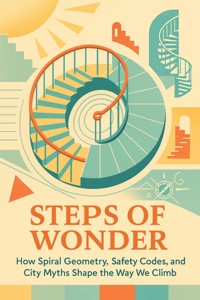
From winding towers to tucked-away courtyards, staircases have always invited more than footsteps—they invite imagination. Steps of Wonder is an uplifting journey through the fascinating world of stair design, exploring the friendly intersection of safety, geometry, and storytelling that gives every set of steps its own charm. This isn't a book about forbidden danger—it's a celebration of how rules and creativity build beauty together. Whether you love architecture, urban exploration, or simply noticing the details of your surroundings, Steps of Wonder reveals how staircases quietly shape our lives and cities in ways both practical and poetic.
Sie lesen das E-Book in den Legimi-Apps auf:
Seitenzahl: 152
Veröffentlichungsjahr: 2025
Das E-Book (TTS) können Sie hören im Abo „Legimi Premium” in Legimi-Apps auf:
Ähnliche




















Table of Contents
Chapter 1: The Spiral’s Secret
The Allure of Spirals
The Geometry Behind the Beauty
Safety First: Designing with Care
The Art of Space Utilization
The Cultural Significance of Spirals
Chapter 2: Codes of Confidence
The Role of Building Codes
Understanding Key Regulations
The Intersection of Safety and Aesthetics
Positive User Experience through Design
Chapter 3: Myths in Motion
Stair Legends and Their Origins
The Allure of Forbidden Towers
Endless Steps: The Myth of the Infinite
Myths as Cautionary Tales
Chapter 4: Cities that Climb
The Charm of Iconic Staircases
Practical Designs for Public Safety
The Role of Art in Urban Staircases
Community-Driven Staircase Projects
Learning from Global Inspirations
Chapter 5: Designing Upward
The Art of Sketching Your Staircase
Building Miniature Models
Rethinking Steps for Your Home
Thinking Beyond the Home: Public Art and Staircases
Chapter 6: The Psychology of Ascent
Understanding the Climb
The Power of Anticipation
Rhythm and Repetition in Design
The Impact of Surroundings
Emotional Connections to Ascension
Chapter 7: Curves that Calm
The Allure of Curved Spaces
The Science of Curved Stairs
The Role of Light and Shadow
Cultural Perceptions of Curved Stairs
Designing Curved Stairs: A Practical Guide
Curves in Public Spaces
Chapter 8: Steps of Community
The Heart of Public Spaces
Case Studies of Transformation
Safety and Comfort in Community Spaces
Encouraging Creativity and Art
Chapter 9: The Intersection of Art and Safety
The Role of Artists in Safety Design
Geometry's Influence on Safety
Iconic Examples of Artful Safety
The Future of Safe Artistic Design
Chapter 10: Historical Perspectives
The Origins of Staircases
Renaissance Innovations
Industrial Revolution and Functional Design
Modernist Movements and Aesthetic Shifts
The Future of Staircase Design
Chapter 11: Building with Nature
The Essence of Biophilic Design
Eco-Friendly Materials
Incorporating Greenery
Enhancing Community Spaces
Chapter 12: The Future of Stair Design
Innovations in Staircase Materials
Automation and Stair Design
Sustainability and Energy Efficiency
The Role of Aesthetics in Future Designs
Chapter 1: The Spiral’s Secret
In this chapter, we explore the enchanting world of spiral stairs. Why do they captivate us? Their geometry seems to dance in the air, and their design illustrates balance and elegance. We'll discuss how architects use spiral geometry not just for aesthetics but also to create safe, welcoming spaces. Discover the fusion of art and science as we unlock the secrets of these captivating structures.
The Allure of Spirals
Spiral staircases are more than just functional structures; they are expressions of elegance and creativity. Their circular form draws the eye and invites exploration. Let’s examine what makes these stairs so captivating and how they ignite our imagination.
Their Shape Inspires Curiosity
Spiral staircases, with their unique circular form, create a visual magnetism that captures our attention. This compelling shape does more than facilitate movement; it invites exploration and wonder. The continuous flow of a spiral staircase leads the eye upward or downward, encouraging those nearby to engage with the space. The notion of an endless ascent or descent evokes a sense of adventure, stirring the imagination as one contemplates what lies at the top or bottom.
Moreover, the very act of climbing a spiral staircase becomes an experience akin to entering a storybook. Surrounded by fluid lines and sweeping curves, individuals often feel a connection between themselves and the structure. This emotional resonance is characteristic of well-designed spaces that transcend mere functionality, urging us to take a moment to appreciate every step and turn.
Historical Significance in Architecture
Spiral staircases have woven themselves into the fabric of architectural history, gracing structures from ancient towers to modern homes. Historically, these elegant stairways have been prominent features in castles and cathedrals, where they served both practical and symbolic purposes. In these grand edifices, spiral stairs often represented a journey of enlightenment or authority, guiding visitors and residents through their sacred halls.
Moreover, architecturally, they exemplified advances in design and construction techniques over the centuries. From the intricate stone-carved stairs of medieval architecture to sleek, minimalist designs in contemporary homes, each iteration reflects cultural shifts and innovations in engineering. These historical connections highlight how spiral staircases endure, continuing to inspire modern architects while offering a glimpse into our shared architectural heritage.
Spirals in Nature and Design
The prevalence of spiral shapes in nature adds another layer to their allure in architecture. From the shells of snails to the patterns of galaxies, spirals are a recurring theme found in the natural world. This organic geometry resonates with us, making spiral staircases feel more harmonious and inviting. When architects incorporate these natural forms into design, they create environments that echo the beauty of the world around us.
Designers often draw inspiration from these natural models, utilizing spirals to achieve balance and fluidity. Emphasizing soft curves can quell harsh lines and rigid structures, promoting a sense of calm among users. This symbiosis between nature and man-made structures enhances architectural aesthetics, making spirals beloved elements in both public and private spaces.
Psychological Appeal of Curved Forms
Curved forms, such as those found in spiral staircases, often elicit positive psychological responses. Unlike straight lines, which can feel harsh and confining, curves create a sense of openness and flow—qualities that are inherently more inviting. Research in environmental psychology suggests that individuals feel more relaxed and comfortable in spaces that incorporate gentle curves, making spiral staircases particularly appealing in public and residential designs.
The graceful ascent provided by a spiral staircase may also help mitigate anxiety associated with heights or confined spaces. The continuous curve allows for gradual transitions, drawing attention away from potential discomfort. As a result, these staircases not only serve a functional purpose but also enhance the user experience, promoting an emotional connection that encourages exploration and enjoyment of the journey.
The Geometry Behind the Beauty
Geometry is the heart of spiral staircase design. The intricate math behind these structures creates not only beauty but also stability. Understanding these geometric principles enhances our appreciation of their craftsmanship.
The Golden Ratio and its Application
The Golden Ratio, approximately 1.618, has fascinated artists and architects for centuries. In spiral staircase design, it serves as a guiding principle for achieving aesthetic harmony. When applied to the proportions of the staircase—such as the width of the steps to their rise and run—this ratio creates a visually striking form that is both comfortable and inviting. By aligning aspects of the design with this mathematical ratio, architects create a sense of balance and unity.
Moreover, using the Golden Ratio can also enhance the experience of ascending and descending the staircase. Since our eyes are naturally drawn to this pleasing proportion, it can influence how we perceive the space as we move. Thus, integrating the Golden Ratio into the design process captures not just beauty but provides a subconscious sense of peace and order, elevating the functionality of the staircase beyond mere steps.
Balancing Tread and Rise for Safety
In designing spiral staircases, the balance between tread and rise is crucial for ensuring user safety. The tread refers to the horizontal part of the step where one places their foot, while the rise denotes the vertical distance between steps. A well-calibrated ratio of tread to rise ensures that users can ascend and descend the staircase comfortably without feeling unstable.
Standard guidelines often suggest a rise-to-tread ratio of 1:2, which has been shown to create a natural rhythm that the body instinctively follows. By adhering to these proportions, architects enhance the safety of the design, creating a step that feels secure underfoot. This thoughtful balance between safety and aesthetics reinforces the harmony of the spiral design, making it a favorite in both private homes and public structures alike.
How Curves Manage the Flow of Movement
The inherent curves of a spiral staircase not only contribute to its visual appeal but also play a significant role in the flow of movement. Curved designs are known to guide the user’s direction naturally, creating a smooth transition between each step. Unlike straight stairs, where one may feel a sudden stop, spirals allow for a gradual and engaging ascent or descent.
This fluidity fosters a sense of comfort and ease as individuals navigate the space. Furthermore, the gentle curves provide opportunities for interactive design elements, such as handrails that follow the staircase’s path, reinforcing safety while enhancing aesthetic appeal. Thus, the curvature of spiral staircases can be seen as an ingenious method of integrating form and function, making them not only beautiful but also practical.
The Importance of Eccentric Circles
Eccentric circles play a pivotal role in the design of spiral staircases, creating the structure’s unique and enchanting shapes. By offsetting the center of the circle, architects can develop stairs that spiral around a central void or column, adding depth and dimension to the design. This eccentricity allows for more creative freedom, leading to breathtaking formations that can transform a mundane staircase into a sculptural element.
Additionally, the use of eccentric circles enables varying widths of stair treads as one moves up or down, accommodating better foot placement and improving safety. This thoughtful planning not only enhances the staircase’s functionality but also enriches the user experience, encouraging exploration and interaction. Ultimately, the incorporation of eccentric circles exemplifies how mathematical principles can unlock the artistic potential of architectural designs.
Safety First: Designing with Care
While elegance is crucial, safety is paramount. Modern architectural guidelines ensure that spiral staircases offer a secure experience while maintaining their enchanting appeal. Let's explore these vital safety considerations.
Handrails: A Must-Have for Protection
Handrails are not just an aesthetic addition to spiral staircases; they serve as a pivotal element of safety. Their primary function is to provide support and stability, guiding users safely up and down the stairs. A well-designed handrail offers a secure grip for anyone using the staircase, reducing the risk of accidental slips or falls.
In addition to functionality, handrails contribute to the overall design language of a staircase. Architects often choose materials and finishes that enhance the spiral's elegance while ensuring robustness. Guidelines typically dictate handrail height and design, promoting accessibility for all users, including children and the elderly.
When placed strategically along the ascending path, handrails can transform the user experience, turning a potentially daunting ascent into a confident climb. As such, they represent the harmony between safety and beauty, allowing architects and designers to fulfill their dual commitment to form and function.
Understanding Tread Depth and Rise Ratios
The relationship between tread depth and rise ratios is fundamental to creating a staircase that is both safe and comfortable to navigate. Tread depth refers to the horizontal part of the step, while the rise ratio indicates the vertical height between steps. Balancing these elements is crucial for user safety during both ascent and descent.
Modern guidelines recommend specific measurements to optimize this relationship, ensuring each step feels natural. Well-balanced ratios minimize the risk of tripping and encourage a smooth, confident movement. A comfortable tread depth allows users to position their feet securely, while an appropriate rise ensures that climbing feels effortless rather than strenuous.
The science behind these dimensions reveals how careful considerations in design can create an inviting experience. When done right, the combination of depth and rise enhances the overall aesthetic of spiral staircases, marrying safety with a unique visual appeal that captivates the spirit.
Compliance with Building Codes
Adhering to building codes is essential in the design of spiral staircases, as these codes encapsulate decades of research into safety and accessibility. Compliance ensures that staircases are constructed to withstand everyday use while providing a secure environment for users. Building codes typically outline important specifications related to rise heights, tread depths, and handrail designs.
When architects design spiral stairs, they must navigate local building regulations to ensure every aspect meets safety requirements. These codes are not merely restrictions; they create frameworks that guide innovation. Designers can explore unique shapes and materials while remaining grounded in safety principles.
By understanding and applying building codes, architects transform potential constraints into opportunities for creativity. This compliance informs aesthetically pleasing designs and safeguards users, highlighting the delicate balance between imaginative ambition and responsible architecture.
How Safety Enhances Design Innovation
Far from stifling creativity, safety regulations can inspire innovation in architectural design. Embracing safety as a core component allows architects to think imaginatively and develop cutting-edge solutions that fulfill user needs. This spirit of innovation often results in unexpected yet engaging stair designs that surprise and delight the user.
For instance, designers may use unconventional materials for handrails or experiment with tread shapes that enhance grip and stability while adding visual interest. When safety measures are integrated as design principles, the staircase becomes more than a structural necessity—it becomes an art form.
Additionally, the limitations imposed by safety codes can spark ideation, challenging architects to devise unique approaches that prioritize both risk reduction and aesthetic elegance. Such synergy between safety and design fosters an environment where creativity flourishes, giving rise to beautiful staircases that serve their purpose as functional art.
The Art of Space Utilization
Spiral staircases offer unique opportunities for utilizing space efficiently, especially in urban settings where every square foot counts. Learn how designers implement these designs to optimize spaces.
Maximizing Vertical Space in Small Areas
Spiral staircases excel in transforming limited vertical space into functional design. In compact urban environments, where every inch counts, their cylindrical shape allows for a minimal footprint while providing essential vertical movement. Unlike traditional staircases, which may require extensive landing areas, spirals ascend elegantly with a series of tight turns, inviting creativity in architectural design.
Moreover, maximizing vertical space goes beyond just saving area; it enhances the aesthetic appeal of the environment. By incorporating spiral staircases into nooks or corners, designers can create signature features that draw the eye upward, adding layers of visual interest. This dynamic use of space encourages homeowners and architects to rethink conventional layouts, fostering innovative solutions that balance beauty and practicality.
Integrating Stairs into the Overall Design
Integration of spiral staircases within the overall architecture is vital for visual and functional harmony. A well-thought-out design connects the staircase seamlessly with surrounding elements like walls, windows, and ceilings. This ensures that the staircase doesn’t merely serve as a functional pathway but as an integral component of the interior or exterior landscape.
For instance, when a spiral staircase is wrapped in a glass balustrade, it not only provides safety but also allows natural light to flow, enhancing the space’s openness. By considering materials and colors that echo other design elements throughout the building, architects can create a cohesive look. This thoughtful integration enhances user experience, reflecting a commitment to both aesthetics and utility.
Creating Multi-Functional Environments
The versatility of spiral staircases extends beyond mere transportation; they can be pivotal in creating multi-functional environments. In urban design, where space usage has to be optimized, these staircases can serve as features that double as storage, seating areas, or even art installations. By incorporating functional elements into the staircase design, architects can maximize the usability of every square foot.
Such versatility can transform a simple staircase into a gathering spot or a display area for plants, art, or books. This multi-functionality not only makes spaces feel more vibrant but can also adapt to the evolving needs of occupants. As life in urban areas continues to change, spiral staircases will play a vital role in flexible and dynamic living and working spaces.
Adapting Designs for Various Architectural Styles
The beauty of spiral staircases is their adaptability to a variety of architectural styles. Whether in a modern minimalist home, a rustic cabin, or a classic Victorian building, these staircases can be designed to enhance the unique characteristics of each setting. Architects often customize materials, finishes, and details to ensure the staircase complements the existing structures while maintaining its functional integrity.
For example, a sleek metal spiral staircase can add a contemporary flair to an industrial loft, while a wooden version with intricate carvings might complement the elegance of a traditional home. This adaptability allows for personal expression while ensuring that the staircase harmonizes with its surroundings, underscoring its role not only as a means of transit but also as a focal point in diverse architectural narratives.
The Cultural Significance of Spirals
Spiral staircases often symbolize a journey or transition. Their designs can reflect cultural values and convey significant meanings. Let’s delve into the stories behind these remarkable structures.
Spirals in Mythology and Symbolism
Spiral shapes have long been prominent across various mythologies, transcending culture and geography. In many traditions, spirals symbolize life's cycle, continuity, and growth. For instance, ancient Celtic art frequently incorporated spirals, representing the connection between the physical and spiritual realms. Similarly, the spiral is a motif in Greek mythology, often seen in the form of the labyrinth where a journey culminates in self-discovery.
The enduring presence of spirals in myths often signifies a path of transformation, reflecting the journey from chaos to order. This rich symbolism extends into architecture, where spiral staircases serve as structural elements that embody these metaphysical characteristics. They invite us to ascend or descend, echoing the vital journey of life itself, while encouraging us to embrace change with every step we take.
Cultural Variations in Spiral Design
The spiral staircase has seen diverse interpretations and significance across cultures. In Asian architecture, spirals often signify harmony and balance, reflecting the principles of Zen design. For example, traditional Japanese houses integrate spiral elements to create fluid transitions between indoor and outdoor spaces, enhancing tranquility.
In contrast, Baroque architecture showcases grandiose spiral staircases that symbolize opulence and power. These elaborate designs, often found in cathedrals and palaces, allow for dramatic ascents, leading to a heightened sense of arrival. By examining these cultural variations, we see how the essence of spiral stairs adapts, embodying the social and aesthetic values unique to each society, while reinforcing a common thread of connection through form.
Celebrating Identity through Architecture
Spiral staircases often serve as powerful statements of cultural identity and regional pride. For many communities, unique spiral designs evoke a sense of belonging and continuity. In places like Italy, ancient stone spiral staircases reflect the historical narrative of craftsmanship that has been passed down through generations, marrying functionality with artistic expression.
Moreover, contemporary architects often draw on spirals as symbols of hope and resilience, reflecting local heritage in modern designs. Projects that incorporate spiral elements invite public engagement, encouraging individuals to explore spaces that are infused with community stories. Thus, these structures not only advance our physical journey but also create bridges connecting us to our cultural past and identity.
Stairs as Metaphors for Life's Journey




