


8,99 €
Mehr erfahren.
- Herausgeber: neobooks
- Kategorie: Sachliteratur, Reportagen, Biografien
- Sprache: Deutsch
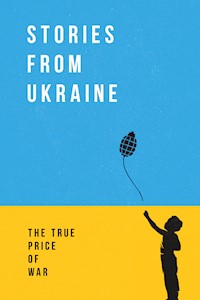
Stories from Ukraine: The True Price of War is a compilation of eighteen stories written by Ukrainians from a first-person perspective, providing an unflinching look at the human impact of the war in Ukraine. The authors were given full freedom to write whatever they wanted, without any instructions or rules. As a result, the book gives readers a glimpse into the realities of war and its effects on those who have lived through it. Capturing the raw emotions, fears, anxiety, and patriotism that surrounded that fateful day, these personal stories offer a unique perspective on the war, one that is not presented in the news media. Through these stories, readers will gain a greater understanding of the human cost of the events in Ukraine and the lasting consequences of these atrocities. Stories from Ukraine: The True Price of War reveals the individual stories of numerous brave Ukrainians, their accounts from the morning their lives changed forever, and the harrowing days that followed.
Das E-Book können Sie in Legimi-Apps oder einer beliebigen App lesen, die das folgende Format unterstützen:
Seitenzahl: 267
Veröffentlichungsjahr: 2023
Ähnliche



















STORIES FROM
UKRAINE
The True Price of War
Copyright © 2022
Bartosz Popko
Stories from Ukraine
The True Price of War
All rights reserved.
No part of this publication may be reproduced, distributed, or transmitted in any form or by any means, including photocopying, recording, or other electronic or mechanical methods, without the prior written permission of the publisher, except in the case of brief quotations embodied in critical reviews and certain other non-commercial uses permitted by copyright law.
Bartosz Popko
Warsaw, Poland 2022
E-mail: [email protected]
Printed Worldwide
First Printing 2022
First Edition 2022
ISBN: 978-83-966235-1-5 (paperback)
ISBN: 978-83-966235-2-2 (ebook)
10 9 8 7 6 5 4 3 2 1
Proofreading: Sara Lubratt
Cover design: Emir Orucevic
Introduction: Samantha Whaley
Table of Contents
Introduction
Note from the Publisher
Prologue: Russia's War Through Different Eyes
Through the Eyes of Civilians
Through the Eyes of the Military
Through the Eyes of Volunteers
War and Dreams
We Are Not Underdogs
I Miss My Simple Life
Living in the Subway
Such an Unnatural Silence
Leaving a Country Behind
We Did Not Fall in Ninety-six Hours
This Is Not A Movie
Coming Home for the Fight
Life Under Russian Occupation
From Ukraine to Switzerland
Let Me Tell You Something
Sound of Missiles
There Is No Time for War
Silent Victims
My Inner Battle
Wake Up
If You Want to Help
Authors
Introduction
A
fter two long years of enduring the COVID-19 pandemic, it finally seemed like things were beginning to improve. Then came the reports that a major conflict was brewing, and 2022 began with the prospect of a large-scale war in Europe. While Putin defended his deployment of tens of thousands of troops to the Ukrainian border as mere military exercises, governments worldwide were alarmed that the tactics could be a precursor to an invasion of Ukraine. By February 2022, there were as many as 190,000 Russian troops along the Russian-Ukrainian border, in Belarus, and in Russian-occupied Crimea.
On February 21, 2022, President Vladimir Putin gave a notable speech laying out a long list of grievances as justification for an upcoming “special military operation.” In the speech, Putin recognized the independence of the self-proclaimed people’s republics of Donetsk and Luhansk and ordered Russian peacekeepers into Ukrainian territory. Throughout Putin’s time in office, Moscow has pursued a policy toward Ukraine predicated on the assumption that their respective national identities are artificial, and therefore fragile, requiring Russian influence and support in the region. This is far from true.
Russia had been supporting the separatist movements in these Ukrainian territories since 2014, but the new accusations and movement of troops marked a dramatic escalation. Following the increase of troops, Western leaders announced a new wave of sanctions. In the three months prior to the invasion, everyone argued about whether there would be a war and whether Vladimir Putin was bluffing. Some of the Russia experts who had long told people to take it easy were now telling them to be worried. Others, who had long criticized Putin, said that he was simply trying to draw attention to himself, that it was all for show. Putin had always been cautious—the sort of person who never started a fight he wasn’t sure to win. But they were wrong.
In the days prior to the invasion, Ukrainian President Volodymyr Zelenskyy had made it clear that he did not want war. For better or worse, democracy was rooted deep in Ukrainian political culture. Still, the cultural and historical differences between the different regions of Ukraine would often surface in times of crisis. After the dissolution of the Soviet Union, Ukraine struggled to rebuild itself as a free country, but the people were determined and persevered through various political regime changes. As the years passed, Ukraine became stronger. In recent years, it has made enormous progress in consolidating a shared civic identity, making Ukrainian patriotism and national unity much more evident. Given the choice between fighting or surrendering to Russia, Ukraine has continuously decided to be a vision of change, resolved to fight for its right to freedom.
On the morning of February 24, Russian missiles hit military installations and civilian targets inside Ukraine, and Russian armored convoys crossed the border. Putin’s unprovoked attack was condemned by leaders around the world. Ukrainians, seeing Russian armored vehicles coming at them, didn’t freeze or back down. They didn’t wait to be told what to do. They united. They acted. They fought back.
The evidence from the past few months suggests that Russian calculations turned out to be wrong. Ukrainian resistance has already far surpassed what Moscow was expecting. Russian forces have suffered tens of thousands of casualties and failed in their initial objective of marching on Kyiv. Today, more than five million Ukrainians have fled the country, and thousands more have been killed or wounded. Yet Russia has failed to achieve any of its stated military objectives and has itself suffered significant losses of both troops and materiel.
Despite the fact that they did not want the war to begin with, the Ukrainians rallied and persevered because through the chaos, anguish, and turmoil, they communicated what they saw, what they were doing, and what they needed. They figured out how to obtain essential supplies and equipment, how to solve problems, how to make things happen. They united as a nation, and they fought back.
The contributors to this book have each been given a chance to tell their story of what happened that fateful day as well as in the aftermath. The narrative covers events up until early October 2022. Each author has experienced this war firsthand and lived through the days that followed. They have all seen the destruction that war can cause. They have all felt the fear that comes with being in the middle of a war zone. They have all had to make split-second decisions that could mean life or death. And they have all had to live with the consequences of those decisions.
Readers will have a front-row seat to the events as they unfolded, through the eyes of those who lived it. These personal stories provide an intimate look at the human cost of war and remind us that behind every statistic is a real person with a story to tell. From interviews in the Ukrainian refugee camps, to a soldier on the front line, to families living in a subway, to broken dreams of successful professionals, to personal thoughts on how the war began, these are their stories. These are their memories of that calamitous day. These are their thoughts and feelings about what happened and what it means for their country. They need to be heard.
Note from the Publisher
M
ore than thirty people worked on this book. Most of them are Ukrainians.
The contributors to this book were given complete freedom to write whatever they wanted without any instructions or rules. Each opinion or political interest is expressed as the author’s personal view. We made an effort to keep the individual authorial voices in the original style as much as possible, mainly correcting significant issues regarding diction or punctuation and making improvements to the flow of the stories. Therefore, some minor language errors may be found in the content.
The stories were written between August 2022 and October 2022. As you read this book, the war in Ukraine may be at a different stage, but the emotions and suffering of these people remain. Some characters’ names have been changed to maintain their privacy and anonymity. The exceptions are persons whose first and last names appear.
Prologue: Russia's War Through Different Eyes
T
here was a power outage in the village, a rocket hit the neighbors' house. Later, the occupants started shelling the yard and outbuildings. They did not shoot at the house—maybe because they were adequate [sic]. But the neighboring family was shot dead.
This text was written by a local journalist. We managed to contact him through a branch of the press office in Poland.
Through the Eyes of Civilians
The third stage of the Russian-Ukrainian war began on February 24, 2022 with the entry of a column of Russian tanks into the territory of the Donetsk region at 3:40 a.m. and the invasion from the occupied Crimea at 4:00 a.m. It was a full-scale invasion. In the morning, the Russian offensives from other directions, in particular from Belarus, became known. Immediately after Vladimir Putin announced a "special military operation", Russian troops shelled dozens of peaceful Ukrainian cities. Just like that, without declaring war, while people were sleeping in their homes. Millions of Ukrainians woke up to the sound of Russian planes in the sky and rocket attacks. For many, this horror has been repeated every day for more than half a year, some were forced to leave their homes, and for some, a new day may never come. We’ve collected stories of ordinary Ukrainians about their lives during the war.
In Anticipation of War
"At 3:00 in the morning my daughter and I arrived by taxi at the Kyiv Boryspil airport—in about an hour and a half we had to board the plane to Egypt," Iryna from Kharkiv recalls this terrible day. "On February 23, in the morning, my husband and I sat down to breakfast in silence, because we understood that we had to make a decision—our intuition whispered to us that trouble would soon come. So we bought a ticket online for me and the child, first to Kyiv and then to Egypt. We decided that if the war, which everyone was talking about, doesn’t start, we’d at least be able to relax at the sea. However, instead of the beaches of the Red Sea, we waited for long days on the road to the border with Poland, and then life away from home and husband. We didn’t even have time to board the plane: all flights were canceled—the sky was closed, the war began. I don't even want to remember how we got to Lublin and then to Wroclaw. Probably every mother who evacuated with children in those days knows that it was a horror. Now we are safe, but it’s not known when we will be able to return to Kharkiv, because Russians bomb it every day. The husband and his colleagues work in the office relocated to Ternopil. Our apartment in Kharkiv seems to be still intact, but I understand that at any moment we may not have a home, and this is a terrible feeling."
Life Under Occupation and Escape
Despite desperate resistance, Russian troops occupied and hold a part of the territories along offensive lines. In particular, Mariupol has been under occupation since February 28. The city, which in 2014 was captured—but not held—by separatists, with the help of Russians, was subjected tomerciless bombing. According to Russia's plans, this ‘strategic point’ had to be captured at any cost. Many Mariupol residents were unable to leave the city in time and were forced to survive inhuman conditions. One of the residents of the city kept a diary from February 24th and later published it on Twitter, describing how communications and connection gradually began to disappear, how she had to live in the basement, and how she managed to leave the occupied territory. Below are some excerpts from her diary.
"Day 1: Woke up at 6:14... Started packing. First shelling of the airport, sirens... second shelling.
Day 4: The first explosion near us. In the evening the power went out. We spent the night at home in jackets.
Day 8: First day in the basement. The explosions are getting louder. It was so loud that my ears hurt.
Day 12: We decided whether to go to another place. We gathered under the shelling. On the way we prayed, everything was broken and on fire.
Day 14: Shelling of our area. They [Russian military] were just driving around and shooting at houses. It hit our garden. Only the door remained from the garage.
Day 17: There is not a single whole house left on the street and, apparently, in the whole city. Shells are flying, we are not even hiding anymore.
Day 22: People leave the city on foot—just to escape.
Day 26: Checkpoints happened constantly, cars were pushed to them to save fuel. There were a lot of broken vehicles on the way. When an APC and two tanks passed by, I thought it was the end. In Zaporizhzhia I restored everything on my phone and switched to Ukrainian."
According to the girl, she had to carefully prepare for the escape: hide all expensive things, sew money in underwear, "clean" and switch the phone to Russian.
Alina also shared her story from Mariupol. In the city, Alina and her husband had a good job, built and furnished a house, even managed to invite friends to visit in the spring. Her son, a fourth grader, was waiting for his graduation from primary school. The city itself had also developed significantly over the past few years. Now Alina and her son live in Germany, and her husband helps in Ukraine. Grateful for the shelter, the mother and son dream of returning to Ukrainian Mariupol. However, the city remains under the control of the occupiers, and the self-proclaimed authorities are in no hurry to restore it. The so-called aid is not enough, and those who could not leave are forced to live in ruins. At the end of August, it became known about87,000 dead in the morgues of the city. This figure is not final, because many victims of Russian war criminals remain in mass graves, yards, parks, and under the rubble of destroyed buildings.
Refugees and Internally Displaced Persons
Because of the war, millions of Ukrainians were forced to go abroad, or as far away from the front as possible. At the beginning of the full-scale invasion, the regional centers of the western regions often worked at the limit of their capabilities, providing assistance to all in need. On his way to Poland, 15-year-old Ivan from Kyiv region stopped in Lviv for a short rest. The boy talks about how he dreamed of working as an agronomist, and how the Russian occupiers destroyed this dream.
"There was a power outage in the village, a rocket hit the neighbors' house. Later, the occupants started shelling the yard and outbuildings. They did not shoot at the house—maybe because they were adequate [sic]. But the neighboring family was shot dead."
Ivan's brother at that time was helping with humanitarian aid, his sister went abroad, and his father stayed at home with a rifle. The guy, like most refugees, had a long way ahead. In the early days of the war, people waited in line at the border for days—without supplies, in the cold, uncertain about the future. Children were sick, frightened adults were even more exhausted. Volunteers came to help: Ukrainians, Poles, citizens of other neighboring countries. Everyone tried to provide the necessary assistance. Generators were brought to the checkpoints, heated tents and lighting were installed. A lot of help came from Poland, including clothes and food.
Strong Because We Are United
Deadly missiles, endless military equipment, and more than two hundred thousand occupants did not make Ukrainians surrender. Today, everyone is doing everything possible to speed up the victory, and many refugees have already managed to return to their homeland. Having organized themselves, the people of Ukraine defend their freedom. We tell real stories of people to support this struggle and counteract the hostile Russian propaganda.
Through the Eyes of the Military
On February 24, the whole of Ukraine was under the gun of the Russian army. The invasion came from the territory of the Republic of Belarus, the Russian Federation, the occupied part of the Luhansk region, as well as from the occupied Crimea. Thus, the front line stretched for 2500 km. On the first day of the war, the Russian occupiers took control of the Chornobyl nuclear power plant, including the exclusion zone. In the south, Russians shelled and captured Zmeinyi Island, approached Kherson and Melitopol. Simultaneously, there were attacks on the eastern and northeastern directions. Ukrainians were forced to act: to take up arms, to negotiate in an emergency mode with suppliers of equipment, machinery and weapons, to go to safe places.
Army and Mobilization
The Ukrainian military have performed a miraculous feat, stopping a Russian army of thousands and convoys of military equipment several kilometers long, continuing to do so for over six months. Maksym, an officer of the Armed Forces of Ukraine from Lviv, says that the most difficult thing was to prepare the military for the reality they would have to deal with. However, already at the front, despite constant shelling and exhausting battles, Maksym's unit repels the aggressor.
"There are wounded, but most of them will return soon. We are confident that sooner or later we will be able to defeat the enemy. At some point the Russians will run out of equipment, and without it they will not be able to do anything."
Among the Ukrainian military there are many volunteers from different regions of Ukraine, of different ages and professions. Some joined the army immediately, others joined the Territorial Defense Forces. In the occupied regions of Ukraine and Crimea, a rather large-scale guerrilla resistance movement immediately unfolded. Collecting stories of the military is a real professional challenge for journalists, because talking to the press is usually the last thing they want to do now, during the war. Despite this, we managed to talk to some of the Ukrainian heroes.
Roman is a history teacher, journalist, and after February 24, a volunteer and combatant in the Territorial Defense Forces. On March 2, Roman began preparing to perform tasks in the combat zone. Like most of his comrades, the man had no military experience, but this did not stop him from fulfilling his duty.
"At first, we trained at the training ground. After that, we were sent to Donetsk region. It was hard to overcome fear, but even harder to lose friends and comrades. Many good fighters were killed," the serviceman said.
During the war, Roman's old leg injury was aggravated, and he had to take painkillers, eventually returning for treatment. However, not only the military but also ordinary Ukrainians are killed and injured. The terrible events in Bucha, Irpin, Mariupol and other occupied cities and villages of Ukraine claim the lives of tens of thousands of civilians. And the Russian policy of destruction of the Ukrainian language and culture, combined with propaganda, has reached catastrophic proportions.
"Everyone sees that this is genocide, that Putin wants to destroy Ukraine. Therefore, we have no other choice but to win," Roman concludes.
Ukrainian Heroes
Despite the invincibility and high morale of Ukrainian soldiers, the war takes lives. In May, 100 Ukrainian soldiers were killed in one day. On August 22, Valeriy Zaluzhny, Commander-in-Chief of the Armed Forces of Ukraine, reported about almost 9,000 fallen heroes. Widow Olena tells about her husband, "cyborg" Vladyslav.
"We had a lot of plans. Vlad's contract was about to expire. After February 24, he came home for the first time in June. Shortly after his departure, we celebrated the birthday of our daughter, 7 years old. Vlad called, congratulated me... But he never saw the photos from the holiday that I sent him. It was hard to hold back tears, I cried and screamed. My daughter immediately understood everything, started to calm me down..."
Olena did not believe in the death of her husband until the moment she was given his wedding ring. The younger daughter of the hero celebrated her first birthday on her father's grave.
Not only men risk their lives for the victory of Ukraine. Today, more than 57,000 women serve in the Armed Forces together with volunteers of territorial communities, almost 32,000 of whom are in the combat zone. Ukrainian media regularly tell the stories of women warriors to the public. These are, in particular, theICTV Facts project, which collected the stories of 12 military girls, theTSN project "Women in the Armed Forces: Ukrainian beauties who took up arms and ‘poured’ to the occupiers", as well as the special project of the Ukrainian edition ofELLE "Women at the Front".
"I come from a military family. My father is at the front now, and I have been a career serviceman since 2014, when Russia launched military aggression against our country," says Svitlana from Ivano-Frankivsk. "The first loss of my friends shocked me and I also rushed to the front in 2014. Although we can say that the war for me began with the Maidan, because among the Heavenly Hundred is my close friend... Now I am defending Ukraine in one of the brigades of the Ukrainian army. Ukrainian women do a lot for our victory not only at the front, but also in the rear, and only together can we defeat the enemy!"
"Ukrainian women are not only victims of war. They are fighting on all fronts along with men," First Lady of Ukraine Olena Zelenska said in an interview with the media of the Republic of Korea. And this once again proves to the world that Ukraine is a modern country with democratic values, for which Ukrainians are ready to fight to the last drop of blood, to victory.
Through the Eyes of Volunteers
On February 24th, Ukrainians woke up with an understanding of the need to unite and help the Armed Forces of Ukraine for victory. The wave of volunteering began with donations to the army, and later covered humanitarian issues. The initiative was joined by Ukrainians abroad, temporarily displaced persons, ordinary citizens from different parts of the world and entire states. Very quickly, the Ukrainian volunteer movement spread all over the world, as assistance to Ukraine became a symbol of the struggle for freedom and human values. In this article, we have collected stories of people who are engaged in volunteer activities at different levels and help Ukrainians bring victory closer.
Volunteer Movement
The volunteer movement gained large scale support in Ukraine back in 2014-2015. Then the revolution of Dignity had just ended, Russia occupied Crimea and launched an invasion of the Donbas, and resources were very limited. In response to these challenges, a circle of people formed who became volunteers to provide the military with equipment, weapons and other necessities.
After February 24, 2022, there was a kind of revival and scaling of this movement, in accordance with the number of mobilized military personnel and the pressing threat. Nikita Perezichny, now the head of the NGO "Voda", says that he had never volunteered before and did not plan to do so. However, the war adjusted his plans.
"I have a friend at the front. I once offered to help him with the equipment, but he wrote that he had everything, and sent the contacts of another military man who needed it. And already from him and his commander I received a list for half a million hryvnias. The joint efforts of friends managed to raise part of the amount, but it was obvious that for such purposes it was necessary to increase the reach. This is how our organization was created. We try to fulfill smaller requests, which large funds—such as "Come Back Alive" or The Foundation of Sergey Prytula—do not cover. In the first month of the war, there were many requests for equipment. Bulletproof vests from Europe had to be bought more expensively, and, for example, mittens could be of worse quality, but at that time it was better than nothing. The issues of thermal imagers and night vision devices are always relevant."
For half a year, Nikita became convinced that Ukrainians are ready to help each other even in such difficult conditions.
Another aspect of volunteering is helping civilians. Andrey—a fitness trainer from Kiev, a father and a volunteer with experience—took the family abroad, and returned to help the residents of the Kiev region. Under the shelling, a volunteer and his friends carried food, supplies, and took people out.
"On March 5, we came under fire, and after it we were all surrounded. But, fortunately, the Marines came to the rescue. We were quickly taken out, so it cost only six lost cars, a friend's leg injury and other minor injuries. The next day, we continued to evacuate. It's a pity that it's impossible to help everyone."
United for Victory
According to a survey conducted by Ilko Kucheriv's "Democratic Initiatives" Foundation, 57% of Ukrainians from the center and west of the country have joined volunteering or charity, while 11% still plan to do so. Ukrainians are engaged in volunteer activities both within the framework of initiatives of companies and organizations in which they work, and outside of work. "In the beginning, our team united spontaneously. On weekends, two colleagues and I regularly took food and medicine to Kharkiv, and on weekdays we collected money among friends and colleagues, bought and packed the necessary things. Finding fuel wasn't easy at the time, so we never knew if we could go with help on Saturday or not. But in most cases, we found a solution," says Alexey, an employee of a Kiev IT company.
"From the very beginning, my team and I decided to help with what we can do best—feed people," Irina, the owner of a restaurant in Chernihiv, shares. "So we started cooking regularly for the local Territorial defense. There was a period when there were enough funds, but there were problems with the logistics of products. When the products ran out, our customers and friends came to the rescue, as well as people who had read about our initiative on social networks. Therefore, when, for example, the grandmother of our bartender Igor gave us cabbage and sugar from her own stocks so that we could feed our defenders, it was clear that we could not be defeated, because every Ukrainian does everything and even more to support the military.”
When Russian missiles from the Black Sea began to hit Odesa, 38-year-old Ekaterina and her two teenage sons left for Germany. "I lost my job in the first days of the war, so I had plenty of time to volunteer," she says. "I coordinated the purchase of necessary things for military personnel through my sister, who lives near Cologne. There was an urgent need for various equipment—from bulletproof vests to shoes. We handed over the purchased items to the military on the Southern Front in the Kherson and Mykolaiv regions. When the rocket attacks became very frequent and my sons and I decided to go to my sister's house, I already understood what I would do in Germany. Now I continue to coordinate the purchase of necessary things, a list which we receive from our brothers on the front."
Charity Foundations
From February 24 to June 30, 2022, 4,365 civil society organizations were registered in Ukraine (according to the Center for democracy and the rule of law (CEDEM), received from the Ministry of Justice of Ukraine). Among them are charitable foundations of various scales, which were joined not only by professional fundraisers, but also by people for whom such work has become a new experience. Large Ukrainian businesses initiated the creation of their own funds, while medium and small businesses joined the large funds that were formed before and during the full-scale war. The state, for its part, adapted a number of laws to develop the activities of non-profit organizations. So, for example, if a volunteer receives compensation for travel expenses or medical examinations, this money is not considered their income. Accordingly, the volunteer does not pay taxes on them—personal income tax and ERU. The same applies to training in pre-medical care, psychological adaptation, or working with PTSD.
To be sure that your donations will actually be received by volunteers and sent to help those who need it, you should listen to basic advice and transfer funds only to trusted volunteer organizations that have official accounts with the National Bank. Transparent foundations control the process of purchasing, receiving and transferring equipment/assistance, collect and store all acts and documents, publicly report on their work, and post photo and video reports. You can find the necessary information and view reports on official websites and social media pages.
During the six months of Russia's war against Ukraine, a number of foundations have been formed that have earned the trust of both Ukrainians and foreign benefactors. Among them are the above-mentioned foundation for competent assistance to the army "Come back alive" and The Foundation of Sergey Prytula, as well as United 24, KSE Foundation, Kolo, Future for Ukraine and many others.
Though victory depends on many factors, the motivation and unity of Ukrainians and the whole world certainly help to bring closer the day when peace will come to Ukraine.
War and Dreams
War, oddly enough, leads not only to catastrophic consequences. To some extent, we can even thank it for some things. For the fact that we become completely new people and discover new facets and skills in ourselves.
Taras Romashchenko Ph.D
W
ar is about ugly deaths, horrific injuries, unimaginable suffering, numerous destructions, but not only. It is also about the destruction of the most cherished or everyday dreams of those who are killed, as well as of those who, despite all the horrors and challenges of war, eventually survive.
Before Russia's unprovoked full-scale attack on Ukraine in February 2022, each of millions of Ukrainians had their own dreams and aspirations. The author of these lines also had them, but the war made its insurmountable adjustments to the plans. However, first things first...
When guns speak, science will wait!
Have you ever thought about what an ambitious scientist and, at the same time, a teacher dreams of in modern Ukraine? Probably everyone who is involved in the academic sphere in our country will have their own answer to this question. Someone will put in the first place a noticeable increase in wages as a necessary material basis for future professional achievements. And he will be right, because, unfortunately, during all the years of independence, the attitude of the state to scientific and pedagogical staff in this matter leaves much to be desired. For some, the priority is the opportunity to work fruitfully with indifferent or, if lucky, gifted students, to pass on their knowledge every day and see how future professionals are being formed before your eyes—talented managers, engineers, economists, doctors, programmers, and other specialists in their field.
At the same time, I am convinced that, answering this question, there will be many who associate their ambitions in the scientific and pedagogical field primarily with the possibility of constant and comprehensive professional growth and self-improvement. Scientists (teachers) are undoubtedly creative people. And true creativity, as you know, does not recognize any restrictions, and strives for new challenges and horizons. To achieve such horizons in the field of academic life allows, among other things, cooperation with representatives of foreign scientific circles—like-minded people from leading universities or institutes of Europe and the world.
I belong to the latter category, especially about international cooperation in academic and other spheres. There are several logical explanations and, if you like, prerequisites for this. First, there were diplomas with honors on obtaining higher education as a specialist in Romance and Germanic philology. That is, English and German are not native languages for me, but very close and every day, especially the first one. Suffice it to say that at the university for foreign students I teach specialized economic disciplines in English, for many of whom this language is native.
Your humble servant was not limited to higher education and soon decided to radically expand his professional profile. As a result, he continued his postgraduate studies, after which he successfully defended his PhD thesis in the specialty—World Economy and International Economic Relations.




