


0,99 €
Mehr erfahren.
- Herausgeber: WS
- Sprache: Englisch
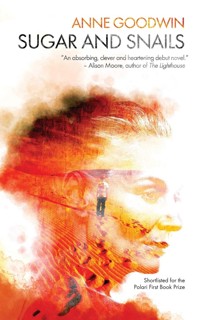
At fifteen, she made a life-changing decision. Thirty years on, it’s time to make another.
When Diana escaped her misfit childhood, she thought she’d chosen the easier path. But the past lingers on, etched beneath her skin, and life won’t be worth living if her secret gets out.
As an adult, she’s kept other people at a distance... until Simon sweeps in on a cloud of promise and possibility. But his work is taking him to Cairo, the city that transformed her life. She’ll lose Simon if she doesn’t join him. She’ll lose herself if she does.
Sugar and Snails describes Diana’s unusual journey, revealing the scars from her fight to be true to herself. A triumphant mid-life coming-of-age story about bridging the gap between who we are and who we feel we ought to be.
Das E-Book können Sie in Legimi-Apps oder einer beliebigen App lesen, die das folgende Format unterstützen:
Seitenzahl: 429
Veröffentlichungsjahr: 2015
Ähnliche

















Sugar and Snails
Anne Goodwin
Inspired Quill Publishing
Published by Inspired Quill: July 2015
First Edition
This is a work of fiction. Names, characters and incidents are the product of the author’s imagination. Any resemblance to actual events or persons, living or dead, is entirely coincidental. The publisher has no control over, and is not responsible for, any third party websites or their contents.
Sugar and Snails © 2015 by Anne Goodwin
Contact the author through her website:
http://annegoodwin.weebly.com
Chief Editor: Sara-Jayne Slack
Cover Design: Vince Haig
Find Anne on Twitter via @Annecdotist and use #SugarandSnails to tell us what you think!
All Rights Reserved.
No part of this publication may be reproduced or transmitted in any form by any means electronic, mechanical, photocopying, recording or otherwise, without the prior permission of the copyright owner.
Paperback ISBN: 978-1-908600-47-9
eBook ISBN: 978-1-908600-48-6
EPUB Edition
Inspired Quill Publishing, UK
Business Reg. No. 7592847
http://www.inspired-quill.com
Praise for Sugar and Snails
I loved this book. Sugar and Snails is beautifully written and a truly impressive debut by Anne Goodwin. It reminded me a little of Claire Messud’s The Woman Upstairs. The character of Di, at first frustrating, grows more endearing as you begin to understand her. Her friend Venus and lover Simon are well-drawn; there as foils to Di’s story. A beautiful and gripping read.
– Fleur Smithwick,
author of How to make a Friend
Sugar and Snails is a brave and bold emotional roller-coaster of a read. Anne Goodwin’s prose is at once sensitive, invigorating and inspired. I was hooked from the start and in bits by the end. Very much to be recommended.
– Rebecca Root,
actor and voice teacher
An absorbing, clever and heartening debut novel.
– Alison Moore,
author of Booker-shortlisted The Lighthouse
A very moving portrayal of how paralysing the shame of one’s identity can lead to lifelong isolation and secrecy. A gripping, compelling and moving read.
– Dr. Victoria Holt,
Consultant Psychiatrist
A probing debut novel and, like its protagonist, not what it first seems.
– Gavin Weston,
author of Harmattan
Vivid and visceral, Anne Goodwin’s debut novel provides an astute and fascinating portrait of a protagonist struggling with unusual demons.
– Victoria Best,
blogger, Shiny New Books
For the Coast-to-Coasters and old school friends, September/October 2008
Table of Contents
Cover
Title Page
Copyright Page
Praise for Sugar and Snails
Dedication
Chapter 1
Chapter 2
Chapter 3
Chapter 4
Chapter 5
Chapter 6
Chapter 7
Chapter 8
Chapter 9
Chapter 10
Chapter 11
Chapter 12
Chapter 13
Chapter 14
Chapter 15
Chapter 16
Chapter 17
Chapter 18
Chapter 19
Chapter 20
Chapter 21
Chapter 22
Chapter 23
Chapter 24
Chapter 25
Chapter 26
Chapter 27
Chapter 28
Chapter 29
Chapter 30
Acknowledgements
About the Author
About Gendered Intelligence
Chapter 1
Halfway down the stairs, I sink to my haunches and hug my dressing gown across my breasts.
Below me in the hallway, Simon reaches up towards the row of coat hooks. His hand hovers above the collar of his black fleece and then falls, combing the sleeve as his arm flops to his side. “This is ridiculous, Di. We should at least talk about it.”
Can’t he see this has gone beyond talking? “It’s late. You’ve got a long day tomorrow.”
“Come to Cairo, then. Whatever’s bothering you, I promise, I can help.”
“We’ve been through all that.”
“Yeah, and you’ve served up one feeble excuse after another. Don’t you trust me, Di?”
Staunch as sculpted granite, Simon exudes reliability from every pore. Over the past five months, I’ve imagined him sharing my duvet, my toaster, my council tax bill. On good days, I persuaded myself I could summon up enough maternal sentiment to play mother to his kids. After tonight, I can’t envisage a casual catch-up over coffee.
Yet Simon rattles on, as if hope were a virtue: “Come to Cairo, Di. Come for a long weekend if that’s all you can spare.”
If I could explain, if I could open my mouth to speak, even, he would come to me. He would spring up the stairs and cradle me in his arms. If I could cry, perhaps, as other women can, and let my weakness make him strong. But tears don’t come naturally to me: I haven’t cried for thirty years.
*
I’m sandwiched between my parents in the back seat of a taxi, crawling along the Corniche with the Nile to our left. I’m fifteen years old and this is my first and only foray out of Europe.
We’ve wound down the windows but there’s not even the promise of a breeze. The driver hits the horn with the heel of his hand. Every time he does it my mother flinches and he hits the horn almost as much as he curses other drivers, which is practically all the time.
My father fans his face with a tourist map of Cairo. “It’s not too late to change your mind,” he tells me. “We won’t think any less of you if you do.”
My mother breaks off from rummaging through her patent-leather handbag. “Honestly, Leonard, you certainly choose your moments.”
I try not to squirm on the tacky plastic seat. I’ve heard the quiver in my mother’s voice often enough, but I’ve never heard her call my father by his Christian name.
Our driver waves his fist and growls in throaty Arabic as he pulls past a camel cart weighed down with builder’s rubble. My eyes prickle, but I save my tears for later; crying is my mother’s prerogative after all.
*
The front door slams. I rise stiffly and stumble down the remaining stairs. Dragging my fingertips along the dado rail, I reach the kitchen and flick the light switch on the wall. I note the lustre of the sunshine-yellow cupboards and the chill of the tiles on my bare feet, but from a distance, as if I’m researching a stranger’s home.
I pull out drawers and rummage through the contents. I select my best knives and rank them by length along the worktop, the way a toddler might arrange her toys: breadknife; chef’s knife; carving knife; the whole gamut of blades, right down to the fruit and veg knife with the yellow handle, still smeared with dried threads of pumpkin from our supposed romantic meal. Pushing back my sleeve, I test each one against my forearm. None of them up to the job.
I fumble in the cupboard under the stairs for my torch and beam it around until it highlights an old shoebox stuffed with tools. The Stanley knife is a work of art in its simplicity, with its green plastic casing and satisfying heft in my hand. The blade seems sharp enough but it’s freckled with dirt-coloured paint. Taking a crossed-tip screwdriver, I unleash the blade and turn it over. The triangle of pristine steel peeping out from the sheath gives me an artisan’s sense of accomplishment.
My ears are abuzz with white noise as I push back the sleeve of my dressing gown to the crook of my arm. Flexing my wrist, the blood vessels reveal themselves below the surface like waterways on a map. The pads of my fingers trace a raised blue-green vein, from the middle of my forearm, through crossings of taut white scar tissue to the base of my thumb where it branches out with arteries and purple capillaries in a sanguineous river delta.
I locate a patch of clear skin amongst the tangle of old scars and apply the blade. At first there’s nothing more than a puckering at either side. As with sex, I’m sorely out of practice. I press harder, digging the tip of the knife so deep that by rights it should reach bone. Still nothing. Pressing harder still, a tiny red bauble bubbles at the tip of the blade.
Maintaining an even pressure, I scrape the knife along my arm. The bauble clones itself over and over, beads on a rosary that multiply and merge into a glistening red band. Dropping the knife, I bring my arm to my mouth: the vibrant colour, the taste of hot coins, the pain as sharp as vinegar spearing the fug of nothingness with the promise of peace. When Simon left, I was drowning. Now I’m floating on a sea of calm.
In the kitchen, I bind a folded tea towel round my forearm, gripping one end in my teeth to brace the knot. Secure as a swaddled baby, I mount the stairs to bed.
Somewhere between sleep and memory, regret sneaks in. The jab-jab-jab of guilt, the rumbling shame. Part dream, part reminiscence, I look down on my ten-year-old self sprawled on the bathroom floor. Blue pyjama bottoms draped across the rim of the bath, blood pooling between my legs onto the chessboard lino. My mother screaming What have you done? What have you done?
Now it’s my arm that’s screaming. My mind wants to dive into oblivion but my arm is pulsing me awake. Patting the pain beneath the bedclothes leaves my fingers sticky. The digital alarm shows three-seventeen.
Switching on the bedside light, I steel myself to push back the duvet. The tea towel looks like it’s been boiled with beetroot; not only the towel, but the sheet, the duvet cover, my torso from my breasts to my pubic hair are smeared with blood. Oh, Simon, if only I could show you what your leaving means.
My mind on automatic, I shake a pillow from its case and wrap the cloth around my arm, the fabric blotting steadily from salmon pink to crimson. The night chill slaps my bare skin as I shuffle along the landing to the bathroom, fingers pressed on the gash. I fill the basin and, tossing the makeshift bandage in the bathtub, submerge my arm. The pain makes my eyes sting as the water flushes pink.
Out of the water, the wound dribbles blood the moment I release the pressure. The sides cleave apart like the crevice in a cartoon earthquake, picking out layers of skin like bands of rock in cross-section. It’s going to take some expert needlework to heal the rift.
At first, the A&E department seems like every other: the same weary people on the same jaded chairs. The same hiccupping lighting and ragged magazines. The tang of antiseptic that triggers the urge to pack away my feelings some place the medics can’t get to, safe from their condescension and contempt. Yet tonight there’s an extra element that, until I pause to analyse it, makes no sense.
Compassion. It greets me in the soothing voice of the triage nurse who takes my details at reception. I shrug it off as due to youth and an unfinished apprenticeship in cynicism, until it pops up a second time in his grey-haired colleague, who lays a gentle hand on my shoulder as she ushers me through the swing doors to a couch in a curtained cubicle, apologising for the wait. It lurks again in the form of the bleary-eyed doctor, a petite woman sporting a turquoise sari beneath her white coat, who won’t move an inch without explaining what she’s doing. It’s as if they’re too gullible to register they’re dealing with a self-inflicted wound.
The nurse helps the doctor ease her hand into a latex glove. She rests my arm on a pillow and peels back the sodden cloths. Under the glare of the angle-poise lamp it looks like I’ve been attacked by a madwoman.
“We could arrange for you to talk to someone about this.” The stick-on bindi between the doctor’s eyebrows brings to mind that first bauble of blood. “Entirely up to you, Diana, but it might help.”
I smile noncommittally as she shoots anaesthetic into my arm. The doctor is so well intentioned it would be churlish to argue, but NHS bureaucracy would surely save me from that indignity: all those letters shuttling back and forth to help me scramble onto the bottom rung of a lengthy waiting list. Simon would be back from Cairo before my appointment came through.
“It’s a lady called Pammy,” says the doctor. “She’s very sympathetic and discreet.”
“Tammy,” says the nurse, handing her colleague what looks like a pair of slim-line pliers. “Tammy Turnbull, the liaison nurse.”
The doctor eases black thread through my skin with the pliers, double wrapping it around the tip to form a loop. “Comes on duty at eight, doesn’t she?”
The nurse passes her a pair of scissors to finish off the stitch. “Seven-thirty. Even less of a wait.”
“You want me to see this liaison nurse here? This morning?”
The nurse strokes my knee. “Try and relax for Doctor if you can, Diana. Won’t be much longer.”
When I was thirteen, my mother took me to Lourdes. “Don’t let on what we’ve come for,” she whispered as we boarded the coach.
So many people, so many queues, ever anxious of joining the wrong one. Lining up for breakfast in the hotel. Lining up again at the stalls near the grotto to buy holy water and souvenirs. Joining up with pilgrims and penitents of every nationality to process by candlelight through the night-time streets. Waiting to be dipped head-to-toe in the water, one queue for the able-bodied and another for the cripples.
“What have we come for?” I said.
“A miracle of course,” said my mother. “Why else would I bring you?”
With my left arm in a high sling, I prepare to tackle the vending machine one-handed. Feeding it some coins and punching a few buttons, the machine responds with some serious whirring and gurgling. I’m still undecided as to whether I’m passing the time till Tammy Turnbull comes on duty, or I fancy a synthetic coffee before making my escape.
The drink almost scalds my fingers as I extract the styrofoam cup from the machine and take it to a seat in the far corner of the room. I could walk to the university in ten minutes, be at my desk before my colleagues are out of bed. Another five minutes would take me down to the Haymarket, three stops on the Metro to be home with the milk float. Put the bedclothes in the washing machine and mop the blood from the bathroom tiles.
What would I say to a liaison nurse? What possible use could she be?
I picture an earnest woman positioning her chair at a nonthreatening ninety degrees. What made you do it, Diana? Let’s start with that.
I feel foolish even thinking about it. I take a sip of bitter coffee and leave her to guess. She may be a figment of my imagination but, if she wants to know my secrets, she’s going to have to put in some spadework.
Boyfriend trouble, is that it?
I’m amazed I’ve enough blood in my system to blush, but I do. I’m forty-five years old for chrissake. Even my first-year students wouldn’t be so gauche.
Simon is off to Cairo for six months and he wants you to go out and visit. Lucky you!
Doesn’t feel so lucky from where I’m sitting.
You don’t want to go?
Of course not.
Sun-streaked hair parted down the middle, flower-power clothes: my imaginary liaison nurse bears a striking resemblance to the social worker they foisted upon me after Cairo. Yet Ms Thompson wouldn’t need to ask why I can’t go back.
You can’t tell Simon the real reason but, if you don’t, he’ll think you don’t care. You’re caught between two stools, scared of losing him if you don’t go …
And losing myself if I do.
The phantom Tammy Turnbull-Thompson looks pensive. Her bangles clatter as she pushes her hair back from her face. I must admit, it’s a tricky one, but if we put both our minds to it, perhaps we can find a way …
I come to with a jolt. My arm is throbbing and there’s a coffee-tinged damp patch down the front of my jumper.
A middle-aged woman looms before me. “Diana Dodsworth? I’m sorry to startle you, but I believe you wanted to see me. I’m Tammy Turnbull. The liaison nurse?”
With her sombre skirt suit and tamed hair, she looks nothing like Ms Thompson. Her eyes brim with well-meaning confidence as she offers me her hand. She reminds me of those Home Counties girls at boarding school, raised on gymkhanas and tennis lessons and tea on the terrace at half past four. They were always very jolly and willing to have a go, but real life with all its pain and contradictions would’ve sent them careering into a tailspin.
How could I be so naive as to imagine anyone could even begin to understand? If we both put our minds to it! What an ass to let my guard down and leave myself so open. Like a dance-floor buffed to a silky sheen, hope is riddled with risk for the unwary: let yourself go and, sooner or later, you’re bound to come a cropper.
Chapter 2
Ifirst met Simon five months earlier, 17th April 2004 to be precise, the date clear in my mind because it was Venus’s forty-fifth birthday.
It was the Saturday after Easter. She phoned at breakfast to thank me for the card. “You’re still on for tonight?”
“Of course. Half past six at Pizza Hut.”
“Slight change to the programme,” said Venus.
I looked down at my plate, butter congealing on the cooling toast. I’d been an integral part of Venus’s birthday celebrations since she turned nineteen, except when she’d been doing post-doctoral research at Harvard, and the time Paul whisked her off for a romantic weekend before Josh was born. I didn’t relish the word change. “Oh?”
“No need to get so het up, you goose,” said Venus. “I just fancied something without the kids hogging the limelight.”
The warbling in the background shaped itself into Ellie singing Happy Birthday. “Won’t they feel left out?”
“Not so long as they get to blow out the candles on my cake. And we can go to Pizza Hut any time.”
I plucked a mouldy grape from the withering bunch in the fruit bowl and set it down on the edge of my plate. “So what’s the plan? Is Giles’s daughter going to babysit?”
“Nothing so outlandish,” said Venus. “A little supper party chez nous. A few close friends: Giles and Fiona, Mohammed and Mumtaz, and you.”
My gaze drifted from the unwashed pots by the sink to the heap of dirty laundry on the floor below it, to the stack of marking on the table before me. I’d been planning to pick up something cheap and cheerful for Venus from Acorn Road when I went to do my grocery shopping. But if she were having a dinner party with official guests I’d have to battle the hordes on Northumberland Street for a proper present. “Sounds lovely. What time do you want me?”
“Half-seven for eight. Bring your toothbrush and stay overnight if you can bear to leave that bally cat for once.”
I glanced towards the back door, half-expecting Marmaduke to come clattering through the cat flap to take a bow. “I’ll think about it.”
“Make sure you do,” said Venus. “I hate you cycling across the Town Moor in the dark.” Her voice tailed off into Just a minute, Munchkin, Mummy’s on the phone, before a final: “Got to love you and leave you already. See you tonight … and Di, make sure you wear something nice.”
My shopping trip kicked off well. Too well. Within twenty minutes I’d ferreted out an Italian-leather handbag edged with gold filigree: the perfect partner for the pair of knee-high boots Venus seemed particularly fond of. Only while taking out my credit card did it strike me that my confidence stemmed from the fact she’d been toting the exact same bag around since Christmas. Waiting at the till in Waterstones with a chunky celebrity memoir, I suddenly realised I’d had it in mind because Venus despised its author with such passion. After that, I flitted about, picking things up and putting them down again, dashing back to the shop from which I’d fled only minutes before. Just choose, you goose! It’s hardly quantum physics. Venus would be content with whatever I gave her, the way she accepted a bunch of dandelions from Ellie or a cheap box of chocolates from Josh, delighted in the giver if not the gift. Yet I couldn’t kill the fear I’d disappoint her, or the snip of hope I’d surprise her with the perfect gift.
Couldn’t kill my fear of the other guests’ disapproval. If I bought the apricot cardigan, would Fiona think I should’ve gone for the duck-egg blue? If I plumped for the fifty-quid designer vase from Fenwick’s, might Mumtaz see a tacky affair picked up in the Grainger Market for under a tenner?
When I found myself in Bainbridge’s basement reaching for a pack of chequered tea towels with a trembling hand, I had to concede defeat. Decision-making wasn’t my forte; I’d exhausted my capacities in that regard the year I turned fifteen.
Flopping into a vacant seat on the Metro, squeezed in alongside an obese woman with a howling child, I longed to spend the evening curled up on the sofa with Marmaduke, nursing a gin and tonic and watching rubbish on TV. Bolt the front door and not speak to anyone till Monday. I wouldn’t, of course. I’d as soon turn down an invitation from Venus as I’d fail to show up for a scheduled lecture or neglect to feed my cat. Venus might be frustrating at times, but our lives had been intertwined since we’d met as fresh-faced undergraduates and I wouldn’t be me without her.
That evening, snaking my bike through the wooden gate, I saw Paul standing in the bay window, a fluted glass in his hand. I waved, but he was facing into the lounge, intent on the other guests.
I veered away from the porticoed front door and followed the path round to the back. Parking the cycle against their battered shed, I knocked on the kitchen door and, without waiting for an answer, stepped inside, blinking at the light. I hadn’t felt hungry, but the smell of sizzling meat had me salivating like Pavlov’s dogs.
Venus crouched at the cooker, a khaki apron and giant oven-mitts clashing in both style and hue with her taffeta dress. Behind her, at the far end of the room, Ellie and Josh sat at the pine table, bedtime-scrubbed and angelic-looking in their Magpie football-strip pyjamas. The little girl noticed me first: “Di, Di, I’ve got a wobbly tooth.”
Venus turned and, shedding her gloves and apron, grabbed me in a mother-bear hug to plant a kiss on my cold cheek. Her dangling earrings brushed my neck and I caught the familiar scent of sandalwood.
Ellie jiggled in her seat. “Look, Di, look!” Pushed from behind with her tongue, her front tooth swung towards the horizontal.
“Well, isn’t that something?”
Josh dipped a ginger snap in his milk. “She’s trying to force it out herself, when everybody knows the Tooth Fairy won’t come unless it drops out natural.”
“Is that right?”
Venus clapped her hands. “Hurry-scurry, you two, Di’s here, so you can finish off your milk and scoot upstairs to bed.”
“Can I have a story?” Ellie asked.
“Only if you promise to go straight to sleep afterwards and let Mummy see to her guests.”
“Can I have the one where you rode to school on a camel?”
Josh groaned: “For the zillionth time!”
“We’ll see.” Venus dipped into the fridge for a bottle of wine.
I shrugged off my Gore-Tex jacket and hung it by its hood on a hook at the back of the door. I took a lavender envelope from the pocket. Before I could hand it to Venus, Ellie had launched herself out of her chair and snatched it from my hand.
“Manners!” snapped Venus, but she smiled indulgently as her daughter ripped open the envelope.
Ellie frowned at the contents. “Another card? But you already sent one.”
I followed her gaze to the line of birthday cards on the waxed pine dresser. Mine stood slap in the middle: a pair of dolphins springing from the ocean in one synchronised movement, showering glitter across the surface with their tails.
Venus thrust a glass of fizz into my hand. “Ah, but this is a special kind of card.”
Ellie looked unconvinced.
“I thought, you know, with a gift card you could get whatever you wanted.”
“Absolutely.” Venus’s words were as sparkly as the wine, but I sensed a stiffness about her as she leant forward to kiss me once more. “That’s marvellous! Thank you so much!”
Perhaps even the tea towels would’ve been more welcome. Could I redeem myself by complimenting her earrings? They were unusually pretty, with their double helix of metallic blue. But the more I studied them, the less sure I felt. Were they a special birthday gift from Paul, or something she’d been wearing every day for years?
Ellie abandoned the gift card beside the fruit bowl on the dresser. “Di, Di, which pwincess does my mummy look like?”
Venus wore an electric-blue sleeveless dress with an all-round collar. Pinched at the waist with a knee-length flared skirt, on anyone else it would have seemed old-fashioned. Her thick dark hair, which ordinarily hung in a loose cataract to her shoulders, was pinned up above her face and neck, not in any ordered manner, but in dribs and drabs, as if she were determined to have the best of both worlds. Her high-heeled sparkly mules might’ve been nicked from Ellie’s dressing-up box, but princesses could get away with anything.
Venus put an arm around her daughter. “All right, Munchkins. Why don’t we go up and do your teeth and let Di join the party? You don’t mind introducing yourself, do you, Di?”
“I’m supposed to introduce myself to Giles and Mohammed?”
Venus merely curved her cinnamon-painted lips into a smile, and switched her attention to herding the children up to bed.
Wear something nice, Venus had said that morning and, back home, checking my outfit in the wardrobe mirror, with Marmaduke supervising from the bed, the rosebud-patterned blouse, with its pin-tucks on the bodice and ruffle at the wrists, had seemed so dressy – so girly – I’d toned it down with a pair of stonewashed jeans. Now, as the other guests welcomed me into the lounge, I realised I’d underestimated the formality of the occasion. Giles, dressed as always in chain-store sweatshirt and chinos, didn’t worry me. Nor did Mohammed, albeit more dashing in a black shirt and trousers with a slim white tie and two-tone shoes. Yet their wives set a higher standard: Fiona, despite the northern chill, in a floor-length backless shimmering grey gown and Mumtaz in white silk evening trousers and glittery sleeveless top.
I’d barely recovered my composure when Paul led me towards a man in a suit and crisp pink shirt. “Let me introduce you to Simon!”
Smiling, the man rose from his seat on the buckskin sofa. “Pleased to meet you, Di.” His handshake made ripples in my wineglass. “I’ve heard a lot about you.”
“Nothing bad, I hope.”
“Nothing you wouldn’t want your students to know,” said Giles.
“Take no notice, Di.” Fiona dragged her husband away into a huddle with Mohammed and Mumtaz.
A clutter of packages and torn wrapping paper lay on the coffee table and, among them, a matchbox-size carton stuffed with cotton wool. I’d missed my cue with Venus’s earrings. I resolved to do better with Simon. “How do you know Venus?”
“I don’t, actually, unless you count being in the same conga line at Giles’s wedding.”
“So you’ve gate-crashed her birthday party?”
“Not exactly. I came with Giles and Fiona. I think I’ve been invited to make up the numbers.”
“I can’t see Venus being hung up on numbers.”
“Then she must be the first mathematician who isn’t.”
I scanned the room for a partner for Simon, but there was no sign of a surrendered wife addicted to bad jokes and ironing. I was still trying to summon up a suitable riposte when the door opened and Venus sashayed across the room. “Mega apologies, Simon, but may I borrow Di a moment? Di, would you do me a humongous favour? Ellie wants you to read her a story.”
“Me?” It seemed a long time since the little girl had sat on my lap, correcting my pronunciation of Rapunzel and Rumpelstiltskin.
“Would you mind? It needn’t be a long one – five minutes and we could all be sitting down to supper.”
“Of course.” Somehow I felt more confident about revisiting my inner Cinderella than making small talk with Simon.
I could hear the tinkly music as I mounted the stairs, Ellie’s little-girl voice bouncing above it, colliding intermittently with the tune. Passing her brother’s door with the Lord of the Rings poster peeling away at the corners, I stepped into her room. Ellie stood at a pinewood desk, tapping out a rhythm on a purple CD player with a sparkly fairy wand. My voice was hardly better than hers as I joined in the refrain: “Today’s the day the teddy bears have their pic-nic!”
Ellie beamed. “Di, did you go to the teddy bears’ picnic with my mummy?”
I laughed: “Come on, get yourself into bed and I’ll read you your story.”
Ellie snapped off the music and jumped into bed. I surveyed her bookshelves while she arranged the teddies and dolls around her. “Which one would you like?”
“I don’t need one of those stories.” Ellie danced a furry orange rabbit across the duvet. “I don’t need a made-up story.”
“What do you mean?” I pulled out a book with a ragged spine. The cover showed a boy and girl snuggled up under a weeping willow. “All stories are made up.”
Ellie pushed her tongue against her loose tooth. “I need a real story. About when you were a little girl.”
“When I was a little girl?”
“When you were a little girl going on adventures with my mummy.” Ellie shuffled herself and the ginger-haired rabbit towards the wall to make space for me on the bed. “Once upon a time, there was a little girl called Venus, and another little girl called Diana …”
I hovered by the bookcase. “I’m sorry, Ellie, I didn’t meet your mummy until we were eighteen.” We might have been geriatrics as far as a seven-year-old was concerned. Ellie bit her lip, as if I’d told her Father Christmas didn’t exist. Or the Tooth Fairy. “How about Babes in the Wood? Or should we get your mummy to come up and tell you about riding to school on a camel?”
Ellie sniffed: “It’s all right, Di. You can tell me about when you were a little girl going on adventures with another friend.”
“You expect an old lady like me to remember her childhood? It’s practically ancient history.”
“You’re not as old as Granny, and she’s got millions of stories about when she was a little girl.”
I skimmed my fingers along the ranks of day-glo coloured hardbacks. I could’ve insisted it was Babes in the Wood or nothing, but I didn’t want to let her down.
“Please, Di? Once upon a time there was a little girl called Diana …”
As she spoke, a girl burst into life in my mind, bounding down the street in a green seersucker dress with puffed sleeves and smocking on the bodice, curly red hair flopping against her shoulders as she hopped through the looping skipping rope. A scene from Bessemer Terrace almost forty years before: Geraldine Finch, the girl who ruled my childhood.
Ellie wobbled her tooth with her tongue as she patted the space on the bed beside her.
My thigh nudged her elbow as I took my seat. “Once upon a time, there was a little girl called Geraldine …”
Ellie giggled. “Gelatine?”
“Geraldine. She was my best friend when I was your age.”
“Like my mummy’s your best friend now?”
“Kind of.”
“So …” Ellie wriggled closer. Her hair smelled of lemonade. “Once upon a time there was a little girl called Geraldine, and another little girl called Diana.”
I hesitated, but only momentarily. “Geraldine and Diana went everywhere together.”
Ellie pushed her warm hand into mine. “Did they go to school together? And the park and Brownies?”
“They spent as much time together as they could.” Surely even I could fashion enough drama from my scraps of childhood memories to entertain her. “Although their parents tried to keep them apart.”
“That’s not fair.”
I squeezed her hand: “Now, the two friends loved dressing up in their finery.” In my mind’s eye, Geraldine dragged the dressing-up box out from the cupboard under the stairs. I could almost smell the musty skirts and dresses, but I didn’t yet know where to send my two characters to parade in their glad rags.
I glanced at the bookshelves. Geraldine hadn’t been much of a reader, but she loved performing. I’d find the stories and together we’d act them out. Snow White, Babes in the Wood and, later, Lamb’s Tales from Shakespeare. Purely for our own entertainment; we had an implicit understanding to ensure our antics wouldn’t get back to my dad. “But as I said, their parents didn’t like them hanging around together. They threatened to keep them locked up in their bedrooms unless they promised never to meet again.”
Giggling, Ellie kicked at the duvet. “That’s cruel!”
“Diana couldn’t bear to be parted from Geraldine so, one day, she concocted a plan. She’d read in an encyclopaedia about a magic potion …” I paused, breathless, as if I’d been cycling up a particularly steep hill. I was a child again, with total faith in the power of wanting. Believing in the magic that made dreams come true.
“Magic?”
Or the fairy-tale ending that would carry a little girl to sleep. “A magic potion that could mimic death. And Diana thought, if she drank it, and her parents were convinced she was dead, they’d feel really sorry for how they’d neglected her. They’d wail over her coffin saying, If only by some miracle our child would be resurrected, we’d give her everything she’d ever wanted. We’d let her eat chocolate for every meal and play with Geraldine from dawn to dusk.”
“Di, Di, my tooth’s really really wobbly now …”
“Shh, Sweetheart, and listen to the story!”
“But Di …”
“The idea was that, while they were weeping and gnashing their teeth, the drug would wear off and Diana would leap from the coffin to find Geraldine waiting for her in the graveyard. And the two of them would run away to live happily …”
An insistent digging at my ribs. Looking down at the little girl in the bed, I was startled to see her hair was not red, but black, her skin not freckled cream but deep caramel.
“Look, Di, look!” Inches from my nose, Ellie held out her baby tooth between thumb and forefinger. “I said it would come out tonight.”
I found Venus in the kitchen peeling cling-film from a ceramic bowl. I snatched a pimento-stuffed olive and popped it in my mouth: “The tooth’s out and safely under her pillow.”
“Marvellous! Remind me to swap it for a pound coin later. Did she settle all right?”
“Fine.” But something still bugged me: “You said tonight would be just close friends.”
“I couldn’t invite Giles and Mohammed without their wives.”
“And Simon? He told me he’s here to make up the numbers.”
Venus arranged some pitta bread in a rattan basket. “Don’t you like him?”
“That’s hardly the point. I don’t appreciate being treated as a spare part.”
“Oh, you goose! You think I’m matchmaking?”
“I wouldn’t put it past you.”
Venus smiled. “I abandoned that as a lost cause yonks ago. The poor chap’s wife’s just left him. He and Giles have been friends since the year dot. Giles practically begged me to ask him along. Go and talk to him – he won’t bite!”
The meal had a Lebanese theme: spicy dips for starters, followed by rice-stuffed squashes and a delicately perfumed lamb stew. Simon asked if that was where Venus was from.
“Where isn’t she from?” said Paul. “Thirteen countries, wasn’t it, before you came here at eighteen?”
“She spent her first three years in Beirut,” I said, “which makes her almost Lebanese.”
“Although she was born in Cairo,” said Paul.
“You can’t really count Bhutan as one of the thirteen,” I said. “She was at school in Switzerland all the time her parents were stationed there.”
“Hark at you two,” said Fiona. “I can see you on Mastermind. Specialist subject – the places Venus lived in as a child.”
Simon, seated on my right, leaned in closer: “Cairo – I’ve been dreaming of seeing the pyramids since I was six.”
“That’s way too long to harbour a dream.” Still smarting from Fiona’s teasing, my words sounded more judgemental than sympathetic.
“We were hoping to go for our twentieth wedding anniversary next Christmas. Don’t suppose I’ll ever get there now.”
I could almost hear the violins. Men became so gutless once a woman let go of their hands. “There’s nothing to stop you going on your own.”
“It wouldn’t be the same, would it? It’s supposed to be romantic.”
“Romantic?” Slicing into a slow-cooked zucchini, my irritation seemed to render it as hard as a calabash. I tried to catch Venus’s eye but she was closed off in a tête-à-tête with Mohammed. If she’d invited the extra man to keep me company she might have picked someone less wimpish. Yet, on reflection, the smoothly-ironed shirt suggested there might be more to him: either Simon sent his shirts to the laundry – unlikely on a lecturer’s salary – or he possessed some life skills independent of his former wife. I decided to give him another chance: “I suppose so, especially at dawn with the sun coming up in the background.”
“I don’t know about that,” said Simon. “According to my guidebook, the site isn’t open till eight.”
“Isn’t it?” For the second time that evening, I was buffeted by childhood memories. A world away from Bessemer Terrace and Geraldine Finch, these were warm and abrasive, blowing a sheen of dust over all the familiar landmarks, fierce enough to knock me off my feet. “It’s thirty years since I was there. It’s probably changed.”
“Thirty years? You must’ve been only a tot.”
I smelled the spices, felt the sun scorch my face. Mesmerised by the cadence of the ancient language, the fascination of a culture so different to my own. “I’d just turned fifteen.”
“School trip? Or did you have a peripatetic childhood like Venus?”
I took a slug of Prosecco. “Not at all. Cairo was only my second time abroad. And I was travelling independently; my school didn’t do that kind of trip.”
Simon put down his knife and fork. “You went to Egypt on your own at fifteen? What were your parents thinking?”
“Of course I didn’t go all that way alone. My parents took me to Cairo. Although I did go to Giza on my own for the day.”
“On an excursion?”
“No, I caught the local bus.”
“I wouldn’t want my daughter roaming around a strange city alone.”
I didn’t need to justify my trip to a man who was only invited to make up the numbers, but I felt the tug of something I needed to justify to myself. “Kids were more independent back then.”
“Didn’t your parents want to share it with you? The pyramids at Giza – one of the Seven Wonders of the World.”
Ms Thompson had said to put it behind me. But this was one memory I’d been determined to keep. A picture-postcard image of the sphinx sheathed in pink light. I couldn’t let Simon import storm clouds into the scenario. “My father was tied up at the bank. And my mother, unfortunately, was sick a good deal of the time. But I enjoyed exploring by myself.”
Simon nodded. “Needs must, eh? Sounds a bit like my childhood. My folks had a corner shop. Open all hours. Not much time left for me.”
“No, it wasn’t like that! Not at all!” It had been a magical time, those few weeks in Cairo, basking in my parents’ attention. I mustn’t give the impression I’d been deprived. “Did your guidebook tell you about the market?”
“The Khan el Khalili?”
“It was like something out of the Arabian nights. Lanterns suspended from the ceiling. Stall after stall sky-high with silk and copper and gold. Perfume, spices, clothes, and cooking pots. Embroidered shoes with curled-up toes and enough reproduction funerary goods to stock the British Museum.”
“They say it’s got rather touristy. You have to watch their prices.”
What a wet blanket! “You have to watch, obviously, same as you would anywhere. But once you figure how to play it, you can have a whale of a time. Especially if there are two of you working together.”
“I’m glad you didn’t have to go everywhere on your own,” said Simon.
“Me and my dad. We had this scam going.”
Simon raised his eyebrows.
My cheeks tingled. Was it the memory or the wine? “Perhaps it was a scheme. Or a double act.”
“Tell me about it,” said Simon. “Whatever it’s called.”
“You know how you have to bargain for everything?”
“I’d be rubbish at that,” said Simon.
“We were perfectly coordinated – like Ryan and Tatum O’Neal in Paper Moon. I’d pick out a papyrus painting, say, or a brooch in the shape of a scarab and he’d be: You can’t have that! It’s way too expensive! He’d storm off and I’d follow, droopy shouldered and looking down sulkily at my shoes. Nine times out of ten the stallholder would call us back and offer it to us cheaper.”
“Sounds like you enjoyed it.”
“Enjoyed doesn’t begin to describe it. It was like our minds were in perfect harmony and, so long as we stuck together, we could get away with anything. We got all our souvenirs at knockdown prices.”
“Including,” quipped Venus, “the galabeyah she was wearing when we first met.”
Simon looked quizzical but, before he could enquire further, Giles cut in: “Dads and their teenage daughters, eh?”
I’d forgotten, for a moment, we weren’t alone. Now the others’ comments seemed intrusive, shockingly inappropriate, as if they were spearing food from my plate. I cast about for the memory I’d chanced upon with Simon: the scent of incense, the rhythmic voices, the rare intimacy with my dad. It was hopeless, like trying to climb back inside a dream. “We made a good team,” I mumbled.
“How could you not?” said Fiona. “It’s a mutual admiration society at that age.”
What did she know? What I had in Cairo was unique; it couldn’t be whittled down to the tired old cliché of Freud’s Electra syndrome.
As the conversation drifted on to the highs and lows of parenthood, I felt relieved, for once, to have nothing to contribute beyond the occasional academic abstraction better kept to myself. At such moments, the only thing required of the childless was that we should avoid nodding off, keep smiling and, perhaps, pour ourselves another glass of wine.
Yet as I extended my arm, Simon stretched across me and snatched the bottle, gleaming with condensation, from its bucket of ice. My glass frothed as he poured.
“Thanks.” I looked down at my plate, streaked with lamb sauce and a few glistening grains of rice. Simon, I assumed, would be intent on the current conversation, waiting for a suitable gap to chime in with some anecdote about his own offspring. Some well-rehearsed vignette to illustrate the amusing quirkiness of children in general, highlighted by the spectacular talents of his own. Yet when I looked up, his gaze was directed not down the table towards the three couples, but at me.
He spoke as if emerging from his own dream: “If I ever make it to the Khan el Khalili, I hope I’ll find a guide who can match your enthusiasm for the place.”
When Fiona and Mumtaz rose to clear the table, Venus took the opportunity to pick up on some unfinished university business with their husbands. She was incensed by a recent decision by the mathematics department admissions panel.
“What’s the problem?” said Giles. “The kid got top marks in all his papers at A-level. He’ll sail through his degree.”
“University isn’t only about the academic side,” said Mohammed. “Socially, he’ll struggle.”
I was considering lending a hand with clearing up, while silently fuming at the men for leaving it to the women, when Venus drew me in: “What do you think, Di? Would a fifteen-year-old be too immature for university, even if he is a mathematical genius?”
It’s an old cliché about psychologists: people either dismiss your scrupulous research as common sense, or demand a pat analysis of a complex issue aeons away from your own area of expertise. That’s if they don’t confuse you with a gypsy fortune-teller and ask if you can read their minds. Before I could compose my reply, Fiona rushed in, fluffed up with self-importance, to say Ellie was crying. Venus pushed back her chair, but Paul pre-empted her. “You’re the birthday girl.” He drained his glass and dumped his napkin on the table.
Freed of parental responsibility, Venus launched into a somewhat slurred synopsis of my PhD thesis. “How can an adolescent decide his future? In fact, fifteen-year-olds are appalling decision-makers, the absolute worst. Di proved it already. The evidence is there in her book in black and white.” Having helped recruit my research participants, Venus, when it suited her, considered herself as much an authority on the work as I was. “They should give him a couple more years to make up his mind.”
“I don’t think you can extrapolate from my lab test to the kid’s entire university career.”
“She’s just modest.” Venus winked at Simon. “You should read her book.”
“I’d like to,” said Simon.
I didn’t dare look at him. I guessed he was just being polite. “Too bad it’s out of print.” I stood up. “Come on, Venus. Let’s get dessert.”
We were scraping the dregs of cream and custard from our bowls when Paul rejoined us. “Where does that child get her ideas from?”
Venus spooned a generous helping of trifle into the last glass bowl and passed it over the table to her husband. “A nightmare?”
“She dreamt she was buried alive and couldn’t get out of the coffin.”
Fiona rubbed her bare arms as if imagining herself deep underground. “Poor lamb.”
Across the wilting tulips, the guttering candles, and the full length of the spattered linen cloth, Venus shot me a look. “What story did you read her, Di? Jack the Ripper?”
“She asked for a story about my childhood.”
Fiona sniggered: “What were you, a teenage vampire?”
Giles made a cross with his forefingers. “Anyone got any garlic?”
“I just told her about a game I played with a friend.” I thought children liked being scared: wasn’t that the Grimm brothers’ whole raison d’être? Besides, Ellie hadn’t seemed scared; she’d egged me on until the very end when her tooth proved more enticing.
“I remember the time I buried my brother in the sand,” said Mohammed. “He screamed blue murder till I dug him out.”
“Scarred him for life,” said Mumtaz. Her eyes were sparkling as much as her high-necked sleeveless top, but I couldn’t tell if it was from horror or amusement.
“Being covered in sand isn’t half as traumatic as being trapped in a coffin,” said Fiona.
“Di didn’t say her game involved a coffin,” said Mohammed.
“It may not even have been the story that did it,” said Paul. “Anything could’ve set her off.”
“Anyway, she’s okay now, that’s the main thing,” said Venus, finally breaking into a smile.
I tried to return it, but Venus still wouldn’t meet my gaze. Somehow it didn’t feel as if the fault lay in something I’d done, but the whole essence of my being. I seemed about to be reprieved, when Fiona pitched in once more: “We still haven’t been told what your game was.”
“You know,” said Simon, “I take it as a matter of principle to tell my kids the grizzliest tales about my childhood. I consider it one of the main parental responsibilities.”
A hush descended on the table. Giles removed his rimless glasses and polished them on his napkin. Mohammed rubbed a hand across his shaven skull. Mumtaz dabbed at some breadcrumbs on the tablecloth. Fiona settled the straps of her gown around her shoulders and glanced from Venus to Paul and back again.
“Kids these days,” said Paul, “they’ve got it all on a plate. Does no harm for them to know we never had half the luxuries they take for granted.”
“And most of the world still hasn’t,” said Venus.
“Central heating …”
“Computers in their bedrooms …”
“Camera phones …”
“Ey bay gum,” said Giles, “when I were a lad …”
Finally, I found my voice again: “I’ll say one thing, Giles, that Yorkshire accent would give anyone nightmares.”
Paul served coffee and brandies and, for those with a tiny pocket of unfilled space in their stomachs, mini baklavas oozing syrup. At some point, we repositioned ourselves in the lounge. Venus gave Fiona her recipe for the spiced lamb and Mohammed discussed cricket with Paul. I sat quietly nursing my empty cup, cheeks aching with the effort of looking as if I were enjoying myself, wondering how soon I could take my leave.
Underneath, my mind reeled. Poor little Ellie, dreaming herself sealed up in a coffin with only a furry orange rabbit and a liberated tooth for company. The guilt burned in my throat, but I still couldn’t understand how my story had engendered such a reaction. It wasn’t logical for something that had given two children hours of pleasure to traumatise another little girl a generation later. As with an experiment that yields unexpected results, I juggled the variables in my head, trying to isolate the source of the trouble. Perhaps I’d told it badly, introducing a macabre slant I hadn’t intended; perhaps, at seven, Ellie was too young to understand. Perhaps, like tug-of-war and hopscotch, those games from the Sixties would be unfathomable to any twenty-first-century child. Or perhaps it had more to do with me and Geraldine, the kind of kids we were, importing our peculiar pathologies into our play. The excitement of ransacking the dressing-up box, the jumble-sale smell of old clothes. Watching our reflections in the wardrobe mirror as we morphed into the star-crossed lovers: a purple bolero and a feathered hat for Romeo, a balding velvet dress and necklace of rosary beads for Juliet. With only the Lamb to go by, we had to improvise the words, but what we lost in poetry we made up for in passion.
Romeo oh Romeo, let us marry and live together happily ever after!
Oh my sweet Juliet, how can this be when our parents forbid it?
But I would rather die than live without my Romeo!
And I could not bear to live without my Juliet!
Listen, my love, I have a plan. You must try to be brave. There is a chemist who has promised me a secret potion to make it look like I am dead. He has warned me the medicine tastes revolting, a thousand times nastier than worm medicine, but I will drink it happily because it is the key to a lifetime by your side.
It was only a game after all, yet where I saw curiosity and creativity, and friendship against the odds, would others find signs of disturbance? I couldn’t ask, couldn’t possibly raise the topic again, not even with Venus in private, lest the answer be a resounding yes. Besides, a psychologist should know better than anyone what was normal. The only person I could possibly have discussed it with was Geraldine herself, but we’d hacked off all connection when Ms Thompson whisked me away to boarding school at fifteen. The whole episode was enough to give me a nightmare, and I had nobody to reassure me it was only a dream.
When an unattached man offers a single woman a lift home from a party, there is often a subtext. Yet I was oblivious, thinking only of reaching the solace of my own bed a little sooner, while avoiding an argument with Venus about my cycling home in the dark. She seemed particularly keen on the arrangement: “Marvellous! Saves you getting het up about leaving that bally cat alone overnight.”
“How is that crazy billah?” said Mohammed. “Or is it a billih, I always forget?”
It was a worn-out joke, but spanking new to Fiona. “Billy, billa,” she chanted. “What’s all that about?”
Giles giggled. With his podgy face and floppy corn-coloured fringe, it made him look about ten-years old.




