


5,99 €
Mehr erfahren.
- Herausgeber: Klish T. Kinderman
- Kategorie: Für Kinder und Jugendliche
- Sprache: Englisch
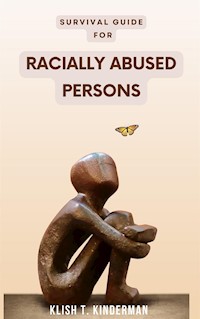
Surviving in a world filled with racial prejudice is never easy. You may feel hopeless, scared, and alone. But the good news is, you don't have to go through it alone anymore.
With "Survival Guide for Racially Abused Persons," you'll learn how to navigate through this tough journey and come out better and stronger on the other side.
This book isn't just another self-help guide. It's a powerful tool that has been crafted by experts who understand what it feels like to be racially abused. This book offers practical advice, as well as coping strategies that really work.
Whether you're experiencing racism at work, school, or in your personal life, "Survival Guide for Racially Abused Person" will provide you with all the tools you need to stand up for yourself and fight back against racial discrimination.
In this book, you will learn:
- How to Cope with Race-Related Stress
- How to Deal with Racist People
- Coping Strategies of Racial Abuse
- How to Build Mental Resilience as a Racially-Abused Victim
- How to Deal with Racial Abuse in Your Workplace
- How to Fight Racism at School
And much more...
Don't wait any longer; order your copy today and take the first step towards a better tomorrow!
Das E-Book können Sie in Legimi-Apps oder einer beliebigen App lesen, die das folgende Format unterstützen:
Veröffentlichungsjahr: 2023
Ähnliche











Survival Guide for Racially Abused Persons
Klish T. Kinderman
Copyright ©
Klish T. Kinderman
© 2023 United Kingdom
All rights reserved. No part of this book may be reproduced or modified in any form, including photocopying, recording, or by any information storage and retrieval system, without permission in writing from the publisher.
Table of Contents
Title Page
Copyright Page
Introduction | Racism and Its Effect On Society
Chapter One | Embrace Your Uniqueness
Chapter Two | How to Cope with Race-Related Stress
Chapter Three | How to Deal with Racist People
Chapter Four | Coping Strategies of Racial Abuse
Chapter Five | How to Build Mental Resilience as a Racially Abused Victim
Chapter Six | How to Deal with Racial Abuse in Your Workplace
Chapter Seven | How to Fight Racism at School
Conclusion | Love and Accept Yourself the Way You Are Even if Others Don't
Introduction
Racism and Its Effect On Society
Racism is a deeply ingrained societal issue that has plagued humanity for generations. Its negative effects on society are multifaceted and far-reaching, perpetuating inequality and injustice in countless ways.
Racism is a social issue that has been present for centuries, but its negative effects on society are still prevalent today.
Racism creates barriers to equal opportunities in areas such as education, employment, housing, and healthcare. This results in the marginalized communities being unable to access fair economic and social conditions.
Furthermore, racism fosters hate speech and violence against individuals or groups based on their race or ethnicity. It fuels fear of the "other," leading to discrimination and prejudice that can manifest into hate crimes or even genocide. The psychological impact of racism cannot be overstated either, with feelings of inferiority among those who experience it directly, as well as creating resentment towards others who have privileges they do not possess.
Racism also affects the mental health of individuals who experience it.
People who face racial discrimination may suffer from anxiety, depression, low self-esteem, and even post-traumatic stress disorder (PTSD).
Moreover, racism creates a hostile environment that hinders social cohesion and integration. It increases distrust between communities leading to tensions that can escalate into violence.
The Signs of Racism in Communities
Signs of racism can manifest in several ways within communities. One common sign is the presence of discriminatory language, actions, or remarks toward individuals who belong to a particular race or ethnicity. This could range from subtle microaggressions to overt racist behavior such as hate speech and physical assault.
Racism in communities can manifest in various ways, and it is essential to recognize the signs to address them effectively.
For example, one of the most apparent signs of racism in communities is discrimination based on skin color or ethnicity.
This can be observed through unequal treatment, such as being denied access to resources or opportunities due to one's race.
Another sign of racism is prejudice and stereotyping, which involves making assumptions about individuals based on their racial identity.
This often leads to negative attitudes and behaviors towards people from certain ethnic backgrounds, perpetuating harmful stereotypes that continue to divide communities.
Systemic racism is another significant sign of discrimination that persists in many communities today.
Systemic racism can be referred to as policies and practices that have been put in place by institutions such as governments, schools, and workplaces that disadvantage people from particular racial groups.
Lastly, racial profiling by law enforcement is another significant indicator of racism within communities.
This practice leads to unjust targeting and harassment of individuals based on their race instead of actual evidence-based suspicion. It perpetuates systemic inequalities that disproportionately affect black and brown communities.
What Happens if Racism is Allowed to Thrives?
If racism is allowed to thrive, it can have devastating consequences for individuals and society as a whole.
Racism can lead to discrimination and prejudice against marginalized communities, which in turn perpetuates inequality and injustice. This can result in unequal access to resources such as education, healthcare, and employment opportunities.
Moreover, racism creates an environment of fear and mistrust between different racial groups. It fuels hatred and violence against people of different ethnicities or races.
It also promotes the false notion that one race is superior to others, leading to conflicts and tension.
Furthermore, allowing racism to thrive can damage relationships between nations. Racial tensions can escalate into international conflicts that destabilize regions or even trigger wars. Additionally, it makes international cooperation on issues such as climate change or global health crises difficult due to political disagreements rooted in racist beliefs.
In summary, letting racism thrive has numerous negative impacts that hinder social progress both locally and globally.
It is essential for individuals and governments alike to take active measures towards dismantling systemic racism in all its forms so that everyone has equal opportunities regardless of their race or ethnicity.
Racially Abused Persons
Racially motivated abuse can have devastating psychological and emotional impacts on those affected.
For racially abused persons, navigating the aftermath of such a traumatic experience can be an overwhelming task. However, this book serves as a survival guide to help you cope with the impact of racial abuse, provide support resources to help you heal, and equip you with strategies to build resilience and reclaim your strength.
Without much ado, join me in Chapter One; let's get it started...
Chapter One
Embrace Your Uniqueness
As someone from a different race, it can be challenging to embrace your uniqueness.
Society may have preconceived notions about what is considered normal or desirable, making it difficult to fully accept and celebrate who you are. However, embracing your uniqueness means recognizing and owning the qualities that make you stand out in a crowd.
It's important to remember that your differences are what make you special and add value to the world around you.
Embracing your uniqueness also means acknowledging and accepting the challenges that come with being different from those around you.
It requires courage and self-confidence to own who you are without seeking approval or validation from others.
Ultimately, embracing your uniqueness is a journey of self-discovery and acceptance. It involves learning to love yourself for who you are, including all of your strengths and weaknesses.
By doing so, you can unlock your full potential and live a fulfilling life on your own terms.
Ways to Embrace your Uniqueness
Embrace who you are
As someone of a different race, it's easy to feel out of place and struggle with accepting your uniqueness. But embracing who you are is essential to living a fulfilling life.




