


5,49 €
Mehr erfahren.
- Herausgeber: Corvus
- Kategorie: Abenteuer, Thriller, Horror
- Sprache: Englisch
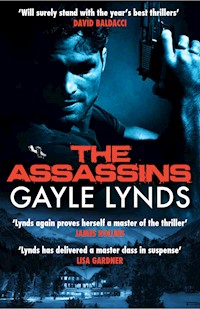
Recently retired from US military intelligence, Judd Ryder is walking home one evening when he sees a man wearing his clothes step out of his house. Moments later, the man is killed in a hit-and-run. Was the stranger the intended victim, or was it Judd himself? Searching the man, Judd finds a phone with only one number dialled - to CIA trainee Eva Blake, Judd's former girlfriend. What Judd and Eva don't know is that they've unwittingly been trapped in a battle to the death against six professional assassins, and only one will be left standing....
Das E-Book können Sie in Legimi-Apps oder einer beliebigen App lesen, die das folgende Format unterstützen:
Veröffentlichungsjahr: 2015
Ähnliche
















Gayle Lynds is a New York Times bestselling and award-winning author. She worked as a reporter and editor for a top-secret US Government think tank before becoming a full-time novelist. She also co-founded International Thriller Writers with David Morrell. She lives in Maine.
ALSO BY GAYLE LYNDS
Masquerade Mosaic Mesmerized The Coil The Last Spymaster The Libraky of Gold
WITH ROBERT LUDLUM
The Hades Factor The Paris Option The Altman Code
First published in the United States in 2015 by St. Martin’s Press.
Published in paperback in Great Britain in 2015 by Corvus, an imprint of Atlantic Books Ltd.
Copyright © Gayle Lynds, 2015
The moral right of Gayle Lynds to be identified as the author of this work has been asserted by her in accordance with the Copyright, Designs and Patents Act of 1988.
All rights reserved. No part of this publication may be reproduced, stored in a retrieval system, or transmitted in any form or by any means, electronic, mechanical, photocopying,recording, or otherwise, without the prior permission of both the copyright owner and the above publisher of this book.
This novel is entirely a work of fiction. The names, characters and incidents portrayed in it are the work of the author’s imagination. Any resemblance to actual persons, living or dead, events or localities, is entirely coincidental.
10 9 8 7 6 5 4 3 2 1
A CIP catalogue record for this book is available from the British Library.
Trade Paperback ISBN: 978 1 78239 825 7 Paperback ISBN: 978 1 84887 678 1 E-book ISBN: 978 1 78239 411 2
Printed in Great Britain.
Corvus An imprint of Atlantic Books Ltd Ormond House 26-27 Boswell Street London WC1N 3JZ
www.corvus-books.co.uk
For my husband, John C. Sheldon. His love makes my world beautiful.
Contents
Acknowledgments
The Six
1
2
3
The Padre
4
5
6
7
8
9
10
11
12
13
14
15
16
17
18
19
20
21
22
Eli Eichel
23
24
25
26
27
28
29
30
31
32
33
34
35
36
37
38
Krot
39
40
41
42
43
44
45
46
47
48
49
50
51
52
53
54
55
56
57
58
59
Burleigh Morgan
60
61
62
63
64
65
66
67
68
69
70
71
72
73
74
75
Seymour
76
77
78
79
80
81
82
83
84
85
86
87
88
The Carnivore
89
ACKNOWLEDGMENTS
I’m one of the luckiest authors in the world. I not only love my work, I’m surrounded by terrific people who aid and abet me along the way. In particular, I’m indebted to those who read and commented on the entire manuscript several times—my editor, Keith Kahla; my literary agent, Lisa Erbach Vance; freelance editor Frances Jalet-Miller; and fellow author and dear friend Melodie Johnson Howe.
Since my previous novel, and following the death of my husband Dennis Lynds, I’ve been lucky again: I met and fell in love with John C. Sheldon, whom I married a couple of years ago. John’s quite a guy—retired prosecutor, defense attorney, and judge—and still writing scholarly articles for law journals. He’s also a longtime voracious reader. I had no idea he would turn out to be an invaluable source for brainstorming and editing. Oh, and that he could write fiction. Thus far, we’ve collaborated on three short stories. As you read The Assassins, you won’t know the impact he had on page after page, but trust me, it’s there.
My family endures as a never-ending source of help and support. They bring me ideas, answer questions, and are nice to me when it really counts. My deepest gratitude to Julia Stone and Kari Timonen, Paul Stone and Katrina Baum, Deirdre Lynds and Hudson Bunce, Katie Lynds, Emily Sheldon and Trevor Ross, Jim Sheldon and Vandy Say, and Heather and Craig Geikie. And to our wonderful grandchildren, who are growing up much too quickly: Sophia Stone, Finn Timonen, Duncan Geikie, and Ian Geikie.
St. Martin’s is my longtime publisher, where books are cherished. Particular gratitude to Hannah Braaten, Melissa Hastings, Paul Hochman, Kelsey Lawrence, Carolyn McBroom, Justin Velella, and the remarkable Sally Richardson.
Others who have generously helped me include Nancy Colahan, Julian Dean, Celine Godin, Tara and Dominique Harbeck, Bethany Hays, Bones Howe, Elizabeth Huebnor, Randi and Doug Kennedy, Sarah Ketcham, Phillip Kowash, Dan Lord, Bill and Carol McDonald, Cathy McDonald, Jason Merry, Melinda Molin, David and Donna Morrell, Monika Mozdzynski, Elaine and George Russell, Kathleen Sharp and Ray Briare, and Pam and Frank Smith.
I hope you enjoy The Assassins.
THE SIX
[The assassin] almost never emerged from the turbid underworld of international crime, and he had no consistent belief system. He switched allegiances with ease. Governments actually paid him just to leave their people alone.
—Time magazine, September 2, 2002
1
Death was not something the six men talked about. Instead they used phrases like “the job” or “the assignment.” They were acquaintances, not friends, just like workers in any industry requiring initiative, independence, and travel.
Each had been at it more than two decades, thriving in a career notorious for high attrition. They were the best. They had never collaborated, until now.
Night gave Baghdad little relief. Electricity was fitful, garbage rotted along the boulevards, and clean running water was a memory. Gunfire crackled across rooftops as looters carried off computers, chairs, and crates of canned goods. Since the invasion, there was no more dictator and no more law.
In earlier, better times, the country was known as Mesopotamia, a rich land where the wheel and writing were invented. It was all documented in the National Museum of Iraq, which contained priceless antiquities dating back a hundred thousand years.
International law forbade anyone to use cultural sites for military purposes, or to attack them. But the museum was strategically located on eleven acres in the heart of Baghdad, protected by a tall security wall, and dotted with towering turrets perfect for snipers. So the Republican Guard took it over, and when the American soldiers invaded, the Guards blasted them with machine guns and AK-47s. The Americans fired back, and they kept coming. Finally the Guards brought out their big guns—rocket-propelled grenades, RPGs—and sent a firestorm down on the foreign troops.
A U.S. tank responded with a single round from its nosebleed 120-mm main gun, taking out the RPG position but leaving a gaping hole in the façade above one of the museum’s reconstructed Assyrian gates. Under the laws of war, the Americans were entitled to defend themselves, but they had also seen how easily they could destroy the museum. So the task force commander ordered the tanks to remain in the intersection in front of the museum—Museum Square—but out of range of the Iraqis.
This was the tense situation near midnight on April 10, 2003, when six international assassins made their way individually through Baghdad’s backstreets toward the museum. They were in Baghdad because Saddam Hussein owed them money, and when the Americans won the war, his wealth would be confiscated. This was their last chance to get what was theirs.
2
The night air stank of oil fires. Gunfire crackled in the distance. Watchful, the assassins waited in the night shadows at the museum’s rear security wall. They were dressed like locals, in loose shirts, Western trousers, and ghutrahs—cotton scarves—wrapped around their heads and across the lower parts of their faces. Only their eyes showed. They checked their watches.
At precisely 12:10 A.M. the door in the wall opened, and General Mulh Alwar appeared. A tall blade of a man with refined features, he wore the uniform of the Special Republican Guard, but his shirt was unbuttoned, he was capless, and his eyes were overbright. His Kalashnikov dangled carelessly from one hand.
“Mierda. Ha perdido el juicio!” snapped the Basque. Shit. He’s lost it!
The Russian shoved the general back into the compound, and the others rushed after, weapons up, ready for trouble. The last man bolted the door in the security wall.
The general shook off the Russian and stared anxiously around at their scarf-hidden faces. “Show me you are here, Burleigh Morgan. I need to be certain it is you and these are your people.”
“You bloody wanker, it’s us all right.” Morgan unpeeled his ghutrah, revealing corrugated skin, a fighter’s broken nose, and a neatly trimmed silver mustache. Morgan was the oldest, in his early sixties, but he still had a tough look about him, as if with the crook of a finger he could hollow out the eye of any of them.
The general stood a little straighter and gave a deferential nod. “Aash min shaafak, Morgan. B-khidimtak.” It’s good to see you. At your service.
Although there was no trust in the venal business of international wet work, occasionally there was respect, and Burleigh Morgan was respected. Other top independent assassins would accept a job from him, which was why Saddam Hussein had hired him to put together a team for a series of particularly sensitive international terminations. Besides Morgan, the Basque, and the Russian, there were a former jihadist, a retired Mossad operative, and a peripheral member of the Cosa Nostra. They had executed their assignments perfectly. The problem was, Saddam had never paid the second half of what he owed them.
“Which direction, General?” Morgan prodded.
With a nod, the general trotted off.
Watching their flanks, the contract killers followed, passing weed-infested lawns and gardens. Lights from lanterns and flashlights moved occasionally behind the dark windows of the buildings towering around them.
Off to the right, a side door opened and slammed back against the wall. Two soldiers stripped down to their trousers and combat boots burst out onto a stone patio. Rifles slung over their naked shoulders, each carried an armful of plastic boxes. They spotted the general and the assassins.
The general bellowed at them in Arabic, “La’a! Qof!” No! Halt!
But they bolted, their legs pumping, heading off across the grounds toward the northwest gate, the gate farthest from the American tanks.
“Dogs and thieves! Deserters!” The general squeezed off two volleys from his AK-47.
The rounds hit the soldiers in their backs, slamming them to the ground. Blood rose like black tar on their skin. One lay silent and motionless; the other moaned, his feet twitching.
The general ran over to them and scooped up a handful of little gemlike tubes that had fallen out of one of the boxes. He held them up for the assassins to see. “These are cylinder seals. Our ancestors, the ancient Mesopotamians, carved pictures and writing on them and then rolled them across wet clay for their signatures. Just one of these can be sold for fifty thousand American dollars—”
The Basque had had enough. “Maria José Cristo!” he exploded. “Who gives a fucking damn!”
Morgan agreed. He stepped in front of the general. A highly respected line officer, the general had just shot his own soldiers in the back because of a bunch of tiny tubes that looked like crusty cigarette holders. The general was probably not barking mad yet, but his priorities were circling the toilet.
Morgan stabbed a finger into the man’s chest. “You stupid arsehole, remember why we’re here. You’re digging your family’s graves!” He had tracked down the general’s wife and children in Tahiti and sent him chilling photos showing how easily they could be wiped.
The general paled. He was a close friend of Saddam’s half brother Barzan al-Tikriti, who had managed part of Saddam’s clandestine financial network. If anyone could get to Barzan and Saddam’s money, it was the general.
Without a word, the general jogged off. They ran close behind.
Morgan noted hundreds of 7.62-mm shell casings embedded in the weeds and dirt, the bullets used by AK-47s, not by U.S. assault rifles. “How many men do you have here, General, and where are they?”
“About seventy-five, stationed around the compound.”
Morgan knew 150 Republican Guards had been onsite at five P.M., so the general had lost half his force. In the distance, a clutch of men wearing only T-shirts and undershorts and carrying cardboard boxes rushed northwest, in the same direction the two soldiers had been heading with the cylinder seals. It looked to Morgan that the general’s troops were ditching their uniforms, grabbing antiquities, and deserting.
His face tight with anger, the general slowed and glared after them.
“Forget it.” Morgan jammed his bullpup rifle into his side.
With a grunt, the general ran again. The little group pounded past a pile of sandbags toward a long three-story building. The general yanked open the door, and they slipped into a vast exhibit hall. Moonlight shone down from high windows, illuminating shattered glass display cases, fallen shelves, and empty marble pedestals. It had the feel of a graveyard.
Cursing the thieves, the general led them across the room toward an arched entrance. There was no door.
“It looks bloody dark ahead,” Morgan said. “Light your torches, lads.”
3
Switching on their flashlights, the six assassins and the general raced down the hall past corridors and doors until they reached another large gallery decorated with wall friezes glorifying larger-than-life Mesopotamians slaughtering much smaller foes.
Slowing, the general gestured around. “This is the Assyrian Gallery.” Then he turned to a glass case attached to the wall. “And your tablet is here.”
The assassins converged. Inside was a brown clay tablet about twenty-four inches square, but instead of Roman or Cyrillic letters, it displayed the wedge-shaped characters of civilization’s first form of writing—cuneiform.
The assassin who had once been Mossad focused his flashlight on an engraved sign in Arabic beside the display cabinet. Excited, he said, “This tablet dates back three thousand years and describes our father, Abraham. He came from Ur.” The founder of Judaism, Abraham grew up in Ur, an ancient city in what was now Iraq.
The former jihadist gave him a sharp look. “The Prophet Abraham, yes.” In Islam, Abraham was considered one of the religion’s five prophets, along with Muhammad and Jesus.
Impatient, Morgan aborted the never-ending religious quarrel: “The only thing that bloody matters is getting our money.”
He pulled out the key he had picked up in an Amsterdam drop box two days before, and the general handed over a second key. Morgan inserted them into the double lock, turned them, and pulled open the glass door. The general stepped forward and pressed what appeared to be a small blemish inside the frame. There was a soft clicking sound, and the entire display swung away, disclosing a recessed safe with two more locks. A safe within a safe.
Again Morgan inserted the keys, turned them, and pulled open the door. Another tablet lay on the floor of the second safe. Everyone leaned forward.
His pulse accelerating, Morgan slung his bullpup across his back and with both hands reached inside and lifted it out. About twenty inches long and eighteen inches wide, it was not clay but limestone, pale, slightly grainy, about two inches thick. The cuneiform script was carved deep and clean. Morgan felt emotion well up in him, not for the beautiful artifact, but for the castle in Yorkshire he planned to splurge on.
“Here’s our twelve million dollars, lads.” That was the amount Saddam still owed them. The general had guaranteed the tablet was worth at least that much. Morgan tilted it upright for the others to see. “Let’s get the hell out of here. I’ve got a man in London panting to flog it.”
Suddenly a thundering crash sounded in the stairwell. The walls seemed to shudder. Voices quarreled loudly above them, then an arm and head in pink granite thudded down the steps.
“More thieves!” The general dashed inside the stairwell and aimed his AK-47 upward. “Come down here, you dogs!”
Before the general could shoot, automatic fire rained down. Rounds exploded through the general’s head and shoulders, spraying blood and bone. He dropped to his knees then pitched forward.
“Kill the torches,” Morgan snapped. “We’re gone.”
The limestone tablet clasped close to his chest with one hand, the bullpup rifle in the other, he ran back through the dark gallery, the others close around. In seconds, bullets followed, slicing past, the noise echoing loudly. A sharp pain burned across his gun arm, telling Morgan he had been hit. He hurtled around the corner, down a corridor, around another corner, and through a door.
They were in another exhibit hall. Breathing heavily, he dropped to his haunches. The others squatted beside him. The gunfire behind them had stopped. They peered through the shadows across the long room to where two Republican Guards appeared in a doorway. One was talking on his radio, repeating to his cohort that intruders had arrived and they must be killed.
Morgan swore silently. All his carefully arranged plans had gone to hell. He could hear the noise of running boots behind them. They were trapped, but he was not done yet. He pointed at the Basque and the Israeli and then indicated the two Guards across the room.
The Basque slid his knife out from under his shirt. It was slender, tapered, and doubled-edged. Keeping low, he padded off past an upended display case. At the same time, the Israeli aimed his M14 modified sniper rifle with sound suppressor.
The two Guards seemed to see or hear something. They lifted their weapons, looking for targets.
The Israeli’s M14 gave off a single pffft, but both Guards staggered and went down.
The assassins rushed across the exhibit hall. One Guard was dead, a black hole in his forehead. The other was dying, stabbed up under his rib cage to his heart.
The group took off, passing through one doorway then another until at last they blasted out into the cool night air. But as they accelerated away from the building, a dozen Guards chased, firing their AK-47s. Orange-colored muzzle flashes flamed into the night.
The assassins lowered their heads and pounded toward the children’s museum. Morgan staggered, a pain burning across his scalp. A bullet had grazed his head. Hot blood soaked his ghutrah.
The Israeli grunted—a round had pierced his shoulder.
The Basque stumbled—he was hit in the calf.
Finally they made it through a towering arch, past giant statues of Babylonian lions, and around to the lee of the building. They had managed to lose their pursuers, at least for the time being.
“We can’t stay here. Let’s go,” the former Cosa Nostra killer ordered.
Morgan wiped sweat and blood from his face. His head ached like someone had bashed it with an axe. “Yeah? And where to, dipstick?”
“Out there.” He gestured with his Walther past a wrought-iron fence to Museum Square, where a platoon of U.S. Abrams tanks was stationed. There was no way the Guard would follow them into all of that weaponry.
Morgan hesitated. Unless they were being employed by a government, and sometimes even then, governments were a professional assassin’s enemy. Still, he stared thoughtfully at the American tanks. It was not as if anyone there would know who the assassins were.
“Brilliant,” he decided, “if we survive that long.”
“I’ll carry the tablet, Morgan,” the jihadist offered.
“I’m not crippled, you greedy bastard.” Morgan glared at him. “Let’s go.”
With the building as a shield, the assassins hurried past palm trees. The Israeli gripped his shoulder. The Russian held his side. The Basque limped badly. The air erupted with the piercing noise of another fusillade—the Guards had rounded the building and were pursuing.
The jihadist grunted and staggered. Blood appeared on his hip.
The ex-Mafia killer was out front. He shot open the museum gate, and the others rushed for it. That was when Morgan felt pain explode in his back. He had been shot, but it felt as if a bloody lorry had rammed him. The cuneiform tablet slipped from beneath his arm, and he heard it crash onto the paving stones. His legs would not move. He could not feel his hands. He fell hard. Vaguely he realized his team was down beside him, picking up the pieces. He could hear someone talking to him, swearing at him, saying his name. Were they going to take him or dump him? An assassin could never be too careful with his friends.
4
From Beirut to Paris
Rescued by two of his fellow assassins, Burleigh Morgan was laid up for a month under an assumed name in a private suite at the Clemenceau Hospital in Beirut. He had multiple wounds to his skull, right arm, scapula, lungs, and ribs. As he drifted in and out of pain, his thoughts kept returning to the castle he wanted in Yorkshire. He could see it clearly in his mind, standing on a green hill, its turrets tall and walls formidable. He had planned to use his share of the proceeds from selling the cuneiform tablet to buy it.
When his headaches stopped, Morgan flew to Cairo, to a secret pied-à-terre on an island in the middle of the Nile River. His flat was on the twentieth floor. In the bedroom, he unpacked. Then he went out to the balcony to enjoy the view.
He did not understand loneliness, could not abide complaining, and deep in his scarred soul knew a professional assassin had no business with “beliefs.” An assassin needed to be sharp, plan for every detail, and crave the work. African wild dogs were not the largest predators on the savannah, but they were far more successful killers than most.
So when Morgan looked down from his balcony at the teeming streets and sidewalks with people scrambling and sweating, he smiled to himself. He was a wild dog. They were not.
That night he e-mailed the five other assassins:
The Baghdad item could still be valuable. I have two pieces. Send me yours. I’ll get them reassembled and appraised.
Morgan’s tradecraft was impeccable. His various e-mail addresses ran through private servers from Kuala Lumpur to Mexico City, from the Ural Mountains to Pakistan. Tracing him was as impossible as a top Chinese black hatter could make it.
The next day, he heard from three of the assassins:
3:22 A.M.: You’re nuts. The general said it was worth millions because it was an ancient artifact. Now it’s just a pile of rocks.
8:03 A.M.: I’ll give you my pieces if you wire me $250,000 holding money.
12:10 P.M.: How do I know if I send you mine, you won’t cut me out of my full share?
Controlling his temper, Morgan responded that they bloody well knew he could be trusted to give all of them their fair shares. Besides, money was money, and it was worth a shot to see whether they could make a few million quid off what they had.
The next morning, he received two more e-mails:
8:43 A.M.: I’ve got four pieces. I assume I’m going to get twice as much for mine as anyone with two pieces.
9:12 A.M.: I want my own appraiser.
The bickering continued until Morgan could not take dealing with the arseholes any longer. Besides, what one of them had written was true—the tablet in pieces could be worthless.
From Cairo he flew to Majorca, where he continued to recuperate, and then on to London to an East End safe house. Finally, he resumed wet work.
Years passed. He spent more and more time in Paris. He bought himself a brand-new, sapphire-blue Cobra MkVI gull-wing sports car and hooked up with a lively blonde who lived on the rue des Fossés Saint Bernard. Her name was Beatrice. She was in her fifties, and she was hot. They were an odd-looking couple—he was in his mid-seventies, skinny, and as wrinkled as a gorilla. He was also strangely happy.
In January, Beatrice and he were sitting together in front of her fireplace, enjoying the warm flames and listening to blues music, when he checked his e-mail. One had just arrived from an anonymous sender, addressed to six assassins. As he read the names, a chill crawled up his spine—it was the six of them who had heisted the ancient tablet. The sender knew far too much about them, including past employers. The information was incendiary.
Beatrice was staring at him. “Some bad e-mail has upset you, cheri?” She stroked his silver ponytail.
Closing the laptop, he lied: “No, nothing bad at all. I’m tired, old girl. I’ll go back to my place and catch up on my sleep. You and I have too much fun, you know.” He forced a smile. In truth, he needed to make phone calls. He slid the laptop into his satchel and stood.
Her worried eyes assessed him. “Very well. I understand.”
He took her hand and kissed it.
She watched him put on his coat and leave. She had been a famous dancer in Pigalle and missed the excitement of those days, and Morgan was an exciting man. She hurried to the window, where she saw his grand Cobra waiting near the end of the block. Good—he would not have far to walk. His complexion had been gray.
She turned back into her sitting room. It was time for a café serré. Opening the door, she started toward her kitchen. But before she had gone six steps, there was a huge roar. Her apartment shook. As the chandelier swung, she ran to the hallway window. Flames licked up through a brown cloud over the spot where the Cobra had been parked. Her throat tightened. She forgot her coat and ran down four flights and out to the curb, where the concierge and neighbors and shopkeepers were gathering in the afternoon cold, staring at the end of the block.
“Sainte merde,” someone murmured in shock.
A woman nodded. “Une bombe énorme!”
Sirens wailed.
Beatrice ran into the smoke. Tree limbs littered the area like broken toothpicks. Car parts were strewn about, sizzling. A streetlight had snapped in half. With horror, she saw a charred arm on the sidewalk. And there was a giant hole where the car had been, a black hole that spread across the asphalt and took out grass and parking.
Coughing, she wiped tears from her face.
“Madame, venez avec moi.” The concierge took her arm and guided her back. “Your gentleman did not suffer, madame. I am very sorry. Venez avec moi.”
She could feel people’s eyes on her. She was shaking from the shock and cold, but the cold was good. It helped to clear her mind. At her building, she turned to gaze back at the smoke, to think about the enormity of the blast that had killed Morgan. It would have been much simpler and cheaper to shoot him. This was not just about murdering some old assassin. Someone powerful had sent a warning.
THE PADRE
Victory is gained not by the number killed, but by the number frightened.
—Basque proverb
5
Washington, D.C.
It was one of those bitterly cold January mornings that cut to the bone. Snow blanketed the city. Icicles sparkled from phone lines. As a frosty wind burned his cheeks, Judd Ryder shouldered his duffel bag and walked away from Union Station, heading east. He was tall, about six feet one, and thirty-four years old. Seldom did anyone find his face memorable—the arched nose, the gray eyes that tended toward detachment, the jaw that could turn stubborn. That was the way he wanted it. He liked being forgettable.
Turning onto Fifth Street, he entered Metro Cleaners and hefted his duffel onto the counter. “I’ve brought you a month’s worth of dirty clothes. Do your worst.”
The clerk pulled the duffel to her. “Happy to take care of you. What’s your phone number?”
Ryder related it. She looked it up on her computer.
“I’ve got two shirts and a sports jacket to pick up, too,” he told her.
She frowned. “Says here you got them yesterday.”
“I was out of the country yesterday.” He thought a moment. “I always pay with my Visa. Does your computer show that?”
Tapping the keyboard, she studied the screen. “Nope, it was a cash transaction.” She glanced at him apologetically. “If we find your stuff, someone will call you.”
Perplexed, he thanked her and pushed outdoors. He had been in Baghdad nearly four weeks and was glad to get back to Washington and even more eager to be home. Digging his hands into his pockets, he hunched his shoulders against the cold and hurried off, turning onto G Street. Most of the sidewalks were shoveled, but the city plows had not reached the street, where the snow was a good twelve inches deep. Buntings of snow covered the branching trees and the tall row houses and the little front lawns with their little wrought-iron fences. The neighborhood sparkled white and clean in the sunlight. He took in the tranquil beauty.
Then a door closed, an unnaturally loud sound in the hush. A man had stepped outside and was hunched over, locking his front door. What the hell! That was Ryder’s row house—668 G Street Northeast.
Remaining across the street, Ryder saw the man turn away from the door, head bowed as he buttoned his trench coat. A gust of wind flipped open the coat. The lining was black-and-green tartan—Ryder had a subzero lining in the same tartan fabric sewed into his trench coat. He focused on the man’s boots. They were L.L. Bean. Above the tops showed tan shearling linings. Those were his damn boots. His damn trench coat. The man was a frigging burglar. What else had he stolen?
The intruder raised his head to scan around. For the first time his face showed. It was as if Ryder were looking into a mirror—gray eyes, arched nose, square face. The man was about six feet one. Ryder’s height. He had wavy chestnut-brown hair. So did Ryder. The bastard even had a good tan, and of course Ryder was tanned from his month in Iraq. This was no ordinary burglar. Ryder had been professionally doubled.
Knotting his hands, Ryder felt a hot tide of fury. He wanted to strangle the bastard. He could do that. God knows he had killed enough in Iraq and Pakistan. He inhaled, exhaled, calming himself. But dead men did not talk. Tugging his knit cap down past his ears, Ryder slapped on sunglasses.
The double peered to the left, checking out a cross-country skier gliding toward the intersection of G and Seventh streets, then he scanned past the elementary school on the corner, and paused at Ryder. Ryder kept his expression neutral, his pace unhurried. Finally the double scrutinized the far end of the street, descended the steps, and ambled to the corner. He stopped at the curb, waiting for the cross-country skier to pass.
The skier wore a black balaclava, exposing only his eyes, nose, and lips. Suddenly extending his stride and arm swing, the skier accelerated through the intersection as if he were a racer crossing the finish line.
The double stepped off the curb. His boots sank into the snow.
The noise of a powerful engine sounded from around the corner.
The double started slogging across the street.
A big white Arctic Cat snowmobile careened around the corner. Wearing a white helmet, goggles, and jumpsuit, the driver expertly guided the Cat as it bore down on the double.
The man stared. Abruptly there was an explosion of snow as the double reversed direction. His feet slipped and his arms flailed as he fell and scrambled back up.
Two women had come out on the steps of the elementary school.
“Watch out!” one yelled, while the other gave a piercing shriek.
The Cat rammed into the double, sending him high in a spine-breaking backward arch. He landed spread-eagled on his back, blood oozing from his nose, mouth, and ears.
The snowmobile skidded from the impact. The driver turned into the skid, bringing the Cat under control. With a glance over his shoulder at the motionless man, he sat down, revved the Cat’s engine, and shot away.
“Call 911!” Ryder shouted at the women. In seconds he was at the downed man’s side.
The double’s eyes were open, staring up at the icy blue sky. His jaw hung slack, lips parted as if he were about to speak.
Ryder felt for the carotid artery. No pulse. Opening the trench coat, he saw the man was wearing the sports coat and one of the shirts Ryder had tried to pick up at the cleaners just minutes before. Ryder found a wallet inside the jacket—one of his old ones. Inside was about one thousand dollars in cash and a District driver’s license forged to appear identical to the one Ryder carried. He returned the wallet, cash, and driver’s license. Continuing to search, he found a cell phone. He pocketed that.
He stood up. He had to leave before police arrived. The women were motionless on the school’s steps, horror in their faces.
“You called 911?” he asked.
“Yes, they’re on their way,” one told him. “How is he?”
“Unconscious and in bad shape. My sister lives on Seventh.” He was lying. The imposter was definitely dead, and Ryder had no brothers or sisters. “She’s a doctor. I’ll go see if she’s home.”
As the women nodded, sirens sounded in the distance.
Ryder got back on the sidewalk and ran. At H, he headed west. It was a busy boulevard, running parallel to his street. Traffic rushed past. At last he slowed and took deep breaths. He needed to focus. What had just happened, and what did it mean?
The cross-country skier had been moving at a normal speed until the double approached the corner. Then the skier had accelerated and hurtled through the intersection. As the double had started to cross, the snowmobile engine had roared to life. The way Ryder figured it, the skier had been the lookout and his speeding through the crossway had signaled the hidden snowmobiler that the double was about to enter the deep snow and be vulnerable.
This was the time Ryder usually walked over to the little market on Seventh to buy groceries. When he did, he always crossed that intersection. His lungs tightened. The double had been targeted for murder—or Ryder had been.
6
Ryder wanted to get inside his row house to search for an explanation of why he had been doubled. As the sirens grew closer, he hurried past insurance offices, down a driveway, and south across a parking lot. Ahead was the rear of his house. Opening the gate, he saw no footprints in the snow. No one, the double included, had been back here today.
Ryder plodded across the yard, unlocked his rear door, and opened it. A billow of warm air enveloped him. The only sound was his refrigerator’s hum. He was home at last, but this was not the way he had expected to find his sanctuary; it had become someone else’s lair. Smelling burned toast, he stepped into the kitchen. His years in the army had changed him from a slovenly youth to a man who prized order. When one lived with the unpredictability of violent death, orderliness was not only efficient, it was as comforting as a finely tuned weapon. So it was with irritation that he surveyed the grease thick on the stove and the dirty dishes piled on the counter.
Scraping snow from his boots, he went into his living room. The Washington Post was strewn across his sofa. He climbed the stairs. In his bedroom, clothes were piled on a chair and scattered around the floor. Ignoring the mess, he went into his closet, pushed aside boxes, and crouched in the corner. Running his hands over the parquet floor, he located four finger holds then lifted out a square of wood, revealing his subcompact semiautomatic Beretta pistol, ammo, sound suppressor, cash, two billfolds containing cover identities and passports, and pocket litter.
Removing his peacoat and sports jacket, he buckled on the canvas shoulder holster. Then he checked his Beretta, loaded it, and balanced it in his hand. A familiar calmness settled over him, and he felt complete. Automatically, he lifted the weapon and aimed. If you don’t kill the memories, the memories will kill you. He had been military intelligence, MI, then recruited and trained by an MI black unit for special death missions. He was good at it. Worse, he had liked it. That was why he had retired from the army, why there were moments when a dark cloud seemed to envelop him.
He snapped the Beretta into his holster and packed his black backpack with the rest of the things from his hidey-hole. Then he went to the window and peered down between the slats at two police cruisers and an ambulance parked at angles in the intersection, roof beacons rotating. Yellow crime scene tape already outlined the area. The two women who had witnessed the attack were talking to the officers. They would describe the death as, at best, a hit and run, and, at worst, deliberate murder. At some point soon, the officers would come here to his home to investigate.
Quickly he searched his bedroom. The only items of interest were jeans, a flannel shirt, underwear, and shoes that were not his—but with no identifying tags or pocket litter. He methodically inspected the rest of the rooms, finally going back downstairs to the living room and then into the kitchen. The red light on his answering machine was flashing. He hit PLAY.
Tucker Andersen’s voice sounded from the machine: “I hope you’re bored. Or you’ve come to your senses and realize you suck at being a civilian. Call me.” Tucker was the number two at Catapult, a Langley black unit that specialized in counteroperations.
Not now, Tucker. First I’ve got to get the hell out of here. Some homecoming. Pulling on his coat, hat, and gloves, he stepped outdoors. The door slammed behind him, locking automatically. His face already felt frozen.
He slogged through the snow. Waiting inside his garage was his faded green 1978 Ford pickup, which was retrofitted with a powerhouse Audi V8 Quattro drive train. He climbed in. Minimal cranking, and the big engine fired.
In seconds Ryder was driving away through the parking lot. He had escaped without having to talk to the police, but he had no clue what the hell the double was all about. Before entering H Street, he scanned. Seeing nothing unusual and no one seeming interested in him, he merged with the traffic.
As he drove off, he remembered the cell phone he had taken from the dead man. Gripping the steering wheel with one hand, he used the other to fish it out of his pocket.
A snow-dusted Chevy van was parked at the curb across H Street and a half block back. It was an older model, indistinguishable from thousands of others in the metropolis. The lone occupant sat in the rear at a darkened window, peering out through binoculars. He studied the man in the navy blue peacoat driving away in the green truck. He recognized Judd Ryder.
He grabbed his cell phone and made the call. “You were right. I’ve picked him up.”
7
There were moments when strong coffee was the only answer. Shaking off tension, Ryder drove through Coffee Blast, got his usual three-shot caffè americano, and parked off Maryland Avenue. He drank deeply, welcoming the heat and caffeine. Then he inspected the double’s cell phone. It was disposable, anonymous, no surprise. The address book had no password protection, but it did not need any—it was empty.
Ryder checked the calls the double had made. And stared. The man had phoned Eva Blake’s home number. His chest tightened. He kept her in a special place in his memory, Eva of the long red hair and the cobalt-blue eyes that could pierce him to the soul. He remembered the first time he saw her—running through a cold night rain in London, no umbrella, hair flying, frightened and furious as she tried to escape her murderous husband. There had been something about her defiance, her bravery despite being on the losing end of a bad deal, that had gotten to Ryder. Now she was at the Farm, the CIA’s highly secret facility at Camp Peary, where she was learning tradecraft. Maybe she was home on break. He dialed her.
“Hullo,” she answered.
Hearing her, he felt a rush of emotions. He had saved her that night in London, and they had grown close. He’d had fantasies they might have a future together. But when the mission they were on finished, she abandoned her earlier life as a museum curator and joined Langley. The problem was, the clandestine life was one he never wanted again. So it was better to keep his distance.
“Hi, Eva.”
“Judd!” There was surprise in her voice. “Are you calling from Baghdad?”
“No, I just got back to D.C.”
“I thought you weren’t coming home until tomorrow.” Her voice sounded strained. Probably stress from the Farm’s tough training, he decided.
“I finished a day early, so I decided to move my flight ticket,” he told her. “And before you ask, yes, it was a productive trip. We’ll talk about it later. Right now I have a question. Who phoned you a little after four o’clock yesterday on your land line?”
“I don’t think anyone did. Why? What’s happened?”
“I’ve been doubled.” He described watching the imposter leave his row house and then the snowmobiler deliberately run him down.
“My God, that’s awful. You’re sure he’s dead?” she asked.
“Yes, and it’s too bad. I had serious questions for him. What about his call to you?”
“Hold on.” She read him digits. “Is that his number?” When he said it was, she continued, “According to my phone, he called at four-twelve. But I wasn’t home, and he didn’t leave a message. Maybe he called to enhance his credibility. You know, trying to get in touch with me would help to make him look real. If I’d actually answered, he could’ve said he dialed the wrong number.”
He nodded. “Makes sense.” But then he warned: “Maybe not only my double knows about you, his killer might, too. I don’t know why the double—or I—got targeted, but his phoning you makes me think you could also be in danger.”
“I’ll be careful. Drive over here. We can work on this together.”
He agreed. As he said good-bye, he remembered Tucker Andersen had called and left a message on his answering machine. It was because of Tucker that he had met Eva. It had all begun six months ago, when Ryder’s father was shot and killed. To find his father’s killer, he had accepted contract work with Tucker, who had been tracking terrorist financing based on a tip the old man had given him just before he was killed.
He dialed the CIA man.
As soon as he heard Ryder’s voice, Tucker demanded, “What took you so long to get back to me?”
He found himself smiling at Tucker’s cantankerousness. “I don’t work for you anymore, remember?”
“We both know you should. Are you home now?”
“I am. You haven’t been up to your old tricks, have you, Tucker?”
“What in hell are you talking about?”
“I’ve been doubled,” Ryder told him. “It’s a professional job. Did you order it?”
“If I were going to double you”—Tucker’s voice had an edge—“I would’ve told you.”
Ryder nodded to himself. Then he again related the story of the imposter and the snowmobiler. “The double was wearing clothes I’d expected to pick up at my dry cleaner today, and he was carrying duplicates of my ID. He was killed at the time I would’ve ordinarily walked to the grocery store. He was following my routine.”
“Who wants you dead?”
“Let me count the ways.” He sighed. “I searched my row house but couldn’t find anything about who the double was or why I got chosen. He was carrying a cell. It’s disposable, but he called Eva—”
“You’ve warned her?” Tucker interrupted.
“Sure. He phoned her land line but didn’t leave a message. I need a favor. First, there were three other numbers on the cell. Would you get them checked?”
Tucker agreed, and Ryder related the numbers.
“Second,” Ryder continued, “I’m hoping the police and medical examiner don’t realize the dead guy is my double, at least not right away. I’d like at least a week to stay under the radar while I try to figure out whose cross-hairs I’ve landed in.”
Once the news was released, the media would home in like heat-seeking missiles. The District medical examiner had in his icebox a cadaver that not only carried the ID of a former member of U.S. Army intelligence, but also had been made to look like him right down to the color of his eyelashes. Photos of Ryder would be plastered on TV and Internet screens around the globe.
“I understand,” Tucker told him. “I’ll see what I can do.”
“Thanks. Your turn. Why did you want to talk to me?”
“Your trip to Iraq. The situation there is deteriorating again. We’re worried something new is in the wind, some big operation, maybe devastating to us and the region. I’d like to know what you saw and heard. Whom you met—and trust.”
“Sure, but let’s have that conversation later. I’m on my way to Eva’s place.”
“Right.” The line went dead.
8
His heavy wool overcoat buttoned up to his chin, Tucker Andersen wove among the pedestrians in Chinatown. It was lunchtime, and the sidewalks teemed with office workers. Tucker sniffed, smelling Mexican, Greek, and Italian food. Like much of life, Chinatown was not what it used to be. A lifelong jogger, he walked lightly. He was five feet ten inches tall, fifty-three years old, and slender. All that was left of his once thick hair was a gray fringe touching the back of his collar, so to ward off the cold, he wore a burgundy beret. Tortoiseshell-rimmed eyeglasses accented his face, a Grand Canyon of lines. His mustache was brown and his beard gray, short, and, as usual, in need of a trim. He looked ordinary and blended easily, and to him that was what “style” was all about.
As he put away his secure handheld, he wondered why Judd Ryder had been doubled. He had plans for Judd, and they did not include early death. Besides, Tucker liked him, and he did not like many people. He had just made a couple of calls on his behalf. Now it was time to refocus on the covert business at hand.
Tucker was tailing the Padre, a bulky man who was decked out in his signature disguise—black brimmed hat set square on his head, long black cashmere overcoat, black wool suit, and white collar. With his benign smile, it was unlikely the uninformed would know that the man who seemed to be a kindly Roman Catholic priest was in fact an infamous international assassin. A half hour earlier, Tucker had been eating lunch at Teaism Café when the Padre had appeared, laid what looked to be a business card on the table, and walked away. It invited Tucker to follow for a meet. No details, just that it would be worth his while.
About twenty feet behind, Tucker trailed the Padre into a wide paseo and then through glass doors into Gallery Place, an indoor shopping complex of several stories. The contract killer stopped at the Regal Cinemas box office, where he bought a matinee ticket for the new George Clooney movie.
As the Padre stepped onto the up escalator, Tucker bought a ticket and followed. Soon he spotted the three-man surveillance team he had summoned from Catapult. One was at the complex’s main entry. The second was near the ice cream parlor. And the third was riding the escalator behind Tucker.
Satisfied no one else was surveilling them, Tucker stepped off the escalator. The scent of hot buttered popcorn infused the air, and the Padre was leaving the concession stand with a large bag of it. Unbuttoning his overcoat, Tucker followed him into the theater, where he had taken the aisle seat in the top row. He was already eating popcorn, his black overcoat folded on his lap. No one was within listening distance.
Tucker made an impatient gesture, and the assassin moved his legs. Tucker slid in and sat next to him.




