


1,49 €
Mehr erfahren.
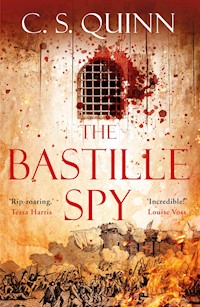
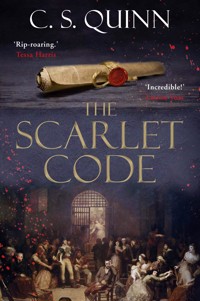
Shortlisted for the HWA Gold Crown 2020 _________________________________ From the bestselling e-book sensation of The Thief Taker series comes a thrilling and sumptuous novel set during the early days of the French Revolution. 'A rip-roaring adventure.' Tessa Harris, author of the Dr Thomas Silkstone Mysteries _________________________________ 'He was alive when he went in the mortuary.' 1789. The Bastille is marked for destruction. Skirmishes in the city are rife and revolution is in the air. When a gruesomely murdered rebel is found in the prison morgue, a plot is suspected. English spy, Attica Morgan, is laying low after an abortive mission. So when she's given an assignment inside the Bastille, her instinct is to run. Instead, she's offered a pardon, in return for solving the mystery of the dead revolutionary; and exposing a plot that leads to Marie Antoinette. But as tensions rise to breaking point in the city, Attica quickly realises she's in a race against time. Soon there could be no Bastille to investigate. 'Incredible! It's the best action adventure novel I've ever read... A fantastic achievement that has blown me away with its ingenuity, scope and breathless pace.' Louise Voss, author of the Detective Lennon series
Das E-Book können Sie in Legimi-Apps oder einer beliebigen App lesen, die das folgende Format unterstützen:
Veröffentlichungsjahr: 2019
Ähnliche

















THE BASTILLE SPY
C. S. Quinn is a travel and lifestyle journalist for The Times, the Guardian and the Mirror, alongside many magazines. Prior to this, Quinn’s background in historic research won prestigious postgraduate funding from the British Arts Council. Quinn pooled these resources, combining historical research with first-hand experiences in far-flung places to create her bestselling Thief Taker Series.
Also by C. S. Quinn
The Thief Taker SeriesThe Thief TakerFire CatcherDark StarsThe Changeling MurdersDeath Magic (short story)
THE BASTILLE SPY
C. S. QUINN
First published in Great Britain in 2019 by Corvus, an imprint of Atlantic Books Ltd.
Copyright © C. S. Quinn, 2019
The moral right of C. S. Quinn to be identified as the author of this work has been asserted by them in accordance with the Copyright, Designs and Patents Act of 1988.
All rights reserved. No part of this publication may be reproduced, stored in a retrieval system, or transmitted in any form or by any means, electronic, mechanical, photocopying, recording, or otherwise, without the prior permission of both the copyright owner and the above publisher of this book.
This novel is entirely a work of fiction. The names, characters and incidents portrayed in it are the work of the author’s imagination. Any resemblance to actual persons, living or dead, events or localities, is entirely coincidental.
10 9 8 7 6 5 4 3 2 1
A CIP catalogue record for this book is available from the British Library.
Hardback ISBN: 978 1 78649 8427
Trade paperback ISBN: 978 1 78649 8458
E-book ISBN: 978 1 78649 8441
Corvus
An imprint of Atlantic Books Ltd
Ormond House
26–27 Boswell Street
London
WC1N 3JZ
www.corvus-books.co.uk
Inspired by true events
CHAPTER 1
St Petersburg, The Winter Palace, 1789
THE DAY I KILLED THE COSSACK WAS WHEN IT ALL BEGAN. If I think carefully, I can trace everything back to that slave market in St Petersburg – an illegal affair trafficking mostly Persians and Kurds foolish enough to cross the badlands of Khiva.
The dusty square bore a resemblance to other livestock markets in Russia. There were enclosures, merchants shouting their wares and buyers haggling, examining the goods. A good deal of vodka was being drunk and a few traders were filling their bowls from a cauldron of cabbage soup bubbling over a wood fire. Despite the sultry heat of the St Petersburg summer, most buyers wore thick fur-lined leather coats and boots.
In contrast, I was dressed in Turkoman rags that barely covered my body, with a metal cuff heavy around my neck and chains at my wrists and ankles.
The fellow slaves in my consignment were similarly clothed and bound, heads bowed low with the discomfort of their bonds, bodies wasted from their weeks dragged starving through the Russian countryside.
In the middle distance stood the fate of many people trafficked here. The magnificent Winter Palace was being extended for Catherine the Great; the boxy Hermitage annexe wrought brick by brick from the sliding marsh. Her Imperial Majesty had ended slavery. But she doesn’t involve herself in building works. This square palace, with its endless gold columns and bride-cake green-white façade, was built on the bones of spent slaves, flung carelessly into the foundations.
Even now if I close my eyes I can see and feel that fateful day as if it’s happening all over again. A bushy-bearded man steps forward and ushers our little group into a fenced enclosure. He wears a tricorn hat with red fur edging, jammed down low over his greasy dark hair. This is the man who bought us, the unseen buyer who paid the dead-eyed Khiva tribesman who herded us to the city gates. At his side stands a giant Cossack with a plumed turban, a studded-leather jerkin and a whip in his hand.
‘Let’s see what we have,’ says the fur-hatted merchant in heavy St Petersburg Russian, with a humourless grin, ‘in our Kurdish soup.’ This is a derogatory term for a job lot of slaves bought cut-price from Khiva – like the cheap stew made in Kurdistan, where each ladle holds differing amounts of miscellaneous meat.
The slave merchant shoots a dark smile at his Cossack henchman.
‘Those pig-ignorant slave-hunters wouldn’t know if they caught Empress Ekaterina herself,’ opines our owner with a sneer. ‘My last batch had two Russians, worth fifty roubles each.’ He eyes us greedily, assessing, whilst the Cossack stares stoically at the Winter Palace. ‘Mostly Kurds,’ he decides, disappointed. ‘Perhaps some Persians if we’re lucky.’ He points. ‘Separate those at the back.’
The Cossack moves among us, driving the slaves apart. He looks resigned and I wonder how he came to this position, hired muscle for a slave buyer.
Our owner’s eyes land on me.
‘Well, well,’ he says, licking his lips. ‘What have we here?’
I’ve tried my best to disguise myself, spreading mud over my skin, matting my long dark hair and arranging it over my face, but there’s no hiding my height.
The owner lifts a chunk of tangled hair and I blink, scowling.
‘Could be something,’ he decides, turning to his hired thug. ‘See the eyes? Blue-grey.’ He spits on his finger and rubs away a little of the dirt on my upper arm.
‘Dark, but not too dark,’ he says. ‘What think you? An African half-breed?’
‘Too light. Maybe Moorish,’ says the Cossack. ‘The eyes are too savage to be Russian.’
‘Maybe,’ decides the owner. He prods his sharp stick into my chest.
‘You,’ he barks. ‘Where from?’
I mutter a few words of frightened Kurdish. He shakes his head.
‘Kurdish,’ he says contemptuously. ‘Hardly worth the chains that hold her. She’s only good for the street brothels.’ He indicates towards the back of the market. ‘Put her in with the other whores.’
They drag me along, the chain weighing around my neck, my hands bound, to a stinking shack partially roofed with mouldering reeds. A door of sticks is dragged open and the stench of despair wafts out. A huddle of frightened girls look up as I’m pushed to the ground and fastened to a metal hoop on the floor.
The door shuts and I begin to free myself, working fast. I reach up, tugging a hidden lock-pick from my filthy hair. I unlock my chains and the manacle at my neck, rubbing my wrists in relief as the restraints fall.
The other slaves are watching me shed my bonds, their eyes like saucers. I scan the little hut and my eyes land on a single scrawny man, huddled in the corner. Without his rigid aristocratic clothing, he reminds me of a soft pink crab slipped from its shell. His head was once close-cropped for a wig, but now his hair grows out untidily in clumps of black and grey, to match his unshaven face. Bare knees are drawn up to his chin, the naked legs ageing and liver-spotted. There is a deep bruise on his cheek just below his haunted eyes. My heart aches for him.
I drop to the ground near where he sits.
‘You are Gaspard de Mayenne?’ I ask. He flinches, features twisted between confusion and fear.
‘Who are you?’ he whispers, his gaze trying to reconcile my light-coloured eyes to skin that isn’t white enough to fit, in that way Europeans do.
‘My name is Attica Morgan,’ I say, speaking in French. ‘I’m an English spy. I’m here to rescue you.’
CHAPTER 2
IN MY EXPERIENCE, MEN OFFERED RESCUE BY A WOMAN FALL in two camps: those who refuse the possibility and those who try to take command of the escape themselves. To my relief, Gaspard is in the first group; these are the ones who cause the least trouble.
He makes a little half-laugh, then stops when he sees my expression.
‘You have the wrong person,’ he says. ‘I was exiled here by King Louis XVI. I’m of no use to the English.’
‘Revolution is in England’s interest,’ I explain. ‘We like what you’re doing in France. Your pictures. We want you to keep doing it.’
Gaspard considers this. I wonder how much of his spirit has been broken in his hard months of slavery.
I move to unlock his chains but he pulls away, eyes furious.
‘No!’ he hisses. ‘I don’t need your kind of help. They will blind me and worse.’ My thoughts flick back to the mutilated people in the market. Slaves who tried to run. Gaspard’s eyes burn with boundless terror.
‘Even if I could return to Paris,’ says Gaspard, ‘the King would boil me alive as a warning to others who seek democracy.’
It’s then I notice a raised ring of branded flesh on his ribcage, ill concealed by tattered slave garments. The Bastille guards must have tortured him before sending him to Russia. He sees me looking and rearranges his rags.
I grip his thin wrists tightly and look straight in his eyes.
‘France is closer to change than its King wants you to think,’ I say steadily. ‘Your rescue will show the French people they needn’t be afraid. I give you my word as an Englishwoman. You will be free and you will be safe. I have done this many times.’
I’ve been unlocking his chains as I speak and they fall to the dusty ground. His mistrust fades and he starts shaking, tears running down his cheeks.
‘It’s true?’ he whispers. ‘The French people might have liberty?’
I nod.
‘What about the others?’ he manages, swallowing a sob. ‘The other slaves. The things they do to them ...’ He is trembling. I hold his shoulders.
‘Every last one of you,’ I promise, ‘will have your freedom today.’ Quickly I start unchaining the other girls, careful of their injured wrists and bruised necks. They are Kurdish and I speak to them softly in their own language. Without chains they seem even more vulnerable.
I snatch a glance at the low sunlight slicing through the rickety door. Our means of escape will come soon. I work faster. There are more slaves here than I thought possible. But at last each sits unbound on the dirt floor.
There’s a sudden flare in the far distance, visible even through the slats of our wooden door. Flames, the sound of gunfire. It’s time.
I throw open the door. The slave merchants have been thrown into panic, believing their illegal trade is being raided. We’ve worked to give the illusion our limited troops are from the Palace and large in number.
I kneel and move aside a little dirt on the ground. My knife is where I buried it last night, before I hid myself in the wagon of kidnapped Kurds disguised as a slave.
I grip the dark-wood handle and pull the curved blade free. This is a Mangbetu knife, smooth black and deadly, awarded only to the deadliest fighters of the African Congo. I feel its reassuring weight in my hand and slide it into the back of my rags.
The traders are wildly freeing their captives, anxious to avoid arrest. Chains and manacles fall to the ground with a heavy clanking. Ropes are cut, fences kicked down. Unshackled slaves are staring around themselves, unable to comprehend what’s happening.
Behind me the slave girls are watching the chaos.
‘This is your chance,’ I tell them, pointing to a building at the top of the hill. ‘Go. Any slave who gets inside that church is promised sanctuary. Her Imperial Majesty decreed an end to servitude. By tomorrow night I’ll get you on a fur-trade boat bound for Hamburg.’
There’s a fraction of a pause. Then Gaspard remembers something of his revolutionary self. He grabs hold of two girls by either hand.
‘Vite! Vite!’ he cries, dragging them forth. As soon as they exit the hut, something changes. Their faces become determined, their movements certain. They flee as a pack, heading for freedom. It’s like a dam breaking. Every slave is running hard, like a tidal wave moving uphill in the direction of the church.
I hear a cry. One of the girls has fallen, her leg caught tight in a slave-snare. It’s only a simple rope-trap, but she’s panicking. Other slaves are stampeding near where she lies.
I run to her. Falling at her side, I begin slicing through the trap.
Suddenly strong fingers seize my upper arm. I stagger as I’m pulled around to see a familiar face: the outsized Cossack guard from the slave sorting. I twist, breaking from his grip, step back into a low fighting stance, my long black blade in my hand.
The Cossack grins, revealing large white teeth. He tilts his head appraisingly, closing in. ‘I knew there was something different about you,’ he says in Russian, moving forward. ‘We heard tales about a girl spy. I didn’t believe it until now. You’re going to fetch a fine price in Moscow.’
Out of the corner of my eye I can see the girl pulling at the half-cut rope around her ankle. I bring the blade low, pointing upwards as the Cossack closes in.
He taps his thick studded armour.
‘Blades don’t pierce military leather,’ he says, lunging to take a heavy hold of my arm again.
Suddenly his face twists in shock. He lets out a strange strangled cough.
‘Mangbetu knives do,’ I say, turning the blade to slice his lung as his eyes bulge.
The Cossack drops silently to the floor, blood filling his airways. I look back to the slave girl sprawled in the dirt, mouth open in silent horror.
I move back to her side, slash free the snare, pull her up and give her a hard shove.
Her ankle is twisted and she gasps in pain.
‘I can’t do it.’ The girl’s starved and battered body is giving way. Her eyes are fixed on my bloody knife. ‘I can’t fight like you. They’ll find me ...’
I take her face in my hands.
‘Look at me,’ I say, speaking in Kurdish. ‘Do you believe me when I say I don’t break my promises?’
She glances at my blood-soaked hands.
‘Yes.’ She swallows.
‘You will survive this,’ I tell her. ‘I promise. I see it in you. Get to the church at the top of the hill and your freedom awaits.’ I spin the gore-flecked knife. ‘I will cut down anyone who tries to stop you.’
She runs, limping towards salvation.
I shield my eyes and see Gaspard has reached the safety of the church door. He turns, sees me and shouts something. I can’t hear the words but his expression is unmistakable.
Hope, that emotion he’d so carefully guarded against, was in full bloom. I live for that look. It’s what keeps me going through all the hard business of spying for the English.
Little did I know, in under two weeks, his face would look very different.
Gaspard would be lying dead in the Bastille prison, a diamond between his lips.
CHAPTER 3
London, two weeks later
IT’S GOOD TO BE BACK IN LONDON. THE TREES SURROUNDING King’s Cross are in blossom. I can smell the sweet-grass meadows that lead to Camden Village. My family’s town residence, a great red-brick hall awarded to my ancestors by Henry VIII, is resplendent in the sun.
Today I’m dressed for a wedding: a white silk dress embroidered with dainty violets. Beneath a little purple hat, secured at a tilt, my curled dark hair is elaborately styled with jewelled pins. My shoes are satin, pointed, with a small heel. Strings of pearls conceal yellow ghosts of manacle bruising to my wrists and neck.
I made the hour’s walk here from the squalid Wapping docks, drinking in the lively industry of blacksmiths and papermakers, the press of girls with baskets of wares on their heads, a scent of fresh bread and pies in the air. So, unlike the other wedding guests, I haven’t arrived in a gilded carriage. As I ascend the grand steps to the house an unfamiliar servant in gold-frogged livery is in the hallway making space on the portrait wall.
He’s straightening an oil painting of my stepmother, the first Lady Morgan – a rapacious socialite who died many years ago.
Next in line is the picture of my mother. A bright turban frames her dark-skinned face and she holds a narrow spear. Mamma never did get to England, but my father made sketches and had her commemorated in oils.
Hearing my approach, the servant looks down from his half-ladder.
‘A sad story there, I’ll be bound,’ he says, noticing me looking at my mother’s portrait. ‘They say she’s why Lord Morgan drinks the laudanum. You are here for one of Lord Morgan’s wedding guests?’ he adds.
Of course, he assumes me a courtesan. It’s hard for the English to see an unaccompanied woman in finery and come to any other conclusion.
‘I’m Attica Morgan,’ I reply. ‘Lord Morgan’s daughter.’
The servant overbalances slightly then rights himself, pulling my mother’s portrait askew. He looks from her to me. A wild blush creeps up his neck and across his face. He tries to bow and the ladder jerks dangerously.
‘Please,’ I say, moving towards him, ‘don’t fall on my account.’
‘My apologies,’ he says. ‘Miss Attica. I didn’t know ...’
He pronounces it A-ttica, the way the English do, which could be correct for all I know. My name means ‘of Africa’ – perhaps an attempt to connect me with my heritage. I’ve never minded my mixed blood because I can look like many different people. I could be, say, a Jewess or a Spanish dancer or an Italian heiress or a coal-eyed beggar girl. This is a great advantage for a woman who travels in disguise.
‘It’s a common mistake.’ I smile at the servant. ‘No one can quite agree if I’m illegitimate and I never could sit still for portraits. That’s the only one of me.’ I point to a mischievous-looking girl sat on my father’s lap.
This discomforts him worse than before. He begins leaning from foot to foot.
‘Your shoes are the new Lady Morgan’s choice?’ I observe, taking in the little gold heels.
‘Yes.’ He smiles in relief, having found a better subject than my scandalous existence.
‘I’ll see if I can’t put in a word,’ I say, ‘to get you something for standing about in.’ I wink at him as I walk past, and through the main doors.
The dark interior closes around me as if I’d never left. The smell of beeswax polish, the richly coloured walls and oil paintings, the feeling of never belonging.
Garlands of flowers are festooned all around today and there’s a hum of modernity. Servants are polishing glassware rather than tarnished old chalices. The wedding breakfast is fashionably understated. No huge sides of game or suckling pigs. The new Lady Morgan’s influence is like a breath of fresh air.
I’m eyeing the small crowd, trying not to listen to the whispers about my father’s new wife – an American slave-abolitionist, who has already scandalized London with her lack of English decorum.
‘Attica!’ I hear a high-pitched voice and realize the Spencer sisters have seen me. It’s too late to beat a retreat. They close in, ribbons and bows flapping.
The older and younger siblings are almost identical, with fish-like blue eyes and mousy hair, sculpted upwards into precipitous waxy towers. As usual they are dressed for determined husband-hunting. Single men are giving them a wide birth.
‘We have someone who is mad to meet you,’ enthuses the older sister.
I scan the room for a way out. Likely one of their greasy cousins has come of age.
The younger Spencer sister makes some frantic beckoning into the crowd. A rather silly-looking blonde girl is the target of her wild gesticulating.
‘This is her!’ announces the elder, proudly, stepping back so her friend might get a full view of me. ‘Attica Morgan, the escaped slave.’
CHAPTER 4
LONDON SOCIETY CAN BARELY BREATHE IN THE FETID AIR of its own stale gossip, yet I’m perpetually surprised by how resistant everyone is to forgetting my origins. If you believe the rumours, my brilliant father, Lord Morgan, sailed away from his acrimonious marriage into the arms of an African princess. She was captured by slavers whilst pregnant with me and my father was tricked into thinking her dead. His laudanum haze followed. Then some years later I docked at Bristol, a glowering little beast, so they tell it, who refused to speak a word of English and bit the first Lady Morgan’s jewelled hand.
My recollection is rather less straightforward. Nevertheless, it’s true I arrived in England as a small girl, to an estate of horrified relations and servants.
I have a similar sensation now, as a girl with solid blonde curls pasted to her forehead makes towards me, cooing as though I’m a monkey in a cage.
‘Amelia is mad to meet you,’ says the older Spencer sister, taking the blonde girl’s arm. ‘We’ve told her all about your daring getaway.’
‘I thought she’d be darker,’ says Amelia, sounding disappointed. ‘She could pass for Spanish. Do you speak any English words?’ she asks, speaking slow and loud.
‘Attica is frightfully clever,’ says the oldest Spencer quickly. ‘You would hardly know her mother was a savage. She is a translator of languages, isn’t that right? You were helping the Russian ambassador.’
She glances around the room. Several young men look away in panic.
‘I don’t know how you can stand such dry work,’ she says. ‘How do you find time to embroider?’
‘It’s not as dull as it sounds.’ I keep my tone impassive. ‘Though I must admit my needlework has suffered.’
‘You must apply yourself,’ cautions the younger Spencer, her blue eyes wide. ‘You will never catch a husband if your sewing is poor.’
Her sister elbows her in the ribs and the younger reddens, realizing her blunder. ‘Very sad,’ she ventures, in a strange babyish voice, ‘that your wedding didn’t go ahead?’
‘No,’ I say, ‘I cannot say that it was.’ The relief, the sheer relief, of escaping the bonds of wedlock. I can still call it to mind now, like a waterfall of gold washing me clean. ‘I thought England had no slavery,’ I tell them, ‘until I learned about marriage.’
They all laugh a little too loudly. The new Lady Morgan has, after all, just become my father’s legal property.
‘Very good,’ says the blonde girl approvingly. ‘Don’t get glum about it.’ She gestures to a table where the remains of hot buttered rolls, tongue, eggs and ham are being cleared away. A large bridal pie with cornice-like fluting is being brought forth.
‘Perhaps you will get the slice with the glass ring in it.’ She holds up two crossed fingers inches from my head, her features scrunched earnestly.
‘What good fortune that would be.’ I keep my face perfectly neutral.
‘You know you really are rather pretty,’ she continues, encouraged. ‘Those grey eyes are quite striking and not all men would mind such a tall woman. Perhaps another suitor can be found.’
‘Unfortunately, we African brides eat our husbands on the wedding night,’ I say. ‘So it is a hard match to make. Would you excuse me?’
I make them a brilliant smile, curtsey and vanish into the crowd, leaving them wide-eyed in shock. I’m making my way to the servants’ door when a hand tightens on my arm.
I turn around and find myself looking directly into the dark brown eyes of Lord Pole. I feel as though the warmth has been sucked out of the room.
How much does my scheming uncle know about what I did in Russia? I wonder.
Lord Pole is dressed in the clothes he wears to Whitehall: a bear-fur collar, long black robes, and a square felt hat, like a scribe might wear.
A thousand thoughts race through my head. ‘No dress coat,’ I ask, ‘for your own brother’s wedding?’
‘I’ve come from urgent business,’ he replies, watching the wedding crowd with a thoughtful expression. He frowns as a servant hands us each a dainty glass of red wine and a plate of bridal pie.
Besides being my uncle, Lord Pole is one of the most important men in English intelligence. He is keenly aware that, matched to the right husband, I could get into all kinds of drawing rooms and bedrooms. But so far his plans to have me married to the enemy have been averted. His dark eyes are surveying the room again. We are all outcasts, us in the low business of espionage, and Lord Pole is no exception. His long nose and swarthy features are courtesy of his German father – a Bavarian count whose scandalous lineage Lord Pole dedicates his life to nullifying. The rest of his time is spent plotting, an activity at which he is masterly.
‘As if your father’s African wife wasn’t scandal enough for one family,’ he says, more to himself than to me, ‘now he weds an American heiress and it isn’t even for her money.’
‘Be sure not to follow his example, Uncle,’ I say. ‘You risk a happy marriage.’ I take a small mouthful of pie. It is made of the traditional offal and oysters and loud with expensive spices, a nod to my father’s generation, whose artifice and grandeur are now out of favour.
‘I think the new Lady Morgan will be good for him,’ I conclude. ‘Less laudanum.’
Lord Pole hands his untouched plate impatiently to a passing servant.
‘It’s bad luck not to eat the pie,’ I say.
‘I don’t believe in luck.’
There’s a girlish shriek in the corner. One of the Spencer sisters is holding up a grubby glass ring, a symbol she’ll be next to marry. Lord Pole’s expression clouds in disapproval.
‘I imagine you’re looking forward to your own wedding one day soon,’ he says, returning his attention to me.
‘I hadn’t considered it,’ I say, careful to stop the tremble in my hands. ‘I am told I provide a useful service to my country.’
‘Yes.’ He lifts his glass and swallows the contents. ‘Become indispensable in the active spy network. That has been your game, has it not?’
‘It isn’t a game.’
Lord Pole locks eyes with me suddenly. It’s an arresting, disconcerting sensation to be the sole focus of that calculating gaze.
‘Don’t think I don’t know of the plots that were made to abort your wedding last summer,’ he says. ‘Very convenient that a mysterious fortune came into the hands of the bride who took your place.’
‘I don’t know what you’re talking about.’
His dark brows knit together. ‘Do not forget the service this country did for you, Attica. You arrived as legal property of a plantation. We turned a blind eye.’
‘Because you saw my potential to marry the right man and spy on him,’ I fill in. ‘Or is it usual to train English girls in code-breaking and lock-picking?’
Lord Pole smiles but I see his fingers curl tighter. He hates for anyone to see his machinations at play.
‘We only capitalized on your father’s irresponsible beginnings,’ he says, ‘letting you into the cigar rooms, allowing you to cavort with his maps and instruments. I took the chance to gain you an advantage. Yet you squander it.’
He gives me a long look. ‘The reprieve your father negotiated for you was supposed to end with one mission. It’s true your abilities are exceptional, but we never meant you to become a crusader.’ He waves his hands to signal the inexplicability of it all.
‘You are afraid your pawn is not behaving as you expect,’ I observe. ‘I have been proving too useful in the field.’
‘You have surpassed expectations,’ he admits. ‘Yet I’ve been hearing things. Your obsession with breaking up slave rings has compromised your neutrality. You were supposed to bring Gaspard back to France, not release two hundred Kurds into the bargain.’
I have a sudden queasy feeling that he’s been waiting for me to slip up.
‘What does it matter?’ I say. ‘I brought Gaspard to a safe house, as was asked of me.’
‘A woman’s usefulness will always be different to a man’s. You are a year from spinsterhood, at which point your value will plummet. It’s time your more female qualities were put into service.’
‘What of my feelings on the subject?’ I manage to keep my voice perfectly steady.
I’ve a terrible prescience Lord Pole is formulating something that will be difficult to evade.
‘Ah! Feelings,’ says Lord Pole. ‘Yes. You young people seem to have so very many of them.’
CHAPTER 5
MY HEART LIFTS AS I SEE THE FAMILIAR HOTCHPOTCH buildings of Whitehall. Barefoot children with baskets of quill pens and reeds of cheap ink are pestering the wigged and waistcoated men entering parliament. Street stalls fry pancakes and sell pea soup by the pint from a cluster of tankards swinging on chains. A bird-catcher sits, emptying a net of chirping goldfinches into a small wooden enclosure.
I approach him, dip a hand in my purse and hand over a shining guinea. His eyes widen and his hand stretches out uncertainly.
‘Let them all fly away,’ I say, closing his hands around the coin.
He nods rapidly, opening the cage with a disbelieving grin. Clutching the money tight to his chest, he walks away, unable to stop smiling.
The birds take flight. They streak past me, black, red and gold, as I turn my attention back to the grand Whitehall buildings.
Tacked against the turreted wall of Westminster Palace is a threadbare canopy over a cauldron of hot green peas. A man with one eye and a single tooth stirs it with a long stick.
I move towards him, smiling.
‘Hello, Peter,’ I say.
‘Attica!’ He beams, treating me to the full view of his sole tooth. ‘Those lyin’ bastards said you was dead. Where’ve ya bin then, girl?’ Peter leans over his tepid wares and grasps both my hands in his wizened old claws.
‘Russia.’ I grip his hands in return.
‘Ah.’ His eye lifts skyward, considering. ‘That’s north of Oxford, is it?’
I hide a smile. ‘Yes.’
He tilts his head, taking in the new scar, running deep, just below my jawline.
‘Robber got ya?’ he suggests.
I touch it with my fingers, feeling the long track of raised red. It feels like it belongs to someone else.
‘Something like that,’ I say.
He leans back, assessing.
‘Well, you’ve looked worse,’ he concludes. ‘Least you’ve some meat on your bones.’
He’s referring to my training in Sicily, in preparation for which I’d spent far too long running in forests with logs on my back, so as to pass for a boy.
In the months that followed, my knife was so rarely from my hand, the palm muscles began to atrophy in the shape of the handle. By the end, those still alive could slash five different arteries in thirty seconds – abdomen, wrist, throat, thigh, chest – and no one ever deduced why a boot to the groin affected me so much less than my fellows. The final test was two sleepless weeks, hunted by assassins. Then fighting blind-fold, waist-deep in cold water. Two of us graduated – that is to say, lived.
Peter had been the first familiar person on my return. I’d lost so much weight my jaw jutted. My face held the burning gaze of what the Italians call ‘blood on the soul’.
‘I’m different now,’ I remember telling Peter, looking at him with pupils blown wide from exhaustion.
He’d considered this for a long moment before heaping a ladle of peas into a tankard and pushing it into my hands.
‘Drink this,’ he’d said, looking at me steadily. ‘Nothing’s happened to you, girl, that hot peas and a good night’s sleep won’t fix.’
I still think about that sometimes.
‘Good to have you back,’ Peter says now. ‘They’re a savage lot Scotland way, so I hear.’ He sniffs and wipes his nose on his sleeve. ‘It’s not the same without you here,’ he continues, with a glance at Whitehall. ‘They bin sayin’ I can’t empty me slops into the gutter.’
‘I’ll talk to them,’ I promise. ‘Is Atherton inside?’
‘Yes.’ His face turns wary at the name. Peter holds up a warning finger, eyeing the surging parliament men behind me.
Peter waits for his moment before stepping aside, motioning me behind his smoking cauldron. At the back of his stall is a hessian curtain; to all appearances it covers nothing but wall, but as I lift it, immediately beneath me is a set of old stone steps.
Whitehall’s secret entrance. Once used by the King to smuggle in his mistresses, in these times of espionage it is employed for a different purpose. I descend into torchlit gloom, turn a corner and open another curtain into an underground room. The dark explodes into light.
This is the society of the Sealed Knot. We lie, steal, deceive and risk summary execution so upstanding soldiers and generals might win wars and medals publicly. They are the closest thing I have to a family.
And after almost a year in Russia, I’ve come home.
CHAPTER 6
IN THE SEALED KNOT’S LABYRINTHINE HEADQUARTERS, candelabras and candles burn along every wall, illuminating the carved wood-panelled ceilings. Large tables are lined with men, maps and papers of every kind.
The familiar bubbling chatter of plans and schemes surrounds me. Servants move about, pouring wine and brandy punch, putting down plates of meat and bread. The air is fuggy with pipe smoke and intrigue.
Naturally, the dirty underhand war of intelligence is staffed by those whom polite society shun. There’s no one here without a scandal to tell, a price on his head or a court martial to run from. Though no recruitment was more shocking to our sensible German King than mine, so I’m told.
I pass through and a few faces turn to me, eyes wide. I raise my finger to my lips and head to a corner where a little knot of men are huddled over a large book. As I approach I can hear them arguing loudly about a wager that should be paid out.
I put my hand on the shoulder of the nearest – a dark-haired man with nut-brown skin and an expensive fencing sword at his hip.
‘You should have bet higher, Emile,’ I say.
He whips around. His face makes a strange contortion.
‘Attica!’ He grabs me in a bear-embrace. I wince. Emile fled from France to England after a fight with the wrong man; his upper-body strength is vicelike. Like me, he grew up with a gypsy camp, so we share a common language and have always been favourites to one another.
The other gamblers are welcoming me home now, delight on their faces. These are my friends, my comrades. Besides fencing champion Emile, there’s a highwayman, an excommunicated young priest and a playwright-turned-forger. Like me – the tawny-skinned illegitimate daughter of an English lord – they are all outcasts with extraordinary talents useful to England’s underground secret service.
‘I thought you were dead!’ Emile admonishes. ‘The last German ship docked on Thursday.’
‘I knew you bloody Hellfires would run a bet,’ I say, ‘so I spent a night in Southwark instead of coming straight. Only narrowly made it to my own father’s wedding.’
I eye the open book over his shoulder.
‘Congratulations, Emile,’ I grin, ‘I knew you’d take the longest odds.’ I wag my finger at the rest of them. ‘And you all should have more faith,’ I admonish, smiling. ‘Since when did some cold water stop me getting home?’
The assembled spies laugh, enjoying the joke.
I look to a tapestry hanging at the back which everyone is pretending a little too hard isn’t there. The way to Atherton’s door.
‘He’s in there?’ I ask, nodding to it. The mood instantly changes.
‘Ye-es,’ ventures Emile. ‘But he’s in a foul temper. Something’s happening in France. Missing diamonds or some such. People are turning on the Queen. You’d think Atherton would be happy,’ he adds with a confused shrug. ‘We’ve spent a lot of manpower trying to bring King Louis down.’
I glance at the tapestry. The power of life and death lies beyond. No one goes through without good reason. Or, more likely, bad reason.
‘Best I find out more,’ I decide, breaking away from the group. ‘You can buy me brandy from your winnings later,’ I toss over my shoulder to Emile.
I slip underneath the tapestry. A spiral staircase is on the other side and I ascend to another part of Whitehall. Atherton’s office is the clandestine bridge between secret spying and public politics.
His door is at the top of the stairs and I turn the handle without knocking.
As it opens, I’m greeted by the familiar sharp smell of sealing wax. This is the heart of it all, where it all happens.
The most illegal of legal things in England.
Forged pardons, authorizations, safe passage in every language are issued from here. Maps and city plans, stolen and duplicated from the four corners of the earth, are rolled and filed.
The room is filled with smoke and at first I can’t see Atherton. My heart beats faster. It’s been almost a year since I saw him last. We wrote to one another whenever we could, but I know there are things he wouldn’t tell me by letter.
The haze clears and there he is.
Atherton. Sitting behind the same desk. Wearing the same blue and gold naval coat, his thick brown hair just as unruly.
A rush of emotions hit me.
His shaggy head is lowered, deep in concentration, fiddling with a tiny brazier of burning coals. Floating before him, like dancing angels, are three paper lanterns, bobbing in the air. Each belches a trail of black smoke, rather ruining the celestial effect.
I watch him reach out a long finger and tap one of the hovering lanterns. It lifts gracefully, propelled by the heat of the brazier burning on his desk. Atherton’s lanky frame is twisted awkwardly on his chair and twin walking canes rest against his withered legs.
‘If you must play with fire, Atherton,’ I say, ‘you should find an office with higher ceilings.’
He looks up confused, then his face changes.
‘Attica?’ He stands with effort, his light green eyes lit with joy, a smile stretched across his narrow face. ‘Those bloody French have mastered the hot air balloon,’ he explains. ‘King Louis tests them with convicts. They got one halfway across the English Channel before it mercifully combusted.’
Something like relief catches in my throat to find him so unchanged. I half-run at him and we hug tightly and for too long because there’s no one watching.
‘I thought you were dead,’ he says.
‘How could I be?’ I say. ‘I promised you I would return.’
‘You’ll stay?’ He slides his hands from my shoulders, takes my hands in his. ‘Longer than a week this time?’
I feel my heart squeeze. My eyes settle on his wedding ring.
‘I can’t,’ I say, shaking my head.
‘For a few days, at least.’ Atherton makes the disarming smile I love, his green eyes tilted up, straight mouth drawn wide.
We’re staring into one another’s eyes, my hands still on his shoulders and his on mine. If we were reunited lovers, we would kiss now, I think.
Could we? Just once? I picture Atherton drawing closer, see myself doing nothing to stop him.
A blaze of flame behind us shocks me into my senses. One of his lanterns has caught on fire.
‘Your flying balloons need more work,’ I tell him, moving to extinguish the flames. ‘Shouldn’t you use silk, instead of paper?’
CHAPTER 7
ONCE I’VE EXTINGUISHED ATHERTON’S AIR BALLOON experiment, I take in his office.
It’s different to how I remember it. It was once full of fashionable furniture, Chinois style, all red and gold and looping shapes. But things have been cut down, altered, removed. His old desk is still here, though – heavy black, with a scattering of different-sized drawers at the front, painted with gold-lacquered flying birds, willow trees and rivers from a far-flung land he’ll never see. But bolted solidly to the top are two wooden handles, rough-hewn things for a cripple to grip at.
On the wall is a portrait of him five years ago in the Navy, before his illness began, standing tall in his admiral’s uniform and tricorn hat. I wonder how he can bear to have it here still.
‘Your office looks awful.’ I grin, knowing he’ll appreciate my honesty. ‘Couldn’t you have kept your limbs working a little longer?’
He laughs. ‘It’s been a long time since you decorated,’ he says, smiling back at me. ‘I became bored of good taste.’ The smile fades away. ‘You’ve been gone a long time, Attica,’ he says. I see in his face a little snatch of how it must feel to be stuck here with someone you care for far away.
‘That doesn’t change things,’ I say, squeezing his fingers.
I drop my hands down to hold his, reluctant to move apart.
‘How are you?’ I ask.
‘Good and bad,’ he admits, shifting his twisted legs. ‘The rubber stoppers you got me come in useful on Whitehall’s waxed floors. Fortunate those Caribbean pirates never found you.’
He gives me a mischievous glance.
‘How did you ...?’
‘How did I know you risked your life to steal them? Let’s just say it’s my job to know things.’ He taps his nose.
Atherton plants his palms on his walking sticks and shuffles with difficulty to his desk. When his condition first deteriorated he told me in no uncertain terms not to treat him like a cripple. I’ve always respected his wishes, but it’s not always easy.
I wander around the office, taking in the changes. I reach up to a little cabinet, all little-gold-leafed drawers. It bears all the markings of one of Atherton’s puzzle boxes.
‘You’ve altered the pattern?’ I guess, reaching up and pressing on a gold-leaf. It recedes into the wood.
‘I’ve made a few improvements.’
I nod, pushing in a few other sections in sequence. I only just duck in time, as a drawer shoots free, sending a whirling blade winging across the room.
‘Very good,’ I enthuse, noting how far it has lodged in the wall.
‘The spring is a great deal stronger,’ agrees Atherton, pleased.
I move to the opposite side of the room, where the blade has embedded, twanging menacingly with the impact.
‘Anything else?’ I ask, prodding it.
‘Oh yes!’ Atherton’s schoolboy energy always lights him up when speaking of his inventions. He opens a drawer and then another, hidden inside.
After a moment’s frowning search, he removes what look like some little pieces of wood. Their tips are coated in a yellow substance.
I look closer, then grin at him.
‘They work?’
Atherton sits back proudly. He lifts one.
‘Self-lighting fire-sticks,’ he says. ‘Drag them against any rough surface and they will fire on their own.’ He picks one up carefully and drags it against the edge of his desk. It flares. ‘Instant flame, and you can hide them in all kinds of places you couldn’t fit a tinderbox.’
I stare at the fire, transfixed. ‘I don’t believe it.’
‘They fail if you get them wet, mind,’ says Atherton, blowing it out. ‘I’m still working on how to fix that. Perhaps a different mix of chemicals at the tip.’
We share a smile; two strange people who love ciphers and mechanics.
I didn’t realize quite how much I’d missed Atherton.
‘You must at least stay long enough to drink with me,’ he decides. He manoeuvres himself to his desk with impressive dexterity and using the wooden handles he opens the largest of his drawers.
‘Sailor’s finest,’ he beams, lifting out a battered bottle. Atherton’s vice is the filthiest of cheap naval rum, a throwback to his days warring at sea with common sailors.
I lift a chair and seat myself next to him. I lean forward and collect two glasses from inside his drawer and fill them both much too full. The sugary tang of strong alcohol fills the air.
Atherton takes one appreciatively and we sit side by side, our chairs touching. Through his large first-floor window I can see the pale stone of Whitehall streets and buildings and down below the wigged men hurrying to court.
He swigs deeply. ‘Ah,’ he says happily, ‘the taste of the seven seas.’
I sip, shaking my head. The dark rum is as terrible as it ever was.
‘This is why sailors die so young,’ I say, my eyes burning from the fumes tunnelling up my nose.
‘You’ll appreciate it when you’re older,’ he adds, enjoying my wincing expression. His favourite thing is to joke about the age gap between us, which seemed very great when we first met. Atherton tutored me in code-breaking and lock-picking talents ten years ago when I was thirteen and he was twenty-two.
I feel suddenly choked with emotions and take a clumsy mouthful of rum to hide my expression. I want to tell him how I dreamed of the moment I’d see him again, almost daily, in Russia, gathering information for the Crown. That even though he was far away, I knew he was doing everything he could, helping me, keeping me safe, and that knowledge made me happy. But somehow the words don’t come.
Instead, I say: ‘I always liked this view,’ in a cold little voice that doesn’t sound like me.
Atherton eyes me sideways and I wonder if he knows what I’m thinking.
‘So what brings you back to England? King and country?’ he suggests.
‘The usual reason. I’ve come to ask for your help,’ I say, sipping rum. I feel the alcohol burn my stomach, a warm comfortable glow. ‘I need papers. I uncovered a trail of slave trading leading to Madrid. I think there’s a big market hidden there.’
He hesitates. ‘You’ve already been assigned. It’s not my decision. Lord Pole’s office has higher authority.’
My eyes flick to his.
‘Since when did Lord Pole involve himself in Sealed Knot business?’
‘The man you rescued from Russia, Gaspard de Mayenne, we think he’s in danger,’ he says quietly. ‘Lord Pole needs you to get him to Versailles.’
I’m looking hard at Atherton, wondering what it is he isn’t telling me.
‘What business could Gaspard de Mayenne have in Versailles?’ I say. ‘What did you bloody schemers do?’
I’d forgotten, in English intelligence there’s no such thing as a simple rescue.
‘Thanks to you, Gaspard owes us a favour,’ says Atherton. ‘His daughter has a position in the Palace, close enough to get to the Queen.’
‘So you want this girl to smuggle something in?’ I deduce, sipping the bad rum. ‘What?’
Atherton hesitates.
‘Have you heard about the lost diamonds of Marie Antoinette?’
CHAPTER 8
THE LOST DIAMONDS OF MARIE ANTOINETTE. I’M TURNING Atherton’s words over in my head. An image forms in my mind: a newspaper sketch of extravagantly looped and tasselled gems. The description comes back to me.
‘Constructed from two million francs’ worth of diamonds and commissioned by the late French King for his working-class mistress,’ I say, reciting from memory. ‘When he died, his son wouldn’t honour the debt. Marie Antoinette refused a necklace of such vulgar provenance. It was stolen, four years ago.’
‘You’ve a good recall,’ Atherton says. ‘A confidence trickster convinced the jeweller that Marie Antoinette had changed her mind, disguised a prostitute as the Queen and stole the jewels. The thief was caught and the ensuing court trial became a national scandal.’
‘Lèse-majesté,’ I say, it was all flooding back now. ‘The Queen tried to convict not just the thief but the jeweller, too. She accused him of disrespect for daring to believe she would have met a man alone and at night. But she lost the case.’
‘It was all but decreed by law that Marie Antoinette was debauched,’ agrees Atherton. ‘After that, the gossip was unstoppable. The ripples of real discontent began back then. People thought that Marie Antoinette was venal, vengeful. The jewels vanished. Rumours started up that the Queen had taken them.’
‘They’re something of a legend now, aren’t they?’
‘So people have been led to believe,’ he says. ‘But whilst you’ve been in Russia, we’ve been working to find the missing jewellery. We got hold of it in London, before it was to be broken up and sold.’
‘Impressive,’ I admit. ‘You tracked the necklace for all that time, through all the smugglers and shadowy jewellers whose hands it must have passed through. Wait until everyone thought it lost for ever. Then pounce. So,’ I pour him more rum, ‘I imagine you plan to smuggle it back into Versailles? Make it appear the Queen kept it all along.’
‘I’d forgotten how clever you are at guessing plots.’ He smiles at me over his glass. ‘The French King and Queen are hated. It will take only the slightest push for the French people to revolt. A scandalous diamond necklace appearing in Versailles,’ finishes Atherton, ‘is just the pressure needed. Put the diamonds back, let the right servants see it ...’ He waves his glass to suggest the ease with which this could take place.
‘This is Lord Pole’s doing?’ I say. ‘He’s still trying to stop the French King sending troops to America.’
I can always smell my uncle’s schemes a mile away; they have a distinctly cold-blooded reek to them. I picture Lord Pole, a spider in his web of intrigue, making plans, weaving futures for the unwitting.
‘He has a genius for plots of this kind.’ Atherton’s tone is as disapproving as mine.
‘It all sounds very interesting,’ I admit, ‘but I’ve saved Gaspard once. And there’s a slave-trading ship docked off Portugal that needs my attention.’
Atherton rubs his face in the way he does when he’s exasperated.
‘I don’t have a choice in this, Attica. Lord Pole has the highest authority in the Sealed Knot.’ He says it in a way that means: ‘You don’t have a choice.’
‘This is apprenticeship level,’ I protest. Humiliation is blooming.
‘We didn’t mean for you to vanish into Russia and start organizing our embedded men without permission,’ he continues.
‘I saw an opportunity. I took it.’
‘It was a daring and brilliant mission,’ says Atherton, ‘in many ways a great success. But there is more to freeing slaves than fieldwork. And if you can’t take orders ...’
I glare at him. I am so tired of hearing how people should wait a little longer in servitude whilst well-fed men decide their fates by warm fires.
Atherton sighs. ‘It’s Lagos slave docks all over again, Attica. You can’t just go in burning things down for your own agenda.’
‘A youthful grudge, now behind me.’ I try for a winning smile.
‘I took a chance on you, Attica. Everyone knows women aren’t suitable for active service. You’re proving them right.’ He takes my glass, fills it, pushes it back into my hands. ‘If you complete this mission, they’ll let you back at the slave rings. Just prove you’re willing to do as you’re told.’
‘You’d have me playing bodyguard? Those people in Russia have their eyes gouged out for looking at the wrong person.’
I toss the rum back in one, grab the bottle and pour myself another measure.
‘I won’t do it,’ I say, as the alcohol burns. ‘It’s taken years to get inside those slave rings. I know Lord Pole. This is his way of putting me in my place, making sure Lord Morgan’s daughter doesn’t get above herself.’
‘Maybe,’ admits Atherton. ‘But you know how clever he is.’ There’s a warning in his green eyes that makes me snap to attention.
‘He knows I’ll refuse,’ I say, tracking Lord Pole’s likely thought processes. ‘I’ll bet he’s put some penalty in place.’ I drink more rum, feeling suddenly confident. ‘There’s nothing he can do to make me go to France.’
Atherton has a strange expression on his face, almost as though he’s wincing.
‘What?’ I demand.
‘If you don’t go to Paris and deliver this necklace,’ says Atherton, ‘Lord Pole will have you married off.’
I’m absorbing this when something else occurs to me.
‘The unrest in Paris,’ I say. ‘Customs gates are on high alert. Lord Pole would have needed someone trustworthy to smuggle the diamonds into France.’
‘I don’t know who was sent,’ says Atherton. ‘Why do you ask?’
A horrible feeling slides into my stomach.
‘Atherton,’ I say, ‘do you remember my cousin Grace?’
‘The chubby girl who won’t stop talking about politics? Small-pox scars?’ He gestures around the eyes. ‘How could I forget?’ His expression darkens. ‘The pair of you were absolute savages, digging forts in the tennis lawns and stuffing that old cannon with goose feathers. Wasn’t it Grace that had you both using mud as warpaint?’
‘She was absolutely fearless,’ I say, grinning. I’d forgotten Atherton had been around back then. ‘Grace kicked my slave terrors right out of me. I think my father must have known she would. We were kindred spirits.’




