


0,49 €
Mehr erfahren.
- Herausgeber: Booksell-Verlag
- Kategorie: Abenteuer, Thriller, Horror
- Sprache: Englisch
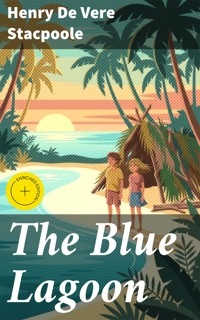
In "The Blue Lagoon," Henry De Vere Stacpoole crafts an evocative tale of innocence and the primal allure of nature through the story of two shipwrecked children, Emmeline and Dickon, who find themselves on a deserted tropical island. With richly descriptive prose that evokes the beauty of the sea and the lushness of the island, Stacpoole employs a lyrical style that celebrates youth, freedom, and the bittersweet passage of time. The novel encapsulates themes of survival and the tension between civilization and the natural world, serving as both a romantic adventure and a philosophical meditation on existence in an Edenic setting. Stacpoole, born in 1863 in Ireland, led a life steeped in travel and exploration, experiences reflected in his writing. His background as a medical doctor and a wanderer instilled in him a deep appreciation for both the human condition and the unfettered beauty of nature. These experiences undoubtedly influenced the creation of "The Blue Lagoon," as he juxtaposes the simplicity of island life against the complexities of society, offering readers a glimpse into his own longing for freedom from societal constraints. Readers seeking a poignant exploration of childhood, nature, and the inherent beauty of life will find "The Blue Lagoon" an essential addition to their literary collection. Stacpoole's narrative not only captivates the imagination but also invites reflection on the essence of human existence and the innocence of youth, making it a timeless classic that resonates with both young and mature readers. In this enriched edition, we have carefully created added value for your reading experience: - A succinct Introduction situates the work's timeless appeal and themes. - The Synopsis outlines the central plot, highlighting key developments without spoiling critical twists. - A detailed Historical Context immerses you in the era's events and influences that shaped the writing. - A thorough Analysis dissects symbols, motifs, and character arcs to unearth underlying meanings. - Reflection questions prompt you to engage personally with the work's messages, connecting them to modern life. - Hand‐picked Memorable Quotes shine a spotlight on moments of literary brilliance. - Interactive footnotes clarify unusual references, historical allusions, and archaic phrases for an effortless, more informed read.
Das E-Book können Sie in Legimi-Apps oder einer beliebigen App lesen, die das folgende Format unterstützen:
Veröffentlichungsjahr: 2023
Ähnliche

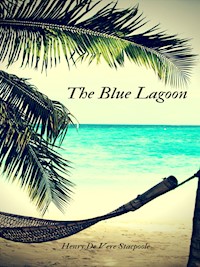














The Blue Lagoon
Table of Contents
Introduction
Civilization’s rules can vanish in an instant, leaving people to discover what remains of identity, love, and responsibility when no society is left to instruct them.
Henry De Vere Stacpoole’s The Blue Lagoon is a late-Victorian adventure romance, first published in 1908, that blends castaway fiction with an idealized vision of tropical nature. Set on a remote island in the South Pacific, the novel draws on the era’s popular fascination with exploration, shipwreck narratives, and the boundary between the “natural” and the “civilized.” Its compact, fable-like design and exotic setting place it at the intersection of popular adventure storytelling and a more reflective, symbolic romance about growing up beyond the reach of conventional institutions.
The premise is simple and immediately compelling: after a catastrophe at sea, two children find themselves stranded far from any established community, dependent on the island’s resources and their own ingenuity. As time passes, survival becomes routine, and the story turns from immediate danger to the longer, quieter pressures of forming a life without guidance. The reading experience is shaped by a steady, observational narration that lingers on landscape, weather, and bodily need as much as on emotion, creating a mood that can feel at once serene and unsettled.
Much of the novel’s distinctive force comes from the tension between pastoral beauty and the harsh demands that beauty conceals. The island is rendered as both refuge and test, offering abundance while exposing the limits of knowledge and the precariousness of safety. Stacpoole uses the natural world not merely as scenery but as a shaping power, determining what can be learned, what can be feared, and what must be improvised. The pacing often mirrors this environment: episodes of threat and urgency give way to stretches of quiet adaptation, inviting attention to the slow work of endurance.
At its center lies a coming-of-age story that raises questions about innocence, education, and the origins of social behavior. Without the usual structures of family, schooling, and law, the characters confront fundamental matters of language, work, attachment, and trust in ways that highlight how much of “normal” life is learned rather than innate. The novel also probes the relationship between instinct and understanding, suggesting both the strength and the vulnerability that follow when experience must substitute for instruction. In doing so, it frames maturity not as a single event but as an accumulation of choices under unfamiliar conditions.
The Blue Lagoon continues to matter because it invites contemporary readers to reflect on what counts as culture and what remains when culture is removed. Modern debates about nature and nurture, the ethics of idealizing “unspoiled” places, and the psychological costs of isolation can all find an early, influential imaginative counterpart here. The book’s island fantasy can be read critically as a product of its time, yet its central anxieties—about safety, intimacy, and the fragility of social norms—retain their urgency. Its very simplicity makes it an effective lens for examining assumptions we often take for granted.
For today’s reader, the novel offers both the pleasures and the complications of a classic popular romance-adventure. Its descriptive attention to the island creates a vivid sense of atmosphere, while its emotional arc unfolds with a directness that can feel deliberately elemental. At the same time, its perspective reflects early twentieth-century sensibilities that may invite scrutiny alongside appreciation, especially in its treatment of “civilization” as an idea set against a romanticized wilderness. Approached with awareness, The Blue Lagoon remains a memorable meditation on dependency and freedom, asking how human life is remade when the world becomes, all at once, smaller and immeasurably larger.
Synopsis
Henry De Vere Stacpoole’s The Blue Lagoon (first published in 1908) opens with a maritime catastrophe that leaves two young cousins, Emmeline and Dick, abruptly separated from ordinary society. Their removal from civilization is not presented as an adventure of choice but as an accident that forces immediate adaptation. With no adults to guide them, they confront hunger, fear, and the unfamiliar rhythms of the natural world. Early episodes emphasize the tension between childish dependence and the necessity of practical self-reliance, setting up the novel’s central question of how human life develops when social structures disappear.
They reach a remote tropical island that becomes both refuge and testing ground. Stacpoole traces their first efforts to secure food, fresh water, and shelter, using these tasks to show how instinct, observation, and improvisation begin to substitute for instruction. The island’s beauty and abundance are balanced by constant vulnerability, since the children lack tools, knowledge, and any clear prospect of rescue. As days lengthen into months, their initial panic gives way to routine, and the narrative increasingly contrasts the island’s apparent paradise with the precariousness of life lived outside human institutions.
As the children grow, the book shifts from survival logistics to the shaping of perception and character. Their memories of the outside world fade unevenly, leaving fragments of language and custom that sometimes help and sometimes confuse. The natural environment, in turn, becomes a kind of teacher, offering lessons through seasons, weather, injury, and recovery. Stacpoole presents this development in small, accumulating scenes rather than sudden transformations, emphasizing how identity forms through repeated experience. The island remains physically bounded, yet it opens a wide moral and psychological space in which innocence, fear, and curiosity contend.
A pivotal strain in the novel comes from the cousins’ changing relationship as childhood gives way to adolescence. Without community norms or adult explanation, their emotions emerge in an isolated context where affection, attachment, and rivalry must be understood from within rather than learned from others. The narrative explores how bodily maturity and new feelings create uncertainties that survival skills alone cannot resolve. At the same time, practical needs do not vanish; storms, illness, and shortages periodically remind them that nature is not merely scenic. Their private world becomes more complex even as their social world remains absent.
The story also introduces moments of contact, distance, or threat beyond the island’s immediate routines, which sharpen the sense that isolation is not absolute. Such episodes underscore how fragile their security is and how little control they have over forces larger than themselves. Stacpoole uses these disruptions to test the routines the pair have built and to raise questions about whether their island life is a protected Eden or a temporary suspension before change. The children’s responses reveal how far they have moved from their earliest dependence, while also exposing lingering naiveté about the wider human world.
As time passes, the cousins’ improvised household and emotional bond face pressures from both internal change and external circumstances. The narrative continues to follow their attempts to preserve safety and continuity, even as new responsibilities and uncertainties accumulate. Stacpoole keeps the focus on immediate perceptions—heat, hunger, fear, tenderness, and fatigue—so that large life transitions are rendered through concrete experience. The island’s seeming timelessness is repeatedly challenged by events that suggest movement, consequence, and the possibility of an ending that is not fully within their control.
In its broader significance, The Blue Lagoon endures as a study of human development stripped of conventional society, using a castaway premise to examine innocence, sexuality, and the formation of moral understanding. The novel’s central conflict is less a contest against a villain than a negotiation between nature’s generosity and its indifference, and between instinctive feeling and the absent guidance of culture. Its continued resonance lies in the way it frames paradise as ambiguous—both nurturing and perilous—and in how it invites readers to consider what is essential, what is learned, and what is lost when civilization falls away.
Historical Context
Henry De Vere Stacpoole’s The Blue Lagoon appeared in 1908, during the late Victorian–Edwardian transition in Britain. It was published in a period marked by mass-market fiction, serialized storytelling, and expanding global readerships served by new printing and distribution networks. The novel’s premise—European children isolated in a tropical environment—draws on widely circulated narratives of shipwreck and survival that had long been popular in English-language literature. Its immediate historical context includes Britain’s position as a global imperial power, which shaped public familiarity with distant islands and sea routes.
paragraphs=[
The story is set on a small tropical Pacific island reached after maritime disaster, and that setting reflects the long nineteenth-century “age of sail” and its cultural afterlife. Although steamships dominated major routes by the early twentieth century, shipwrecks remained a recognized hazard, and nautical travel continued to feature in newspapers, memoirs, and popular adventure fiction. British readers were accustomed to accounts of remote coasts and islands from explorers’ narratives and imperial communications. The institutional background includes maritime commerce and the legal-administrative structures that accompanied British seafaring, even when narratives, like Stacpoole’s, focus on life beyond formal governance.
paragraphs=[
Stacpoole (1863–1951) was trained and worked as a physician, and he lived within a culture that prized scientific authority while also debating its limits. Late nineteenth-century biology, comparative anatomy, and public discussions of evolution influenced how writers and readers thought about human development and natural environments. At the same time, medical and moral discourse in Britain treated sexuality and reproduction as sensitive topics, often governed by social reticence and censorship pressures in publishing. The Blue Lagoon’s attention to bodily growth and adaptation can be read against this milieu of scientific interest coupled with strict conventions about explicit description.
paragraphs=[
The novel’s island environment also reflects a broader Edwardian fascination with nature as both restorative and morally testing. This interest overlapped with the popularity of travel writing and ethnographic description produced within imperial networks, often presenting tropical regions as spaces of beauty, abundance, and perceived danger. Such representations were shaped by unequal power relations and by European assumptions about “civilization” and “wilderness.” Stacpoole’s setting draws on these established literary and cultural vocabularies rather than on detailed local political realities of Pacific communities, a common tendency in British popular fiction of the era.
paragraphs=[
The Blue Lagoon
BOOK I
PART I
CHAPTER IWHERE THE SLUSH LAMP BURNS
Mr Button was seated on a sea-chest with a fiddle under his left ear. He was playing the “Shan van vaught,” and accompanying the tune, punctuating it, with blows of his left heel on the fo’cs’le[1] deck.
“O the Frinch are in the bay, Says the Shan van vaught.”
He was dressed in dungaree trousers, a striped shirt, and a jacket baize—green in parts from the influence of sun and salt. A typical old shell-back, round-shouldered, hooked of finger; a figure with strong hints of a crab about it.
His face was like a moon, seen red through tropical mists; and as he played it wore an expression of strained attention as though the fiddle were telling him tales much more marvellous than the old bald statement about Bantry Bay.
“Left-handed Pat,” was his fo’cs’le name; not because he was left-handed, but simply because everything he did he did wrong—or nearly so. Reefing or furling, or handling a slush tub—if a mistake was to be made, he made it.
He was a Celt, and all the salt seas that had flowed between him and Connaught these forty years and more had not washed the Celtic element from his blood, nor the belief in fairies from his soul. The Celtic nature is a fast dye, and Mr Button’s nature was such that though he had been shanghaied by Larry Marr in ’Frisco, though he had got drunk in most ports of the world, though he had sailed with Yankee captains and been man-handled by Yankee mates, he still carried his fairies about with him—they, and a very large stock of original innocence.
Nearly over the musician’s head swung a hammock from which hung a leg; other hammocks hanging in the semi-gloom called up suggestions of lemurs and arboreal bats. The swinging kerosene lamp cast its light forward, past the heel of the bowsprit to the knightheads, lighting here a naked foot hanging over the side of a bunk, here a face from which protruded a pipe, here a breast covered with dark mossy hair, here an arm tattooed.
It was in the days before double topsail yards had reduced ships’ crews, and the fo’cs’le of the Northumberland had a full company: a crowd of packet rats such as often is to be found on a Cape Horner “Dutchmen” Americans—men who were farm labourers and tending pigs in Ohio three months back, old seasoned sailors like Paddy Button—a mixture of the best and the worst of the earth, such as you find nowhere else in so small a space as in a ship’s fo’cs’le.
The Northumberland had experienced a terrible rounding of the Horn. Bound from New Orleans to ’Frisco she had spent thirty days battling with head-winds and storms—down there, where the seas are so vast that three waves may cover with their amplitude more than a mile of sea space; thirty days she had passed off Cape Stiff, and just now, at the moment of this story, she was locked in a calm south of the line.
Mr Button finished his tune with a sweep of the bow, and drew his right coat sleeve across his forehead. Then he took out a sooty pipe, filled it with tobacco, and lit it.
“Pawthrick,” drawled a voice from the hammock above, from which depended the leg, “what was that yarn you wiz beginnin’ to spin ter night ’bout a lip me dawn?”
“A which me dawn?” asked Mr Button, cocking his eye up at the bottom of the hammock while he held the match to his pipe.
“It vas about a green thing,” came a sleepy Dutch voice from a bunk.
“Oh, a Leprachaun you mane. Sure, me mother’s sister had one down in Connaught.”
“Vat vas it like?” asked the dreamy Dutch voice—a voice seemingly possessed by the calm that had made the sea like a mirror for the last three days, reducing the whole ship’s company meanwhile to the level of wasters.
“Like? Sure, it was like a Leprachaun; and what else would it be like?”
“What like vas that?” persisted the voice.
“It was like a little man no bigger than a big forked raddish, an’ as green as a cabbidge. Me a’nt had one in her house down in Connaught in the ould days. O musha! musha! the ould days, the ould days! Now, you may b’lave me or b’lave me not, but you could have put him in your pocket, and the grass-green head of him wouldn’t more than’v stuck out. She kept him in a cupboard, and out of the cupboard he’d pop if it was a crack open, an’ into the milk pans he’d be, or under the beds, or pullin’ the stool from under you, or at some other divarsion. He’d chase the pig—the crathur!—till it’d be all ribs like an ould umbrilla with the fright, an’ as thin as a greyhound with the runnin’ by the marnin; he’d addle the eggs so the cocks an’ hens wouldn’t know what they wis afther wid the chickens comin’ out wid two heads on them, an’ twinty-seven legs fore and aft. And you’d start to chase him, an’ then it’d be mainsail haul, and away he’d go, you behint him, till you’d landed tail over snout in a ditch, an’ he’d be back in the cupboard.”
“He was a Troll,” murmured the Dutch voice.
“I’m tellin’ you he was a Leprachaun, and there’s no knowin’ the divilments he’d be up to. He’d pull the cabbidge, maybe, out of the pot boilin’ on the fire forenint your eyes, and baste you in the face with it; and thin, maybe, you’d hold out your fist to him, and he’d put a goulden soverin in it.”
“Wisht he was here!” murmured a voice from a bunk near the knightheads.
“Pawthrick,” drawled the voice from the hammock above, “what’d you do first if you found y’self with twenty pound in your pocket?”
“What’s the use of askin’ me?” replied Mr Button. “What’s the use of twenty pound to a sayman at say, where the grog’s all wather an’ the beef’s all horse? Gimme it ashore, an’ you’d see what I’d do wid it!”
“I guess the nearest grog-shop keeper wouldn’t see you comin’ for dust,” said a voice from Ohio.
“He would not,” said Mr Button; “nor you afther me. Be damned to the grog and thim that sells it!”
“It’s all darned easy to talk,” said Ohio. “You curse the grog at sea when you can’t get it; set you ashore, and you’re bung full.”
“I likes me dhrunk,” said Mr Button, “I’m free to admit; an’ I’m the divil when it’s in me, and it’ll be the end of me yet, or me ould mother was a liar. ‘Pat,’ she says, first time I come home from say rowlin’, ‘storms you may escape, an’ wimmen you may escape, but the potheen ’ill have you.’ Forty year ago—forty year ago!”
“Well,” said Ohio, “it hasn’t had you yet.”
“No,” replied Mr Button, “but it will.”
CHAPTER IIUNDER THE STARS
It was a wonderful night up on deck, filled with all the majesty and beauty of starlight and a tropic calm.
The Pacific slept; a vast, vague swell flowing from far away down south under the night, lifted the Northumberland on its undulations to the rattling sound of the reef points and the occasional creak of the rudder; whilst overhead, near the fiery arch of the Milky Way, hung the Southern Cross like a broken kite.
Stars in the sky, stars in the sea, stars by the million and the million; so many lamps ablaze that the firmament filled the mind with the idea of a vast and populous city—yet from all that living and flashing splendour not a sound.
Down in the cabin—or saloon, as it was called by courtesy—were seated the three passengers of the ship; one reading at the table, two playing on the floor.
The man at the table, Arthur Lestrange, was seated with his large, deep-sunken eyes fixed on a book[1q]. He was most evidently in consumption—very near, indeed, to reaping the result of that last and most desperate remedy, a long sea voyage.
Emmeline Lestrange, his little niece—eight years of age, a mysterious mite, small for her age, with thoughts of her own, wide-pupilled eyes that seemed the doors for visions, and a face that seemed just to have peeped into this world for a moment ere it was as suddenly withdrawn—sat in a corner nursing something in her arms, and rocking herself to the tune of her own thoughts.
Dick, Lestrange’s little son, eight and a bit, was somewhere under the table. They were Bostonians, bound for San Francisco, or rather for the sun and splendour of Los Angeles, where Lestrange had bought a small estate, hoping there to enjoy the life whose lease would be renewed by the long sea voyage.
As he sat reading, the cabin door opened, and appeared an angular female form. This was Mrs Stannard, the stewardess, and Mrs Stannard meant bedtime.
“Dicky,” said Mr Lestrange, closing his book, and raising the table-cloth a few inches, “bedtime.”
“Oh, not yet, daddy!” came a sleep-freighted voice from under the table; “I ain’t ready. I dunno want to go to bed, I— Hi yow!”
Mrs Stannard, who knew her work, had stooped under the table, seized him by the foot, and hauled him out kicking and fighting and blubbering all at the same time.
As for Emmeline, she having glanced up and recognised the inevitable, rose to her feet, and, holding the hideous rag-doll she had been nursing, head down and dangling in one hand, she stood waiting till Dicky, after a few last perfunctory bellows, suddenly dried his eyes and held up a tear-wet face for his father to kiss. Then she presented her brow solemnly to her uncle, received a kiss and vanished, led by the hand into a cabin on the port side of the saloon.
Mr Lestrange returned to his book, but he had not read for long when the cabin door was opened, and Emmeline, in her nightdress, reappeared, holding a brown paper parcel in her hand, a parcel of about the same size as the book you are reading.
“My box,” said she; and as she spoke, holding it up as if to prove its safety, the little plain face altered to the face of an angel.
She had smiled.
When Emmeline Lestrange smiled it was absolutely as if the light of Paradise had suddenly flashed upon her face: the happiest form of childish beauty suddenly appeared before your eyes, dazzled them—and was gone.
Then she vanished with her box, and Mr Lestrange resumed his book.
This box of Emmeline’s, I may say in parenthesis, had given more trouble aboard ship than all of the rest of the passengers’ luggage put together.
It had been presented to her on her departure from Boston by a lady friend, and what it contained was a dark secret to all on board, save its owner and her uncle; she was a woman, or, at all events, the beginning of a woman, yet she kept this secret to herself—a fact which you will please note.
The trouble of the thing was that it was frequently being lost. Suspecting herself, maybe, as an unpractical dreamer in a world filled with robbers, she would cart it about with her for safety, sit down behind a coil of rope and fall into a fit of abstraction: be recalled to life by the evolutions of the crew reefing or furling or what not, rise to superintend the operations—and then suddenly find she had lost her box.
Then she would absolutely haunt the ship. Wide-eyed and distressed of face she would wander hither and thither, peeping into the galley, peeping down the forescuttle, never uttering a word or wail, searching like an uneasy ghost, but dumb.
She seemed ashamed to tell of her loss, ashamed to let any one know of it; but every one knew of it directly they saw her, to use Mr Button’s expression, “on the wandher,” and every one hunted for it.
Strangely enough it was Paddy Button who usually found it. He who was always doing the wrong thing in the eyes of men, generally did the right thing in the eyes of children. Children, in fact, when they could get at Mr Button, went for him con amore. He was as attractive to them as a Punch and Judy show or a German band—almost.
Mr Lestrange after a while closed the book he was reading, looked around him and sighed.
The cabin of the Northumberland was a cheerful enough place, pierced by the polished shaft of the mizzen mast, carpeted with an Axminster carpet, and garnished with mirrors let into the white pine panelling. Lestrange was staring at the reflection of his own face in one of these mirrors fixed just opposite to where he sat.
His emaciation was terrible, and it was just perhaps at this moment that he first recognised the fact that he must not only die, but die soon.
He turned from the mirror and sat for a while with his chin resting upon his hand, and his eyes fixed on an ink spot upon the table-cloth; then he arose, and crossing the cabin climbed laboriously up the companion-way to the deck.
As he leaned against the bulwark rail to recover his breath, the splendour and beauty of the Southern night struck him to the heart with a cruel pang. He took his seat on a deck chair and gazed up at the Milky Way, that great triumphal arch built of suns that the dawn would sweep away like a dream.
In the Milky Way, near the Southern Cross, occurs a terrible circular abyss, the Coal Sack[2]. So sharply defined is it, so suggestive of a void and bottomless cavern, that the contemplation of it afflicts the imaginative mind with vertigo. To the naked eye it is as black and as dismal as death, but the smallest telescope reveals it beautiful and populous with stars.
Lestrange’s eyes travelled from this mystery to the burning cross, and the nameless and numberless stars reaching to the sea-line, where they paled and vanished in the light of the rising moon. Then he became aware of a figure promenading the quarter-deck. It was the “Old Man.”
A sea captain is always the “old man,” be his age what it may. Captain Le Farges’ age might have been forty-five. He was a sailor of the Jean Bart type, of French descent, but a naturalised American.
“I don’t know where the wind’s gone,” said the captain as he drew near the man in the deck chair. “I guess it’s blown a hole in the firmament, and escaped somewheres to the back of beyond.”
“It’s been a long voyage,” said Lestrange; “and I’m thinking, Captain, it will be a very long voyage for me. My port’s not ’Frisco; I feel it.”
“Don’t you be thinking that sort of thing,” said the other, taking his seat in a chair close by. “There’s no manner of use forecastin’ the weather a month ahead. Now we’re in warm latitoods, your glass will rise steady, and you’ll be as right and spry as any one of us, before we fetch the Golden Gates.”
“I’m thinking about the children,” said Lestrange, seeming not to hear the captain’s words. “Should anything happen to me before we reach port, I should like you to do something for me. It’s only this: dispose of my body without—without the children knowing. It has been in my mind to ask you this for some days. Captain, those children know nothing of death.”
Le Farge moved uneasily in his chair.
“Little Emmeline’s mother died when she was two. Her father—my brother—died before she was born. Dicky never knew a mother; she died giving him birth. My God, Captain, death has laid a heavy hand on my family; can you wonder that I have hid his very name from those two creatures that I love!”
“Ay, ay,” said Le Farge, “it’s sad! it’s sad!”
“When I was quite a child,” went on Lestrange, “a child no older than Dicky, my nurse used to terrify me with tales about dead people. I was told I’d go to hell when I died if I wasn’t a good child. I cannot tell you how much that has poisoned my life, for the thoughts we think in childhood, Captain, are the fathers of the thoughts we think when we are grown up. And can a diseased father—have healthy children?”
“I guess not.”
“So I just said, when these two tiny creatures came into my care, that I would do all in my power to protect them from the terrors of life—or rather, I should say, from the terror of death. I don’t know whether I have done right, but I have done it for the best. They had a cat, and one day Dicky came in to me and said: ‘Father, pussy’s in the garden asleep, and I can’t wake her.’ So I just took him out for a walk; there was a circus in the town, and I took him to it. It so filled his mind that he quite forgot the cat. Next day he asked for her. I did not tell him she was buried in the garden, I just said she must have run away. In a week he had forgotten all about her—children soon forget.”
“Ay, that’s true,” said the sea captain. “But ’pears to me they must learn some time they’ve got to die.”




