


0,49 €
Niedrigster Preis in 30 Tagen: 1,99 €
Niedrigster Preis in 30 Tagen: 1,99 €
Mehr erfahren.
- Herausgeber: DigiCat
- Kategorie: Gesellschafts- und Liebesromane
- Sprache: Englisch
In his pioneering Gothic novel, "The Castle of Otranto," Horace Walpole intricately weaves a tale imbued with elements of the supernatural and the macabre. Set against a backdrop of medieval architecture and mysterious castles, the narrative follows the tragic events surrounding the titular castle, where family secrets and ominous prophecies intertwine. Walpole's stylistic choices reflect the early 18th-century fascination with romanticism, blending poetic prose with a somber atmosphere. The novel serves as a precursor to the Gothic genre, flirting with themes of terror, romantic despair, and the uncanny, while employing a narrative technique that invokes suspense through both action and the characters' psychological turmoil. Horace Walpole, an English writer, art historian, and politician, drew heavily on his own experiences and historical interests to craft "The Castle of Otranto." His upbringing in a politically active family and his extensive engagement with art and literature cultivated an environment ripe for creative expression. As a patron of the arts and an aficionado of antiquities, Walpole was profoundly influenced by the ideas of his time, leading him to explore the intersection of history, fiction, and human emotion in his writing. This essential read is highly recommended for those interested in the foundations of the Gothic tradition and the exploration of human psychology within the confines of literature. Walpole's engaging narrative style, combined with his innovative approach to storytelling, makes "The Castle of Otranto" a captivating experience that continues to influence writers and enthrall readers. In this enriched edition, we have carefully created added value for your reading experience: - A succinct Introduction situates the work's timeless appeal and themes. - The Synopsis outlines the central plot, highlighting key developments without spoiling critical twists. - A detailed Historical Context immerses you in the era's events and influences that shaped the writing. - An Author Biography reveals milestones in the author's life, illuminating the personal insights behind the text. - A thorough Analysis dissects symbols, motifs, and character arcs to unearth underlying meanings. - Reflection questions prompt you to engage personally with the work's messages, connecting them to modern life. - Hand‐picked Memorable Quotes shine a spotlight on moments of literary brilliance. - Interactive footnotes clarify unusual references, historical allusions, and archaic phrases for an effortless, more informed read.
Das E-Book können Sie in Legimi-Apps oder einer beliebigen App lesen, die das folgende Format unterstützen:
Veröffentlichungsjahr: 2022
Ähnliche
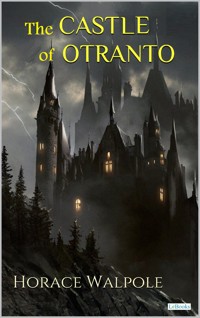
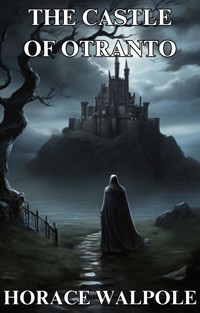

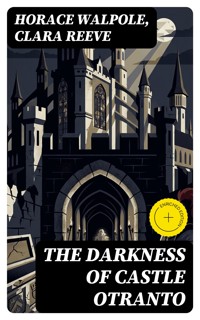




The Castle of Otranto
Table of Contents
Introduction
Within the stone labyrinth of a hereditary stronghold, a ruling house finds that authority grounded in brittle claims cannot wall out the echo of prior wrongs, and as whispers of curses thicken into tangible signs, corridors tighten around desire, fear, and guilt, until every doorway seems to open onto another chamber of doubt, every emblem of lineage doubles as a menace, and the struggle to preserve a name becomes a perilous descent through shadows where superstition and calculation trade places, testing whether human will can command the past or whether the past, like the castle itself, commands everyone within.
Horace Walpole’s The Castle of Otranto, first published in 1764, is widely regarded as the inaugural Gothic novel. Written in mid-eighteenth-century Britain, the book sets its action in a medieval castle on the southern Italian coast, where a princely household prepares for a politically useful marriage when uncanny disturbances begin to unsettle the ceremony and the halls around it. Without revealing its turns, the premise hinges on a contested inheritance and the mounting suspicion that the fortress itself enforces an ancient design. At once an adventure and a study of authority under pressure, the story pairs spectacle with moral unease.
The novel’s publication history is itself part of its design. Walpole first issued the book anonymously, presenting it as a translation of a sixteenth-century Italian manuscript discovered in a Catholic family library. This playful disguise aligned the tale with chivalric romance and antiquarian curiosity, while shielding its experiment from immediate scrutiny. In a revised second edition the following year, he acknowledged authorship and described his aim to join older romance’s marvels with the modern novel’s attention to everyday motives. That candid frame helped readers understand how Otranto could be both boldly supernatural and psychologically pointed, and it set terms for later Gothic fiction.
Otranto holds classic status because it forged an enduring literary grammar. It made architecture an active force in narrative, turned corridors and stairways into channels of emotion, and anchored terror in the structures built to guarantee safety. It modeled how a closed world—bound by lineage, ritual, and stone—could expose anxieties about legitimacy and rule. The book’s blending of wonder with domestic vulnerability created a template for tales in which the extraordinary bursts into the ordinary. Its controlled audacity, at once archaic and new, offered readers a fresh avenue for exploring fear not as mere spectacle but as a revelation of character.
Subsequent writers seized the path Walpole opened. Clara Reeve responded to Otranto by refining its methods, and Ann Radcliffe developed its atmospherics and dilemmas of perception. Matthew Lewis intensified its shock, while nineteenth-century authors carried its motifs into science, sensation, and the supernatural. Across different modes, from Mary Shelley’s exploration of creation and responsibility to Bram Stoker’s reinvention of aristocratic menace, the structural cues are recognizable: the ominous residence, the pressure of inheritance, the uneasy pact between reason and dread. Even when the settings modernize, the narrative logic that Otranto crystallized—mystery as a test of power and conscience—remains a guiding thread.
At the thematic core lies authority’s vulnerability. The story probes the instability of succession, the tyranny that can grow from fear of losing status, and the fragile ethics of rulers who justify harsh acts as necessities of state or family. It also stages the conflict between providence and calculation: characters try to master events, only to confront signs that history resists manipulation. Supernatural tokens dramatize these tensions without reducing them to easy answers. The novel thus asks how far a person may go to secure a name, and what happens when symbols of legitimacy turn into instruments of exposure and judgment.
Formally, Walpole orchestrates a swift, tightly bounded action that unfolds over a compressed span and in a constricted space. The castle concentrates danger and meaning, while rapid scenes, urgent dialogue, and sudden reversals generate a theatrical momentum. The initial pretense of translation gives an archival texture that encourages readers to weigh testimony, rumor, and report, inviting questions about authority not only within the plot but in the act of storytelling. By fusing feudal romance’s bold incidents with observational detail about family and community, the book demonstrates how intensity of situation can coexist with scrutiny of motive and responsibility.
The novel also arises from a particular cultural moment. Mid-eighteenth-century Britain prized reason and manners, yet it nurtured a revived fascination with medieval art, legend, and design. Walpole, a passionate collector and builder, helped shape that taste through his Gothic Revival house at Strawberry Hill, and his fiction channels the same aesthetic curiosity. Otranto does not reject Enlightenment values; it puts them under stress, examining how they behave when confronted with the residues of an older order. The result is neither pure nostalgia nor simple skepticism, but a poised experiment in which past and present argue across corridors, chapels, and keeps.
Readers encounter familiar figures—an imperious patriarch, a threatened bride, loyal attendants, clerical advisers—but the book treats them as more than stock types. Their choices illuminate competing visions of duty, piety, and self-protection. The castle’s topography externalizes their dilemmas: hidden passages suggest concealed motives, courtly chambers expose negotiations, and subterranean spaces stage confrontations that politeness cannot govern. Scenes of flight and pursuit deliver excitement, yet they also trace the ethical distances characters are willing to travel. Through these patterns, Otranto shows how private fears and public claims tangle, and how attempts to control narratives of honor can entrap their authors.
From its first appearance, the book provoked debate. Some readers objected to improbable wonders; others welcomed a revitalized sense of marvel and danger. That tension is central to its legacy: Otranto insists that imaginative extravagance can coexist with moral inquiry. Over time, critics have recognized its pioneering status and studied its mechanics with the same care later Gothic works receive. Its influence is legible not only in plot devices but in the conviction that setting, heredity, and atmosphere are themselves actors. The novel’s early daring has matured into a benchmark, a touchstone for judging how fear can carry meaning.
Approached today, the book rewards a double focus: surrender to its immediacy, and notice how carefully it constructs that immediacy. The feigned-historical frame anticipates modern experiments with documents and unreliable mediation. The castle anticipates every haunted house whose walls seem to listen back. Readers attuned to questions of power will find a study in authoritarian reflexes; readers drawn to romance will find courage and constancy tested under pressure. The prose, compact and urgent, moves briskly, but the images linger. What might appear antique becomes contemporary when seen as a diagnosis of how institutions shape feelings, choices, and fates.
In our age of contested narratives and inherited structures, The Castle of Otranto retains a clear pulse. It speaks to anxieties about legitimacy, the ethics of leadership, and the friction between public story and private fear. Its architecture of dread—rooms that record ambition, corridors that echo concealed acts—anticipates modern thrillers, yet its interest in conscience aligns it with serious social fiction. By wedding spectacle to scrutiny, Walpole fashioned more than a curiosity; he set a durable pattern. That pattern, at once gripping and reflective, explains the novel’s lasting appeal and its continuing power to illuminate how the past inhabits the present.
Synopsis
The Castle of Otranto (1764) by Horace Walpole is often cited as the first Gothic novel, merging medieval setting, feudal power, and startling supernatural phenomena. The narrative opens in a castle on the Italian coast, where Prince Manfred prepares to secure his lineage through the marriage of his frail son, Conrad, to the noble Isabella. An old prophecy, circulating in whispers among servants and townspeople, hints that the house of Otranto stands on precarious foundations. Walpole establishes an atmosphere of looming catastrophe: claustrophobic corridors, ancestral portraits, and a chapel whose sanctity contrasts with the lord’s mounting anxiety over succession and legitimacy.
On the wedding day, catastrophe strikes with inexplicable violence: an enormous helmet, seemingly part of a gigantic suit of armor, crashes into the courtyard and kills the young heir. The spectacle frightens the household and unsettles the populace, suggesting that powers beyond human control are at work in Otranto. Manfred, stunned by the loss and terrified by the implications for his line, refuses to accept the blow as mere accident. The event lends fresh urgency to the whispered prophecy and inaugurates a narrative pattern in which prodigious omens intrude upon feudal rituals, bringing law, custom, and family ambition under uncanny pressure.
Driven by the fear of extinction, Manfred resolves upon a drastic course: he will set aside his blameless wife, Hippolita, and marry Isabella himself, thereby hoping to secure a male heir without relinquishing power. Isabella recoils at the plan and flees through the castle’s shadowed passages. In her escape, an ancestral portrait appears to stir, intensifying the sense that the past itself has awakened. She reaches sanctuary under the protection of Father Jerome. Amid these alarms a young peasant, Theodore, emerges as an unexpected actor, aiding Isabella and drawing Manfred’s suspicion, as the boundaries between social rank and destiny begin to blur.
Manfred’s response is swift and coercive. Theodore is arrested, and the prince contemplates ruthless punishment to reassert control. In a charged scene at the church, Father Jerome pleads for the youth and recognizes a distinctive sign that links Theodore to his own hidden past. The revelation complicates the friar’s duty and underscores the novel’s preoccupation with concealed lineage, spiritual authority, and paternal bonds. Jerome’s intercession temporarily stays Manfred’s hand, yet resentment and fear smolder. Walpole balances scenes of supplication and mercy against threats of violence, while the castle’s crypts, chapels, and underground passages stage confrontations between tyrannical will and communal conscience.
As the upheaval widens, an armored stranger appears near the castle, and soon a powerful nobleman connected to Isabella arrives: Frederic, Marquis of Vicenza, long absent from her life. Their presence introduces new claims and alliances that further unsettle Manfred’s authority. Theodore shows courage and skill in the martial stirrings that follow, gaining attention beyond his apparent station. At the same time, a quiet, chaste understanding grows between Theodore and Matilda, Manfred’s virtuous daughter, nurtured in moments of prayer and constrained conversation. Walpole contrasts private feeling with public calculation, suggesting how affection, duty, and honor can collide within rigid dynastic designs.
Negotiations ensue among Manfred, Frederic, and the ecclesiastical authorities, each party seeking a settlement that will stabilize the principality while preserving face. Marriage proposals are reshuffled as instruments of policy: Manfred presses his suit to Isabella; counteroffers raise the prospect of alternate unions. Hippolita responds with patient submission, emblematic of her piety and loyalty, while Isabella persists in resisting coercion without defying moral law. The castle’s architecture—its galleries and courts—becomes a theatre for surveillance and rumor, and the recurring prophecy returns in private consultations, a reminder that any purely human contract must contend with a judgment emanating from the past.
Supernatural tokens multiply, magnifying public dread. Fragments of an enormous suit of armor appear in improbable places; plumes stir without wind; the effigy of a revered ancestral prince seems to manifest agency. Servants whisper and scatter, and even seasoned warriors pause before spectacles that dwarf human scale. These prodigies do not supply answers so much as intensify questions: Who rightfully holds Otranto? By what chain of title—blood, conquest, or providence—can authority be grounded? Walpole uses the marvelous to test the limits of feudal order, forcing characters to interpret signs that may confirm the prophecy or expose the pretender.
The crisis converges in dim corridors and consecrated spaces, where flight, pursuit, and misrecognition collide. Manfred, trapped between fear of dispossession and the momentum of his own schemes, acts with catastrophic haste. A fatal error in identity produces irreparable loss, and the castle’s walls echo with grief and alarm. At the same time, the supernatural reaches a culminating display that places human ambition within a vaster moral frame. Allegiances shift under shock, and titles are challenged by unexpected testimony. Yet the full resolution of the prophecy, and the ultimate allocation of power and union, emerge only as the tumult subsides.
Without disclosing its final turns, the book closes by aligning questions of rightful rule, family duty, and spiritual accountability with a coherent—if awe-inspiring—sense of justice. The Castle of Otranto inaugurated the Gothic mode by making architecture, ancestry, and prodigy active forces in a domestic-political drama. Its enduring significance lies in how it fuses terror with moral inquiry: tyrannical power confronts the claims of legitimacy; private love struggles within public structures; faith and superstition are tested against conscience. Walpole’s experiment suggests that the past is never inert, and that authority, to endure, must answer to an order beyond mere will.
Historical Context
Horace Walpole’s The Castle of Otranto presents itself as a tale rooted in a medieval, southern Italian principality, where authority radiates from a fortified residence and the figure of a lord. The dominant institutions are feudal lordship, dynastic inheritance, and the Roman Catholic Church, whose clerical offices, rituals, and monastic orders shape social life. Marriage is a political tool, binding families to land and legitimacy, while law is personal and patriarchal rather than bureaucratic. The castle—armory, chapel, hall, and subterranean passages—embodies an era of siege, lineage, and sacred sanction, a setting that frames the novel’s conflicts over authority, conscience, and rightful possession.
The book appeared in London in December 1764, amid the Enlightenment’s emphasis on reason, skepticism, and polite letters. Walpole initially issued it anonymously as a “found” or translated text, purportedly printed in the early sixteenth century and recovered from a Catholic family’s library—an antiquarian ruse that lent the work spurious historical authority. In a second edition (1765), he acknowledged authorship and called it “A Gothic Story,” announcing a fusion of medieval romance with modern psychological and social observation. The framing devices situate the narrative between history and invention, inviting readers to confront how the past is mediated by documents, memory, and taste.
Eighteenth-century Britain remained haunted by questions of succession and legitimacy. The Glorious Revolution of 1688–89 had reshaped the monarchy under parliamentary limits, yet the Jacobite rebellions of 1715 and 1745 revealed persistent disputes over rightful rule. Anxiety about usurpation, forged claims, and dynastic continuity permeated political discourse and popular imagination. The Castle of Otranto echoes these concerns through its focus on inheritance, contested titles, and the moral consequences of power seized or exercised without lawful sanction. The narrative’s energy derives from the clash between hereditary expectation and ethical order, a drama familiar to readers living with recent memories of contested sovereignty.
Walpole’s family and political milieu sharpened this focus. He was the son of Sir Robert Walpole, widely regarded as Britain’s first “prime minister,” and himself sat in Parliament for decades as a Whig. Whiggism prided itself on constitutional balance and suspicion of arbitrary authority. From the perspective of a Whig insider, the tyrannical seigneur becomes a cautionary figure: a ruler whose personal will overrides law, custom, and familial duty. The novel’s interest in checks on power—whether tradition, conscience, or providence—reflects a political culture attuned to limiting despotism and defending legitimate succession while recognizing the fragility of those safeguards.
The novel’s aesthetic belongs to a broader Gothic Revival that gathered momentum in mid-eighteenth-century Britain. Walpole’s house at Strawberry Hill near Twickenham, developed from the late 1740s, became a famed experiment in reviving medieval forms—turrets, tracery, heraldry—and in collecting antiquities. The house staged a cultivated past within a modern domestic space, a blend of fantasy and scholarship. Otranto extends that experiment onto the page, translating fan vaults, painted glass, and relic cabinets into corridors, chapels, and ancestral portraits that press upon the living. Architecture becomes a historical actor, a visible repository of memory and moral claims.
Antiquarianism formed an important intellectual environment. The Society of Antiquaries received a royal charter in 1751, and scholars and collectors pursued heraldry, genealogy, and medieval art with renewed rigor. At the same time, the public debated authenticity in a market hungry for “ancient” texts—most famously James Macpherson’s Ossian (1760s), which Walpole and others questioned. Otranto’s false-translator preface knowingly exploits this appetite and skepticism, dramatizing how authority is conferred by manuscripts, provenance, and editorial voice. The novel thus participates in contemporary disputes about the reliability of the historical record and the allure of a storied, and sometimes fabricated, past.
The novel’s Catholic setting reflects both historical realities and British perceptions. In eighteenth-century Britain, legal disabilities still restricted Catholics, and anti-popery sentiment lingered, even as elite culture admired continental art and ecclesiastical architecture. For fiction, Catholic Italy offered an environment where confession, monastic vows, relics, and miracles felt plausible within inherited belief systems. By placing friars, monasteries, and sacred spaces at the narrative’s center, Walpole could examine conscience, penance, and authority without implicating the Church of England directly. The setting furnished an aura of spiritual hierarchies and institutional secrecy that enhanced themes of guilt, penance, and moral accountability.
Walpole knew Italy first-hand from his Grand Tour in 1739–41, a rite of passage for British elites seeking art, ruins, and political education. The very name Otranto evokes a historic port in Apulia, long contested by Normans, Angevins, and Aragonese, and dramatically besieged by the Ottomans in 1480. The novel does not re-stage those events, but its Mediterranean locale taps a memory of invasion, dynastic transfer, and religious confrontation. Italian courts, princely families, and city-state politics allowed Walpole to imagine feudal continuity and sudden rupture, amplifying the tale’s tension between hereditary claims and the hazards of fortune.
Questions of property and marriage ran through eighteenth-century debates about social order. In both Britain and the Italian states, aristocratic houses relied on primogeniture, entail, and strategic marriages to preserve estates and titles. Annulments, dowries, and guardianship laws entwined personal lives with legal instruments. Otranto dramatizes the pressure to secure a lineage through marriage, exploring how private desires become hostage to public duty. The threat of coerced union underscores the costs of treating people as extensions of property. Walpole’s readers, familiar with marriage settlements and dynastic anxieties, would recognize the ethical and legal stakes embedded in seemingly domestic choices.
The era also witnessed a growing discourse of sensibility and virtue, expressed in conduct literature and influential novels by Samuel Richardson. Pamela (1740) and Clarissa (1748) popularized narratives in which female integrity confronts male power, inviting readers to sympathize with the vulnerable and morally steadfast. Otranto adapts this sensibility to a chivalric and ecclesiastical setting, aligning endangered innocence with conscience and retreating sanctuaries. While eschewing the epistolary realism of Richardson, Walpole preserves the ethical drama of threatened virtue, casting it within a world of heraldic identity, vows, and ancestral memory, thereby connecting modern emotional culture to medievalized forms.
The book also participates in eighteenth-century aesthetics of the sublime and the beautiful. Edmund Burke’s 1757 treatise linked terror, obscurity, and vastness with the sublime’s thrilling awe. Otranto leverages that vocabulary through cavernous spaces, uncertain lineages, and events that dwarf human calculation. Yet Walpole maintains enough psychological and social realism to meet contemporary taste: characters weigh duty, reputation, and guilt. By blending archaic marvels with modern moral introspection, the novel offers a laboratory for readers negotiating Enlightenment skepticism and a revived appetite for mystery, grandeur, and the limits of rational explanation.
Spectacle in Otranto reflects eighteenth-century theatre and opera, where elaborate machines, trapdoors, and painted perspectives created astonishment. London audiences were accustomed to scenic transformations, storms, and apparitions on stage, especially in Italian opera and popular drama. Walpole’s scenes of sudden marvels feel cognate with this culture of contrivance, translating stagecraft into narrative incident that overwhelms characters and spectators alike. The effect is not merely decorative; it tests the stability of rank, oath, and legal form when confronted by phenomena that seem to carry judgment from beyond human jurisdiction.




