



Erhalten Sie Zugang zu diesem und mehr als 300000 Büchern ab EUR 5,99 monatlich.
- Herausgeber: Musaicum Books
- Kategorie: Gesellschafts- und Liebesromane
- Sprache: Englisch
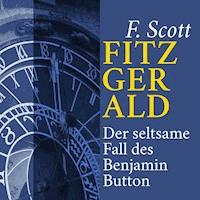
In F. Scott Fitzgerald's 'The Curious Case of Benjamin Button,' readers are transported to a world where age defies logic and time operates in reverse. This short story explores the life of Benjamin Button, a man born as an old man who grows younger as the years progress. Fitzgerald's elegant prose and vivid descriptions paint a captivating portrait of a protagonist navigating the challenges and joys of living his life in reverse. The exploration of themes such as identity, mortality, and the inevitable passage of time will leave readers pondering the complexities of human existence long after they finish the story. Set in the early 20th century, the narrative reflects the changing societal norms and values of the time, making it a fascinating reflection of the era. F. Scott Fitzgerald's exploration of the unconventional concept of aging adds a refreshing and thought-provoking twist to the traditional coming-of-age narrative. Fitzgerald's own experiences with the fleeting nature of success and fame may have inspired him to delve into the theme of aging and its impact on an individual's sense of self. Through his nuanced storytelling and poignant character development, Fitzgerald invites readers to contemplate the essence of life and the inevitability of change. 'The Curious Case of Benjamin Button' is a timeless classic that offers a unique and poignant perspective on the complexities of the human experience, making it a must-read for those seeking a thought-provoking and emotionally resonant literary journey. In this enriched edition, we have carefully created added value for your reading experience: - A succinct Introduction situates the work's timeless appeal and themes. - The Synopsis outlines the central plot, highlighting key developments without spoiling critical twists. - A detailed Historical Context immerses you in the era's events and influences that shaped the writing. - An Author Biography reveals milestones in the author's life, illuminating the personal insights behind the text. - A thorough Analysis dissects symbols, motifs, and character arcs to unearth underlying meanings. - Reflection questions prompt you to engage personally with the work's messages, connecting them to modern life. - Hand‐picked Memorable Quotes shine a spotlight on moments of literary brilliance. - Interactive footnotes clarify unusual references, historical allusions, and archaic phrases for an effortless, more informed read.
Sie lesen das E-Book in den Legimi-Apps auf:
Seitenzahl: 102
Veröffentlichungsjahr: 2017
Das E-Book (TTS) können Sie hören im Abo „Legimi Premium” in Legimi-Apps auf:
Ähnliche












THE CURIOUS CASE OF BENJAMIN BUTTON
Published by
Books
Table of Contents
Introduction
A life that begins in apparent old age and proceeds toward youth becomes a mirror held up to society’s obsessions with appearance, status, and time itself, revealing how every stage we prize or dismiss is shadowed by expectation, misunderstanding, and the quiet ache of transience, as family, community, and institutions struggle to interpret a body that contradicts their rules, and as the individual at the center of this paradox discovers that chronology does not guarantee belonging, dignity, or love, but instead exposes the strange arithmetic by which we count meaning, measure memory, and attempt to make sense of a journey no clock can truly explain.
The Curious Case of Benjamin Button is a short story by F. Scott Fitzgerald, first published in Collier’s Magazine in 1922 and later collected in Tales of the Jazz Age the same year. Its premise is disarmingly simple: a man is born appearing elderly and grows physically younger with each passing year. From that setup, Fitzgerald constructs a narrative that blends the marvelous with the mundane, testing how families, workplaces, and social scenes respond to a life that subverts the usual course. Without disclosing the arc’s events, it is enough to say the story uses its conceit to probe identity, time, and social ritual.
F. Scott Fitzgerald, one of the most recognizable voices of twentieth-century American literature, chronicled the aspirations and anxieties of the era often called the Jazz Age. Known for his stylistic precision and keen social observation, he captured the glamour and disillusionment of prosperity, ambition, and changing mores. In this tale, he channels those concerns into a concentrated thought experiment. The story’s elegance lies in its compression: within limited pages, Fitzgerald refracts questions that animate his longer works—how people define success, how class expectations shape destiny, and how time can feel both relentless and strangely negotiable—through an audacious, memorable premise.
The publication of the story in a popular weekly magazine positioned it at the intersection of mass readership and literary craft, a place where Fitzgerald often thrived. Set largely in and around Baltimore, the narrative unfolds against the backdrop of American urban life as it crossed from the nineteenth into the twentieth century. This setting allows the piece to register the textures of social formality, family reputation, and emergent modern attitudes. The magazine context also underscores its accessible wit: Fitzgerald wrote for readers who could appreciate both satire and poignancy, and the story’s brisk pace and clear architecture reflect that dual aim.
Although fantastic in premise, the story proceeds with realistic detail and sharp social comedy. Fitzgerald’s narrator treats the extraordinary as matter-of-fact, letting ordinary procedures—birth announcements, schooling, courtship, work—bear the burden of the impossible. This understated approach produces humor and pathos in equal measure. The tone can be playful and ironic, but beneath the lightness lies a serious meditation on the roles people are assigned at specific ages. The prose, controlled and economical, magnifies small moments of recognition, inviting readers to notice how language, dress, and custom conspire to reinforce the rhythms of conventional life.
The work holds classic status for several reasons. Its central idea is instantly graspable yet endlessly interpretable, enabling generations of readers to find fresh significance. It shows Fitzgerald’s gift for distilling cultural critique into a compact narrative form, and it has been widely anthologized, discussed in classrooms, and republished as a standalone volume. The story exemplifies how early twentieth-century American fiction experimented with time and perspective while remaining accessible. Its durability also stems from emotional clarity: it is easy to read but hard to forget, because the notion at its core illuminates experiences every reader eventually faces.
Time, aging, and identity form the story’s thematic triad. Fitzgerald asks what happens when the world’s schedule for education, work, marriage, and retirement does not fit a person’s body or experience. He invites readers to consider whether age is an inner truth, an outward sign, or a contract with society. The tale probes how families manage difference, how institutions police normalcy, and how desire adjusts to shifting appearances. It also contemplates memory: if life’s milestones arrive at unexpected moments, do they feel more authentic or more absurd? These questions give the story its philosophical depth without requiring elaborate theoretical scaffolding.
Fitzgerald’s technique heightens these themes. By presenting the protagonist’s condition as a given and proceeding chronologically, he entwines narrative momentum with a steady reversal of expectation. Each scene juxtaposes inner feeling and public perception, demonstrating how language and etiquette can dignify or diminish a person. The third-person voice maintains a measured distance, amplifying irony while protecting the story’s emotional core. Patterns of repetition—social rituals revisited under altered circumstances—build a subtle architecture of echoes, helping the reader perceive how roles harden into fate when time is treated as a rulebook rather than a mystery.
The story’s influence extends beyond print. Its premise has entered cultural conversation as shorthand for thinking about life stages, often invoked when appearances defy expectation. It has inspired adaptations, most notably a 2008 film that broadened public awareness of the original tale and introduced its central idea to new audiences. While the adaptation takes liberties, its existence demonstrates the narrative’s pliability: the concept travels across media and eras without losing its grip. Such endurance marks a work whose imaginative core is strong enough to host many interpretations while still bearing the imprint of its author.
Historical texture enriches the narrative. The setting traces American society’s transition from rigid nineteenth-century codes to the looser, modern rhythms that Fitzgerald elsewhere chronicled. Expectations about dress, speech, leisure, and work function like invisible rails shaping a life’s course. The story therefore works on two levels: as a fantastical biography and as a compact social history, attentive to class, reputation, and the symbols through which people display belonging. By placing the extraordinary within this realistically rendered world, Fitzgerald shows how cultural scripts can be both absurd and powerful, especially when someone cannot fit their lines.
For contemporary readers, the story offers practical interpretive rewards. Watch how clothing, names, and official documents define the protagonist in the eyes of others. Notice how institutions—schools, businesses, clubs—confer or withhold legitimacy based on age-coded expectations. Attend to the humor: the narrative’s wit is not a dismissal of feeling but a method for revealing the discomfort of mismatched roles. Above all, allow the central conceit to complicate notions of growth, maturity, and decline. The tale does not prescribe a single lesson; it opens a space to consider what makes a life feel properly timed.
Today, when cultures worldwide prize youth yet grapple with longevity, caregiving, and the changing arcs of careers and families, The Curious Case of Benjamin Button retains vivid relevance. Its steady, graceful prose and audacious premise invite readers to question metrics that reduce people to birthdays or appearances. The story’s classic status rests on this blend of daring and clarity: it transforms a speculative idea into a humane inquiry. Returning to it now, we encounter not merely a curiosity but a lens for seeing ourselves, our calendars, and our communities with sharper, more generous attention—an appeal that does not diminish with time.
Synopsis
F. Scott Fitzgerald’s The Curious Case of Benjamin Button, first published in 1922 and later collected in Tales of the Jazz Age, is a satirical yet poignant short story about a life lived against the grain of time. Set largely in Baltimore and narrated with cool wit, it follows a protagonist whose physical aging proceeds in reverse, creating friction between biological fact and social convention. Fitzgerald treats the premise as a lens for examining status, propriety, and the arbitrariness of age-based roles. The narrative unfolds in discrete episodes that track the protagonist’s changing appearance and capacities, balancing irony with sympathy while observing consequences without overt moralizing.
The story opens with a birth that confounds family expectations and medical routine. Hospital staff, relatives, and the local community struggle to classify the newcomer, weighing decorum against reality. The family’s first response is to disguise the anomaly, outfitting the child to match conventional standards and instructing him to behave according to his assigned stage of life. Early scenes emphasize the comic strain between surface and substance: ritual meets resistance, and caretaking becomes negotiation. Fitzgerald renders these moments with dry humor, establishing themes of conformity and display that recur as the protagonist’s outward age recedes and the household works to protect its standing.
As the years pass, the protagonist’s body sheds visible years, though society continues to judge him against fixed expectations for childhood and youth. Attempts to enter institutions meant for the young falter under scrutiny, and public gatekeepers refuse to accept what seems implausible. Family pressures intensify: he is urged to adopt toys, clothing, and manners that conflict with his instincts. Finding steadier footing in work, he joins the family business, where competence matters more than appearances. Yet the misalignment persists, shaping friendships and opportunities. He learns to manage perception, to move carefully among rules that ignore the evidence of his own experience.
In adulthood, when his strength and poise grow more apparent, he steps confidently into society. At a formal gathering, he meets a woman whose ideals of prestige and security make his apparent maturity appealing. Their courtship is swift, their wedding suitably public, and their life together seems to promise the stability admired by their milieu. Business prospects brighten; invitations arrive; outwardly, they present a model of conventional success. Beneath this sheen, however, Fitzgerald keeps the central paradox in view. The protagonist’s trajectory, unlike that of peers, trends toward youth, a fact that will complicate both affection and expectation inside the marriage.
Domestic scenes trace the strain that emerges when a couple travels in opposite temporal directions. They welcome a child and assemble the trappings of respectability, yet tastes begin to diverge. As his energy increases and curiosities expand, his spouse prefers the settled rhythms appropriate to her stage of life. Disagreements over dress, leisure, and acquaintances signal deeper misalignment. Without melodrama, Fitzgerald shows how affection contends with embarrassment, and how social performance influences private choices. The home remains a refuge and a stage, alternately supportive and constricting, as each partner tries to preserve dignity while adapting to a bond that no longer fits customary patterns.
With vigor rising, the protagonist turns to pursuits commonly associated with youth. He seeks the education earlier denied him, enters a university, and excels in both studies and athletics. On the field he becomes a figure of admiration; in classrooms he enjoys the curiosity and daring that accompany capability. Such recognition arrives tinged with irony: the milestones celebrated by younger men come to him after marriage and work have already defined his reputation. The victories do not suspend time. Fitzgerald lets pride and unease coexist, emphasizing how public acclaim cannot fully reconcile a private chronology that runs counter to collective expectations.
As his outward age slips beneath middle years, the father–son relationship acquires new tensions. The son rises in professional circles, attentive to appearances, while the father’s youthfulness complicates introductions and authority. Roles invert: the elder is guided and, at times, constrained by the younger, urged to avoid gatherings that might confuse or embarrass. In the family business, responsibilities narrow; at home, routines are adjusted to limit visibility. The scenes do not caricature either figure. Instead, they illuminate how ambition, affection, and propriety intersect when lineage and chronology refuse to align, forcing both men to renegotiate respect and care within an unsparing social order.




