


Erhalten Sie Zugang zu diesem und mehr als 300000 Büchern ab EUR 5,99 monatlich.
- Herausgeber: BoD - Books on Demand
- Kategorie: Abenteuer, Thriller, Horror
- Sprache: Englisch
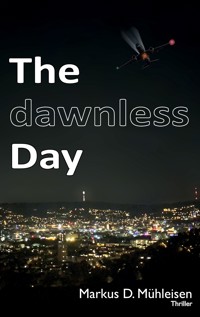
Investigative journalist François Beauford boards a flight to New York to uncover the truth behind Intersol, the bankrupt tech giant. But halfway across the Atlantic, the unimaginable happens: the sun fails to rise. Darkness grips the Earth. Chaos erupts worldwide. As governments and intelligence agencies scramble for answers, most find none. Only Beauford's investigation leads him closer to the heart of the darkness and to a force more dangerous than anyone imagined. Can he stop it before it consumes the world? What begins as a search for truth turns into a desperate race against time, with the fate of humanity hanging in the balance. This thriller explores the depths of our most ancient fears, twisted and exploited by a shadowy power for its own sinister purpose.
Sie lesen das E-Book in den Legimi-Apps auf:
Seitenzahl: 476
Veröffentlichungsjahr: 2025
Das E-Book (TTS) können Sie hören im Abo „Legimi Premium” in Legimi-Apps auf:
Ähnliche




















Inhalt
0 Preface
1 Something ends and someone disappears
2 Phaethon awakens
3 The rise of obscurity
4 Night landing
5 Rapids in chaos
6 Through the fear
7 In medias res
8 The three-body problem
9 Intellectus mundi
10 In the deep darkness
11 Change of location
12 China Town
13 Phaeton should sleep
14 Light
15 Wakeful sleep
16 Appearance and reality
17 The red Kali
18 Phaeton speaks
19 The interior of the dark goddess
20 Decapitation
21 Countermeasures
22 Gale force winds
23 Praeparatio
24 Problemi in arrivo
25 DEFCON I
26 Wiped away
27 Limits of power
28 Cat and mouse
29 Submerged
30 A new face
31 Realisation
32 Warning
33 Chaos
34 When Schrödinger's cat escapes
35 Inverse thinking
36 Things become clearer
37 HALO
38 The third man
39 Support
40 Special skills
41 Night flight
42 Unnoticed insertion
43 Final Approach
44 The island
45 Breaking
46 Hades is awakened
47 On the run
48 Escapism in the polar ice
49 The Italian Lady
50 Epilogue
51 Personalised delivery
52 People and institutions
53 Timeline
54 Technologies and terms
55 Book Recommendations
0 Preface
There are many things we may have been told as children. One promise often made is that the darkness of the night will be dispelled with absolute certainty by the rising sun the next morning.
But what if it does not? What if the sun does not rise and the darkness of the night continues to hold us captive?
When this thought came to me as an idea for a book, I was at first shocked at myself. After all, the idea of perpetual darkness appeals to one of our primal fears. And yet this thought inspired me to tell a story about it.
I am an optimist at heart. My belief in the sovereign capacity of the individual to act is a firm foundation for the fact that seemingly hopeless situations can be resolved through the interaction of positive abilities. Sometimes this requires the action of large structures such as a state or even the military. Sometimes it is the tenacious work of individuals or small groups that makes a good outcome possible. I am convinced that this cooperation is even more important in today's world than in the past. This is partly because technology has made the world so opaque and interconnected that it seems or is impossible for individuals to achieve anything on their own.
Fortunately, this is a purely fictional story and, as is usual with such stories, any similarities between the characters in this book and real people are purely coincidental and in no way intended. There is a US Space Force with its own website. But the Active Group of the US Space Force is a fiction of my own making.
Now, the technologies I have described in this novel are somewhat more diverse. Today, all of these technologies either exist or are under development. Of course, I don't know the extent to which these developments have already produced usable results. But as I understand it, the development of the technologies described to the point of application is in principle possible, and in some cases has already become a reality. Perhaps we should be more aware of what already exists around us. Because as much as I love technology and development, the risks of the opportunities it creates are sometimes truly frightening. Think, for example, of self-organising and self-replicating nanomachines.
I would like to apologize to all people from military organizations. Any incorrect or inappropriate use of designations, awards, and ranks is in no way malicious, but simply due to my ignorance and perhaps an overly colourful imagination.
Where would I be without the many helpers who support me in my book projects?
Rolf has tried to talk me out of some of my biggest flying mistakes. I would like to thank my fairy godmother for the truly Herculean task of proofreading, without her support this book would never have been written. My family accepted my absence during the writing of this book with an indulgent roll of the eyes.
I bow my head in gratitude to all my supporters!
With these various preliminaries, I hope you, my readers, will enjoy my story of the
The dawnless Day
1 Something ends and someone disappears
François Beauford tries to make his way through the bustle of the Héraut de Clichy. As usual, a small but noisy group had gathered in the bar at the end of the day. The Héraut de Clichy is not well known. No celebrities, no stars or starlets come here. Once upon a time, during the Belle Èpoque, this part of Paris was considered the real centre of the city. The financial world, i.e. the banks, and the press were concentrated here. Today, the 9th arrondissement is still known for the Galeries Lafayette or Printemps, the big department stores. At least the press has remained loyal to the area: the editorial team of La Tribune, one of the leading media platforms for business and finance, remains in the area.
If you asked the guests tonight, they would call themselves friends of the Héraut de Clichy. François nods with a grin at the guests, whom he pushes aside with a friendly shove to make his way to the bar. Short, flippant greetings are exchanged, but they are almost impossible to hear over the loud music of a small local rock and pop station.
François has finally arrived at the bar. Manuel, the bald barman, is working behind the bar with his usual calm composure, serving his guests the drinks they have been waiting for. They pay as they go, because there's no question that anyone who comes here has no intention of cheating. Manuel places two freshly tapped glasses of beer on the bar, which are immediately snatched up by greedy hands and carried off into the hustle and bustle. When he catches sight of François, a brief smile lights up his face, revealing his two golden incisors. The moment had passed, and Manuel returned to his stoic expression, nodding briefly at François. This wordless communication is returned by François with a brief nod, accompanied by a slightly raised right corner of his mouth, his very own way of showing a casual grin. One of the guests put a hand on his shoulder and François turned around. Seraphine Solier, one of the few female guests at the Héraut de Clichy tonight, looks at him seriously, then stands on tiptoe so that she can speak loudly into his left ear, over the loud music: »Bonsoir, François, did you hear it?«
Irritated, he looks at the now slightly greying former brunette lawyer. He leans over to speak into her ear: »Hello Seraphine, what did I hear?«
She looks him seriously in the face, then points to the small flat screen in the corner with an outstretched index finger. The news programme of an international platform for financial and economic news is muted.
At first, François doesn't understand what she wants to show him, because it's a shot of a landscape between two programmes. Then he notices the text on the ticker at the bottom of the screen:
*Intersol Technologies files for Chapter 11 bankruptcy protection*
François' after-work spirits are suddenly dampened. With a serious expression on his face, he follows the other text inserts on the conveyor belt.
*Geraldo Gonzales has disappeared and is being sought worldwide*
Frustrated, François shakes his head and says in horror: »Merde.«
He turns to the bar. Manuel had just poured his beloved Pastis into a tall, narrow glass on a small white napkin with the brewery's logo on it. François takes the glass and, in complete contrast to his usual behaviour, swallows the contents in one go. Manuel sees this and raises his eyebrows in recognition of François' unusual behaviour. With a jerk, François puts the glass back on the small white napkin and nods earnestly at the barman. The barman shrugs and takes the empty glass to replace it with a full one as quickly as possible.
François' eyes fell on a bulletin board of postcards next to the shelf of bottles. There is a skyline of New York. He grimly remembers that, after months of preparation, he was supposed to be in New York the following weekend to interview Geraldo Gonzales, who had just been reported missing. Although he is not on the relevant lists, everyone in the financial world knows that Gonzales is considered to be the richest and, above all, the most influential person in the world. It took more than two years of research, networking and begging at countless of the same old boring high finance and tech events. Then François finally got access to Geraldo Gonzales, known behind closed doors as Big GG. An interview lasting several days was planned, including a visit to the research facilities of Intersol Technologies, the heart of Big GG's corporate empire.
Suddenly he feels the mobile vibrating in his pocket. Of course, he can't hear it over the noise of the music. An old Rolling Stones song is playing: Paint it Black. How appropriate, François thinks to himself. He takes out the device and looks at the screen. Of course... his editor is trying to reach him. François swallows his second Pastis and makes his way through the crowd back to the front door. As he finally steps out onto the pavement and the door closes behind him, he feels the peace and quiet around him. Only the usual sounds of a big city like Paris can be heard: After-work traffic and people chatting. François looks thoughtfully down the street. People used to just meet and talk. Nowadays they still talk to each other, but they do it on their mobile phones. They either hold it directly to their ears or casually wear one of those headphones that can now be slipped into their ears, small and almost invisible. François is one of these people. He takes out his mobile phone. The editor has hung up, but left a message for him. And three messages on the popular social media platform. This is unusual for Jonba Kraszninsky, the digitally comfortable head of technology at La Tribune. With a sigh, François calls him back. He holds his mobile phone to the ear. As an investigative journalist, he values confidentiality, so this is not one of the big players' products. He is using a device with a Linux operating system. Because this resistance to the established giants is punished with a great deal of commitment in terms of selection, commissioning and maintenance, he has set up the phone himself. Jonba answers after the first ring: »What the hell is going on, François?«
»Have a nice evening, Jonba.«
»Forget the nice evening. Your Big GG has disappeared and is broke, so no more nice evenings!«
François sighs. As usual in such situations, his friend's African temperament breaks through. François is already familiar with this, so he listens patiently for the next few minutes as Jonba Kraszninsky lets off steam. At the crucial points, François interjects a murmur of agreement or a grumble of disapproval. In this way, he ensures that Jonba feels recognised. The son of a Nigerian woman, with a father who served for many years in the Polish army's special forces, he has an incredible physical presence. He is huge, over six feet tall, with jet-black skin and naturally blessed with a very muscular, athletic body. He was originally selected as a decathlete for the last Olympic Games, but his Afro-Polish family history gave the French Olympic Committee some cause for concern, despite their outward commitment to diversity and integration. As a result, his ticket to the Olympics went to a pale Frenchman from the Vosges mountains who, as expected, finished in the lower echelons instead of winning a medal. François stood by Jonba during this difficult time. He had started out as a very young journalist at La Tribune, writing background reports in the sports section. Together with Jonba, he uncovered the machinations of the French Olympic Committee. The article cost some officials their jobs. Jonba and François, on the other hand, got their permanent jobs at La Tribune. Jonba, a real family man, has chosen a career in internal affairs, while François, a confirmed bachelor who prefers independence and freedom to the security of a partnership, has remained faithful to the investigative side of journalism.
»François, are you there?«
The person addressed emerges from his memories and clears his throat before answering: »Sure, I was just thinking.«
A throaty laugh comes from the other side: »Of course. I'm puking my guts out here and you're thinking about old times.«
François makes a face, then has to grin as he replies: »Gotcha. But I have to go to New York.«
There is a faint hiss, nothing else. Jonba hesitates to answer. When he speaks again, his voice is reserved and cautious: »Why?«
Unconsciously, François tilts his head and says: »Something's wrong.«
A deep sigh from the other end is the answer: »That was obvious. There's always something wrong somewhere. Hey, the guy's gone, so why fly to New York?«
»Yes, of course. But the question is: why is he gone?«
Again it takes a moment before Jonba answers: »All right. You've got two weeks. That's it, you hear? Two weeks. I can't enforce it internally any longer than that.«
François nods with a grateful smile as he answers: »Thank you, Jonba. I'll be in touch.«
»Take care of yourself, you hear? I've got a bad feeling about this.«
»I always do.«
»You don't do shit. But this time you listen to me, OK? Pay attention!«
François is startled by the concern in his friend's voice. His answer is also serious: »All right, I promise. Like I said, I'll be in touch. Ciao, Jonba.«
»Au revoir and bon voyage, François.«
Then the call is over. François takes the phone from his ear, taps the screen briefly to end the call and looks thoughtfully at his mobile phone for a moment.
»What have you got yourself into again?«
When he turns to the smoky female voice, Seraphine Solier is looking at him seriously. As always, she was wearing a business suit and leaning casually against the wall of the house, her legs slightly crossed, a cigarette in her right hand in front of her bright red mouth, her left hand resting on her right elbow. Once again, François marvelled at how this woman could look so casually attractive despite her anything but slim figure. He can tell from the serious expression on her face that she really cares about him.
»Oh, I don't even want to get into anything yet. You showed me the news.«
Seraphine raises her eyebrows in question: »The tech guy? What do you have to do with him?«
François took a deep breath, held it for a moment and then let it out with a deep sigh: »Well, something struck me as odd, so I did a bit of digging.«
She nods understandingly, her eyebrows still raised: »Of course, what you found there didn't stop you from pursuing the matter further.«
He smiles at her with a disarming grin, shrugs his shoulders casually and raises both palms slightly: »Hey, Seraphine, you know me!" She gives him a fierce nod: »Of course, François. I know you only too well. That's why I'm worried. This Gonzales is ten sizes too big for you. Do you realise that? The richest man in the world, master of tens of thousands of jobs and hundreds of companies.«
Now he looks her in the face with a completely serious expression: »And apparently on the run from something.«
»You don't know that. The news was just that he had disappeared.«
François shakes his head vigorously: »Not Big GG. He won't disappear. So far, every time one of his companies has been in trouble, he has aggressively sought publicity.«
Seraphine Solier looks at him thoughtfully, having learned over the years that François is almost always right in his assumptions, but she says seriously: »Maybe. But you're out of your league.«
At that moment, she sees a sparkle in her friend's eyes.
She knows him well enough to hope that the fire this story has lit in him will be quickly or easily extinguished.
Defeated, she answers: »I see where this is going. But you must promise me one thing, François.«
He tilts his head slightly to meet her eyes: »What?«
She takes a deep breath before meeting his gaze directly and openly, then continues: »You keep me informed and you secure your information as usual. Do you hear me?«
The two of them maintain their intense eye contact for a few more seconds. Then François nods jerkily as he answers: »I promise.«
Her reply is a soft but emphatic whisper, almost inaudible over the traffic noise: »Thank you.«
Then she straightens and pushes herself away from the wall of the house she was leaning against. After one last drag, she flicks the cigarette away and starts walking back towards the Héraut de Clichy. She took a few steps before turning to him one last time: »What happens now?«
In an unusually pensive tone for him, he replied: »I'm leaving for New York on Saturday. I'll start my research there.«
She understands and says goodbye again, and with a grin that she throws over her shoulder, she says: »Go for it! I'll have a nightcap and pay for your lid. Au revoir, François.«
Then he stands alone on the pavement. He looks thoughtfully down the street again, the traffic has eased a little.
It's quitting time for the Parisians. But for François, work is just beginning. As if to encourage himself, he gives himself a vigorous nod, then starts to walk home.
2 Phaethon awakens
Flight XFH381 glides smoothly. Since taking off from Charles-de-Gaulle International Airport in Paris at 05:03 on Saturday morning, the flight has been completely unremarkable. Now, after just over four hours in the air, the Airbus A330neo has flown almost exactly half of the total 5,834 km. Paris time is still in effect on board, so it is now 09:08 and so time for breakfast.
François yawns. The cabin lighting was switched from night to day some time ago, but it is still dark outside. The last few days have been filled with further research into Intersol Technologies. He has practically worked his way through it and has now lost all sense of time. The god of passengers has been kind to him: when he checked in for his flight to New York at Charles de Gaulle airport this morning, he was unexpectedly given a free upgrade. He is now flying in the airline's exclusive Executive Class. He was so pleased with this unexpected gift that he didn't ask any questions. Furthermore, he is now sitting in a wonderful chair, which he was able to convert into an almost perfect bed immediately after take-off. Now he is trying to turn this wonderful piece of flying furniture back into an armchair using one of the many controls. He has not yet succeeded when a friendly female voice speaks to him: »Can I help you?«
François looked up at the woman, whose expression was sober, but whose smile was warm and friendly. He frowns: »Yes, please!«
The woman routinely reaches for the chair's hand control terminal, calls up a menu on the touch screen, selects the »sit upright" position and the chair moves gently. The electric motors of the chair's adjustment mechanism are inaudible over the noise of the engines, but François can just make out the slight, almost imperceptible vibrations: »There you go.« The woman's eyes remained fixed on him. »Thank you very much. I'm obviously too stupid to operate a seat. I actually need the help of the flight attendant.«
Now the woman laughs softly, a pleasant laugh that makes François sit up. He looks at her for the first time. He guesses she is in her mid-thirties. She has light brown hair and very alert, intelligent dark brown eyes.
»Well, in the executive class, only the top staff will serve you. I am Fiona Köhler, your pilot for this flight.«
This is one of those rare moments when François is embarrassed: »Please excuse me. I didn't mean to demote you, of course flight attendants are important too, but you know...« he ends the failed attempt with a sigh. He closes his eyes for a moment. When he opens them again, Fiona Köhler is still smiling at him. Wonderful dimples had just formed on her cheeks. François tries to save the situation with a smile of his own: »So let's start again: thank you very much, and please excuse me for assigning you to the cabin crew.«
Fiona Köhler finds the somewhat confused-looking Frenchman very likeable. And as if she were riding a little devil, she now looks at him with feigned seriousness: »Mmm, and how do you intend to make up for this faux pas?«
Now his eyes light up. In true gallant French style, he replies in a warm voice: »Well, I could buy you a drink when and if you can land this bird safely in New York!«
This quick-witted reply makes her laugh out loud. Now her expression is no longer formal and professional, but cheerful and light-hearted. She answers in agreement: »Let's see if I can do that. And then we'll see if you're willing and able to keep your end of the bargain.«
François laughs briefly: »I want to, and I can.« Then he extends his right hand in greeting: »François Beauford, I'm delighted to meet you.«
She takes his hand and shakes it briefly. It was a very pleasant touch for both of them. Then her gaze turns serious again: »Well, I'll go and do my pilot's stuff, you know, steering and landing and all that!«
He grins at her and points to the closed door of the cockpit: »I think you'll have to go that way.«
The mischief flashes in her eyes again: »Oh dear, thank you. It's so easy to get lost in here.«
One last wink and Fiona Köhler turns to leave. She thinks to herself that this day, as pleasant as it has just begun, should continue like this.
After a few steps she reaches the cockpit. She taps the access code on the door, and it unlocks, allowing her to enter. Her first officer, the co-pilot, is sitting on the right, concentrating. He glances over his shoulder and nods at her. Fiona closes the cockpit door carefully. In the past, it was often open for the entire flight, but since hijackings have become more frequent, the door to the cockpit is usually closed. She sits down in the left-hand seat, the pilot's seat. She quickly scans the displays and checks the onboard computer. Everything is as she expected. Her first officer is very young and has only recently obtained his pilot's licence, but today's training makes sure that the trainee pilots follow the procedures and processes to the letter. He gives her a brief course and altitude briefing and reports: nothing out of the ordinary. Then he turns his attention back to the flight plan, because she has told him that he can land the bird in New York today.
Fiona Köhler can't help but think of the passenger, the Frenchman. He introduced himself as François Beauford.
She decides to let him buy her a drink - after all, her rotation in New York ends today, and she has a whole five days there at her disposal. Not entirely at her disposal, she admits. As the airline's second chief pilot, she will probably have to sit down at her computer tomorrow and do some paperwork. But then she can enjoy the city that never sleeps. And that's exactly what she intends to do. She grins inwardly at the thought of confessing to this François, with a loyal, warm look in her eyes, that she left the landing to the young first officer. She is sure that this date, because that's what it is, will be a wonderful evening.
Now she looks out over the Atlantic. She frowns and looks at her mechanical watch. For her, this marvellous piece of technology, though sinful, expensive and very high-maintenance, is a kind of anchor that provides stability in a world increasingly dominated by digital data streams. It is 9:08 am and her watch is still on Paris time, which is Central European Time. In New York, she switches to daylight saving time, which has been in effect there since 9th of March. Then she grabs the flight plan, which is still on a paper clipboard in the cockpit. Not all airlines do it this way, but she agrees with the airline's chief pilot that, in case of doubt, paper is always available in the cockpit and, above all, that it is legible. This is not necessarily the case with electronic data. Now her frown deepens. Outside the deep night over the Atlantic glows in starlight. Once again she mentally calculates when the sun will rise. As she instinctively expected, the time is now.
Her unease deepens. Then she turns to the first officer on her right: »When do we expect the sun to rise?«
He looks up from his course planning, blinks briefly and turns back two pages on his clipboard. With his finger he finds the place he is looking for: »Sunrise halfway is 08:08 UTC, which is 09:08 Paris time.«
She gives order: »Check the time.«
He blinks at her again, then looks at his wristwatch and retrieves the time from the on-board computer: »It's 09:11 CET.«
He gives her a brief nod, then returns to his course planning. The situation is serious, even absurd: »Look outside!«
The young pilot looks up, irritated. Then he looks out of the cockpit window. It is a dark, moonless night. Fiona Köhler can see him working. Then he gasps in shock and looks back to the pilot on his left: »No sunrise in sight!«
He frantically checks the times and dates in his documents, does the maths and then gasps again: »I must be doing something wrong. But I can't find the mistake!«
He looks desperately at Fiona again and tries to hand her his clipboard, like a pupil asking his teacher for help with a difficult maths problem. She just shakes her head sadly: »No, you didn't make a mistake, or we both made the same mistake.«
He shakes his head in denial, rejecting the epiphany: »But we must have done something wrong. The sun always rises! It comes up every day, like clockwork. That's how it is!«
Fiona looks out of the cockpit window again. It is still a black, dark night. She takes a deep breath. And then she does something very few people are able to do. She accepts the situation as it is. This gives her the opportunity to regain control of the situation. Her gaze becomes fierce and hard. Then she turns back to her first officer: »No. The sun is obviously not rising today.«
She waits a moment to see if her co-pilot reacts. But he just keeps staring at her with an increasingly desperate expression.
She seamlessly configures the radio, which lies to the right of the push levers. She glances at her first officer, who is still sitting next to her, frozen in terror. To shake him out of his torpor, she gives him a task: »I want you to determine the position and altitude using all available methods. Then compare it with our flight plan.
The young pilot winces, then nods eagerly. Fiona Köhler is glad that he has got over his shock, at least for the time being. The realisation that the sun has obviously not risen today is still in her bones. But as is her wont, she springs into action. The first thing she does is try to contact the air traffic control centre in the Americas.
3 The rise of obscurity
He must have dozes off again. François Beauford is trying to stretch. As usual, he has fastened his seatbelt to his seat for his own safety, which makes stretching much more difficult. But painful experiences on flights to the Far East during the typhoon season have taught him that an aircraft can enter turbulence at any moment and that a fastened seatbelt can protect passengers from minor or even serious injuries. On this XFH38 flight, they glide calmly through the dark skies over the Atlantic, free of turbulence. The engine noise heard in the cabin is even and testifies to a smooth, scheduled flight. With a sigh, François Beauford unfastens his seatbelt and stands up. He blinks and yawns in remembering the stimulating conversation with the pilot and a warm smile appears on his face. He decides to take this woman out for a drink, if only to avoid giving the jet lag too much of a chance. Then he shakes his head: no, it's not true. He admits that he is really looking forward to getting to know this Fiona Köhler better. He tries to stretch again and stands up. After a muffled yawn, he looks out.
It was still dark outside. François Beauford frowns for a moment. He thought they should have seen the sunrise by now. Then he shrugs and looks around. A wonderful smell of coffee wafts towards him from the entrance area at the front of the cockpit. Without hesitation, he goes over and speaks to the flight attendant who is preparing to serve breakfast: »Excuse me, could I have a cup of coffee?«
The stewardess looks at him with amusement: »Ah, we're only halfway there and it's still dark outside! It's a bit early for jet lag, isn't it?«
Although the flight attendant spoke English, as did everyone else on board, François could tell that the young man was either French or Belgian. He gives him a conspiratorial wink as he leans over and whispers: »Un café est essentiel à la vie!«
The man laughs briefly and answers in agreement: »Absolument, Monsieur, Absolument!" Then his gaze sweeps around the small galley and finally François Beauford is holding a steaming cup of coffee: »Merci beaucoup! Tu m'as sauvé!«
The flight attendant nods conspiratorially: »C'est un plaisir.«
Then he grabs one of the plastic boxes he has filled with napkins and other items and makes his way into the cabin. He says goodbay to him in a friendly manner, then François is alone. With his eyes closed, he takes his first sip of coffee.
Behind him, he hears a beep and then the scraping sound of a door opening. François Beauford opened his eyes and took a step to the side. The cockpit door swung open and a young man in a white shirt stood in front of him, his epaulettes bearing a very new insignia with two silver stripes.
Without looking at François, he storms past him into the back of the cabin. As the door to the cockpit swung open, it clicked into place, holding the door open with an audible snap. Puzzled, François looked after the man, then his eyes wandered into the cockpit. On the left is Fiona Köhler.
She has just finished making an entry on a device in the centre console to her right when she looks up. Her look is serious. When she sees François, her frown disappears for a moment and then reappears. The light from the darkened cockpit lighting, combined with the glow of the instruments, illuminates her face. Without really being able to explain it, François found this sight promisingly adventurous. He immediately calls himself to order: »Shall I close the door or will your colleague be right back?«
The pilot looked him in the eye for a moment, then shook herself. François Beauford is a little surprised by her answer: »He'll probably need a moment.«
The dark brown eyes fix on him once more, then Fiona Köhler decides: »Why don't you come in and close the door?«
Uncertain, he raises his eyebrows, but the pilot gives him an encouraging nod. Then he turns to the door. After a short search, he finds the latch and enters the cockpit, closing the door behind him.
»You can take the jump seat.« Fiona points with her chin to the third seat in the cockpit on the right, behind the co-pilot's seat.
»Thank you.« As he sits down, his gaze goes to the cockpit window and out into the darkness. It's a lot louder up here than in the cabin. »To be honest, I've never been in a cockpit before.«
Fiona nods. She knows only too well the reaction of passengers who are invited into the inner sanctum on board. She turns back to the instruments and taps the small buttons on one of the devices in the centre console. Then she looks up at him. She had put on her headphones, but they are pushed far enough back on the right side so that she could hear them. François tries to get an overview. He frowns and then looks at Fiona Köhler in confusion: »I would have expected it to be light by now.«
She keeps eye contact with him. Then she turns and looks out again: »Me too. But the sun is not rising today.«
François laughs at first, thinking the pilot is joking with him. But he sees from her posture that she is deadly serious. He is about to reply with a flippant remark, but then he changes his mind: »So the sun doesn't rise. Is that an assumption or do you know for sure?«
Once again her attentive gaze sweeps from left to right out into the darkness, then she turns again: »That's what we're looking at.« Just as he is about to ask, she continues: »All of Europe is still in the dark.«
With a wave of her hand, she points to one of the devices in the centre console: »You can't imagine what's going on there. The air traffic control centre is overloaded with requests. The radio traffic is dramatic, to say the least.«
François Beauford looks at the pilot, startled. She looks back at him calmly, but with obvious concern. Without wanting to, he compares her calm reaction with the almost panicked flight of her co-pilot from the cockpit. This woman is crisis-proof and resilient. He closes his eyes for a moment. When he opens them again, he looks out into the darkness over the Atlantic. He doesn't want to embarrass himself in front of Fiona, so he deliberately takes a deep breath and lets it out before answering: »That's completely absurd. But more importantly, are we in danger?«
She shakes her head, obviously not mistaken about this Frenchman. Her answer is calm and professional: »Flight XFH38 is not in danger. This aircraft can fly in the dark as well as in the light. We are on course and will reach New York in a little over four hours. We'll land there, night landings are no problem, it's business as usual for us.«
He is grateful for her sober assessment: »But what happens to the world? What happens when the sun stops rising?" She moves her head slowly up and down, pondering, worried: »That's a completely different matter, of course.
But we won't have to worry about that until we land.«
Suddenly his eyes go to the cockpit door.
Now Fiona laughs fatalistically: »And my first officer, my co-pilot, will have to understand this bit by bit, but he'll manage.«
She looks forward again, and François Beauford notices how she routinely scans all the instrument displays and checks the surroundings outside. Then her hand goes to the headphones, she slides the right earpiece over her ear and fiddles with the centre console.
François pauses and watches in his mind's eye as the pilot makes professional radio contact with a remote station.
The dialogue ends and Fiona nods in satisfaction. In this short time, he tries to come to terms with the situation. The sun has not risen. The world is in darkness. He shakes his head angrily. No, he won't let himself be driven to despair.
It is far too early for despair. He has far too little information for that. Even if the subject of darkness is a sneaky way of appealing to his primal fears.
»Excuse me. Air Traffic Control wanted to reroute us, but I made it clear that we would only be flying on emergency fuel. So we'll land in New York as planned.«
François Beauford nods slightly, less out of understanding of the procedures than as a sign of his attention. Fiona Köhler grins wearily as she replies: »It's the usual thing.
NYC is always full, there's always someone hoping to get someone else's slot, who's late or cancels. But it's all good: we end up in New York.«
He smiles and tries to be humorous: »And then we use our mobile phones as torches in the dark to find a place where we can have a relaxed conversation.«
Her reply comes in a serious tone: »We'll do that. Let's hope the batteries last.«
François Beauford is about to reply when a buzzer sounds behind him. The pilot is fiddling with her instruments and the cockpit door is pulled outwards. The co-pilot, now looking a little less frantic, stands in the doorway. Fiona Köhler pushes the headphones over her ears as she continues in an emphatic, loud voice: »Well, I hope you enjoyed your visit here in the cockpit! We need to prepare for our approach to New York, so please return to your seats.«
François understands the message and bows slightly: »Thank you for this opportunity. I'm really fascinated by what a challenging job you have as a pilot!«
He winks at her, but the co-pilot behind him can't see it. She turns around with a stoic expression on her face.
François Beauford turns to leave, and the copilot takes two steps back to let him pass through the cockpit door.
The co-pilot also receives a respectful nod from François Beauford as he leaves, without a wink, of course.
As he takes his seat, breakfast is served. The cabin crew smile with professional friendliness, but François Beauford always catches a moment when they look out with a worried expression. As if they were hoping the sun would come out. Each time they are disappointed.
4 Night landing
The mood on board is depressed. By now everyone has realised that the world remains in the dark. After the pilot's wonderfully thoughtful and competently worded announcement, the very professional cabin crew managed to calm people down and prevent any major drama or conflict. Now everyone is in their seats, strapped in and listening to the usual sounds of an airliner. Earlier, François had a wonderful view of New York at night from his cabin window. No, this isn't New York at night, he corrects himself. It's normal New York, which, like the rest of the world, is currently in darkness. The longer he thinks about it, the more surreal and frightening the situation seems. Over the past few hours, he has forced himself to stop thinking about the world in darkness.
Because, as he has repeatedly reminded himself, there is nothing, absolutely nothing, he can do about this situation at the moment. Yet worry and fear lurk like a malevolent creature behind every protective wall he has built up in his mind against the despair of the darkness. So he has spent the last few hours poring over all the documents he has collected on Geraldo Gonzales. His laptop runs a free Linux distribution, and he has completely encrypted his hard drive. Every time he logs on to his laptop as a user, he has to rethink the key encryption. He does this methodically in his head, following the instructions given to him by his old university friend, until he has worked out the 16-digit passcode. It was tedious at first, but he has now mastered the process perfectly, and he has discovered that he can do it while half awake or slightly drunk. In human terms, it should be impossible for even one of the world's three-letter services to decrypt the data in his laptop's mass memory. In the event that the device is taken or destroyed, the encrypted version of the data is stored in a secure location on the Internet. There is, of course, a certain amount of risk involved, but François Beauford is fully aware of this. He smiles slightly when he thinks about what happens when the laptop is switched on. The operating system starts and a clean, password-free desktop appears. There are just a few folders with holiday pictures and PDFs of his old articles. The email client shows the usual inboxes of an individual. He deliberately set up his email account with one of the big American providers.
This provider is known for sharing its customers' data internally and externally. Of course, in strict compliance with the company's policy to prevent data misuse.
This Geraldo Gonzales, GG as his friends and enemies call him, is a very colourful character. In public, the multi-billionaire appears to be a self-made man. But François is certain that GG is financed by very powerful financial structures. He must have excellent connections with the international military and economic complex. For François Beauford, there is no other explanation for how GG is able to keep his business empire at the forefront of high-tech projects. However, he seems to have made a mistake with his »Deep Space" project. Over the past seven months, 15 probes have been launched in quick succession. All were designed to explore the asteroid belt between Mars and Jupiter. GG's grand vision is to exploit the resources of metals, rare ores and gases that lie dormant on the asteroids. The aim of this vision is to pave the way for humanity into the solar system and, in a sense, make GG incredibly rich. François Beauford thoughtfully calls up the video of GG's last press conference. As usual, he is wearing black trousers with finely embroidered stripes down the side. His white linen shirt is similarly decorated, and his black hair is slicked back with gel. At the back of his neck, his long hair is held together by a leather barrette with a wooden pin. François Beauford has put on his headphones so that he can hear the sound of the recording clearly. He knows the recording, so he concentrates less on the content and more on the person. Unlike when he normally goes on stage or to the lectern, there is complete silence. There is no music playing, no cheering in the hall.
The spotlight follows him from the moment he steps onto the stage. He looks earnestly at his audience, then turns to the lectern and takes the few steps to it. GG is a charismatic person. Someone once said that he could even turn the weather forecast for a rainy day on holiday into a hysterically cheered-up speech. But not at this moment. He looks down for a moment, then speaks up. His voice is soft, the characteristic slight creak making his words sound rustic:
»Ladies and gentlemen, my friends. I am here today to tell you something very sad.« He takes a deep breath and looks around. Then GG continues: »The past few weeks have been incredibly difficult. Not just for me, but for everyone in the Intersol Technologies family.«
Another pause: »But if something needs to be said, then it needs to be said. It is my duty, my obligation, to tell you this, my friends.« GG takes another breath, then tightens visibly before continuing. He seems to be reading the next words from a notepad: »We have failed. All 1400 exploration probes have stopped communicating with our ground stations. It's a tragedy.«
With a pained expression, he looks up at his audience again: »It's over. Every attempt to reconnect has failed. I am very sorry, my friends. We have invested all our hope, all our enthusiasm, all our knowledge in this mission, no, in this vision. Just as we have invested all our resources, all our financial resources. And now, I have to admit, we have failed.«
Despite the increasing noise in the cabin just before landing, you could have heard a pin drop in the press conference room after Geraldo Gonzalez's last words.
GG nods thoughtfully, then continues: »Now we have to discuss and clarify what happens next. Whether it will continue at all.«
Another fatalistic nod, then the great GG speaks his last public words: »Thank you for all your strength and trust. I promise you will hear from me again.«
François stops the playback by clicking on the pause icon. There it is, the decisive moment. For a tiny moment, the pose of the beaten man, revealing his failure, disappears. For a fraction of a second, we see a being whose cold gaze foreshadows something terrible.
Suddenly, François felt a hand on his shoulder. It was the flight attendant, asking him to switch off his laptop and fold up the table in front of him for the landing. He gave her a friendly nod.
Then he feels the plane make a final left turn into final approach. The sound of the flap hydraulics can be heard.
This brief moment when the multi-billionaire shows his true nature is the reason for his trip to New York. He literally senses that there is much more to this failure than the supposed collapse of a technology giant. That's why he wants to meet a well-informed insider in New York who specialises in analysing the balance sheets of large corporations. Now the sound of hydraulics at work can be heard again, followed by hard knocks. The landing gear has been extended and locked, and the sound has changed considerably. François Beauford could feel the aircraft rolling slightly, wobbling back and forth along its longitudinal axis. He had actually assumed that Fiona Köhler would be able to do without these corrections during the approach.
With a mild smile, he decides to ask her about it tonight in an ironic, enigmatic tone. Outside, he could see the lights on the ground coming closer and closer. Otherwise, it was completely dark. Then it became suddenly bright, the runway lights bathing the Airbus in bright spotlights. First the main landing gear comes down, then the nose of the aircraft tilts forward and the nose landing gear touches the ground. The actual landing was perfect, as far as he could judge as a passenger. The sound of the engine has changed with the touchdown; as François knows, the reverse thrust is now active for braking. The plane decelerates sharply and has already reached the end of the runway, turning sharply to the left onto a taxiway. It has landed safely in New York. He looks out of the cabin window. Darkness lurks behind the airport lights.
5 Rapids in chaos
François Beauford looks around exhausted. It has taken him more than five hours to get through immigration. He can still count himself lucky. An announcement has just been made that the counters are closing. Baggage reclaim was chaotic, to say the least, but luck was on his side: a frustrated passenger must have pulled his trolley from the carousel, then realised it wasn't his trolley and simply left it in the middle of the carousel. When François Beauford spotted his trolley, he made a beeline for it and tried to pass through customs. But two eagle-eyed security officers spotted him and suspected he was a suitcase thief. Luckily for him, his toiletries bag contained a prescription that the pharmacy had labelled with his name. This allowed him to prove ownership of the bag and, after much arguing, he was finally allowed to pass through customs an hour later.
As happy as he was a few seconds ago that he had finally survived this ordeal to enter the US, he is now desperate.
Outside the airport, the traffic is unlike anything François Beauford has ever seen. That's saying something, as he's lived for decades in Paris, the mother of all traffic jams. He looks thoughtfully at the chaos outside through the glass windows and revolving doors. It is still dark. Of course, this problem has not gone away. And François senses that this darkness is actually provoking the chaotic situation here, and probably everywhere else in the world. People are scared and aggressive. Through the windows he sees a young woman dragging the suitcases of an elderly couple out of the boot of a taxi and throwing them carelessly onto the street. François shook his head in disappointment. A woman's voice speaks to him from the side: »You would think that in difficult situations people would come together. But the opposite happens.«
He turns to face the voice, and for the first time in hours, he can smile. Next to him stands Fiona Köhler, the pilot of flight XFH38, still in uniform, her handy trolley in her hand. She looks ahead with a worried frown, watching the chaotic activity on the pavement in front of the airport through the glass front. François also looked there again:
»They will come closer, but now is not the time. Everyone still thinks it will pass.«
Her head jerks towards him: »And you? You don't think so?«
He shrugs, »I just don't know. But I hope so, of course.
An existence in the dark appeals to people's primal fears.«
Then he turns back to her: »But I have a question to the pilot!" She grins and lifts her chin questioningly: »Well, ask her then?«
He tries to keep a neutral expression on his face, but a trace of his mischievous smile remains: »Which way do I have to go to get to the city on foot? Because I don't see any chance of getting transport out there.« She nods in understanding: »Well, you can get to the city on course 000. You just have to head north.«
He nods understandingly, straightens his shoulders and reaches for his trolley. She can't keep her sober expression for long and giggles. François Beauford is surprised to find that he really likes that sound when she giggles: »Or you're travelling with us. That's why I spoke to you. Anyway, we've just finished the flight debriefing and booked a shuttle to the city.«
He breathes out a sigh of relief and nods gratefully:
»That's the best news I've had in hours. Thank you so much!«
Now she looks at him seriously again: »But there is one condition.« He rolls his eyes playfully: »Ah, I knew it.
There's always a condition. Well, madam, what do I have to do?«
She nods, smiling as she answers. The laugh lines in the corners of her eyes reappear: »A drink. You promised me a drink.«
François laughs, then bows gracefully: »It's an honour, Madame. A drink for a lift. A fair exchange.«
Then his face turns serious again: »I can't tell you how much I want to get away from all this chaos.«
A few minutes later, he was sitting in a minibus. There are only two other men on the bus, probably flight attendants from an Indian airline. He sits next to Fiona.
The minibus sets off, fighting its way through the traffic at the airport. They both watch with growing concern as the people out there cope with the darkness.
It takes over an hour and a half before they finally arrive at Fiona's hotel. After the shuttle has dropped off the other passengers, François Beauford and the pilot are able to have a more relaxed conversation. As usual, New York is brightly lit at night. But the mood of the city is not that of the evening or the night. It is the bustle of the day with the visual effect of the night. François Beauford is aware that he finds this strange combination a contradiction. When he asks Fiona Köhler about it, she looks at him from the side window and nods thoughtfully: »You're right. It's not a good contrast.«
Her gaze wanders back to the streets of New York behind the slightly greasy window of the shuttle bus. She sits on the left, François Beauford next to her. He is beginning to feel a leaden fatigue. The last few hours have taken a lot out of him mentally, he can feel it now. Closing his eyes for a moment, he can just catch a whiff of Fiona Köhler's perfume. It lets his thoughts drift away. He imagines the two of them relaxing over dinner in the open air, watching the sun set over the water.
»Why are you smiling?" Startled, he opens his eyes and, feeling her questioning gaze, unconsciously adopts the expression of a student caught daydreaming by his teacher.
When she sees this expression, the pilot chuckles softly:
»I'll have to remember that look. That's what it looks like when you're upset, isn't it?«
He shrugs sadly: »Actually, I was just imagining something very pleasant. Quite different from this!«
He makes an indeterminate movement with his right hand, encompassing the entire area around the shuttle.
Curious, she asks: »Would you like to tell me what this pleasant image was about?«
He takes a deep breath and is about to shake his head in denial. Then François Beauford changes his mind: »Oh, what the hell. I was just imagining the two of us having a relaxed dinner and watching the sun set over the water.«
Her look becomes very serious. Then she nods at him:
»That's a very pleasant idea.«
He is about to reply when the shuttle bus driver announces that they have arrived at the hotel where Fiona is staying. She grabs her handbag and they both stand up.
The driver opens the sliding door on the right.
He takes the pilot's trolley out of the boot. François Beauford and Fiona Köhler stood facing each other, a little unsure. Then she boldly held out her hand to say goodbye.
He shakes it automatically, his eyes lingering on hers:
»Thank you, Mr Beauford.« He smiles at her: »I must thank you. And my name is François.«
She chuckles in reply: »A very French name, I think.«
»The most French name of all.« Then they both laugh for a moment. They still shake hands. Neither wants to let go at first.
»Fiona. I don't think it's the most German name.«
François Beauford laughs amusedly: »Certainly not. But beautiful.«
After one last look, she lets go of his hand, turns and nods her thanks to the bus driver. He taps an imaginary cap with the index finger of his right hand, then turns away to get back behind the wheel. Fiona Köhler takes a few steps as François Beauford snaps out of his stupor: »How can I reach you? I've got another drink for you!" She turns as she runs and calls to him: »Left pocket of your jacket!«
Her next steps take her through the revolving door of her hotel, then she disappears. François Beauford looks after her in surprise. Then he reaches into the left pocket of his jacket and searches. He felt a piece of paper and took it out. It was her business card: Fiona Köhler, Deputy Chief Pilot. She has written her mobile number by hand on the back. He smiles, this time not because of imagination. The driver honks his horn and François Beauford quickly gets in, closing the sliding door behind him. In the darkness of this day, New York is left behind.
6 Through the fear
François Beauford steps through the revolving door and takes a deep breath. It has started to rain outside, so he has walked the last two blocks to get here. He is wearing a dark cloth jacket, which he carefully takes off. Then he tries to shake it out a bit. It's not completely soaked, but it's damp enough that he doesn't put it back on right away.
He looks around the lobby. Earlier he had sent a quick message to Fiona Köhler, repeating his invitation for a drink. To his surprise, she accepted immediately. They spoke briefly on the phone and agreed that he would pick her up at her hotel and they would have lunch together in a small restaurant she knew. In a good mood, François Beauford took a shower and then made his first contact in New York. After some back and forth, they agreed to meet that afternoon.




