



Erhalten Sie Zugang zu diesem und mehr als 300000 Büchern ab EUR 5,99 monatlich.
- Herausgeber: SK Digital Classics
- Kategorie: Gesellschafts- und Liebesromane
- Sprache: Englisch
Leo Tolstoy’s The Death of Ivan Ilyich follows a man who has done everything right—and discovers, while dying, that none of it can save him. Ivan Ilyich, a successful judge in nineteenth-century Russia, falls ill and is forced into the one reckoning he spent his life avoiding. This new translation renders Tolstoy’s prose in clear, direct English while preserving its cold precision. The novella unfolds as a slow stripping-away. Ivan Ilyich lies in pain while his family debates curtains; he searches for comfort and finds only polite phrases and practiced indifference. Tolstoy removes every familiar shield—professional success, social standing, domestic routine—until what remains is stark and human: fear, loneliness, and the final demand for honesty. This English new translation presents The Death of Ivan Ilyich by Leo Tolstoy as a carefully edited eBook—unsentimental, exact, and unforgettable in what it reveals about how a life can be lived, and what it can come to mean at the end.
Sie lesen das E-Book in den Legimi-Apps auf:
Seitenzahl: 106
Veröffentlichungsjahr: 2026
Das E-Book (TTS) können Sie hören im Abo „Legimi Premium” in Legimi-Apps auf:
Ähnliche
















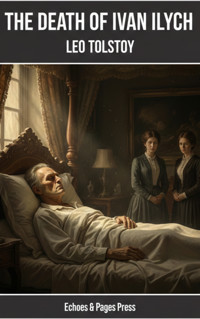

Leo Tolstoy
The Death of Ivan Ilych
New Translation
Copyright © 2026 Novelaris
All rights reserved. This ebook and its contents, including the translation, introduction, design and cover, are protected by copyright. No part may be reproduced, distributed, made publicly available or shared without prior written permission, except as permitted by law.
ISBN: 9783689314347
Contents
I.
II.
III.
IV.
V.
VI.
VII.
VIII.
IX.
X.
XI.
XII.
Cover
Table of Contents
Text
I.
During a break in the Melvinsky trial, the members and the prosecutor gathered in Ivan Yegorovich Shebek’s office in the large courthouse building, and the conversation turned to the famous Krasovsky case. Fyodor Vasilyevich became heated, arguing that it was not a matter for the courts, Ivan Yegorovich stood his ground, while Pyotr Ivanovich, not joining in the argument at first, did not take part in it and looked through the Vedomosti newspaper that had just been delivered.
“Gentlemen!” he said, “Ivan Ilyich is dead.
“Really?”
“Here, read this,” he said to Fyodor Vasilyevich, handing him a fresh, still fragrant copy.
In a black border, it was printed: “Praskovya Fedorovna Golovina, with deep sorrow, informs her relatives and acquaintances of the death of her beloved husband, member of the Judicial Chamber, Ivan Ilyich Golovin, which occurred on 4 February of this year, 1882. The funeral will take place on Friday at 1 o’clock in the afternoon.”
Ivan Ilyich was a colleague of the gentlemen gathered there, and everyone loved him. He had been ill for several weeks; they said his illness was incurable. His seat remained vacant, but there was speculation that in the event of his death, Alekseev might be appointed to replace him, and Vinnikov or Shtafel might replace Alekseev. So, upon hearing of Ivan Ilyich’s death, the first thought of each of the gentlemen gathered in the office was what significance this death might have for the transfers or promotions of the members themselves or their acquaintances.
“Now I will probably get Shtafel’s or Vinnikov’s position,” thought Fyodor Vasilyevich. “I have been promised this for a long time, and this promotion means an extra 800 roubles for me, in addition to the office.”
“Now I’ll have to ask for my brother-in-law to be transferred from Kaluga,” thought Pyotr Ivanovich. “My wife will be very happy. Now no one can say that I never did anything for her relatives.”
“I thought he wouldn’t make it,” said Pyotr Ivanovich aloud. “It’s a pity.
“What was wrong with him, anyway?
“The doctors couldn’t determine that. I mean, they did, but they had different opinions. When I saw him last, it seemed to me that he would recover.
“And I never visited him after the holidays. I kept meaning to.
“Was he wealthy?”
“I think his wife had a little something. But nothing significant.”
— Yes, I’ll have to go. They lived terribly far away.
“That is, far from you. Everything is far from you.
“He can’t forgive me for living across the river,” said Peter Ivanovich, smiling at Shebek. And they talked about the distances in the city, and went to the meeting.
Apart from the thoughts about transfers and possible changes in service that this death might bring, the very fact of the death of a close acquaintance caused everyone who heard about it, as always, to feel glad that it was he who had died and not me.
“How is it that he died, and I did not?” each one thought or felt. Ivan Ilyich’s close acquaintances, his so-called friends, involuntarily thought that now they would have to perform the very tedious duties of propriety and go to the funeral service and visit the widow to offer their condolences.
Fyodor Vasilyevich and Pyotr Ivanovich were closest to him.
Pyotr Ivanovich was a fellow student at law school and considered himself indebted to Ivan Ilyich.
After informing his wife at lunch of Ivan Ilyich’s death and discussing the possibility of transferring his brother-in-law to their district, Pyotr Ivanovich, without resting, put on his tailcoat and went to Ivan Ilyich’s.
A carriage and two cabmen were waiting at the entrance to Ivan Ilyich’s apartment. Downstairs, in the hall, leaning against the coat rack, was the glass lid of the coffin with tassels and polished brass fittings. Two ladies in black were taking off their fur coats. One was Ivan Ilyich’s sister, an acquaintance, the other was an unfamiliar lady. Pyotr Ivanovich’s comrade, Schwartz, came down from upstairs and, seeing him entering from the top step, stopped and winked at him, as if to say, “Ivan Ilyich has made a foolish arrangement; it’s a different matter with you and me.”
Schwartz’s face, with its English sideburns, and his whole thin figure in a tailcoat had, as always, an elegant solemnity, and this solemnity, which always contradicted Schwartz’s playful character, had a special flavour here. So thought Peter Ivanovich.
Peter Ivanovich let the ladies go ahead of him and slowly followed them up the stairs. Schwartz did not go up, but stopped at the top. Peter Ivanovich understood why; he obviously wanted to agree on where to go today. The ladies went up the stairs to the widow’s room, and Schwartz, with his strong lips pressed together seriously and a playful look in his eyes, motioned with his eyebrows to Peter Ivanovich to go to the right, into the dead man’s room.
Pyotr Ivanovich entered, as always, wondering what he was supposed to do there. He knew one thing: it never hurt to cross yourself in such situations. He wasn’t quite sure whether he should bow as well, so he chose a middle ground: upon entering the room, he crossed himself and bowed slightly. As far as his movements of his hands and head allowed, he looked around the room. Two young men, one a high school student, apparently nephews, were leaving the room, crossing themselves. The old woman stood motionless. And the lady with strangely raised eyebrows whispered something to her. The sexton, in his frock coat, lively and decisive, was reading something aloud with an expression that excluded any contradiction; the buffet attendant, Gerasim, passed in front of Pyotr Ivanovich with light steps, sprinkling something on the floor. Seeing this, Peter Ivanovich immediately smelled the faint odour of a decomposing corpse. On his last visit to Ivan Ilyich, Peter Ivanovich had seen this man in the study; he was acting as a nurse, and Ivan Ilyich was particularly fond of him. Peter Ivanovich crossed himself and bowed slightly in the direction of the coffin, the sexton, and the icons on the table in the corner. Then, when this movement of crossing himself with his hand seemed too long to him, he paused and began to look at the dead man.
The dead man lay as dead men always lie, especially heavily, with his stiff limbs sunk into the coffin lining, his head bent forever on the pillow, and, as dead people always do, his yellow, waxy forehead with lumps on his sunken temples and his protruding nose, as if pressing on his upper lip. He had changed a lot, losing weight since Petr Ivanovich had last seen him, but, like all dead people, his face was more beautiful, and more importantly, more significant than it had been when he was alive. His face showed that what needed to be done had been done, and done right. In addition, there was a reproach or reminder to the living in that expression. This reminder seemed inappropriate to Pyotr Ivanovich, or at least not relevant to him. He felt uncomfortable, so Pyotr Ivanovich hastily crossed himself again and, as it seemed to him, too hastily, inconsistently with propriety, turned and went to the door. Shvarts was waiting for him in the anteroom, standing with his legs wide apart and playing with his top hat behind his back with both hands. One glance at Shvarts’ playful, neat and elegant figure refreshed Pyotr Ivanovich. Pyotr Ivanovich understood that Shvarts was above all this and did not succumb to depressing impressions. His very appearance said: the incident at Ivan Ilyich’s funeral service cannot serve as sufficient grounds for declaring the meeting order disrupted, i.e. nothing can prevent us from clicking our cards open this evening, while the footman arranges four unlit candles; there was no reason to suppose that this incident could prevent us from enjoying ourselves this evening. He whispered this to Pyotr Ivanovich as he passed by, inviting him to join Fyodor Vasilyevich for a game. But it was clear that Pyotr Ivanovich was not destined to play cards this evening. Praskovya Fedorovna, a short, fat woman who, despite all her efforts to look unpleasant, still spread out from her shoulders downwards, dressed all in black, with her head covered in lace and her eyebrows raised strangely, just like the lady standing in front of the coffin, came out of her chambers with the other ladies and, seeing them to the door of the deceased, said, “The funeral service will begin shortly; please come in.”
Shvarts bowed vaguely and stopped, apparently neither accepting nor rejecting the suggestion. Praskovya Fyodorovna, recognising Pyotr Ivanovich, sighed, approached him closely, took his hand and said, “I know that you were a true friend of Ivan Ilyich…” and looked at him, expecting him to respond to these words with appropriate actions. Pyotr Ivanovich knew that just as one had to cross oneself there, so here one had to shake hands, sigh, and say, “Believe me!” And that is what he did. And having done so, he felt that the desired result had been achieved: that he was moved and she was moved.
“Let’s go, before it starts; I need to talk to you,” said the widow. “Give me your hand.”
Pyotr Ivanovich gave her his hand, and they headed for the inner rooms, past Schwartz, who gave Pyotr Ivanovich a sad wink.
“Well, well! Never mind, we’ll find another partner. Why not the five of us, when you’re done?” said his playful glance.
Pyotr Ivanovich sighed even more deeply and sadly, and Praskovya Fyodorovna gratefully shook his hand. Entering her living room, upholstered in pink cretonne and lit by a dim lamp, they sat down at the table: she on the sofa, and Peter Ivanovich on a low pouf with broken springs that did not fit properly under his seat. Praskovya Fyodorovna wanted to warn him to sit on another chair, but found this warning inappropriate for her position and changed her mind. Sitting down on this pouf, Pyotr Ivanovich remembered how Ivan Ilyich had arranged this living room and consulted with him about this very pink cretonne with green leaves. Sitting down on the sofa and passing by the table (in fact, the whole living room was full of knick-knacks and furniture), the widow caught the black lace of her black mantilla on the carving of the table. Pyotr Ivanovich stood up to unhook it, and the pouf freed from under him began to sway and push him. The widow began to unhook her lace herself, and Peter Ivanovich sat down again, pressing down on the rebellious pouf beneath him. But the widow did not unhook everything, and Peter Ivanovich rose again, and again the pouf rebelled and even clicked. When it was all over, she took out a clean batiste handkerchief and began to cry. Pyotr Ivanovich was cooled by the episode with the lace and the struggle with the pouf, and he sat frowning. This awkward situation was interrupted by Sokolov, Ivan Ilyich’s butler, with a report that the place in the cemetery, the one assigned by Praskovya Fyodorovna, would cost 200 roubles. She stopped crying and, looking at Pyotr Ivanovich with a martyred expression, said in French that it was very hard for her. Pyotr Ivanovich made a silent gesture expressing his unquestionable certainty that it could not be otherwise.
“Please smoke,” she said in a generous and at the same time dejected voice, and discussed the price of the plot with Sokolov. Pyotr Ivanovich, lighting his cigarette, heard her ask very detailed questions about the different prices of the land and decide which one to take. In addition, having settled the matter of the plot, she also made arrangements for the singers. Sokolov left.
“I do everything myself,” she said to Peter Ivanovich, pushing the albums lying on the table to one side; and, noticing that the ashes were threatening the table, she promptly moved Peter Ivanovich’s ashtray and said: “I find it hypocritical to claim that I am unable to deal with practical matters because of my grief. On the contrary, if anything can comfort me… or distract me, it is caring for him.” She took out her handkerchief again, as if she were about to cry, but suddenly, as if overcoming herself, she shook herself and began to speak calmly.
“However, I have business with you.




