


5,99 €
Mehr erfahren.
- Herausgeber: Independent Publishing Network
- Sprache: Englisch
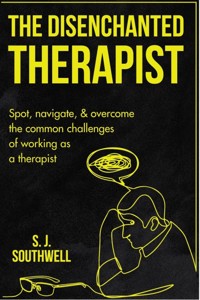
As you have arrived at this book description it is likely that you are a therapist, or someone who is concerned about the wellbeing of therapists. If you are a therapist, then the chances are that you are struggling in some way. If so, you are not alone. Therapy is tremendously rewarding work. At the same time though, it is extraordinarily demanding. As a result, each year, many previously committed therapists burn out in their roles, or leave feeling discouraged and dispirited.
This is a book for anyone whose voluntary or paid work involves elements of counselling or ‘talk therapy’. The aim of this book is to help you spot, navigate, and overcome the common emotional challenges of counselling and therapy, so that you can continue to love the work, effectively support clients, and grow professionally and personally.
Clinical psychologist and author, S. J. Southwell, draws on thirty years working in welfare, community, education, and mental health settings. She outlines the key personal, practical, and professional issues that contribute to therapist distress and disenchantment, and provides a wealth of suggestions to support therapists avoid or address the common challenges that arise on their professional journey.
The first section encourages you to reflect on different aspects of your life that affect your work as a therapist. These include your habitual thinking patterns and responses, in Chapter 1, and your personal history and current physical and mental health, in Chapter 2. The second section takes a look at what happens in the therapy space, especially when it is likely to affect the wellbeing of the therapist. This includes Chapter 3, which explores the situations in which therapy tends to be particularly hard or slow, and Chapter 4, on three ways in which client work can have particularly powerful and disturbing effects on therapists, transference and countertransference, vicarious trauma, and moral injury. The final section addresses broader aspects of our professional experience, including our work context, in Chapter 5. The remaining chapters in this section address professional crises, including taking on too much client work too soon, and burnout, in Chapter 6, and professional crises of faith, in Chapter 7.
The book assumes that if you are having struggles in these areas, you have already set aside time to reflect on how your own thoughts and long-term ways of being in the world are contributing to the situation, and that you are intentionally using all the therapeutic strategies and skills you have available to support yourself. In addition, it assumes that you are discussing your work with a professional, competent, and wise therapist-colleague who is acting as your clinical supervisor or peer mentor. Last but not least, it assumes that you are regularly planning and engaging in professional development learning that is relevant to the struggles you are experiencing, and that you are establishing a personal and professional discipline of intentional self-care.
It is, of course, much easier to write this list of essentials than it is for anyone to put them all in place. They are so important that the book returns to them in the final chapter, Chapter 8, with some practical suggestions for how to consolidate your practice in these areas.
'The Disenchanted Therapist' is also available as a paperback through Amazon and the Ingram Spark distribution network.
Author website: sharonsouthwellauthor.wordpress.com
Das E-Book können Sie in Legimi-Apps oder einer beliebigen App lesen, die das folgende Format unterstützen:
Veröffentlichungsjahr: 2023
Ähnliche




















The Disenchanted Therapist
S. J. Southwell
The
Disenchanted Therapist
Spot, navigate, and overcome
the common challenges of working as a therapist
S. J. Southwell
Independent Publishing Network
Note to readers: Standards of clinical practice and protocol change over time, and no technique or recommendation is guaranteed to be safe or effective in all circumstances. This volume is intended as a general information resource for professionals practicing in the field of psychotherapy and mental health; it is not a substitute for appropriate training, peer review, and/or clinical supervision. Neither the publisher nor the author can guarantee the complete accuracy, efficacy, or appropriateness of any particular recommendation in every respect. The views expressed in this work are solely those of the author and do not necessarily reflect the views of the publisher, and the publisher hereby disclaims any responsibility for them.
Copyright © 2023 Sharon Southwell.
All rights reserved. No part of this book may be reproduced, stored, or transmitted by any means—whether auditory, graphic, mechanical, or electronic—without written permission of both publisher and author, except in the case of brief excerpts used in critical articles and reviews. Unauthorised reproduction of any part of this work is illegal and is punishable by law.
ISBN: 978-1-80352-343-9 (sc)
ISBN: 978-1-80352-344-6 (e)
Publisher: Independent Publishing Network
Publication date: July 17, 2023
Author: S. J. Southwell
Website: sharonsouthwellauthor.wordpress.com
Please direct all enquiries to the author.
To my colleagues, past and present, and to my clinical supervisors
Contents
Acknowledgements
Introduction
Chapter 1: The Perfect Therapist and Other Traps, or Working With Our Habitual Thinking Patterns and Responses
Our habitual thinking patterns and responses
Unhelpful thinking habits
Schemas, lifetraps, and defence mechanisms
How these patterns affect our work
Chapter 2: Know Yourself and Your History
Your background
Your work history
Your trauma history
Attachment styles and personality traits
Personal crises
Managing your physical and mental health
Chapter 3: When the Work is Hard and Slow
Social disadvantage and multiple health issues
Clients behaving ‘badly’
Not turning up
Anger
Self-harm and suicidal behaviours
The compelled, the complainers, and the clients
The compelled
The complainers
Complex cases
Clients who feel ‘stuck’
Clients presenting in repeated crisis
Chapter 4: Transference and Countertransference, Vicarious Trauma, and Moral Injury
Transference and countertransference
Vicarious trauma
Moral injury
Chapter 5: Context is Everything
Layers of context
Challenges and opportunities
Chapter 6: When Things Go to Hell in a Handbasket, or How to Handle Professional Crises
Professional crises
Too much too soon, or ‘Perhaps I’m not cut out for this work’
Is this burnout?
Chapter 7: Crises of Faith
Gratitude and appreciation
Follow-up research
Redefine your work and success
Hope and trust
Value what you do
Acceptance and grief
A change of heart
Recognising the spiritual dimension to your work
Chapter 8: In Conclusion: Back to—Self-Care—Basics
Reflection
Therapeutic strategies and skills
Clinical supervision
Professional development
Self-care
Reference List
Acknowledgements
My clients, colleagues, and clinical supervisors have taught me so much about being a therapist. This book about the struggles of being a therapist and the ways through them would not exist without the many colleagues who have provided me wise counsel or clinical supervision. They include, Lindsay Gore, Patrick Newton, Sraddhanaya Hannan, Judi Brewster, the other supervisors at Quit Victoria, Kaaren Hawkes, Rebecca Diehm, Sue Murrant, Ross King, Marianne Weddell, Brendan Meagher, Jon Finch, Kirk Radcliff, Hugo Alarcon, Sandra Boughton, Mariavi Martinez, and Sean Harper. At just the right time, Gina Denholm provided experienced guidance about how to structure the fledgling manuscript. Many of its current merits reflect her advice while its infelicities remain my responsibility. Sandra Boughton and David Jones read an early version and provided encouragement. Finally, Vicki Grgic, Greg Restall, and Jenni Southwell brought their considerable capacities of heart and mind to the details and gaps in the final manuscript. I am deeply grateful to each of them.
Introduction
Although I don’t know you, as this book has caught your eye it is likely that you are a colleague, and probably a therapist, or someone who is concerned about the wellbeing of therapists. If you are a therapist then while it is possible that you picked up this book to prepare yourself better for your future career, or because you are concerned about the staff you supervise, the chances are that you are struggling in some way.
Therapy is tremendously rewarding work, both for what it can contribute to others and for what it can shape in us. At the same time though, because it requires authentic and committed engagement with others to support them in the business of change, it is extraordinarily demanding. We do this work in the context of our own patterns, histories, and responses, known or just as often, barely recognised or understood. The work needs to be created anew with each client but there are no guarantees of success. The hopes we have to be helpful often fall short with precisely the clients we know have suffered the most. We are routinely sitting with clients in deep distress and difficult circumstances, where we cannot help but be affected by the stories and emotions we encounter. There are innumerable practical and organisational constraints on what we can offer, matched only by the expectations from clients, our work places, and the community. When things go wrong, this can include the death of clients, professional sanction, or legal action. And all the while we do this work with imperfect tools and skills, and with varying degrees of scepticism and self-doubt, liabilities arising from our professional commitments to honesty and transparency in the face of discomfort.
Perhaps one or more of these challenges is weighing on you. You may be spending a lot of time talking to your colleagues and clinical supervisor about your concerns, or you may be avoiding them, aware of how negative your thoughts about your work, your clients, or therapy have become. You may have noticed persisting signs of stress, including impaired sleep, disturbed digestion, low and anxious mood, and avoiding tasks. You may have begun to wonder if your work is affecting your relationships with family and friends. Perhaps your colleagues or those close to you have told you they are concerned about you. Perhaps you are worried about whether therapy is the work for you. Perhaps the work is taking you to uncomfortable places. Perhaps you are wondering if therapy is effective or questioning whether you like people and working with them as much as you thought.
If you are struggling in these and other ways you are not alone. Each year, many previously committed therapists leave their work feeling discouraged and dispirited. You may have heard stories of therapists leaving their work or seen this happen to colleagues. Perhaps that is a real option for you as you begin to read this book. This problem afflicts the other caring professions as well, many of which have a significant turnover in the first years after training. Whether sooner in a career or later, the costs of such distress and associated decisions to leave the work are enormous for individuals, their careers, and their families. There are also significant costs for workplaces and work sectors that recruit and equip staff only to lose that investment in training.
I began my career in Australia. Prior to becoming a psychologist, I worked for 10 years in welfare and educational settings, supporting women and children affected by family violence, and later, university students. I have since worked as a psychologist for twenty years, providing assessment, counselling, and psychological treatment in a range of settings, including government services, not-for-profit health services, community health counselling services, and private practice.
I also worked as a health educator and trainer for a cancer support, prevention, and research institute, with a focus on encouraging preventative changes in health behaviours among populations with co-morbid mental health conditions. In addition, I worked initially as a counsellor and then as a supervisor and trainer of counsellors in a smoking cessation service, and as a trainer in a 24-hour volunteer-based counselling service.
Since moving into generalist psychological treatment and private practice in the last decade, I have worked with adults experiencing stress, depression, and anxiety conditions such as worry, social fearfulness, phobia, and panic attacks, as well as trauma, sleep difficulties, addictions, relationship and other interpersonal difficulties, and bereavement. The therapies I use include Cognitive Behaviour Therapy, Schema Therapy, Interpersonal Therapy, Motivational Interviewing to support behaviour change, Cognitive Processing Therapy to treat trauma, and mindfulness-based therapies including Acceptance and Commitment Therapy (ACT).
My clients have included individuals and families living with disability, individuals wanting to make changes to health behaviours, and adults seeking counselling and psychological treatment, across the age range, and from culturally and linguistically diverse backgrounds. At the time of writing this book, I find myself back in a university setting, but now in the UK, as a clinical supervisor for student-support staff and as a therapist for students.
I experienced elements of burnout in my late twenties when I was studying psychology and working full-time in a student-support role. I write about this experience in the section ‘Is this burnout?’, in Chapter 6. I recognised the experience for what it was because my professional training program covered the prevalence of burnout and the likelihood of psychologists leaving the profession. Having had that experience, I committed myself to doing whatever was necessary to prevent it ever happening again. Now such commitments can become a problem if they come with a degree of hypervigilance and reactivity to early signs of stress. Fortunately, that hasn’t been the case for me. That said, over these 20 years, in order to keep my word to myself, I have changed jobs and work hours on several occasions. I have needed to regularly review my self-care plan, to increase the clinical supervision I am receiving, and to revisit how I am holding boundaries around my work. Periodically, I have needed to go deeper still, to reconsider what got me into therapy in the first place, whether that still matters to me, and how I want be present in the work going forward.
During my most recent period of professional dis-ease, I started writing about my experiences with therapist disenchantment as an exercise in reflection. I discovered something unexpected. I had fallen into, climbed out of, and recovered from many forms of therapist disenchantment. Over time I had become familiar with many of the risks of the work and had established personal and professional rules for myself about how to avoid them. As well as being encouraging, this review was also clarifying. It helped me recognise some of the many threads woven into my recent disenchantment but also how much I have learnt about doing therapy in a way that was good for my clients and for me. It also helped me identify the specific issues that were ailing me. Rather than one overwhelming mass of discontent, I could see the cause of the pain. When that was evident, I was able to prescribe my own remedies.
Soon into this writing, it occurred to me that other therapists might find it helpful to see written in one place something about the harder parts of being a therapist. Aside from a range of books about professional supervision and burnout, I have found it very difficult to locate candid books by therapists on this topic. I wonder if many of the things that motivate therapists to do their work, and many of the expectations that therapists and their workplaces and clients have of them, pose barriers for us in acknowledging these harder things we therapists know about our work. I very rarely hear colleagues talking about disenchantment, informally or in clinical supervision. I suspect that therapists who continue to struggle with some or more of these issues without support and resources eventually burnout, quietly or more spectacularly, or move sideways and perhaps even away from work with clients altogether.
This book is particularly for therapists who have been looking for help with distress, disappointment, dis-ease or disenchantment. In it I help therapists spot, navigate, and overcome the common emotional challenges of client work so that despite the occasional encounter with therapist disenchantment, they can continue to love the work, effectively support clients, and grow professionally and personally. It might be that having read this book you decide that a change is good and even needed, including perhaps a move away from this type of work. The aim of this book, however, is to support you in the possibility of continuing as a therapist, in one form or another.
When I use the words ‘therapy’ and ‘therapist’, I mean someone whose voluntary or paid work involves elements of counselling or ‘talk therapy’. It is important to add that my experience with therapy has been largely in contexts of short- to medium-term work, in most instances where the timeframe and the nature of therapy reflect the limits of government or organisational funding models. Although I refer briefly to a range of psychodynamic ideas and concepts, a therapy field where long-term and open-ended therapy may still occur, much of what I have written here refers to the challenges and frustrations of time-limited and structured therapy. Even with this caveat in mind, the ‘therapists’ who might find this work relevant are a large group. They are counsellors and psychotherapists from all theoretical backgrounds. Along with therapists in private practice, they include psychiatrists, psychologists, social workers, clergy, pastoral workers, mentors, and coaches, working in a rich variety of roles and settings.
The stories I have included come from my own work or from the experiences of colleagues, or my work as a clinical supervisor or a therapist to therapists. To protect their identities all the stories from clients and therapists have been altered or are composites.
In this book I address many of the things that contribute to therapist disenchantment. They are grouped into three sections, the personal, practical, and professional, although these divisions are necessarily arbitrary and, in practice, there is tremendous crossover. The first section encourages you to reflect on different aspects of your life that affect your work as a therapist. These include your habitual thinking patterns and responses, in Chapter 1, and your personal history and current physical and mental health, in Chapter 2. The second section takes a look at what happens in the therapy space, especially when it is likely to affect the wellbeing of the therapist. This includes Chapter 3, which explores the situations in which therapy tends to be particularly hard or slow, and Chapter 4, on three ways in which client work can have particularly powerful and disturbing effects on therapists, transference and countertransference, vicarious trauma, and moral injury. The final section addresses broader aspects of our professional experience, including our work context, in Chapter 5. The remaining chapters in this section address professional crises, including taking on too much client work too soon, and burnout, in Chapter 6, and professional crises of faith, in Chapter 7.
None of these sets of challenges stands in isolation, and all of them continue to be relevant over a career lifetime. My hope is that having mapped out the territory, you may avoid some of the risks, be better prepared than you might have been, and smile with recognition at those challenges you have survived.
With that focus on growth in mind, in each chapter I include ‘Suggestions’ for individual practitioners. Throughout, however, I am assuming that if you are having struggles in these areas, you have already set aside time to reflect on how your own thoughts and long-term ways of being in the world are contributing to the situation, and that you are intentionally using all the therapeutic strategies and skills you have available to support yourself. In addition, I am assuming that you are discussing your work with a professional, competent, and wise therapist-colleague who is acting as your clinical supervisor or peer mentor. Last but not least, I’m assuming that you are regularly planning and engaging in professional development learning that is relevant to the struggles you are experiencing, and that you are establishing a personal and professional discipline of intentional self-care.
It is, of course, much easier for me to write this list of essentials than it is for anyone to put them all in place. I urge you though, to make them your focus, and to return to and recover them whenever they become neglected. They are the basic foundation for addressing therapist disenchantment. Without them, you are building on shaky ground. They are so important that we return to them in the final chapter, Chapter 8, with some practical suggestions for how to consolidate your practice in these areas.
While this book primarily addresses individual therapists, one of the risks of that focus is the implication that each therapist is entirely responsible for their wellbeing in the workplace. In truth, many of the challenges that confront therapists arise out of workplace processes and cultures. With that in mind, the ‘Recommendations’ sections are followed by brief ‘Workplace Tips’ for managers of therapists or readers who are otherwise in a position to influence decisionmakers in their workplace.
Although the chapters have been written in a particular order and build on one another in the depth and complexity of the issues they address, they can also be read on their own. If you have come to this book with particular and pressing struggles and concerns, I encourage you to turn back to the Contents page, so you can see what speaks to you and dive in from there.
Chapter 1
The Perfect Therapist and Other Traps, or Working With Our Habitual Thinking Patterns and Responses
‘I’m not sure than I can keep going,’ Paul said, as he sat in my office. ‘Every time I think about work, I feel all churned up … and angry. There are too many cases for the staff to see, but our managers expect us to see them and follow all the processes and complete all the paperwork. They’ve lost touch with the pressures we are under … if they ever were in touch. They don’t have to sit in the room with such distress and such complicated problems, session after session. We are constantly being updated about changes to procedures. I’ve got to the point where I don’t look at certain emails because if I do, I’ll have to take time out that I don’t have to change what I’m doing. I need to be answering calls from clients, or seeing them. It takes me all my time to do that, and I’m often working late, even though I try not to. The list of things to do is never-ending, but who else is going to follow-through for clients if I don’t. That said, I suppose I could be more efficient. I’m just so tired and stressed it’s hard to focus well. And I feel resentful about the time it takes from my family. I find it really hard to wind down when I get home. It’s very easy to get into conversations with my partner about the day and my frustrations. She’s very supportive but it’s like she’s expecting the day to be bad now, and I know that she worries about me. My sleep’s been shocking. Also, I know the kids need me to be spending time with them and showing interest in their day as well. Really, I’m just glad they are watching TV or playing a game online when I get home, but I feel guilty about it all the same.’
This was how Paul introduced himself to me. As you read his description of his situation, perhaps you recognised some of your own thoughts or those you have heard from colleagues. Perhaps, with the benefit of some distance from Paul’s situation and your therapist hat on you noticed what looked like themes. Perhaps you even wondered about his background and any long-term patterns that might be contributing to his choices in this situation. As therapists, our thinking patterns, core beliefs, schemas or longer-term thinking patterns, and our preferred defence mechanisms all affect our work with clients and how we think and feel about that work over the course of our careers. This chapter provides a brief introduction to these thinking and response patterns, how they affect our work, and some ways we can reflect on them more intentionally.
Our habitual thinking patterns and responses
Unhelpful thinking habits
Readers with a background in Cognitive Behaviour Therapy (CBT) will recognise the ‘10 unhelpful thinking patterns’ that I’ve listed below. If they are new for you, you might want to mark the patterns that resonate with you as you read through the examples I’ve heard from therapists. Most people quickly identify these patterns in themselves and others, and can spot the ones they tend to use most. This is true of therapists as well as their clients.
1. All or nothing thinking
My casenotes are bad.
The management are hopeless (also a case of Labelling and mislabelling, see below).
I need to be the perfect therapist.




