


0,99 €
Mehr erfahren.
- Herausgeber: Mad Dog Crime
- Kategorie: Abenteuer, Thriller, Horror
- Serie: Bird and Abbett
- Sprache: Englisch
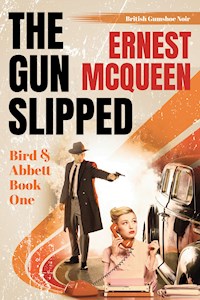
When private investigators Ted Bird and Betty Abbett are hired by a local shipping tycoon to investigate a smuggling racket, they quickly find themselves in the frame for murder.
As Ted struggles to unravel the truth, another man disappears at sea. The net is closing in. Could their client be lying to them? Is anyone they meet being straight? This is a high stakes story of greed, piracy, murder and international intrigue.
We're excited to bring you a new gumshoe detective, Edward Bird. Known to his enemies as Ted Bod, he works with his boss, Betty Abbett, to clean up the port city of 1950s Kingstown. That's right, Ted is a totally new British crime hero for the modern reader. In the vein of Raymond Chandler, Erle Stanley Gardner and James Crumley, Ted is the real deal. This is British Gumshoe Noir for the 2020s.
Das E-Book können Sie in Legimi-Apps oder einer beliebigen App lesen, die das folgende Format unterstützen:
Seitenzahl: 187
Veröffentlichungsjahr: 2021
Ähnliche




















Mad Dog Crime presents
The Gun Slipped
Copyright © 2021 by Ernest McQueen
MDC-002
For Rebecca and Isis,
Contents
1
2
3
4
5
6
7
8
9
10
11
12
13
14
15
16
17
18
1
It all happened down at the docks that night. I didn’t expect a gun. I don’t think anybody did. But to understand what happened at the docks, there’s a bunch of other things you need to understand first. Then you can understand my present situation. Which isn’t great, and I’ve seen some things.
The week had started normally enough, on a Monday, as all right-thinking people agree that it does. I waltzed into the office, full of news about the weekend, expecting a slow crawl out of the grey fog. When it’s foggy here, you can hear the horns on the ships. It is a low rumble, like an earthquake, and they have horns to warn each other in the river. Sometimes they crash, but not often.
In the office I found Miss Iris M. Cool, always the first one in. I’m usually second. Betty, that’s our boss and the owner of the agency, is always last in. As she pays our wages, it is her prerogative. Miss Cool was hammering away at her typewriter, a cigarette dancing between her red lips until you thought the ash would fall but it never did. While she flings the roller back, what’s that called? The carriage. She flings it across with one hand while using the other hand to tap the ash into the ashtray in a synchronised moment. In this way, she has told me before, she can maintain one hundred words per minute without easing off, and still make it through twenty smokes a day. She is multi-talented, that girl.
“Morning, Miss Cool,” I said, as cheerfully as I could manage. Never wasting air on talk, she gave me a friendly wink and carried on bashing. It was too early for the post, so I hung my hat and coat on the stand and wandered into my office.
We have an office each, Betty and me. With our names on the frosted glass in gold leaf. She paid for that last year, after one of our cases actually went well and we made more money than expenses. It’s a hard game in this town. The docks are always bringing new folk in to keep track of, from all over the world, and as a result crime is higher than the mayor would like it. It’s good for us when the clients don’t skip town before paying our fees, of course, but it’s hard.
I was telling you about the docks and the gun. But this is before then, this is the Monday morning it all started. Unusually, a client turned up early for a morning conference, so that Betty was not in. Normally I would let Miss Cool deal with the interloper, but something told me that she was behind on those letters and that Betty, that’s Betty Abbett, the one with her name against our license to practice, that Betty was expecting the letters ready by last Friday night. For these reasons, I found myself walking out to open the door to the client, making him coffee - black, heavy on the sugar - and making small talk. He seemed put out that I wasn’t Miss Cool, and you’re not to blame him for that.
“It’s Partridge,” said our client. “Donald Partridge.” I hadn’t been appraised of his status within our client acquisition process but he acted like I should know the name. I didn’t.
“Good morning, sir,” I said vaguely. “Are you looking for Betty? Mrs Abbett?”
The man nodded as I handed him the steaming mug. I realised then that it should have been a cup and saucer from the client cupboard.
“Who are you?” asked Partridge.
“I’m one of Betty’s operatives, Edward Bird. People always call me Ted.”
“Good morning, Ted. When will Betty be here?”
“Any minute. Are you in a hurry? I can try to raise her on the phone, perhaps?”
The man pulled a gold pocket watch from somewhere and shook his head. “I’m eight, nine minutes early. I’ll wait.”
He plonked himself in the chair and sipped away, so I went back to my office and began tidying up, as I do every Monday. I prefer to do it that way so that I don’t have to look for a job while I’m waking up on Mondays. Looking busy when Betty arrived was always a good angle.
I got another wink off Miss Cool for depositing a coffee beside her typewriter. I know little about her other than that she watches The Grove Family on television. She can type, smoke and sip at the same time, and that’s why she does the typing.
I closed the door on my office and started screwing up paper for the waste basket. I screwed up each sheet I didn’t need and threw the balls one at a time into the basket. More than half hit the target. It was in this steady state that the whirlwind that is Betty Abbett blew into the building five minutes later.
“Edward!”
That didn’t sound good. I gingerly opened the door, although I could see a wide grey outline on the other side of the glass.
“Edward! With me, please.” She lowered her voice after I’d opened the door. I went with her into the adjoining office. It hadn’t been tidied in the whole year we had worked together. There were cobwebs in some of the stacks of paperwork, invoices and envelopes. No cheques, of course. They were all carefully cared for and deposited within minutes of arrival.
“Sit down, Ted. I need a quick one about Partridge out there. Why the hell is he early on a Monday?”
Betty watched me sit, but remained on her feet. She was a pacer. There was a groove in her carpet, winding between the objects and piles of paper down there. It was like the Hellfire Pass.
“You know Partridge?” she asked.
I didn’t know Partridge.
“I thought not. He’s high up in one of the shipping larks over by the docks.”
And that was how we came to be at the docks that night.
“Is it his wife?” I asked. It was a safe bet.
“No, smart arse, it’s not.” Betty didn’t like that we only handled divorces, but they made up a fair bulk of her business, our business. “No, friend, this is corporate espionage from the top shelf.”
If Betty got going with French words like espionage it was to be taken as a warning. “I want you on this one,” she continued, “and I want you to show Partridge in here as soon as you’ve tidied up the papers. I want you to keep schtum until he’s told us the full story, and then do that thing where you ask lots of incisive questions, yes?”
Betty was holding Miss Cool’s coffee. She proceeded to demolish it in two gulps. “I will show Mr. Partridge in shortly.”
And I found myself tidying the great Betty’s office at high knots. I blew some dust, scooped, dumped and finished by pinging open the roller blind with a flourish. She had the only outside window in the place, but with a fog like this it didn’t make much difference. Partridge was into the room as I turned around.
“Take a seat, Mr. Partridge. I’m going to be working on your case, so I’ll take some notes while Betty talks you through the particulars.”
“Just so,” he said, and plonked himself in the chair I had been warming a few moments before. Most people are instinctively repelled by a chair that has been warmed by another man’s backside. Partridge didn’t flinch.
“Right, Mr. Partridge. In your own time, sir.” Betty was all smiles.
Partridge cleared his throat. “It sounds simple when you say it. Someone’s on the chisel in my organisation.”
“The shipping company, Mr Partridge?”
He nodded. “One of my staff is siphoning off some of the stuff we ship, mainly lumber, wood. It’s stealing, but covered up on the inside very cleverly. They’re not just smuggling it, but covering their tracks too.”
“An inside job should be quite easy to unravel, Mr Partridge,” I said. “Do you have anyone in mind?”
“I do.”
“So why come to us?” asked Betty. It was the obvious question, one I thought she would have asked at their first meeting. The glance she gave me suggested she already knew the answer.
“I’m not confident of my suspicions,” he replied quickly. “It could be one of three or four, or more likely several of them colluding. If I start digging around, rumours will get around and they’ll either stop or get nasty.”
“Wouldn’t be such a bad thing if they stopped, I would think.” A silence arrived. I wasn’t going to be the one to break it. “It’s not enough for it to just stop,” he said carefully. “I want them caught so they can be... disciplined.”
Betty would have sensed my thoughts at this point. We first met in the police more than twenty years ago.
“We will be pleased to act for you, Mr Partridge. And as soon as we can prove who is involved we will present the information to the relevant...”
“It will be enough to just give me their names. If you’re convinced of yourselves that’s good enough for me.”
“How did you hear of us, sir?” I asked.
“I put the word out and more than one person suggested Mrs Abbett here. Your reputation is very high.”
Betty smiled despite herself. “Whoever sent you this way has high standards, Mr Partridge. I’ll let Miss Cool outside talk you through the terms but it’s very simple. You don’t want to work on a day rate?”
“What are the alternatives?”
“On a case like this, where we have a list of suspects and a narrow field, we can act for a fixed price. You pay up front and you know how much you’re paying out. We don’t stop until we’re finished, however long it takes.”
“And how long will that be?”
“No more than a week,” I said flatly. It had to be a colleague. “Write down the names here with their job title or whatever information you can give us including addresses and any telephone numbers, and I’ll get started.”
“The other advantage of a fixed fee,” Betty continued, “is less paperwork for you, and for us too if I’m honest. It’s simple and clear and we can guarantee a result in such a case, of course. I stake my reputation on it.”
“Sounds good to me, Mrs Abbett. He took out his chequebook. How much?”
“A thousand for a cheque or nine hundred in cash,” she said quickly. He carried on writing.
“Eight hundred for cash,” she said, and he put the cheques away. He opened his wallet and counted out the money. There was plenty left, I could see, and he sure as hell wanted me to notice.
“I’m on the case right now,” I said. “Once I get the names and particulars of the suspects, I’ll hit the track.”
This part of the job is the part I love the most. In fact, it’s the only part I enjoy. You have a list of leads, money in the bank, or in Betty’s bank anyway, and every piece of information is new. It’s the part I find easy, just chatting to people, even if they don’t particularly want to chat to me. That’s fun. It beats waving guns around.
So what is going on here? A part of me always takes the story at face value, and that’s the best place to start. But the whole time, you have to keep in mind that the story is probably horse crap.
I have in my hand a list of five names, all men. All on the payroll at Partridge’s ship company. It’s not called Partridge’s for obvious reasons. It’s called the Lord Line, whatever that refers to. The word “line” often appears in shipping operations because it means a line of ships or boats, literally. The proper steam shipping lines only started in England around a hundred years ago. Of course, we had sailing ships before that, but the modern idea of a shipping line still feels new to most people. I tell you this because being a port city, you would not believe how few people understand how we make money in this town. And wherever there is money there’s crime, as you are about to see.
Helpfully enough these five names are in order of seniority in the company. Perhaps Partridge thinks that the scale of the chisel means some bigwig is on the take. Or maybe this first name on the list, Michael Powell, is his worst enemy and he’s on an elaborate ruse to muddy the waters and get him fired. You see how you need two brains to carry this stuff? That’s why me and Betty work so well together. She sits on her ass thinking and I go out and get the information.
Don’t get the wrong idea. Betty and Miss Cool are not sitting around doing their nails right now. Miss Cool might be, granted. But Betty is more likely checking the horse racing and laying odds at the turf. One day someone should start a newspaper just for that. Keep that in mind if you want to understand her well. She used to work in the police with me, although they wouldn’t let her on the beat, she solved a few cases just by sitting on her ass and asking questions nobody else thought of.
I’m not the best brains of the outfit, but that’s only because I have to go out into the world. If I could sit in the warm every day, I would be better at thinking. My stroke of genius on this matter was to start at the bottom of the list on the grounds that the person old Partridge least suspected would know something about what was going on. My challenge was to figure it out without anyone realising Partridge is the one pulling the strings. Which gives me-
“Mr Partridge, sir?” I asked. He was figuring out the paperwork with Miss Cool in the outer sanctum. They both looked up at me. His hand was hovering over her backside, so I saved him an embarrassment there. “Sir, would you be able to give me a cover story in case someone asks why I’m poking around? Can I be your new hire or something like that?”
“Christ no, I don’t want anyone thinking a new hire is snooping around. Tell them you’re writing a book about my life.” My mouth drooped open at this. But I didn’t say anything. If that’s less suspicious than a new deckhand learning the ropes then this case is going to be interesting. “Yes, Mr Bird. That’s the least suspicious thing you can say unless you’re going to spend forty hours a week doing work for me for free just so you can ask ten minutes of questions after the shift?”
He did have a point about that.
“I’ve got it sir. I’m writing your memoirs, thank you very much.”
And we watched him don his coat and hat. “Good luck,” he said, and floated out.
Miss Cool glared at me, but I wasn’t interested in talking at that moment. My head was filling with ideas and I had to take some notes before they all floated away.
2
My first time at the docks in months. By the time I got there at eleven the fog had lifted. I’m not saying the sun was shining and I could feel the heat on my cheeks, but it wasn’t foggy and there were streaks of blue between the clouds in the mainly steel sky. Take the small things, Betty says.
I had decided to lose the cigarettes and the hat, and the overcoat, and I made a big show out of my pencil and notepad. Today I was a writer, a thinker, a questioner, but not a detective. Any police or private dick would sniff me out a mile away, but by starting on the bottom rung of the Lord Line company, with a panel beater called Jimmy Southman, I figured I had time to ease into my new role as biographer of old Partridge. Perhaps it wouldn’t sound as crazy to young Jim as it did to me.
“You’re what!” was the first thing out of his mouth. He openly laughed in my face. “Why start with me?”
“We have to start somewhere, sonny. And to be honest I have a feeling that the work going on in here is more important than those managers over in those offices think it is, and that the true story of this amazing shipping line is happening right in front of ourselves as we stand here.”
He scratched his head. “What do you want to know?”
“Well, to cut to it. I don’t want some kind of slick thing that makes this out to be the best job since sliced bread. I want whatever passes for the truth in your own eyes. For example, what’s old Partridge really like to work for?”
And that was it. It was like surfing off the top of the Hoover dam. Christ I couldn’t keep up with the pencil act so I just figured I would commit to memory whatever this kid wanted to say.
I came to realise that although Jimmy didn’t exactly love working here, it was broadly as good or bad as everywhere else. They got paid on time, although not enough. Nobody actually hurt them, at least not deliberately, and Jimmy was unaware of any serious injuries in the three years he had been hitting metal in this shed. What Jimmy was saying, in his own painfully slow and wordy way, is that there’s nothing interesting to put in a book. Just some guys making boats in a shed that will one day carry other people’s stuff around the world and back, and if everyone’s lucky they never sink. End. Finis.
By the time I left that shed the blue streaks of sky had gone and the rain was coming down. I needed a drink.
I found a drink in the Black Boy, Ye Olde Black Boy no less. It’s been in the same place for two hundred years and possibly much longer. They know me in there, so I sat quietly at my notes with what passes for whisky in that place. They don’t sell bourbon for any price I can afford.
The question wasn’t so much as why Jimmy was so bland and on the edges of interest to Partridge. The question was: why was he on the list at all?
This guy, a junior guy, had been around a couple of years bashing metal and riveting stuff together. An important job, without which the ships would fall apart. But Partridge’s charge levelled against his own staff was that they were on the take in the cargo sense. They were somehow sliding off with some of the stock, not pulling from the till or driving off in a stolen ship. Jimmy had nothing to do with that side of the business at all.
In fact, now I came to reflect, it was not common for a single company to build the boats and manage them once they took to sea. Those two businesses were chalk and cheese. It was only the sheer scale of Partridge’s Lord Line outfit that allowed him to exploit both sides of the business. My guess was that shipbuilding itself was low on margin. The big money came from the stock, and if you could get a huge contract, say a sugar contract or spices that could only be obtained in India or Asia then you could rake it in.
Lord Line are not into fishing trawlers, for example. I’d say you could care less about these things, these nuances, as the French say. But they will be important. Fish are close by and plentiful, and they require smaller boats. These Lord Line ships are monsters. B-I-G. Big. They are some of the biggest ships on the entire seven seas. The ships look like a village has just rolled up out of the distance, wobbling all over and looking for land. They are like an alien invasion, that’s how to think of it, when they arrive. The sailors and the supporting hands, the people who load and unload these things account for more than five in every hundred of every adult who lives in this town. So you need to know that fish is not sugar, which most people do. After that, you need to know that catching and storing fish for a few hours while you hightail it back to shore is not the game these boys are in. Longer, slower distances with longer, slower vessels. You could cream off a few sacks, even a few tonnes, of sugar or wood or steel and nobody would see it. A miscount here, a dropped oar there, and it’s vanished into thin air. Jimmy, in this context, was not important. I struck him off the list and drained my glass. I asked for a bacon butty and returned to the docks.
I found Charlie Wilson in the next shed. He hadn’t been around as long as Jimmy Southman and the two did not know each other very well, but they were aware of each other. They were people with skills, who did things, not managers sitting up there in the offices, daydreaming as they stared out to sea or up into space. They beat panels and carried loads and made ships that weren’t quite ready into seaworthy craft. They both carried huge respect with me. Perhaps Mr Partridge had written out the first five names that came into his head, but I was still working on the more likely theory that the whole gig was a smoke screen.
“Morning, Charlie. They said it was all right to talk for five minutes.”
“You’re that writer guy?” Word was spreading fast.
“I’m Ted.” I held out a hand, but Charlie held up his own, black with grease, and waved it instead.
“What do you want to know?”




