



0,99 €
Niedrigster Preis in 30 Tagen: 1,99 €
Niedrigster Preis in 30 Tagen: 1,99 €
Mehr erfahren.
- Herausgeber: Musaicum Books
- Kategorie: Geisteswissenschaft
- Sprache: Englisch
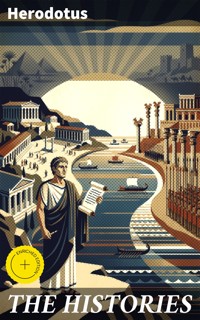
The Histories of Herodotus is a monumental work that lays the foundation for the study of history. Herodotus brings to life the ancient world with vivid descriptions of wars, customs, and cultures. His narrative style combines reportage with storytelling, making the text engaging and accessible. Written in the 5th century BCE, The Histories is considered one of the earliest works of Western literature and a pioneering example of historical writing. Herodotus' critical investigation of events and reliance on eyewitness accounts set a standard for future historians. The book presents a wealth of information on the Persian Wars, the rise of the Greek city-states, and the customs of various peoples. Herodotus' timeless exploration of human nature and the complexities of civilization make The Histories a must-read for anyone interested in the origins of history as a discipline. Herodotus, often referred to as the 'Father of History,' was a Greek historian known for his meticulous research and global perspective. His travels to Egypt, Babylon, and Persia provided him with firsthand knowledge that he incorporated into his writings. The Histories reflects Herodotus' curiosity about different cultures and his belief in the cyclical nature of human affairs. This magnum opus solidified his reputation as a master storyteller and historian, whose influence continues to be felt today in the field of historiography. In this enriched edition, we have carefully created added value for your reading experience: - A succinct Introduction situates the work's timeless appeal and themes. - The Synopsis outlines the central plot, highlighting key developments without spoiling critical twists. - A detailed Historical Context immerses you in the era's events and influences that shaped the writing. - An Author Biography reveals milestones in the author's life, illuminating the personal insights behind the text. - A thorough Analysis dissects symbols, motifs, and character arcs to unearth underlying meanings. - Reflection questions prompt you to engage personally with the work's messages, connecting them to modern life. - Hand‐picked Memorable Quotes shine a spotlight on moments of literary brilliance. - Interactive footnotes clarify unusual references, historical allusions, and archaic phrases for an effortless, more informed read.
Das E-Book können Sie in Legimi-Apps oder einer beliebigen App lesen, die das folgende Format unterstützen:
Veröffentlichungsjahr: 2018
Ähnliche

The Histories of Herodotus
Published by
Books
Table of Contents
Introduction
At the crossing of curiosity and empire, a traveler listens for the heartbeat of history. Herodotus’s The Histories opens a world where questions matter as much as answers, where the routes of armies and merchants double as the paths of ideas. It is a book about how people explain themselves, about the causes they claim and the motives they conceal, about memory made durable when it is set into narrative. Neither austere chronicle nor simple tale, it blends observation, testimony, and reflection into a panorama of peoples encountering power. From its first pages, it begins a conversation between wonder and reason.
We know the author as Herodotus of Halicarnassus, a Greek writer of the fifth century BCE, composing in Ionic prose. The Histories was produced in the classical Greek world during that century, and the text that survives has been transmitted in a traditional division into nine books established by later editors. Its subject engages events of earlier generations, above all the expansion of the Persian Empire and the confrontations between Greeks and their neighbors. Within that frame, Herodotus pursues an inquiry into human actions, seeking to understand how customs, leadership, geography, and chance together shape the destinies of communities.
At its center stands a clear premise: to investigate the origins of conflict between Greeks and non-Greeks, to preserve notable deeds from slipping into oblivion, and to register remarkable customs encountered along the way. The book proceeds outward from this aim, relating the rise of powers, the weaving of alliances, and the miscalculations that attend ambition. Herodotus does not merely list events; he asks why they unfolded as they did, offering explanations that consider both material conditions and human character. The reader enters an inquiry that values breadth of perspective and connects distant causes to visible, consequential outcomes.
The Histories holds classic status because it is the earliest fully extant large-scale work of historical prose in the Western tradition and because its narrative art remains compelling. It established a model in which history explains as well as recounts, linking past and present through causes, patterns, and exemplary moments. Later historians and writers, ancient and modern, found in Herodotus a demonstration that fact-finding can coexist with storytelling without diminishing either. The book’s capacity to broaden horizons—geographical, cultural, and moral—has ensured its continuous presence in education and letters, where it still frames discussions about what history can and should accomplish.
Herodotus achieves this reach through a flexible narrative architecture. Episodes branch into digressions that illuminate a custom, a river, a lineage, or a decision, then return to the main line with added resonance. Speeches dramatize choices and interpret motives; catalogues measure resources and ambition; anecdote supplies texture. The pacing alternates between the slow accumulation of context and sudden turns that reveal contingency. The tone is balanced: alert to marvels but attentive to plausibility, sympathetic to human striving yet unsparing about its excesses. This versatility lets the work move from court to marketplace, from sacred precinct to battlefield, without losing coherence.
Enduring themes provide continuity. The Histories meditates on the reach and limits of power, on the allure of expansion and the risks it carries, on prosperity that invites envy, and on reversal that follows misjudgment. It examines how communities remember success and failure, how leaders are raised up by fortune or brought low by arrogance, and how cultural difference can be both barrier and bridge. Throughout, the work tests ideas about justice and responsibility across shifting frontiers. By tracing consequence from decision to result, it makes visible the fragile balance between foresight and chance that governs public life.
The method behind the narrative is inquiry in the plain sense: learning by asking. Herodotus signals when he relies on direct observation and when he transmits reports, sometimes comparing versions and marking uncertainty. He consults stories, inscriptions, lineages, and local explanations, and he weighs probabilities. This habit of source-awareness does not resemble modern apparatus, yet it models a discipline of transparency and evaluation. The author’s willingness to record differing accounts preserves voices that otherwise would vanish, while his judgments invite the reader to practice discernment. The result is a conversation with evidence that animates the entire undertaking.
One of the book’s most striking features is its breadth of cultural description. It presents accounts of lands and peoples from the Mediterranean to the Near East and beyond, observing rituals, laws, foodways, clothing, measures, and landscapes. Rivers and deserts, coasts and capitals, shrines and palaces appear not as scenery but as forces that shape conduct. Such ethnographic attention situates conflict within a wider map of human possibility. Even when reports are tentative, the curiosity that gathers them is steady, and the reader encounters a world where difference is something to be understood, compared, and occasionally admired, rather than dismissed.
This imaginative range made The Histories a touchstone for later writers. Greek and Roman historians drew on its example of causal explanation and expansive scope, while authors in many periods adopted its art of embedding cultural description within narrative. Its influence extends to travel writing, anthropology’s early prehistory, and the modern essay of reflective reportage. The book also shaped the language in which imperial power and resistance would be discussed, supplying frameworks for thinking about the rise and fall of states. Across centuries, it has served simultaneously as sourcebook, method, and inspiration for interpretive historical prose.
The work’s transmission and reception underscore its adaptability. Written in Ionic Greek and copied over generations, it invites each era to translate not only its words but its habits of attention. Readers should not expect a ledger of dates and figures alone; they will find instead a web of narratives, inquiries, and comparisons that together make argument. The traditional division into nine books, arranged by later scholars, provides practical waypoints but does not confine the work’s ambitions. The Histories offers a reading experience that rewards patience, cross-referencing, and an openness to learn from contexts that at first seem distant.
As historical testimony, the book preserves a record of the eastern Mediterranean and Near Eastern worlds at a pivotal moment, when expanding empires encountered fractious city-states, and sea lanes tied distant regions into a single field of action. As literature, it reveals how story can stabilize memory and test moral insight. Herodotus connects logistics to leadership, custom to decision, and rumor to outcome, proposing that understanding requires attention to both structure and character. The cumulative effect is not certainty but comprehension: a sense of how and why events can gather force until they reshape the lives of nations.
To read The Histories today is to confront questions that remain urgent: how communities narrate themselves to others, how power justifies its reach, how evidence is collected, weighed, and shared, and how differences can be described without contempt. The book’s appeal endures because it treats inquiry as a public virtue and cross-cultural understanding as a necessary skill. Its stories caution against overconfidence while honoring resourcefulness and resilience. In an age of competing explanations and global entanglement, Herodotus’s expansive, questioning voice still offers a model for seeing complexity clearly and for telling the past in ways that enlarge the present.
Synopsis
The Histories of Herodotus, composed in the fifth century BCE by Herodotus of Halicarnassus, is an inquiry into the causes of conflict between Greeks and non-Greeks, culminating in the wars with the Persian Empire. Combining travel reports, stories from informants, and observations on geography and customs, the work ranges across the eastern Mediterranean, North Africa, and western Asia. Its nine-book division, added later, loosely tracks a widening scope from local traditions to imperial confrontations. Herodotus records multiple versions of events and weighs their plausibility, aiming to preserve notable deeds and explain how they came about, while foregrounding the interplay of character, chance, and power.
The narrative begins with accounts of earlier exchanges between Asia and Europe and focuses on Lydia, a wealthy Anatolian kingdom interacting closely with Greek cities on the coast. Herodotus traces Lydian dynasties and turns to King Croesus, whose ambitions and consultations with sanctuaries lead to decisions that shape regional politics. Croesus’s dealings with Greeks, alliances, and hostilities introduce themes of counsel, foresight, and the limits of human judgment. The fall of Lydia to rising Persian power changes the balance of power in Anatolia and brings the Ionian Greek cities under foreign rule, a development that becomes central to the later conflict.
Herodotus then recounts the ascent of the Persian Empire under Cyrus, describing how the Persians replaced Median dominance and expanded west and east. Campaigns against major kingdoms bring a mosaic of peoples into a single imperial framework. Alongside battlefield movements, Herodotus notes customs, landscapes, and origin stories, underscoring how differing ways of life complicate governance and loyalty. The consolidation of Persian rule in Asia Minor, the Near East, and beyond sets the stage for future confrontations with Greeks on the Aegean’s fringes. Episodes surrounding succession and frontier warfare illustrate the risks of rapid expansion and the fragility of fortune in royal enterprises.
With Cambyses, Herodotus turns to Egypt, offering one of antiquity’s fullest ethnographic portraits: religious practices, funerary rites, animal cults, social hierarchies, and the annual flooding of the Nile. He contrasts Egyptian customs with those of other peoples and reports debates about the river’s sources and inundation. Campaigns into Egypt and plans for expeditions deeper into Africa and the Near East intertwine with assessments of the king’s character and counsel from advisors. These episodes highlight tensions between ambition and prudence, while anchoring the broader history in detailed observations of a venerable civilization whose records and monuments give the historian material to evaluate.
The succession of Darius introduces themes of legitimacy and order. Herodotus relates how power was secured and then reorganized through satrapies, tribute assessments, and a network of roads and couriers that tied distant regions to the royal center. Administrative detail is balanced with narrative set pieces, including a campaign against the Scythians that prompts reflections on nomad warfare and the limits of imperial reach. Descriptions of Thrace, the Danube, and the Black Sea world bring Greek and non-Greek communities into contact under Persian oversight. Figures such as Histiaeus and Megabazus illustrate how local interests and imperial directives could collide or align.
The Ionian Revolt emerges from this milieu of dependency and ambition. Herodotus links its outbreak to local political calculations, failed ventures, and appeals for mainland Greek support. The revolt briefly changes the balance along the coast and draws a punitive response from the Persian court. In tracing embassies, alliances, and naval confrontations, he attends to how city-level decisions reverberate across the Aegean. The involvement of Athens and Eretria gives the conflict a wider cast, shaping Persian views of mainland Greece. The revolt’s suppression leads to renewed planning at the imperial center and sets in motion expeditions designed to compel submission.
Herodotus narrates the first and then the grander second Persian invasions of the Greek mainland, framing them through logistics on a continental scale. He describes bridges over the Hellespont, a canal cut across Mount Athos, provisioning, and musters drawn from many subject peoples. On the Greek side, he records arguments over strategy, the balance between land and sea forces, and questions of leadership and unity. Oracles, portents, and public debate reflect collective anxiety and resolve. As armies advance through Thrace and Thessaly, lines of defense are chosen at a narrow pass and nearby waters, setting up encounters in constricted terrain.
Subsequent campaigns pivot around key naval and land engagements that test plans, alliances, and endurance. Herodotus details the deliberations of commanders, the composition of fleets and armies, and the influence of weather, terrain, and intelligence. A sea battle near the island-studded waters off Attica and a land battle in central Greece become turning points, complemented by fighting on the coast of Asia Minor. He interweaves these set pieces with episodes of negotiation, defection, and retribution, and follows operations that extend beyond the initial theaters. The narrative closes the military arc with sieges and withdrawals, while attending to the fates of notable participants.
Throughout, The Histories blends explanation with storytelling, proposing that events arise from a mix of human character, institutional design, and the unpredictability of fortune. Herodotus compares customs to show that values are shaped by place and tradition, and he preserves multiple versions to acknowledge uncertainty in human memory. By charting the rise of a world empire and the responses of smaller communities, he invites reflection on power, hubris, and collective action. The work’s enduring significance lies in its method of inquiry and its wide horizon, offering readers a foundational model for investigating causes while respecting the diversity of human experience.
Historical Context
The Histories unfolds against the backdrop of the fifth century BCE eastern Mediterranean, when independent Greek poleis coexisted uneasily beside the vast Achaemenid Persian Empire. City-states such as Athens and Sparta relied on distinctive institutions—democratic assemblies and law courts in Athens, dual kingship and ephorate in Sparta—while sanctuaries like Delphi and Olympia mediated inter-polis relations. Monarchy and satrapal administration dominated Persia, whose reach extended from Anatolia to Egypt and Mesopotamia. Slavery was pervasive across societies, and warfare structured civic life. This world of competing political forms, shared religious practices, and expanding imperial power frames Herodotus’s inquiry into causes, customs, and conflicts.
Herodotus was an Ionian Greek from Halicarnassus in Caria, a city under Persian authority during his lifetime (c. 484–c. 425 BCE). Writing in the Ionic dialect, he presents himself as an investigator who reports what he has seen, heard, and compared. Ancient testimonies connect him with Athens and later with the colony of Thurii in southern Italy, reflecting the mobility of intellectuals in his era. His proem states a desire to preserve the memory of great deeds by Greeks and “barbarians,” and to explain their causes. This blend of ethnography, political analysis, and narrative exemplifies Ionian inquiry shaped by empire and diaspora.
The rise of the Achaemenid Empire under Cyrus II, Cambyses II, and Darius I in the late sixth century BCE transformed the Near East. Cyrus conquered Lydia and Babylon (mid- to late 540s BCE), Cambyses added Egypt (c. 525 BCE), and Darius reorganized territories into satrapies, standardized tribute, and developed royal infrastructure such as the Royal Road. Imperial administration used multiple languages, including Imperial Aramaic for communications, while royal inscriptions appeared in Old Persian, Elamite, and Babylonian. The Histories reflects these expansions by tracing earlier Lydian and Median histories and by examining Persian rule’s methods—taxation, logistics, and ideology—alongside the empire’s ambitions in the Aegean.
In the Greek world, the archaic centuries had produced durable institutions and rivalries. Most poleis were governed by citizen bodies, though many had experienced tyrannies before reforms. Athens underwent significant changes with the reforms credited to Cleisthenes (508/7 BCE), which reorganized citizenship and bolstered assembly power. Innovations in warfare (the hoplite phalanx) and in technology (trireme navies) altered strategy and social participation. Coinage, first developed in Lydia in the seventh to sixth centuries BCE, spread widely, enabling state payments and mercenary service. Panhellenic sanctuaries fostered shared identity through games and oracles. Herodotus situates Greek politics amid these long-term transformations.
The Ionian Revolt (499–493 BCE) marked a decisive fracture between Greek coastal Asia Minor and Persian overlords. Triggered by local grievances and failures such as the Naxos expedition, the revolt drew limited support from mainland Greece, notably Athens and Eretria, whose forces joined the burning of Sardis. Persian countermeasures culminated in the defeat of Ionian fleets at Lade and the subjugation of rebellious cities. Herodotus reconstructs these events to illuminate the origins of conflict and to weigh responsibility among Greeks and Persians alike. The revolt’s suppression set the stage for punitive expeditions against Eretria and Athens and hardened identities on both sides.
The first Persian invasion of mainland Greece (490 BCE) reached its climax at Marathon, where an Athenian-led force defeated a Persian army. Herodotus’s account emphasizes deliberation in the Athenian council, the role of Plataean allies, and the tactical dynamics of hoplite battle. He examines motives—retribution for Sardis and strategic coastal control—without reducing the conflict to simple binaries. The episode, central to Athenian civic memory, also signals broader trends: the emergence of citizen-soldiers as political actors and the importance of leadership in crisis. The Histories preserves divergent testimonies, making the battle a test case for critical reasoning.
The second Persian invasion (480–479 BCE) under Xerxes I displayed imperial scale and engineering. Herodotus describes bridges over the Hellespont and the canal at Mount Athos, underlining Persian logistical capacities. The Hellenic League formed under Spartan leadership, and a series of engagements—Thermopylae, Artemisium, Salamis, Plataea, Mycale—decisively checked Persian aims. Naval warfare became pivotal as trireme fleets shaped strategy and outcomes. Herodotus’s narrative highlights diverse contingents, including Carian and Ionian forces and the notable figure of Artemisia of Halicarnassus, a commander in Xerxes’ fleet. The work balances admiration for imperial organization with sustained interest in Greek deliberation and dissent.
After 479 BCE, the balance of power shifted as Athens spearheaded the Delian League (founded 478 BCE) to continue the war and protect the Aegean. Over ensuing decades, tribute assessments and naval commitments strengthened Athenian hegemony, culminating in the relocation of the league treasury to Athens (mid-5th century BCE). The so-called Peace of Callias, often dated around 449 BCE, remains debated, but hostilities diminished. Herodotus composed amid this Athenian ascendancy, when public rituals, monuments, and drama shaped memories of the Persian Wars. His wide geographic scope provides counterpoint to imperial narratives, situating Greek successes within a broader, contingent history.
Cross-cultural contact long predated the wars. Ionian Greeks traded and settled along Anatolian coasts; Phoenician networks linked the Levant to the western Mediterranean; and Egyptian Saite rulers had sanctioned the Greek emporion at Naukratis in the Nile Delta. Herodotus uses Egyptian priestly accounts and local observation to explore chronology, cult, and custom, sometimes juxtaposing Greek interpretations with Egyptian explanations. His Libyan and Scythian logoi similarly trace the edges of Greek knowledge. By documenting such encounters, The Histories records the permeability of borders and the economic and religious exchanges that shaped everyday life for merchants, mercenaries, and travelers.
Economic structures underpin much of the narrative. Darius I’s daric gold coinage and standardized tribute furnished Persian rulers with reliable revenues for armies and roads. In the Greek world, Athenian access to silver from the Laurion mines, exploited intensively in the early fifth century BCE, financed shipbuilding and pay for oarsmen. Market exchange and coin circulation supported military mobilization and urban growth, while spoils and indemnities redistributed wealth after campaigns. Herodotus reports tribute lists, gifts, and lavish court expenditures to illustrate power relations. His attention to money, wages, and provisioning underscores how finance and logistics were decisive alongside valor and strategy.
Technological and organizational innovations shape the conflicts Herodotus recounts. Greek triremes, developed in the late archaic period, required extensive timber, skilled shipwrights, and coordinated crews. Persian road systems and a relay of royal couriers enabled rapid communication across vast territories, supporting concentrated military operations. Engineering feats—canals, pontoon bridges, siege works—signal imperial ambition and practical expertise. Written records, inscriptions, and diplomatic letters, though not always accessible to Herodotus, formed the administrative backdrop to the events he narrates. The Histories thus mirrors an age in which information management, transport, and naval technology were as consequential as battlefield tactics.
Religious practice and divination pervaded decision-making. Greeks consulted Delphi and other oracles before campaigns, interpreted prodigies, and sought favor through sacrifice. Herodotus reproduces oracular verses and reports debates over their meaning, capturing how prophecy mediated politics. He also describes Persian rites—including reverence for fire and the role of Magi—while acknowledging variations across regions within the empire. Rather than privileging one system, he juxtaposes customs, raising questions about human agency under divine oversight. The recurrent theme of hubris punished and fortune’s reversals reflects widely shared assumptions that success invites correction by gods, fate, or time.
Social structures inform the story’s actors and outcomes. Citizenship in most Greek poleis was restricted, with metics and slaves excluded from political decisions but vital to economies. In Sparta, a militarized citizen body relied on helot labor, shaping strategic choices and alliances. In democratic Athens, large juries and assemblies empowered common citizens, including the oarsmen who sustained naval power. Persian society encompassed nobles, administrators, and subject peoples integrated through tribute and military service. Herodotus’s biographies of rulers and communities often pivot on social tensions—exiles, factional strife, and class interests—making institutional frameworks as significant as individual charisma.
The western Greek world forms an important horizon. Colonies in Sicily and southern Italy, such as Syracuse and Taras, developed their own power struggles, economies, and artistic cultures. Conflicts between Greeks and Carthaginians, including the battle of Himera (480 BCE), intersect chronologically with the Persian advance, creating a Mediterranean-wide theater of war and alliance. Herodotus connects these fronts without asserting direct coordination, illustrating how contemporaneous crises shaped perceptions of shared fate. By moving between regions, he reveals patterns—tyrants rising and falling, cities negotiating autonomy—that resonate across the Hellenic and non-Hellenic worlds.
Herodotus positions himself within and against earlier traditions of explanation. Ionian prose writers, including Hecataeus of Miletus, had mapped lands and genealogies, while epic poetry framed the past in heroic terms. The Histories adapts these legacies by offering alternative accounts, naming informants, and evaluating plausibility. He reports conflicting stories, explicitly marks uncertainty, and sometimes infers causes from patterns in human behavior. Speech-making, catalogues, and ethnographic digressions serve analytic ends rather than mere ornament. In this way, the work reflects a fifth-century intellectual milieu that prized debate, argument, and the scrutiny of customary beliefs alongside inherited myth.
Institutional memory and dissemination shaped the work’s reception and purpose. Public festivals, lawcourt oratory, and funerary speeches commemorated collective struggles, while writing on papyrus enabled extended prose composition and circulation. Ancient traditions associate Herodotus with Athens and later Thurii, suggesting that The Histories reached audiences across the Greek world. The Ionic dialect anchored the text in Ionian scholarship even as it addressed panhellenic themes. As records of tribute, treaties, and temple dedications accumulated, readers could test parts of his narrative against public documentation, further encouraging a culture of critical engagement with the recent past.
The Histories also reflects local Carian and Anatolian perspectives shaped by Persian authority. Halicarnassus, Herodotus’s birthplace, lay within the Carian sphere of influence under Persian suzerainty, and Carian communities contributed ships and soldiers to imperial campaigns. The figure of Artemisia of Halicarnassus, whom Herodotus singles out for tactical insight, exemplifies regional participation in empire beyond simple domination. By charting loyalties and calculations among Ionian and Carian Greeks, he shows how subject peoples negotiated survival, advantage, and identity. These nuances complicate a purely Greek-versus-Persian narrative and foreground the pragmatic choices of coastal communities under imperial rule and naval pressure.nished studies of Persian administration and strategy provide a counterpoint to Greek civic deliberation, matching imperial centralization with local agency and variation in tribute, law, and custom. Herodotus describes the empire’s courier system, road networks, and satrapal oversight alongside anecdotes of court politics and regional governance. By integrating ethnography and political narrative, he presents conquest as both logistical achievement and cultural encounter. This dual focus allows readers to see how institutions—from the royal court to village cults—shape outcomes, and how misunderstandings across languages and traditions can trigger conflict or unexpected cooperation in crisis situations.
Author Biography
Herodotus of Halicarnassus was a Greek writer of the fifth century BCE, widely known as the “Father of History.” He is the author of the Histories, the earliest surviving extended prose narrative to investigate causes and compare cultures across the Mediterranean and Near East. Living in the aftermath of the Greco‑Persian Wars, he sought to record human actions and explain how conflicts arose between Greeks and non‑Greeks. His work combines storytelling with inquiry, assembling testimony, observation, and reflection. Though ancient critics sometimes questioned his accuracy, Herodotus established a model for historical explanation that balanced narrative richness with an effort to evaluate competing accounts.
Herodotus was born in Halicarnassus, a Greek city in Caria on the southwest coast of Asia Minor, when the region was under Achaemenid Persian rule. Ancient sources and modern estimates place his birth in the early fifth century BCE, often around 484 BCE, with death later in that century. The multicultural environment of Caria, with Greek, Carian, and Persian influences, likely shaped his curiosity about cross‑cultural contact. Little is securely known about his family or private life, and ancient anecdotes are often inconsistent. What is clear is that the political and military upheavals of his youth framed the central subject of his Histories.
Herodotus wrote in the Ionic dialect and worked within the Ionian tradition of historiē—“inquiry.” He drew upon and sometimes challenged earlier prose writers known as logographers, notably Hecataeus of Miletus, whose geographical and genealogical schemes he discusses. The epic poetry of Homer provided narrative models and a repertoire of heroic exempla, while contemporary intellectual currents encouraged rational explanation alongside respect for traditional tales. Herodotus regularly marks distinctions between what he saw, what he was told, and what he inferred. His prose moves through “logoi,” self‑contained accounts that combine ethnography, geography, and narrative, revealing wide reading, extensive listening, and a programmatic interest in method.
The Histories investigates the origins and course of the conflict between the Persian Empire and the Greek world, beginning with the rise of Lydia under Croesus and extending through the invasions of Darius and Xerxes. Alongside this central story, Herodotus offers detailed accounts of the customs, landscapes, and rulers of Egypt, Scythia, Asia Minor, and other regions he encountered or researched. The work as we have it is divided into nine books, a later editorial arrangement. Composed over years in the mid‑fifth century BCE, it presents causes as multiple—human ambition, political structures, chance, and the divine—while repeatedly warning against hubris and imperial overreach.
According to his own testimony, Herodotus traveled widely in the Aegean, Asia Minor, parts of the Near East, and Egypt, gathering local stories and examining monuments. He often notes when he consulted priests, officials, sailors, or settlers, and he occasionally refers to inscriptions or measurements. His practice juxtaposes “autopsy” (what he claims to have seen) with “hearsay,” frequently offering alternative versions before judging which seems most plausible. He is attentive to climate, resources, and geography as forces shaping societies. A famous theme is that “custom is king”: people consider their own practices best, so comparative description is essential to understanding action and motive.
Reception of Herodotus in antiquity was mixed but influential. Cicero famously hailed him as the “father of history,” while Thucydides positioned his own work as more exacting in political and military analysis. Plutarch later criticized Herodotus for alleged bias, yet even detractors relied on his materials. The Histories survived through a strong manuscript tradition, and humanists and Enlightenment scholars used it to reconstruct the ancient world. Modern research continues to debate his accuracy in particular cases, but values his ethnography, attention to sources, and explicit reasoning about evidence. Herodotus thus stands at the origin of narrative history and early cross‑cultural inquiry.
Little is firmly known about Herodotus’s final years. Ancient tradition places him for a time in the colony of Thurii in southern Italy, and some locate his death there, but details remain uncertain. Whatever his end, his legacy is substantial. The Histories modeled how to integrate testimony, travel, and comparison into a coherent account of causes, and it remains indispensable for studying Achaemenid Persia, Archaic Lydia, Egypt, and the Greek world. His sensitivity to cultural difference, insistence on asking how we know, and warnings against overconfidence continue to shape historical thinking and public discourse about empire, identity, and the uses of memory.
The Histories of Herodotus
Book I: Clio
These are the researches of Herodotus of Halicarnassus[1], which he publishes, in the hope of thereby preserving from decay the remembrance of what men have done, and of preventing the great and wonderful actio[4]ns of the Greeks and the Barbarians from losing their due meed of glory; and withal to put on record what were their grounds of feud.
According to the Persians best informed in history, the Phœnicians began to quarrel. This people, who had formerly dwelt on the shores of the Erythræan Sea[2], having migrated to the Mediterranean and settled in the parts which they now inhabit, began at once, they say, to adventure on long voyages, freighting their vessels with the wares of Egypt and Assyria. They landed at many places on the coast, and among the rest at Argos[3], which was then pre-eminent above all the states included now under the common name of Hellas. Here they exposed their merchandise, and traded with the natives for five or six days; at the end of which time, when almost everything was sold, there came down to the beach a number of women, and among them the daughter of the king, who was, they say, agreeing in this with the Greeks, Io, the child of Inachus[5]. The women were standing by the stern of the ship intent upon their purchases, when the Phœnicians, with a general shout, rushed upon them. The greater part made their escape, but some were seized and carried off. Io herself was among the captives. The Phœnicians put the women on board their vessel, and set sail for Egypt. Thus did Io pass into Egypt, according to the Persian story, which differs widely from the Phœnician: and thus commenced, according to their authors, the series of outrages.
At a later period, certain Greeks, with whose name they are unacquainted, but who would probably be Cretans, made a landing at Tyre, on the Phoenician coast, and bore off the king's daughter, Europé. In this they only retaliated; but afterwards the Greeks, they say, were guilty of a second violence. They manned a ship of war, and sailed to Aea[6], a city of Colchis[7], on the river Phasis[8]; from whence, after despatching the rest of the business on which they had come, they carried off Medea[9], the daughter of the king of the land. The monarch sent a herald into Greece to demand reparation of the wrong, and the restitution of his child; but the Greeks made answer that, having received no reparation of the wrong done them in the seizure of Io the Argive, they should give none in this instance.
In the next generation afterwards, according to the same authorities, Alexander the son of Priam[10], bearing these events in mind, resolved to procure himself a wife out of Greece by violence, fully persuaded, that as the Greeks had not given satisfaction for their outrages, so neither would he be forced to make any for his. Accordingly he made prize of Helen[11]; upon which the Greeks decided that, before resorting to other measures, they would send envoys to reclaim the princess and require reparation of the wrong. Their demands were met by a reference to the violence which had been offered to Medea, and they were asked with what face they could now require satisfaction, when they had formerly rejected all demands for either reparation or restitution addressed to them.
Hitherto the injuries on either side had been mere acts of common violence; but in what followed the Persians consider that the Greeks were greatly to blame, since before any attack had been made on Europe, they led an army into Asia. Now as for the carrying off of women, it is the deed, they say, of a rogue: but to make a stir about such as are carried off, argues a man a fool. Men of sense care nothing for such women, since it is plain that without their own consent they would never be forced away. The Asiatics, when the Greeks ran off with their women, never troubled themselves about the matter; but the Greeks, for the sake of a single Lacedaemonian[12] girl, collected a vast armament, invaded Asia, and destroyed the kingdom of Priam. Henceforth they ever looked upon the Greeks as their open enemies. For Asia, with all the various tribes of barbarians that inhabit it, is regarded by the Persians as their own; but Europe and the Greek race they look on as distinct and separate.
Such is the account which the Persians give of these matters. They trace to the attack upon Troy their ancient enmity towards the Greeks. The Phoenicians, however, as regards Io, vary from the Persian statements. They deny that they used any violence to remove her into Egypt; she herself, they say, having formed an intimacy with the captain, while his vessel lay at Argos, and perceiving herself to be with child, of her own free will accompanied the Phoenicians on their leaving the shore, to escape the shame of detection and the reproaches of her parents. Whether this latter account be true, or whether the matter happened otherwise, I shall not discuss further. I shall proceed at once to point out the person who first within my own knowledge inflicted injury on the Greeks, after which I shall go forward with my history, describing equally the greater and the lesser cities. For the cities which were formerly great have most of them become insignificant; and such as are at present powerful, were weak in the olden time. I shall therefore discourse equally of both, convinced that human happiness never continues long in one stay.
Croesus[15], son of Alyattes, by birth a Lydian, was lord of all the nations to the west of the river Halys[13]. This stream, which separates Syria from Paphlagonia, runs with a course from south to north, and finally falls into the Euxine[14]. So far as our knowledge goes, he was the first of the barbarians who had dealings with the Greeks, forcing some of them to become his tributaries, and entering into alliance with others. He conquered the Aeolians, Ionians, and Dorians of Asia, and made a treaty with the Lacedaemonians. Up to that time all Greeks had been free. For the Cimmerian attack upon Ionia, which was earlier than Croesus, was not a conquest of the cities, but only an inroad for plundering.
The sovereignty of Lydia, which had belonged to the Heraclides, passed into the family of Croesus, who were called the Mermnadae, in the manner which I will now relate. There was a certain king of Sardis[16], Candaules[17] by name, whom the Greeks called Myrsilus. He was a descendant of Alcaeus, son of Hercules. The first king of this dynasty was Agron, son of Ninus, grandson of Belus, and great-grandson of Alcaeus; Candaules, son of Myrsus, was the last. The kings who reigned before Agron sprang from Lydus, son of Atys[32], from whom the people of the land, called previously Meonians, received the name of Lydians. The Heraclides, descended from Hercules and the slave-girl of Jardanus, having been entrusted by these princes with the management of affairs, obtained the kingdom by an oracle. Their rule endured for two and twenty generations of men, a space of five hundred and five years; during the whole of which period, from Agron to Candaules, the crown descended in the direct line from father to son.
Now it happened that this Candaules was in love with his own wife; and not only so, but thought her the fairest woman in the whole world. This fancy had strange consequences. There was in his bodyguard a man whom he specially favoured, Gyges[18], the son of Dascylus. All affairs of greatest moment were entrusted by Candaules to this person, and to him he was wont to extol the surpassing beauty of his wife. So matters went on for a while. At length, one day, Candaules, who was fated to end ill, thus addressed his follower: "I see thou dost not credit what I tell thee of my lady's loveliness; but come now, since men's ears are less credulous than their eyes, contrive some means whereby thou mayst behold her naked." At this the other loudly exclaimed, saying, "What most unwise speech is this, master, which thou hast uttered? Wouldst thou have me behold my mistress when she is naked? Bethink thee that a woman, with her clothes, puts off her bashfulness. Our fathers, in time past, distinguished right and wrong plainly enough, and it is our wisdom to submit to be taught by them. There is an old saying, 'Let each look on his own[2q].' I hold thy wife for the fairest of all womankind. Only, I beseech thee, ask me not to do wickedly."
Gyges thus endeavoured to decline the king's proposal, trembling lest some dreadful evil should befall him through it. But the king replied to him, "Courage, friend; suspect me not of the design to prove thee by this discourse; nor dread thy mistress, lest mischief be. thee at her hands. Be sure I will so manage that she shall not even know that thou hast looked upon her. I will place thee behind the open door of the chamber in which we sleep. When I enter to go to rest she will follow me. There stands a chair close to the entrance, on which she will lay her clothes one by one as she takes them off. Thou wilt be able thus at thy leisure to peruse her person. Then, when she is moving from the chair toward the bed, and her back is turned on thee, be it thy care that she see thee not as thou passest through the doorway."
Gyges, unable to escape, could but declare his readiness. Then Candaules, when bedtime came, led Gyges into his sleeping-chamber, and a moment after the queen followed. She entered, and laid her garments on the chair, and Gyges gazed on her. After a while she moved toward the bed, and her back being then turned, he glided stealthily from the apartment. As he was passing out, however, she saw him, and instantly divining what had happened, she neither screamed as her shame impelled her, nor even appeared to have noticed aught, purposing to take vengeance upon the husband who had so affronted her. For among the Lydians, and indeed among the barbarians generally, it is reckoned a deep disgrace, even to a man, to be seen naked.
No sound or sign of intelligence escaped her at the time. But in the morning, as soon as day broke, she hastened to choose from among her retinue such as she knew to be most faithful to her, and preparing them for what was to ensue, summoned Gyges into her presence. Now it had often happened before that the queen had desired to confer with him, and he was accustomed to come to her at her call. He therefore obeyed the summons, not suspecting that she knew aught of what had occurred. Then she addressed these words to him: "Take thy choice, Gyges, of two courses which are open to thee. Slay Candaules, and thereby become my lord, and obtain the Lydian throne, or die this moment in his room. So wilt thou not again, obeying all behests of thy master, behold what is not lawful for thee. It must needs be that either he perish by whose counsel this thing was done, or thou, who sawest me naked, and so didst break our usages." At these words Gyges stood awhile in mute astonishment; recovering after a time, he earnestly besought the queen that she would not compel him to so hard a choice. But finding he implored in vain, and that necessity was indeed laid on him to kill or to be killed, he made choice of life for himself, and replied by this inquiry: "If it must be so, and thou compellest me against my will to put my lord to death, come, let me hear how thou wilt have me set on him." "Let him be attacked," she answered, "on the spot where I was by him shown naked to you, and let the assault be made when he is asleep."
All was then prepared for the attack, and when night fell, Gyges, seeing that he had no retreat or escape, but must absolutely either slay Candaules, or himself be slain, followed his mistress into the sleeping-room. She placed a dagger in his hand and hid him carefully behind the self-same door. Then Gyges, when the king was fallen asleep, entered privily into the chamber and struck him dead. Thus did the wife and kingdom of Candaules pass into the possession of Gyges, of whom Archilochus the Parian, who lived about the same time, made mention in a poem written in iambic trimeter verse.
Gyges was afterwards confirmed in the possession of the throne by an answer of the Delphi[19]c oracle. Enraged at the murder of their king, the people flew to arms, but after a while the partisans of Gyges came to terms with them, and it was agreed that if the Delphic oracle declared him king of the Lydians, he should reign; if otherwise, he should yield the throne to the Heraclides. As the oracle was given in his favour he became king. The Pythoness[20], however, added that, in the fifth generation from Gyges, vengeance should come for the Heraclides; a prophecy of which neither the Lydians nor their princes took any account till it was fulfilled. Such was the way in which the Mermnadae deposed the Heraclides, and themselves obtained the sovereignty.
When Gyges was established on the throne, he sent no small presents to Delphi, as his many silver offerings at the Delphic shrine testify. Besides this silver he gave a vast number of vessels of gold, among which the most worthy of mention are the goblets, six in number, and weighing altogether thirty talents, which stand in the Corinthian treasury, dedicated by him. I call it the Corinthian treasury, though in strictness of speech it is the treasury not of the whole Corinthian people, but of Cypselus, son of Eetion. Excepting Midas, son of Gordias[22], king of Phrygia, Gyges was the first of the barbarians whom we know to have sent offerings to Delphi. Midas dedicated the royal throne whereon he was accustomed to sit and administer justice, an object well worth looking at. It lies in the same place as the goblets presented by Gyges. The Delphians call the whole of the silver and the gold which Gyges dedicated, after the name of the donor, Gygian[21].
As soon as Gyges was king he made an in-road on Miletus[23] and Smyrna, and took the city of Colophon. Afterwards, however, though he reigned eight and thirty years, he did not perform a single noble exploit. I shall therefore make no further mention of him, but pass on to his son and successor in the kingdom, Ardys
Ardys took Priêné and made war upon Miletus. In his reign the Cimmerians, driven from their homes by the nomads of Scythia, entered Asia and captured Sardis, all but the citadel. He reigned forty-nine years, and was succeeded by his son, Sadyattes, who reigned twelve years. At his death his son Alyattes mounted the throne.
This prince waged war with the Medes under Cyaxares, the grandson of Deioces, drove the Cimmerians out of Asia, conquered Smyrna, the Colophonian colony, and invaded Clazomenae. From this last contest he did not come off as he could have wished, but met with a sore defeat; still, however, in the course of his reign, he performed other actions very worthy of note, of which I will now proceed to give an account.
Inheriting from his father a war with the Milesians, he pressed the siege against the city by attacking it in the following manner. When the harvest was ripe on the ground he marched his army into Milesia to the sound of pipes and harps, and flutes masculine and feminine. The buildings that were scattered over the country he neither pulled down nor burnt, nor did he even tear away the doors, but left them standing as they were. He cut down, however, and utterly destroyed all the trees and all the corn throughout the land, and then returned to his own dominions. It was idle for his army to sit down before the place, as the Milesians were masters of the sea. The reason that he did not demolish their buildings was that the inhabitants might be tempted to use them as homesteads from which to go forth to sow and till their lands; and so each time that he invaded the country he might find something to plunder.
In this way he carried on the war with the Milesians for eleven years, in the course of which he inflicted on them two terrible blows; one in their own country in the district of Limeneium, the other in the plain of the Maeander. During six of these eleven years, Sadyattes, the son of Ardys who first lighted the flames of this war, was king of Lydia, and made the incursions. Only the five following years belong to the reign of Alyattes, son of Sadyattes, who (as I said before) inheriting the war from his father, applied himself to it unremittingly. The Milesians throughout the contest received no help at all from any of the Ionians, excepting those of Chios, who lent them troops in requital of a like service rendered them in former times, the Milesians having fought on the side of the Chios during the whole of the war between them and the people of Erythrae.
It was in the twelfth year of the war that the following mischance occurred from the firing of the harvest-fields. Scarcely had the corn been set alight by the soldiers when a violent wind carried the flames against the temple of Minerva Assesia, which caught fire and was burnt to the ground. At the time no one made any account of the circumstance; but afterwards, on the return of the army to Sardis, Alyattes fell sick. His illness continued, whereupon, either advised thereto by some friend, or perchance himself conceiving the idea, he sent messengers to Delphi to inquire of the god concerning his malady. On their arrival the Pythoness declared that no answer should be given them until they had rebuilt the temple of Minerva, burnt by the Lydians at Assesus in Milesia.
Thus much I know from information given me by the Delphians; the remainder of the story the Milesians add. The answer made by the oracle came to the ears of Periander[25], son of Cypselus, who was a very close friend to Thrasybulus[24], tyrant of Miletus at that period. He instantly despatched a messenger to report the oracle to him, in order that Thrasybulus, forewarned of its tenor, might the better adapt his measures to the posture of affairs.
Alyattes, the moment that the words of the oracle were reported to him, sent a herald to Miletus in hopes of concluding a truce with Thrasybulus and the Milesians for such a time as was needed to rebuild the temple. The herald went upon his way; but meantime Thrasybulus had been apprised of everything; and conjecturing what Alyattes would do, he contrived this artifice. He had all the corn that was in the city, whether belonging to himself or to private persons, brought into the market-place, and issued an order that the Milesians should hold themselves in readiness, and, when he gave the signal, should, one and all, fall to drinking and revelry.
The purpose for which he gave these orders was the following. He hoped that the Sardian herald, seeing so great store of corn upon the ground, and all the city given up to festivity, would inform Alyattes of it, which fell out as he anticipated. The herald observed the whole, and when he had delivered his message, went back to Sardis. This circumstance alone, as I gather, brought about the peace which ensued. Alyattes, who had hoped that there was now a great scarcity of corn in Miletus, and that the people were worn down to the last pitch of suffering, when he heard from the herald on his return from Miletus tidings so contrary to those he had expected, made a treaty with the enemy by which the two nations became close friends and allies. He then built at Assesus two temples to Minerva instead of one, and shortly after recovered from his malady. Such were the chief circumstances of the war which Alyattes waged with Thrasybulus and the Milesians.
This Periander, who apprised Thrasybulus of the oracle, was son of Cypselus, and tyrant of Corinth. In his time a very wonderful thing is said to have happened. The Corinthians and the Lesbians agree in their account of the matter. They relate that Arion of Methymna[26], who as a player on the harp, was second to no man living at that time, and who was, so far as we know, the first to invent the dithyrambic measure[27], to give it its name, and to recite in it at Corinth, was carried to Taenarum[28] on the back of a dolphin.
He had lived for many years at the court of Periander, when a longing came upon him to sail across to Italy and Sicily. Having made rich profits in those parts, he wanted to recross the seas to Corinth. He therefore hired a vessel, the crew of which were Corinthians, thinking that there was no people in whom he could more safely confide; and, going on board, he set sail from Tarentum. The sailors, however, when they reached the open sea, formed a plot to throw him overboard and seize upon his riches. Discovering their design, he fell on his knees, beseeching them to spare his life, and making them welcome to his money. But they refused; and required him either to kill himself outright, if he wished for a grave on the dry land, or without loss of time to leap overboard into the sea. In this strait Arion begged them, since such was their pleasure, to allow him to mount upon the quarter-deck, dressed in his full costume, and there to play and sing, and promising that, as soon as his song was ended, he would destroy himself. Delighted at the prospect of hearing the very best harper in the world, they consented, and withdrew from the stern to the middle of the vessel: while Arion dressed himself in the full costume of his calling, took his harp, and standing on the quarter-deck, chanted the Orthian. His strain ended, he flung himself, fully attired as he was, headlong into the sea. The Corinthians then sailed on to Corinth. As for Arion, a dolphin, they say, took him upon his back and carried him to Taenarum, where he went ashore, and thence proceeded to Corinth in his musician's dress, and told all that had happened to him. Periander, however, disbelieved the story, and put Arion in ward, to prevent his leaving Corinth, while he watched anxiously for the return of the mariners. On their arrival he summoned them before him and asked them if they could give him any tiding of Arion. They returned for answer that he was alive and in good health in Italy, and that they had left him at Tarentum, where he was doing well. Thereupon Arion appeared before them, just as he was when he jumped from the vessel: the men, astonished and detected in falsehood, could no longer deny their guilt. Such is the account which the Corinthians and Lesbians give; and there is to this day at Taenarum, an offering of Arion's at the shrine, which is a small figure in bronze, representing a man seated upon a dolphin.
Having brought the war with the Milesians to a close, and reigned over the land of Lydia for fifty-seven years, Alyattes died. He was the second prince of his house who made offerings at Delphi. His gifts, which he sent on recovering from his sickness, were a great bowl of pure silver, with a salver in steel curiously inlaid, a work among all the offerings at Delphi the best worth looking at. Glaucus, the Chian, made it, the man who first invented the art of inlaying steel.
On the death of Alyattes, Croesus, his son, who was thirty-five years old, succeeded to the throne. Of the Greek cities, Ephesus was the first that he attacked. The Ephesians, when he laid siege to the place, made an offering of their city to Diana, by stretching a rope from the town wall to the temple of the goddess, which was distant from the ancient city, then besieged by Croesus, a space of seven furlongs. They were, as I said, the first Greeks whom he attacked. Afterwards, on some pretext or other, he made war in turn upon every Ionian and Aeolian state, bringing forward, where he could, a substantial ground of complaint; where such failed him, advancing some poor excuse.
In this way he made himself master of all the Greek cities in Asia, and forced them to become his tributaries; after which he began to think of building ships, and attacking the islanders. Everything had been got ready for this purpose, when Bias of Priêné (or, as some say, Pittacus the Mytilenean) put a stop to the project. The king had made inquiry of this person, who was lately arrived at Sardis, if there were any news from Greece; to which he answered, "Yes, sire, the islanders are gathering ten thousand horse, designing an expedition against thee and against thy capital." Croesus, thinking he spake seriously, broke out, "Ah, might the gods put such a thought into their minds as to attack the sons of the Lydians with cavalry!" "It seems, oh! king," rejoined the other, "that thou desirest earnestly to catch the islanders on horseback upon the mainland,- thou knowest well what would come of it. But what thinkest thou the islanders desire better, now that they hear thou art about to build ships and sail against them, than to catch the Lydians at sea, and there revenge on them the wrongs of their brothers upon the mainland, whom thou holdest in slavery?" Croesus was charmed with the turn of the speech; and thinking there was reason in what was said, gave up his ship-building and concluded a league of amity with the Ionians of the isles.
Croesus afterwards, in the course of many years, brought under his sway almost all the nations to the west of the Halys. The Lycians and Cilicians alone continued free; all the other tribes he reduced and held in subjection. They were the following: the Lydians, Phrygians, Mysians, Mariandynians, Chalybians, Paphlagonians, Thynian and Bithynian Thracians, Carians, Ionians, Dorians, Aeolians and Pamphylians.
When all these conquests had been added to the Lydian empire, and the prosperity of Sardis was now at its height, there came thither, one after another, all the sages of Greece living at the time, and among them Solon[29], the Athenian. He was on his travels, having left Athens to be absent ten years, under the pretence of wishing to see the world, but really to avoid being forced to repeal any of the laws which, at the request of the Athenians, he had made for them. Without his sanction the Athenians could not repeal them, as they had bound themselves under a heavy curse to be governed for ten years by the laws which should be imposed on them by Solon.
On this account, as well as to see the world, Solon set out upon his travels, in the course of which he went to Egypt to the court of Amasis, and also came on a visit to Croesus at Sardis. Croesus received him as his guest, and lodged him in the royal palace. On the third or fourth day after, he bade his servants conduct Solon over his treasuries, and show him all their greatness and magnificence. When he had seen them all, and, so far as time allowed, inspected them, Croesus addressed this question to him. "Stranger of Athens, we have heard much of thy wisdom and of thy travels through many lands, from love of knowledge and a wish to see the world. I am curious therefore to inquire of thee, whom, of all the men that thou hast seen, thou deemest the most happy?" This he asked because he thought himself the happiest of mortals: but Solon answered him without flattery, according to his true sentiments, "Tellus[30] of Athens, sire." Full of astonishment at what he heard, Croesus demanded sharply, "And wherefore dost thou deem Tellus happiest?" To which the other replied, "First, because his country was flourishing in his days, and he himself had sons both beautiful and good, and he lived to see children born to each of them, and these children all grew up; and further because, after a life spent in what our people look upon as comfort, his end was surpassingly glorious. In a battle between the Athenians and their neighbours near Eleusis, he came to the assistance of his countrymen, routed the foe, and died upon the field most gallantly. The Athenians gave him a public funeral on the spot where he fell, and paid him the highest honours."
Thus did Solon admonish Croesus by the example of Tellus, enumerating the manifold particulars of his happiness. When he had ended, Croesus inquired a second time, who after Tellus seemed to him the happiest, expecting that at any rate, he would be given the second place. "Cleobis and Bito[31]," Solon answered; "they were of Argive race; their fortune was enough for their wants, and they were besides endowed with so much bodily strength that they had both gained prizes at the Games. Also this tale is told of them:—There was a great festival in honour of the goddess Juno at Argos, to which their mother must needs be taken in a car. Now the oxen did not come home from the field in time: so the youths, fearful of being too late, put the yoke on their own necks, and themselves drew the car in which their mother rode. Five and forty furlongs did they draw her, and stopped before the temple. This deed of theirs was witnessed by the whole assembly of worshippers, and then their life closed in the best possible way. Herein, too, God showed forth most evidently, how much better a thing for man death is than life. For the Argive men, who stood around the car, extolled the vast strength of the youths; and the Argive women extolled the mother who was blessed with such a pair of sons; and the mother herself, overjoyed at the deed and at the praises it had won, standing straight before the image, besought the goddess to bestow on Cleobis and Bito, the sons who had so mightily honoured her, the highest blessing to which mortals can attain. Her prayer ended, they offered sacrifice and partook of the holy banquet, after which the two youths fell asleep in the temple. They never woke more, but so passed from the earth. The Argives, looking on them as among the best of men, caused statues of them to be made, which they gave to the shrine at Delphi."
When Solon had thus assigned these youths the second place, Croesus broke in angrily, "What, stranger of Athens, is my happiness, then, so utterly set at nought by thee, that thou dost not even put me on a level with private men?"




