


8,99 €
Mehr erfahren.
- Herausgeber: anna ruggieri
- Kategorie: Für Kinder und Jugendliche
- Sprache: Englisch
Das E-Book können Sie in Legimi-Apps oder einer beliebigen App lesen, die das folgende Format unterstützen:
Veröffentlichungsjahr: 2025
Ähnliche













![Tintenherz [Tintenwelt-Reihe, Band 1 (Ungekürzt)] - Cornelia Funke - Hörbuch](https://legimifiles.blob.core.windows.net/images/2830629ec0fd3fd8c1f122134ba4a884/w200_u90.jpg)



Cover
Praise for The Curse He Chose, Book One of the In Aeternum Trilogy
“Finally! The genuinely Catholic vampire novel so many of us have been waiting for. What a joy to sink my mental fangs into such a gripping, metaphysically satisfying read. Eagerly awaiting the second book.”
— Corinna Turner, author of the Carnegie-nominated I Am Margaret series
“As popular as vampire stories have become, few recall their deeply Catholic origins. The Curse He Chose puts a fresh spin on their familiar themes by integrating spiritual realities into an action-packed thrill ride of modern fantasy. This is a rare young-adult adventure that takes the faith seriously without losing any of its bite.”
— Father Cassidy Stinson, Pastor, Diocese of Richmond
“I appreciated the balance this story had between suspense, storytelling, character development, and overall positive message. The book concludes in a way that leaves you feeling satisfied but also curious about what could happen next. I think this book could be a good conversation starter about the role of faith in daily life.”
— Kate Taliaferro, CatholicMom.com
TheIn Aeternum Trilogy:
The Curse He Chose
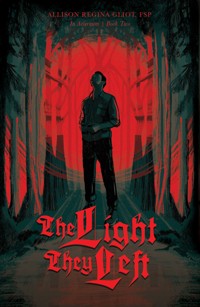
The Light They Left
Title
Book Two of the In Aeternum Trilogy
By Allison Regina Gliot, FSP
Copyright page
Library of Congress Control Number: 2024938917
ISBN 10: 0-8198-3168-9ISBN 13: 978-0-8198-3169-9
The Scripture quotations contained herein are from the New Revised Standard Version Bible: Catholic Edition, copyright © 1989 by the Division of Christian Education of the National Council of the Churches of Christ in the United States of America, and are used by permission. All rights reserved.
Excerpts from the English translation of The Roman Missal © 2010, International Commission on English in the Liturgy Corporation (ICEL); excerpts from the English translation of The Order of Confirmation © 2013, ICEL. All rights reserved.
Cover design by Ryan McQuade
All rights reserved. No part of this book may be reproduced or transmitted in any form or by any means, electronic or mechanical, including photocopying, recording, or by any information storage and retrieval system, without permission in writing from the publisher.
“P” and PAULINE are registered trademarks of the Daughters of St. Paul.
Copyright © 2026 Daughters of St. Paul
Published by Pauline Books & Media, 50 Saint Paul’s Avenue, Boston, MA 02130-3491
www.pauline.org
Pauline Books & Media is the publishing house of the Daughters of St. Paul, an international congregation of women religious serving the Church with the communications media.
1 2 3 4 5 6 7 8 9
30 29 28 27 26
For Katja and Yesenia, the first sisters I ever had. We’ve been through thick and thin.Thanks for putting up with me all these years. Ich liebe euch.
Und für Frau Monica Stabile. Wir vermissen Sie. Ruhe in Frieden.
Death inevitably follows birth, and everything born dissolves in decay.
—Saint Gregory of Nyssa
Editor’s Note
This book contains historical portrayals of popular Catholic understanding from the nineteenth century regarding issues such as the fate of unbaptized infants and adults that are not representative of the Church’s present-day understanding of these issues. Please see page 359 for clarification on the current Catholic teaching on these topics.
Prologue
He stood between the dead and the living.
—Numbers 16:48
Blood and ashes. The taste was on my tongue, the first thing I remember, singeing my lips with an iron tang.
Blood and ashes. I sat up and saw only snow, the charred remains of . . . what? covered in a fine layer of white powder. The flakes fell from the darkened sky, kissing my face. I couldn’t feel them. I couldn’t feel anything. I should have been cold. Confused. Afraid. But I was nothing. Nothing, except hungry.
Blood and ashes. Blood. I wanted—no, I needed blood.
So it began.
I stood, swaying on my feet as I caught my bearings. The wind ruffled my filthy hair as it moaned through the blackened wood that jutted from the frozen ground like broken fingers. I took a deep breath, the chill cutting my lungs like a knife, and opened my clenched fists. Something yellow fluttered to the ground, a crumpled piece of ripped parchment. It landed face up in the snow, bleak words scrawled in pencil:
There is nothing more
I stared at the message for a long moment, waiting for it to mean something. It evoked nothing in me, not even curiosity.
But I was hungry. Ravenous, even. So I raised my eyes to the dark forest that waited beyond the ashes, and I never once looked back.
Part One
We have been wandering in death’s darkness, blindly and without aim.
—Saint Cyprian
Kapitel Eins
Remember the long way that the Lord your God has led you.
—Deuteronomy 8:2
Mai, 1861
“See there? That’s the edge of the Großer Wagen, the Great Wagon,” my grandfather told me, pointing to the sky. I squinted, trying to figure out which star he meant. I must have been around six years old, and they all still looked the same to me.
“The one above the pine branch?” I asked doubtfully, and he laboriously crouched down to see from my angle. Then he gave a bellowing laugh that echoed through the dark forest that surrounded us.
“No, my boy. That’s the Polarstern, the pole star. But if you can find that one, you’ll never be lost.”
“Why not?” I looked at him, wide-eyed.
“It always points north. Look for it when you can’t find your way, and it will get you home.”
“But, Opa, what if I’m lost during the day?”
The creases by his eyes deepened as he huffed a laugh. “When have you ever been lost in these woods during the day?” I scrunched my face up, trying to think of a time, but I couldn’t. He patted my shoulder affectionately. “That’s what I thought.” His tone became more serious, then, his bushy gray eyebrows knitting together. “It’s trickier at night, though. Everything starts to look different. Scary and unfamiliar. When that happens, don’t forget to look up. You’ll find your guiding star. It will be there waiting for you.”
“But what if it’s cloudy, Opa?” I asked, my pragmatic mind jumping to the next potential problem.
“Then pray for God to send wind that blows the clouds away,” he replied good-naturedly, used to my endless stream of questions.
I frowned. “Vati says air pressure makes the wind blow. Not God.”
For the first time, my grandfather’s expression soured, his lips turning down in a frown that was lost in his beard. “Your father says a lot of things.”
I bounced excitedly on the balls of my feet, remembering what Vati had told me the last time he was home. “He’s going to take me to the university to look through the telescope! It’ll make the Polarstern bigger than the moon!”
“We’ll see about that,” he replied, shaking his head. “All right, my boy. Let’s head back. It’s getting cold, and your mother will have my head if we’re late for supper again.”
He tried to take my hand, but I ducked away from him, grinning. “Race you home!”
“Josef, wait!” He took a few stiff steps after me, but I was already tripping at top speed down the stony trail that led to our cottage. I heard Opa warn me to be careful, but he didn’t try to stop me. When I really got running, nothing could slow me down.
Chapter Two
[God] determines the number of the stars;
he gives to all of them their names.
—Psalm 147:4
I wake with a gasp, heart pounding. For a few seconds, I think I’m still on that path near our village, about to turn the bend and see my family’s cottage nestled into the hillside. Then I register the hum of the old radiator, the scent of fabric softener, the streetlamp shining through my window. I’m not in the forest with my grandfather. I’m in my own room a century and a half later, sweating through the sheets tangled around my legs. And I finally remember my name—my birth name.
It’s not the first memory to come back to me. In January, I just recalled Opa’s grizzled face and the warm scent of my mother’s bread wafting from the woodstove. In February, there were more snippets of memories—the scratchy scarf I wore in the winter, the way my older brother, Friedrich, used to throw his head back when he laughed—but nothing that really told me who I used to be.
Now, not two weeks into March, I’ve started remembering full incidents. I distinctly recall my mother’s smile and tired brown eyes, and how she’d make us cross ourselves and say prayers around our solid kitchen table whenever my father was away on business—which was often. And I remember my siblings.
Friedrich was the eldest, with his pranks and teasing. He used to drive my sister Amalia crazy, but he’d stand up for her in a heartbeat if any of the village boys picked on her. Amalia was only four years older than me, but she liked to pretend she was already a grownup, always trying to boss me around. Lucia was next, but she died just weeks before I was born. She was the last one my father had let be baptized. He reasoned that it hadn’t done any good anyway and we should each decide for ourselves whether we wanted to “get wrapped up in that papist nonsense.” My mother hardly ever spoke of Lucia, but she kept me and Adrian close. Adrian was younger than me by two years, and by far the quietest. When the two of us were alone, though, he’d talk plenty.
Then there was Anton, who lived just a few short days. I remember how tiny he was, how his face was always bunched up in pain. Then he was gone. My mother wept for days, and Opa was the only one who could calm her down. He lived with us after my grandmother died, all of us crammed into that wooden cottage at the end of the road, only one main room and an attic where us children slept.
There are still holes. I can’t remember much about my father, or anything that happened after I was about seven years old. Until tonight, I couldn’t even remember my own name. But now that’s one more piece returned to me.
Josef. My name was—is—Josef. I should feel grateful for having a part of myself back again, but I don’t. I just feel unsettled, like trying to be in two places at once.
I throw off my sheets and get out of bed, knowing I’ll never fall back asleep. It’s time for me to get up anyway. The sun set fifteen minutes ago, and I can feel it lurking below the horizon. I have work to do on the parish grounds tonight, pruning the roses and clearing out debris from the gardens so that I can top-dress the soil next week. But first things first: I’m starving.
I pull on a pair of old jeans and a sweatshirt, grabbing the keys to the church and jogging down the creaking stairs. It’s still strange for me to be staying in my own place, but I like the groundskeeper’s house. It’s simple, just a bedroom upstairs and a bathroom, kitchen, and living room on the ground floor. Of course, none of the things in it are mine. It was fully furnished when I moved in, complete with sage green wallpaper and fading framed prints of the life of Jesus that always look crooked no matter how I adjust the hooks in the wall. Father Stephen said they’d been using the house for visiting priests, but he never put a time limit on how long I’m allowed to stay. And I didn’t ask.
I slip on my old running shoes and go through the front door, locking it behind me. I check my surroundings out of habit before I go anywhere, sniffing the cold evening air as I survey the lawn between the house and the church. No one is near now—at least, no people or vampires. The raccoons are another story. They’ve been digging holes in the mulch lately, and even from this side of the lawn I can hear them scratching around the side of the church. Later. I’ll deal with them later.
There’s still the faintest stain of light to the west. I automatically avert my eyes from it as I head toward the church, also pointedly ignoring the first stars twinkling above me. They’ll only make me think of my grandfather, and I’m not sure I want to think about him right now. Instead, I focus on the consecrated ground beneath my feet, the grass wet with dew that will soon be frost. The holy ground has a presence of its own that’s hard to describe—the presence of grace, of God. It’s something between a smell and an itch that I know other vampires find unbearably painful. I did, too, but it hasn’t hurt me in a long time. Still, even after living on it for three months, I’m constantly aware of it pricking at the back of my mind, that aroma of the eternal.
As I reach the polished oak doors at the main entrance of Sacred Heart, it intensifies to something impossible to ignore. It used to almost overwhelm me, entering such a holy place, like being engulfed by a tidal wave. Sometimes, it still does. I close my eyes, resting my hand on the brass door handle as I take a deep breath, preparing myself. Then, I step inside.
The church is dark, except for the light near the tabernacle and the arching stained glass fracturing the glow of the streetlamps outside, but that makes no difference to me. I walk the length of the main aisle slowly, glad there’s no one else here. Well, no one except the One dwelling in the Eucharist. It still amazes me how I can feel his presence, so real that I think I could almost pinpoint his scent. He’s ever-attentive, watching me with unseen eyes. I don’t feel threatened by the attention like I used to. I recognize it for what it is: an invitation. He’s always waiting for me to come. Even though he knows I won’t give him what he wants, every night he asks. And every night, I say no. Or, at least, not yet.
It doesn’t matter. I may not have given God my full surrender, but he still feeds me. When I come into his presence like this, the gnawing hunger in the pit of my stomach subsides. I don’t feel full, exactly, but the bloodlust vanishes for a time, leaving my mind clear and my body strong. When it first started happening, I thought maybe I was cured, somehow human again. But it doesn’t work like that. I learned the hard way that if I don’t come before the Eucharist every day, I end up worse off than I was before.
I stop next to the first pew, genuflecting on one knee. Before I get up, I raise my eyes to the tabernacle, knowing Jesus can hear me even though I still can’t hear him. “I didn’t ask for these memories to come back,” I remind him. “The past can’t change, so what’s the point of remembering?”
I’ve been asking myself that for weeks, but deep down, I know why this is happening. It’s because I’m trying to move forward and start a new life. It’s because I’m trying to live, even though vampires aren’t supposed to get involved in human affairs, aren’t supposed to want to get involved in them. Yet here I am: staying in one place, holding down a respectable job, spending time with humans, coming to church. It’s all a charade, like if I just pretend hard enough, I could be human, restart my clock and actually grow up the way everyone else does. But these memories counter that. They chain me to my past, keep me in place. They remind me that there’s a reason why I became a vampire. A darkness within me that I never could conquer.
What if that darkness is rising again? What if this masquerade comes crashing down and hurts the people close to me, the ones I never want to hurt again?
My eyes move to the sanctuary step in front of the altar, where I almost killed Elizabeth the night the Enchantress found us. It doesn’t matter how many times Elizabeth tells me it wasn’t my fault I drank her blood, that I was only acting under the Enchantress’ mind-controlling compulsion. I know she doesn’t blame me for it, but that doesn’t stop me from blaming myself. Because if I wasn’t the kind of creature who fed on good people like her, no one would have been able to compel me to do that. No one.
The worst part is knowing it could happen again. It’s been six months since the other vampire attacked us, and I’ve seen no sign of her since, but I can’t shake the feeling that we aren’t safe. Maybe it’s more dangerous for me to be here, but I won’t leave Elizabeth defenseless. Even if I still believe she’d be better off without me.
I close my eyes. Elizabeth. All this time, and I still don’t understand her. I don’t understand why she loves me. I wish she wouldn’t. She knows I can’t return her love, that we have no future together. No, she doesn’t know that. That’s the problem. Every time she looks at me with hope in her eyes, it kills me because I can’t give her what she wants. She deserves so much more than me, and yet she’s willing to bide her time waiting for the impossible. I don’t have the heart—or the willpower—to tell her not to. So we’re stuck. I pretend not to see the looks she gives me, not to feel anything in return. We act like “friends,” even though that word doesn’t even begin to describe us. It doesn’t capture how many times I saved her life—and how many she saved mine.
I groan, opening my eyes. Somehow, every time I come to the church and try to pray, it ends up this way: circles in my mind, getting me nowhere. It’s times like this that I need the rosary to ground me. I slip into the pew, the hard wood solid beneath me, and take it from my pocket, grasping the deep blue beads until I calm down. Elizabeth taught me the prayers, the Hail Mary and the Our Father and the Glory Be. I recite them in my mind because at least then I can’t think of anything else. The words of the ancient prayers carry a holy weight that keeps me where I am.
The longer I sit there, the more something becomes clear: I need to tell Elizabeth about this latest memory in person. It’s only fair—she gave me my new name, after all. She should be the first to hear my old one.
Kapitel Drei
Peace be to you, and peace be to your house.
—1 Samuel 25:6
September, 1862
“Josef, over here!” Friedrich called through the trees. I finished breaking the branch I’d discovered and added it to my bundle before hurrying down the slope. The brown needles were soft and bouncy under my boots, the scent of pine resin sharp and sweet in my nose. Mutti had only let me start gathering firewood with my older brother on my eighth birthday. He had just turned thirteen, but he was almost as tall as Opa, and just as wide in the shoulders. I looked up to him in more ways than one, and I didn’t want to slow him down.
I found Friedrich by a fallen fir with his hand axe. He’d pushed through the splayed branches to hack off the boughs into a size that would fit our wood stove. He grinned widely when I joined him and began cracking the smaller branches into kindling. “This is good. No rot, no bugs. Must have fallen in that storm the other night. We’ll be able to go home after this.”
I nodded, diligently focused on avoiding the splinters, sap making my fingers stick on the rough bark. Wood was one thing we always needed. No matter how much we brought back, it never seemed like enough to last the cold winters in the mountains. Amalia helped our mother with the cooking and washing, hauling water from the spring up behind our cottage, but mine and Friedrich’s main chore was gathering wood. Whenever it was light out and school wasn’t in session, we’d climb the hills away from the village, avoiding the areas where the loggers worked and bringing back whatever we could find.
I loved exploring the forest, and with Friedrich I was finally allowed to go further in. We called it the Schwarzwald, the Black Forest, and I could see why: the trees were so thick that the leaves blocked out the sun. It was like twilight even at noon. Opa complained that they were cutting down too many trees, that it wasn’t like it used to be when he was a boy. But to me, the rolling hills of the forest were vast, full of mystery and adventure. Even carrying heavy loads of kindling on my back couldn’t quell my excitement at spending time there with my brother.
“That’s enough,” Friedrich decided as we gathered the last of the fir branches, stripping off the needles.
“I can take more. Give me a bigger log.”
He ruffled my dark hair so it got in my eyes. “No, little man. If you carry any more, you’ll tumble down the gully and break a leg. Do you want to limp like Opa?”
I huffed in frustration, but Mutti had told me not to argue with Friedrich while we were out. Still, as we began the winding trek back to our cottage on narrow trails, I tried to show him that I wasn’t tired. I wanted to help, and I wasn’t that little.
I was still panting by the time our brown shingles came into view, the hewn logs that formed the walls of our cottage seeming to grow out of the side of the hill, like it was just another part of the forest. We laid our wood out to dry on the side of the house, where the steep slanting roof came almost to the ground, providing the perfect overhang to protect it from the rain. Then we washed the sap from our hands in the bucket by the outhouse, wiping them dry on our trousers, and I followed Friedrich around to the front door.
“We’re home!” he called as he unlatched it, stomping mud off his boots before he could trek it inside.
“Took you long enough,” our twelve-year-old sister, Amalia, replied flippantly, not looking up from the pot she was stirring over the stove. The windows were open to let in the breeze, and my stomach grumbled as it carried the smell of parsley and carrots to us.
“What do you mean? We’re earlier than usual,” Friedrich said. I saw he had a handful of pine needles, and he winked at me as he added, “You’re not making lunch by yourself, are you? After what happened last week with the mushrooms?”
She reached for the knife she’d been using to chop onions, waving it for emphasis. “If you don’t like the way I make soup, you can eat stones. Mutti said I could do it.”
“Where is she, anyway?” he asked, circling the kitchen table to come up behind her.
“At the church with Frau Marschner. Where else?”
“And Adrian?”
“Oh, upstairs with his charcoal, I think. I told him to sweep the floor, but I couldn’t leave the soup to hunt him down. So, you can sweep it.”
He eyed the old broom in the corner. “Why does it need to be swept? We’ll just get it dirty again.”
“Now you sound like Opa,” she admonished, but I was only half listening as I climbed the ladder to the loft, making sure Adrian really was up there. He was only six, and I felt like I had to keep an eye on him, since he was the only younger sibling I had. But there he was, happily drawing on the wall near the flue with his charcoal pieces. We all knew exactly how tall Adrian was because of how high his scribbles extended up the roughly hewn wooden planks. Mutti didn’t mind, so long as he only did it in the attic where we children slept.
Adrian didn’t even notice me, so absorbed in his work of creating something that looked vaguely like a tree. I was about to call his name when Amalia let out a bloodcurdling shriek. “Friedrich Thomas Keller, get out of my kitchen!” I ducked my head back down to see what was going on. Friedrich was bent double, laughing as Amalia hopped around, trying to get the pine needles out of her long coil of copper hair and hit him with her wooden spoon at the same time. At least she wasn’t still brandishing the knife.
“Josef?” Adrian asked. I turned to see him watching me with wide, frightened eyes.
I smiled at him reassuringly. “It’s all right. They’re only playing.”
“Oh,” was all he said, turning back to his masterpiece. I left him alone, descending the ladder to fetch the broom. Now with pine needles everywhere, the floor really did need to be swept. I’d make sure it was done before Mutti got home.
Chapter Four
What is seen in dreams is but a reflection,
the likeness of a face looking at itself.
—Sirach 34:3
“Christopher? What are you looking at?”
I jolt back to reality, completely disoriented. Elizabeth is standing in front of me, watching me with warm hazel eyes. Her head is cocked to the side so that a lock of escaped hair from her messy ponytail falls in her face. Did I just fall asleep?
“I—um . . . what?” Why didn’t I sense her approaching? I’d been looking at the stand of fir trees on the other side of the empty parking lot, and then . . . nothing. Did I space out the entire fifteen minutes I was waiting for her to finish her bookstore shift?
A furrow forms between her eyebrows as she steps closer to peer into my face. “Are you all right?”
I shake my head in a vain attempt to clear it. “No. I mean, yes, I’m fine. I was just . . . thinking.” It unsettles me, that a memory came back while I was awake. That hasn’t happened before.
I can tell Elizabeth doesn’t entirely believe me, but she just smiles, pulling her jacket tighter around herself to ward off the chill. I try to ignore the way it accentuates her curves as she speaks shyly. “I’m glad you came. Richelle was going to give me a ride, but I’d rather walk with you.” If I didn’t sense Elizabeth before, I’m definitely sensing her now: the way her heartbeat sped up a little as she said that, her unique scent that’s something like jasmine and a hint of milky cinnamon, the papercut on her left ring finger. Sometimes I wish I could turn off my heightened sensory perception, especially when I’m around her. It can be . . . distracting, to say the least.
“Becca won’t mind if you get home a little later, will she?” Elizabeth’s protective older sister hasn’t quite decided how she feels about me, and I don’t want to make things worse. But Elizabeth waves a dismissive hand.
“Her company is having some kind of dinner tonight. She and Miguel won’t be done for another hour at least. Why, do you have something in mind?”
“I thought we could go over to the park, if you’re up for it?” It’s such a nice night, with the air crisp and clear, that it would be a shame to spend it inside.
“The one where the Ripper almost ate me? Or the one where I first saw you?”
Her way of phrasing things makes me wince. “Belmont Park. The one where we first saw each other.”
“Do you think it’s safe? There haven’t been any signs of . . . ?” She trails off, and I know she’s asking about the Enchantress. She used to ask every day. Now that months have passed with nothing happening, she only asks when we do things outdoors.
“No signs of her or any other vampire. I checked on my way here.”
She breathes a sigh of relief. “Then I’d love to. We haven’t been back there since that first night.”
“No, we haven’t,” I agree as we turn away from the fluorescent lighting outside the shopping center and walk down the ribbon of sidewalk that hugs the road. It feels like a lifetime ago, that summer evening when I looked up after feeding and saw her watching me. A lot has happened since then.
As we pass dark shop windows and an elementary school saturated with the smell of apple juice and disinfectant, she tells me about work, and about how she’s almost done with her scholarship application. If she gets it, she’ll be able to study English at the local college next semester. She’s wanted this for a long time, and I’m half-tempted to intervene with a little compelling to make sure they choose her. I know better than to suggest something like that, though; she’d be horrified if she knew I was even contemplating it.
“If you get it, you’ll still be living at home, won’t you?” I ask as we wait to cross a busy street, cars rushing by with snatches of music and radio talk.
She nods, chewing her lip. “It will be cheaper, and it’s not too long of a commute. Becca would be happier that way, too. Not that she’s ever home anymore, anyway.”
I have to hide my smile. Elizabeth never seems to want her sister around until her sister isn’t around. “Her work’s been busy lately?”
Elizabeth makes a face. “And she’s always with Miguel. I’m wondering how much longer it will take for him to propose to her.”
“How long have they been together?”
“Almost two years. Their anniversary is this summer.” She looks up and down the street before adding, “I think we can go; there’s no one coming.”
She starts walking even though the light hasn’t turned, so I follow her, thinking about what she said. I don’t have much context for understanding current dating practices, so I ask, “Is that typically how long a couple waits before getting engaged?”
“Depends on the couple, I guess. For someone like Becca, I’m honestly surprised she’s waited this long. She was looking up wedding dresses after their first date just because she ‘got a good feeling’ about him.” Her voice is a mix of exasperation and affection. As much as Becca drives Elizabeth crazy, I know Elizabeth cares for her deeply.
“He must be worth the wait.”
“Yeah,” she agrees in a slightly different tone, one I can’t read. When I meet her eyes, though, she breaks my gaze quickly, color rising in her cheeks. I am very curious as to what, exactly, she’s thinking right now, but I don’t ask. Asking would be a terrible idea. Instead, I pretend not to notice anything until she clears her throat and awkwardly changes the subject. “How are things going with Father Stephen? Have you met with him lately?”
I shove my hands into my sweatshirt pockets, wondering how to answer her first question. The second is much easier. “Our next meeting is tomorrow.” I can almost feel her trying to restrain herself from asking me again how it’s going. Even if she did ask, I’m not sure I’d tell her. I know how much she wants me to enter the Church. But it’s not that simple, and talking to a priest doesn’t immediately solve every problem. “He’s very patient,” I finally say, just so that she doesn’t explode.
“Patient?”
I nod. “And he answers my questions as best he can.”
“Are you finding the answers helpful?”
“Yes and no.” Father Stephen is good at explaining things about the faith that I don’t understand, and he often intuits the sense of what I’m asking even when I can’t articulate it. But something is still missing, something that’s holding me back. I wish I could put my finger on what it is.
I realize Elizabeth is watching me. She’s either worried about me or frustrated with me, because her jaw is clenched and I can hear her fidgeting with the coins in her jacket pocket. I guess my responses were less than enlightening, but I’m not feeling very enlightened myself. Thankfully, we turn a corner around a brick building and the park comes into view, giving me the perfect excuse to change the subject again. “Look, we’re here.”
The streetlamps are shining brightly over the baseball field and playground, making the shadows stand out in sharp contrast. I scan the area, alert for signs of danger, but there’s no one here besides a woman running with her dog, and I’m not picking up any scents I didn’t already investigate earlier.
“Is the park closed?” Elizabeth asks in confusion. “I’ve never seen it this empty.”
“It is after ten. And I’m guessing most people only come here in the summer when the weather’s nice.”
“And when the ice cream shop is open,” she adds, her face wistfully turned toward the rundown shack with its hand-drawn sign reading Crabby Hill Creamery. “June can’t come fast enough,” she sighs as we start down the asphalt path that circles the park. “What do you think your favorite ice cream flavor would be? If you ate ice cream, I mean.”
It’s a strange question to consider. “I don’t know. I’ve never tasted any of them, and the smell of human food isn’t appealing to me. It just seems like cold sugar.”
“Cold creamy sugar.”
“Cold creamy sugar,” I cede, my eyes moving to the bench at the edge of the woods with its chipped white paint. The one I was sitting on when Elizabeth walked past me for the first time. She’s looking at it too with a serious expression, and after a moment, she cuts across the grass toward it. I follow her without a word, taking a seat next to her.
I can hear the sounds of the woods behind us, the leaves stirring in the wind, an owl perched on a high branch to our left. Those noises are louder than the occasional car passing by on the other side of the park and the electric hum of the streetlamps. I close my eyes, tuning out everything but the sounds of the forest and Elizabeth’s steady breathing. It feels more like home that way. There are different trees here, but it smells similar: frosty earth, moldering leaves, burnt soup—
No. There is no burnt soup, I’m just remembering the rest of that day at the cottage, how Amalia accidentally scalded the soup because she was trying to get back at Friedrich for the pine needles. Our mother had returned from church to find Amalia in tears and made Friedrich apologize. Amalia still refused to acknowledge his existence until Opa talked to her.
I jump at a light touch on my hand, then realize it’s only Elizabeth. She doesn’t say anything, but there’s a question on her lips and she’s holding her breath. I’m worrying her.
“It’s nothing,” I say, but we both know that’s not true.
I’m more than half sure she’s going to pressure me into explaining myself, but instead she says, “It was my eighteenth birthday. That night I first saw you. Did I ever tell you that?”
I shake my head, making a note of it for the future. Will I still be here in August for her next one?
She points toward the path. “I was standing over there, by that bike rack, when I noticed you.”
“I remember. Your hair was down, and you were wearing green that day.”
She glances up at me, startled. “You remember that much? I couldn’t even tell my friends what your hair looked like.”
I blink. “You talked to your friends about me? I thought you didn’t see me doing anything out of the ordinary.”
She rubs her arms like she’s cold, and now she won’t meet my eyes. “Well, the way we made eye contact felt kind of out of the ordinary to me. I just mentioned you to them. They were the ones asking for more details.”
I frown. “Details?”
Her face is flushed now, her heart beating faster. Why is she so embarrassed? “Anyway, it’s not important. I’m just surprised you remember it so clearly.”
“You were a liability. Most people don’t take notice of me, so the fact that you did indicated a danger, a chance that you had seen me feeding. I had to remember what you looked like in case I needed to follow up.”
“Right,” she says shortly. Is she mad? Before I can figure out why, she’s standing. “It’s cold out here. Are you up for walking a little more?”
“Of course,” I reply, wondering how I’m going to get around to telling her the real reason I wanted to see her tonight. I should have come up with a plan before we met.
She starts to walk back the way we came, but I catch her arm. “Wait. There’s something I want to show you.”
“What is it?”
“A place I like to go,” I reply, nodding toward the forest. I’m not ready to return to the world of traffic and electricity yet.
The trees bend over us as I lead her down the faint deer path. “I can’t see,” she reminds me, pausing where the streetlamps stop shining. I always forget that. The darkness doesn’t look any different from the day to me.
“Sorry,” I say sheepishly, coming back and taking her hand. “Here, it isn’t far.” She lets me guide her around the roots and fallen branches until the path opens to a small clearing where deer like to graze. The first buttercups of the year are swaying in the breeze, splashes of yellow like midnight sunshine.
“Oh, Christopher,” Elizabeth sighs, stepping forward. Starlight gilds her hair as she bends to brush the feathery grass blades. She pauses at one of the buttercups, her fingers hesitating over the delicate petals. “This was Mom’s favorite color.”
“Maybe it still is.” She lingers over it a beat longer, then sits down next to the patch of blossoms and lies flat on her back. “What are you doing?” I ask her.
“Getting my work clothes muddy. Care to join me?” Her answer teases a smile from me. I love that she doesn’t care about the wet grass or the bugs. “It’s quite a view, isn’t it?” she adds when I’m lying next to her, chilly dew soaking through my sweatshirt.
“Yeah,” I reply quietly. The stars are impossible to ignore from this angle, the trees around us framing a perfect window to the heavens. For a second, it reminds me so much of the Schwarzwald that it makes my heart ache. My eyes search automatically for constellations. “Do you see the brighter stars that almost make a square? That’s the edge of the Großer Wagen, the Big Dipper.”
“Where?” she asks, squinting at the sky.
“The top right is closest to that tall tree, see?”
She half sits up, moving closer to my side and tilting her head to look from my point of view. I shiver as her ponytail brushes my ear and her jasmine scent is suddenly all around me. “That one?” she asks, totally oblivious to the effect she has on me. I can’t quite tell what she’s pointing at, but I’m pretty sure it’s not the star I meant.
I tell myself I’m just trying to show her the constellation. That’s the only reason why it’s acceptable to draw her back against my chest so our faces are level, our cheeks almost touching as I take her pointing finger and redirect it. “Here. Do you see it now? And the one just above it?” Elizabeth nods wordlessly, her eyes fixed on the stars. She doesn’t seem to mind my arm around her waist, so I don’t let her go. “Those two show the way to the Pole Star that never moves.”
“Where?”
“We can’t see it because of the trees.”
She turns her face to look at me, her breath tickling my chin. “Your grandfather taught you all this?”
I nod, staring at the spot on the horizon where the Polarstern should be. If I look at Elizabeth, I might kiss her, and I can’t do that. I shouldn’t do that. What I should do is tell her about my memories. That was the point of all this. “Elizabeth, I . . . I’m named after him. My grandfather.”
She gasps, stiffening. “You remembered your name? Your real name?”
I take a deep breath. “Josef Wilhelm Keller.” It sounds strange, saying it out loud. Like something forbidden, something that should no longer exist.
Elizabeth hasn’t said anything, so I finally have to glance at her. Her eyes are wide, fixed on me. “Joseph . . .”
A smile twitches at my lips, distracting me from the strangeness of it all. “No, Josef. In German, the J sounds like a Y. And Wilhelm starts with a W, not a V, even though it sounds like a V.”
“Josef Wilhelm?” she tries tentatively, getting the pronunciation right this time.
“Yes.” Hearing her say it is even weirder than hearing me say it. “But you don’t have to call me that. Christopher is fine.”
“What do you want me to call you?” she asks, her eyes still fixed on my face. When she watches me that way, it feels like she can read my soul. I know she can’t, but in the starlight, her hazel eyes framed by long lashes look almost unearthly. Her delicate nose, high cheekbones, full lips. . . . She could easily be one of the fairies in Opa’s stories.
“I don’t know. Is it right to use the name I rejected? Is it even mine anymore?”
“Who else would it belong to?”
“No one. Maybe it died with my humanity.”
A frown forms between her eyebrows. “Don’t talk that way. You’re more human now than you have been in a long time.”
“Which is still less human than I should be.” She opens her mouth to protest, but I hold a finger to her lips, my voice firm. “Not even you can argue with that.” A blush creeps into her cheeks at how I called her out—or maybe at how my finger is still resting on her lips. I remove it before I can think about that too hard, continuing, “I’m not the same person I was when I bore that name.”
“Your name is still a part of you, though. Just like this is.” She reaches for my hand, turning it over to expose the old scar that cuts through my palm toward my thumb. I don’t know how I got it. That memory hasn’t returned.
“What if it’s a part of me I’m not ready for?” I ask her softly, closing my hand into a fist.
“Then I’ll hold it for you until you are,” she quips, but her eyes are dead serious. And maybe that was exactly what I needed to hear.
“Thank you,” I whisper, turning my face into her hair to hide from everything, just for a second. I feel the way it makes her heart skip a beat, though. I didn’t mean to startle her. “Sorry,” I mutter, pulling back. We probably shouldn’t be lying like this either, with her nestled so close to my side, but I don’t have the heart to push her away. If she had wanted to move, she could have.
“Christopher,” she says after a long moment, waiting for me to look at her. “Have you been remembering other things too? Is that why you’re so distracted?”
There’s no point in lying to her, she’d see right through me. “Just little things from when I was a child, nothing important. But . . . it’s started happening while I’m awake. Not just in my dreams anymore.” I can’t keep the fear out of my voice. Every time a piece of my history returns to me, I feel different. Who will I be by the time it all comes back?
“You couldn’t see me when I came out to meet you tonight. Your eyes were open, but you were looking straight through me. It’s like you were somewhere else.”
“Sweeping the kitchen floor as an eight-year-old,” I tell her faintly, even more troubled. The only thing that triggered the flashback was smelling the fir trees in the parking lot. How am I supposed to make sure it doesn’t happen again in a worse time and place?
“Maybe this is something you should talk to Father Stephen about.”
My stomach lurches at the thought. “Do you think he’ll be able to do anything?”
“I don’t know. But he has a lot of experience with counseling people through spiritual direction, and he’s been helping me work through . . . well, a lot of things. If this is coming up because you need to reconcile with your past, he might have some insight.”
“Maybe.” I’m not convinced these are problems he can solve, but I don’t want Elizabeth to worry. “I’ll talk to him.”
She nods, resting her head back on my shoulder. We shouldn’t keep staying like this. She’s going to get the wrong idea, I’m getting the wrong idea. “We should start walking back. It’s late,” I tell her, wishing I wasn’t such a coward.
“I don’t mind,” she answers lazily.
I wrack my brains for another excuse. “I still have work to do on the parish gardens tonight. Besides, you’re cold.” I can feel her shivering. It’s probably not good for her to be lying on the wet ground for so long.
She closes her eyes. “You’re so . . . practical.” It sounds like an insult, which I ignore.
“Now that your clothes are damp, it’s going to be even colder walking back. And the temperature is still dropping.”
She groans, finally sitting up and looking down at me. “Fine. But one of these days, I want to stay out all night and only get home as the sun is rising.” Her eyes are dancing mischievously in a way I find very attractive, the stars a halo around her head. All the more reason to get out of here quickly.
“Or preferably a little before sunrise so I don’t burn to a crisp,” I add, helping her to her feet. She smacks me playfully, holding onto my arm as we start back toward the park.
“You won’t burn to a crisp. You’ll get all translucent and go into a daze, remember?”
How could I forget? It’s my only memory of the sun, that day the Kin-Slayer came to kill us and Elizabeth tipped the fight in my favor by raising the blinds. The daylight burned me and yet . . . it was so warm. So bright. So different from everything I knew. What would it be like to belong to that light? To walk in it fearlessly, with Elizabeth by my side?
“I still don’t know what you mean by me ‘getting all translucent,’” I say as we reach the edge of the woods and she lets go of me. She’s tried to describe it before, but I can’t picture it.
“There were shadows and light under your skin. You looked like you were glowing.”
“Because I was literally burning up.”
“I don’t think that’s what was going on . . .” She sounds like she’s deep in thought, so I don’t bother arguing. We’ll never know anyway. There’s no precedent for vampires surviving direct exposure to sunlight, nothing to base a theory on.
I take Elizabeth all the way back to her apartment building, just to be safe. As she heads up the front stairs, I wait on the sidewalk until she reaches the door and waves at me. Then she pauses, her eyes flickering to the dark street behind me. Instantly alert, I turn to look, but I don’t sense anything out of the ordinary.
“What’s wrong?”
She shakes her head uneasily. “Nothing, I just thought . . .” She stares at the darkness again, then forces a smile as her gaze darts back to mine. “It’s nothing. Good luck with the roses. I can’t wait to see them in bloom.”
With that, she goes inside, the door hitting the metal frame so hard the glass trembles as it swings shut. I don’t know what that was about, but I check the street again just to be safe. There’s nothing there.
Kapitel Fünf
Ever since the creation of the world [God’s] eternal power and divine nature, invisible though they are, have been understood and seen through the things he has made.
—Romans 1:20
Januar, 1863
“Josef, come and show me what you’ve learned,” my father called from his chair by the woodstove. Well actually, it was Opa’s chair, but Opa was visiting one of his old logger friends in another village tonight.
I set my book—Vati’s book, the one he’d brought me—on the floor and came to stand in front of him, nervous energy humming from my fingertips to my toes. He had been home for a few weeks because of Christmas, but I knew he’d be going back to the big city soon. He had to do his important job at the university or with the politics or whatever it was. I wanted to impress him before he left so he’d come home again soon.
“Did you finish the book about oceans?” he questioned, half his face glowing in the flickering light of the burning logs.
I licked my lips, the heat from the stove drying them immediately. “Yes, and the one about planets, too.”
“Really? That was for Friedrich. I thought it would be too advanced for you.”
“Friedrich didn’t want to read it, so he let me borrow it.”
The shadows caught on the dark crags of his cheeks as he turned his head. “Hmm . . . let’s see how much you understood. Which planet has rings?”
My heart was pounding, but the answer came easily. “Saturn. Galileo was the first one to see them in 1610.”
Vati scratched his short-trimmed beard. “And how many moons does Jupiter have?”




