


1,99 €
Mehr erfahren.
- Herausgeber: Booksell-Verlag
- Kategorie: Für Kinder und Jugendliche
- Sprache: Englisch
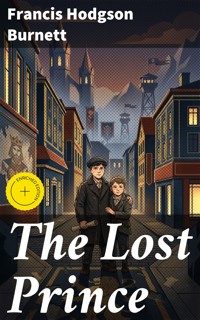
In "The Lost Prince," Frances Hodgson Burnett weaves a richly imagined narrative that combines elements of adventure and fantasy with poignant explorations of identity and belonging. Set against the backdrop of the fictional European kingdom of Samandra, the story follows young Marco, who embarks on a quest to protect the rightful heir to the throne, intertwining themes of loyalty and courage. Burnett'Äôs stylistic prose is imbued with vivid descriptions, allowing readers to immerse themselves in this fantastical world that mirrors the political tumult of her time, as she cleverly critiques societal norms and the concept of nobility. Frances Hodgson Burnett, an accomplished author known for her works such as "The Secret Garden" and "A Little Princess," drew upon her experiences as an immigrant and her keen observations of Victorian society while penning this tale. Her personal background'Äîexperiencing both the challenges of poverty and the uplifting power of imagination'Äîshapes her narratives, imbuing them with a sense of hope and resilience. "The Lost Prince" reflects her belief in the transformative power of bravery and friendship. I wholeheartedly recommend "The Lost Prince" to readers seeking a blend of fantasy and profound moral lessons. Burnett's timeless storytelling and heartfelt characters continue to resonate with audiences, making this book a cherished addition to any literary collection. In this enriched edition, we have carefully created added value for your reading experience: - A succinct Introduction situates the work's timeless appeal and themes. - The Synopsis outlines the central plot, highlighting key developments without spoiling critical twists. - A detailed Historical Context immerses you in the era's events and influences that shaped the writing. - An Author Biography reveals milestones in the author's life, illuminating the personal insights behind the text. - A thorough Analysis dissects symbols, motifs, and character arcs to unearth underlying meanings. - Reflection questions prompt you to engage personally with the work's messages, connecting them to modern life. - Hand‐picked Memorable Quotes shine a spotlight on moments of literary brilliance. - Interactive footnotes clarify unusual references, historical allusions, and archaic phrases for an effortless, more informed read.
Das E-Book können Sie in Legimi-Apps oder einer beliebigen App lesen, die das folgende Format unterstützen:
Veröffentlichungsjahr: 2024
Ähnliche


















![Tintenherz [Tintenwelt-Reihe, Band 1 (Ungekürzt)] - Cornelia Funke - Hörbuch](https://legimifiles.blob.core.windows.net/images/2830629ec0fd3fd8c1f122134ba4a884/w200_u90.jpg)
The Lost Prince
Table of Contents
Introduction
A child’s identity becomes a battleground when private loyalty collides with public upheaval and the future of a nation seems to hinge on a single life. Francis Hodgson Burnett’s The Lost Prince endures as a classic because it combines the page-turning momentum of adventure fiction with the moral seriousness of a fable about character, courage, and responsibility. Burnett was already celebrated for shaping modern children’s literature with emotionally intelligent, socially alert stories, and this novel extends that legacy into a tale that tests what young people can do when adults fail them. Its lasting reputation rests on its ability to speak to both youthful readers and adults, offering romance and suspense while never losing sight of ethical choice. Burnett (1849–1924) wrote during a period when English-language fiction for young readers was expanding beyond simple moral lessons toward more complex narratives that blended realism, imagination, and social concern. The Lost Prince was published in the early twentieth century, after her major successes, at a time when popular literature often engaged with questions of political stability, national identity, and the role of ordinary individuals in history. While it is a work of entertainment, it is also a product of its moment: attentive to power, to the hazards of secrecy, and to the way private households can become entangled with public events. The novel’s central premise is simple and compelling: a prince has disappeared, and the search for him becomes both a mission and a test of faith. Burnett frames the story so that the reader enters a world of hidden messages, shifting allegiances, and travel across borders, yet the emotional core remains grounded in youth. Children and adolescents are not merely observers; they become active participants whose decisions matter. This emphasis on youthful agency is central to Burnett’s appeal and helps explain why her work has remained a touchstone for later writers of children’s adventure and coming-of-age narratives. What distinguishes The Lost Prince within Burnett’s body of work is its fusion of political romance with a careful study of companionship. The story draws energy from the tension between secrecy and trust: characters must decide whom to believe, what to conceal, and when to act. Burnett’s skill lies in making these dilemmas legible to younger readers without flattening them into easy answers. Even when the plot moves swiftly, the novel keeps returning to questions of conscience, loyalty, and the cost of bravery, inviting readers to weigh impulses against principles. Burnett’s classic status also rests on her craft as a storyteller. She writes with clarity and momentum, building suspense through pursuit and discovery rather than relying on sensationalism. Her scenes are designed to be pictured: train journeys, unfamiliar cities, guarded conversations, and sudden reversals that keep the narrative taut. At the same time, she understands the intimate scale of fear and hope, especially as experienced by the young. This balance between the large drama of national stakes and the small drama of personal resolve gives the novel its enduring readability. The Lost Prince participates in a broader tradition of “lost heir” narratives and restoration plots that were widely read in nineteenth- and early twentieth-century fiction. Burnett uses the familiar shape of the premise to explore how legitimacy is constructed—through blood, law, memory, and public belief—and how easily those foundations can be shaken. The result is not merely a puzzle about whereabouts but an inquiry into what makes authority persuasive and what makes ordinary people willing to risk themselves for an idea. That thematic depth helps the story rise above formula. Its influence can be traced less through a single, documented line of borrowing and more through the way it models a form of children’s political adventure: young protagonists moving through adult conflicts, deciphering secrets, and acting with moral purpose. Later writers of middle-grade and young-adult fiction have frequently returned to this combination of intrigue and ethical development, even when the settings and politics change. Burnett’s emphasis on empathy, resilience, and the seriousness of youthful perception helped expand what children’s novels could attempt, making room for stories where the young carry real narrative and moral weight. At the level of theme, the book’s durability comes from its focus on identity under pressure. The prince at the center of the premise is not simply a symbol; he represents the vulnerability of a person caught in the machinery of power. Around that vulnerability, Burnett asks how identity is protected, hidden, or reshaped by circumstance. She also examines loyalty as something earned through action rather than granted by status alone. These themes remain intelligible across time because they describe social dynamics readers still recognize. Burnett also weaves a subtle social imagination into the adventure. As characters move through different environments, the novel registers contrasts in class, security, and opportunity, suggesting how politics affects daily life. Without turning into a treatise, it treats institutions—households, guardianship, networks of helpers and informants—as the channels through which safety or danger flows. That perspective aligns with Burnett’s broader interest in how communities nurture or neglect the young. The story therefore works on two levels: a suspenseful quest and an examination of how care and responsibility are organized. Reading The Lost Prince today also means encountering a historical vision of Europe filtered through early twentieth-century popular fiction. The novel reflects the narrative tastes of its era: swift plotting, heightened stakes, and a belief that personal virtue can matter in public outcomes. While modern readers may notice period assumptions, the book’s central emotional logic remains accessible. Burnett invites readers to consider how courage is practiced in uncertainty, how friendships are forged in peril, and how hope can be sustained when official channels cannot be trusted. The Lost Prince retains its lasting appeal because it treats childhood not as a sheltered interval but as a stage in which convictions are formed and tested. Its concerns—displacement, secrecy, political anxiety, and the search for rightful belonging—continue to resonate in a world where people still face instability and contested narratives about legitimacy and truth. Burnett’s novel offers the pleasure of adventure while insisting that character matters, and that the young can be capable of remarkable steadiness. That blend of excitement and ethical seriousness keeps the book alive for new generations.
Synopsis
Francis Hodgson Burnett’s novel The Lost Prince (1915) opens by establishing a Europe shaped by political upheaval and the threat of authoritarian power. Within this atmosphere, the idea of a rightful heir becomes more than a family concern; it becomes a symbol around which hopes of national restoration can gather. The early chapters introduce the “lost prince” as a figure whose whereabouts and safety are uncertain, and they suggest that secrecy, loyalty, and courage will be required to protect both a person and a cause. Burnett frames the story as a blend of adventure and moral testing rather than mere intrigue.
paragraphs
Central attention soon turns to Marco Loristan, a boy raised under difficult conditions by his father, Stefan Loristan. Stefan is a dignified, enigmatic man whose past ties to an old European order and a contested kingdom are implied but not fully explained at first. Marco’s life is shaped by discipline, restraint, and an insistence on honor even when material security is scarce. Burnett presents their relationship as both affectionate and exacting: Marco is trained to observe carefully, to speak cautiously, and to put duty above comfort. This upbringing prepares him to face events larger than his private world.
As the narrative advances, Marco and Stefan’s movements and associates hint at a concealed network bound by a shared political purpose. Marco gradually perceives that the rules he lives by are not solely personal virtues but practical necessities. Burnett develops tension through partial revelations: coded conversations, wary travel, and the sense that enemies may be close at hand. Marco’s youth does not exempt him from responsibility; instead, his position allows him to move in ways adults cannot, making him useful in uncertain circumstances. The novel’s pace emphasizes preparation, trust earned over time, and the cost of living under constant watchfulness.
The wider circle of characters expands to include The Rat, a streetwise boy whose quick intelligence and survival skills contrast with Marco’s formal training. Their meeting brings together two kinds of resourcefulness, and Burnett uses their developing bond to explore class difference, adaptability, and loyalty. The Rat’s familiarity with the city’s hidden corners complements Marco’s sense of purpose, and their cooperation gives the story a more immediate, ground-level energy. Through their partnership, the book shifts from private discipline to active engagement, suggesting that a political struggle depends on many kinds of courage, not only those born to privilege.
The political dimension becomes clearer as references to a threatened country and its hopes for lawful leadership gather force. Burnett depicts revolution and repression not as abstractions but as pressures that shape ordinary lives, forcing people into silence, disguise, or flight. Marco’s tasks increase in seriousness, and his understanding of Stefan’s past deepens enough to show the stakes without turning the story into a full political treatise. The novel maintains suspense by keeping key identities and locations guarded, reinforcing the sense that knowledge itself is dangerous. Marco’s growth is marked by his ability to weigh risk, judge character, and endure uncertainty.
As Marco and The Rat become more entangled with the covert effort surrounding the lost prince, they encounter allies who test their discretion and resolve. Burnett emphasizes procedures of secrecy—messages passed carefully, meetings arranged cautiously, and help offered only after scrutiny—so that the resistance feels both fragile and disciplined. At the same time, the boys’ youth introduces moments of emotional immediacy: fear, excitement, pride, and the longing for clear answers. The narrative balances these human responses with the demands of the larger mission, portraying the struggle as one that must be sustained by patience and restraint as much as by daring.
The threat posed by opponents is presented through surveillance, intimidation, and the possibility of betrayal, keeping the characters in a state of alertness. Burnett avoids reducing the conflict to simple villainy by focusing on the mechanisms of power—control of information, exploitation of poverty, and the use of fear to fracture solidarity. Marco’s internal conflict sharpens as he measures personal safety against obligation to others, and as he recognizes that bravery often means acting without reassurance. The Rat, too, must choose between the instincts of self-preservation and the demands of trust. Their choices drive the plot forward while preserving uncertainty about outcomes.
The narrative continues with preparations for decisive movement within the secret cause, drawing Marco and his companions into plans that require precise timing and unwavering loyalty. Burnett maintains a spoiler-safe suspense by emphasizing the risks inherent in any attempt to protect or recover a figure of political importance. The boys’ roles underscore the novel’s interest in how individuals, even the young and socially marginal, can matter in historical currents. The friendships and mentorships formed under pressure become as significant as the political aims, suggesting that the quality of one’s character affects not only personal fate but the fate of communities striving to endure oppression.
Historical Context
The Lost Prince (1915) is set in an invented European kingdom called Samavia, but its political atmosphere and social hierarchy closely resemble the late nineteenth- and early twentieth-century monarchical states of Central and Eastern Europe. The dominant institutions implied by the narrative are a hereditary monarchy, a court aristocracy, and a militarized state apparatus used to protect a ruling order against internal rivals. The story also moves through England, where constitutional monarchy, parliamentary government, and a mature press culture provide a contrasting civic backdrop. Burnett uses these contrasting settings to examine legitimacy, loyalty, and the vulnerability of small states in a Europe shaped by dynastic politics.
Francis Hodgson Burnett (1849–1924) wrote during a period when British and American readers consumed popular fiction that blended romance, adventure, and contemporary political anxieties. Born in Manchester, she emigrated to the United States in 1865 and built an international career with magazines and book publishing. By the time she wrote The Lost Prince, she was well known for children’s and family literature, but she was also attentive to public events and the language of political crisis. Her transatlantic life placed her near the centers of Anglophone publishing and journalism that reported intensively on European monarchies and revolutions in the decades before World War I.
The book’s imagined “lost heir” premise draws on a long European tradition of dynastic uncertainty and contested succession. In many nineteenth-century monarchies, the legitimacy of ruling houses was treated as a matter of state stability, and claims about heirs or competing branches could become rallying points for factions. While Burnett does not replicate a single historical case, her plot echoes how monarchies used ceremony, lineage, and court networks to sustain authority—and how opponents could exploit secrecy, exile, and propaganda. The narrative’s interest in who has the right to rule mirrors real debates that intensified as monarchies confronted mass politics and nationalist movements.
The Lost Prince also reflects the “Eastern Question” atmosphere that permeated European diplomacy during the nineteenth century: the persistent concern over instability in southeastern and eastern Europe and the strategic vulnerability of small states. After the Congress of Vienna (1814–1815), European powers tried to manage change through a balance-of-power system, but revolts and wars repeatedly altered borders. In regions such as the Balkans, national independence movements and great-power rivalries made the fate of minor kingdoms a constant topic in newspapers and political conversation. Burnett’s fictional Samavia, threatened by internal plots and external pressure, resembles the precariousness associated with such states in the public imagination.
Nationalism, a major political force of Burnett’s era, provides a key context for the story’s emphasis on “the people” and the idea of a nation that persists beyond a single ruler. Throughout the nineteenth century, nationalist movements argued that language, history, and shared identity justified political self-determination. Nationalist claims helped drive the unifications of Italy (completed in 1870) and Germany (1871) and reshaped imperial regions where multiple ethnic groups lived under one crown. Burnett’s narrative uses patriotic devotion and collective memory as moral forces, echoing the period’s belief that nations could be bound together by symbols, education, and shared ideals, not only by aristocratic privilege.
At the same time, revolutionary politics and anti-monarchical sentiment were widely reported realities. The year 1848 saw uprisings across much of Europe, and although many were suppressed, they left enduring fears among rulers and enduring hopes among reformers. Later decades brought additional upheavals, including the Paris Commune of 1871 and the Russian Revolution of 1905. Burnett’s conspirators and counter-conspirators, as well as the theme of a hidden or endangered legitimate order, resonate with the era’s recurrent crises in which underground groups, secret policing, and exile politics were common features of political life and popular fiction alike.
The novel’s publication during World War I is central to its historical context. In 1914, war began after the assassination of Archduke Franz Ferdinand in Sarajevo and the subsequent cascade of mobilizations and declarations among the great powers. Britain entered the conflict in August 1914, and the war quickly became a mass industrial struggle involving conscription, censorship, and propaganda. The Lost Prince does not function as a war chronicle, but its heightened focus on national survival, loyalty, and the moral meaning of leadership reflects a wartime readership primed to think in terms of endangered states, heroic endurance, and the fate of small countries caught in broader contests.
Prewar Europe’s alliance structures and diplomatic tensions also form an unspoken backdrop. By the early twentieth century, the Triple Alliance (Germany, Austria-Hungary, Italy) and the Triple Entente (Britain, France, Russia) shaped expectations that a local crisis could become general war. Newspapers discussed armaments, mobilization timetables, and the vulnerability of borders, especially for minor states near imperial frontiers. Burnett’s fictional kingdom, though not named on any real map, sits within this mental geography of a Europe where sovereignty seemed fragile. The book’s interest in secrecy and surveillance echoes an age preoccupied with espionage scares and political intrigue.
Technological and media changes help explain the novel’s tone and reach. By the late nineteenth and early twentieth centuries, telegraphs, expanding rail networks, and cheaper printing supported rapid news circulation and international awareness of distant events. Mass-market newspapers and illustrated magazines popularized accounts of courts, assassinations, and diplomatic drama, often blending fact with sensational narrative. Burnett, a professional writer who worked with periodicals, wrote for audiences accustomed to such reporting. The Lost Prince’s swift movement between countries and its confidence that readers understood European-style monarchy reflect a world in which travel and information were faster than in earlier generations, even if still limited by class and resources.
The story’s English scenes engage a society defined by sharp class distinctions but also by a strong ideal of public institutions. Late Victorian and Edwardian Britain (roughly 1880s–1910s) combined aristocratic prestige with a growing professional middle class and expanding state capacity. Reforms in the late nineteenth century broadened political participation, and debates about social welfare, labor rights, and education were prominent. Burnett places virtuous characters within relatively stable English civic life to contrast with Samavia’s volatility. This contrast reflects a common contemporary perception that Britain’s constitutional framework provided continuity even as continental monarchies faced sharper revolutionary pressures.
Economic realities of the period also matter. Britain and the United States experienced profound industrial and urban growth in the late nineteenth century, creating new wealth but also visible poverty and labor conflict. Across Europe, industrialization and the integration of markets changed daily life, employment patterns, and expectations about social mobility. Burnett’s earlier fiction often addressed children’s welfare and class inequality, and The Lost Prince carries forward an interest in how character and moral duty are formed amid social structures. While the plot centers on royal fate, it is framed by a wider social world in which loyalty, service, and opportunity are shaped by economic position.
Children’s literature itself was evolving in Burnett’s lifetime, influenced by changing ideas about childhood, education, and moral development. The late nineteenth century saw expanding compulsory schooling in many countries, growth in juvenile publishing, and a tendency to use adventure narratives to teach civic virtue and ethical resilience. Burnett had already helped define popular children’s fiction with Little Lord Fauntleroy (1886) and The Secret Garden (1911). In The Lost Prince, she adapts political romance into a form accessible to younger readers, using suspense and idealism to explore public themes—an approach consistent with an era that treated children’s reading as both entertainment and moral formation.
The book’s monarchy-centered plot also speaks to the persistence of royal glamour in the press and popular imagination. Despite constitutional limits in some countries, European royal families remained highly visible through ceremonies, marriages, and international kinship ties. In the decades before 1914, monarchs were photographed, reported upon, and sometimes criticized as symbols of privilege or stability. Burnett’s invented courtly world draws on these recognizable patterns without tying itself to a particular dynasty. By dramatizing the vulnerability of a crown to plots and exile, the novel reflects contemporary fascination with royalty as both spectacle and political institution.
Another relevant historical current is the tension between autocracy and constitutionalism. In parts of Europe, demands for representative institutions and civil liberties competed with traditions of centralized royal power, often enforced through police authority and restrictions on dissent. The Russian Empire’s limited constitutional reforms after 1905, for example, did not resolve broader conflicts over political rights. Burnett’s Samavia suggests a setting where power can be abused by factions and where the moral legitimacy of rule must be proven, not merely inherited. The story thereby echoes contemporary debates about whether a state’s stability should rest on coercion, tradition, or consent.
Exile and diaspora politics, common in nineteenth- and early twentieth-century Europe, inform the narrative’s movement across borders. Political opponents of regimes often lived abroad, raised funds, wrote pamphlets, and sought foreign support; London in particular was a well-known center where émigrés and activists could sometimes operate with relative freedom. Burnett’s use of England as a place of refuge and plotting fits this historical pattern. The ability of characters to carry identities, documents, and loyalties across frontiers also reflects a period when passports and border controls existed but were not yet standardized in the way they would become after World War I.
Gender and authorship provide another layer of context. Burnett achieved prominence in an era when women writers could command large audiences but still faced cultural expectations about appropriate subjects and styles. She often combined domestic sentiment with public themes, helping normalize the idea that fiction for families and children could address social questions. In The Lost Prince, political conflict is rendered through personal bonds, caregiving, and ethical instruction as much as through statecraft, which aligns with a broader tradition of using intimate narratives to approach public life. This approach allowed Burnett to engage readers with political ideas while remaining within respected literary conventions.
The novel’s reception also sits within wartime Anglophone culture. During World War I, British and American publishers continued producing fiction that offered both escape and moral reassurance. Stories of threatened homelands, heroic endurance, and rightful restoration could resonate with readers coping with casualty reports and uncertainty. Burnett’s idealized emphasis on courage, loyalty, and national feeling fits a moment when public discourse stressed sacrifice and collective purpose. Without needing explicit battlefield scenes, the narrative’s emotional logic matches the era’s heightened interest in what makes a nation worth defending and what forms of leadership deserve trust in crisis times.
Author Biography
Frances Hodgson Burnett (1849–1924) was an Anglo-American novelist and playwright whose popular fiction helped shape late‑Victorian and early twentieth‑century children’s literature. Born in Manchester, England, she became a transatlantic literary figure, publishing widely in the United States and Britain and reaching a mass readership through magazines, books, and stage adaptations. Burnett is best known for enduring novels that combine sentimental realism with moral and psychological growth, notably The Secret Garden, Little Lord Fauntleroy, and A Little Princess. Her work’s lasting significance lies in its accessible storytelling, memorable child protagonists, and continued presence in theatre, film, and classroom reading.
Burnett’s early years were marked by the commercial and cultural life of industrial Manchester, and she later emigrated to the United States as a teenager during the 1860s. Her formal schooling was limited compared with many contemporaries, and she educated herself largely through reading and persistent writing practice. She entered the literary marketplace through periodicals, a common route for aspiring authors in the era of mass-circulation magazines. The popular traditions of nineteenth‑century serial fiction and domestic realism informed her style, as did the broader Victorian interest in moral improvement narratives and the portrayal of childhood as a formative stage of character.
Beginning in the early 1870s, Burnett established herself as a professional writer by selling stories and articles to magazines, steadily expanding her audience. Her early success was grounded in industrious output and a clear, emotionally direct narrative voice suited to serial publication. Over time she moved from shorter pieces into longer novels, building a career that navigated both literary and commercial expectations. She wrote for adults as well as young readers, often focusing on social mobility, personal resilience, and the possibility of renewal after hardship. This period laid the foundation for the international recognition that would arrive with her best‑known titles.
In the 1880s Burnett achieved major prominence with Little Lord Fauntleroy (published 1886), a novel that became a cultural phenomenon on both sides of the Atlantic. Its popularity extended beyond print through dramatization, and Burnett’s involvement in the theatrical life of her work helped secure her reputation as a writer whose stories could move fluidly between media. The book’s reception—admired by many readers for its sentiment and criticized by some for the same quality—illustrated a recurring pattern in responses to her fiction. Nevertheless, its commercial success strengthened her position and enabled continued experimentation across genres and formats.
Burnett continued to write widely, including the novel A Little Princess (first appearing as a shorter work and later expanded, published 1905), which further consolidated her standing in children’s literature. Her fiction often places young protagonists in testing circumstances and traces the development of empathy, self-control, and imagination, framing ethical growth as a practical resource rather than mere instruction. Her plots frequently contrast restrictive environments with spaces of possibility, emphasizing the transformative effects of attention, kindness, and purposeful activity. While her tone can be overtly sentimental, her work also shows sustained interest in psychology and the social conditions shaping childhood.
A culminating achievement of her later career was The Secret Garden (published 1911), now widely regarded as a classic. The novel’s enduring appeal rests on its careful depiction of emotional recovery and the restorative power of a cultivated natural space, themes that have supported generations of adaptations and critical rereadings. Burnett wrote other works during this period as well, including fiction and plays, maintaining a visible public profile. Some of her writing engaged with contemporary interests in the mind and self‑help philosophies, though her most influential contributions remain the novels that dramatize change through daily practice, companionship, and environment.
In her final years Burnett continued working while living between the United States and England at different points in her life, and she died in 1924. Her legacy is sustained by the continued popularity of The Secret Garden, A Little Princess, and Little Lord Fauntleroy, each of which remains widely reprinted and frequently adapted for stage and screen. Critics and readers alike continue to debate the balance in her work between sentiment, social observation, and idealization, yet her narrative clarity and memorable settings have kept her central to discussions of classic children’s fiction. Her stories still resonate for their focus on resilience, inner discipline, and the possibility of renewal.
The Lost Prince
I The New Lodgers At No. 7 Philibert Place
There are many dreary and dingy rows of ugly houses in certain parts of London, but there certainly could not be any row more ugly or dingier than Philibert Place. There were stories that it had once been more attractive, but that had been so long ago that no one remembered the time. It stood back in its gloomy, narrow strips of uncared-for, smoky gardens, whose broken iron railings were supposed to protect it from the surging traffic of a road which was always roaring with the rattle of busses, cabs, drays[1], and vans, and the passing of people who were shabbily dressed and looked as if they were either going to hard work or coming from it, or hurrying to see if they could find some of it to do to keep themselves from going hungry. The brick fronts of the houses were blackened with smoke, their windows were nearly all dirty and hung with dingy curtains, or had no curtains at all; the strips of ground, which had once been intended to grow flowers in, had been trodden down into bare earth in which even weeds had forgotten to grow. One of them was used as a stone-cutter's yard, and cheap monuments, crosses, and slates were set out for sale, bearing inscriptions beginning with "Sacred to the Memory of." Another had piles of old lumber in it, another exhibited second-hand furniture, chairs with unsteady legs, sofas with horsehair stuffing bulging out of holes in their covering, mirrors with blotches or cracks in them. The insides of the houses were as gloomy as the outside. They were all exactly alike. In each a dark entrance passage led to narrow stairs going up to bedrooms, and to narrow steps going down to a basement kitchen. The back bedroom looked out on small, sooty, flagged yards, where thin cats quarreled, or sat on the coping of the brick walls hoping that sometime they might feel the sun; the front rooms looked over the noisy road, and through their windows came the roar and rattle of it. It was shabby and cheerless on the brightest days, and on foggy or rainy ones it was the most forlorn place in London.
At least that was what one boy thought as he stood near the iron railings watching the passers-by on the morning on which this story begins, which was also the morning after he had been brought by his father to live as a lodger in the back sitting-room of the house No. 7.
He was a boy about twelve years old, his name was Marco Loristan, and he was the kind of boy people look at a second time when they have looked at him once. In the first place, he was a very big boy—tall for his years, and with a particularly strong frame. His shoulders were broad and his arms and legs were long and powerful. He was quite used to hearing people say, as they glanced at him, "What a fine, big lad!" And then they always looked again at his face. It was not an English face or an American one, and was very dark in coloring. His features were strong, his black hair grew on his head like a mat, his eyes were large and deep set, and looked out between thick, straight, black lashes. He was as un-English a boy as one could imagine, and an observing person would have been struck at once by a sort of SILENT look expressed by his whole face, a look which suggested that he was not a boy who talked much.
This look was specially noticeable this morning as he stood before the iron railings. The things he was thinking of were of a kind likely to bring to the face of a twelve-year-old boy an unboyish expression.
He was thinking of the long, hurried journey he and his father and their old soldier servant, Lazarus, had made during the last few days—the journey from Russia. Cramped in a close third-class railway carriage, they had dashed across the Continent as if something important or terrible were driving them, and here they were, settled in London as if they were going to live forever at No. 7 Philibert Place. He knew, however, that though they might stay a year, it was just as probable that, in the middle of some night, his father or Lazarus might waken him from his sleep and say, "Get up—dress yourself quickly. We must go at once." A few days later, he might be in St. Petersburg, Berlin, Vienna, or Budapest, huddled away in some poor little house as shabby and comfortless as No. 7 Philibert Place.
He passed his hand over his forehead as he thought of it and watched the busses. His strange life and his close association with his father had made him much older than his years, but he was only a boy, after all, and the mystery of things sometimes weighed heavily upon him, and set him to deep wondering.
In not one of the many countries he knew had he ever met a boy whose life was in the least like his own. Other boys had homes in which they spent year after year; they went to school regularly, and played with other boys, and talked openly of the things which happened to them, and the journeys they made. When he remained in a place long enough to make a few boy-friends, he knew he must never forget that his whole existence was a sort of secret whose safety depended upon his own silence and discretion.
This was because of the promises he had made to his father, and they had been the first thing he remembered. Not that he had ever regretted anything connected with his father. He threw his black head up as he thought of that. None of the other boys had such a father, not one of them. His father was his idol and his chief. He had scarcely ever seen him when his clothes had not been poor and shabby, but he had also never seen him when, despite his worn coat and frayed linen, he had not stood out among all others as more distinguished than the most noticeable of them. When he walked down a street, people turned to look at him even oftener than they turned to look at Marco, and the boy felt as if it was not merely because he was a big man with a handsome, dark face, but because he looked, somehow, as if he had been born to command armies, and as if no one would think of disobeying him. Yet Marco had never seen him command any one, and they had always been poor, and shabbily dressed, and often enough ill-fed. But whether they were in one country or another, and whatsoever dark place they seemed to be hiding in, the few people they saw treated him with a sort of deference, and nearly always stood when they were in his presence, unless he bade them sit down.
"It is because they know he is a patriot, and patriots are respected," the boy had told himself.
He himself wished to be a patriot, though he had never seen his own country of Samavia. He knew it well, however. His father had talked to him about it ever since that day when he had made the promises. He had taught him to know it by helping him to study curious detailed maps of it—maps of its cities, maps of its mountains, maps of its roads. He had told him stories of the wrongs done its people, of their sufferings and struggles for liberty, and, above all, of their unconquerable courage. When they talked together of its history, Marco's boy-blood burned and leaped in his veins, and he always knew, by the look in his father's eyes, that his blood burned also. His countrymen had been killed, they had been robbed, they had died by thousands of cruelties and starvation, but their souls had never been conquered, and, through all the years during which more powerful nations crushed and enslaved them, they never ceased to struggle to free themselves and stand unfettered as Samavians had stood centuries before.
"Why do we not live there," Marco had cried on the day the promises were made. "Why do we not go back and fight? When I am a man, I will be a soldier and die for Samavia."
"We are of those who must LIVE for Samavia—working day and night," his father had answered; "denying ourselves, training our bodies and souls, using our brains, learning the things which are best to be done for our people and our country. Even exiles may be Samavian soldiers—I am one, you must be one."
"Are we exiles?" asked Marco.
"Yes," was the answer. "But even if we never set foot on Samavian soil, we must give our lives to it. I have given mine since I was sixteen. I shall give it until I die."
"Have you never lived there?" said Marco.
A strange look shot across his father's face.
"No," he answered, and said no more. Marco watching him, knew he must not ask the question again.
The next words his father said were about the promises. Marco was quite a little fellow at the time, but he understood the solemnity of them, and felt that he was being honored as if he were a man.
"When you are a man, you shall know all you wish to know," Loristan said. "Now you are a child, and your mind must not be burdened. But you must do your part. A child sometimes forgets that words may be dangerous. You must promise never to forget this. Wheresoever you are; if you have playmates, you must remember to be silent about many things. You must not speak of what I do, or of the people who come to see me. You must not mention the things in your life which make it different from the lives of other boys. You must keep in your mind that a secret exists which a chance foolish word might betray. You are a Samavian, and there have been Samavians who have died a thousand deaths rather than betray a secret. You must learn to obey without question, as if you were a soldier. Now you must take your oath of allegiance."
He rose from his seat and went to a corner of the room. He knelt down, turned back the carpet, lifted a plank, and took something from beneath it. It was a sword, and, as he came back to Marco, he drew it out from its sheath. The child's strong, little body stiffened and drew itself up, his large, deep eyes flashed. He was to take his oath of allegiance upon a sword as if he were a man. He did not know that his small hand opened and shut with a fierce understanding grip because those of his blood had for long centuries past carried swords and fought with them.
Loristan gave him the big bared weapon, and stood erect before him.
"Repeat these words after me sentence by sentence!" he commanded.
And as he spoke them Marco echoed each one loudly and clearly.
"The sword in my hand—for Samavia!
"The heart in my breast—for Samavia!
"The swiftness of my sight, the thought of my brain, the life of my life—for Samavia.
"Here grows a man for Samavia.
"God be thanked!"
Then Loristan put his hand on the child's shoulder, and his dark face looked almost fiercely proud.
"From this hour," he said, "you and I are comrades at arms."
And from that day to the one on which he stood beside the broken iron railings of No. 7 Philibert Place, Marco had not forgotten for one hour.
II A Young Citizen of the World
He had been in London more than once before, but not to the lodgings in Philibert Place. When he was brought a second or third time to a town or city, he always knew that the house he was taken to would be in a quarter new to him, and he should not see again the people he had seen before. Such slight links of acquaintance as sometimes formed themselves between him and other children as shabby and poor as himself were easily broken. His father, however, had never forbidden him to make chance acquaintances. He had, in fact, told him that he had reasons for not wishing him to hold himself aloof from other boys. The only barrier which must exist between them must be the barrier of silence concerning his wanderings from country to country. Other boys as poor as he was did not make constant journeys, therefore they would miss nothing from his boyish talk when he omitted all mention of his. When he was in Russia, he must speak only of Russian places and Russian people and customs. When he was in France, Germany, Austria, or England, he must do the same thing. When he had learned English, French, German, Italian, and Russian he did not know. He had seemed to grow up in the midst of changing tongues which all seemed familiar to him, as languages are familiar to children who have lived with them until one scarcely seems less familiar than another. He did remember, however, that his father had always been unswerving in his attention to his pronunciation and method of speaking the language of any country they chanced to be living in.
"You must not seem a foreigner in any country," he had said to him. "It is necessary that you should not. But when you are in England, you must not know French, or German, or anything but English."
Once, when he was seven or eight years old, a boy had asked him what his father's work was.
"His own father is a carpenter, and he asked me if my father was one," Marco brought the story to Loristan. "I said you were not. Then he asked if you were a shoemaker, and another one said you might be a bricklayer or a tailor—and I didn't know what to tell them." He had been out playing in a London street, and he put a grubby little hand on his father's arm, and clutched and almost fiercely shook it. "I wanted to say that you were not like their fathers, not at all. I knew you were not, though you were quite as poor. You are not a bricklayer or a shoemaker, but a patriot—you could not be only a bricklayer—you!" He said it grandly and with a queer indignation, his black head held up and his eyes angry.
Loristan laid his hand against his mouth.
"Hush! hush!" he said. "Is it an insult to a man to think he may be a carpenter or make a good suit of clothes? If I could make our clothes, we should go better dressed. If I were a shoemaker, your toes would not be making their way into the world as they are now." He was smiling, but Marco saw his head held itself high, too, and his eyes were glowing as he touched his shoulder. "I know you did not tell them I was a patriot," he ended. "What was it you said to them?"
"I remembered that you were nearly always writing and drawing maps, and I said you were a writer, but I did not know what you wrote—and that you said it was a poor trade. I heard you say that once to Lazarus. Was that a right thing to tell them?"
"Yes. You may always say it if you are asked. There are poor fellows enough who write a thousand different things which bring them little money. There is nothing strange in my being a writer."
So Loristan answered him, and from that time if, by any chance, his father's means of livelihood were inquired into, it was simple enough and true enough to say that he wrote to earn his bread.
In the first days of strangeness to a new place, Marco often walked a great deal. He was strong and untiring, and it amused him to wander through unknown streets, and look at shops, and houses, and people. He did not confine himself to the great thoroughfares, but liked to branch off into the side streets and odd, deserted-looking squares, and even courts and alleyways. He often stopped to watch workmen and talk to them if they were friendly. In this way he made stray acquaintances in his strollings, and learned a good many things. He had a fondness for wandering musicians, and, from an old Italian who had in his youth been a singer in opera, he had learned to sing a number of songs in his strong, musical boy-voice. He knew well many of the songs of the people in several countries.
It was very dull this first morning, and he wished that he had something to do or some one to speak to. To do nothing whatever is a depressing thing at all times, but perhaps it is more especially so when one is a big, healthy boy twelve years old. London as he saw it in the Marylebone Road seemed to him a hideous place. It was murky and shabby-looking, and full of dreary-faced people. It was not the first time he had seen the same things, and they always made him feel that he wished he had something to do.
Suddenly he turned away from the gate and went into the house to speak to Lazarus. He found him in his dingy closet of a room on the fourth floor at the back of the house.
"I am going for a walk," he announced to him. "Please tell my father if he asks for me. He is busy, and I must not disturb him."
Lazarus was patching an old coat as he often patched things—even shoes sometimes. When Marco spoke, he stood up at once to answer him. He was very obstinate and particular about certain forms of manner. Nothing would have obliged him to remain seated when Loristan or Marco was near him. Marco thought it was because he had been so strictly trained as a soldier. He knew that his father had had great trouble to make him lay aside his habit of saluting when they spoke to him.
"Perhaps," Marco had heard Loristan say to him almost severely, once when he had forgotten himself and had stood at salute while his master passed through a broken-down iron gate before an equally broken-down-looking lodging-house—"perhaps you can force yourself to remember when I tell you that it is not safe—IT IS NOT SAFE! You put us in danger!"
It was evident that this helped the good fellow to control himself. Marco remembered that at the time he had actually turned pale, and had struck his forehead and poured forth a torrent of Samavian dialect[2] in penitence and terror. But, though he no longer saluted them in public, he omitted no other form of reverence and ceremony, and the boy had become accustomed to being treated as if he were anything but the shabby lad whose very coat was patched by the old soldier who stood "at attention" before him.
"Yes, sir," Lazarus answered. "Where was it your wish to go?"
Marco knitted his black brows a little in trying to recall distinct memories of the last time he had been in London.
"I have been to so many places, and have seen so many things since I was here before, that I must begin to learn again about the streets and buildings I do not quite remember."
"Yes, sir," said Lazarus. "There HAVE been so many. I also forget. You were but eight years old when you were last here."
"I think I will go and find the royal palace, and then I will walk about and learn the names of the streets," Marco said.
"Yes, sir," answered Lazarus, and this time he made his military salute.
Marco lifted his right hand in recognition, as if he had been a young officer. Most boys might have looked awkward or theatrical in making the gesture, but he made it with naturalness and ease, because he had been familiar with the form since his babyhood. He had seen officers returning the salutes of their men when they encountered each other by chance in the streets, he had seen princes passing sentries on their way to their carriages, more august personages raising the quiet, recognizing hand to their helmets as they rode through applauding crowds. He had seen many royal persons and many royal pageants, but always only as an ill-clad boy standing on the edge of the crowd of common people. An energetic lad, however poor, cannot spend his days in going from one country to another without, by mere every-day chance, becoming familiar with the outer life of royalties and courts. Marco had stood in continental thoroughfares when visiting emperors rode by with glittering soldiery before and behind them, and a populace shouting courteous welcomes. He knew where in various great capitals the sentries stood before kingly or princely palaces. He had seen certain royal faces often enough to know them well, and to be ready to make his salute when particular quiet and unattended carriages passed him by.
"It is well to know them. It is well to observe everything and to train one's self to remember faces and circumstances," his father had said. "If you were a young prince or a young man training for a diplomatic career, you would be taught to notice and remember people and things as you would be taught to speak your own language with elegance. Such observation would be your most practical accomplishment and greatest power. It is as practical for one man as another—for a poor lad in a patched coat as for one whose place is to be in courts. As you cannot be educated in the ordinary way, you must learn from travel and the world. You must lose nothing—forget nothing."
It was his father who had taught him everything, and he had learned a great deal. Loristan had the power of making all things interesting to fascination. To Marco it seemed that he knew everything in the world. They were not rich enough to buy many books, but Loristan knew the treasures of all great cities, the resources of the smallest towns. Together he and his boy walked through the endless galleries filled with the wonders of the world, the pictures before which through centuries an unbroken procession of almost worshiping eyes had passed uplifted. Because his father made the pictures seem the glowing, burning work of still-living men whom the centuries could not turn to dust, because he could tell the stories of their living and laboring to triumph, stories of what they felt and suffered and were, the boy became as familiar with the old masters—Italian, German, French, Dutch, English, Spanish—as he was with most of the countries they had lived in. They were not merely old masters to him, but men who were great, men who seemed to him to have wielded beautiful swords and held high, splendid lights. His father could not go often with him, but he always took him for the first time to the galleries, museums, libraries, and historical places which were richest in treasures of art, beauty, or story. Then, having seen them once through his eyes, Marco went again and again alone, and so grew intimate with the wonders of the world. He knew that he was gratifying a wish of his father's when he tried to train himself to observe all things and forget nothing. These palaces of marvels were his school-rooms, and his strange but rich education was the most interesting part of his life. In time, he knew exactly the places where the great Rembrandts, Vandykes, Rubens, Raphaels, Tintorettos, or Frans Hals hung; he knew whether this masterpiece or that was in Vienna, in Paris, in Venice, or Munich, or Rome. He knew stories of splendid crown jewels, of old armor, of ancient crafts, and of Roman relics dug up from beneath the foundations of old German cities. Any boy wandering to amuse himself through museums and palaces on "free days" could see what he saw, but boys living fuller and less lonely lives would have been less likely to concentrate their entire minds on what they looked at, and also less likely to store away facts with the determination to be able to recall at any moment the mental shelf on which they were laid. Having no playmates and nothing to play with, he began when he was a very little fellow to make a sort of game out of his rambles through picture-galleries, and the places which, whether they called themselves museums or not, were storehouses or relics of antiquity. There were always the blessed "free days," when he could climb any marble steps, and enter any great portal without paying an entrance fee. Once inside, there were plenty of plainly and poorly dressed people to be seen, but there were not often boys as young as himself who were not attended by older companions. Quiet and orderly as he was, he often found himself stared at. The game he had created for himself was as simple as it was absorbing. It was to try how much he could remember and clearly describe to his father when they sat together at night and talked of what he had seen. These night talks filled his happiest hours. He never felt lonely then, and when his father sat and watched him with a certain curious and deep attention in his dark, reflective eyes, the boy was utterly comforted and content. Sometimes he brought back rough and crude sketches of objects he wished to ask questions about, and Loristan could always relate to him the full, rich story of the thing he wanted to know. They were stories made so splendid and full of color in the telling that Marco could not forget them.




