


1,99 €
Niedrigster Preis in 30 Tagen: 1,99 €
Niedrigster Preis in 30 Tagen: 1,99 €
Mehr erfahren.
- Herausgeber: Booksell-Verlag
- Kategorie: Gesellschafts- und Liebesromane
- Sprache: Englisch
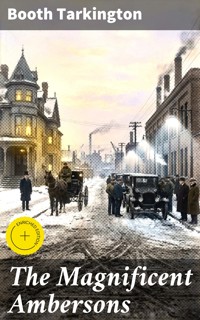
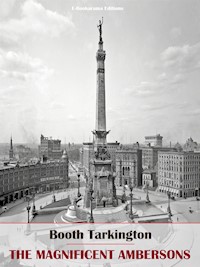
In "The Magnificent Ambersons," Booth Tarkington crafts a poignant narrative that explores the themes of wealth, ambition, and the decline of the American aristocracy during the early 20th century. This novel is notable for its keen social observations and richly drawn characters, showcasing Tarkington'Äôs signature style of ironic realism and vivid imagery. Set in an era marked by industrial change, the story centers on the Amberson family, particularly the arrogant George Amberson Minafer, whose entitlement unravels amidst the transformations around him, mirroring the tension between progress and tradition in society. Booth Tarkington, an acclaimed American novelist and playwright, was deeply influenced by his Midwestern upbringing, which provided him with an intimate understanding of social dynamics and class structures. A two-time Pulitzer Prize winner, Tarkington'Äôs fascination with the interplay of status and morality in American life is intricately woven into "The Magnificent Ambersons," reflecting both his artistic convictions and his observations of a rapidly modernizing America. This book remains a quintessential exploration of American culture and is essential reading for those interested in social commentary and literary mastery. Tarkington's incisive prose and rich characterizations make this work a compelling study of human nature and societal change, inviting readers to reflect on the implications of their own time. In this enriched edition, we have carefully created added value for your reading experience: - A succinct Introduction situates the work's timeless appeal and themes. - The Synopsis outlines the central plot, highlighting key developments without spoiling critical twists. - A detailed Historical Context immerses you in the era's events and influences that shaped the writing. - An Author Biography reveals milestones in the author's life, illuminating the personal insights behind the text. - A thorough Analysis dissects symbols, motifs, and character arcs to unearth underlying meanings. - Reflection questions prompt you to engage personally with the work's messages, connecting them to modern life. - Hand‐picked Memorable Quotes shine a spotlight on moments of literary brilliance. - Interactive footnotes clarify unusual references, historical allusions, and archaic phrases for an effortless, more informed read.
Das E-Book können Sie in Legimi-Apps oder einer beliebigen App lesen, die das folgende Format unterstützen:
Veröffentlichungsjahr: 2019
Ähnliche












The Magnificent Ambersons
Table of Contents
Introduction
A proud family watches the ground beneath its certainty shift as an old order gives way to a new age.
Booth Tarkington’s The Magnificent Ambersons endures as a classic because it captures, with unusual clarity, how private lives are shaped by public change. Its reputation rests not on sensational events but on the steady pressure of time—on the way manners, expectations, and social standing can be transformed within a single generation. The novel’s psychological attentiveness and social reach helped define a major strain of American realism, and its portrait of status and self-deception has continued to resonate with readers who recognize how quickly communities—and reputations—can be remade.
Published in 1918, the novel belongs to the early twentieth century, a period when the United States was undergoing rapid industrial growth and technological change. Tarkington wrote about an American Midwest he knew well, drawing on the textures of city life as it expanded and reorganized itself. The book is often associated with a tradition of fiction that examines the interplay between individuals and the larger forces of economics, technology, and social fashion. Without relying on exotic settings, it makes the familiar landscape of an American town feel historically momentous.
At its center is the Amberson family, long regarded as the leading household in its community. Tarkington begins from the premise of apparent security: wealth, lineage, and social authority seem to guarantee permanence. Yet the story’s attention is fixed on what such confidence can conceal—misjudgments, complacency, and a failure to recognize how the world’s values are changing. The narrative frames these tensions through domestic scenes and public encounters, showing how the boundaries between family life and civic life are thin, and how each continually revises the other.
One reason the novel’s classic status persists is its disciplined focus on the costs of pride. Tarkington studies how prestige can harden into entitlement, and how entitlement can distort perception until a family mistakes deference for affection and tradition for invulnerability. The book’s power lies in its refusal to treat social position as merely decorative; it becomes a moral and psychological condition, shaping what characters can imagine and what they cannot. That approach gives the novel a lasting seriousness even as it remains deeply readable.
The Magnificent Ambersons is also a notable American city novel, attentive to the transformation of streets, businesses, and daily rhythms. The world it depicts is not static scenery but a living system that alters opportunities and relationships. Changes in transportation and industry—present as lived experience rather than abstract ideas—reorder how people move, where they gather, and what kinds of futures they consider plausible. Tarkington’s realism is therefore historical in the richest sense: it shows how progress can be exhilarating, unsettling, and unevenly distributed.
Tarkington, an American novelist and dramatist, composed this book at a time when national optimism about modernization mingled with anxieties about what modernization displaced. His fiction repeatedly examined American social life and the pressure of change on established communities. In this novel, his style combines social observation with a narrative voice capable of irony, sympathy, and restraint, keeping the focus on character even when the backdrop is a sweeping shift in civic identity. The result is a work that feels both intimate and broadly representative.
The book’s influence can be traced in later American fiction that treats the family as a lens for historical transition. Its method—linking personal choices to structural change, and revealing the emotional costs of social recalibration—became a durable model for writers interested in the decline of old elites and the rise of new forms of power. Tarkington’s emphasis on the everyday consequences of technological and economic development helped normalize the idea that the story of modernity could be told through parlors, sidewalks, and conversations as much as through factories and boardrooms.
Just as importantly, the novel’s themes are enduring because they are not limited to a single place or decade. It asks what happens when a community’s values shift faster than a family’s self-understanding, and when success is redefined by new kinds of work, new patterns of movement, and new social expectations. The Ambersons’ prominence makes them a compelling case study, but the questions the novel raises—about adaptability, identity, and the fragile basis of respect—extend well beyond any one household.
Readers often return to the book for its careful portrayal of generational friction. Tarkington shows how younger and older perspectives can clash not only over tastes and manners but over what counts as reality. The past appears both comforting and restrictive, while the future can seem both liberating and impersonal. By presenting these tensions through recognizable social situations rather than exaggerated melodrama, the novel preserves a sense of authenticity that has helped it remain part of the American literary conversation for more than a century.
The Magnificent Ambersons also retains its stature because it invites reflection without preaching. It observes how communities narrate themselves—how they celebrate certain families, excuse certain behaviors, and overlook emerging forms of influence. In doing so, it becomes a study of reputation and its limits, of the way public admiration can mask private weaknesses, and of how quickly admiration can turn to indifference when circumstances change. Such insights have made the book a touchstone for readers interested in the moral dimensions of social history.
For contemporary readers, the novel’s relevance is easy to recognize in an era of rapid technological shifts and economic reconfiguration. The tension between nostalgia and adaptation, between inherited identity and changing conditions, remains a central feature of modern life. Tarkington’s achievement is to render that tension through a story grounded in human motives—pride, loyalty, fear, and longing—so that the historical setting amplifies rather than distances the emotion. That combination of social insight and psychological realism sustains the book’s lasting appeal.
Synopsis
Booth Tarkington’s novel The Magnificent Ambersons (published in 1918) follows the rise and decline of a prominent Midwestern family as their private fortunes intersect with sweeping social and technological change. Set largely in and around a growing American town, the book begins in an era when established names and inherited status carry enormous weight, and the Ambersons occupy the center of local attention. Against this backdrop, Tarkington introduces the tensions between an older, tradition-bound social order and a new age shaped by industry, mobility, and different ideas of success, creating the novel’s central field of conflict.
paragraphs
The narrative first settles on the family’s public image and internal dynamics, emphasizing how reputation can function like a form of currency. The Amberson household is portrayed as both admired and insulated, with conventions of manners, class, and family pride organizing daily life. Tarkington shows how the community’s gaze reinforces the family’s sense of distinction, even as small signs suggest that the wider world is changing faster than the Ambersons would prefer to admit. This early movement establishes the novel’s concern with social perception: how a family becomes “magnificent” in the eyes of others, and what such magnificence costs in adaptability and personal freedom.
paragraphs
As the story progresses, attention shifts to the younger generation, where personality and upbringing begin to matter as much as wealth. The Amberson heirs are presented in ways that expose the strengths and blind spots created by privilege, especially the ease with which security can harden into entitlement. Relationships within the family develop under the pressures of expectation, and romantic prospects become entwined with questions of pride and control. Tarkington treats these interpersonal entanglements as more than private drama; they serve as a lens through which the reader can see the social rules of the town, and how those rules start to loosen under modern influences.
paragraphs
A crucial strand of the plot introduces the expanding presence of new business and new technology, especially the automobile, which reorders the town’s rhythms and its economic prospects. Characters associated with enterprise and invention begin to represent a different kind of power: not inherited, but created and continuously renewed. This contrast places the Ambersons in a difficult position, because their identity is tied to an earlier model of leadership and taste. The novel does not treat progress as purely triumphant; it is shown as disruptive, noisy, and socially unsettling, even as it offers opportunity and alters what the community values.
paragraphs
Within this changing setting, social gatherings and public scenes become turning points where private motivations and public standings collide. Tarkington uses these episodes to highlight how quickly admiration can shift, and how family legend can be challenged by new standards of competence and relevance. The Ambersons’ self-conception, anchored in continuity, begins to meet resistance from a town increasingly impressed by innovation and practical achievement. At the same time, the novel pays close attention to the emotional stakes involved, showing how individuals can cling to an inherited script because it offers certainty, even when that script no longer fits the world outside their doors.
Historical Context
Booth Tarkington’s The Magnificent Ambersons is set in a Midwestern American city modeled on places like Indianapolis, during the decades when the United States shifted from a largely Victorian, small-city society to a modern, industrial, urban nation. The narrative spans roughly the late nineteenth century into the early twentieth, when family status, property, and reputations were enforced through local elites, churches, business associations, and tightly knit social circles. In this setting, old mercantile and professional families could dominate civic life through land, banks, and informal influence, but their authority faced growing pressure from new industries and new forms of wealth.
The novel’s social world reflects the Gilded Age, commonly dated from the 1870s to the 1890s, when rapid industrial expansion and unevenly distributed fortunes reshaped American life. Railroads, steel, meatpacking, and finance created unprecedented wealth, while political patronage and corporate consolidation generated public debate over inequality and power. Tarkington portrays an elite class whose standing rests on inherited position and recognizable manners, a pattern consistent with many American cities where “old families” served as arbiters of taste. The book’s attention to prestige, parties, and neighborhood hierarchies echoes how status culture functioned as a stabilizing institution amid fast economic change.
A key historical force behind the story is the transformation of the American economy from small-scale enterprise toward large, capital-intensive corporations. By the end of the nineteenth century, mergers and trusts had become prominent, and the visibility of “new money” challenged established social orders. The Amberson family’s prominence sits within an older pattern of wealth rooted in property and local dominance rather than continuous reinvention. Tarkington’s depiction of business success and shifting influence reflects the era’s broader transition in which entrepreneurial and corporate achievement increasingly determined civic prominence. The novel’s tensions align with contemporary anxieties that industrial capitalism could disrupt stable communities and moral expectations.
The book also reflects the rise of the American middle class and the expansion of consumer culture in the late nineteenth and early twentieth centuries. Department stores, mass advertising, and branded goods became more common, encouraging new aspirations and redefining respectability. Social standing could be displayed not only through lineage but through consumption, home furnishings, and participation in public leisure. Tarkington’s attention to domestic spaces, appearances, and social rituals is consistent with a culture where etiquette and display marked boundaries between classes. The novel echoes the period’s concern that material progress and social ambition might outpace character, prudence, or civic responsibility.
Urbanization is central to the novel’s background. Between the late nineteenth century and the 1920s, American cities grew rapidly, drawing residents from farms and small towns and absorbing immigrants into expanding industrial labor markets. Growth required new infrastructure—street paving, sewage, public transit, and street lighting—and it also produced congestion, pollution, and crowded housing in many places. Tarkington’s city changes from a more intimate environment to a busier, more industrial one, mirroring the broader national pattern. The novel’s portrayal of altered neighborhoods and shifting rhythms of life reflects how urban expansion could erode the stability of older residential enclaves.
Technological change, especially in transportation, provides one of the clearest historical anchors. Electric streetcars spread widely from the 1880s into the early twentieth century and helped create “streetcar suburbs,” allowing residential districts to move outward from downtown. The most consequential shift, however, was the rise of the automobile industry, especially after the 1890s and accelerating dramatically in the 1910s. Tarkington uses transportation change to symbolize a new era that reorders space and social life. The book echoes contemporary debates over whether machines and speed improved life or diminished community, beauty, and safety.
The automobile’s real-world impact on American cities was profound: it changed street design, increased demand for paved roads, altered shopping and leisure patterns, and supported new industries from oil to rubber to road construction. By the 1910s and 1920s, car ownership was rising quickly, and traffic became a visible urban problem. Tarkington’s narrative reflects this transformation by showing how an emerging transportation regime affects business opportunities and daily routines. The novel also captures an early-twentieth-century awareness that technological “progress” carried costs, including accidents, noise, and disruption of established social environments. Such concerns were widely discussed as cities adapted to motor vehicles.
Industrial growth brought new labor relations, which form an important historical backdrop even when not foregrounded. The late nineteenth and early twentieth centuries saw major strikes and conflicts, including the Haymarket affair in Chicago (1886), the Homestead Strike (1892), and the Pullman Strike (1894), reflecting tensions between labor and capital. Although Tarkington centers elite and upper-middle-class life, the era’s labor unrest shaped public conversations about order, responsibility, and the legitimacy of concentrated wealth. The book’s depiction of business and civic leadership can be read alongside these debates, as industrialization forced communities to confront inequality and the human costs of economic change.
Reform movements of the Progressive Era, generally dated from the 1890s through the 1910s, also inform the novel’s context. Progressives pursued civil service reform, antitrust enforcement, public health measures, and regulation of urban services; they often argued that older, informal systems of elite control were inadequate for modern industrial cities. Municipal reform and “good government” campaigns sought to curb corruption and professionalize administration. Tarkington’s portrayal of a city undergoing institutional change aligns with a time when civic identity and governance were being renegotiated. The novel reflects, and sometimes questions, the assumption that modernization—economic and political—was both necessary and morally improving.
Changes in gender roles and family life provide another layer of historical context. The late nineteenth century emphasized domestic ideals often associated with Victorian culture, while the early twentieth century saw expanding educational opportunities for women and growing public debate about women’s civic roles. The women’s suffrage movement achieved national success with the Nineteenth Amendment in 1920, marking a major political transformation. Tarkington’s focus on courtship, marriage expectations, and family authority reflects norms that were being tested as women’s public participation increased. Without reducing characters to slogans, the novel echoes the era’s negotiation between traditional family hierarchies and emerging modern identities.
Education and cultural institutions in Midwestern cities also expanded during the period. Public high schools grew, libraries and museums became civic emblems, and universities increased their influence on professional life. Such institutions helped define “respectability” and provided new avenues for social mobility. Tarkington’s attention to manners, refinement, and the performance of culture fits an environment where civic leaders promoted art, music, and lectures as markers of a city’s maturity. The novel reflects the idea that culture could both elevate and police social boundaries. This civic self-fashioning was characteristic of growing Midwestern cities seeking recognition alongside older Eastern cultural centers.
Immigration and demographic change shaped many American cities in the same era. Large-scale immigration from southern and eastern Europe, especially from the 1880s to the 1910s, transformed urban neighborhoods, workplaces, and politics, while internal migration moved Americans from rural areas into cities. These changes provoked both cultural pluralism and nativist reactions, including restrictive immigration policies that culminated in national quotas in the 1920s. Tarkington’s novel focuses primarily on an established social circle, a choice that itself reflects how elites often perceived their city through a narrower lens. The background reality, however, was a rapidly diversifying urban population that complicated older hierarchies.
The physical environment of the city—its houses, streets, and commercial districts—changes in ways tied to real trends in architecture and real estate. In the late nineteenth century, large single-family homes in prominent neighborhoods signaled status; by the early twentieth century, land values, new transportation, and commercial expansion could fragment those enclaves. Subdivisions, apartment buildings, and mixed-use corridors altered neighborhood character. Tarkington’s emphasis on the fate of grand homes corresponds with a broader pattern in which older residential grandeur faced pressures from development and changing tastes. The novel uses built space as a record of social change, showing how urban form can embody shifting power.
Booth Tarkington’s own life places him close to these transitions. Born in 1869 and closely associated with Indianapolis, he wrote with intimate knowledge of Midwestern civic life and the manners of its leading families. The Magnificent Ambersons was published in 1918, when the United States had already undergone decades of industrial expansion and when the automobile was becoming a defining feature of modern life. Tarkington’s career included other works about American society and change, and his public reputation rested partly on his ability to portray the textures of everyday social behavior. His personal familiarity with Indianapolis and its development lent plausibility to his depiction of a city in flux.
The novel’s publication date also matters because 1918 was the final year of U.S. involvement in World War I, a conflict that accelerated industrial production, expanded federal authority, and intensified debates about national purpose. Wartime mobilization affected labor markets, public rhetoric, and expectations of sacrifice, while the immediate postwar period brought social strains and political reaction. Although the book is not a war narrative, its appearance amid such upheaval underscores its preoccupation with the costs of “progress” and the fragility of old certainties. Readers in 1918 were confronting a world remade by mass industry and mass politics, making the novel’s themes especially resonant.
The period surrounding the novel also saw heightened attention to class divisions and the meaning of democracy in an industrial society. Populism in the 1890s had challenged corporate power and monetary policy, and Progressivism later pursued reforms to reconcile capitalism with public welfare. By the 1910s, antitrust cases and regulatory initiatives had become prominent, reflecting worries about monopolies and concentrated wealth. Tarkington’s story of an elite family’s changing fortunes can be read against this backdrop of contested economic legitimacy. The novel echoes the era’s question of whether inherited privilege remained defensible in a society increasingly organized around industry, expertise, and market competition.
In the end, The Magnificent Ambersons functions as a mirror of America’s passage from nineteenth-century gentility to twentieth-century modernity, using a family and a city to register broad structural changes. Its historical context includes the rise of industrial capitalism, urban growth, Progressive reform, and—most visibly—the transportation revolution that reordered space and daily life. Tarkington’s narrative does not merely celebrate modernization; it preserves the memory of what development displaced, including older forms of community and status. By emphasizing how institutions, technologies, and social expectations reshape personal destinies, the novel offers a critique of complacent privilege and an elegy for a passing urban world.
Author Biography
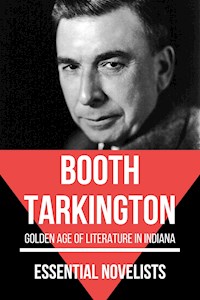
Booth Tarkington (1869–1946) was an American novelist, playwright, and essayist best known for fiction that chronicled Midwestern life during the transition from the Gilded Age into the early twentieth century. Closely identified with Indianapolis and the social world of the American Midwest, he became one of the most popular and commercially successful writers of his generation. His work often examines the pressures of industrialization, changing class structures, and the cultural tensions between tradition and modernity. Several of his novels enjoyed wide readership and long afterlives through stage and film adaptations, helping to shape national images of small-city American society.
Tarkington was born in Indianapolis, Indiana, and was educated in the Midwest before attending Princeton University in the 1890s, though he did not graduate. At Princeton he was active in campus literary life, experiences that would later inform his best-known collegiate novel. His early formation coincided with the rise of American realism and the growing influence of social observation in popular fiction; his writing drew on detailed settings, recognizable social types, and an interest in manners and aspiration. While he cultivated humor and sentiment, his strongest work is anchored in attentiveness to the everyday textures of speech, custom, and civic change.
He began publishing in the 1890s, building his reputation through novels and magazine work while also writing for the stage. His early success arrived with “The Gentleman from Indiana” (1899), a novel that established themes he would revisit: local politics, civic morality, and the contrast between idealism and self-interest. In 1900 he published “Monsieur Beaucaire,” a romantic historical tale that reached a wide audience and later became a frequent source for adaptations. These early books helped position him as a versatile writer capable of both contemporary social narrative and more escapist historical or romantic modes.
In 1903 Tarkington published “The Two Vanrevels,” and in 1905 he issued “The Conquest of Canaan,” continuing his engagement with Midwestern settings and public life. That same period also brought “Penrod” (1914), a collection of stories about boyhood that became a classic of American juvenile humor and nostalgia. His work from these years shows a steady sharpening of technique: clearer social framing, stronger dialogue, and an increasing willingness to treat community life as a subject with both comedy and critique. By the 1910s he was widely read, frequently reviewed, and a familiar presence in American letters.
Tarkington’s major critical and popular achievements are often associated with his depiction of Indianapolis society and the American upper middle class. “The Magnificent Ambersons” (1918) is a central work in this regard, tracing a family and a community as the automobile age and new economic realities transform established hierarchies. He continued this line of inquiry with “Alice Adams” (1921), a novel of ambition, social climbing, and the costs of self-invention. Both novels were honored with the Pulitzer Prize for the Novel, making him one of the few writers to receive the award twice. His tone in these works balances sympathy with satirical distance, and his narrative interest lies in how public change refracts through private aspiration.
Alongside novels, Tarkington maintained an active career in theater and in collaborative work. He wrote plays and contributed to musical theater, including collaborations with composer Harry Von Tilzer, extending his reach beyond the page. Hollywood and Broadway also drew on his fiction; “The Magnificent Ambersons,” for example, was adapted into a major film directed by Orson Welles in 1942, cementing the story’s place in American cultural history. More broadly, Tarkington’s prominence reflected the era when magazine publication, theatrical adaptation, and book sales could reinforce one another, allowing a popular novelist to shape national tastes across media.
In later years Tarkington continued to publish, though changing literary fashions and the rise of modernist experimentation altered the critical climate in which his work was received. He remained associated with the tradition of socially observant, accessible American fiction and with the regional and civic histories he had made vivid for millions of readers. He died in 1946, and his reputation has since fluctuated—sometimes criticized as emblematic of an older genteel style, yet repeatedly rediscovered for his sharp portraiture of class, modernization, and the psychology of status. Today his best work endures as a record of American transformation, capturing how technological and economic shifts remade communities, ambitions, and identities.




