



Erhalten Sie Zugang zu diesem und mehr als 300000 Büchern ab EUR 5,99 monatlich.
- Herausgeber: Musaicum Books
- Kategorie: Für Kinder und Jugendliche
- Sprache: Englisch
Clement Clarke Moore's 'The Night Before Christmas' is a classic holiday poem that encapsulates the magic and excitement of Christmas Eve. Written in a simple and charming style, Moore's poem follows the nighttime adventures of St. Nicholas as he delivers presents to children around the world. The poem's rhythmic cadence and vivid imagery have solidified its place as a beloved Christmas tradition. This illustrated edition enhances Moore's timeless poem with beautiful and intricate illustrations that bring the story to life. The combination of Moore's poetic language and the stunning visuals creates a truly enchanting reading experience. 'The Night Before Christmas' has become an essential read during the holiday season, captivating readers of all ages with its festive spirit and timeless appeal. In this enriched edition, we have carefully created added value for your reading experience: - A succinct Introduction situates the work's timeless appeal and themes. - The Synopsis outlines the central plot, highlighting key developments without spoiling critical twists. - A detailed Historical Context immerses you in the era's events and influences that shaped the writing. - An Author Biography reveals milestones in the author's life, illuminating the personal insights behind the text. - A thorough Analysis dissects symbols, motifs, and character arcs to unearth underlying meanings. - Reflection questions prompt you to engage personally with the work's messages, connecting them to modern life. - Hand‐picked Memorable Quotes shine a spotlight on moments of literary brilliance. - Interactive footnotes clarify unusual references, historical allusions, and archaic phrases for an effortless, more informed read.
Sie lesen das E-Book in den Legimi-Apps auf:
Seitenzahl: 57
Veröffentlichungsjahr: 2017
Das E-Book (TTS) können Sie hören im Abo „Legimi Premium” in Legimi-Apps auf:
Ähnliche











The Night Before Christmas
Table of Contents
Introduction
On a hush-dim winter night, wonder slips into an ordinary household and gently rearranges certainty, turning a familiar hearth into a threshold where imagination and tradition meet, where the measured breaths of sleepers and the bright watchfulness of a parent converge, and where the smallest sounds across a rooftop ripple through the quiet like a promise, so that by dawn the boundaries between memory and myth feel newly permeable, and the season’s deepest hopes appear not distant or abstract, but close enough to hear, to see, and to believe.
The Night Before Christmas (Illustrated Edition) presents the most celebrated holiday poem in the English language, widely credited to Clement Clarke Moore. Composed in the early nineteenth century and known also by the title A Visit from St. Nicholas, it recounts, in nimble verse, the quiet vigil of a household on Christmas Eve and the unexpected arrival of a joyous visitor. Without divulging its turns, the poem offers a scene at once intimate and expansive: a domestic interior held in suspense, a sky alive with possibility, and a narrator whose observations transform a night into a cherished ritual.
First published anonymously in the Troy Sentinel on December 23, 1823, the poem circulated quickly through newspapers and almanacs, finding audiences far beyond its original printing. Clement Clarke Moore publicly acknowledged authorship years later and included the poem in his 1844 volume of verse, securing its place in a growing American canon of seasonal literature. Its early context is significant: a young republic blending inherited European customs with distinctly domestic ideals, and a print culture eager for lively, memorable pieces that families could recite together. The poem’s compact narrative and musical cadence suited perfectly the rhythms of such communal reading.
Part of the poem’s enduring magnetism lies in its meter: a buoyant anapestic pulse that mimics excitement while never losing control. The language is clear yet melodious, engineered for the ear as much as the eye, and the narrative thread advances with a storyteller’s economy. Repetition, internal echoes, and vivid sensory cues invite listeners to anticipate what comes next, a quality that makes the work ideal for annual recitation. The verse’s forward tumble feels like sleigh bells in motion, carrying the listener swiftly from hush to spectacle and back again, all within the safe circle of home.
As a work of myth-making, the poem’s influence is difficult to overstate. It helped cement a festive figure who arrives by sleigh, descends by improbable means, and brings cheer without disturbing the sleepers he visits. It famously names eight reindeer and describes a mode of arrival whose speed and grace have become standard in seasonal storytelling. These details, offered without grandeur or sermon, feel intimate and immediate, as if they belong to the listener’s own street and roofline. By locating wonder within familiar architecture, the poem naturalizes the magical, giving generations a vocabulary for joyful expectation.
Equally influential is the poem’s vision of domestic life. The household is not merely a setting but a character—orderly, watchful, and full of quiet feeling. The perspective centers the experience of a caretaker who senses that something special is near and who registers minute changes in light, sound, and air. The poem celebrates preparation, rest, and the ethics of giving, yet it does so with mischief and delight. It presents holiday generosity not as spectacle staged elsewhere but as a visitation to the intimate spaces people guard most, thereby honoring both privacy and communal festivity.
The poem’s cultural afterlife is vast. It has inspired countless parodies, homages, and adaptations in print, performance, and popular media, a testament to how deeply its rhythms and images have entered shared memory. Writers borrow its structure to tell new seasonal tales; performers return to its cadences to animate gatherings; and artists repeatedly reinterpret its scenes for new audiences. Illustrated editions especially have extended its reach, augmenting the text’s swift suggestiveness with visual storytelling that invites closer looking. Each generation’s images illuminate fresh textures—costume, architecture, weather, expression—while the poem’s narrative remains supple enough to welcome these varied renderings.
Reading the poem aloud reveals how carefully it balances motion and repose. Short phrases accelerate like gliding runners, then pause for a hush that heightens anticipation. Alliteration and end rhyme guide the mouth and ear through a sequence of bright impressions: windowlight on snow, the silhouette of a figure, the quick choreography of approach and departure. The diction is accessible, but never flat; the precision of images ensures that even simple words gather resonance. This combination of clarity and lift makes the piece unusually memorable, encouraging families to pass it along not only as text, but as performance.
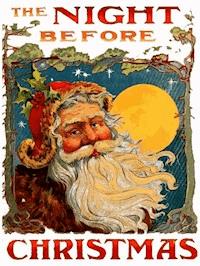
In the decades after its debut, the poem became intertwined with evolving holiday customs in the United States and elsewhere, shaping how communities imagine the gifts and goodwill of late December. It worked in concert with visual culture, as nineteenth-century illustrators developed the visitor’s appearance and setting in ways that harmonized with the poem’s spirit. Later, artists such as Thomas Nast further advanced a now-familiar iconography, underscoring how text and image together can consolidate tradition. The poem’s imagery proved remarkably adaptable, able to speak to both cozy domestic ideals and a broader civic language of generosity and cheer.
Although long associated with Clement Clarke Moore, the poem’s authorship has been discussed and debated by some scholars. What remains clear is the historical record of its early anonymous publication, its rapid reprinting, and Moore’s later inclusion of the piece in his 1844 collection, which helped standardize the attribution. Regardless of these discussions, the work’s literary merits stand on their own: a compact narrative, a distinctive cadence, and images that readers have embraced for two centuries. The poem’s authorship conversation ultimately attests to its importance; few works invite such sustained attention to origins and transmission.
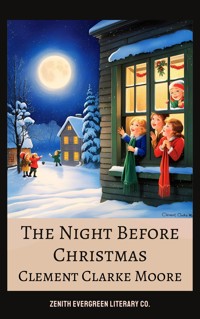
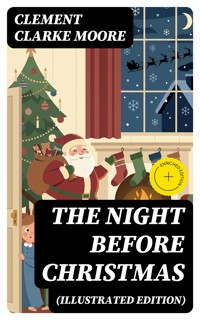
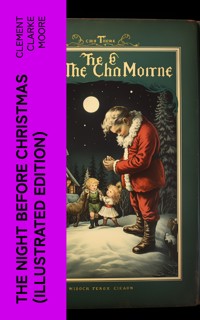
This Illustrated Edition participates in that living tradition by pairing the poem’s bright momentum with images that linger on gesture, texture, and mood. Illustration can slow the reader just enough to savor a glance, a snowfall, a silhouette in motion, turning each page into a small stage. Visual pacing underscores the poem’s turns—from watchful stillness to airborne exhilaration and back to calm—while giving contemporary readers a gallery of details that enliven the familiar. Because the text remains concise, the art provides space for contemplation, allowing the poem’s scenes to expand without losing their quicksilver charm.




