


0,00 €
Niedrigster Preis in 30 Tagen: 0,00 €
Niedrigster Preis in 30 Tagen: 0,00 €
Mehr erfahren.
- Herausgeber: DigiCat
- Kategorie: Poesie und Drama
- Sprache: Englisch
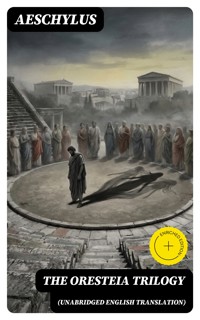
The Oresteia Trilogy, Aeschylus's masterwork, presents a profound exploration of justice, vengeance, and the evolution of societal norms in ancient Greece. Comprising three plays—Agamemnon, The Libation Bearers, and The Eumenides—this unabridged English translation captures the lyrical beauty and intricate construction of Aeschylus's language, while immersing readers in the rich tapestry of myth and tradition. The trilogy is notable for its intricate dialogue and the transition from personal retribution to collective civic responsibility, reflecting the tension between archaic blood feuds and the emerging concept of judicial law, set against the backdrop of the tumultuous aftermath of the Trojan War. Aeschylus, often hailed as the father of tragedy, was deeply influenced by the socio-political landscape of 5th-century BCE Athens. Having witnessed the devastating consequences of war and tyranny, his works grapple with themes of moral complexity and divine justice. The Oresteia trilogy serves as a commentary on the transition from an ancient worldview to a more enlightened rule of law, likely inspired by his engagement in Athenian culture and civic affairs. This seminal work is an essential read for anyone interested in the foundations of Western literature and drama. A compelling blend of intricate character dynamics and philosophical depth, The Oresteia invites readers to ponder the nature of justice through its characters' harrowing journeys. Whether approached as a socio-political critique or a timeless narrative of familial tragedy, it remains profoundly relevant and insightful. In this enriched edition, we have carefully created added value for your reading experience: - A comprehensive Introduction outlines these selected works' unifying features, themes, or stylistic evolutions. - The Author Biography highlights personal milestones and literary influences that shape the entire body of writing. - A Historical Context section situates the works in their broader era—social currents, cultural trends, and key events that underpin their creation. - A concise Synopsis (Selection) offers an accessible overview of the included texts, helping readers navigate plotlines and main ideas without revealing critical twists. - A unified Analysis examines recurring motifs and stylistic hallmarks across the collection, tying the stories together while spotlighting the different work's strengths. - Reflection questions inspire deeper contemplation of the author's overarching message, inviting readers to draw connections among different texts and relate them to modern contexts. - Lastly, our hand‐picked Memorable Quotes distill pivotal lines and turning points, serving as touchstones for the collection's central themes.
Das E-Book können Sie in Legimi-Apps oder einer beliebigen App lesen, die das folgende Format unterstützen:
Veröffentlichungsjahr: 2022
Ähnliche







The Oresteia Trilogy (Unabridged English Translation)
Table of Contents
Introduction
This collection presents the Oresteia by Aeschylus—Agamemnon, The Choephori (The Libation-Bearers), and Eumenides—in an unabridged English translation, gathered as a single, continuous dramatic argument. First performed at the City Dionysia in Athens in 458 BCE, the trilogy won first prize and stands today as the only extant complete tragic trilogy from classical Greece. Bringing these plays together restores their intended arc, in which the fate of a single royal house becomes the lens for questions of order and justice in the community. The aim of this volume is to provide a faithful reading experience that honors sequence, scale, and the cumulative resonance of the whole.
The texts collected here are plays: verse dramas composed for performance, structured in episodes and choral odes. They belong to the genre of Athenian tragedy, which interweaves dialogue, song, and dance to probe public and private crises. Readers will encounter the full range of tragic technique—prologues that set the scene, entrances of the chorus that frame communal response, messenger narratives that relay offstage events, and lyrical laments that channel grief into ritual language. There are no essays, letters, or prose narratives in this collection. Instead, the work is entirely dramatic poetry designed to be both spoken and sung, heard and seen.
Agamemnon opens at Argos on the night a beacon signals the fall of Troy. A watchman’s long vigil ends as the city prepares for the king’s homecoming after years of war. The chorus of elders considers the cost of victory and the tensions that have grown within the royal household during his absence. Aeschylus focuses the stage on return, welcome, and the fragile balance between triumph and memory. The premise is the arrival of a victorious leader to a house overshadowed by old grievances and sacrificial debts. From the outset, words of greeting carry undertones of caution, and public celebration shares the air with dread.
The Choephori, often titled The Libation-Bearers, turns to the next generation. At a father’s tomb, a son returning from exile meets a daughter who has lived under watch, and the rituals of mourning become the occasion for recognition. The chorus of women brings offerings to appease the dead, and their songs press toward action while recalling the claims of ancestry. The premise is the gathering of kin at a grave to reckon with injustices that have not been addressed. Aeschylus frames the scene in rites and vows, drawing out the conflict between private loyalties and the need to restore a disturbed moral order.
Eumenides transports the drama from the house to the city. Pursued by ancient powers that avenge familial bloodshed, the central figure seeks refuge and adjudication beyond Argos. The action moves toward a civic forum in Athens, where competing claims—old sanctions and new institutions—must be heard. The premise is a passage from personal vendetta toward a public reckoning, with divine and human authorities sharing the stage. In this final play, Aeschylus explores how a community might contain violence without denying the forces that demand accountability, proposing a resolution grounded in procedure, persuasion, and the reorientation of fear into lawful restraint.
Read as a trilogy, these plays trace a progression from retaliatory cycles to deliberative justice, from the secrecy of the house to the visibility of the court. They set fate alongside choice, showing how inherited damage can be acknowledged without being endlessly repeated. Aeschylus measures divine ordinance against human capacity, not to erase religion, but to articulate a civic framework that can coexist with sacred claims. Throughout, images of light and shadow, sea and storm, animal predation and entangling nets, shape a language of peril and recognition. The repeated return to ritual—sacrifice, supplication, funeral offerings—marks how societies narrate and transform grief.
Aeschylus writes with compressed grandeur, forging compound images and dense metaphors that reward attentive reading. The chorus functions as more than background; it is the communal mind, capable of warning, remembering, and judging. Rapid exchanges of single lines heighten confrontations, while expansive odes slow the pace to consider causes and consequences. Action remains largely offstage, conveyed through formal report and emotional aftermath, a technique that concentrates attention on responsibility rather than spectacle. The poet’s diction balances prophetic cadence with stark simplicity, and recurrent motifs bind scenes across the trilogy, creating echoes that accumulate into moral argument as much as narrative momentum.
The Oresteia was composed for a religious festival dedicated to Dionysus, where drama served civic reflection as well as artistic display. Tragedy in this setting was public, competitive, and collectively witnessed. Aeschylus presented the trilogy with a companion satyr play titled Proteus, of which only fragments survive, underscoring how complete the surviving tragic sequence is by comparison. That original context matters: the plays assume an audience attuned to ritual gesture, legal practice, and mythic genealogy. While this volume offers them for reading, their choral textures and formal balances still carry the imprint of performance, debate, and communal participation.
The lasting significance of the Oresteia lies in its articulation of justice as a human practice under divine horizon. Its influence can be traced through later drama, political theory, and literary reflection, where the trilogy’s movement from private wrong to public remedy becomes a model for thinking about institutions. As the only complete tragic trilogy to survive, it preserves a rare structural ambition: three independent plays that remain inseparable in effect. Aeschylus’s blend of mythic scale and procedural detail enables readers to see law, ritual, and memory as interdependent forces shaping a community’s endurance over time.
This edition presents the three plays in unabridged English translation, retaining their sequence and dramatic divisions. Readers may find proper names and place names in classical forms, and may encounter editorial stage directions that clarify movement or setting, since the ancient texts give minimal guidance on staging. Lineation and phrasing in translation can vary across editions, but the structural elements remain constant: prologue, entrance of the chorus, alternating scenes and odes, and concluding departures. The purpose is to offer a clear, continuous reading experience that preserves the plays’ architecture and the interplay of spoken dialogue with choral song.
To approach the trilogy, attend to how images recur and evolve. A metaphor introduced as omen or rumor may return as ethical question, and a song of mourning can become political counsel. The chorus situates private speech within public consequence, while the plays’ formal symmetry guides expectations without disclosing outcomes. Knowledge of the broader myth is helpful but not required; each opening scene supplies the necessary premise and stakes. Read in order, the works invite reflection on how communities remember, judge, and change. Their energy comes from argument as much as event, asking what accountability might look like when bonds conflict.
Gathered here, Agamemnon, The Choephori, and Eumenides form a single act of imagination that moves from house to city, from fear to deliberation. Aeschylus composes not a lesson but a framework, where grief, authority, and hope contend in public view. This collection’s purpose is to restore that full framework in an accessible, continuous form, enabling readers to experience the trilogy’s cumulative force. The Oresteia remains compelling because it treats justice as a living practice—historical, contested, and shared. In presenting the plays unabridged, this volume offers the enduring drama of how a community seeks to end strife without forgetting its dead.
Author Biography
Aeschylus (c. 525/524–456/455 BCE) was an Athenian tragedian often called the father of tragedy. Born in Eleusis near Athens, he wrote perhaps seventy to ninety plays; seven survive complete. His surviving masterpiece is the Oresteia—Agamemnon, The Choephori (The Libation-Bearers), and Eumenides—the only extant complete trilogy from classical Greek drama. Writing amid the rise of Athenian democracy and in the aftermath of the Persian Wars, he shaped the form of tragedy through daring theatrical experiments and probing theological inquiry. His dramas test divine justice, human responsibility, and the costs of power, establishing patterns that later tragedians refined but never eclipsed.
Little is securely recorded about Aeschylus’s early education, but his formation unfolded within the civic-religious context of Attic festivals, especially the City Dionysia, where tragedies were premiered before citizen juries. He grew up near the sanctuary at Eleusis, an environment that heightened sensitivity to ritual and choral spectacle. His language and dramaturgy are steeped in the Homeric tradition, drawing on expansive similes, martial imagery, and heroic scale. Choral lyric and the competitive culture of Athenian performance shaped his craft. Within this matrix he developed a style both ceremonially austere and dramatically forceful, fusing mythic grandeur with public reflection.
Aeschylus fought as a hoplite in the Persian Wars, including at Marathon in 490 BCE, and ancient sources also connect him with Salamis. The experience of imperial aggression and collective defense left a deep imprint on his art. The Persians, his earliest extant play, depicts the aftermath of Xerxes’ defeat from the enemy court’s viewpoint, praising communal resilience without simple triumphalism. More broadly, his tragedies confront the strains of rapid political change and emerging civic institutions. Themes of hubris, catastrophe, and hard-won wisdom reflect an Athens learning to balance ancestral piety with the demands and deliberations of a developing democratic order.
In form and staging, Aeschylus transformed Greek drama. Later tradition credits him with adding a second speaking actor, enlarging possibilities for dialogue and conflict; he also employed striking costumes, masks, and scenic effects to lend ritual grandeur to the stage. He wrote in tetralogies—three tragedies and a satyr play—and pursued thematic unity across trilogies. The Oresteia is the only complete example to survive. At the City Dionysia he achieved repeated victories, and his experiments in structure, music, and spectacle shifted emphasis from purely choral performance to dramatic interaction, while preserving the chorus as a moral and ceremonial voice.
The Oresteia confronts the fracture between private vengeance and public order. Agamemnon portrays the volatile aftermath of wartime triumph returning to a wounded household. The Choephori (The Libation-Bearers) follows the next turn in a lineage shadowed by wrongs that demand redress yet deepen the debt of blood. Eumenides imagines how such conflicts might be drawn into a communal framework of judgment and restraint. Throughout, Aeschylus weaves a dense moral vocabulary—dikē (justice), atē (ruin), miasma (pollution)—and dramatizes the claims of gods and mortals. The trilogy’s arc moves from solitary decision to shared deliberation, without dissolving tragedy’s tragic knowledge.
Beyond the Oresteia, Aeschylus’s surviving plays include The Suppliants and Seven Against Thebes, which stage asylum, ancestral obligation, and civil strife. His career extended beyond Athens; he traveled to Sicily, where local rulers fostered dramatic production, and he died at Gela around 456/455 BCE. Ancient testimony records that his epitaph commemorated his valor at Marathon rather than his artistry, a telling gesture about civic identity and honor. After his death, Athens authorized official revivals of his plays, and these restagings continued to find success, confirming his stature as a foundational voice of the tragic stage.
Aeschylus’s legacy lies in the architecture of tragic reasoning he bequeathed to the theater: ritual intensity joined to civic inquiry, myth shaped into reflection on law, responsibility, and communal survival. Sophocles and Euripides engaged his models, refining or contesting them, yet his template endures. The plays remain central to performance and scholarship, valued for choral power, compressed imagery, and searching intelligence. In contemporary discourse, the Oresteia’s meditation on cycles of harm and the possibilities of adjudication sustains its relevance. Agamemnon, The Choephori (The Libation-Bearers), and Eumenides continue to anchor conversations about justice and the uses of memory.
Historical Context
Aeschylus, active roughly from the late sixth to mid-fifth century BCE, wrote in an Athens transformed by war, reform, and rapid civic experimentation. The Oresteia premiered at the City Dionysia in 458 BCE and won first prize. Although the trilogy draws on Bronze Age mythic settings, it is unmistakably a product of classical Athens after the Persian Wars. Its preoccupations—leadership, communal suffering, religious authority, and the emergence of lawful institutions—reflect the pressures of a society consolidating democracy, projecting imperial power, and negotiating new balances between old aristocratic prestige and broader citizen participation. The trilogy’s arc channels these historical tensions into a public, ritualized conversation.
The City Dionysia was a state festival that fused religious devotion with civic spectacle. Tragedians presented tetralogies—three tragedies and a satyr play—funded by a choregos, a wealthy citizen performing a public liturgy. A board of judges drawn from the tribes awarded prizes, and the audience included citizens, resident foreigners, and visiting delegates. Aeschylus’ Oresteia originally ended with the satyr play Proteus, now lost. Performed in the Theater of Dionysus with masked actors and a trained chorus, such works were embedded in the democratic calendar, enabling the polis to debate memory, justice, piety, and political identity through myth before a mass public.
Aeschylus fought at Marathon in 490 BCE and was closely tied to the generation that resisted Persia, with ancient sources also associating him with Salamis in 480 BCE. His epitaph famously notes his valor at Marathon. The traumatic scale of those conflicts shaped Athenian culture: commemorations, war memorials, and narratives about collective endurance permeated civic life. Aeschylus’ earlier Persians (472 BCE) already dramatized the Greek victory as a cautionary tale about hubris. Within this milieu, the Oresteia’s attention to the costs of war, the responsibilities of commanders, and the reintegration of veterans into civic order mirrors postwar questions facing the city.
The political institutions of Athens matured rapidly after Cleisthenes’ reforms of 508/7 BCE, which reorganized the citizen body into tribes and strengthened councils and assemblies. Public decision-making, accountability of magistrates, and the growth of jury courts gave Athenians new venues for collective judgment. Tragedy mirrored these developments with choruses deliberating, messengers reporting, and leaders being scrutinized through speech and counterspeech. The Oresteia participates in this culture of argument, dramatizing how communities weigh claims of duty, piety, and expediency. Even when set in Argos or at sanctuaries beyond Attica, the trilogy’s dramatic procedures—oaths, assessments, and appeals—echo Athenian civic practice.
In the early 460s BCE, reforms associated with Ephialtes and his allies curtailed the political oversight of the Areopagus council while preserving its jurisdiction in homicide cases. This recalibration sharpened debate about aristocratic authority and the rule of law. The Eumenides culminates in a trial on the Areopagus, presenting an origin-story for a civic court’s role in resolving bloodshed. Whatever Aeschylus’ personal stance, the play engages live constitutional issues: how to transform inherited authority into accountable procedure, how to temper vengeance with verdicts, and how divine sanction might endorse, rather than supplant, formal adjudication.
Greek religious practice framed homicide as a source of miasma—ritual pollution requiring purification and proper rites. Sanctuaries like Delphi, with its panhellenic oracle of Apollo, guided communities and individuals on expiation. The Oresteia moves through this ritual world, staging supplication, libation, oath, and curse as recognizable instruments of sacred order. In Athens, a classical cult of the Semnai Theai (Revered Goddesses) existed near the Areopagus, attested by later sources. The Eumenides offers a charter-like narrative connecting the older Erinyes to an Athenian cultic presence, integrating threatening divine forces into the civic landscape without erasing their ancient dignity.
The trilogy reshapes a long-standing mythic cycle about the house of Atreus, known from Homeric epic and other archaic poetry. Homer’s Odyssey, for example, recounts Agamemnon’s homecoming and its consequences, while lyric and epic traditions elaborated the family’s past. Aeschylus inherits motifs of inherited guilt, oath-breaking, and prophetic insight, but adapts them to fifth-century concerns. Omens, sacrifices, and seers populate a world where divine signals must be interpreted—and misinterpreted—by leaders. By reframing familiar episodes, he engages an audience already versed in the myth, ensuring that novelty arises not from surprise events but from the moral and political significances attached to them.
Postwar Athens oversaw the Delian League (founded 478 BCE), amassing naval strength and tribute that underwrote civic projects and a vibrant festival culture. Silver from the Laurion mines and revenues from allies sustained the city’s public life, including theatrical liturgies. This environment fostered a confident, sometimes assertive, Athenian self-image that tragedy could endorse, critique, or complicate. The Oresteia’s final movement toward an Athenian setting publicly associates the city with “civilizing” justice, a posture congenial to a polis casting itself as arbiter of Hellenic order. Yet the plays also keep attention on costs, obligations, and the fragility of consensus.
Household management (oikonomia), inheritance, and marriage alliances structured classical Greek society. Legal control of property and legitimacy of heirs were central to the oikos, the building block of the polis. Tragedy often explores how disrupted households imperil civic stability. The Oresteia examines the passage from martial to domestic space, the strains of long campaigns on families, and the competing obligations of kinship and public service. By situating political questions within a household marked by memory, grief, and ritual obligation, the trilogy aligns personal bonds with broader debates over authority, allowing audiences to consider how private wrongs spill into public danger.
Aeschylus’ theatrical practice was technologically and artistically innovative. Ancient testimony credits him with introducing a second actor, thereby intensifying dialogue and conflict; Sophocles later added a third. Fifth-century productions used masks, elaborate costumes, and stage machinery such as the ekkyklema (a wheeled platform) and possibly mechane for appearances of gods. Agamemnon famously features a chain of beacon fires conveying news across great distances, drawing on known ancient techniques of signaling by fire and smoke. Stagecraft thus supported a drama attuned to revelation, testimony, and proof—key features of a society increasingly invested in persuasive display and public reasoning.
The language of Athenian tragedy blended Attic speech with stylized poetic diction. Dialogue typically employed the iambic trimeter, while choral odes mixed meters and incorporated Doric forms traditional for choral lyric. Aeschylus’ style favors intensifying repetition, striking compounds, and densely patterned imagery, qualities that harness the chorus as a vehicle for communal meditation. These poetic resources deepened the audience’s engagement with civic questions, encouraging reflection rather than mere spectacle. The Oresteia’s verbal architecture mirrors the institutional architecture it contemplates: measured, antiphonal, and juridical, inviting listeners to weigh statements, test probabilities, and accept outcomes as the result of reasoned process.
Agamemnon opens with the aftershocks of a long war abroad and a fraught return home, themes resonant for a city processing victory and its fallout. Athenians knew the dangers of charismatic commanders—admiration could turn to suspicion, as ostracism and prosecutions showed. The play’s scrutiny of leadership, collective responsibility, and rumor acknowledges a world where distant events travel by report and signal, and where public celebration can mask unresolved claims and grief. Without rehearsing plot, it suffices that the drama probes what is owed to the dead, to the gods, and to citizens when wartime decisions return to haunt domestic life.
The Choephori (Libation-Bearers) unfolds amid tomb rites and laments, rituals familiar to Greek audiences who practiced regular commemorations of the dead. The politics of burial and memorial had been sharpened by the war dead’s public funerals and epitaphioi logoi in Athens. The play treats kin obligations, oath-making, and recognition as components of a world still governed by reciprocity and retaliation. Exile—common in Greek interstate life—and the obligations of host and guest attest to a Mediterranean of constant movement, sanctuary-seeking, and alliance-making. In presenting the pressures of vendetta, the drama prepares the conceptual ground for legal transformation without presuming its inevitability.
Eumenides stages a transition from retaliatory justice to civic adjudication through an Athenian court. Historically, homicide jurisdiction in Athens belonged to the Areopagus, whose prestige rested on antiquity and probity. The play ratifies procedures recognizable to Athenian jurors: oaths, arguments, a jury vote, and authoritative proclamation. Athena’s presence integrates divine will with human institutions rather than eliminating religious sanction. The outcome supplies a foundation story for local cult at the Areopagus, promising the community protection if it honors ancient powers. This is cultural politics of a high order, aligning sacred tradition with democratic mechanisms in a moment of constitutional rebalancing.
Panhellenic sanctuaries knit Greek cities into shared networks of consultation and competition. Delphi, governed through an Amphictyony, issued oracles that influenced colonization, lawmaking, and military ventures. Eumenides’ initial setting at Delphi underscores the credibility of appeals to Apollo’s authority in cross-polis disputes. By transferring the drama’s resolution to Athens, Aeschylus reshapes a panhellenic dossier into an Athenian charter, resolving a supra-local moral crisis through an Athenian institutional solution. This spatial journey—from Argive houses to Delphic shrine to Athenian hill—maps the imagined path by which older, diffuse norms are concentrated into a civic court’s durable jurisdiction.
Aeschylus’ career also points beyond Athens. He traveled to Sicily and staged plays at the courts of western Greek rulers, evidence of the far-reaching prestige of Athenian tragedy and the interconnection of Greek cultural centers. Such mobility helps explain the Oresteia’s panhellenic idiom even as it culminates in Athenian self-definition. The trilogy’s reliance on shared myths, recognizable ritual, and universal claims about justice would have resonated widely, while its specific institutional solution would have advertised Athenian competence. This blend of common heritage and local distinctiveness typifies fifth-century cultural politics, where cities vied for leadership through art as much as arms.
Later ancient authors and dramatists revisited the Atreid material, with Euripides composing his own treatments and Roman tragedians such as Seneca rewriting episodes for different moral climates and political orders. Across antiquity, the Oresteia was admired for grandeur of language and scope of argument. In modernity, legal thinkers and theater practitioners have repeatedly turned to the trilogy as a case study in the origins of the rule of law and the management of collective violence. Translations and productions continually reassess its stance on authority, gender, and civic identity, reading its fifth-century concerns through contemporary debates about justice and reconciliation.
Synopsis (Selection)
Agamemnon
After the long war at Troy, the Argive king returns to a city unsettled by omens and old grievances. The chorus tracks a mounting sense of dread as private guilt and public triumph collide within a house long shadowed by ancestral wrongs. With choral warnings and ritual intensity, the play probes the costs of war, the strain of leadership, and the first turns of a cycle of justice and retribution.
The Choephori (The Libation-Bearers)
At a graveside meeting, exiled heirs are drawn together by mourning and a commanding call to set the past right. Plans for revenge take shape amid riddling signs and ritual laments, testing boundaries between piety, family duty, and moral restraint. The drama tightens into a chamber-like conspiracy, deepening the trilogy’s focus on inherited guilt and the perilous logic of blood answering blood.
Eumenides
Hounded by embodiments of vengeance, a fugitive seeks purification and an end to the retaliatory chain. The pursuit becomes a public hearing where divine and human claims to justice are weighed, shifting the arena from family to community. With argumentation that moves from night toward civic clarity, the play reframes terror into order and closes the trilogy’s meditation on law, mercy, and the possibility of stable peace.
The Oresteia Trilogy (Unabridged English Translation)
Of the life of Aeschylus, the first of the three great masters of Greek tragedy, only a very meager outline has come down to us. He was born at Eleusis, near Athens, B. C. 525, the son of Euphorion. Before he was twenty-five he began to compete for the tragic prize, but did not win a victory for twelve years. He spent two periods of years in Sicily, where he died in 456, killed, it is said, by a tortoise which an eagle dropped on his head. Though a professional writer, he did his share of fighting for his country, and is reported to have taken part in the battles of Marathon, Salamis, and Plataea.
Of the seventy or eighty plays which he is said to have written, only seven survive: "The Persians," dealing with the defeat of Xerxes at Salamis; "The Seven against Thebes," part of a tetralogy on the legend of Thebes; "The Suppliants," on the daughters of Dana's; "Prometheus Bound," part of a trilogy, of which the first part was probably "Prometheus, the Fire-bringer," and the last, "Prometheus Unbound"; and the "Oresteia," the only example of a complete Greek tragic trilogy which has come down to us, consisting of "Agamemnon," "Choephorae" (The Libation-Bearers), and the "Eumenides" (Furies).
The importance of Aeschylus in the development of the drama is immense. Before him tragedy had consisted of the chorus and one actor; and by introducing a second actor, expanding the dramatic dialogue thus made possible, and reducing the lyrical parts, he practically created Greek tragedy as we understand it. Like other writers of his time, he acted in his own plays, and trained the chorus in their dances and songs; and he did much to give impressiveness to the performances by his development of the accessories of scene and costume on the stage. Of the four plays here reproduced, "Prometheus Bound" holds an exceptional place in the literature of the world. (As conceived by Aeschylus, Prometheus is the champion of man against the oppression of Zeus; and the argument of the drama has a certain correspondence to the problem of the Book of Job.) The Oresteian trilogy on "The House of Atreus" is one of the supreme productions of all literature. It deals with the two great themes of the retribution of crime and the inheritance of evil; and here again a parallel may be found between the assertions of the justice of God by Aeschylus and by the Hebrew prophet Ezekiel. Both contend against the popular idea that the fathers have eaten sour grapes and the children's teeth are set on edge; both maintain that the soul that sinneth, it shall die. The nobility of thought and the majesty of style with which these ideas are set forth give this triple drama its place at the head of the literary masterpieces of the antique world.
AGAMEMNON
Agamemnon is one of four Greek tragedies written by Aeschylus in 450 B.C. collectively known as The Oresteia. This English translation of the original work was performed by E. D. A. Morshead, English classicist and teacher.




