


1,99 €
Niedrigster Preis in 30 Tagen: 0,00 €
Niedrigster Preis in 30 Tagen: 0,00 €
Mehr erfahren.
- Herausgeber: Musaicum Books
- Kategorie: Gesellschafts- und Liebesromane
- Sprache: Englisch
William Dean Howells' 'The Pumpkin Glory & Other Christmas Stories' is a collection of heartwarming tales that capture the essence of Christmas through vivid descriptions, sympathetic characters, and subtle moral lessons. Known for his realistic portrayals of ordinary people and their struggles, Howells utilizes a straightforward yet heartfelt writing style that engages readers and invites them to reflect on the true meaning of the holiday season. Set against the backdrop of 19th-century America, these stories provide a glimpse into the traditions and values of a bygone era, making them both timeless and relevant to contemporary readers. From tales of redemption to stories of family bonds, 'The Pumpkin Glory & Other Christmas Stories' is a treasure trove of literary gems that celebrate the spirit of Christmas in all its glory. William Dean Howells, a prominent figure in American literary circles during the late 19th and early 20th centuries, drew inspiration from his own experiences and observations of society to craft his works. As a keen observer of human nature and social dynamics, Howells infused his writing with compassion, wit, and a keen sense of justice, earning him a reputation as a master storyteller and advocate for social reform. His commitment to depicting the complexities of human relationships and the challenges of everyday life is evident in 'The Pumpkin Glory & Other Christmas Stories', making it a valuable addition to his oeuvre. I highly recommend 'The Pumpkin Glory & Other Christmas Stories' to readers who appreciate classic literature, insightful storytelling, and timeless themes. Whether you are a fan of Howells' work or a newcomer to his writing, this collection is sure to captivate you with its heartfelt narratives and poignant reflections on the holiday spirit. In this enriched edition, we have carefully created added value for your reading experience: - A comprehensive Introduction outlines these selected works' unifying features, themes, or stylistic evolutions. - The Author Biography highlights personal milestones and literary influences that shape the entire body of writing. - A Historical Context section situates the works in their broader era—social currents, cultural trends, and key events that underpin their creation. - A concise Synopsis (Selection) offers an accessible overview of the included texts, helping readers navigate plotlines and main ideas without revealing critical twists. - A unified Analysis examines recurring motifs and stylistic hallmarks across the collection, tying the stories together while spotlighting the different work's strengths. - Reflection questions inspire deeper contemplation of the author's overarching message, inviting readers to draw connections among different texts and relate them to modern contexts. - Lastly, our hand‐picked Memorable Quotes distill pivotal lines and turning points, serving as touchstones for the collection's central themes.
Das E-Book können Sie in Legimi-Apps oder einer beliebigen App lesen, die das folgende Format unterstützen:
Veröffentlichungsjahr: 2020
Ähnliche









The Pumpkin Glory & Other Christmas Stories
Published by
Books
Table of Contents
Introduction
The Pumpkin Glory & Other Christmas Stories gathers five short tales by William Dean Howells, a central figure in American realism whose work also includes a charming body of writing for children. This volume curates pieces associated with festive seasons and family reading: Christmas Every Day, Turkeys Turning the Tables, The Pony Engine and the Pacific Express, The Pumpkin Glory, and Butterflyfutterby and Flutterbybutterfly. Rather than attempting a complete edition or a comprehensive survey of Howells’s career, the collection presents a focused selection that highlights his gift for domestic comedy, gentle moral inquiry, and playful fantasy, assembled to be read aloud and enjoyed across holiday evenings.
The texts represented here are short stories, written in supple, conversational prose. They are designed in the mode of fireside narration, with a storyteller’s voice that invites interruptions and questions, foregrounding the intimacy of family talk. Several of these pieces were gathered together in Howells’s children’s collection Christmas Every Day and Other Stories Told for Children, and they share the sensibility of that volume: accessible plots, comic invention, and clear yet tactful ethical stakes. The genre is neither parable nor sermon, but story; the lessons arrive through laughter, surprise, and the everyday rhythms of home.
Christmas Every Day begins from a premise that has tempted many children: the wish that the holiday might never end. Howells frames the idea with light irony and practical detail, tracing the early delights that attend a day of gifts and sweets when multiplied beyond its natural measure. The narration treats the wish seriously without solemnity, exploring how abundance behaves when it ceases to be special. The tale’s humor stems from domestic realities—crowded rooms, repeated rituals, and the logistics of celebration—while its theme asks what we cherish in tradition and why scarcity, memory, and waiting can deepen joy.
Turkeys Turning the Tables delights in reversal. Set against the season when turkeys figure most conspicuously on household menus, the story imagines the familiar order of holiday feasting upended, with the birds granted the rhetorical upper hand. The tone is mischievous rather than macabre, and the comedy arises from swapping perspectives that are usually taken for granted. As with many of Howells’s children’s stories, the narrative invites readers to examine habitual customs by viewing them from an oblique angle, turning a comic conceit into a gentle exercise in empathy and into a reminder to consider the feelings of others.
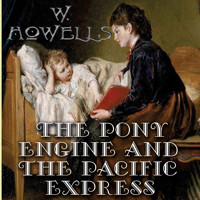
The Pony Engine and the Pacific Express tells of a small locomotive confronted with a large task, its size seemingly mismatched to the weight of the work ahead. Howells animates the scene with his characteristic mix of affectionate scrutiny and practical sense, observing the hard facts of effort while opening space for pluck and persistence. The story’s appeal lies in the sturdy pleasures of machinery and motion, and in the way determination can be dramatized without grand speeches or miracles. It remains a favorite for reading aloud, its rhythms and incremental progress made tangible through plain, vivid narration.
The Pumpkin Glory turns from winter to autumn, finding wonder in a homely icon of the season. A pumpkin becomes an occasion for imaginative transformation and communal spectacle, as lights, faces, and laughter fill an evening that carries the glow of neighborhood festivity. Although not a Christmas tale in setting, it shares with the holiday stories a focus on the household as a theater of marvels. Howells lingers over textures—lamplight, cut rind, the hush before a surprise—and allows a child’s pride and curiosity to guide the action, keeping the emphasis on shared experience rather than on solitary fantasy.
Butterflyfutterby and Flutterbybutterfly revels in language. The title signals the story’s method: reversals, mishearings, and the play of names become the means by which creatures and children encounter one another. The narrative treats linguistic slips not as errors to be corrected but as doors to delight, turning pronunciation into plot. In doing so, it displays Howells’s ear for the talk of the nursery and the parlor—the chuckle of a pun, the quick pivot from sense to nonsense and back again. The outcome is a fable of perception, where attention and affection do the work that definitions cannot.
Taken together, these stories are united by themes of wish and limit, reversal and recognition. Holidays supply the occasion, but the deeper subject is ordinary life—its cadences of anticipation, its small negotiations of fairness, gratitude, and self-restraint. Howells’s moral vision is patient and domestic, preferring the test of daily practice to the shock of punishment. He cultivates sympathy by letting readers inhabit competing viewpoints and by showing how consequences arise from choices without melodrama. The result is instruction without hectoring and enchantment without evasion, a balance that keeps the tales fresh for households and classrooms alike.
Stylistically, Howells blends the realist’s attention to detail with the raconteur’s genial pace. A colloquial narrator guides the action, often acknowledging the presence of a listening child and shaping the episodes to the rhythms of bedtime conversation. This frame fosters intimacy and responsiveness: explanations are brief, images familiar, and the wit remains tender. The sentences move with ease, never hurried, and the comic effects draw on domestic scale—crammed pantries, crowded parlors, rattling crockery—so that the extraordinary feels rooted in the everyday. Even the most playful inventions rest on recognizably human habits and hopes.
Although Howells is best known for his novels and essays advancing American realism, his children’s stories show the same commitments adapted to a younger audience. He favors clear causes, plausible motives, and the social meanings of small choices. The holiday setting heightens these concerns by concentrating attention on rituals and generosity, asking what traditions are for and how communities sustain them. That these tales have been repeatedly reprinted and read aloud speaks to their lasting usefulness: they make merriment a form of moral reflection, and they keep company with families seeking both laughter and good sense.
The scope of this edition is selective rather than exhaustive. It brings together five short stories to represent a distinct strand of Howells’s work—prose for children with festive horizons and domestic settings. Readers will not find his adult novels, criticism, or travel writing here; instead, the volume offers pieces designed for shared reading, capable of standing on their own or being enjoyed as a sequence. The arrangement places the widely known Christmas Every Day alongside kindred narratives whose seasons and subjects echo its concerns, inviting comparison among wishes, turnabouts, industrious attempts, and playful words.
Above all, The Pumpkin Glory & Other Christmas Stories aims to renew an art that Howells prized: the spoken story. These pages welcome a parent, teacher, or older child to become the teller, to pause for questions, to let details breathe. They ask us to listen for how humor can carry care, how imagination can illuminate responsibility, and how festivals can gather a household into a single, friendly circle. In returning to these tales, we find not only holiday sparkle but the durable warmth of attention—an atmosphere in which generosity grows, one well-told, well-heard story at a time.
Author Biography
William Dean Howells (1837–1920) was an American novelist, critic, and editor whose career spanned from the Civil War era into the early twentieth century. He helped guide U.S. literature from romanticism toward realism, favoring clear-eyed depictions of ordinary life over melodrama. Known popularly as the Dean of American Letters, he combined editorial leadership with a prolific output of novels, essays, travel sketches, and stories for adults and children. Urbane wit, ethical curiosity, and close attention to speech and manners characterize his prose. Through both his fiction and criticism, he shaped how Americans read and wrote about the social fabric of their own time.
Howells’s formation came largely through self-directed reading and early newsroom work in the American Midwest, where journalism taught him economy, observation, and an ear for everyday idiom. A campaign biography of Abraham Lincoln in 1860 helped bring him a consular appointment in Venice during the Civil War, an experience that widened his horizons and deepened his engagement with European literature and art. Exposure to continental realism confirmed his belief that fiction should be grounded in fact and manners. Returning to the United States after the war, he settled into literary life, refining a critical program that emphasized sincerity, social observation, and stylistic restraint.
In Boston he joined the Atlantic Monthly, first assisting and then leading the magazine during the 1870s, when it stood at the center of American literary culture. His editorial advocacy made the case for realism as a humane, democratic art and helped bring writers such as Mark Twain and Henry James to broad audiences. Through reviews, essays, and later his columns at Harper’s, he urged contemporaries to attend to the textures of current life rather than inherited formulas. He cultivated a national conversation about fiction’s responsibilities, arguing that the writer’s task was not to decorate reality but to disclose it with accuracy and sympathy.
Howells’s novels enacted these principles. A Modern Instance treated marital breakdown as a social and ethical problem rather than a sensational plot device. The Rise of Silas Lapham traced the moral testing of a self-made businessman amid Boston society. A Hazard of New Fortunes surveyed class tensions, urban change, and conscience in a rapidly modernizing New York. Across such books, he preferred moral nuance, comedy of manners, and a democratic interest in ordinary people over extravagant incident. His criticism, interleaved with the fiction, supplied a coherent rationale for realism as both an artistic method and a civic education.
Alongside this work for adults, Howells wrote lively tales for children that display playful language and gentle satire. Collected in the 1890s, stories such as Christmas Every Day, Turkeys Turning the Tables, The Pumpkin Glory, Butterflyfutterby and Flutterbybutterfly, and The Pony Engine and the Pacific Express pair conversational sparkle with moral reflection. They often stage comic reversals—holiday wishes taken too far, barnyard roles inverted, small engines tackling big tasks—to invite thought about gratitude, imagination, and perseverance. The settings feel domestic and familiar, yet they stretch just enough to reveal foibles kindly. The same attentive ear and humane outlook that guide his realism animate these pieces.
As critic and public figure, Howells held that literature should tell the truth about ordinary experience. He admired European realists and helped domesticate their methods for American audiences while preserving a characteristically hopeful, reform-minded tone. His essays encouraged sympathy across class and region and welcomed varied dialects when treated with respect. Through editorial platforms he championed new writers and challenged sensationalism that sacrificed credibility for effect. Even in children’s stories, his ethics arrive through humor and example rather than sermon, embodying a belief that narrative can cultivate judgment by showing life as it is lived, in small choices and everyday speech.
Howells remained productive into the twentieth century, publishing fiction, reminiscences, travel writing, and criticism while continuing to shape debates about taste and culture. He spent his later years chiefly in the Northeast, maintaining a steady correspondence with fellow writers and a strong presence in magazines. By his death in 1920, his status as mediator between writers and readers, and as master of American realism, was secure. His novels remain central to discussions of style and society, while his children’s tales—especially Christmas Every Day and its companion pieces—still circulate widely. The blend of wit, moral inquiry, and colloquial grace he advanced continues to influence American letters.




