


6,99 €
Niedrigster Preis in 30 Tagen: 4,49 €
Niedrigster Preis in 30 Tagen: 4,49 €
Mehr erfahren.
- Herausgeber: BQB Publishing
- Kategorie: Abenteuer, Thriller, Horror
- Sprache: Englisch
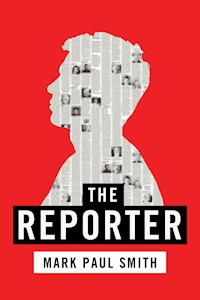
Intent on finding his career path, a rookie reporter struggles to become a journalist at an Indiana newspaper in 1973.
He climbs the ladder from writing obituaries to covering cops and teacher strikes and murder trials and community disasters. As he navigates the competitive politics of the newsroom, he gradually earns the trust of his curmudgeonly city editor. Along the way, he begins performing with a rock and roll band and falls in love.
The choice between being a musician and a journalist becomes obvious after he writes a front page story on a job tryout at the Detroit Free Press.
Das E-Book können Sie in Legimi-Apps oder einer beliebigen App lesen, die das folgende Format unterstützen:
Veröffentlichungsjahr: 2023
Ähnliche
















The Reporter
© 2021 Mark Paul Smith. All rights reserved.
No part of this book may be reproduced in any form or by any means, electronic, mechanical, digital, photocopying, or recording, except for the inclusion in a review, without permission in writing from the publisher.
This novel is based on a true story. Some of the names have been changed to protect individual privacy.
Published in the United States by BQB Publishing(an imprint of Boutique of Quality Books Publishing Company, Inc.)www.bqbpublishing.com
978-1-952782-10-7 (p)
978-1-952782-11-4 (e)
Library of Congress Control Number: 2021945024
Book design by Robin Krauss, www.bookformatters.com
Cover design by Rebecca Lown, www.rebeccalowndesigns.com
First editor: Caleb Guard
Second editor: Andrea Vande Vorde
CONTENTS
CHAPTER ONE
CHAPTER TWO
CHAPTER THREE
CHAPTER FOUR
CHAPTER FIVE
CHAPTER SIX
CHAPTER SEVEN
CHAPTER EIGHT
CHAPTER NINE
CHAPTER TEN
CHAPTER ELEVEN
CHAPTER TWELVE
CHAPTER THIRTEEN
CHAPTER FOURTEEN
CHAPTER FIFTEEN
CHAPTER SIXTEEN
CHAPTER SEVENTEEN
CHAPTER EIGHTEEN
CHAPTER NINETEEN
CHAPTER TWENTY
CHAPTER TWENTY-ONE
CHAPTER TWENTY-TWO
CHAPTER TWENTY-THREE
CHAPTER TWENTY-FOUR
CHAPTER TWENTY-FIVE
CHAPTER TWENTY-SIX
CHAPTER TWENTY-SEVEN
CHAPTER TWENTY-EIGHT
CHAPTER TWENTY-NINE
CHAPTER THIRTY
CHAPTER THIRTY-ONE
CHAPTER THIRTY-TWO
CHAPTER THIRTY-THREE
CHAPTER THIRTY-FOUR
CHAPTER THIRTY-FIVE
CHAPTER THIRTY-SIX
ABOUT THE AUTHOR
SPECIAL THANKS TO:
Editors Caleb Guard, Allison Itterly, and Brenda Fishbaugh; and to Terri Leidich, President and Publisher of BQB Publishing.
OTHER BOOKS BY MARK PAUL SMITH
Rock and Roll Voodoo(A Jesse Conover Adventure)
Honey and LeonardThe Hitchhike
CHAPTER ONE
Jesse let the phone jangle three times before lifting the receiver off its rotary dial base. The chord stretched long enough so he could type while he talked.
“This is Jesse,” he said, trying to sound busier than he was.
The person on the other end of the line paused for dramatic effect so he could ask who it was. Jesse wasn’t playing that game. It was 10:00 p.m., one hour before the reporters at the Fort Wayne Journal Gazette finished their shift. The presses began rolling at 11:00 p.m. He was tired and he knew who was calling. He could tell by the breathing.
When the caller finally spoke, his deep voice sounded like a Boris Karloff impersonator narrating The Monster Mash. “I’ve got another cold one for you, Jesse.”
Jesse chuckled. “Harold, you and your ghouls at the funeral home are setting a record today. What’s this, six in one day? You know it’s too late for the morning paper.”
Harold mustered his most villainous chortle. “I know all about you and your deadlines.”
“You’ve been waiting all night to use that line,” Jesse said. “I can’t believe I didn’t see it coming.”
Harold returned to his hushed tone of funeral home formality. “Why, thank you, Jesse. Coming from you, I regard that as high praise. And might I say, as I always do, you are my favorite death editor of all time.”
It was April 16, 1973. Jesse Conover was twenty-three years old. He had an athletic build and a handsome smile that couldn’t quite hide an inbred contempt for authority. He’d been writing obituaries at the Journal Gazette for three months. The work had been exciting and even frightening at first, seeing his copy printed in the paper and hoping he hadn’t made mistakes. He wrote careful notes on his pad regarding the name, date of birth, date of death, life accomplishments, survivors, and details of the memorial service. He had to be even more careful as he typed out the obit in proper order and form.
He was a thrill-seeker of the motorcycle riding and water tower climbing variety. Writing obituaries had gotten old in a hurry.
“So, what was the cause of death?” Jesse asked.
There was a pause. “You know I can’t talk about that.”
Jesse took his hands off the typewriter and placed both elbows on his desk. “You know, this is starting to piss me off. I always have to leave out the most important part of the story. People want to know the cause of death.”
“It’s the newspaper’s policy, not ours.”
Jesse’s shoulders sagged. “It’s stupid.”
“I’ll tell you how she died if you promise to keep it confidential.”
Jesse sat up straight in his chair. “I never reveal my sources unless they want to be revealed.”
“Very well, then. I believe you,” Harold said. “So here’s what happened. Mrs. Donaldson slipped in the ladies’ room at the country club and cracked her skull wide open on a toilet.”
Jesse paused to let the imagery settle, then asked the probing question, “Was the seat up or down?”
Harold’s voice lightened up. “Ah, my boy, you are a natural reporter. You have put your finger on the real mystery. The seat was up. Now, can you tell me why the toilet seat was up in the women’s bathroom?”
Just then, the city editor, George Weatherly, yelled from several desks away, “Who the hell you gabbin’ at now, Jesse? I need the School Lunches from you ASAP.” The venomous command sent Weatherly into a coughing jag so violent he had to light a Camel cigarette to regain his breath.
The newspaper was the heartbeat of the community in Fort Wayne, Indiana. Political candidates issued press releases to announce their agendas. Elected leaders held press conferences to answer questions from the public. Sports fans had to wait for the morning paper to find out if their team won or lost. Mothers read the School Lunches section to see if they needed to pack a lunch for their finicky children.
There were twenty-five reporters and eleven editors working at the morning paper with Jesse. Desks were arranged in rows of four or five in one high-ceiling room the size of a high school gymnasium. There were no windows. The clatter of typing and teletype machines was as loud as the chatter of discussions and arguments among the staff. The air was thick with the smell of cigarettes, coffee, and newsprint.
Most of the desks were piled high with papers, reference materials, empty beverage bottles, and overflowing ashtrays. Jesse’s desk was too neat and clean for comfort. Restrooms and a small cafeteria were down a long hall at the other end of the building.
Jesse hung up the phone without saying goodbye and jumped up to report to the city editor’s station, which comprised of three desks in a U shape at the center of the room. “That was Harold from Wayne Funeral. He says a lady died when she slipped and bashed her head on a toilet at the country club.”
“I don’t care how she died. All we need to know is that she’s dead.” Weatherly exhaled a storm cloud of smoke that might as well have been a bucket of cold water on Jesse’s excitement. He was a wiry man and stood at five-seven. He was bald on top with bushy gray hair on the sides. His eyebrows were long and wild, and they stuck out at odd angles when he furrowed his brow. His voice sounded like he was already dying of emphysema.
Jesse was undeterred. “It sounds like a story to me. If people are dying because of unsafe conditions at the fanciest club in town, that’s news to me.”
Weatherly motioned for Jesse to sit in one of two wooden chairs on the other side of his desk. “What do you know about news? You’re still a kid. Everything is news to you. Obits aren’t news. They’re death notices. Banks and creditors keep track of them. Families want their privacy. We respect that.”
Jesse folded his arms over his chest and frowned. “We do stories on car crashes all the time. What’s the difference? She died in an accident.”
Weatherly took a deep drag of his cigarette. “It’ll be news when it’s a lawsuit. We don’t put the cause of death in an obit. Period. You do obits on people who die in cars all the time, but you never give the details of the crash or the cause of death. Why? Because it’s an obit.”
“So how about a story on safety conditions at the country club?” Jesse asked.
Weatherly laughed so hard he nearly choked to death. It took a moment for him to regain his voice. “Stephen Longstreet is a member of that club. Does that name ring a bell? He’s our publisher. He’s a friend of your father and the reason you got hired, and the reason I’m stuck trying to educate you right out of college with no journalism experience.”
Jesse was surprised to hear the editor admit his prejudice so openly. He felt like he’d been sucker punched below the belt. Damn, he thought. This guy might never give me a chance unless I stand up for myself. It’s time for a showdown. He took a deep breath and spoke slowly. “How can I get experience if you won’t send me out on a story?”
Weatherly stared toward the back of the newsroom where the automated teletype machines were clacking away with news from the Associated Press and United Press International wire services. He returned his gaze to Jesse with a sad look in his eyes. “You know, Jesse, you’re a nice kid, but I’m afraid you might be in the wrong business. Even on the obits, your copy is not that clean. And this School Lunch thing . . . I can’t seem to get bulletins out of you when I need them.”
Jesse realized he was on shaky ground. “I gave you the School Lunches at seven. There they are, buried in your in-basket.”
Weatherly sifted through several piles of paper on his desk before shuffling through his overflowing in-box. “Oh, I see. Guess I forgot they were there.” He glanced at the copy and looked back at Jesse with only a fleeting apology in his eyes that quickly morphed into stern inquiry. “So, you really want to be a newsman, or is this job just some step on your ladder of success?”
“I want to be a reporter more than anything in the world. Give me a chance. I can do this. I know I can. I’ll prove it to you.” Jesse had risen to his feet without realizing it. He looked around to see the entire newsroom paying attention.
For the first time, the city editor smiled at Jesse and shook his head in reluctant approval. “All right, I like enthusiasm from my cub reporters. Tell you what. I’ll see if I can find a story for you to prove your case. I’m gonna give you one chance and you better not blow it.”
Jesse raised his arms to flex his biceps. “Yes. That’s all I need. You won’t be sorry. Thank you, thank you, thank you.”
Weatherly waved him away from the desk. “Don’t thank me yet.”
CHAPTER TWO
Jesse drove down the highway, beating on the steering wheel like a bongo drum. He was heading to the tiny town of Pierceton, Indiana, to do a story on a fundraising benefit for Henry Coffey, a high school wrestler who had been paralyzed from the neck down in a car crash. This was his first big chance to do a news story on his own. Weatherly had finally sent him out on assignment.
He glanced at his watch. It was six thirty. He had to get the facts and return to write the story and file it by the eleven o’clock deadline. He wondered whether his beat-up 1967 Plymouth Barracuda would make the eighty-mile round trip.
Jesse had written stories in high school and college, but none of them under the time pressure of a deadline. He hoped he wouldn’t choke up with some last-minute writer’s block. He couldn’t think about that right now. He had to focus on the task at hand. First, he had to find the high school gymnasium. Then he had to somehow wrangle an interview with a young athlete who could no longer move his arms and legs.
Jesse didn’t have a camera and there was no photographer with him. Weatherly told him to bring home whatever family photos he could borrow for the story. The paper already had the young man’s photo from a promotional flyer for the event.
Once he was in town, it wasn’t difficult finding the gym. All Jesse had to do was follow the steady stream of cars headed for the benefit. He had to park a football field away from the gym. He grabbed his pen and notepad.
Jesse headed across the large parking lot toward the gym with the other high school students. He seized the opportunity and stopped to ask a few students why they had come. The kids were eager to talk to a newsman even though the only credential he had was an eight-by-four-inch reporter’s notebook and a ballpoint pen.
Jesse was taller than most of the students. He stood at six-three and weighed one hundred and eighty-five pounds. He had curly brown hair, hazel eyes, high cheekbones, and strong eyebrows. His mother always told him he was handsome, but he never felt that good looking. He’d been short until a major growth spurt his senior year of high school.
He was wearing a white shirt with a collar and a tie but no sport coat. He didn’t own one. It was a chilly night, but he left his black leather jacket in the Barracuda.
Once inside the building, he took names and notes from well-wishers as he wedged his way into the center of the gym. The place was huge, a basketball court with ten rows of bleacher seating on every side. The ceiling was thirty feet tall with bright lights hanging from every section. A portable stage was set up at one end of the court with a sea of folding chairs in front of it.
The gym was seriously overcrowded when Jesse waded in and began asking questions of crowd members about why they had come and how they knew Henry. People repeated the usual platitudes about what a great guy Henry was and how his tragedy afflicted the entire community. The story was shaping up to be a colossal cliché until Jesse met an athletic young woman with a long blonde ponytail who burst into tears when he asked for her name.
“I’m Karen, Henry’s girlfriend. I know I’m not supposed to cry, but I can’t help it. He’s being so brave, and everyone has been so kind. But I don’t think I can do this alone.”
Jesse sensed she was talking about much more than attending the fundraiser. He asked questions about how she and Henry had met and what kind of things they liked to do together. My first interview as a reporter, he thought, and the questions are coming naturally. All I’ve got to do is ask about what I want to know. Or what the reader needs to know.
She almost stopped crying as she answered his questions. Finally, she stopped talking and grabbed him by the arm. “Come over here. I’ve got to tell you something in private.”
Karen led him to the back of the event stage. Henry was paralyzed from the neck down and propped up on a hospital bed less than twenty feet away. Karen’s mascara was running down her cheeks as she leaned in close enough for Jesse to smell the spearmint gum she was chewing.
“I haven’t told anybody this. Henry doesn’t even know. And you’ve got to promise you won’t put it in the newspaper.”
Jesse nodded his head.
“Here’s the deal. I’m pregnant. Henry’s the father. I want to marry him no matter what. Should I tell him tonight?”
Jesse stopped taking notes after hearing the word pregnant. He was speechless. Evidently, she regarded him as some kind of moral authority because he wrote for the newspaper. He wondered what he had done to earn her confidence so quickly until he realized she had never been interviewed by a reporter. Answering his questions had put her in a confessional mode. He resisted the urge to tell her that he’d only written obituaries.
He put the notebook in his hip pocket. “How old are you?”
“I’m sixteen, but Henry’s almost eighteen.”
Jesse looked at her stomach and couldn’t see any sign of pregnancy. “How long have you been sixteen, and how long have you been pregnant?”
Karen rubbed her stomach self-consciously. “I’m two months pregnant and I turned sixteen last week.” Her hazel eyes were brimming with tears.
Jesse clenched his jaw. It was clear that she had no idea it was a serious crime to have any kind of sex with a person under sixteen in the state of Indiana. He realized she’d become pregnant at fifteen years old.
Karen looked away and waved at Henry, who was summoning her by raising his head to come up onstage and be by his side.
“I would like to meet Henry. Will you introduce me?” Jesse asked.
Karen wiped the eye makeup off her face with a tissue as she led Jesse onto the platform and introduced him to the guest of honor. “David, this is the man from the Fort Wayne Journal Gazette. He drove all this way to do a story on you.”
Henry smiled broadly. “Sorry I can’t shake hands. All I can do is say thanks for coming.”
Jesse nodded. “You’ve sure got a lot of people on your side. I didn’t think wrestlers got this kind of attention, only basketball stars.”
Henry tried to smile again, but ended up biting his lip. A tear rolled down his left cheek. Karen wiped it away with her tissue and got mascara on his face. “It’s okay to cry, honey. I’ve been crying all night,” she said.
Jesse pulled up a folding chair and sat down next to Henry’s hospital bed. “I guess we’re lucky to have you with us. There wasn’t much left of your car from the photos I saw. Do you remember what happened?”
Henry closed his eyes. “I only know what they told me when I woke up in the hospital. They think I swerved to miss a deer or something and ended up crashing head-on into a big old oak tree. I wasn’t drinking or anything. They tell me the tree is fine.” He opened his eyes. The people around him laughed a little too loudly, grateful that Henry was attempting to maintain his sense of humor.
Jesse took out his notebook and pen. “So, how long were you in the hospital?”
Henry stretched his neck. “I was in a little over two weeks. I’ve been in rehab for five weeks. They rolled me out on this bed for the fundraiser.”
Jesse had no idea what to say next, so he asked the only question that came to mind. “What are the doctors saying about your future?”
Karen intervened. “It’s too soon to tell.”
Henry shook his head. “I’m paralyzed for life. My spine is severed. I’ll never walk again or do anything again.” He fell silent and closed his eyes. Nobody knew what to say. Jesse knew better than to ask any more questions. Karen stroked Henry’s hair as the school principal spoke into the microphone to begin the program.
Jesse stayed to hear the glee club and the band and most of the speakers. Finally, the clock in the protective wire cage hanging over the exit told him it was time to go. He said goodbye to Karen. She gave him a long hug and handed him a photo of her and Henry after one of his wrestling matches. They looked so happy and blissfully unaware of what the near future would bring. Henry’s muscular, glistening physique shined in the photo like nothing could ever beat him.
All the way back to the newsroom Jesse debated what he should write for his lead sentence. Should he focus on the wrestler or on the event? The girlfriend needed to be included to flesh out the story. The stand-by-your-man angle was a tearjerker for sure. But should it be a sad story about the victim or a hopeful tale of a community coming together?
He had no idea what it would be as he sat down to his new Smith Corona electric typewriter and stared at the blank paper. He wasn’t that great a typist, maybe sixty words a minute with a few mistakes. It was ten o’clock, and he was running out of time.
Weatherly walked over to Jesse’s desk and noticed the photo of the wrestler with his girlfriend. He picked up the photo. “Nice touch. Work her into the story.”
Jesse looked up at his boss and grinned. “She’s pregnant with his child and hasn’t told him yet. She wants to get married anyway.”
Weatherly searched Jesse’s eyes to make sure he wasn’t kidding. “Don’t work her in that deep. Stick to the benefit. This isn’t a story about teen pregnancy.”
Jesse kicked himself as Weatherly walked away. He never should have divulged the young girl’s secret. What if the city editor wanted him to write about it? Would he violate her confidence? Trying to impress his boss could have backfired. He vowed to keep his big mouth shut in the future. But something else was bothering him. Why had the girl told him her secret? What had he done to earn such trust? And what kind of internal censor told him not to write about her pregnancy?
Weatherly was right. It wasn’t a story about teen pregnancy. And it wasn’t a story about a paralyzed wrestler who would never take his child for a walk in the park. It was the story of a young man, crippled in the prime of his youth, and the humanitarian reaction of his small town. People were coming together to try to help in any way they could.
He tried to collect his thoughts. A lead sentence had to be written and written fast. He closed his eyes and typed the first thought that came to mind. “The town of Pierceton raised the roof for one of its own last night at a benefit for a paralyzed high school wrestler.”
He opened his eyes. The lead sentence read back much better than Jesse thought it would. Lucky thing. He had no time to rewrite it. The second sentence followed naturally and was much easier to write. By the end of the article, Jesse was clacking the keys on his typewriter like the deadline was all he ever needed to kick him into gear. The sense of urgency inspired him. It was a thrill like nothing he had ever experienced. Sentences were writing themselves, paragraphs parading into his mind’s eye. He had to remind himself to breathe. The deadline rush felt addictive. It was heart-pounding. His doubts about becoming a reporter vanished as he felt the printers’ ink surging through his veins. That’s what older reporters loved to say. “They got printers’ ink in their blood.” Printers were the blue collar boys upstairs who set type and turned giant rolls of newsprint that arrived by railroad car into newspapers.
He worked the girl into the fifth paragraph. “Henry’s girlfriend, Karen Wagner, remained at his side throughout the two-hour program of music and speakers. Henry’s mother cried when she stepped up to the microphone and spoke about the shock of her only son’s horrible accident. At that moment, Karen leaned down and kissed Henry on the forehead. The crowd saw the tender gesture and filled the gymnasium with a thunderous cheer of support.”
Jesse typed the story on a continuous roll of copy paper. When he finally ripped it off the typewriter, it was nearly three feet long. He handwrote “-30-” on the page to show the piece was complete.
Weatherly was both impressed and annoyed when Jesse laid the copy on his desk. “Jesus Christ, I don’t have that big a news hole for this piece. The advertisers are taking up all my space.” He read the first few paragraphs. His growls and mutterings made Jesse think he might wad the paper up and throw it in the wastebasket.
When he finished reading, he stared at Jesse long and hard. “Who the hell uses thunderous in a news story? What are you trying to be? Some kind of Ernest Hemingway?”
Jesse started to defend his copy, but Weatherly waved him off. “All right, all right. I don’t want to hear it. You make me nervous. Go on. Get out of here. I’ll see what I can do to turn all this overblown bullshit into something people can actually read.”
Jesse headed back to his desk, relieved to have the story completed, and surprised and elated at how easily the words had flowed. Still, he wasn’t sure if he had passed the Weatherly test.
He stopped by the desk of the police beat reporter, Glen Barnes, a forty-four-year-old newsman who’d bounced around Midwestern newspapers for twenty years. He was bowlegged and walked with a slight limp to favor his right hip. He had a beer belly that made his belt disappear. He wore inexpensive suits, wrinkled as the many days in a row he wore them. Glen was a kind-hearted, old-school journalist who loved to teach young reporters the techniques and ethics of their profession.
“So, you got her done under deadline. Good show,” Glen said. “Let’s go celebrate at Henry’s Bar. Nobody’s getting murdered. Our work here is done. We can drink until the paper comes out. You can see your first byline. It’s a big moment. You don’t want to miss it.” He paused. “You are getting your name on this piece, aren’t you?”
“I don’t know,” Jesse said. “Weatherly didn’t seem to like the story much. And, by the way, why do they call it a byline?”
Glen laughed. “Because it’s by somebody.”
The two men left the newsroom and walked across the street to Henry’s. It was nearing midnight, and the paper would come out at 1:30 a.m. Jesse felt flattered that Glen would hang out with him while they waited to see if he got a byline.
Henry’s was a downtown neighborhood bar known to be a hangout for reporters and actors and musicians and novelists and politicos and dancers and artists and hustlers of all sexual and professional persuasion. It was a freakishly cosmopolitan crowd for a Main Street tavern in a city surrounded by never-ending corn and soybean farms.
Glen paused with his hand on the doorknob of the side door entrance before opening it. “He didn’t tell you to sit down and rewrite it, did he?” Jesse shook his head. Glen smiled. “That means he liked it.”
Glen opened the door to a blast of rock and roll on the jukebox and noisy conversation in the air. The bar was long and narrow, fire coded for seventy-five people, but often served more than one hundred tightly packed partiers. The air was thick with cigarette smoke as Glen and Jesse wedged their way in and looked for a place to sit. The booths beneath the round leaded glass exterior windows were occupied, as were the stools facing the ornate mahogany bar. Henry, the bald-headed proprietor, was helping two bartenders mix drinks by the dozen behind the bar.
“Looks like your typical Friday night free-for-all at Henry’s,” Glen said as he wedged into the bar and held his fingers up like a peace sign to order two draft beers. They were served so quickly the frothy heads were spilling over the glass mugs. Jesse and Glen had to slurp to keep from getting wet.
They drank standing up for a couple beers until a booth opened and they slid in. “How does it feel?” Glen asked.
Jesse drained his beer mug. “Nice to finally get a table.”
Glen took a big gulp and smiled as he shook his head. “No, I mean how does it feel to do your first story on assignment?”
“To tell you the truth, Glen, I can’t believe it actually happened. I was beginning to think I’d be writing obits the rest of my life.” Jesse raised his arm to get the waitress’s attention for another round. “And, let me tell you. It felt good, writing on deadline. It felt like getting high, like I’ve been doing it all my life.”
Glen emptied his mug with a satisfied sigh. “That, my fine young friend, is the acid test. If you get a kick out of writing on deadline, you’re a reporter. If you don’t, you’re not. It’s as simple as that. I remember my first story. I was scared to death. It was a murder in Des Moines. I got there just as they were loading this poor guy into the ambulance. He got shot in an alley behind a bar over some gambling dispute. I didn’t know he was dead until the next day. They didn’t identify the body until the day after that.”
Jesse raised his eyebrows. “So what did you write?”
Glen set his mug on the table with authority. “That’s what had me terrified as I sat down to write the story with the city editor breathing down my neck. Before I really knew what was happening, the story started writing itself. And it was just like you said. It was a rush.”
Jesse leaned in closer to Glen. “But what did you write if you didn’t even know it was a murder?”
Glen tilted his head back and laughed. “You write that a man was shot and seriously wounded behind Poor John’s bar on the city’s south side last night at ten thirty. You write the who, what, when, where, why and how as best you can, and you leave it at that. You don’t worry about it. You write the facts and let the chips fall where they may. You don’t try to solve the crime. That’s what detectives are for. But you do get to know the cops, so they’ll tell you what they find.”
Jesse exchanged his empty mug with the waitress for a full one. “I gotta say. The police beat scares the crap out of me. I’m afraid I’ll miss a big story and get scooped by the afternoon paper.”
Glen hoisted his new beer to clink Jesse’s mug. “No, no. You don’t have to worry about that. You develop your sources. They’ll tell you what’s going on. Believe me, they want to see their name in the paper as much as you do.”
Glen regaled Jesse with tales of how to cover cops. He went on until Chuck Macy, the school beat reporter with eight years in the business, came up to the table with a beer in his right hand and a copy of the freshly printed morning paper under his left arm. It was 1:35 a.m.
Chuck was round faced and slightly pear shaped, but he moved like he might have played shortstop in Little League. “Well, well, well. Look who’s here, Mr. Byline Reporter himself. Look at this, front page, city section. ‘Pierceton Raises the Roof’ by Jesse Conover. You finally did it. Not bad. Not bad at all.”
Jesse grabbed the paper. The story was above the fold, upper right. It was the lead local story. His name looked larger and even more impressive than he imagined. It jumped off the page at him like a neon sign. He tried not to act too impressed. “I’ll be damned. Weatherly kept my lead.” He kept reading. “Damn, he ran the whole story. I can’t believe it. He ran the whole goddamned story. Holy shit, he even kept in thunderous. He made fun of me for that. Look, there it is, big as life, right where I put it.”
Glen took the paper from Jesse and read the article carefully, reciting several paragraphs out loud. When he was finished, he looked over the top of the paper at Jesse. “By Jove, I think you’ve got it. You might make it in this business after all. Did you come up with that thing about raising the roof?”
Jesse nodded.
Glen reached across the table to shake Jesse’s hand. “Welcome to the news business, young man. I hereby anoint you, Jesse Conover, cub reporter and future king slayer.”
Jesse took a long sip from his beer and set the mug down carefully. “I get the cub reporter part, but what’s this about a king slayer?”
Glen smiled a tight-lipped smirk as he looked Jesse in the eye. “You’ve got real power now, boy. The pen is mightier than the sword. One story from you could bring down the mayor. Look how they’re exposing Nixon. Those two reporters for the Washington Post, what are their names?”
“Bob Woodward and Carl Bernstein,” Chuck said.
Glen pounded his mug on the table. “See, you know their names. Those guys are going to be national heroes before this Watergate thing is over. Either that or they’ll get shot.”
“But their sources are anonymous,” Jesse said. “Is that even legal?”
Glen half stood up and leaned across the table to get closer to Jesse “People are too scared to talk these days,” he whispered, his breathing smelling like stale beer. “You’ve got to protect your sources. A good reporter will go to jail before he reveals his source. Without anonymity, the bad guys take over. And don’t think they won’t.”
Jesse was surprised by Glen’s passion, but he appreciated the lesson. Glen sat back down, winded from the outburst. He lit a cigarette and then told more hair-raising stories from the police beat.
Chuck had his own lessons. “Glen’s right about the power of the pen and slaying dragons or whatever. But the main thing is to get the facts right. Never believe any one source. Crosscheck everything. Get as many points of view as you can. Don’t take sides. Be fair. Most of all, don’t believe what you read in a police report. Get the names of witnesses from the report and talk to them yourself. They’ll tell a much better story than the cops.”
As Chuck and Glen and Jesse were clinking their mugs in a boisterous toast to the principles of journalism, Henry, the club owner, came over to the table with four shots of tequila on a tray. He was six feet tall and a broad shouldered two hundred pounds. He looked like a man who could have played football for Notre Dame. In fact, one of his three sons did play for Notre Dame. When Henry had too much to drink, he would stand on a chair and sing along with the “Victory March” fight song playing at top volume on the jukebox.
“Did I hear somebody got his first byline tonight?” Henry said.
Jesse held up the paper as his fellow reporters cheered. Henry served the shots and kept one for himself. “We have a little tradition here at Henry’s. New reporters get their first byline shot on the house. Consider it your initiation ceremony.”
Glen raised his shot glass high. “Here’s to Scoop Conover. Long may you report the truth, the whole truth, and nothing but the truth.”
As Jesse winced down his shot, he followed Henry’s gaze to the front door of the bar. A man in a flowing black cape and broad-brimmed hat was making an entrance like he was on the red carpet at the Oscars. He waved the cape at the booths and tipped his hat to the barstools in flowing, dancelike motions.
He promenaded up to Henry and asked, “And what, may I ask, are we toasting at this fine witching hour?”
Henry bowed to the man in the cape and announced loudly, “Ladies and gentlemen, did you notice that Charles Allen—the Charles Allen—has finally decided to grace us with his presence?”
Charles did not return the bow. He performed a curtsy so deep it looked like a yoga move. “Ah, my Henry, my Henry the Eighth, so sorry to be late. I’ve been unavoidably detained.” Charles exaggerated a wink. “So who have we here? I see Glen Barns, my beloved police reporter, and Chuck Macy, my favorite school reporter. But who is this gorgeous young man?”
“This is Jesse Conover,” Henry said. “Jesse got his first byline tonight.”
Charles arched his head back and extended his hand for Jesse to kiss his ring. Jesse shook his hand and stood up as best he could in the tight booth.
“No, no, my dear boy. Please remain seated. ’Tis I who must bow in your presence.” Charles bowed like a butler. “And please, my good friend Henry, would you be so kind as to allow me to purchase another round of whatever these fine gentlemen are drinking? You know, I’m never above bribing members of the press, or the fourth estate as we like to call it.”
Jesse scooted over on his bench to make room for Charles to have a seat. Charles slid in and immediately placed his hand on Jesse’s knee. Jesse firmly removed the hand before it could slide up his thigh. “So, you’re the famous Charles Allen. I’ve been wanting to meet you.”
Charles responded to the flattery like a cat getting stroked. He was a tall, thin man, who would never admit to being sixty years of age. His long, pointed goatee and handlebar mustache made him look like Don Quixote. He grabbed the newspaper and read Jesse’s article aloud and with theatric embellishment. He finished with a flourish as the next round of tequila arrived. “This is good. This is very, very good. I’d love for you to come do a story on my dance studio.”
Jesse began to see why people were paying him so much attention. It wasn’t about him. It was about the free advertising he could provide. Damn, he’d have to be careful about getting used. It felt good to have something everybody wanted. He felt the power of the pen surging into his consciousness. He realized, right away, he couldn’t let that power go to his head.
CHAPTER THREE
Two weeks after his first byline, Jesse got his first chance to cover the police beat. Glen Barns made it happen by calling in sick on a Thursday, twenty minutes after the two o’clock starting time for reporters. His unscheduled absence would leave Weatherly no choice but to throw Jesse into the fray.
Weatherly put both hands on Jesse’s desk. Ash from his cigarette fell onto the typewriter. “Jesse, you’re all I’ve got to take the police beat today. Glen’s out and everybody else is on assignment. Can you handle it?”
Jesse had jumped up from his chair and tried to sound confident. “No problem, Mr. Weatherly. I’ll get on it right away. I know the beat. I’ll start at the lockup, then make my way up to the city detective bureau, and head over to the County Sheriff’s office at the jail. Glen filled me in on everything.” Jesse understood that police reporters had to make the rounds of their sources in order to find out what was happening in the world of cops and robbers.
Weatherly grunted, “Don’t go over there acting like you own the place. Some of those cops have been at it for thirty years. They don’t need some hippy-dippy kid fresh out of college asking too many questions. Do more listening than talking. You got two ears and only one mouth. You understand what I’m saying?”
Jesse nodded without saying a word.
A smile began to form on Weatherly’s face as he nodded in appreciation of Jesse’s silence, but he caught himself and reverted to a tight-lipped grimace. “By the way, they found a body in Foster Park. It came across the police scanner about an hour ago.”
Jesse tried to act cool as he grabbed a pen and notebook, headed out the newsroom door, and walked three blocks to the nine-story City-County Building. His mind raced. A body found? Oh shit, this is a murder. It’s big, front page. Maybe I should call Glen. No, I can do this. This is my chance. I can’t freak out.
He entered the building and walked down a long flight of metal stairs. No one answered the call button at the basement lockup window. Prisoners were processed there before being transferred to the jail. It was as good a place as any to start looking for a body. Jesse looked through the bars and the bulletproof glass of the window and saw a confinement officer talking on the telephone with his back to the window. Jesse waited until the officer hung up before buzzing him again. The officer got up slowly and shuffled to the window. He shook his head obviously annoyed by the intrusion.
“Who are you?”
“I’m Jesse Conover from the Journal Gazette. The police radio says they found a body. Can you tell me where it is?”
The officer didn’t ask for identification. He raised his head slightly at the mention of the newspaper and became reluctantly helpful. “Check the coroner’s unit, down the hall to your right. They wheeled her in about an hour ago.”
So it’s a woman, he thought. Or a girl. He tried to stay calm and remind himself that he was a reporter even if he didn’t feel like one yet.
Jesse walked down the hall slowly and paused in front of a double door. It didn’t say “coroner” anywhere, but it was the only entrance wide enough to accommodate a gurney.
Jesse listened and heard no one inside. He looked both ways down the hall. He was alone; the area was eerily quiet. He detected the scent of rubbing alcohol and human feces in the air. Hopefully, they hadn’t started an autopsy. The only dead body he’d ever seen had been in a casket at a funeral, nice and neat and fully clothed with no blood anywhere. There was no telling what lay behind those doors. He wasn’t even sure he would be allowed entry. It could be a crime to walk in on a dead person. He took a deep breath and pushed on the doors. Unlocked. They made a whooshing sound as they opened and closed behind him.
There was no one in the room except for a woman in her early twenties lying on the table with both arms outstretched as if she was about to hug somebody. Jesse thought she was alive at first until he approached the table and realized her arms were frozen in rigor mortis. Her left eye was half open but there was clearly nobody home. Jesse imagined the corpse springing to life and trying to strangle him. He wanted to run out of the room, but he knew he couldn’t.
The woman was fully clothed except for bare feet. Her mouth was closed with a hint of faded lipstick on her lips. She was pretty, or at least she used to be. Her frozen face was expressionless. It had been wiped clean. There was dirt and dried grass in her blonde hair. Jesse was looking for signs of trauma when a man in medical scrubs walked through a back door and yelped loudly in surprise at seeing a live person in the room.
“What are you doing in here?”
Jesse jumped at the sudden intrusion. He recovered quickly and tried to act nonchalant. “I’m a reporter for the Journal Gazette. I heard you had her in here, and I was wondering how she died.”
“Well, good,” the man said. “You scared the crap out of me. You’re not supposed to be in here, you know.” The man paused and looked at the corpse. He looked back at Jesse with lips pursed and eyebrows raised like he was thinking about answering the cause of death question. Jesse saw his chance and came at him with a slightly different angle of questioning.
“Are you the coroner?” Jesse asked.
“No, I’m a pathologist assisting the coroner on this case.”
Jesse nodded as the doctor invited him to the other side of the table. Never underestimate the power of asking the right questions, he thought.
The doctor puffed his cheeks as he let out a deep breath and nodded his head. “All right. I’ll tell you. People have a right to know, I guess. But you can’t tell anyone we had this conversation.”
“Off the record, doctor. Strictly off the record.”
Without saying another word, the doctor used both hands to turn the woman’s head to her right. The back of her head had been blown off and what was left of her brains began oozing out onto the table. The doctor rotated her head back as Jesse doubled over and barely kept himself from puking into a container that was already half filled with blood and human tissue.
“First time, eh?” the doctor said. “Surprised you didn’t blow lunch. I think we can safely say she put a gun in her mouth and pulled the trigger.”
The room was spinning as Jesse straightened up. “What was her name?”
“You’ll have to ask the detective about that. And you know they won’t release the name until the next of kin have been notified. So, get out of here for now and remember what you saw so next time you won’t go nosing around a medical facility without permission.”
Jesse’s knees were shaking as he stumbled out the doors, down the hall, and up the stairs to the fresh air of the afternoon. It crossed his mind that he might not have the stomach for the job. He had never considered how much blood and guts would be involved in the daily upheavals of a modern city.
Before he had time to dwell on the wrenching sloppiness of violent death, his curiosity saved him from despair as questions popped into his mind. Who was that poor woman, and what happened that would make her kill herself? Maybe someone put the gun in her mouth to make it look like suicide. What would her mother think?
Jesse went back in the building and up to the fourth floor to the detective bureau and knocked on the open-door frame. There was only one person in the room, a broad-shouldered man with a bald head bent down within inches of the desktop. He was filling in a form and took his time before looking up to acknowledge the interruption. Jesse introduced himself and asked about the dead woman.
The detective shook his head. “Sorry, pal. It’s not front-page news, just another suicide. She left a note. Bunch of bullshit about how depressed she was. And, no, I can’t tell you her name until we notify her people.”
Jesse wasn’t about to be summarily dismissed. “Can I see the note?”
The detective hung his head in exasperation. “No, you can’t see the note. It’s evidence in an ongoing investigation. And if I showed you the note, you’d know who she is, wouldn’t you?”
Jesse left the detective bureau and walked down the hall in a dejected frame of mind. The story wasn’t even an obit yet. The cop was right. Kill yourself, no story. Kill somebody else, front page news.
Just then, the door flew open and slammed against the wall. The detective he’d been talking to came running out, strapping on the shoulder holster for his 9 mm handgun as he ran. “Robbery in progress, First Bank, downtown, shots fired!” he shouted at Jesse.
Jesse kept up with the cop as he ran for three blocks to the bank. Squad cars surrounded the crime scene with screaming sirens and flashing lights. Two masked robbers had fled on foot. A manhunt was underway as Jesse followed the detective into the bank. People were standing around, frozen in place, still in shock. A middle-aged female teller staggered from behind the counters with blood gushing from her right upper arm. She had been shot. A male customer was lying slumped in a pool of his own blood on the floor in front of the main counter.
The wounded female teller lurched around the counter and headed straight for Jesse with outstretched arms. He wondered what he had done to attract her attention. He had never seen the woman before, but he was the first person in her path. She stumbled as she got within reach and fell into his arms, smearing blood all over his shirt.
Jesse laid her down as gently as he could and put his hand over the gunshot wound to apply pressure. He switched hands on the wound and wiped his brow. Her blood dribbled down his face. It tasted like sweaty wine. She was gasping for breath as she looked into his eyes. “I told him he couldn’t have the money. I told him no. This is all my fault. I should have just given him the money. He wouldn’t have started shooting if I had just given him the money.”
The woman strained her neck to look at the man lying on the floor. He was motionless but still clutching a wallet in his right hand. “Is he dead? Can you see? Is he gone? Oh, please, God. Tell me he’s not dead.”
“He’s going to be fine,” Jesse said, not knowing if it was true. “What did the guy who shot you look like?”
“He was wearing a mask over his nose and mouth. I could see his eyes. They were evil. It looked like he came from hell. He was a young white guy and he was high on something. He was jumpy and angry, and then he started shooting when I wouldn’t give him the money.” She closed her eyes and sobbed. “I saw the fire come out of his gun. Am I going to die? My whole left side is going numb. Why didn’t I just give him the money?”
Jesse kept one hand over the gunshot wound and stroked her head with the other. “You’re going to make it. Look, here comes help.”
Paramedics rushed into the bank and raced over to Jesse and the woman. They told him to lie down on the floor, thinking he was a gunshot victim, while they took over treating the woman.
“I’m fine, I’m fine,” he said, and scooted away. Blood covered his shirt and hands.
The woman moaned incoherently before passing out. Jesse watched to make sure she was still breathing as they loaded her onto a stretcher and hauled her out to an ambulance in front of the glass doors of the bank. The wounded customer looked like he might regain consciousness as medics were treating him. Jesse thought he saw him move the hand that still clutched his wallet. The robbers must have been in too much of a panic to grab it.
A female medic turned her attention to Jesse. It took some talking, but Jesse convinced her he was a newspaper reporter, and that the blood all over his shirt was not his own. As he stood up to demonstrate he wasn’t injured, he saw Chuck Macy, the school reporter, running toward him. He arrived out of breath and looked like he might pass out from looking at the blood all over Jesse and puddling on the floor.
“Weatherly figured you’d be on the scene. He sent me over to help with the story. Looks like you could use a little.”
Jesse held his arms out to his sides. “I’m fine. The teller who got shot bled all over me, that’s all. She said the robber was a white male, in his twenties, high as a kite. He started shooting when she wouldn’t hand over the money.”
Chuck looked around the bank, taking stock of the situation. “Okay, here’s what we do. I’ll interview the cops and see if they catch the robbers; you go talk to the tellers. Try to get their names and numbers so we can follow up later. See if you can get a quote from the manager. Find out what the robbers stole. Looks like the whole thing blew up before they got any cash. Find out how many of them there were. Ask about cameras. Tell them we’ll run photos to help catch the creeps.”
Chuck turned to leave and then looked back at Jesse. “Sure you’re okay?” Jesse nodded. “You got this?” Jesse nodded again. “You take the tellers and I take the cops?” Jesse nodded a third time, amazed that Chuck could be so organized in such a chaotic situation.
Jesse began interviewing tellers and filled up his notebook with names and numbers and quotes. Bank employees were eager to talk until the manager came to his senses and corralled them into his office for a meeting. A camera crew from each of the three television stations arrived too late to talk to the bank staff. Two radio station reporters tried to interview Jesse until they realized he was a newspaper reporter who wasn’t about to share his story.
When Jesse got back to the office, Weatherly stood up and dropped papers on the floor when he saw him covered in blood.
“What the hell happened to you?” Weatherly asked.




