


1,99 €
Niedrigster Preis in 30 Tagen: 0,00 €
Niedrigster Preis in 30 Tagen: 0,00 €
Mehr erfahren.
- Herausgeber: Musaicum Books
- Kategorie: Abenteuer, Thriller, Horror
- Sprache: Englisch
Francis Marion Crawford's 'The Screaming Skull' is a chilling addition to the horror genre, showcasing the author's talent for creating a haunting atmosphere and building tension throughout the narrative. Set in a Gothic mansion, the story follows the mysterious events surrounding a cursed skull that brings terror and death to those who come into contact with it. Crawford's evocative descriptions and vivid imagery immerse readers in a world where the supernatural and the real collide, inviting them to question the boundaries of sanity and fear. With its eerie tone and suspenseful plot twists, 'The Screaming Skull' exemplifies Crawford's mastery of gothic fiction and his ability to both frighten and captivate his audience. The novel's exploration of human psychology and obsession adds depth to the tale, making it a classic in the horror genre. Recommended for readers seeking a spine-tingling and atmospheric read that will leave them questioning reality. In this enriched edition, we have carefully created added value for your reading experience: - A comprehensive Introduction outlines these selected works' unifying features, themes, or stylistic evolutions. - A Historical Context section situates the works in their broader era—social currents, cultural trends, and key events that underpin their creation. - A concise Synopsis (Selection) offers an accessible overview of the included texts, helping readers navigate plotlines and main ideas without revealing critical twists. - A unified Analysis examines recurring motifs and stylistic hallmarks across the collection, tying the stories together while spotlighting the different work's strengths. - Reflection questions inspire deeper contemplation of the author's overarching message, inviting readers to draw connections among different texts and relate them to modern contexts. - Lastly, our hand‐picked Memorable Quotes distill pivotal lines and turning points, serving as touchstones for the collection's central themes.
Das E-Book können Sie in Legimi-Apps oder einer beliebigen App lesen, die das folgende Format unterstützen:
Veröffentlichungsjahr: 2019
Ähnliche


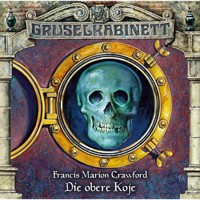
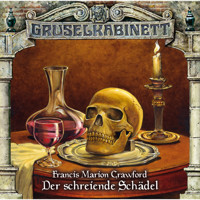

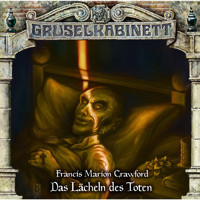



The Screaming Skull
(Horror Collection)
Published by
Books
Table of Contents
Introduction
The Screaming Skull (Horror Collection) gathers seven of Francis Marion Crawford’s most enduring supernatural tales into a single volume, presenting a concentrated view of his achievement in short-form horror. Rather than attempting to be exhaustive, this selection aims to be representative, bringing together narratives that have long been recognized as essential to his reputation in the weird tradition. Written across the late nineteenth and early twentieth centuries, these pieces display the range of settings and tonal registers that Crawford commanded, from shipboard dread to ancestral unease. The result is a coherent introduction to an author whose careful realism gives the supernatural a singular immediacy.
The works assembled here are short stories, some approaching novella length, unified by their allegiance to horror and the supernatural rather than to domestic realism or adventure pure and simple. Crawford favors first-person confession, eyewitness testimony, and framed anecdote, forms that emphasize the spoken quality of a tale told to a listener who must weigh credibility against fear. There are no essays, letters, or verse here; the collection is an intentionally focused gathering of narrative fiction. The tales invite the reader to accept plain, practical voices as guides through events that strain ordinary explanation.
Across these stories, Crawford’s signal preoccupations emerge with clarity: the stubborn materiality of the uncanny; the sea as both highway and abyss; the persistence of old wrongs inside modern rooms; and the treacherous border where skepticism meets belief. His specters tend to act within meticulously rendered spaces—cabins, corridors, terraces, workshops—so that the extraordinary feels anchored to the ordinary. Sensation and sound play decisive roles, as do objects imbued with memory. The atmosphere is one of cumulative pressure rather than spectacle, with dread accruing from small, verifiable details until no rational exit seems sufficient to dispel what has been witnessed.
Several tales exploit maritime settings with unusual technical assurance. In The Upper Berth, a passenger on an ocean liner confronts inexplicable disturbances focused on a particular cabin, where the confines of shipboard life turn curiosity into peril. The Screaming Skull adopts the intimate cadence of a retired seafaring man addressing a guest, its coastal house and singular relic channeling an uncanny auditory phenomenon. Man Overboard! begins with a sudden absence at sea, tracing the way an unresolved incident reverberates through those who observed it, leaving behind a blank that discipline and routine cannot fill.
Other stories draw upon landlocked spaces and folkloric currents. The Dead Smile turns inward to a household where inheritance is shadowed by a secret that outlives its keeper, exploring the charged silence of corridors and closed rooms. For the Blood is the Life unfolds near a ruined tower on a lonely shore, invoking a vampiric motif through a tale of treasure, desire, and the pull of blood. By the Water of Paradise marries romance and mortality beside a dark pool, while The Doll’s Ghost follows a craftsman whose encounter with a damaged toy becomes an appeal from grief made strangely audible.
Crawford’s style is marked by clarity, restraint, and a craftsman’s regard for causality. He prefers everyday diction and measured pacing, allowing sensory particulars to accumulate until unease becomes inescapable. Practical knowledge—of ships, rooms, tools, weather—grounds his effects, and moral judgments are seldom declaimed; instead, the reader confronts consequences that grow logically from character and circumstance. His narrators often profess skepticism, not as a hedge but as a method, the better to register the moment when explanation fails. This disciplined approach places his fiction at the juncture of Gothic inheritance and modern psychological realism.
Situated within the broader Anglo-American ghost story tradition of the fin-de-siècle and after, these tales have remained widely anthologized and frequently cited for their durable craft. Their ongoing significance lies in the way they render fear as a matter of evidence: a sound heard, a shape seen, a thing found where it ought not to be. This collection offers a concise pathway through Crawford’s horror, inviting both newcomers and returning readers to consider how technique, setting, and a calm narrative voice can make the impossible feel incontrovertibly present. Read as a sequence, the stories form a cumulative argument for his lasting influence.
Historical Context
Francis Marion Crawford (1854–1909) wrote these tales within the late-Victorian and early-Edwardian resurgence of the ghost story, shaped by transatlantic magazine culture and holiday numbers. An American raised and educated across Europe, he settled at Sant’Agnello near Sorrento in the 1880s, writing for readers in London and New York. The short form thrived in periodicals, where concise shocks and framed narrators were prized. Crawford’s cosmopolitan movements—from New England to Rome and India—supplied maritime, Mediterranean, and Anglophone settings that recur across the collection. That mobility reflected a world of steam and telegraph, while his Italian base lent him access to Catholic ritual, local folklore, and classical ruins.
Mid-nineteenth-century Spiritualism, inaugurated by the Fox sisters in 1848, remained culturally potent when Crawford began publishing fiction. By 1882 the Society for Psychical Research in London, led by Henry Sidgwick, Edmund Gurney, and Frederic W. H. Myers, investigated apparitions with quasi-scientific methods. Their case collections, debating hallucination versus survival, equipped writers with terminology—crisis apparitions, telepathy, veridical dreams—and lent plausibility to first-person testimonies. Crawford’s narrators frequently adopt a sober, witness-like tone, mirroring this investigative climate. Readers accustomed to séance reports and SPR Proceedings could entertain the possibility of the uncanny without abandoning modern skepticism, a balance that deepened the persuasive chill of his maritime cabins and haunted rooms.
Steamship modernity furnished both settings and anxieties. After the Suez Canal opened in 1869, routes to India compressed, and liners became floating microcosms regulated by timetables, class segregation, and new technologies. On the North Atlantic, Cunard and the revived White Star line raced for the Blue Riband, while iron and then steel hulls promised safety yet bred claustrophobic spaces. Shipboard folklore—unlucky cabins, drowned men’s return—persisted alongside electric lighting and standardized berths. Crawford had traveled widely between Europe and Asia, absorbing this culture; his sea tales exploit the liminal, international corridor where witnesses of diverse nations are trapped together, and where accidents, disappearances, and wakes are terrifyingly routine.
Late-Victorian criminology and sensational journalism also framed readers’ expectations. The Jack the Ripper murders of 1888 sharpened appetites for autopsies, inquests, and criminal profiling. Cesare Lombroso’s theories of hereditary degeneration and criminal stigmata, though controversial, circulated widely, while forensic milestones—from the Marsh test’s arsenic detection to Scotland Yard’s adoption of fingerprinting in 1901—promised scientific certainty. Simultaneously, antiquarian legends like the Bettiscombe “screaming skull” in Dorset entered popular folklore collections. Crawford draws on this intersection of science, superstition, and press-fed horror: cursed artifacts, family taint, and confessional narrators resonate with a public schooled in crime reports, pathological casebooks, and the eerie persistence of relics in respectable houses.
Living within sight of Vesuvius, Crawford wrote amid Italy’s post-unification transformation after 1861, when the Mezzogiorno’s poverty, emigration, and lingering brigandage persisted into the 1870s. The Mediterranean landscape—Saracen towers, earthquake-shaken villages, and coastal necropolises—offered Gothic topography without medieval fog. Catholic festivals, confraternities, and cults of relics coexisted with older beliefs about the dead and nocturnal visitations. Folklorists were recording southern vampiric and revenant lore in these decades, and Crawford’s Mediterranean tales translate such motifs for Anglophone audiences. Ruins and shorelines become thresholds between commerce and curse, where treasure, blood, and oath mingle, and where the rites of the Church contend with the stubborn economy of the supernatural.
Technological novelties subtly haunted the domestic sphere. Gaslight yielded to electric illumination in the 1880s and 1890s, altering interiors and shadow. The telegraph, telephone (1876), and phonograph (1877) popularized disembodied voices, while stagecraft such as Pepper’s Ghost (demonstrated in 1862) made spectral illusions fashionable. Simultaneously, an international toy trade—centered in German towns like Sonneberg—flooded parlors with lifelike dolls, repaired in specialized “doll hospitals” advertised in metropolitan newspapers. Crawford’s uncanny interiors leverage this modern material culture: objects speak, break, and are mended, yet remain unsettlingly animate. The home, saturated with commodities and mechanical marvels, offers no refuge; sentimentality shades into the eerie under the glow of modern light.
Debates over gender, inheritance, and degeneration colored the fin de siècle. The British Married Women’s Property Acts (1870, 1882) and parallel American reforms complicated household power, while the “New Woman” controversy unsettled traditional courtship scripts. Queen Victoria’s prolonged mourning after 1861 made bereavement customs and memorial objects conspicuous, from jet jewelry to elaborate funerary photography. Crawford’s spectral women, doomed heirs, and fatal legacies reflect a culture preoccupied with the costs of desire and the transmission of guilt. His families do not merely fear intruders; they fear themselves—blood, contracts, and vows binding the living to the dead with a legalistic, near-liturgical exactitude.
Publication channels shaped reception. The late-nineteenth-century short story prospered in transatlantic periodicals and Christmas numbers, traditions popularized since Dickens’s 1843 experiment. Crawford contributed to leading American and British magazines, reaching circulating-library subscribers and railway readers alike. The U.S. International Copyright Act of 1891 improved authors’ earnings across markets, encouraging polished, exportable tales. By the Edwardian years, when M. R. James began publishing (1904), the authoritative, rational ghost story was firmly established. Crawford’s blend of cosmopolitan settings, cautious empiricism, and folkloric menace fitted that tradition, earning frequent anthology reprints and securing a readership attuned to both modern engines and ancient terrors.
Synopsis (Selection)
The Dead Smile
A decaying aristocratic household is stalked by a hereditary secret that manifests as an unnerving, suggestive smile.
In suffocating Gothic tones and precise detail, the story dissects inherited guilt, taboo desire, and the fatal pull of family doom.
Sea-Faring Hauntings: The Upper Berth; Man Overboard!
At sea, a haunted stateroom saps the nerve of seasoned travelers (The Upper Berth), while an uncanny reappearance unsettles witnesses after a disappearance overboard (Man Overboard!).
Brisk, investigative narration and briny realism emphasize isolation, skeptical camaraderie, and how accidents at the horizon harden into lingering presences.
Blood, Love, and the Lure of the Grave: For the Blood is the Life; By the Water of Paradise
On a Mediterranean shore, a pale figure bound to blood and hidden treasure tests the line between superstition and need (For the Blood is the Life), and by a fateful pool, a morbid courtship tempts devotion toward oblivion (By the Water of Paradise).
Lyrical and fatalistic in tone, these tales braid desire and death, letting landscape and folklore act as seducers and judges.
Domestic Hauntings and Conscience: The Screaming Skull; The Doll's Ghost
In a lonely seaside house, a skull seems to voice an accusation to its keeper (The Screaming Skull), while in a toymaker's world, a child's doll bears a gentle, sorrowful trace of the uncanny (The Doll's Ghost).
Intimate interiors and confessional frames foreground guilt, tenderness, and the eerie persistence of seemingly harmless objects.
The Screaming Skull (Horror Collection)
The Dead Smile
"What?... It's gone, man, the skull is gone!!"
CHAPTER I
Sir Hugh Ockram smiled as he sat by the open window of his study, in the late August afternoon; and just then a curiously yellow cloud obscured the low sun, and the clear summer light turned lurid, as if it had been suddenly poisoned and polluted by the foul vapours of a plague. Sir Hugh's face seemed, at best, to be made of fine parchment drawn skin-tight over a wooden mask, in which two eyes were sunk out of sight, and peered from far within through crevices under the slanting, wrinkled lids, alive and watchful like two toads in their holes, side by side and exactly alike. But as the light changed, then a little yellow glare flashed in each. Nurse Macdonald said once that when Sir Hugh smiled he saw the faces of two women in hell—two dead women he had betrayed. (Nurse Macdonald was a hundred years old.) And the smile widened, stretching the pale lips across the discoloured teeth in an expression of profound self-satisfaction, blended with the most unforgiving hatred and contempt for the human doll. The hideous disease of which he was dying had touched his brain. His son stood beside him, tall, white and delicate as an angel in a primitive picture; and though there was deep distress in his violet eyes as he looked at his father's face, he felt the shadow of that sickening smile stealing across his own lips and parting them and drawing them against his will. And it was like a bad dream, for he tried not to smile and smiled the more. Beside him, strangely like him in her wan, angelic beauty, with the same shadowy golden hair, the same sad violet eyes, the same luminously pale face, Evelyn Warburton rested one hand upon his arm. And as she looked into her uncle's eyes, and could not turn her own away, she knew that the deathly smile was hovering on her own red lips, drawing them tightly across her little teeth, while two bright tears ran down her cheeks to her mouth, and dropped from the upper to the lower lip while she smiled—and the smile was like the shadow of death and the seal of damnation upon her pure, young face.
"Of course," said Sir Hugh very slowly, and still looking out at the trees, "if you have made up your mind to be married, I cannot hinder you, and I don't suppose you attach the smallest importance to my consent——"
"Father!" exclaimed Gabriel reproachfully.
"No; I do not deceive myself," continued the old man, smiling terribly. "You will marry when I am dead, though there is a very good reason why you had better not—why you had better not," he repeated very emphatically, and he slowly turned his toad eyes upon the lovers.
"What reason?" asked Evelyn in a frightened voice.
"Never mind the reason, my dear. You will marry just as if it did not exist." There was a long pause. "Two gone," he said, his voice lowering strangely, "and two more will be four—all together—for ever and ever, burning, burning, burning bright."
At the last words his head sank slowly back, and the little glare of the toad eyes disappeared under the swollen lids; and the lurid cloud passed from the westering sun, so that the earth was green again and the light pure. Sir Hugh had fallen asleep, as he often did in his last illness, even while speaking.
Gabriel Ockram drew Evelyn away, and from the study they went out into the dim hall, softly closing the door behind them, and each audibly drew breath, as though some sudden danger had been passed. They laid their hands each in the other's, and their strangely-like eyes met in a long look, in which love and perfect understanding were darkened by the secret terror of an unknown thing. Their pale faces reflected each other's fear.
"It is his secret," said Evelyn at last. "He will never tell us what it is."
"If he dies with it," answered Gabriel, "let it be on his own head!"
"On his head!" echoed the dim hall. It was a strange echo, and some were frightened by it, for they said that if it were a real echo it should repeat everything and not give back a phrase here and there, now speaking, now silent. But Nurse Macdonald said that the great hall would never echo a prayer when an Ockram was to die, though it would give back curses ten for one.
"On his head!" it repeated quite softly, and Evelyn started and looked round.
"It is only the echo," said Gabriel, leading her away.
They went out into the late afternoon light, and sat upon a stone seat behind the chapel, which was built across the end of the east wing. It was very still, not a breath stirred, and there was no sound near them. Only far off in the park a song-bird was whistling the high prelude to the evening chorus.
"It is very lonely here," said Evelyn, taking Gabriel's hand nervously, and speaking as if she dreaded to disturb the silence. "If it were dark, I should be afraid."
"Of what? Of me?" Gabriel's sad eyes turned to her.
"Oh no! How could I be afraid of you? But of the old Ockrams—they say they are just under our feet here in the north vault outside the chapel, all in their shrouds, with no coffins, as they used to bury them."
"As they always will—as they will bury my father, and me. They say an Ockram will not lie in a coffin."
"But it cannot be true—these are fairy tales—ghost stories!" Evelyn nestled nearer to her companion, grasping his hand more tightly, and the sun began to go down.




