


4,99 €
Mehr erfahren.
- Herausgeber: Michelle Damiani
- Kategorie: Gesellschafts- und Liebesromane
- Sprache: Englisch
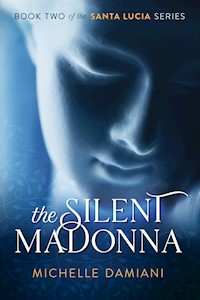
A ruined castle. A town picking up the pieces. And a mysterious stranger who could change everything.
The fire may be out, but smoke and suspicion still linger in Santa Lucia. Though the townspeople still gather for espresso at the town café and swap recipes at the butcher shop, their iridescent blue sky is clouded by a veil of uncertainty and mistrust. The statue of the Madonna, set in a wall outside the café, watches it all in collected silence.
But when New Yorker Alessandro arrives to claim his inheritance, it unearths long buried secrets. His renovation plans set off a chain reaction of dangerous relationships and forbidden romance while exposing explosive truths—not just for himself, but for the people who call this village home.
Will rising secrets brought to the surface destroy peaceful village life forever?
"The second book in this series was exactly what I hoped it would be! The rich descriptions of the town, the plot twists and turns, the characters who came alive...this was a great read! I felt like I was in Santa Lucia and knew these characters myself."
"Well done and the twists and turns are unique and spellbinding. Cannot wait for book three."
"I absolutely loved the first book of this series and I couldn't wait for book two! The Silent Madonna didn't disappoint. I couldn't put the book down. I actually stayed up all night to read it! I read very quickly because I was so anxious to find out what happened. As soon as I finished, I started all over again so I can savor every word. I definitely recommend this book, especially if you love Italy!"
"Like meeting old friends in small town Italy. Following the lives of old friends and meeting new ones. Suspense, mystery and romance. I can't wait for the next in the series."
"Falling in love with the people of Santa Lucia. The excitement never seems to end in this small Italian village."
"This second book in the Santa Lucia series is a real page-turner. In fact, I raced through it and then went back and took my time to reread it! The characters are well developed and so is the plot. I cared about the characters and their challenges and triumphs. And the details of life in a small Italian town like Santa Lucia are authentic and believable. I can’t wait for the next book in the series. Brava!"
Das E-Book können Sie in Legimi-Apps oder einer beliebigen App lesen, die das folgende Format unterstützen:
Veröffentlichungsjahr: 2020
Ähnliche














For all those readers who open every book secretly hoping to find Mr. Darcy
A Note on the Italian
Italian words in the text are followed by the English translation or can be understood by context. For interested readers, there is a glossary in the back of this book.
Cast of Characters
Main Characters
Chiara · The owner of Bar Birbo, she therefore hears all the rumors and secrets.
Edo · Chiara’s nephew who lives with her and helps at Bar Birbo, he recently acknowledged to himself and others that he is gay.
Luciano · A retired schoolteacher who lost his daughter and wife, which drove him to lose himself.
Massimo · Father to Margherita, he was once married to Giulia, Luciano’s daughter who died. A year later, he married Isotta, Giulia’s virtual twin.
Anna · Massimo’s mother.
Elisa · An 11-year-old girl who struggled in school until Luciano began tutoring her. She is Fatima’s best friend.
Fatima · A 12-year-old immigrant girl from Morocco, injured in an accidental fire during the village festa at the castello. She is Elisa’s best friend.
Ava · The daughter of a florist, she is Santa Lucia’s guerrilla gardener and perennially unlucky in love.
Alessandro · The owner of the derelict castle, newly arrived to Santa Lucia.
Madison · His very American wife.
Fabrizio · A writer from Bologna, he and Chiara recently began a relationship.
Francy · Fabrizio brings Francy to Santa Lucia.
Villagers
Magda · Moved to Santa Lucia from Germany years ago with her husband who has since disappeared in Thailand.
Bea · Santa Lucia’s source of fresh eggs and fresh gossip.
Patrizia · Chiara’s best friend who helps her husband, Giuseppe, in his butcher shop.
Giuseppe · Patrizia’s husband and the maker of Santa Lucia’s famous chicken sausages.
Sauro · Santa Lucia’s baker.
Giovanni · The joke-telling owner of the little shop on the piazza.
Fabio · Ava’s brother and her opposite In almost every way. He accused both the gay tourists and Santa Lucia’s immigrants for starting the fire.
Salvia · Ava’s mother.
Concetta · Elisa’s mother.
Arturo · Older villager who is sure his French wife is cheating on him.
Rosetta · The school principal.
Paola · The owner of the fruit and vegetable market.
Marcello · The town cop, his mother is desperate for him to get married and give her a grandchild.
The End of Fall
Storm clouds faded against the Umbrian sky. Light began to ripple in waves, illuminating the town of Santa Lucia in a patchwork of glow and shadow. The heaviness that had pressed upon the hilltop village eased, as the air’s murkiness evaporated.
A vitality infused the breeze winding through town, like children chasing each other, laughing, around a glittering olive grove. As the clouds parted further, a dazzle of light tumbled down, shining directly on Santa Lucia’s Madonna, tucked serenely in her niche. The ancient marble statue absorbed the light before redoubling it and sending it back into the village. Shadows hid around corners as the Madonna’s brilliance radiated into the street and down the alleys of Santa Lucia.
The flash caught Chiara’s eye through the windows flanking Bar Birbo’s entrance. She watched the still street for a moment before unlocking both the glass and wooden door, to allow the drifting morning air into her cafe. She breathed in, tugging her sweater more tightly around her chest. After two weeks, the smoke had finally gone. Really gone, not the loss of awareness that comes from living with a smell for so many days that it takes on the same familiarity as Bar Birbo’s waxed wooden door. That door had been shut tight against the townspeople yesterday, as it was Monday, Bar Birbo’s giorno di chiusura. Chiara made sure the door was latched into its open position now, ready to welcome the townspeople back into the espresso-scented fold.
Chiara inhaled again, deeply this time. Yes, the gritty smell had dissipated. Last night’s downpour, in all probability, did the trick. That’s what the villagers had been prophesying since the fire—one good storm would put it right. All the lingering odor needed was a rinse of rain. Chiara could practically smell green blades poking up between the charred trees of the olive orchards that surrounded the castello. Too bad, she thought, that neither the storm nor the collective manpower of the town could put the castello and groves to rights. When Chiara looped through the castle yard during her walk with Patrizia yesterday, it looked much the same. Like a ghoulish mimicry of its former humble grandeur.
She moved toward the castle stairs and stopped at the Madonna, trailing her fingers against the base of the statue. She closed her eyes and breathed, more than said, a prayer for Fatima.
Opening her eyes, Chiara watched a figure walking toward her, and she paused to greet whatever neighbor it might be.
Luciano.
Poor man.
Luciano approached Chiara and raised a hand in greeting. She smiled and held the interior glass door open for him. “Caffè, Luciano?”
“Sì, grazie. This morning fog weighs heavy on my bones.”
Chiara ducked her head and grinned. Stepping up and around the counter to grind the beans, she said, “Pastries aren’t here yet, but I have a cornetto from yesterday I can give you.”
Luciano sighed. “Yes, thank you, Chiara. That would be much appreciated.”
The buzz of the grinder and the scent of coffee filled the bar. Chiara tamped the espresso grounds into the basket before slipping it into her La Pavoni. “And Fatima?” She ventured.
“The same.”
Chiara nodded, staring at the drops of caffè squeezing out of the machine. As she turned to hand over the cup and the pastry on a plate, she greeted Arturo, now pushing open the glass door. “Buongiorno, Arturo . . . Bentornato, welcome back. Caffè?”
“Sí, grazie.” Arturo nodded at Luciano, but Luciano was blowing into his diminutive cup and didn’t notice.
Chiara turned back to the grinder and called over her shoulder, “How was France?”
Arturo pushed his overlarge glasses up onto his nose and said, “Fine, it was fine. Esme’s parents had all the relatives to work the vines, so not too much strain this year.”
Chiara nodded, setting Arturo’s caffè in front of him before walking around the counter to collect the box of pastries from the driver in the three-wheeled Ape.
Arturo said, “I can’t believe I missed all the action. I knew we shouldn’t have left the morning of the festival. I told Esme, but she insisted that her parents needed the help.” Arturo grumbled, “Why they couldn’t wait a few days, I can’t say. And not one plate of pasta in two weeks.”
He stirred sugar into his caffè and went on looking from Luciano to Chiara who unpacked the delivery box, setting the pastries on doilies in the display case. “So you two were there? At the fire?”
They shook their heads. Chiara said, “Edo was, though.”
As if on cue, Edoardo opened the door that led to their upstairs apartment. He smiled and said, “Buongiorno a tutti.” He slid open a drawer to whisk out an apron, winding it trimly around his hips.
Chiara noted, “You’re up early. I thought you wouldn’t be on until the morning rush.”
Edo nodded. “I FaceTimed with Trevor before he had to go to work this morning, and since I was up . . .” He shot a glance at Luciano. Had word of his boyfriend found its way to his former teacher?
Luciano gazed at the wall lined with bottles of liquor. “Trevor? Oh, yes, that British man that helped out at the fire. Aren’t we all glad he was here?” He smiled knowingly at Edo.
Edo’s laugh rang out into the bar that was already warming up with the day.
“How nice to be amused so early in the morning,” Fabrizio said as he walked into Bar Birbo, a newspaper tucked under his elbow. He leaned over the counter and kissed Chiara’s cheek. “Buongiorno, amore mio.”
Luciano and Edo winked at each other over their cups and Arturo grinned. Clearly he’d already heard that Chiara had started dating Fabrizio. This good gossip made up for the rather boring discovery that Fabrizio worked as a writer in Bologna, rather than as the covert operator or government plant his mysterious behavior had suggested.
Arturo waited until Edo had started sipping his own espresso before prodding, “Edo, you were there?”
Edo answered, “The fire? I was.”
Arturo said, “Oh, that’s right!” His face registered sudden awareness, and he quickly changed the subject. Leaning across the counter, he asked Chiara, “Is it true about Stella? She really had an affair with Vale?”
Chiara nodded, wiping up spilt sugar from the counter. Arturo laughed, “Dante must have been furious! Mr. Mayor waltzing through town so important while his wife sleeps with the town handyman.”
Seeing Chiara’s discomfort with the conversation—she and Stella had been childhood friends after all—Fabrizio turned to Luciano. Shaking out his newspaper he asked, “Any news on Fatima?”
Luciano shook his head. “No. Each of us thinks we see movement, but it’s too easy to doubt ourselves. Our eyes see what they want to see.”
Fabrizio cocked his head and smiled at Chiara. “Isn’t that the truth.” He flattened his paper and said, “For years I worked the city beat for Corriere di Bologna. Smoke inhalation is dangerous, but people do recover.”
“That hope is what sustains me.”
Chiara and Edo, unbeknown to each other, whispered twin and fleeting prayers to the Madonna to intercede and keep Luciano from drinking again when hope flagged.
Arturo shifted his weight impatiently. He turned to check for new arrivals who might have more news—would anybody tell him about Massimo and Isotta? He’d even tolerate that bossy German woman, Magda. But only Carosello the one-eyed dog, trotted down the street in his everlasting quest for morsels. Arturo sighed and tried again. “I heard that the family that owns the castello is coming back . . . What a surprise they are in for.”
Chiara straightened the towel over the rack and said, “Not the whole family, I don’t think. Just the son? Or the son’s family?” Chiara thought for a moment and went on, “Anyway, they come in the next day or two. Or so Dante says.”
Shaking his head, Arturo clucked. “I walked around the castello this morning. Uffa! Our mayor is going to get an earful.”
“To be fair, for all he knew, all the people with claim to the castello were dead and gone. How could he know a distant heir lived in New York?”
Smiling, Arturo said, “I sure don’t envy Dante.”
Edo leaned against the counter and sipped his espresso. “I don’t imagine any of us do.”
Giuseppe the butcher opened the glass door to allow his wife, Patrizia, to enter. The couple greeted the room at large as Chiara and Edo moved around each other in a choreographed espresso-making dance. Patrizia placed her hand on Luciano’s arm. “Anything?”
Luciano shook his head.
Patrizia thought for a moment. “I’m sorry. I’ve been lighting candles for her every day. Little Elisa, too . . . she must be so frantic. Her best friend in the hospital and her father suddenly gone.”
Luciano started to answer but waited as Patrizia turned to accept her cappuccino from Chiara. “She’s coping as well as can be expected.”
Patrizia tapped a pack of sugar into her caffè. “Since he left, I’ve been hearing awful rumors about Carlo. Did you know he—” she lowered her voice to avoid catching Arturo’s attention. The man was a horrible gossip. “He . . . hit Elisa’s mother? I found out yesterday from Paola at the fruttivendolo. How terribly, terribly sad. Normally a father leaving would concern me, but do you think it might actually make Elisa’s life easier? Because that would be a blessing.”
Luciano, who was still struggling to make sense of the discovery that Carlo and Concetta adopted Elisa from infancy, offered Patrizia a weak smile before standing to pay for his caffè. As he reached into his pocket he said, “Perhaps. I would be glad of any blessing for the child.”
Luciano dropped a euro into the scuffed copper plate, and then turned to the door, right as Magda entered. She stopped short at the sight of Luciano and barked, “Well? Is she awake?”
Luciano shook his head and exited into the warming morning light of Santa Lucia.
Luciano entered his house and called, “Isotta?”
From the hallway, the young woman appeared. “Ciao, Luciano. I’m almost ready.”
Luciano said, “Are you quite certain about leaving? I confess I like your company. Not to mention your ragú is far superior to the jarred kind.”
Isotta smiled before ducking back into the bedroom she’d been using for the past weeks. “Nice as that sounds, I’m tired of living in dread of seeing Massimo or his mother.” She added, “I left plenty of ragú for you in the freezer.”
Luciano loitered outside her room, hands in his pockets. “Have you told your parents? About—”
“I tried.” Isotta shook her head. “I can’t.”
Luciano cast her a curious expression.
She said, “It’s embarrassing. I thought I had gotten over being the least remarkable of five sisters—”
“Cara . . .”
“It’s true! I finally did something my parents could be proud of, landed myself a catch of a husband. And then it turns out that Massimo only married me because I look like—”
Luciano stiffened, and Isotta rushed on. “Oh, Luciano. I’m so sorry. I didn’t mean to bring up your daughter.”
He said, “It is quite all right. I’ve gotten used to the fact that you look so much like her. But you aren’t, you know . . . Giulia.”
Isotta moved a sweater from one hand to the other. “I hate that my minor tragedy comes on the back of your major one.”
“Please don’t worry yourself. I have to learn to talk about it without drinking to blot it out. Carry on.”
Isotta studied the old man, his flyaway white hair framing his face like the morning fog that still wreathed the distant hills. She said, “How could I explain it to them over the phone? I’ll wait until I get to Florence.”
“Elisa is going to miss you.”
“I’ll miss her, too. Watching her draw has been a tonic. What a rare gift.”
Luciano nodded.
“And I’ll miss you, too, Luciano. You know that?”
Luciano nodded again.
“I wanted to wait until Fatima woke up, but . . . I can’t go any longer not talking to my parents. In their last call, I could hear their suspicion.”
“You need your parents’ support. It’s selfish of me to want to keep you here.”
“Well, I don’t know how much support I’ll get from them. They thought I won the lottery when I married Massimo. I’m not sure I can convince them it was right to leave.”
“Do you want to take the wedding photo? Of Massimo and Giulia?”
Isotta shuddered and thought irrelevantly of a child skipping over her grave. “No. Thank you, though.”
Luciano nodded again.
Isotta clicked shut her suitcase and heaved it off the bed. “Are you sure you can spare the time to take me to the train station on your way to the hospital?”
“Yes, of course. It would be my honor.”
Isotta blinked back tears. How she would miss this old man’s chivalry.
As Luciano went in search of his car keys, Isotta placed a hand on her belly. If he dropped her off in Girona in the next twenty minutes, she’d have time to wave him off, and then race to the pharmacy without him knowing. The suspense was killing her.
Through the airplane window, Alessandro Bardi watched the morning sun shine on the undulating water of the Mediterranean. His breath caught, as it always did when he prepared for touchdown in Rome. He craned his head to peer to the edges of his limited vision, impatient for the first view of the palm trees lining the water and then the increasing cluster of humanity that led to the eternal city.
Beside him, Madison yawned and pulled off the face mask she’d brought with her, rejecting the one offered in the first class cabin. A whiff of cucumber drifted with the movement. She stretched before pressing the button that transformed her bed back to a chair. Glancing at Alessandro she said, “You’re awake!”
“For hours.”
“I told you to take some of my Ambien. I slept like a baby.”
Alessandro grinned. “Snored like one, too.”
“I did not!” Madison’s face looked like she’d caught sight of herself in a fun house mirror. “Did I? Oh, God, I must look a sight, too. Don’t look at me! Let me go do my hair and face.”
Alessandro put his hand on her leg to stay her. “You look perfect as ever and you know it. Wait a second—the next turn we make I think you’ll be able to see the Coliseum.”
But Madison had already grabbed her overnight bag and pranced to the bathroom, ignoring the “Fasten Seatbelt” lighted placard, as well as the admonishment from the flight attendant. “Miss!”
Madison called over her shoulder. “Emergency! Won’t take a moment!”
In the sudden quiet, Alessandro noticed the familiar tickle against his ribcage.
In less than a half hour, he’d be stepping onto Italian soil. The thought moved something indefinable into place.
Different this time, though. His previous visits had included trips to elaborate Venetian palaces and trendy Roman apartments and elegant lake villas, but he had never imagined this moment. When he would be reclaiming the home of his ancestors. He checked his phone for an email from the firm he’d hired. Of course there was nothing, even with the free wifi. Italians were just waking up.
Madison sat back down in a plume of mint and raspberry. As she buckled her seatbelt, ignoring the glares from the flight crew, she chuckled, “You won’t have heard from them already.”
“I know, I know.”
Madison leaned back and closed her eyes. “I can’t wait to see the photos. What do you think the castle is like?”
Ale sighed. “I can’t imagine.”
“I bet it has lots of turrets. Like the one at Disneyland.”
Shaking his head, Ale said, “I already told you, it can’t be like that. It was built as a fortress—”
Madison dismissed his words with a wave of her hand. “You don’t know. Not until we get the photos.”
“I know enough to know that.”
Madison opened her eyes and smiled. “Whatever. It’s a castle! Imagine the parties we’ll have—”
Grinning, Ale said, “I know. It’ll be such a scene. We’ll have good wine, and food, and we’ll for sure put in a top-of-the-line sound system. I hope we can get it in shape soon. The agency said with the fire . . .”
Opening her bag to find her tube of lip gloss, Madison groaned. “Oh, Ale. It’s fine. Stop worrying. It’s a castle.”
“Yes, but what if it’s in terrible shape? No one has lived there for generations.”
“That’s what construction crews are for, darling. And cleaning ladies. An army of them.”
After a bumpy landing that had them both swearing at the pilots, they exited swiftly from the plane and joined the line at passport control. Ale gazed longingly at the shorter EU line, but Madison tugged his hand. “Don’t you dare!” Grumbling, Ale pulled out his US passport. Why did he even bother to keep his Italian citizenship if he was never allowed to use it?
In baggage claim, they waited and watched the same suitcases circle around and around. And around. Madison complained, “A-le! How long does this take?”
Ale said, “Everything takes longer in Italy. You might as well get used to it.”
“Ugh. It’s stupid. Why should it take so long, just putting suitcases on a belt.”
He said, “Your suitcase was pretty heavy.”
Madison rolled her eyes.
After a few more minutes, Ale checked his watch for the tenth time and grumbled, “Okay, this is ridiculous! There’s only that one taped duffel bag going around.” He peered around and located a help desk. He stalked over to it, Madison prancing behind him, fluffing her hair. With eager eyes she watched as Alessandro laid into the man at the counter. Ale was gesticulating at the belt and the clock and using motions and tones he never used in New York. She couldn’t follow the words, but hearing him speak in Italian always widened her smile.
Finally, the bored man at the counter looked at Ale’s ticket and pointed at a carousel at the other end of baggage claim.
Madison pulled his sleeve. “What’s he saying?”
Ale scowled. “It’s over at that carousel.”
“We were at the wrong one the whole time?”
“Doubtful. They must have changed it.”
“The nerve! And he doesn’t even seem sorry!”
Ale shook his head. He tried not to notice that the new carousel was surrounded by people hauling suitcases off the belt. While there was no one at the carousel with the taped duffel.
A buzzing distracted him. He yanked his phone out of his pocket and moaned, “Oh, no.”
“What? What is it?”
“Oh, no!” Ale flicked the screen. “The agent’s photos. The castle. It’s in ruins. Ruins! A total money pit! We’ll never be able to fix it up in time for summer!”
Madison grabbed the phone from Ale’s hand and peered at a photo, using her fingers to zoom in. “It’s kind of grainy and dark. Maybe it’s not so bad?”
Ale stared at the screen. “Maybe. The message does say he had to take the photo in the rain. But still . . . look!” He pointed at a burned down arbor.
Madison sighed. “And no turrets.”
“No. There’s a round tower-type room on this edge, I guess.”
“Maybe there’s a part of it he didn’t photograph! Maybe he was showing you the worst parts so that he can charge extra for hiring us an architect?”
Ale shrugged, defeated. “Maybe. I guess we’ll see in a few hours.”
They found their luggage and loaded it onto a trolley before walking outside to their waiting limousine. The driver held up a sign that read “Bardi.” Ale nodded and muttered, “Alessandro Bardi.”
The driver tipped his hat. “Welcome to Italy!”
Ale left his luggage on the curb and stepped into the climate-controlled air of the limo.
At Bar Birbo, the morning rush was over. Giovanni had told the last of his accumulated jokes before returning to his shop on the piazza, and Magda had complained about an article in the newspaper before going in search of the mayor. Chiara breathed a sigh of relief. Reaching for the broom, she heard Edo drop onto the stool.
“Tired?” she asked.
“Exhausted,” he answered.
Chiara nodded. “Yes, me too.”
“Well now, I thought you were sleeping much better now. You know.” Edo winked.
Chiara smiled. “Don’t get cheeky, Edo.” She focused on nudging the sugar packets out from under the bar and into her waiting dustpan. She grinned to herself, remembering Edo’s capering eyes when he found Fabrizio making breakfast in Chiara’s bathrobe yesterday morning. Edo’s teasing and Fabrizio’s sly comebacks made clear to Chiara how much she’d missed during all those years of loneliness. Yes, she had known she felt alone, but she had only intuited the kaleidoscope of giddy and contented moments that love delivered.
“Actually, Edo, there’s something I want to tell you.”
“What’s that?”
Chiara considered before saying, “I’m thinking of getting a divorce.”
She braced herself.
Edo grinned, his lean face lightening. “It’s about time.”
“You don’t think it’s wrong? Your parents get so angry . . . I haven’t brought it up in years, for fear of their speeches about the sacrament of marriage.”
“Come now, Zia, you can hardly believe I’d take some moral high ground. Look at me.” He spread his arms wide, his brow furrowed in concentration and his handsome cheek twitching in his attempt not to laugh.
“Okay, you’ve made your point.”
Chiara took out a fluffy white rag to buff the counter before asking, “Have you told them?”
“Nah, waiting for the village gossip train to beat me there.”
“Edo . . .”
“Lo so, lo so . . . I know. You don’t have to say it. I’ll tell them.”
“When?”
“When the time is right.”
“So about when Carosello grows back his missing eye?”
“Oh, that reminds me, I saw him the other day pawing through our trash. We really need better lids.”
“Nice try, Edo.”
“Okay, okay. But it’s hard!” Chiara smiled at her nephew’s sudden petulance.
“Of course it is. But that doesn’t mean it’s not worth doing.”
The bar was quiet as Chiara cleaned the counter and ran the rag underneath the warm water to clean the milk-foaming wand, and Edo sat lost in thought.
Finally he sighed. “Will they be furious? Will they cry?”
“Who can say? If you want, I can tell them about the divorce first.”
“That might work,” Edo grinned. “What’s prompting this? You never even talk about your husband.”
“Well, as he’s in jail for child solicitation, it’s hardly a topic for the aperitivo hour.”
Edo said, “Chiara . . .”
“It’s okay. I know I sound bitter. It’s a holdover. But now is time to cut this marital noose. I want to be with Fabrizio with no reservations.”
She imagined Fabrizio’s face when she told him her decision, his slow smile. She couldn’t wait.
Anna whispered a thanks and goodbye and hurriedly hung up the phone.
She listened—the water in the bathroom squealed off. Massimo would be toweling himself dry, slipping into his expensive suit (maybe the one that brought out the smolder in his eyes—he hadn’t worn that one for too long) to head to the bank. Lately he’d had to hug the walls as he made his way to the car, but today, today he would be able to walk with his customary authoritative gait. And Anna would be the one to make that easier for him. It was a mother’s job after all, to make things easier for her child. Anna was glad to do it.
She flitted from the stovetop to the counter to the refrigerator and back, preparing caffè and slicing cake. Thank God her sources had been accurate last night. How happy Massimo would be to celebrate with a slice of her good prune cake. His favorite! Anna clucked to herself, grinning as she neatly poured hot milk into the small pitcher.
Massimo’s footsteps approached the kitchen. Anna ran her fingers through her hair, then smoothed it, tucking the ends to curl becomingly at her jawline.
Massimo slumped down at the table, unaware of his mother’s birdlike movements as she slid a piece of cake in front of him and poured the dark and slightly acrid caffè into the white cup with the blue stripe that he had used every morning for years.
Anna smoothed her skirt and alternatively bit her top and bottom lip. She sat down, then leapt up for sugar, and then sat down again. Wringing her hands as Massimo mutely stirred his caffè, she finally blurted out, “She’s gone!”
Massimo idly stirred his caffè. “What’s that?”
“Isotta. She’s gone. Now things can get back to normal!”
Massimo stared at his mother’s left temple. She reached up to pat her hair, making sure all the strands were in place.
He shook his head. “You don’t know what you’re talking about.”
Anna scowled. “Don’t talk to me that way. I know exactly what I’m talking about. I just got off the phone with Esme, and you know she lives between Luciano’s house and the parking lot. She saw them leave, and Isotta had her suitcase.”
“So?”
“What do you mean, ‘so’?”
“So I’m supposed to be happy about this?”
Anna scowled. “It’s over. We can go back to normal.” She repeated. Was Massimo half asleep? Why did she have to repeat herself and explain this to him like he was a child?
Leaning back in his chair, Massimo examined the crack in the ceiling as if he’d never noticed it before. When in reality it had been there half his life. Or maybe more.
“Massimo!”
Massimo sighed and pushed away from the table. “I need to get Margherita up so I can say goodbye before I go.”
“You didn’t even eat your cake!”
“I’m not hungry.”
Anna watched her son leave the kitchen and wondered where she went wrong.
But no, it wasn’t her. It was that vixen, Isotta. Massimo hadn’t even loved her, but now look, she must have cast a spell on him. He wasn’t right anymore.
She heard Massimo and Margherita’s voices murmuring in the next room. Margherita’s soprano tones lifted querulously, “Mamma? Mamma!”
Anna stood up and started slamming the dishes into the sink, muttering, “She’s not your mother, damn child. She was never your mother.”
She should have known it was a mistake to bring that witch into her house. The meek ones may appear innocent, but they could wreak the most havoc. Like Giulia.
Well, mistakes could be fixed.
Like Giulia.
Isotta watched Luciano’s pale blue Fiat recede down the chestnut-lined road and turn left at the roundabout.
She exhaled. For a few moments, it had seemed that Luciano planned to stay with her until her train left, but luckily he couldn’t find a parking spot. Isotta convinced him she was going to walk directly to the train, so a goodbye in the car was exactly as good as one two minutes later beside the train.
Even with her nervous energy, it had been impossible to not be moved by the tears in the old man’s eyes. She wondered if they were for saying goodbye to her or saying goodbye to a final reminder of his daughter.
Isotta shook her head angrily. She had to stop assuming that her only value was in her resemblance to Giulia. Not only was it not healthy, but she hated to think that Massimo had gotten so thoroughly underneath her skin.
She sighed and walked into the center of Girona. There must be a farmacia nearby. Train stations and farmacie went together like bread and Nutella—there! The green cross glowed and undulated, calling her closer. She watched the light ripple across the sign and let it lull her into a trance state. Anything to avoid the battering “what if?” thoughts. She’d already walked that road to no avail. Her monthly cycle was hardly regular, but it had never been this late. Then again, she’d been under more stress than she had ever been before. If she was pregnant, not just tense and carrying a lingering stomach bug or stress-induced nervous stomach—no. Stop. No good came of that thinking. She knew that already. She couldn’t be pregnant, she simply couldn’t. No husband, her family could hardly be expected to be supportive . . .
Isotta allowed herself to be pulled forward. She moved through the store as if through water, revolving around other customers, swooping up the first pregnancy test she saw (they were all the same, weren’t they?) floating to the counter, plunking down a €20,00 note and walking out, not even waiting for change. Uncharacteristic for a woman who constantly did math in her head and was far too aware of how little money she had in her bank account. At a time when she might need quite a bit. And yet she couldn’t wait for the teenage boy with the pierced nose and the curious stare to make change.
Box in hand, she headed for the train station.
Bathroom, she needed a bathroom.
The faces in the station blurred, only the blue icon clear, a beacon calling her into the land of female bathroom needs.
Isotta rushed toward a stall and locked herself in. She had ten minutes until her train left. Was that enough time? She ripped open the package and tugged out the directions. Yes, barely enough. If she hurried. Her eyes skimmed the instructions. Nodding, she lay them on the floor.
Two minutes later, Isotta huddled against the door of the stall, clothes back in place, instructions tossed into the waste bin on the wall, one hand gripping the slippery plastic stick, the other clasped against her mouth.
She watched, waiting.
Of all the ways she might have imagined this day. This was not it.
She watched. Waiting.
“Ale! A-le, wait!”
Alessandro paused his stride to allow his wife to prance down the cobblestones on her teetering heels. She whined, “Why don’t they fix these old streets with some concrete or something? The roads are the worst!”
As if in punctuation, her pinprick heel wedged in the space between the ancient stones and Madison’s arms pinwheeled. Alessandro grabbed hold of her hand. “I told you not to wear those. They are completely impractical.”
“But we’re visiting your castle!” Madison pouted. “I wanted to look nice.”
Alessandro studied his wife’s shoes for a brief moment. True enough, the shoes set the right tone. A shade of coral only found in designer shoes, plus they elevated his taller-than-average wife into an arresting blond pin-up. She looked perfect. “You saw the photos. It’s a wreck. You’ll likely show it up.”
“Aww, Ale! So sweet!” Madison rubbed her lips together and said, “I wish I could see our friends’ faces when I post selfies of us in front of our castle! Sookie will be so jealous. All she has is that God-awful heirloom jewelry collection.” She stopped to rummage through her bag, grumbling, “Did I bring my stick? You hurried me out of that hotel so fast.”
“Again, the castle is not in a photogenic state.”
“Oh, Ale. Such a Gloomy Gus. I’m sure we can find some part of it that works as a backdrop.” Madison located her slim telescoping phone holder and slipped it into an outer pocket of her purse for easier retrieval.
They walked down Via Romana, Alessandro studiously ignoring the faces peering down around curtains. He tried not to telegraph the presence to Madison of what were likely the town busybodies. If she thought she had an audience, she would ratchet up her voice, when he was trying to remain inconspicuous. At least for the present.
They stopped so Alessandro could study a hand-drawn map. “I think it’s up here a little ways. There should be some stairs. On the right, I think?” He turned the map upside down and squinted to read the writing from his conversation with his grandparents. It was difficult—they themselves had never been here—and related what they had heard from their own parents.
Madison pointed an expertly painted nail. “Ale! There’s stairs, leading up right there! With that tuxedo cat! Oh, that’s darling, where’s my phone?”
Before she could locate her phone in her large and glossy designer bag, a scruffy dog trotted down the stairs, startling the cat who fled to the piazza. Madison clutched Alessandro’s arm. “Gross! Look at that dog! His fur is all matted! Ew, is that trash on his tail?”
Alessandro cocked his head at the beast and decided not to point out what was probably a missing eye. “I think he’s dashing.” Carosello looked up, as if in recognition of a kindred spirit. He panted for a moment and then jogged away, following the cat.
Madison groaned, “You and your strays. Anyway, let’s go up the stairs. That has to be it, right? What’s that sign say?” She gestured at a blue sign with an arrow that pointed to the top of the stairs.
Alessandro read aloud, “Il Castello.”
“What’s that mean?”
Alessandro sighed. “Castle. It means the castle.”
Madison hugged his arm. “I’m so glad your parents taught you Italian.”
“Little kid Italian, the rest is from University—”
“Okay, let’s go! I can’t wait!” She tugged his arm, but as he turned to follow her, his vision snagged on the figure that had been behind his head the whole time, tucked into the wall.
“Wait.”
“Wait? Why wait? It has to be up the steps, you said so.”
“I want to see this.”
Alessandro gingerly stepped toward the Madonna perched in an ethereal blue niche. “These old Italian towns have Madonnas secreted away all over the place. I’ve never seen one like this.” Alessandro raised his hand toward the Madonna, whose own hand was lofted in benediction. Mary’s smile beckoned him closer. Her eyes radiated a direct warmth. Could she see into his soul? “What is this—marble? Usually they are painted and—”
“A-le! Stop looking at that stupid statue. You said yourself these towns have a kabillion of them. And we are about to claim your birthright!”
“It’s not exactly a ‘birthright’”
Madison moaned, “Whatever! I can’t believe you aren’t racing up the steps! What’s gotten into you?”
Alessandro sagged. “I don’t know. I guess I’m a little scared.”
“Scared? That’s weird.”
Alessandro ran his hand across his stubbled cheek. “I know. I should be excited. But it feels so big. I don’t want to mess it up.”
“Mess it up? It’s already messed up, you said so yourself.”
“No, that’s not what I mean. But I don’t really know what I mean.”
“Never mind. Let’s go.”
Madison squealed and grabbed his hand, pulling him up the stairs.
Within moments they stood in the castle yard.
Fabrizio leaned across the counter, his chin in his hand. Chiara felt his eyes on her as she unloaded the dishwasher.
“What?” She laughed.
“Oh, nothing. Admiring the view.”
Chiara snapped her towel at him. “You’re terrible.”
Fabrizio waggled his eyebrows.
Checking to make sure no customers approached, Chiara strolled to Fabrizio and dropped her head level with his. Her gaze drifted from his eyes to his mouth. He tilted his face to kiss her, lips softening. They pulled their faces apart and took a beat before opening their eyes. He grinned. “You know, our relationship isn’t a secret anymore. We don’t have to be clandestine.”
She ran her finger over his lower lip. “I know.”
He leaned back and boasted, “In fact, now that everyone knows I have your stamp of approval, they’re asking if they can be characters in my book.”
Picking up a glass to buff off the water spots, Chiara asked, “What do you say?”
His eyes shone as he said, “I promise them worthy roles for all.”
“That must go over well.”
“Indeed.”
Setting the glass on the shelf, Chiara asked, “You writing today?”
Fabrizio nodded. “Yes. The rest of the morning. Then I told Dante I would stop by.”
“Dante? Why?”
Fabrizio shrugged. “When he was in here the other night, we were talking politics and he said he had an old Avanti newspaper article written by Mussolini.”
“Really? I didn’t know that.”
“Maybe you never talked to him about fascism?” She smiled and Fabrizio said, “Mostly I think he’s glad to talk to someone who doesn’t care that his wife left him for a handyman. How about you? When do you finish work today?”
Chiara looked at the clock behind her. “Soon. I’m going to the hospital before noon.”
“Still no news?”
“No.” Chiara watched a mother and child race up the hill. Late for school? No, the child was too small. She turned back to Fabrizio. “It’s funny, I never really knew Fatima, beyond seeing her skip down the street with Elisa. But I’ve gotten to know her family. I like to bring them caffè. Hospital coffee,” she said, seriously, “is not to be tolerated.”
Fabrizio touched her hand. “Dinner tonight? I’ll cook.”
Chiara bit her lip in thought. “I can’t. I’m back on this evening. Edo has a Skype date.”
“A late dinner, then. Have you had Giuseppe’s chicken sausages? They are tremendous.” Fabrizio’s grin was infectious.
Chiara smiled back. “Once or twice.”
A buzzing splintered the warm lull of the bar. Fabrizio pulled his phone out of his pocket and turned his back. Chiara reached for another glass to dry and tried not to count how many times this had happened this last day or two.
After a minute of furious pecking at his phone, Fabrizio turned back. Chiara forced a smile and said, “Tutto bene?”
Sliding his phone back into his pocket, Fabrizio said, “Yes. Everything is fine.”
Chiara nodded and reached into the under-counter refrigerator to pull out a green bottle of mineral water. As she poured the popping water into a tall glass, she chided herself. People got texts, they didn’t have to announce their contents. This is what came from having last dated in the pre-cell-phone era.
The door flew open and Magda stalked in. Flinging down her newspaper, she said, “Unbelievable! I just tried to talk to Dante about how to deal with the castello owner, and he refused to listen to me!” Magda flipped through the paper and pointed. “Look! Right here! It says that Alessandro Bardi is arriving from the United States this week. Maybe even today. Does Dante have international experience? No he does not!”
Fabrizio raised his eyebrows in mock horror while Chiara tried not to laugh. Magda waved the paper. “Are you listening to me?”
Chiara pulled her face into a caricature of seriousness. “Yes, of course, Magda. Go on.”
“I ask you . . . who has more experience with cross-cultural diplomacy—Dante who has rarely left Umbria, or me who graduated from a top-shelf school in Germany? Not to mention that because of my vacation rentals, I am well versed on cross-cultural problem solving.”
Chiara’s lips twitched as she remembered Magda laughing at her American guests’ request for ice. Not behind their backs, she had actually brought them to the bar to hoot at their ridiculousness. In Italian, so the guests had shifted uncomfortably, unsure of the joke. Then again, that was years ago, or more. Ever since the fire when Magda had revealed to Chiara that her parents had been Nazi sympathizers who had belittled Magda as a child, she had been far less hostile. As if some of the air had leaked out of her combative balloon.
Chiara realized Magda was still talking and tuned back into her words like her radio warming up on a frigid morning. “Then he had the nerve to say I should mind my small affairs of hostessing. Does he think that’s all I do? Greet visitors with a basket of bread?” Magda mimed a simpering smile as she obsequiously held out her arms, laden with imaginary pastries.
Smiling despite herself, Chiara reminded Magda, “Dante has a lot on his mind with Stella gone.”
Magda harrumphed and made a derisive comment about cuckolds as Chiara went on, “And he feels responsible for the fire. You should have sympathy for that.”
Magda’s eyes narrowed. “What are you saying? That I’m responsible? Because—”
Chiara flung out a hand. “You misunderstand me. He feels responsible, like you feel responsible, but in reality no one is responsible. It was an accident. Yes, it was your idea to use the castello for the festa, but Dante didn’t have to agree, nor did anyone else. It was a good idea, it made sense, no one could have predicted the wind would blow those embers to the vines in the arbor. But it’s a weight when you blame yourself.”
Magda grumbled in reluctant agreement.
Fabrizio leaned across the counter to kiss Chiara’s cheek. “I’ll see you this evening, cara.”
The afternoon sunlight slid fast away as the autumnal chill draped over Santa Lucia.
No longer could Luciano and Elisa work outside, even cloaked in jackets and the blankets they swaddled around themselves to ward away the press of cold. Elisa propped her chin on her hands and gazed around Luciano’s meagerly lit living room. She could tell he had made an attempt to scour away his years of devastation, but the house still smelled funny. Like greasy ashes.
She gazed up at the light fixture, wishing for two more bulbs. Even one would do. The numbers on her page liked to dance when the lights went dim, and it was all she could do to fix them in place with her intermittent concentration.
“I know. I need new bulbs.” Luciano walked in, carrying a tray.
Elisa flushed at being caught. “What? Oh!” Elisa made a rare attempt at laughter. At least, it was rare since Fatima was hospitalized. The sound that should be joyful was as wistful as those sightings of Fatima’s fingers fluttering across the sheets and her eyes moved behind their fragile lids. “I was thinking about this math problem.”
“Elisa. You are many wonderful things, but a wonderful liar you are not.”
Elisa’s arms dropped from reaching for her mug of tea, and she sat rigidly. Lip trembling, she asked, “What do you mean?”
Luciano regarded Elisa curiously before plunking the tea in front of her. “Well, clearly you were thinking I need a new lightbulb. Or more probably, two.”
Elisa hung her head.
Luciano pushed the mug closer to her. “You must forgive my poor attempts at humor, Elisa. I seem to be out of practice.”
Nodding, Elisa said, “Thanks for the tea.”
Luciano hesitated and then asked, “How are things at home?”
“Good.”
“Is that right?”
“Yeah, I mean, I guess so. I mean . . . what do you mean?” Elisa narrowed her eyes and gazed up at her maestro.
“Allora, I imagine having your father leave changes your household. Perhaps in some good ways, and some less good ones.”
“He wasn’t my father.”
Luciano mused at the word choice. “Wasn’t?”
“I mean, he’s not ever been.”
“I understand that. Nor your mother your mother in the biological sense of the word. But nonetheless, they have served as you parents.”
Elisa snorted.
Luciano grew serious. “Indifferent parents perhaps, but parents. They have been all you have. It must be a challenge to have him gone.”
“No. He was awful.”
“Awful?”
“Sì. Awful.”
Luciano stirred his tea. Bar Birbo had been full of stories lately, of Carlo hitting Concetta. Had he hit Elisa as well? The thought stifled Luciano’s breath. “Well, then. So your home is better now.”
“Definitely.”
“And your mother . . .”
“I don’t know who she is, I told you.”
Luciano offered an apologetic smile. “Yes, I know. And I’m sure the mystery is uncomfortable for you.”
“Do you know who she is?”
“I’m afraid I don’t.”
Elisa took a hesitant sip of her tea. “They said she lives in Santa Lucia. They don’t know about my father, but my mother lives right here.”
“Or she used to.”
“That’s true. Maybe she moved away.” Elisa propped her head back in her hands and stared at a tattered cobweb waving in the draft that pressed through the windows.
Luciano ventured. “Do you want to know?”
Luciano wondered if she’d heard him. But then she answered softly, “If she’s nice I want to know who it is. If she’d like me.”
“Elisa . . .”
“When are you going to see Fatima?”
“Tomorrow afternoon.”
“Can I come?”
“Of course.” Luciano paused. “So how is the math sheet?”
Elisa pulled it closer to her but instead of asking about the problems she whispered, “Do you think she’ll ever get better?” Elisa’s mind was filled with the words of her fight with Fatima.
Luciano watched Elisa’s face contort with shadows before answering, simply, “I wish I knew.”
Alessandro cheered, “It’s better than I thought!” as Madison groaned, “It’s worse than I thought.”
The castle rose up into the clearing blue sky. The light that settled around it was heavy, liquid, and imbued with a cobalt sheen that made Alessandro wonder if he’d ever properly looked at a sky before. Yes, there were scorch marks all over the castle, and the olive trees closest to the castle perimeter were burned into shards. And though the debris had been stacked and piled, there was still enough to make the area feel like a mix between a rubbish heap and a desolate wasteland.
Yet, there was something here. A heartbeat, a shrouded vibrancy. Alessandro shook his head; he was not usually given to such irrelevant musings. Very unlike the finance pro he knew himself to be. Maybe it was being back in Italy. He always loosened and seemed to fit in his clothes differently once surrounded by the cadence of his first language and the stately umbrella pines, the air tinged with the smell of grilling meat and baking almonds.
He’d tried importing that Italian feeling to his SoHo apartment, even getting a bonsai-sized olive tree for his windowsill. But a particularly busy month of working sixty-hour weeks and partying in his downtime meant he’d failed to water it. Still, he hadn’t been able to throw it away. Luckily, Madison had had no qualms about tossing out the desiccated tree an hour before their friends arrived to admire their remodeled kitchen. At the rising cooking scents wafting up from Santa Lucia, Alessandro suddenly realized that they’d only cooked in that kitchen a handful of times since that night.
Alessandro dropped Madison’s hand and moved to a window in the castle wall. The glass had long since gone, so he stuck his head in the room. His eyes adjusted to the darkness, and he spied a large wooden table piled with metal chargers or plates of some kind. He noticed a sliver of light carving the floor, and realized it came from a doorway around the corner. He must have missed it, as he felt pulled into the center of the castle yard by a magnetic tug.
He walked around to the door, hoping against hope that it would be unlocked.
The door opened with a modest shove, and Alessandro hesitated for only a moment before stepping across the threshold. Madison frowned and followed her husband into the gloom. Alessandro cursed himself for not bringing his flashlight. Of course the castle would be stone and therefore impenetrable to ambient light, and of course there wouldn’t be electricity. He stepped carefully to the center of the room and ran his fingers across the table and yes, a pile of oxidized silver plateware and cutlery. How had this not been stolen?
When he had found out that the castle had been used for a town festival and there had been a fire, he assumed that the town must have been helping itself to his inheritance for generations. But even the charred log in the fireplace looked to have been untouched for a hundred years. There was a pile of brocade heaped on the floor, and though this did look mussed, the fact that it remained at all was startling. It must have been worth a fortune. And that tapestry on the wall! He wouldn’t touch it for fear it would disintegrate, but he allowed his hand to hover over it, the errant fibers tickling his palm. Had the town really preserved the state of the castle since his ancestors abandoned it for a flat on the Grand Canal?
Madison’s whine startled him out of his reverie. “Ale . . . A-le! Let’s get out of here. It’s creepy.”
Alessandro nodded and took her hand to guide her out the door. There would be plenty of time to explore. When he had a flashlight.
They stepped outside, and Ale flung his hand over his eyes at the momentary flare of brightness as his wife yelped and rummaged through her bag for her Gucci sunglasses.
Still blinking, he peered around the edge of the castle. A breezeway connected the main part of the castle to what was probably a kitchen. He could see the charred and splintered remains of an arbor that must have once stretched between them. A series of rooms stood open and facing a small courtyard. Alessandro squinted against the sunblindness that had yet to lessen and let his vision search the darkness as he walked toward the open rooms.
Something white moved, an apparition.
Suddenly the apparition turned and almost crashed into him.
Alessandro leapt backward with a shout and Madison, who was still searching for her sunglasses, screamed at the sound of her husband’s uncharacteristic yell.
It was a woman, dressed in a white smock, holding a pallet of small rosemary plants. “Mi dispiace! Mi dispiace!”
Alessandro rubbed his eyes. Yes, the woman was still there. His mind was playing tricks on him. She continued apologizing. Alessandro held out a hand to forestall her. He said, “It’s all right, really. I was just startled. My name is Alessandro Bardi.” He gestured to the castle, unsure of how to say, “This is mine” without sounding more pretentious than he’d like. Could a person name-drop castle ownership? It suddenly occurred to him that that’s exactly what he had been doing back in New York the past two weeks.
Ava’s eyes widened and her mouth fell open. This was the castle owner? This man with the genial features and soft eyes and an academic—almost Florentine—sounding Italian? She caught her breath. “I apologize, I heard you were arriving soon, but I thought I would have time to plant this rosemary. It was burned . . .” She pointed to the edge of the castle yard as if in explanation.
Madison tugged her husband’s arm. “Ale? What’s she saying? Who is she?”
Ale just shook his head, not taking his eyes off the woman. “Why are you planting the rosemary?”
“I told you, it burned . . .”
“Yes, yes, I see that, but why are you replacing it?”
The woman looked confused at the question. Instead she said, “I’m so sorry.”
Ale held out his hand. “I’m Alessandro. Ale.” Did he already say that?
Ava regarded his hand quizzically for a moment before slipping her own within his. “Ava, piacere.” She shivered as if a warm breeze wound through the icy tendrils of an early spring day. Alessandro’s eyes widened and he released her hand. Stammering he turned to introduce his wife. Ava nodded and shook her hand. “Piacere.”
Ava turned back to Alessandro. “I’m sorry you have to see the castle for the first time in this state. We did try to clean it up.”
“Yes, I can tell.”
“There’s a lot of work to do, still. Obviously. But once the walls are washed and the trees replanted . . .”
Alessandro turned his head to examine the groves. “The roots of the trees look like they are coming right out of the earth. They seem ancient.”
Ava hung her head. “They were. They are. It’s a tremendous loss. We talked to olive tree experts to see if we could each donate an ancient tree from our plots to replant here, but we learned that the odds of those trees taking once uprooted was lower than the odds of the trees themselves regenerating.”
“Olive trees can come back?”
Ava shrugged. “It is possible.”
Madison glared at Ava. “Ale, what’s she saying?”
Alessandro ignored her, his eyes never leaving Ava’s soft features and animated eyes. Were those freckles across the bridge of her nose? He’d never seen an Italian woman with freckles. “Can I buy you a caffè?”
Ava’s eyes shot toward Madison.
Alessandro stumbled over his words. “My wife and I would love to buy you a caffè, and you can tell us more about the work that has been done and the work still to do. We are out of our element.”
Ava chewed on her lower lip briefly before nodding.
“Elisa! How was school?”
Elisa dropped her backpack by the door. With her husband gone, Concetta no longer snarled at a stray backpack, or even papers cluttering the table. “Fine.”
“Keeping those grades up?”
Elisa went to the refrigerator and peered inside, the artificial light reflecting off the bare shelves. “You didn’t go grocery shopping?”
“No.” Her mother broke into tittering laughter. “I thought I’d do some gardening.”
“Gardening?”
“Yes, I planted. Out there.” Concetta gestured vaguely toward the steep brambles that could be considered a yard, but was more often attributable to the town’s common property, as a trail cut through it that went all the way to the bottom of the hill.
Elisa closed her eyes and turned away from the window.
“You’ve been doing a lot of gardening.”
Concetta laughed girlishly again. “Yes, well. With your father gone, and your brothers moving to Spoleto to be closer to school and their new jobs, I have so much time.” She thought for a moment and then whispered, “Your father never allowed me to have a garden. Not even a little one. He said it wasted time.” She smiled broadly again. “Do you want to see it? The weather is getting cold, so there’s not much I could plant, but Ava brought some rosemary bushes.”
“Ava?”
“You know Ava? The florist’s daughter.” Concetta turned away and busied herself opening and shutting the broom cupboard before sweeping up the dirt she’d tracked in the house.
“Why would Ava give you rosemary?”
Concetta sighed. “She had some extra from the castle, and she heard me talking about wanting to get some plants in the ground.”
Elisa nodded and tried to tamp down a sudden sense of alarm. She didn’t like the idea of her mother talking to people in her sudden free time.
Concetta straightened. “Do you want to see the garden or not?”
“Maybe later. I need to get lunch and start on homework.”
“Ah, going to study with Luciano, eh?” She tried to sweeten her tone, but she couldn’t keep out the edge of acidity that bored holes in her words.
“No, I did that earlier. While you were gardening.” She gave her mother a meaningful glance.
“Okay, Elisa, I get your point. I’ll shop tomorrow, okay? Just because your father is gone doesn’t mean you can get sassy.”
“Sorry, Mamma. I’m hungry.”
Concetta stepped into the living room and tugged her purse into her lap. Her fingers sifted through the contents as she shook the bag, listening for the telltale sound of coins slipping against each other. She raised her fist out of her bag, and then opened her palm to count the coins. “90 . . . 95 . . . a euro! Why don’t you take it to the rosticceria and get a slice of pizza before they close?”
Elisa didn’t look convinced. “Are you sure? Won’t you need that money to go to the store this afternoon?”
“No, it’s okay, I found some bills in your father’s wallet.” Concetta paled.
“He left his wallet?”
“Well,” she stammered, “You remember what a hurry he was in when he left.”




