



0,49 €
Niedrigster Preis in 30 Tagen: 0,00 €
Niedrigster Preis in 30 Tagen: 0,00 €
Mehr erfahren.
- Herausgeber: e-artnow
- Kategorie: Abenteuer, Thriller, Horror
- Sprache: Englisch
The Strange Visitation is a mystery tale set on the Christmas Eve in the mansion of well-known multi-millionaire Josiah McNason who receives an unusual and uninvited guest. It was a small uncanny creature, like an unpleasantly huge spider with a human head, small enough to curl itself up on the arm of an easy chair, yet large enough to create fear and repulsion in the mind of such a powerful man. The creature presented itself as Professor Goblin from Hell's United Empire Club, threatening to skin millionaire's soul. As the witching hour approaches, the Goblin grows wings and takes Josiah away on a life changing road trip somewhere between dreams and reality.
Das E-Book können Sie in Legimi-Apps oder einer beliebigen App lesen, die das folgende Format unterstützen:
Veröffentlichungsjahr: 2021
Ähnliche
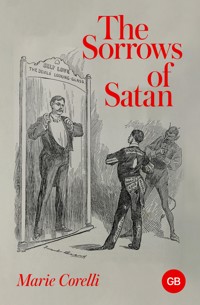

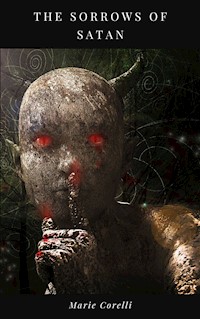












The Strange Visitation
Table of Contents
THE STRANGE VISITATION
A WILD night, with a gale of wind, a wind that scratched and tore and howled at doors and windows like an angry cat spitting and spluttering—its miauling voice now rising, now sinking—at one moment savage, at another querulous, but always incessant of complaint, with a threatening under snarl of restless rage in its tone. A wild night!—full of storm and quarrel, with occasional dashes of cold rain sweeping down on the shrieking blast like gusts of angry tears—a noisy night in which the elements were at open war with themselves, making no secret of their hostile intentions—and yet it was the one night of all nights in the year when “peace and goodwill” were the suggested influences of the time. For it was Christmas Eve. Christmas Eve! What a wonderful anniversary it is, if we would but pause in our reckless and senseless rush onward to the grave, just to think quietly about it for a moment! Long, long ago—yet but a short while since—if we count by the world’s great epochs of civilisation wherein a little two thousand years are but a moment—a host of Angels descended from heaven and sang a joyous hymn of general amnesty to mankind on the first Christmas Eve that ever was—and according to the noble poesy of high-thinking, God-revering John Milton:
One wonders if—in those far-off days of angel-singing—there was such a thing as a millionaire? Not a merely “rich” man;—not a “Wise Man of the East,” who, possessing knowledge and insight as well as wealth, hastened to bring his gold with frankincense and myrrh, and to lay these reverently in the humble manger which served as cradle to a Child, whose vast power was destined to conquer and subdue all the mightiest kings of the earth:—but an actual money-gorged, banknote-stuffed ruler of some octopus-like “Trade,” whose tentacles clutched and held everything within its reach—some owner of huge factories where human creatures “sweated” their lives out to fill his pockets, and died in their hundreds,—perchance their thousands—in order that he, like some monstrous bloated leech, should swell to the point of bursting on the blood he sucked from their throbbing arteries! Was there such an one existing in the miracle days when the “Glory to God in the Highest!” rang from star to star, from point to point of the myriad constellations, like a great wave of melody breaking against illimitable and endless shores? Surely not!—else there would have been some break in the music!—some ugly jar in the divine chorus! For instance, if there had at that time been living a multi-millionaire at all resembling the one whose strange experiences are now about to be related, the angels would have fled in dismay and weeping from the spectacle of a soul so warped from good, so destitute of sympathy, so drained and dry of every drop of the milk of human kindness, and so utterly at variance with the “peace and goodwill” of which they sang!
Yet no one will deny that a multi-millionaire is a great man. What multi-millionaire was ever considered otherwise? It was the glorious environment of multi-millionaire-ism that made Josiah McNason great—and Josiah McNason was a very great man indeed. Quite apart from his connection with you and me, dear reader, as the immediate subject of this story, he was great in business, great in success, great in wealth, great in power, and more than great in his own opinion. Small wonder that he thought much of himself, seeing that thousands of people thought so much of him. Thousands of people had him on their minds, and lay awake at nights, uneasily wondering what might be his next financial “deal.” For on his little finger he balanced mighty “combines.” At his nod “companies” collapsed like card-houses, or rose up again with the aerial brilliancy of “castles in Spain,”—the pulse of Trade beat fast or slow as suited his humour,—speculators on ’Change whispered his name in accents of mingled hope and terror,—aye, even kings were known not to be averse to receiving Josiah in private audience, though they might, and did, deny the privilege to such others of their subjects whose plea was one of merit more than cash. The fact stood out very patently to both royalty and commons alike, that Josiah McNason was a man to be reckoned with,—a man to be studied and considered,—a man whose moods must be tolerated, and whose irritations must be soothed,—a man to be coaxed and coddled,—a man to whom the highest personages in the land might safely—(and even advantageously)—send presents of grouse and salmon in their seasons,—a man whom it was considered politic not to offend. But why? Why all this trouble and anxiety from Majesty itself down to toiling bank-clerks, with respect to the fits and vagaries of one puny biped, neither handsome to look at, nor pleasant to speak with, but merely, taken as nature made him, an irascible, cut-and-dry pigmy of a man, not worth either a curse or a blessing, to judge by his outward appearance? Oh well! Merely because, by speaking him fair and flatteringly, it might be easier to borrow money of him! Everyone with even a small surplus quantity of this world’s goods, knows the taste of that diplomatic bread-and-honey which is always cautiously administered by one dear friend to some other whose pockets are to be tested. Josiah got such bread-and-honey all day long. Someone was always feeding or trying to feed him with it. His appetite however was fastidious, and he seldom swallowed the cloying bait. Even when he did gulp down a large wedge of it with a distrustful smile, it did not have the effect intended. Instead of softening his financial digestion and rendering him pliable, it appeared to make him harder and tougher in mental fibre. The gleam in his cold expressionless eye bored through the soul of the would-be-borrower of cash like a gimlet, and divined his intention before the said borrower could so much as mumble out—“Could you—would you, Mr. McNason—make me a trifling advance?—offer good security—great convenience to me just now!”—trailing the sentence away into indistinguishable fragments as Josiah snapped his thin pale lips on the “No!” which, with sharp snarling sound, hopelessly closed the discussion.
It was Christmas Eve,—and though this fact has already been stated before, it cannot for the purposes of the present veracious chronicle of events be too strongly insisted upon. It was the Eve of the Angels,—and no devils were supposed to be anywhere about. For, as our Shakespeare tells us:—
Perhaps the great McNason, if he had not been so occupied with himself and his own affairs, might have thought of these lines when, on leaving his head office in the city, he travelled with the swiftness of the wind through a storm of sleet and snow to his palatial private abode some twenty miles out of town, rushing along at full speed in a superb motor-car sumptuously furnished with a rain-proof covering, rugs, foot-warmers, and all the luxurious paraphernalia wherewith a multi-millionaire may shield his valuable joints from the cold. For he professed, did McNason, to have Shakespearean proclivities, and had been heard to declare publicly that he preferred the Bard of Avon to the Bible. That was the way he put things,—with all the agreeable free-and-easy indifference to religion and to other folks religious sentiments which so frequently embellishes the character of the multi-millionaire. As a matter of fact he knew nothing about either the Immortal Plays or Holy Writ. They were sealed books to his limited comprehension. The divine teachings of Scripture, and the broadly beneficent and tender philosophy of Shakespeare were alike beyond him. He understood Ledger Literature in its every branch,—every smallest point concerning L.S.D. was familiar to him,—and such “quotations” from books as he could make, were intimately connected with the Stock Market. But for all romance he had a fine contempt, and for poetry and poetic sentiment a saturnine derision. More than anything perhaps, he hated and scorned any idea of things “supernatural.” He attended church very regularly on Sundays,—oh yes!—that was a particular item of “conscience and respectability” with him. But as everything he heard there had to do with “supernatural” matters, it is safe to presume that he was a hypocrite in going to listen to what he did not believe. However, in this he was not exceptional,—there are many like him. “Respectability” may be permitted to play the humbug when it is a millionaire, and drives to its country seat in a motor-car costing two thousand guineas, especially on Christmas Eve, which—despite colossal fortune-makers—remains indissolubly associated in the human mind with Poverty and a Manger. And it was with all the glow and splendour of humbug shining lustrously about him that the world-renowned McNason stepped out of his sumptuous vehicle as it stopped at his own door, and entered his stately baronial hall, where four powdered and liveried flunkeys stood waiting deferentially to receive him. Taking scarcely any notice of these gorgeous personages, who were in his sight no more than flower-pots, umbrella stands, or other portions of ordinary household furniture, he addressed himself to a fifth retainer, severely attired in black, who, by a set of cords and tassels on his left shoulder and the effective simplicity of his costume as compared with the liveries of the other menials, implied to all whom it might concern that he was the commanding officer or major-domo of the royal McNason household.
“Anybody called, Towler?”
“Yessir. Mr. Pitt.”
“Mr. Pitt? Dear me! I saw him only this morning at the office. What did he want?”
“I couldn’t say, sir. He is waiting to see you.”
“Waiting? Here—at this hour?”
“Yessir. In the library.”




