


2,99 €
Mehr erfahren.
- Herausgeber: T.A. Thomas
- Kategorie: Abenteuer, Thriller, Horror
- Sprache: Englisch
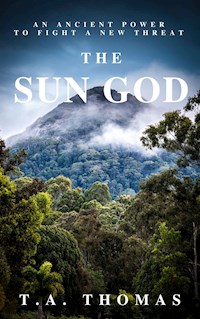
A hidden artefact - A dense jungle - A killer on their trail
It is 1933. Commissioned by the British Museum, young adventurer archaeologists Quinn Westwood and James Duncan plunge deep into the Guatemalan jungle, in search of a priceless gold statuette of the Mayan Sun God Kinich Ahau. However, it quickly becomes clear that they are not the only ones hunting for the Sun God. On their tail is one of Europe’s most ruthless traitors, and what should have been a straightforward assignment, turns into a deadly race through the jungle and a quest for vengeance.
Das E-Book können Sie in Legimi-Apps oder einer beliebigen App lesen, die das folgende Format unterstützen:
Veröffentlichungsjahr: 2019
Ähnliche

















Table of contents
Chapter 1: Valley of the Kings
Chapter 2: The Offer
Chapter 3: The Argyll Arms
Chapter 4: The Tail
Chapter 5: Liverpool
Chapter 6: The Reina del Pacifico
Chapter 7: Belize City
Chapter 8: A Trap for a Shadow
Chapter 9: The River
Chapter 10: Into the Jungle
Chapter 11: The Border
Chapter 12: Deeper into the Forest
Chapter 13: Xultun
Chapter 14: The Pyramid
Chapter 15: A Long-Distance Call
Chapter 16: Professor Méndez
Chapter 17: The Storm
Chapter 18: Itzel
Chapter 19: La Fiesta
Chapter 20: The Madonna
Chapter 21: A Crossroads
Chapter 22: The Trap
Chapter 23: A Shot from the Shadows
Chapter 24: The Race North
Chapter 25: New York City
Chapter 26: Empire State
Chapter 27: A Bad Dream
Chapter 28: The Chase
Chapter 29: Dayton
Chapter 30: An Incomplete Mission
Epilogue
Chapter 1: Valley of the Kings
15 February 1923 Egypt
Rifle bullets threw up puffs of amber dust around her feet as Quinn sprinted through the hot sand carrying her leather satchel filled with stolen Egyptian artefacts. She leapt and barely cleared a crumbling wall, behind which her friend Jimmy was covering her escape. A bullet sheared through the strap of her satchel, causing an alabaster statuette of a cat to spill out onto the scorching Egyptian sand. Quinn immediately joined Jimmy in returning fire, uselessly emptying her six-shot revolver into the fallen sandstone blocks, behind which three Berber grave robbers had taken cover. While Quinn and Jimmy reloaded, bullets pounded the wall in reply to their offence throwing up stone chips above their heads.
They were in the crumbling ruins of an unnamed ancient temple deep in the Egyptian desert, after having followed camel-mounted Berber thieves in the scorching sun for hours, always taking care to stay out of sight. Their horses had struggled to keep up with the camels, which were far better suited to the heat and sand. What should have been a short dash across the Valley of the Kings to the tomb of Amenhotep II had turned into a hot, slow pursuit, when they had come across three figures exiting the tomb carrying a cache of obviously pilfered items. They were ill-equipped for their desert excursion and their arrival at the ruins had offered the opportunity to creep up on the thieves and grab the treasures from under their noses before both they and their horses succumbed to sunstroke and dehydration.
Now they were pinned down behind the east wall of the ruin, and as the setting sun melted into the horizon, they were blinded by the fiery light that bathed the surrounding hot sand in shades of orange and red.
Quinn and Jimmy sent another barrage of bullets over the wall, half of them burrowing into the sand surrounding the ruins.
As they reloaded yet again, Jimmy jestingly commented, “Come on Quinn! At least try to give them some incentive to duck and take cover.”
Quinn scowled while she pressed a bullet into the barrel of her Smith & Wesson revolver and replied “Why do you always complain that I’m useless with a gun? Anyway, this is getting us nowhere.”
“Do you have a better idea?” Jimmy asked, while casually taking a quick peek over the top of the wall.
Quinn grinned slyly. “As a matter of fact, I do.”
***
She handed Jimmy her gun. “Take it.”
Jimmy looked at her perplexed. “I can’t take that. You’re not that bad a shot.”
“You’ll be firing both guns, while I sneak around the ruins and surprise them,” she explained.
A bullet just cleared the top of the wall, grazing Jimmy’s hair and making him crouch deeper into the sand. He turned his attention back to Quinn. “You’re going to go over there unarmed?!”
Quinn explained further, “The one to our left is behind that fallen column and out of his mates’ direct line of sight. Concentrate your fire on his position. I can jump him, while his attention is on you, knocking him out, taking his rifle and turning it on the other two. As soon as they cease firing, you circle to the right.” She pressed her gun into his hand and crept along the wall past Jimmy.
Jimmy grabbed her left arm, still trying to process the absurdly reckless plan he’d just heard. He looked Quinn straight in the eye as a spray of bullets broke off a chunk of the wall that fell to the sand next to Quinn’s feet. He saw an unwavering determination in those hazel eyes. “Blast! I don’t have a better idea. Do not get yourself killed Q!”
He released her arm and lifted his gun. She nodded and crept on hands and feet along the fallen sandstone ruins.
Quinn was two years older than Jimmy, but she seemed an insensible reckless youth to fifteen-year-old Jimmy. He had better create one hell of a diversion.
The sun was a mere sliver on the horizon and the light was beginning to fall, as Jimmy appeared over the wall, guns blazing, aiming for his leftmost foe, hoping to kill him before his best friend had to face him unarmed. He missed, but a fierce counterattack followed.
Jimmy reloaded as fast as he could and was already firing his first revolver as he slotted the barrel of the second gun back in place.
Quinn had picked up a heavy rock as she crept closer to the Western side of the ruins. Her target was on the opposite side of the fallen sandstone column. She used a drift of sand, piled at its base to quickly ascend the broken blocks of the column. From the height of the weathered stones, Quinn threw the rock with her full force, powered by rage, youth and adrenaline. The Berber robber noticed her diving down on him only a fraction of a second before the rock hit him in the forehead. She heard a satisfying crack of bone fracturing. It seems aiming a rock was easier for Quinn than aiming a gun.
A shout came from his two companions as they realised something was wrong. They had ceased firing and were scrambling to defend themselves.
Quinn rolled off the fallen Berber as the first bullet hit the sand around her. She grabbed the Berber’s antiquated Winchester rifle as she rolled, bringing it to bear on her attackers when she came up out of her roll. “Hold it!” she yelled.
They hesitated; two against one, not bad odds. They saw a beautiful, slender seventeen-year-old girl with an innocent face, but with a hard and calculating look in her eyes and neither of them was willing to face a rifle shot in their general direction.
They hesitated a moment too long and a shout came from their rear as Jimmy jumped onto the wall. “Get those hands up, fellows!” Jimmy was pointing two loaded revolvers at them from atop the ruined wall. The last deep-red sunlight of the day illuminated the dust-covered youth as if he were a gun-slinging hero of the Old West.
The fight was over.
Quinn smiled at him. “You see Jimmy? I told you this would work.”
***
They had disabled the Berber’s rifles, taking the firing pins with them. While the Berber were dragging their unconscious companion to the camels they had tied up just outside the ruins, Quinn and Jimmy set out into the desert in the direction of Luxor, keeping a careful eye on the retreating Berbers.
They had disabled the Berber’s rifles, taking the firing pins with them. While the Berber were dragging their unconscious companion to the camels they had tied up just outside the ruins, Quinn and Jimmy set out into the desert in the direction of Luxor, keeping a careful eye on the retreating Berbers.
Their horses were too exhausted to carry them and it was about an eight-hour hike through the desert back to the excavation site in the Valley of the Kings. They were not in a hurry as they would not be missed until the morning, and now that the adrenaline of the shootout at the ruins was dissipating, they fell back to the calm rhythm of night-time in the desert.
Quinn was rummaging in her satchel as they walked. By now, the sun had set, and even though the crescent moon's light did not provide much clarity, Quinn still recognised some of the artefacts therein. She pulled the small alabaster statue of the cat goddess Bastet.
“There’s mostly rubbish here. This Bastet statue is about the most valuable thing they took. That should fetch us,” she did a quick count in her head, “about three hundred pounds from the private collectors I’ve got lined up, providing we can smuggle it out of Egypt, of course. The rest isn’t worth running the risk of getting caught at the border.”
Jimmy looked up at the star-covered night sky. “You mean we risked our necks for a ten-inch cat figurine which will probably get us caught and thrown in jail when we try to leave Egypt eventually?”
“Do you want to sneak back to the tomb and see what else we can find?” Quinn suggested.
“No thanks, I’m done for tonight,” Jimmy sighed.
“Anyway,” Quinn consoled, “We’re not leaving Egypt anywhere soon. There will be plenty of opportunities to get our hands on some prized artefacts. I’ll figure out a way of discreetly stealing some small items from under Howard Carter’s nose. There are hundreds of items in the chamber we’ve found so far and he hasn’t even entered the burial chamber yet.”
“Everything is catalogued meticulously. Tutankhamen’s tomb is one of the greatest discoveries in archaeology and people are visiting the tomb daily. How do you hope to pull this off with so many eyes watching?” Jimmy asked, while he sloshed up a sand dune, now slightly shivering in the cold night air.
“People aren’t looking at the small details at the moment. The whole world is still in awe at the find, an almost entirely intact pharaoh’s tomb! Carter is ecstatic; after all, he’s been poking around the Valley of the Kings fruitlessly for the last seven years, and Lord Carnarvon is simply relieved he hasn’t seen his seven years of investment wasted. Trust me, Jimmy, I’ll find a way,” Quinn said confidently.
***
Shortly after dawn, Quinn and Jimmy entered the Valley of the Kings. They turned their horses to the entrance of Tutankhamen’s tomb, which was no more than a series of steps leading down into a hidden burial site.
As they approached and dismounted, they saw several Egyptian officials exiting the tomb followed by a stout British gentleman with a well-trimmed heavy moustache, wearing a dark neutral suit, indispensable bow tie and hat. This was the renowned English Egyptologist, Howard Carter.
“Miss Westwood! Mr Duncan!” he shouted when he spotted them.
“Exactly where have you two been? Lord Carnarvon isn’t paying his field assistants to go gallivanting around the desert!”
Jimmy closed his eyes, contemplating a certainty of imprisonment in some horrible Egyptian jail.
Quinn, ever confident, turned to the strong commanding figure with the heavy dark moustache and even though she was holding a sack of stolen Egyptian artefacts behind her back for which the punishment under Egyptian law would be harsh, not a shred of uncertainty showed on her face.
“Good morning mister Carter. As you know I am a very enthusiastic archaeologist, and I find myself simply fascinated by the ancient Egyptians, as undoubtedly so are you,” Quinn said as she took a step closer to him.
In a quieter voice, she continued, “We’re in the Valley of the Kings, Sir; the resting place of so many great pharaohs, dozens of tombs, their walls brandishing the tale of one of Earth’s greatest civilizations, all written in beautifully bewitching hieroglyphs. Who could resist exploring?”
Quinn looked him in the eyes, expectantly awaiting his answer.
Howard Carter was no stranger to the lure of Egypt’s treasures. He nodded once and spoke, “Quite understandable, Miss Westwood.” He smiled and enthusiastically continued, “You missed the excitement. We broke through the final seal! Inside, we found a gilt shrine that fills the chamber, life-sized statues of the young pharaoh himself, vibrant yellow walls with depictions of Tutankhamen in different scenes, such wonders!”
He laid his hand on her shoulder and confided, “Quinn, you have been invaluable to us in this endeavour, so please, no more exploring; you still have hundreds of artefacts to catalogue and since this morning, you can add Tutankhamen’s sarcophagus with his intact mummy still inside to the list. That will bring out the enthusiastic archaeologist in all of us.”
Quinn smiled innocently, and turned back to Jimmy, making sure to discreetly swing her treasure sack round with her and out of sight. Her innocent smile transformed into a wolfish grin as she strolled victoriously back to Jimmy.
“You heard him Jimmy, no more exploring, there’s a lot of work to do.”
Chapter 2: The Offer
13 May 1933 London
It was late afternoon on a dreary grey Saturday and the rain was pouring down in droves on Central London. A dark blue Austin taxicab turned onto Great Russell Street and pulled up to the British Museum, which sat there as a solid stone slab in the gloomy May weather. Two middle-aged gentlemen opened their black umbrellas as they stepped out of the cab and into the puddles on the street.
When the cab sped away, both gentlemen pulled up the collars of their heavy overcoats, clutched their umbrellas closer, braced themselves against the wind, and headed up the twelve broad steps leading to the main entrance of the museum. The man in front looked up to the row of Greek-revival columns that made up the façade of the museum, now sinister and looming in the dark weather. He couldn’t help but wonder at the controversy regarding many artefacts in the museum, such as the ancient Greek statues removed by the British from the Parthenon in Athens over a century ago, or the Rosetta stone which holds the key to deciphering the hieroglyphs, taken from Egypt by the French but obtained by the British during the Napoleonic Wars, or the bronze heads of a zodiac clock, stolen from China during the Second Opium War. This building has stood as a temple to human history for two centuries, and now, held artefacts from all corners of the British Empire, much of them taken without permission of the local governments. He turned from the impressive façade and stepped inside.
Once inside, they closed their umbrellas and shook droplets of rain off their cloaks. Both of them wore a non-descript dark grey suit with a black bowler hat. One man was portly with a thin moustache, one slender wearing a pair of wireframe spectacles. They entered the great central reading room of the British Museum, took off their hats, and started scanning the rows of wooden reading desks. The desks were arranged like spokes of a giant wheel and were encircled by more than three miles of heavy iron book stacks. The stale air in the reading room smelled of dust, paper and ancient wood. Both men ignored the splendour of the suspended gold and blue ceiling under the huge dome, inspired by the Pantheon in Rome, and kept searching the room intently.
***
Their eyes fell on an auburn-haired young woman in her twenties sitting at a reading desk at the back of the grand room. She had her back turned toward them, but this late in the day, the reading room did not get many female visitors, so they marched up to her without hesitation.
As they approached, they saw she was studying an ancient Arabian manuscript and was copying notations from the manuscript onto a map of what was the newly formed kingdom of Saudi Arabia.
The grey suits approached, one to her left, one to her right, but the woman had sensed their presence and spoke first.
“Treasure or trouble, gentlemen?”
The two men, still holding their umbrellas and bowler hats, briefly looked at each other, and the thin one said, “Excuse me, Miss?”
She discreetly swept the map of Iran from the reading desk and out of view, while she turned to face her unexpected visitors. “What brings you here, gentlemen, treasure or trouble? Of course, it’s usually both.”
The thin gentleman smiled. “Ah, I assure you, you’re not in trouble Miss Westwood.”
“Then treasure it is, gentlemen,” Quinn concluded.
“Allow us to introduce ourselves,” the portly gentleman added. “I am Henry Gordon and this is my associate Spencer Travis.” He indicated his bespectacled companion.
“We are members of the British Museum's department of the Americas.” Henry Gordon continued, “We want to hire you.”
“You come highly recommended,” Spencer Travis added.
Quinn closed the manuscript, gathered her notes and deposited them into a leather briefcase.
Slight alarm showed on both men’s faces as she stood up and headed for the exit. Was she leaving?
Quinn glanced back and said, “Come on gentlemen. I can’t talk treasure without a proper drink and I believe you gentlemen are buying.”
***
The rain had lessened to a slow drizzle when Quinn Westwood crossed Great Russell Street with the two museum officials in her wake. She was heading for the pub right opposite the British Museum called the Museum Tavern, which had taken that name when the museum had been built.
The smell of alcohol and cigarette smoke greeted Quinn when she stepped through the pub’s entrance. It was only just after five pm and the pub was still quiet, with only a few patrons sitting at the bar. They were quietly getting drunk, most likely to try to forget the hardships of unemployment during these troubling economic times.
Quinn ordered pints of bitter from the bar and walked over to a table in the back, away from anyone who could overhear too much.
“Did you know Karl Marx used to visit this pub?” Quinn asked as they sat down.
“We know,” Henry and Spencer answered in unison.
Quinn felt a sense of impatience from both gentlemen, so she decided to forego the pleasantries.
“Tell me about the Americas, gentlemen and what interests the Museum over there?” Quinn enquired after she had taken a large swig of her pint.
Henry Gordon straightened his thin moustache with his chubby index finger, then folded his hands together and took a deep breath, “The Maya’s, Kinich Ahau, to be precise,” he said rather cryptically.
Quinn had heard the name before and replied, “The Maya god of the sun.”
“Indeed,” Henry continued, “Some Maya dynasties claim to be descended from the sun, so it stands to reason that Kinich Ahau held great importance and power in the Maya world.”
Henry produced a few photographs from the inside pocket of his coat and lay them on the table. They were faded black and white images of ancient murals depicting scenes of worshipping Mayans. Quinn could make out a central figure with an elaborate headdress, sitting in the lotus position. Other photographs showed a disk with an intricate pattern carved into its surface which included a myriad of symbols, all surrounding a central figure, with a dagger as its tongue, holding a heart – human she assumed – in each hand.
“That’s the Maya calendar.” Henry pointed at the photo of the carved disk. “The dagger in the middle symbolizes the need for human sacrifices to allow the sun to continue moving across the sky - sacrifices to Kinich Ahau”
He indicated some of the other photographs.
“These other scenes, we believe to be ceremonies to worship Kinich Ahau. They are copies of the photographs taken in 1839, which accounts for the poor quality of the images.”
Quinn looked up from the pictures; “You’re talking about John Lloyd Stephens’ & Frederick Catherwood’s expedition, right?” This piqued Quinn’s curiosity.
“Correct. Their expedition into the jungles of Yucatán, Guatemala, and Honduras in search of a lost city yielded hundreds of these images. They only became of great interest to us recently. Thirteen years ago, the Carnegie Institution of Washington sent an expedition to Xultun in north-eastern Guatemala. As you may know, this is a large complex of Maya ruins discovered in 1915 by Guatemalan workers. The expedition found a structure containing the workspace of the town's scribe with some very unique images on its walls. There is one image depicting rows of men in black uniforms beside hundreds of numbers relating to the Mayan calendar. These predictions stretch 7000 years into the future. Combined with John Lloyd Stephen’s findings, we believe Kinich Ahau held great power in the Maya culture. Buried in Stephens and Catherwood’s journals we have found references to a statuette of the Sun God which has been revered and fought over by the Maya tribes for centuries. Recently the Americans shared their findings of the 1920 Xultun expedition with the British Museum.”
“The statue is at Xultun, Miss Westwood!” Spencer interrupted excitedly.
“The Americans found it?” Quinn asked.
“No, it was not found in any of the temples. The Americans found numerous indications that ceremonies for Kinich Ahau were held at Xultun for decades. Xultun is the logical place for the statue to be. I’m sure of it,” Spencer said with conviction.
“You seem awfully certain of this.” Quinn tended to distrust overly excited people; they collided with her cynical nature.
Henry addressed Quinn’s concerns. “We are sure of this. We just don’t know exactly where to look within the Xultun complex. We need you to go to Guatemala, Miss Westwood.”
Quinn took a few moments to consider this. “Gentlemen, I’m afraid I and my associate, James Duncan, were already planning a quite lucrative expedition to the Middle East.”
“One thousand Pounds Sterling,” Spencer said without hesitation.
Quinn reclined from the table and looked at both gentlemen sceptically. One thousand Pounds was a considerable amount and could buy her a comfortable house with enough change for Jimmy to cover his gambling losses.
After a moment’s thought, she asked, “Museums and libraries are closing due to lack of visitors and funding. Why would the British Museum, in the midst of one of the worst economic depressions in recent memory, offer such a large sum for the retrieval of a mere gold statuette?”
Spencer sipped his beer before answering, “Rest assured Miss Westwood, the British Museum can still rely on ample funding. Aside from the monetary value of the statuette of Kinich Ahau, it would be central to any Maya exhibitions held in the future. After all, this depression will not last forever and the museum has survived far bleaker times. Furthermore, other parties are interested in the statue and have undoubtedly figured out its likely location by now. The prestige attached to this artefact cannot be ignored and it is with some urgency that we seek to mount an expedition to Guatemala. It is of paramount importance that the statuette falls into British hands, not only for the British Museum but also for the government.”
Quinn’s frown did not disappear, however. “So funding is not an issue, but if this is of such importance, why approach me? I wouldn’t exactly call myself highly respected in my field. Most archaeologists even brand me a reckless treasure hunter.”
“Ah, right,” Spencer admitted and hesitantly explained, “In all honesty, you were not the first archaeologist we approached.”
“But you do come highly recommended,” Henry interjected.
“Yes, very highly. There is an amount of danger attached to this expedition. Guatemala is bankrupt and under the dictatorship of General Jorge Ubico. And aside from the turmoil in Guatemala at the moment, these other parties also seeking this artefact may use drastic measures to obtain it. Sailing directly to Guatemala would be ill-advised as it would attract notice from the Guatemalan government and anyone watching our movements, so we plan to send you to British Honduras where you can hire a guide to take you over the border into the jungles of Guatemala.”
Quinn leaned forward again. “Ah, so the respected members of my field, who are rather stuffy boring gentlemen of advancing age, turned you down because they’d rather dig up their treasures from the sands in Egypt with a comfortable hotel nearby rather than face the tropical rain, swarming mosquitoes and unscrupulous competition.”
“Exactly,” Spencer confirmed.
“It was Howard Carter who pointed us in your direction,” Henry clarified. “He told us he was very impressed with the work you did for him in Egypt.”
“That doesn’t sound like him,” Quinn mentioned, suspicious again.
“Well, his exact words were; if you need someone daft enough to plunge into an insect-infested jungle, at the start of the rainy season, with a heap of armed and angry competitors on her heels, in search of a shiny gold statue, talk to the Westwood-girl,” Spencer admitted.
“Now, that’s more like Howard. Five hundred pounds upfront, five hundred more upon delivery of the statue,” Quinn demanded.
“We can only give you two hundred upfront, Miss Westwood.”
“Afraid I’ll disappear into the jungle and you’ll lose your investment?”
“Something like that.”
“Okay, we have a deal.”
Spencer slid a manila folder over the table to Quinn. “Be at the docks in Liverpool in two days. The details are in the folder.”
Chapter 3: The Argyll Arms
Jimmy’s fist connected with the jaw of a West End theatre actor named Rupert Rowe. A wet crack of breaking bone was swallowed by the noise in the crowded Argyll Arms pub in Soho. The portly actor stumbled into a group of husky dockworkers who had been drinking heavily since they had clocked out several hours earlier. They responded immediately with an outcry of, “Oy!” and a sharp blow to the offending actor’s guts, propelling him back into the crowd. Jimmy sidestepped the groaning actor and let him fall to the dirty floor. He did not get up.
It was nearing midnight and the crowd in the Argyll Arms had been getting drunker and louder by the hour. Several beers had been spilt by the actor’s headlong plunge into the crowd, so within moments, a fight erupted and spread through the bar like wildfire. Jimmy avoided a fist coming from his right, deflected a thrown beer glass with his left shoulder, braced himself for an unavoidable blow to his side and then managed to duck under a table.
A slender young woman, a head shorter than everyone around her, forcefully pushed her way through the brawling crowd. She regularly had to avoid an oncoming blow, but she dealt out a few of her own and managed to get to the back of the room unaccosted. The noise of roaring and cursing men was deafening and disorienting. She finally spotted her chestnut-haired friend under a table gathering coins that had scattered on the filthy beer-soaked floor. She dropped to one knee right beside him.
“What are you doing, Jimmy!” she shouted right into his ear.
He jumped, hit his head on the table, cursed, and looked into her questioning hazel eyes.
“Quinn! Great! Help me pick these up.”
“Leave them. Let’s get the hell out of here.”
Jimmy looked at his friend with shock and worry. “Leave the money?!”
Quinn smiled. “You’re right, I’m messing with you. I just wanted to see your face. We never leave money behind. Come on, let’s pick this up and get out of here. Why is this on the floor anyway?”
“These are my winnings”
“So I assume you’re the cause of all this?” she indicated the surrounding bar fight with a twirl of her index finger.
“No, absolutely not; it was this fat dishonourable bastard of an actor that started it all. He tried to cheat me at cards, Quinn.”
“Jimmy, you cheat at cards.”
“That’s no reason for him to do it,” Jimmy said indignantly.
“So does this place have a back door?”
“Certainly does. I checked when I came in. It leads to the alley out back.”
Quinn stuffed the last of the coins in her pockets, grabbed Jimmy by the arm and pulled him up into the fighting crowd. She punched a dockworker in the ribs, kicked out the knee of a man twice her size, and burst through the back door into the cold dark night. Thick London fog obscured the light from the gas-lit streetlamps. They sped away from the pub, though no one was following.
After running down a few streets, they dropped down to a slow walk. Jimmy clutched his side, where he had taken a hard blow, and groaned.
“I’m going to feel that for a while.”
“You can rest on the ship,” Quinn replied.
“What ship? I thought we weren’t leaving for the Middle East for a few weeks.”
“Change of plans. We need to be in Liverpool in two days. We’re going to Guatemala.”
“We’re going to Guatemala in the rainy season?” Jimmy asked reluctantly.
“They paid us a two-hundred-pound advance and promised a thousand-pound fee,” Quinn countered.
“Let’s go to Guatemala in the rainy season,” Jimmy cheered.
Chapter 4: The Tail
A fashionably dressed handsome man in his mid-forties exited St James’ Park Underground station on the morning following Quinn and Jimmy’s escape from the pub fight. He wore an expensive tailored dark grey suit. He carried no briefcase, no umbrella, wore no hat, and walked with a confident pace down Boston Road, where he entered a large office building and took the elevator to the fourth floor. An unmarked door at the end of a long unremarkable corridor led him to a small office where a secretary was engrossed in a file on her desk. The secretary was in her early thirties; her glossy blonde hair was cut short and reminded him somewhat of a boyish pixie. His eyes slowly followed her figure from her neckline, round the curve of her right breast, down to the point where the desk blocked his view. She was beautiful; not in the sense of dashing off to the Bahamas for a fortnight of passion and escape, but in the sense that you could spend a lifetime with her.
She hadn’t noticed he’d entered the office. He always moved quietly, an ability he had developed during several missions shadowing and spying on enemies of the state, or any person they told him to follow, both foreign and domestic. He now moved softly by instinct. He threw his hat toward the coat stand in the corner of the room and the sound of it landing on the peg startled her.
“Why, Alexander Price!” she exclaimed with a smile, flashing perfect white teeth.
He approached her desk, stepped behind it and sat on the corner, displacing a stack of files marked “classified”. He looked into her eyes charmingly.
“Samantha, you look more radiant every time I see you.”
“Save it Price!” she scolded. “I’m not one of those dull-witted sex kittens you love to hang out with at parties. Do you care to explain why I haven’t heard from you in two months?”
“Oh, Sam. I was caught up in a dangerous mission in New York. You do forgive me, don’t you?” His voice was deep velvet.
Samantha examined his handsome features, short cropped thick hair, slightly silver at the temples, rugged salt and pepper stubble. Only a few lines at the corners of his blue eyes betrayed his age, and yet again, her heart melted for the incorrigible rogue.
“Of course I forgive you. I always do, don’t I? This mission didn’t have a name, did she?”
“Really Sam? You know I only have eyes for you, my dear,” he said with a radiant smile.
The intercom buzzed and a crackling voice interrupted them. “Ah, Miss Gold, has agent Price arrived yet?”
Samantha pushed the button and replied, “He’s right here, sir.”
“Well, send him in, will you?”
***
Alexander stepped through a leather padded door into the adjoining office. An elder man nearing sixty sat behind an imposing antique desk. He had a stern face and a prominent moustache. He looked up from a document he was signing when Alexander entered.
“Ah Price, good man! Please take a seat.” He indicated the ornate chair in front of the desk. Alexander sat down while Admiral Sir Hugh Sinclair opened a crocodile-skin cigar case and offered him a fat Cuban cigar; Alexander obliged. He had high regard for the ageing admiral. Lord Quex they called him, the wickedest man in London. He had a taste for the finer delicacies in life and had always lived life to the fullest, even during the war. For the past ten years, he’d been chief of the Secret Intelligence Service, and Alexander’s direct boss.
While Alexander lit his cigar, Admiral Sinclair asked, “Did you encounter any trouble in New York? The intelligence you sent us was excellent, by the way.”
“Nothing I couldn’t handle sir.”
“I hope you managed to squeeze in some leisure time while you were there,” the admiral enquired.
“Indeed I did. I sampled some of that unbound spirit the Yanks are so proud of when I met this stunning brunette at the Cotton Club down in Harlem.”
Sinclair grinned slyly. “I don’t care much for this jazz music, but it does stir up the passions.”
While he tapped the ashes off his cigar, the admiral reached into a drawer, produced a file, took out a photograph and laid it on the desk before Alexander. It showed an elegantly beautiful young woman with high cheekbones and languid flowing auburn locks, definitely Alexander’s type, though admittedly, most women were.
“I like her,” Alexander decided, raising an eyebrow while twisting his cigar between his fingers.
“Quinn Westwood,” Admiral Sinclair explained, “twenty-seven, born and raised in London, daughter of Harvey Westwood.”
“Isn’t he a railroad executive?” Alexander interjected.
“You’re right. He’s an American; built quite a few of the transcontinental lines in the US. He moved to London in 1902 to join the Great Eastern Railway Company. Quinn was born four years later. Her mother was some showgirl Harvey brought with him from New York.”
“So she’s a spoilt rich kid,” Alexander deduced.
“Oh, much to the contrary. Her parents divorced when she was six. The mother gets custody, but Quinn moves into her father’s London flat when she’s thirteen and this is where it gets interesting. Harvey’s seldom home and generally, leaves his daughter free to do as she pleases. She hardly ever attends the private school in which Harvey enrolled her and by the summer of 1919, Harvey stops paying tuition fees altogether. By then, Quinn has developed an interest in archaeology and in January 1920, entirely self-taught at that point, she joins an archaeological excavation at Gurob in Egypt as one of many assistants to Reginald Engelbach, a renowned Egyptologist and engineer, or so I’m told. We see her name appear at various excavation projects in Europe and she works her way up in the archaeological world. She manages to get a position working quite closely with Howard Carter, who discovered the tomb of Tutankhamen in 1923.”
“OK, so she’s some learned stuffy historian,” Alexander concluded.
Sinclair drew from his cigar and continued, “It would seem so at first sight, however, there are indications of several valuable items being misplaced at the Tutankhamen excavations. No one noticed anything in 1923, as these items were never recorded in any register. However, later investigations of artefacts, papyrus scrolls and tomb walls indicated items which should have been present at the site but weren’t. There were no traces of the tomb having been disturbed since it was sealed upon the pharaoh’s death and to the day of its discovery, they have not found any explanation why some of the missing artefacts weren’t present. We have encountered rumours of such items appearing in private collections though.”
“You think she took them?” Alexander asked, already more interested, the more Quinn’s background unfolded.
“If she did, she’s very good at covering her tracks. We have looked at other archaeological digs where Quinn was present; we’ve even looked at several thefts of valuable artefacts spanning the last ten years. There is always a connection to Quinn somehow, but never anything conclusive.”
“Still, if you have a file on her, I assume there is enough information to form a theory. What do you think of her, Admiral?” Alexander asked.




