


0,49 €
Niedrigster Preis in 30 Tagen: 1,99 €
Niedrigster Preis in 30 Tagen: 1,99 €
Mehr erfahren.
- Herausgeber: Booksell-Verlag
- Kategorie: Lebensstil
- Sprache: Englisch
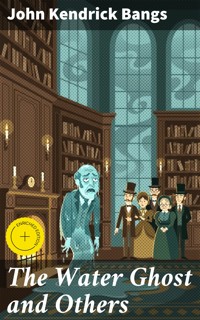
In "The Water Ghost and Others," John Kendrick Bangs weaves a captivating tapestry of supernatural tales that blend humor and Gothic elements, reflecting the Victorian-era fascination with the ethereal and macabre. With a unique literary style characterized by its playful language and satirical wit, the collection features eclectic characters and whimsical plots, challenging conventional narratives while engaging readers with what the author calls "ghostly humor." Set against the backdrop of the late 19th century, the stories echo the period's cultural preoccupations with the afterlife and the unknown, inviting readers to explore the fine line between reality and the fantastical. John Kendrick Bangs was a notable American author and humorist, celebrated for his contributions to literature that often critiqued society through a humorous lens. His varied career includes work as an editor, playwright, and satirist, which undoubtedly informed the creation of "The Water Ghost and Others." Bangs' inclination toward the supernatural may stem from the Victorian appetite for ghost stories, while his sharp satirical edge offers insight into the era's existential musings, creating a rich context for his narratives. This collection is highly recommended for readers who delight in the interplay of humor and horror, as Bangs masterfully captures the absurdities of human nature through his ghostly protagonists. Fans of classic literature, as well as those intrigued by the supernatural, will find themselves enchanted by these timeless tales that are both amusing and thought-provoking. In this enriched edition, we have carefully created added value for your reading experience: - A succinct Introduction situates the work's timeless appeal and themes. - The Synopsis outlines the central plot, highlighting key developments without spoiling critical twists. - A detailed Historical Context immerses you in the era's events and influences that shaped the writing. - A thorough Analysis dissects symbols, motifs, and character arcs to unearth underlying meanings. - Reflection questions prompt you to engage personally with the work's messages, connecting them to modern life. - Hand‐picked Memorable Quotes shine a spotlight on moments of literary brilliance.
Das E-Book können Sie in Legimi-Apps oder einer beliebigen App lesen, die das folgende Format unterstützen:
Veröffentlichungsjahr: 2019
Ähnliche



The Water Ghost and Others
Table of Contents
Introduction
The Water Ghost and Others gathers eight short pieces by John Kendrick Bangs, an American humorist and writer of light supernatural fiction, into a single-author volume designed for continuous reading. Rather than presenting a novel-length narrative, this collection offers a compact survey of Bangs’s ghostly and uncanny inventions as they appear in brief, self-contained forms. Its purpose is to make available, in one place, a representative group of stories that show how Bangs adapts familiar motifs—hauntings, apparitions, and strange visitations—into comic and satirical entertainment without requiring prior knowledge of any larger cycle or sequence.
The texts in this collection are primarily short stories and sketches, each built around a distinct situation and cast, with the emphasis on brisk setup, conversational pacing, and a pointed turn of wit. Several entries announce their playful premises directly in their titles, inviting the reader to approach the supernatural as a narrative device rather than a solemn doctrine. The volume also includes a piece framed as literary remains, signaling Bangs’s interest in mock-documentary structures and in the comic possibilities of editorial pretense. The result is a set of varied narrative experiments united by a consistent authorial tone.
Bangs’s signature lies in the way he treats otherworldly elements as occasions for social observation and verbal comedy. The haunted house, the unexpected midnight caller, or the oddly specialized specter becomes an agent that disturbs ordinary routines and reveals ordinary vanities. Even when the premise turns on a particular mechanism or curiosity—the suggestion of a “speck on the lens,” or the oddity implied by “quicksilver”—the governing interest remains human: how people rationalize, negotiate, and misread what they cannot comfortably explain. Bangs’s humor is typically urbane and situational, preferring irony and understatement to grotesque shock.
Across these pieces, the supernatural functions less as a source of terror than as a controlled disruption that tests manners, language, and social assumptions. Bangs repeatedly sets the extraordinary against domestic or club-like settings where rules, reputation, and propriety matter, and the clash between the uncanny and the conventional becomes the engine of comedy. This approach gives the stories a distinct texture: they resemble parlor narratives and after-dinner tales in which the impossible arrives not to shatter the world but to embarrass it, inconvenience it, or expose its complacent confidence in normal explanations.
The collection also highlights Bangs’s fondness for institutional frames and communal storytelling. Titles such as The Ghost Club and A Psychical Prank suggest organized curiosity and staged inquiry, where belief and skepticism can be played against each other for comic effect. These scenarios allow Bangs to explore how groups form consensuses, how fashionable interests in psychic phenomena can become social performance, and how the rhetoric of evidence and expertise can be gently undermined. The supernatural becomes a meeting ground for credulity and doubt, and the stories draw energy from the tension between earnest investigation and comic misdirection.
If these narratives keep their action light, they are not trivial in craft. Bangs’s economy of scene and his readiness to hinge a tale on a single vivid conceit demonstrate a disciplined approach to the short form. The stories reward attention to tone: small shifts in narration, the careful timing of an interruption, and the steady escalation of an absurd premise. This stylistic consistency gives the volume coherence even as it ranges from household hauntings to more explicitly “psychical” amusements. Read together, the pieces show Bangs’s ability to sustain a recognizable voice while varying the kind of joke the supernatural makes possible.
The enduring interest of The Water Ghost and Others rests on how clearly it illustrates a late-nineteenth- and early-twentieth-century appetite for combining popular ghost lore with modern social comedy. Bangs treats specters as familiar figures that can be repurposed to comment on everyday conduct, institutional fashions, and the stories people tell to preserve dignity. For contemporary readers, the collection offers a reminder that supernatural fiction has long included witty, skeptical, and domestic modes alongside darker traditions. It also preserves a distinctly American strain of literary humor in which the uncanny is welcomed as a guest—often an inconvenient one—into ordinary life.
Historical Context
John Kendrick Bangs wrote the tales later gathered as The Water Ghost and Others during the high tide of American magazine culture in the 1890s, when short fiction circulated rapidly through illustrated weeklies and humor journals. The period saw expanding literacy, cheaper printing, and a national market shaped by rail travel and urban newsstands, encouraging brisk, episodic narratives with punchy conceits. Bangs, based largely in the northeastern United States and active in New York literary circles, adapted the ghost story to these conditions: compact plots, quick tonal shifts, and premises legible to a broad middle-class readership accustomed to serialized entertainment.
The collection also reflects the late-Victorian fashion for supernatural fiction that followed earlier nineteenth-century Gothic traditions but was newly domesticated for parlor reading. After the Civil War, Americans and Britons consumed Christmas ghosts, haunted-house sketches, and comic apparitions that used the uncanny to comment on manners rather than to terrify. By the 1880s and 1890s, the ghost story had become a flexible vehicle for satire of class, hospitality, and social performance. Bangs’s polite specters and orderly settings belong to this transatlantic taste, which prized wit and irony alongside suspense and made comic hauntings respectable.
A major shaping force was the era’s fascination with psychical research and the attempt to systematize belief in spirits. The Society for Psychical Research was founded in London in 1882, and the American Society for Psychical Research followed in 1885, publicizing investigations of séances, apparitions, and mediumship. Newspapers reported these inquiries with a mix of credulity and skepticism, turning spiritual phenomena into public debate rather than private faith. Bangs draws on this climate by treating ghosts as problems to be discussed, managed, and even organized, echoing contemporary impulses to classify the unknown with quasi-scientific seriousness.
Technological modernity further reframed the supernatural, and several stories resonate with the period’s optics and electrical innovations. Photography had become commonplace by the late nineteenth century, and controversies over “spirit photographs” and photographic manipulation circulated widely, while new instruments promised to reveal invisible realities. Electric lighting, telephones, and other household technologies altered experiences of night, privacy, and distance, changing what it meant to be “haunted.” Bangs capitalized on these shifts by letting devices and modern perception complicate the boundary between illusion and encounter. Readers in the 1890s were primed to see the uncanny as something produced—or disproved—by apparatus.
The social setting of these tales is inseparable from the Anglo-American world of country houses, clubs, and leisure travel that flourished amid Gilded Age wealth. In the United States, rapid industrial expansion and rising fortunes after 1870 helped normalize upper-middle-class vacations, resort culture, and conspicuous domestic comfort, even as inequality intensified. Such spaces supplied Bangs with the genteel stage on which absurd disruptions could occur: servants, etiquette, and property become part of the comic machinery. The haunted hall and the private club thus mirror contemporary institutions of status and sociability, allowing the supernatural to expose the fragility of orderly privilege.
Food service, domestic labor, and the management of households were also undergoing change, and Bangs’s humor draws energy from those pressures. Late nineteenth-century households faced shifting labor markets, urban migration, and new expectations of professionalism in service; at the same time, hotels and restaurants expanded with tourism and business travel. Culinary authority and kitchen discipline became topics of advice literature and social anxiety. In this context, a spectral servant or an uncanny disruption of meals becomes more than a joke: it reflects a world in which comfort depended on complex, sometimes unstable arrangements of work and hierarchy. Contemporary readers recognized these tensions beneath the levity.
The collection’s self-conscious engagement with writing and authorship fits the professionalization of American letters during the same decades. The expansion of copyright norms, the consolidation of publishers, and the rise of celebrity authors created a marketplace where literary reputation was both valuable and precarious. New critical standards and the growth of universities encouraged talk of “serious” literature, while popular humor thrived in magazines. Bangs, known for light satire, plays with literary pretension and posthumous fame, inviting readers to laugh at the machinery of publication and the cult of the author. Such themes resonated with an audience watching literature become an industry.
Finally, Bangs’s approach aligns with broader late-century tastes for blending genres—comedy with horror, realism with fantasy—at a moment when American realism was influential but not exclusive. Writers such as Mark Twain had already shown how the supernatural could serve satire without demanding belief, and period readers enjoyed playful reversals of solemn forms. Bangs’s contemporaneous reception benefited from this openness: the stories offered respectable amusement while gesturing toward debates about science, belief, and modern life. The collection thus sits at a crossroads of Victorian spiritual curiosity, Gilded Age social performance, and mass-market literary consumption, all refracted through urbane humor.
Synopsis (Selection)
ILLUSTRATIONS
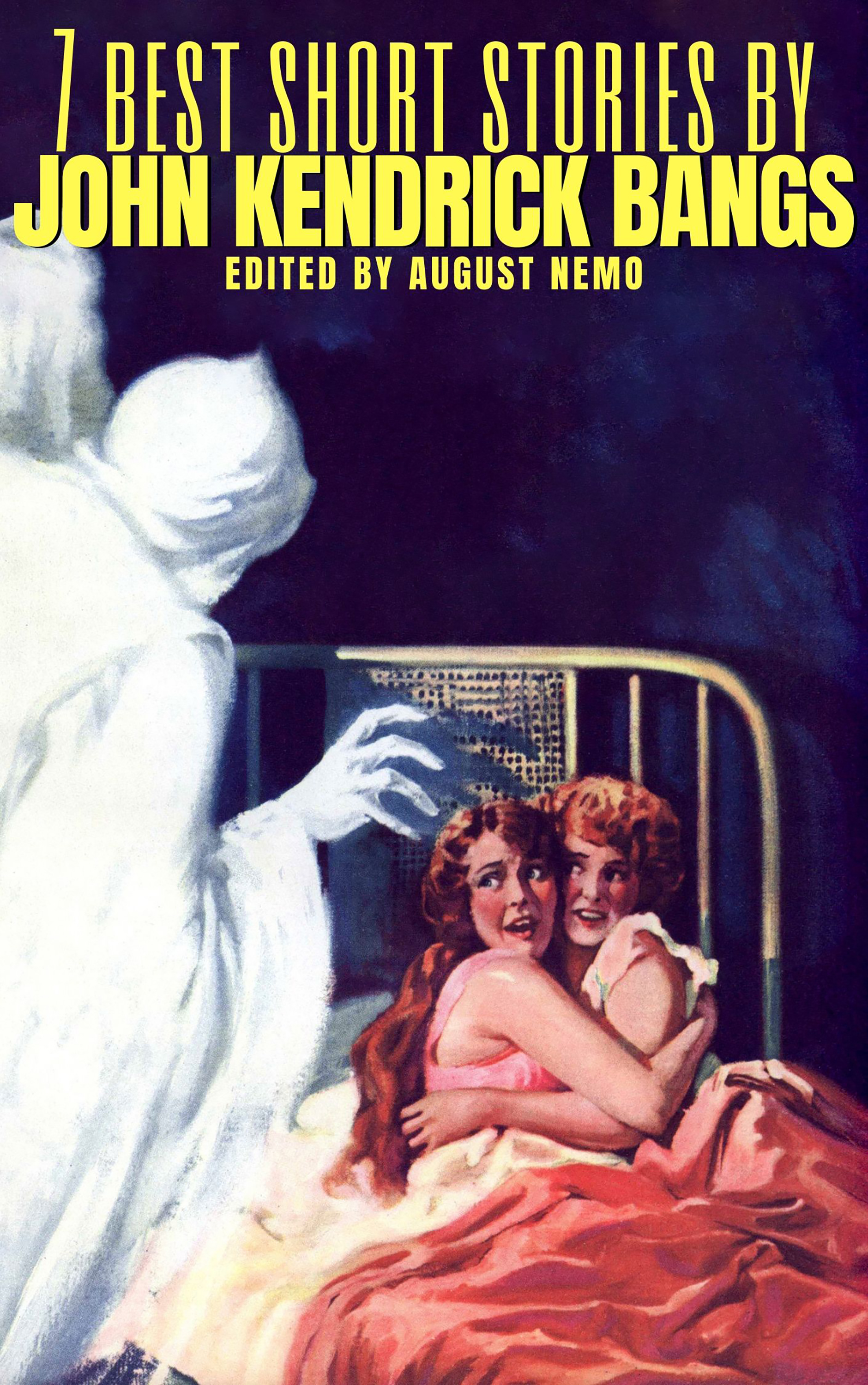
A visual companion to the stories that cues the reader for the collection’s blend of the uncanny and the comic. The images reinforce recurring motifs—domestic spaces disrupted by the supernatural and genteel characters forced into absurd, matter-of-fact negotiations with the impossible.
Haunted House Farces (THE WATER GHOST OF HARROWBY HALL; THE SPECTRE COOK OF BANGLETOP)
Two light supernatural comedies in which respectable households are inconvenienced by unusually practical ghosts—one tied to a grand estate, the other to the kitchen—turning hauntings into problems of management and etiquette. Bangs favors brisk dialogue and social satire, using the paranormal to expose class habits, household order, and the comic limits of “proper” behavior when confronted with the inexplicable.
Across both tales, the signature tone is genial and skeptical rather than frightening, with the supernatural treated as a persistent nuisance instead of a source of dread. The thematic focus stays on domestic authority, hospitality, and the way institutions (home, staff, tradition) strain when the unclassifiable becomes a daily routine.
Perception and Trickery (THE SPECK ON THE LENS; A PSYCHICAL PRANK)
These stories pivot from classic haunting to the unreliability of perception, letting small anomalies—a visual flaw or a staged “psychic” effect—spiral into outsized certainty and confusion. The humor comes from how eagerly people supply explanations, and the theme centers on credulity, evidence, and the ease with which belief can be engineered.
Bangs’s stylistic signature here is the tight, situation-driven setup that escalates through misunderstandings rather than shocks, keeping suspense secondary to social embarrassment and irony. The pair highlights a recurring motif across the collection: the thin line between supernatural experience and human error, especially when authority and reputation are on the line.
A MIDNIGHT VISITOR
A late-night intrusion brings the uncanny into an otherwise ordinary setting, emphasizing conversation and reaction over spectacle. The tale balances mild eeriness with comedy, exploring privacy, hospitality, and how quickly a stable social script can be rewritten by an unexpected presence.
The piece showcases Bangs’s preference for the parlor-room uncanny: restrained, talkative, and more interested in manners than menace. Its thematic pull is toward the psychological—what people choose to believe at night, and how fear and politeness compete in real time.
A QUICKSILVER CASSANDRA
A mercurial figure with unsettling foresight (or the appearance of it) complicates everyday judgments, pushing characters to test the value of warnings they’d rather ignore. The tone is wry and quick, using predictive talk as a tool to satirize self-deception and the social costs of being “right.”
The story’s themes stress uncertainty and responsibility: whether knowledge changes behavior, and how people respond when prediction challenges comfort. It aligns with the collection’s broader pattern of treating the extraordinary as a social problem—managed, debated, and often mishandled.
THE GHOST CLUB
A group bound by shared interest in apparitions turns the supernatural into a subject for fellowship, debate, and status, blending mock-serious inquiry with playful skepticism. The premise lets Bangs lampoon clubs, committees, and amateur expertise, shifting the focus from solitary fright to communal performance.
Recurring motifs—testimony, proof, and rivalry—surface as the club’s dynamics shape what counts as an authentic experience. Stylistically, it foregrounds conversational set-pieces and social satire, treating the ghost story as a vehicle for observing human vanity and groupthink.
THE LITERARY REMAINS OF THOMAS BRAGDON
A purported posthumous trove becomes a comedic lens on authorship, reputation, and the afterlife of texts, with the “supernatural” functioning as an enabling premise for literary mischief. The tone is arch and satirical, targeting how culture manufactures significance from fragments and how audiences hunger for intimate access to creators.
The thematic focus shifts most clearly toward metafictional play—documents, attribution, and the comic bureaucracy of legacy—while keeping the collection’s overall skepticism intact. It reinforces Bangs’s recurring signature: polite society meeting the uncanny (or its imitation) and responding with paperwork, protocols, and misplaced confidence.




