


7,19 €
Mehr erfahren.
- Herausgeber: Luath Press
- Kategorie: Abenteuer, Thriller, Horror
- Sprache: Englisch
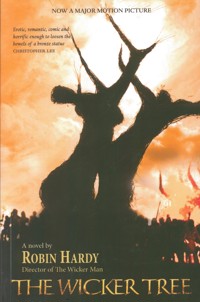
A black comedy of religious sexuality and pagan murder, which inhabits the same territory as The Wicker Man. If I am a Rabbi, Jehova is my God. If I am a Mullah, Allah the merciful is He. If a Christian, Jesus is my Lord. Millions of people worldwide worship the sun. Here in Tressock I believe the old religion of the Celts fits our needs at this time. Isn't that all you can ask of a religion? Gospel singer Beth and her cowboy boyfriend Steve, two virgins promised to each other through 'the Silver Ring Thing', set off from Texas to enlighten the Scottish heathens in the ways of Christ. When, after initial hostility, they are welcomed with joy and elation to the village of Tressock, they assume their hosts simply want to hear more about Jesus. How innocent and wrong they are. REVIEWS: 'Erotic, romantic, comic and horrific enough to loosen the bowels of a bronze statue.' --Christopher Lee 'Robin Hardy looks set to snare a new generation of followers with the long overdue follow-up... another tale of faith, sex and sacrifice.' --Sunday Herald'... the writing style is typical of the genre and Hardy has upped the stakes. After a slow set-up, the plot romps along, with unexpected twists and turns, to its inevitable and frustratingly avoidable conclusion. Those who identify with the youthful protagonists will find it thrilling and horrible, a story to disturb sleep.' --Scottish Review of Books 'Let's face it, there are strange communities in the world.' Purity rings in hand, a young evangelical Christian singer and her devoted fiancé leave the comfort of their Texas home to journey into heathen parts of the earth, hoping to spread the word of God across the land. Their mission takes them to a bizarre Scottish town whose people and practices turn their world inside out. To call it a culture clash would be too gentle. To reveal anything further would be a blight against the heavens. 38 years after directing THE WICKER MAN (and following a 22-year filmmaking sabbatical), celebrated iconoclast Robin Hardy has reunited with producer Peter Snell and returned to the Pagan pantheon with this hugely eccentric successor film, THE WICKER TREE. The distinction is an important one to make, as this is neither sequel nor re-imagining, but rather a film narrative cut from the same universe (or as its maker refers to it, 'a spiritual sequel'). Hardy is a one-of-a-kind filmmaker, and THE WICKER TREE is brimming with the stamp of his personality. It has ample Scottish colour, reaching out through tons of catchy folk songs interspersed throughout the film. Clever plays on religious iconography and an acute understanding of Pagan ritualism. Ethereal locations. A charged sense of the sexual. A dreamlike sense of the magical. Costumes, dances and animal masks. An off-centre look at the absurdities of faith (in this case, neither Christian nor Pagan get off easy), THE WICKER TREE could be called a black theological satire, a strange breed of irony-fuelled comedy-musical-horror-thriller-drama. Call it however you like, it will bring a smile to your lips and, perhaps, a torch to your belief system. Based on Hardy's novel [...] and featuring appearances by Christopher Lee, members of the Beltane Fire Society and a compellingly show-stopping Graham McTavish, this is a film that's been brewing for many years, one that has proved exceedingly difficult to mount. Now, finally, it is here. Prepare to ride the laddie and join us in celebrating the second coming of one of cinema s great seers. May Day is upon us. THE WICKER TREE is about to burn' --Mitch Davis, Director of Fantasia Film Festival, on the motion picture The Wicker Tree
Das E-Book können Sie in Legimi-Apps oder einer beliebigen App lesen, die das folgende Format unterstützen:
Seitenzahl: 377
Veröffentlichungsjahr: 2013
Ähnliche















ROBIN HARDY – screenwriter, producer, director, playwright and novelist – has had a career on both sides of the Atlantic. His film, The Wicker Man, is considered a classic of its genre. His fiction includes The Education of Don Juan, a Book of the Month selection in the USA; The Wicker Man (with Anthony Shaffer); and Don Juan's New World. In 1988 he had a critical success in London's West End with Winnie, a play, with music, about Winston Churchill. His work for television has been worldwide: The Ramayana (with Ravi Shankar) in India; Paradise Lost (with Sir Ralph Richardson) in England; and The Frozen Moment (with Sessue Hayakawa) in Japan, among many others. For a number of years he was a leading producer/director of television commercials in the USA and Europe. He is married and has eight children.
The Wicker Tree
A novel by
ROBIN HARDY
Luath Press Limited
EDINBURGH
www.luath.co.uk
Extracts from 'I Tempted him with Apples' by Keith Easdale reproduced by kind permission of Keith Easdale and JDC Productions.
First published as Cowboys for Christ 2006 This edition 2011
eBook 2012
ISBN (Print): 978-1906817-61-9
ISBN (eBook): 978-1-909912-36-6
The author's right to be identified as author of this book under the Copyright, Designs and Patents Act 1988 has been asserted. © Robin Hardy 2006, 2011
Table of Contents
Preface
Beth's Awakening
Tressock Castle
Delia and Lachlan
The Peace March
The Arm of the Law
Concert at the Cathedral
Orlando's Revelation
At the Grand Hotel
The Mission
Lolly Day
Walking Wounded
Introducing Sulis
The Inquiry Develops
The Road to Tressock
Tressock
The Men at the Inn
At Mary Hillier's House
The Devil Makes a Call
The Rehearsal
At the Sacred Pool
Nuada Keeps its Secret
Lolly is Questioned
Goldie
The Preach-In
The Elections
Beth Goes to the Ball
Orlando Takes Up the Challenge
Steve and Lachlan
God and Magog
The Eleventh Hour
The Hunt
Beame and Beth
The Hunt Continues
Beame and Daisy
The Queens' Eyes
The Optician's Shop
Waiting for Beame
Beth in the Queens' Room
May Day's Eve
The End Game
Nine Months Later
Post Script
Author's Note
For Vicky
Life can only be understood backwards, but it must be lived forwards.
Søren Kierkegaard, Life
Preface
NO ONE CAN SAY that a comedy, however 'black', need be devoid of meaning.
The Wicker Tree is a work of fiction and yet all of it is based on present reality or well documented fact about our Celtic ancestors in Scotland and in all of the British Isles. Much of their religion is still with us in the days of the week and the months of the year and, most particularly, in Christianity itself, especially Easter and Christmas.
While working on the film of The Wicker Tree, I was aware of how strong this ancient inheritance remains in Scotland today. I had recently seen the amazing Beltane festival in Edinburgh, where, on Calton Hill high above the beautiful city, a group of young people reinvent the ancient Celtic celebration which comes with each May Day. What can we know of it thousands of years ago before the Romans came? What matters to these young solicitors' clerks, students, artists and actors is that its inspiration is the same today as then. The sap rising in the blossoming trees, rising in their own bodies, inspiring them to make music and dance, to celebrate the renewing elements of nature: fire, water, air – the very earth itself.
Along with seventeen thousand other people I watched this joyous pagan masque unfold, while, below, the lights of the city started to twinkle and the spires and the domes of the great churches stood in bleak silhouette, as if besieged by fireflies. I had to have a version of this is my film and the perfect place for it is on the hill leading up to The Wicker Tree. For there the tree stands in for all the lovers in nature, for every evolutionary mating of every sentient thing. This is the climax of the film although not quite its ending.
In the transition from book to film we have kept the yearly drama of riding after the Laddie, a reality to this day in the little border towns where almost everyone seems to have a horse. All sorts of myth laundering cannot disguise how the most handsome young man, the cleverest and the bravest, elected by all as their Laddie each year, could never have been hunted over heather and heath simply to sit down at the climax of the chase for a cosy picnic of cup cakes, canned beer and tea.
The final reality, underlining the whole story, is the sinister presence of the Nuada nuclear power station, its threat implicit in the whole plot. While the book, of necessity, explains more of the apparent danger to our village of Tressock, we are re-publishing this story in the immediate wake of the ghastly nuclear disasters that have befallen Japan.
Some will see in this book or film a choice between two beliefs, the Christian and the Pagan. But in the end it is simply raising questions the answers to which are unknowable.
While we were making the film inspired by this story, the wicker tree left the forest and appeared amongst us, an icon, it seemed to us, every bit as potent as The Wicker Man that preceded it. Whereas The Wicker Man is an icon of death, The Wicker Tree heralds new life. The song says it all:
Wicker is woman and she is a tree.
With soft tendrils, tender and free.
Oh, wicker is man and hard wood is he.
Strong are the arms of the wicker tree.
They'll meet in the forest and passionate be.
For the fire that consumes them Consumes all of we.
It licks and devours. So must we be.
Insatiable tree
Part he, part she,
Oh Wicker Tree – Wicker Tree – Wicker Tree.
The Wicker Tree song by Robin Hardy and Keith Easdale © Tressock Films Ltd.
Robin Hardy, 2011
Beth's Awakening
BETH AWOKE THAT morning from a deep dream of peace and tranquillity, feeling blessed. In the dream, she had been singing in an empty auditorium. There was no band, no orchestra, no audience, no fans and, the biggest blessing of all, there was no microphone. Just her voice as she always heard it when no one was jigging around with it, playing it back with echo, with reverb, with the high notes tweaked, just her voice as it sounded in some inner ear of her own where nothing electronic ever penetrated.
This was a very special morning. It was, in a way, her first day of independence from 'the business' that had been her life since she was fourteen, a declaration of independence that had her father saying over and over, 'We made you fifty million dollars in seven years. All you had to do was go out and sing with that voice the good Lord gave you. Now you say this is not a career you "want to pursue." Are you crazy? What about a little gratitude? You're only twenty for Christ's sake. Haven't you heard about honouring your father and mother?'
Beth's answer, she knew it maddened him, was always pretty much the same.
'Fifteen per cent of my earnings would have been enough to keep you in booze and high-priced hookers for the rest of your life. But you've taken fifty per cent. Mom's dead and I've honoured you all I have to. Brother Kenny at the church told me so. And I won't have you taking Jesus' name in vain in this house. It's my house now. Get back to that palace in Dallas of yours. From now on I am doing my thing, my way. OK, Daddy?'
She knew he needed a drink real bad after she'd done telling him that again and he knew she didn't have a drop of alcohol in the house. So he hightailed it back down to Dallas. To his fancy chateau, on the corner of North Versailles Road and Stuart Avenue, where the bar had been copied from the Oak Room at the Plaza Hotel in New York City. She knew that he just couldn't figure how anyone in her right mind could turn down a twenty-gig tour paying all that loot.
But she knew, too, that he had really started to give up on her the previous fall. He'd been in rehab after her mother's death and Beth had refused to let him into the recording studio in Nashville. When he saw her at the launch bash for her new album she thought he might have one of those apoplectic fits. She'd let her hair go natural, sort of blondish but really very light brown. She'd given up on cosmetics altogether. All the specially created paints, creams and unguents her expensive consultants had prescribed to transform her pretty, slightly plump face into the lean and hungry blonde look favoured by Britney, Christina and the others – all had been thrown away.
It was for her wonderful to be seen as what she actually was at age twenty – but you would never have guessed it if you had seen the embalmed pop star that went by her name these last five teenage years.
Yes, it was a glorious day. Beth showered and dressed quickly, trying to think in an organised way about what she needed for her journey. But her excitement about her coming mission constantly distracted her. She had so much to look forward to in the next year. A chance to give some service to the Lord. To meet with some real needy people who were being literally starved of His word, His grace. Europe was like another world. Everybody she knew who'd been there said so. Whole countries there had pretty much turned away from the Lord. He who had given her that greatest of gifts – her wonderful voice – needed her.
She had started packing several days previously, trying to narrow down what would fit into two suitcases and a back pack. That was the most the Redeemers had told her she could take. She was an experienced traveller, as pop stars went, in that she normally packed just about all the clothes and shoes she possessed, knowing that the roadies would be handling all her luggage from one stop to another. That way she had access to any little thing she could possibly require just as if she was at home in Texas. As the star of the tour she naturally always had the largest suite at whatever five-star hotel existed in the town where the gig was being held. By arrangement with her publicity handler, she coped with the fan problem by living on room service, only going down to the lobby of the hotel to do a signing just before the gig. Sometimes it was arranged for her to go to a museum or a local beauty spot, but mostly she was hermetically sealed from the places through which she passed.
So, if you had asked Beth whether she was well travelled she would certainly have answered that for a little ole Texas gal from Walnut Springs she had done pretty well. Nine major tours of America that included virtually every important state and she had somehow fitted in two vacations, one in Hawaii and one in Puerto Rico. But the vacations had been working holidays, doing picture features for Vanity Fair and Rolling Stone respectively, staying in hotels indistinguishable from all the other Marriotts, Hiltons, Sheratons and Four Seasons that blurred together in her memory. She had even done gigs in Toronto and Montreal, Canada where many of the folks spoke French (although not to her).
Now she was becoming a missionary for a year. The Redeemers had given her a choice between several African countries and Europe, where Scotland was their target for the second year running. She had chosen Scotland largely because Steve had wanted to go there. That was the other great thing about this mission. She was getting to go with Steve. She was going to do work she just knew she was going to love. Telling people about Jesus. Explaining how wonderful it was to be born again. Sharing her joy in her faith. And doing it with the man she had loved ever since she was thirteen and they had both been eighth graders at Lyndon B. Johnson High School in Sasquahetta, Texas.
When she was at home in the simple colonial house she had always regarded as her mother's, now hers by virtue of inheritance, and in which no trace of her father remained, she liked to look forward to what she would make of it when she and Steve were married, when they had kids. That was a dream that always distracted her, but looking at her watch she realised she must concentrate. She'd read that Scotland could be cold, real cold, with snow and ice. She'd packed her skiing underwear and now she added several sweaters. Parts of Scotland, she was advised, were also plagued with midges, kind of miniature mosquitoes you could hardly see. She had already packed some insect spray. The news that the Scots' favourite food was sheep's stomach alarmed her and she checked that she had put the Imodium in her toilet kit.
Beth took a long last look at her living room, at all the familiar things she and her mom had collected. The very special collection of Tiffany glass on the illuminated shelves. The photographs of herself and Steve together when she had been elected Homecoming Queen. Her Grammy for Best Female Country Vocal Performance for 'Trailer Trash Love', her favourite song and the one for which her mother had written most of the lyrics. The gold and platinum album plaques had all gone to the palace in Dallas with her father. She didn't miss them.
Confident that she had forgotten nothing, especially her brand new passport, she gave a fond farewell hug to Vashti, her housekeeper, and carried her own suitcases across the porch. Beth detested flashing her money around and despised what her father had done with his. But a few luxuries she did allow herself. True to her career as a recording artist, she liked to travel by limo, and one was now and almost always sitting outside her house, like a beached white whale, waiting for her to do some shopping or to visit Steve at the Dragon X Ranch or to go to the Cowboys for Christ church at Osceola, off Route 171.
Benny, Vashti's husband, who drove the limo, was, according to his wife, 'the laziest nigger in Texas.' It always slightly shocked Beth to hear Vashti use that word. Beth regarded PCness as next to Godliness. But his wife's accusation just made Benny chuckle. Officially, he worked for a limo company with the grand name of Buckingham Livery and Hire, but when Beth was at home she liked to have him always available. Steve pointed out that it would be much cheaper to buy the limo and hire Benny to drive it.
'That would mean I had a chauffeur,' protested Beth. 'That's not me at all. This way, I just hire the limo when I need it.'
Steve seldom argued with Beth. Their friendship was based on being very comfortable in each other's company. It always had been. As kids they held hands a lot, not caring who laughed at them. Steve still lived with his pa, a widower and a working cowboy, a rarity now in Texas, who had originally been a hand on the LBJ Ranch when President Johnson and his wife, Lady Bird, were in retirement. Steve had somehow never been too dazzled by Beth's career. But he was proud of her voice and was one of the very few people around her who understood her view that it was her voice and not her career that was the more important.
Benny drove the limo at about forty-five miles an hour. He considered any speed in excess of that inconsistent with a Cadillac's dignity. Beth watched out the left-hand window as they started to approach Osceola down Route 171. The Church of Christ's Second Coming, recently renamed Cowboys for Christ (and part of a growing brotherhood of such churches) was located just two miles short of the little town. Now what she saw on either side of the highway was flat open country, just shrubs and occasional clumps of pine trees. Beth was looking to see if a rider leaving a long trail of dust from a track that ran parallel to 171 could be Steve.
She knew it should be, because when she phoned him, just before leaving home, he said that if Benny was driving at his usual speed, he'd beat them to the church on Old Johnson, his pa's favourite quarter horse. Sure enough, as rider and horse got closer to the road, she could see that it was indeed Steve, his hat laid back on his shoulders, his tousled blond hair all over his face so that he had to hold his head well back to see.
Now the church was coming into view, just off the road, nestling in a clearing of a small pine wood. It was built on the classic log cabin principle, only the logs looked Wal-Mart shiny and new. There was a corral close by where some cowboys were just finishing a morning of showing off their ropin' skills. Further on was a car park with several hundred vehicles, everything from old, rusty pick-ups through heavily chrome-plated Humvees and SUVs to fancy European automobiles and even occasional Fords and Chevies. Steve had joined the road now and was riding beside the Cadillac, shouting down at Beth through her open window.
'Looks like we're the last to get here. What are you singin'?'
'The Magnificat.'
'Yeah? Do I know that?'
'Maybe not, Steve. But I think you'll like it.'
'What happened to Amazing Grace?'
'This is my new deal, honey.'
'OK. So do the band know this piece?'
'Not doing it with the band. Holly Dempster – she'll play piano for me. Like I said, this is my new deal. I am just going to use my voice.'
'Can the folks stomp and holler?'
'Don't think they'll be inclined, Steve.'
'Well you go for it, girl. Pa came on ahead. He's got my bag and my passport and my ticket. This trip of ours got him all worked up. If he could come too, he'd be there in a New York minute.'
Steve clapped his heels into Old Johnson's flanks and the horse took off towards the church, leaving the long white Cadillac alone to make the majestic arrival for which it had been designed.
Benny would not have dreamed of letting Beth walk from the car park, which she would much have preferred to do, so he drove straight up to the church's main door, reserved usually for funerals and weddings. Beth sighed as she saw the outside broadcast truck of a local TV station, its lines already hung up to the church, its auxiliary generator humming. The video guy was wandering around looking, Beth always thought, like some weird mutant of the human race that had great black cameras growing out of its necks and shoulders.
There were fans crowding in as she got out of the car but, thankfully, Big Bill Marlowe, the guy to whom she (and her father) owed so much, was there to greet her and take charge.
'C'mon guys, give Beth a break,' he said in a voice that was not that loud but nonetheless penetrated the hubbub around them. 'This is a church service, not a gig or a concert, you know. The service will be on your car radio, on TV. Anyone being a regular worshipper at this church will hear Beth inside.' He lowered his voice. 'How many will you sign, Beth?'
'Twelve,' she said. She always said twelve. It was her lucky number.
Two minutes later they were inside the church and she was being greeted by Brother Kenny, the pastor. He took her and Big Bill into his little office. Worshippers were still streaming in to be met by a couple of elders who kept the tally of who was or was not a bona fide member of the congregation. Some serious fundraisers for the President had taken place at this church. He'd even been there himself and said a few words when he was still Governor of Texas. Even so, it was probably not an obvious target for terrorists but, since 9/11, people liked to see real good security wherever they went.
Beth sipped some hot coffee that Brother Kenny had waiting for her and listened to him with the attention she had always given to anyone producing or directing her, whether for a live gig, a music video or a recording.
'Beth, we're real glad you are agreeing to go – and take Steve with you – on this Redeemers' mission. Ever since this church became associated with the Redeemers we've wanted to encourage young people to go out and preach the word of God to heathens everywhere. To have you go to Scotland is such a fine example to other young people. Because you could've just given money – and I know you've done that too.'
Beth felt what he had just said was a tad redundant. She knew all that, so did Big Bill. Where was she to sit? When was she to sing? Where was Holly so she could have a last word about the music? Where was Steve going to be sitting? She wanted him near her. At what time was the Redeemers' bus coming by?
Kenny might have read her mind because he just smiled and produced two photocopied sheets giving the Order of Service and the seating plan of the church. The bus was scheduled to come by in an hour and a half's time. Beth had the grace to look apologetic. She leaned forward and briefly squeezed Brother Kenny's hand. It was a little gesture her mom had taught her. Warm, intimate, friendly, but not in any way sexy. Useful.
'Holly will come and fetch you when it's time for you to sing that hymn of yours,' said Brother Kenny, leaving to start stage-managing the service.
She was alone now in the office with Big Bill, who looked like he had something special he wanted to say to her. He got up to his feet, hesitated, then shut the door, drowning out 'I'm riding down the trailwith Jesus, yes I am.' Then he sat down opposite her and looked at her with that special look of his, head on one side like an old hound dog, eyes a little bloodshot but serious, sincere. Although he was no more than forty or so, still he seemed pretty old to Beth, who'd always called him Big Bill, cause her mom had started it to distinguish him from Beth's father, also a Bill. Her Daddy was small and round. Folks called him Fat Billy, though not to his face. Whereas Big Bill was tall and lean and dignified, built like a true cowboy, except he was really a venture capitalist born with more in his trust funds than you'd find in the treasuries of many a foreign country. She respected Big Bill as much as she despised her father.
'Just thought we'd talk about this trip of yours, Beth. Of course, I agree with Brother Kenny. You are doing a wonderful thing here. But I'm not sure you realise the risk you're taking. Sure, I know you got Steve to look out for you, but he's just a kid too.'
'We're not kids, Bill,' said Beth sharply. 'Kids our age are ready to fight for our country.'
'That is my point exactly. There's a war going on out there. I checked with the Redeemer people. They had to admit, valuable as you are to them PR-wise, they do not plan to detail anyone to act as full-time security guard for you like you'd have on a tour.'
'Bill, I discussed all this with them. I do not want a guard. I do not want any publicity once the main gig in Glasgow is over. Steve is my special guy. You know that. He'll take good care of me. We'll just be two young people, me and him, over from Texas with this message of hope for these poor people who have seemingly lost their faith.'
'Have you any idea what Europe is like these days?'
'Sure. The Redeemers gave us a whole lot of info about the Godlessness in Scotland, the strange beliefs they have, like we're all descended from animals and slimy things out of the ocean. A lot of Yankees believe that stuff too you know, even folks in this state. They really do. We know we got a real big hill to climb with these folks.'
'Did they tell you what the Reverend Pat Robertson said about the Scottish people? He said too many of those poor lost souls are gay, wearing those skirts and all… Do you know something? My dear grandma used to sing songs from a book called Gay Ditties. They've stolen that lovely word from us. God help me, I do resent that.'
'They're called kilts. Have you ever been there, Bill? To Europe?'
'I have not. Like President Nixon said: "I don't care what religion a man has, as long as he's got a religion." In Europe religion is mostly dead. They're lost people. To be frank with you, I don't want to spend
any of my precious time on earth with lost people.'
'Bill!' Beth cried. 'You're trying to discourage me? You of all people. You gave me my start. You paid for my dad to take me to Nashville and for those first recordings. I just can't believe this.'
'You're throwing away your career,' said Bill sadly. 'I'm not saying this just because I invested in you. I think you know that. But because you've been doing great. You're on a roll now. Go away for a year and maybe it'll be, "Beth who?" Aren't you at all scared of that?'
Beth wasn't scared at all. Although she had kept this to herself, she had decided to re-invent Beth, the singer, in the service of her voice. Maybe this was the moment to start breaking this to Bill. She leant forward and put her hand over his big hairy paw and squeezed gently before withdrawing it.
'You are a very dear man, Bill. I love you like I was your own daughter. When I come back, after Steve and I get married, I'm going to sing like you'll hear me sing today. Maybe there won't be no more Grammy awards. But I think people will pay to hear my voice. And if they won't then I'll sing for my little old self and Steve and, I hope, you Bill, and my other real good friends.'
The door to the office had opened a little and Holly was peering through.
'Oh, excuse me,' she said and stood there speechless for a moment. She recognised Bill as the rich, legendary drinker and womaniser who had been saved by Jesus some ten years ago and was now seldom out of the society pages of the newspapers. Holly wondered for an instant about him and Beth, and if she was interrupting something.
'I'm supposed to fetch you now, Beth. Is that OK?' she said hurriedly, as if she'd suddenly remembered her errand.
'Sure, we're all through here,' said Big Bill, rising to his feet. It sounded a bit abrupt, although he was smiling. But Beth had remained seated. She tugged for a few seconds at the hand she had squeezed.
'Bill?' her voice had lowered and he turned to her quickly while Holly went back out the door to wait in the passage.
'Yeah, what is it Beth?'
'I don't owe anyone anything, do I? My dad's paid off. You recovered yours some time ago, I guess. The label… Well I fulfilled my contract. The option to continue was open. I've let it go… I told them I'll come back to them if they still want me in a year's time. They didn't like it. But I'd say they were smart, they were cool. They gave me a nice six-figure kiss goodbye. So who do I owe?' She raised her voice: 'I'm coming Holly.'
'No one, Beth. No one I can think of,' said Bill.
'Right, except the Lord. I'm doing this for Him,' said Beth. It sounded melodramatic but Bill recognised that it was true.
Brother Kenny was about to start his address when she sat down just behind him on the stage next to Steve. The band had left their instruments behind, but Holly had already seated herself at the piano. The collection was in progress: two women passing black ten-gallon hats down the rows of worshippers. Beth reflected, not for the first time in this church, that the pastor ought to get up one day and ask the Lord to help him put the whole congregation on a diet. Most of the men out front were dressed in cowboy clothes; boots, silver-decorated belts and hats which they wore on their heads, except of course during the saying of the Lord's prayer. Beth loved them. These people were, for her, the salt of the earth. Good, kind, God-fearing people. Her people and Steve's people. But she thanked God that he was a real cowboy, not just a suburbanite dressed up.
Brother Kenny took the microphone from its stand by the lectern and started to stride across the stage.
'Lord,' he said, 'this is a special day for this church. Because two of our young people, Lord, will go forth from here to do Your work. Like St Paul in the olden times they are goin' forth to preach Your word, Lord…'
Beth only half listened to what Brother Kenny was saying. She, herself, was trying to get used to talking to the Lord as if He was a next-door neighbour, chatting over the hedge from his back yard. Brother Kenny was good at it. But for her it had never been easy. She tried to think of the friendly approachable Jesus, but the vengeful Jehova of the Old Testament tended to materialise. Now, however, Brother Kenny was referring specifically to her and to Steve. She focused her attention on his pacing figure, his slightly theatrical but effective gestures, his lean, expressive face under his cowboy hat.
'We are gathered today to say Godspeed to two of our Redeemers who are going to give a year of their young lives to Jesus,' he was saying. 'They are going to bring His message to the poor people of Scotland. This is the second year the Redeemers Choir have been over to their Christian Music Festival. But I got to tell you folks that our Missionaries, going door to door to bring the good news – they've found it real tough going. Some of these dear Scots don't even believe in angels, and some are hardcore atheists.'
Brother Kenny had stopped by Beth's chair and placed a hand on her shoulder.
'Beth,' he went on, 'I want you to know we are all real proud of you, because we all know you only gotta raise your little pinky to go right on being a truly great singin' star. Steve, you take good care of this lovely lady, d'you hear? You are one lucky son of a gun to be goin' with her, but you know that. God bless you both and bring you back safe and pure to us here, and we will give you the wedding of the year. And that's a promise. Amen.'
The church was suddenly filled with the noise of cheering, clapping, stomping people, which only subsided as Beth stood and signalled to Holly to start playing. A hush fell almost instantly as Beth handed a slightly surprised Brother Kenny the redundant mike, stepped forward to the edge of the stage, and started to sing.
'My soul does magnify the Lord
And my spirit does rejoice
In God, my Saviour
For He has regarded the lowliness Of his handmaiden
For behold, from henceforth
All generations shall call me blessed
For He that is mighty has magnified me
And holy is His name.'
The piano, underscoring her voice, carried the melody that Johan Sebastian Bach had written for this canticle more than two hundred years earlier. But, even he, who must have heard some of the greatest singers of his age, could not have failed to be moved, exalted even, by this wonderful instrument that was Beth's voice.
'For He has shown strength with his arm He has shattered the proud
In the imagination of their hearts
He has put down the mighty from their seat
And He has exalted the humble and meek
He has filled the hungry with good things
And the rich He has sent empty away.'
Steve, who had never heard her sing like this before, was dazed by the beauty and wonder that she had created in the church. He applauded along with the congregation, who not only had never heard a sound like hers before, but had never heard a hymn (let alone a canticle) without the backing of guitars, drums, accordions, xylophones and the like. Steve guessed that Brother Kenny, applauding with the rest, was relieved that Beth's magnificent sound was not going to disrupt the church's traditional cowboy music. At least not for another year.
The bus carrying the Redeemers Choir to the Dallas/Fort Worth Airport stopped to pick them up from the melee of fans and wellwishing members of the congregation. As they emerged from the church, Steve saw his pa being interviewed by Buz Dworkin, a reporter for one of the local TV stations.
'So it's your boy, Steve, is it, going with Beth?'
'Sure is,' said his father proudly. 'They been promised since eighth grade. His ma, she found them playin' "I'll show you mine, you show me yours". Made them promise. Wait till they're wed. She's gone now, rest her soul. Still, before she went, she had them make a commitment. They're members of that – they call it the Silver Ring Thing. The ring says they won't have no screwin' around – just no sex no-how – till the day they're wed…'
Steve was more embarrassed by this revelation of pa's than was Beth. Sitting next to each other on the plane, with the twenty-strong Redeemers Choir all around them, Beth and Steve held hands. Both were lost in their own thoughts as they took off, bound for Great Britain. But both of them were thinking pretty much the same thing. The commitment they had made to avoid sex until marriage had worked pretty well as long as they were both living apart and taken up with their separate busy lives. Now they were going to be together, day in, day out, and all the time they must keep to this commitment. Beth thought it would be very hard. Steve was afraid it would be impossible.
As for the dangers that Big Bill and many others had warned them about in Europe, they had long since discounted these. In addition to service to God, this was an adventure. And what was adventure without some element of risk? People they knew had been to Europe and returned with nothing worse than astonishment at the price of everything.
Pretty soon they slept.
Tressock Castle
SCOTLAND'S SPRING COMES later than England's, but on the Borders between the two nations it is well advanced by mid April. The kitchen gardens in little towns like Kelso, Coldstream and Tressock are already full of fruit blossoms, and the rough winds that blow across the bare, heather strewn countryside do not wait for the darling buds of May but are already scattering a torrent of petals around the sturdy stone houses of these borderland Scots.
Tressock Castle rises like a cliff face from a rocky promontory where the River Sulis, a tributary of the Tweed, provides it with half its moat. Its towering stone flanks are surmounted by an odd jumble of turrets, mansard roofs, domes and pinnacles. It is a Scottish baronial collage of a building. Somewhere its innards are mediaeval, sometime courtyards long since enclosed as great airy Adam-decorated rooms and everywhere, on the lower floors, huge windows have been punched into the cliff-face walls, to let in the precious light, work done in the seventeenth century when the possession of lots of valuable glass was a mark of conspicuous consumption.
On the dry side of the castle, as it were, lawns and parterres, reflecting pools and fountains, immaculate glass houses and a wellstocked, walled kitchen garden all attest to this being the home of people who care about their surroundings and can afford to do so. Only the topiary, which forms a kind of honour guard from the castle's porte cocher, past its stables, to the great gates that lead to the little town of Tressock, is so unusual as to be condemned in local guide books as 'odd'. Foreigners, unused to British English, do not always realise how severe a censure this adjective implies, for the carefully pruned yew trees that parade along each side of the drive suggest rows of jaunty phalluses.
On the comparatively rare occasions when the sun penetrates the grey, purple cloud cover over the Tressock hills, it waits until it has risen high enough for its warmth to seep through, casting pale shadows on the castle's lawns. But just occasionally it surprises by rising clear and bright over the heathered hills at dawn.
On such a day, Sir Lachlan and Lady Morrison found themselves awakening in their Tressock Castle home to great shafts of blinding sunlight coming through the windows of their bedroom and penetrating the half drawn curtains of their huge four-poster bed. Four broad-bosomed, bearded hermaphrodites, carved in ebony, supported the canopy above the awakening couple. Lady Morrison closed the bed curtains hastily, shutting out the sun, and thought, perhaps for the thousandth time, how she hated the hermaphrodites and how extraordinary it was that Lachlan admired them.
She watched her husband slowly awaken. In the fifteen years of their marriage she had become accustomed to the unexpected from Lachlan, save in a small number of foibles and habits where he was as consistent as a well-oiled chiming clock. Unusually for a Scot, he never took a bath, subjecting himself to freezing showers instead, and he shaved with a cut-throat razor that had belonged to his greatgreat-great-grandfather, Sir John Morrison (VI of Tressock), who had served with the Coldstream Guards at Waterloo under the Duke of Wellington. It lived, this razor – actually there were several – in the long-dead soldier's leather travelling kit. The sound of it being sharpened on its stone slab always put Lady Morrison's teeth on edge. So she had bought Lachlan a state-of-the-art electric razor as a May Day present. He thanked her with his customary civility and suggested she use it on her legs.
But now he was completing what, for him, was the ritual of becoming totally awake. His eyes stared at her, unblinking, unwavering for at least thirty seconds – a long time, at any rate. It was as if some battery inside him was slowly activating and then, suddenly, startlingly, he was again the vivid presence that filled her days, her life. He was speaking to her, speaking urgently.
'Delia, I want you to be ready to go to Glasgow tomorrow early,' he was saying. 'This wretched concert is so late this year it gives us very little time to do what must be done.'
'But I've still got the feasts to plan,' said his wife a little plaintively. 'Unless you think we could persuade everyone to celebrate May Day a little later… well, people do it with birthdays.' She had seen the expression on his face and knew at once the absurdity of her suggestion. 'I'm joking, of course,' she added hurriedly.
At breakfast, Lachlan's mobile cell phone rang repeatedly. Beame, a tall, corpulent butler with a mincing walk poured coffee while Lachlan fended off a series of business calls. Delia took the phone from him so he could finish his breakfast. It rang again almost at once and she answered it.
'This is Lady Morrison. My husband is having breakfast, Mr Tarrant.' She put her hand over the phone and looked questioningly at Lachlan. He scowled and stretched out his hand for the phone. By the time he spoke his voice was quietly composed:
'If you want a statement from me in reply to your article – in the Echo was it? Yes… you can have one. Call my office and make a time to come in, Mr Tarrant. It's Magnus isn't it? I am always anxious to be completely open with the press, you know that… Well you should. I'm away for a few days. But as soon as I get back… I look forward to it, Magnus.'
Lachlan has been studiously polite with a journalist whose hectoring tone could easily be imagined by Delia, who had met the man more than once.
'Does all this fuss they're making over the water worry you?' she asked.
'No. Why should it? Every nuclear power station in the country, probably every one in Europe, has the local press cooking up stories about dangers to the local population. If it's not radiation, it's the hazard of some terrible accident. Nuada is no exception. Our accident was quite a while ago, and it wasn't as serious as it might have been. They never seem to quite accept that.'
'Well it affected those fish in the river,' said Delia
'They only ever got to photograph that one mutant fish out of the Sulis. But what real damage it has done they simply can't figure out. Listen, they'll keep on trying to get another story out of it. And we've got to keep on showing we've nothing to hide.'
Beame had meanwhile reappeared.
'The Glee Club have arrived, sir,' he announced. 'I've shown them into the music room. Coffee is already there, ma'am, so if I may be excused?'
For a moment Delia looked puzzled. Then she remembered the task for which Beame needed to be excused.
'Of course, Beame,' she said.
The sound of the Glee Club singing drifted through the open doors of the music room, up the marble Jacobean staircase with its heavily carved balustrades and into the room where Delia was putting the finishing touches to the public uniform worn by most Scots women of her kind: sensible shoes and a heathery tweed suit over a pale purple cashmere jersey, a string of good pearls and a brooch of enamel and gold, framed in modest sized diamonds, in this case representing the arms of the Black Watch, a Scottish regiment to which a former husband had briefly belonged before she left him for the far more interesting and, it must be said, challenging Sir Lachlan.
Delia lifted the house phone to call Daisy, the cook, but got no answer. She knew that Daisy, while unusually good at cooking anything but vegetables and a conscientious member of Alcoholics Anonymous, tended to fall off her wagon as the heavy responsibility of preparing the May Day feasts approached. Delia was about to hurry down to the kitchen when she was detained by her mirror (a seven-foot-high Victorian looking glass which reflected the whole six feet of her), not simply to confirm that her lipstick was on straight or that her tights showed no wrinkle at the ankle, but to check that the Lady Morrison face and figure, celebrated in paintings by Hockney and Annigoni, had not somehow faded away overnight.
No more vain really than most people, Delia had originally believed she was cursed with being beautiful, because she had learnt to suppose that both men and women found it was her single most important characteristic. Perhaps some even thought it was her only real asset. It came, she thought, this mild paranoia of hers, from her observation that people simply stared at the few other beautiful women she knew, rather than listening to what they had to say.
She paused again in her hurried journey down to the kitchen, at the open doors to the Music Room. Lachlan was playing the piano and intermittently conducting the Glee Club in the Amen section of Handel's Messiah. How unnecessarily long-drawn-out that Amen always seemed to Delia, who loved the music but cared nothing for the words. Lachlan was not at the moment singing, but of course would be in Glasgow Cathedral tomorrow. She was slightly disappointed. His singing voice always thrilled her. The Glee Club, a dozen local men from Tressock and six of Lachlan's employees from the Nuada nuclear power station, had their backs to her as they sang, but she recognised most of them.




