


8,49 €
Mehr erfahren.
- Herausgeber: Titan Books
- Kategorie: Krimi
- Sprache: Englisch
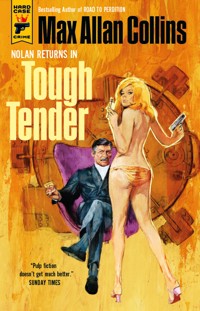
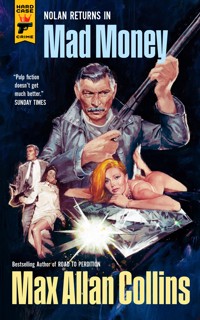
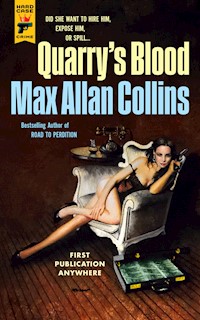
Has Nolan met his match? MWA Grandmaster Max Allan Collins' veteran thief faces off against a cold-blooded femme fatale in this double-length adventure originally published as two complete novels and unavailable in stores for three decades. "Pulp fiction doesn't get much better."Sunday Times SOMETIMES YOU BURY THE PAST. SOMETIMES IT BURIES YOU. Every professional thief knows you never return to the scene of a crime. But what if you're forced to? In this intense heist story – appearing in bookstores for the first time in three decades – MWA Grandmaster Max Allan Collins brings veteran thief Nolan and his young partner in crime Jon back to rob the same bank they targeted in their debut novel, TWO FOR THE MONEY, at the behest of an embezzling executive and a femme fatale with dollar signs where her soul should be. And those aren't the only figures resurfacing from the past either – the ruthless Comfort clan is back to even old scores, and some members of the Outfit are packing bullets with Nolan's name on them. With all these forces marshalled against him, can even the toughest professional hardcase come out on top?
Das E-Book können Sie in Legimi-Apps oder einer beliebigen App lesen, die das folgende Format unterstützen:
Veröffentlichungsjahr: 2022
Ähnliche

CONTENTS
Cover
Title Page
Leave us a Review
Copyright
Introduction
BOOK ONE Hard Cash
1
2
3
4
5
6
7
8
9
10
11
12
13
14
15
16
17
18
BOOK TWO Scratch Fever
One
1
2
3
4
5
Two
6
7
8
Three
9
10
11
Four
12
13
14
15
16
17
18
19
Acclaim For the Work of
MAX ALLAN COLLINS!
“Crime fiction aficionados are in for a treat…a neo-pulp noir classic.”
—Chicago Tribune
“No one can twist you through a maze with as much intensity and suspense as Max Allan Collins.”
— Clive Cussler
“Collins never misses a beat…All the stand-up pleasures of dime-store pulp with a beguiling level of complexity.”
— Booklist
“Collins has an outwardly artless style that conceals a great deal of art.”
— New York Times Book Review
“Max Allan Collins is the closest thing we have to a 21st-century Mickey Spillane and…will please any fan of old-school, hardboiled crime fiction.”
— This Week
“A suspenseful, wild night’s ride [from] one of the finest writers of crime fiction that the U.S. has produced.”
— Book Reporter
“This book is about as perfect a page turner as you’ll find.”
— Library Journal
“Bristling with suspense and sexuality, this book is a welcome addition to the Hard Case Crime library.”
— Publishers Weekly
“A total delight…fast, surprising, and well-told.”
— Deadly Pleasures
“Strong and compelling reading.”
— Ellery Queen’s Mystery Magazine
“Max Allan Collins [is] like no other writer.”
— Andrew Vachss
“Collins breaks out a really good one, knocking over the hard-boiled competition (Parker and Leonard for sure, maybe even Puzo) with a one-two punch: a feisty storyline told bittersweet and wry…nice and taut…the book is unputdownable. Never done better.”
— Kirkus Reviews
“Rippling with brutal violence and surprising sexuality…I savored every turn.”
— Bookgasm
“Masterful.”
— Jeffery Deaver
“Collins has a gift for creating low-life believable characters …a sharply focused action story that keeps the reader guessing till the slam-bang ending. A consummate thriller from one of the new masters of the genre.”
— Atlanta Journal Constitution
“For fans of the hardboiled crime novel…this is powerful and highly enjoyable reading, fast moving and very, very tough.”
— Cleveland Plain Dealer
“Nobody does it better than Max Allan Collins.”
— John Lutz
The beautiful young woman in her mid to late twenties sitting next to Rigley didn’t seem the least bit shaken. Pissed off, yes; shaken, no. She was tall, probably five-ten or more, with dark brown hair that curved around her face in a way that reminded Nolan of the way women wore their hair in the forties, the what was it?—pageboy. She had big eyes, huge damn eyes, as brown as her hair and as beautiful; all of her features were beautiful in an exaggerated way. Her mouth was overly large, but nicely so—a sensual mouth that seemed to Nolan designed for any number of erotic pastimes—and her nose was nearly too small and put together so perfectly, it seemed unlikely God could have done it without help. She was full-breasted, small-waisted, lavishly hipped. She wore a matching sweater and pants outfit the color of the rusty brick fireplace; the shadows from the fire were licking her, and he didn’t blame them.
Nolan went over and took the shotgun from Jon, and it was in his arms as he looked at Rigley and said, “There are two alternatives for dealing with blackmailers. Go along with them. Or kill them. I can’t see going along with you…”
HARD CASE CRIME BOOKS
BY MAX ALLAN COLLINS:
SKIM DEEP
TWO FOR THE MONEY
DOUBLE DOWN
TOUGH TENDER
MAD MONEY*
QUARRY
QUARRY’S LIST
QUARRY’S DEAL
QUARRY’S CUT
QUARRY’S VOTE
THE LAST QUARRY
THE FIRST QUARRY
QUARRY IN THE MIDDLE
QUARRY’S EX
THE WRONG QUARRY
QUARRY’S CHOICE
QUARRY IN THE BLACK
QUARRY’S CLIMAX
QUARRY’S WAR (graphic novel)
KILLING QUARRY
QUARRY’S BLOOD
DEADLY BELOVED
SEDUCTION OF THE INNOCENT
DEAD STREET (with Mickey Spillane)
THE CONSUMMATA (with Mickey Spillane)
MIKE HAMMER: THE NIGHT I DIED (graphic novel with Mickey Spillane)
*coming soon
Tough
TENDER
byMax Allan Collins
LEAVE US A REVIEW
We hope you enjoy this book – if you did we would really appreciate it if you can write a short review. Your ratings really make a difference for the authors, helping the books you love reach more people.
You can rate this book, or leave a short review here:
Amazon.com,
Amazon.co.uk,
Barnes & Noble,
or your preferred retailer.
A HARD CASE CRIME BOOK
(HCC-153)
First Hard Case Crime edition: March 2022
Published by
Titan Books
A division of Titan Publishing Group Ltd
144 Southwark Street
London SE1 0UP
in collaboration with Winterfall LLC
Copyright © 1982 by Max Allan Collins; originally published as Hard Cash and Scratch Fever
Cover painting copyright © 2022 by Mark Eastbrook
All rights reserved. No part of this book may be reproduced or transmitted in any form or by any electronic or mechanical means, including photocopying, recording or by any information storage and retrieval system, without the written permission of the publisher, except where permitted by law.
This book is a work of fiction. Names, characters, places, and incidents either are the products of the author’s imagination or are used fictitiously, and any resemblance to actual events or persons, living or dead, is entirely coincidental.
Print edition ISBN 978-1-78909-143-4
E-book ISBN 978-1-78909-144-1
Design direction by Max Phillips
www.maxphillips.net
Typeset by Swordsmith Productions
The name “Hard Case Crime” and the Hard Case Crime logo are trademarks of Winterfall LLC. Hard Case Crime books are selected and edited by Charles Ardai.
Printed in the United States of America
Visit us on the web at www.HardCaseCrime.com
Introduction
For a long while Hard Cash and its sequel, Scratch Fever, were the toughest of the Nolan novels to find. Their first editions as Pinnacle paperbacks remain among the toughest M.A.C. collectibles to locate.
This is because Pinnacle Books, threatened with legal action by Don Pendleton, caved and published the two novels in small print runs, without the name “Nolan” on the cover…despite the fact that the series was a hit. This capitulation was part of the out-of-court settlement over the absurd claim that Nolan was a Mack Bolan imitator.
If you have any sense of the paperback field in the 1970s and ’80s, you know just how many real Mack Bolan imitations were out there. Nolan was a crime novel series, not a mob vigilante one, but…Nolan rhymed with Bolan.
As I’ve noted elsewhere, Nolan was actually the third name for the character, settled on after “Cord” had been discarded and replaced with “Logan.” I had changed the latter to Nolan because an obscure paperback series (I believe from Belmont Books) about a character called “Logan” prompted me to find a different if similar name for my professional thief.
This had much less to do with me and more to do with how much Don Pendleton and Pinnacle Books hated each other. Nolan, fittingly, got caught in their crossfire. So Hard Cash and Scratch Fever went out as novels about “Jon’s pal.” That’s like calling Batman “Robin’s pal.”
Eventually the books were combined into a single volume, Tough Tender, published by Carroll & Graf, back in 1991. It’s an easier out-of-print volume to locate than the original two paperbacks, and now Hard Case Crime is including Tough Tender in their project of reissuing all the original Nolan novels in two-in-one volumes (Two For the Money collected Bait Money and Blood Money; Double Down collected Fly Paper and Hush Money; and next year Mad Money will collect Spree and Mourn the Living).
Hard Cash continues my propensity to write novels that grow out of novels–this one is, in part, a sequel to Bait Money, the first published novel in the series. It also marks the return of everybody’s favorite crime-fiction hillbilly clan, the Comforts. Well, my favorite, anyway.
But what I had most in mind in Hard Cash was to combine the caper novel with the James M. Cain sex melodrama. I love Cain–particularly The Postman Always Rings Twice and Serenade –and relished the opportunity to perform this genre splice. In so doing, my femme fatale proved memorable enough to appear in the direct sequel, Scratch Fever.
***
Scratch Fever holds a somewhat unique position in my Nolan series. The first five novels were written in the late sixties through the mid-’70s. But only the first two, Bait Money and Blood Money, were published in the seventies (both in 1973). The others, because of a merger between publishers Curtis Books and Popular Library, went into that terrible limbo called inventory. Promises of publication were made but not kept. And around 1980, I got the rights back.
With astonishing speed, Pinnacle Books picked up the five books (three of which had never seen publication, remember). I did some rewriting and updating, and suddenly Nolan was again back in business. But Pinnacle was something of a relentless publisher when it came to crime–they offered me a six-book contract.
Which meant that, after seven or eight years or so, I would be returning to the series, with the express instructions that the jump from ’70s book to ’80s book be seamless.
I think it is. Probably this is my favorite of that first batch of Nolan novels (even if it is, sort of, a one-book “second batch”). I was really getting the hang of writing low-life villains who retained a recognizable humanity, and both Nolan and Jon were getting nice and round, which in particular for Nolan, a genre type if ever there was one, was a good trick. But in Scratch Fever, you meet a Nolan with a genuine relationship going on with his girl Sherry (and to him she is a “girl”), not to mention real concern for his partner-in-crime, Jon. You also will find out what happens when somebody fucks with Nolan’s dog, and I don’t mean the terrier next door.
Two things particularly please me about this novel.
The character Julie, returned from Hard Cash, is a particularly good femme fatale, I think. I can say this looking back at the novel since I hardly remember writing the thing, and can take it on its own terms. (I do remember that the two hitmen in this novel were inspired by an apparently gay pair of killers in the classic Joseph H. Lewis film, The Big Combo. If you are a real buff, you’ll realize that this pits Lee Van Cleef against… Lee Van Cleef.)
The other thing is the presence of rock music in the plot or anyway the ambience. I have played in rock bands since high school, starting around 1966. There have been occasional stretches where I haven’t been out there playing, but mostly I have, right up to the present.
The Barn, the venue where Jon and his band the Nodes are appearing, is based on a now-defunct joint called the Pub, where my band Crusin’ played every other weekend for at least two years. This is a very accurate rendition of that club. When I wrote the novel, I had just quit the band, who went on without me as a trio playing New Wave under the name the Ones. I returned before long, but in some sense, writing about Jon as a rock musician and this particular venue was a kind of valedictory. Premature as it turns out, but nonetheless Scratch Fever marks the most major convergence between my two worlds–writing crime novels and playing rock music–and, for that reason if no other, it holds a special place in my hardboiled heart.
All of my early novels were written when I was a working rock musician. For several years, playing rock was my major source of income…particularly the fallow writing period between when I wrote the Nolan, Mallory and Quarry novels, and landed the Dick Tracy comic strip. Pinnacle publishing Nolan would follow soon, and Mallory finally seeing print at Walker, and Nathan Heller coming to life at St. Martin’s Press and changing my career.
Somewhat ironically, Scratch Fever is the first book of that second, much more successful time…so it’s no wonder it’s my favorite of the first seven Nolan novels.
I hope you like it, too.
MAX ALLAN COLLINS
BOOK ONE
Hard Cash
1
Breen’s first reaction, when he saw the gun, was to laugh.
A nervous laugh, to be sure, but Breen had an ability to look at himself in a detached, ironic sort of way in stress situations, and the thought of him getting robbed tickled his perverse inner funnybone.
He sat up, jarring the naked barmaid on top of him. He eased her off to one side. She was a cute, plump, German-looking girl with lots of yellow hair. Her lips were a blush-pink color. So were her nipples. She tried covering herself with the little black skirt she’d climbed out of moments before; it was like hiding behind a stamp. Breen was naked too, but he didn’t bother covering up. He got a carpet burn on his butt, though, sitting up so fast, surprised.
And the only thing he could see, at first, was the guns—one of them a .45, the other a shotgun, Jesus!—and the long black woolen overcoats, filling the doorway of the back room like two long shadows. The faces of the men were lost, for the moment, in the darkness and the turned-up overcoat lapels, but Breen remembered them immediately, remembered seeing the two men come into the bar an hour or so ago. Remembered the full-length dark coats and turned-up lapels and remembered how stiffly one of the men had walked, almost limping. Limp, hell—that had been the goddamn shotgun strapped to somebody’s thigh.
Which explained why the pair hadn’t bothered shrugging out of their heavy, wet coats to hang them up as they came in; why they retreated at once to the rear of the place, to a back booth near the men’s can, out of Breen’s sight.
And he hadn’t gotten a close look at the pair, either. The yellow-haired barmaid and another waitress, a sexy brunette who had resisted Breen’s advances and just worked there, took care of the customers in the little bar, while Breen just stayed back behind the counter mixing drinks, making occasional conversation. He’d had no contact with the two men, and probably wouldn’t even have noticed them particularly if it hadn’t been such a dead night.
Tonight, the late December freezing rain that had begun to turn to snow around seven was keeping everybody at home. The bulk of drinking done in Indianapolis tonight would be guys sitting in their kitchens with a bottle and glass, or in an easy chair with beer and pretzels and the boob tube for company. The night was so slow, in fact, the snow looking so blizzard-like, that Breen had closed up early, just after midnight. He was losing money staying open, it was so dead, and besides, that would give him two full hours with that Playboy Bunny of a barmaid and the wife none the wiser.
Women were a weakness of Breen’s. Not his worst weakness, but an easy second place. Gambling was his first love, of course —or lust, rather: Breen was a gambler the way a nymphomaniac is a lover, never quite getting out of it what was put in. But he’d kicked the habit, or anyway hoped he had; he hadn’t indulged in anything even as harmless as a penny ante poker game these past three months or so. The trick, of course, would be if he could resist the damn horses. It was easy enough to go cold turkey in December, when there was nothing doing but damn harness racing, which wasn’t racing at all, in his mind. But what about next summer, when the Chicago tracks started up, and he’d have the old itch to drive in on the weekend? December, sure, but what about fucking May?
Anyway, he was paid up. Didn’t owe no bookie no nothin’. Thanks to Nolan, Breen had been able to pay off those four gees he owed that pig bookie of his, and catch up on some of the back alimony and child support he owed his first wife, besides. Things were looking good. The world was spreading its legs for Breen. So was the yellow-haired barmaid, when the guys with guns came in.
She’d been on top of him. Doing her Linda Lovelace imitation and not a bad one at that, after which she’d started settling that sweet German ass down on him, and that’s when those fuckers came in.
Thieves, no less.
And he laughed.
Couldn’t help himself.
For a second, he laughed. Man bites dog. Thief gets ripped off.
That was Breen, that was what he was: a thief. A stocky, forty-two-year-old, black-haired, crew-cut, fleshy-cheeked, twice-married thief. Who ran a bar in Indianapolis with his brother-in-law Fred (the nights Fred had off were the nights Breen had on—on the plump, sexy waitress, that is) and lost more money on the horses than any bar, let alone one small, quiet, out-in-the suburbs neighborhood bar, could take care of. The only way Breen the gambler could survive was if Breen the thief got out and hustled.
And in the old days, the fifties, even on into the sixties, it hadn’t been so bad. It had been good, as a matter of fact, very good. He had worked with the best: guys like Laughlin, Metesky, Randisi, Nolan. Especially Nolan. Nolan was the best organizer in heisting, a real leader, somebody you felt confident working with. But things had started going to hell these last few years. Laughlin and Metesky and a couple of other good men were killed in Georgia little over a year ago, in a back roads chase like something out of the movies, only no happy ending: the damn car went off the side of the road, rolled, blew the fuck up. And Randisi, Christ, he’d just heard about Randisi the other day: shot through the throat, dead before he hit the ground, and the sad part was Randisi was robbing a fucking liquor store. A guy like Randisi robbing a liquor store, shit. That alone was enough to make you sick.
Christ, for a while there, seemed like everybody in the business was either shot or in stir or otherwise out of commission. Even Nolan.
A couple of years back, Breen and Nolan and some others had been in Chicago (Cicero, to be exact) getting a bank job together, when some syndicate guy shot the job right out from under them. Nolan had had some trouble with the Chicago Family years before, but everybody—including Nolan—had thought that to be past history. Well, it wasn’t, it was here and now, and Nolan and Breen and the rest of the string found out the hard way. Luckily only Nolan got tagged with a bullet, but the job went blooey, and Nolan was out of action for a time.
Initially Breen figured Nolan for dead, and so did about everybody else in the business. When Nolan turned up alive, several months later, no heist man worth a shit was willing to come near Nolan, who might as well have stayed dead. Even Breen had stayed clear of his old friend. The risks of the profession were great enough already without including somebody who was wanted by the Family on a job.
Breen had always worked with Nolan as often as possible, but with Nolan and so many other good people out of circulation, Breen had to take what he could get.
And what he could get, it turned out, was the Comforts.
That was what Breen called really hitting the bottom. About as bad as Randisi and the fucking liquor store. Stealing nickels and dimes, that’s what Breen was reduced to. Literally. Heisting goddamn parking meters with the goddamn Comfort family.
Crazy old Sam Comfort usually worked exclusively with his two sons, Billy and Terry, but Terry drew a short term for statutory rape a while back, and Comfort asked Breen to fill in till the boy got out. Breen had gambling debts to pay, and back alimony and such, and even though he knew old man Comfort had a reputation just slightly shadier than a two-dollar whore, Breen accepted Comfort’s offer. When you’re desperate, you’re desperate.
Actually, he had to give old Sam credit: the parking meter angle wasn’t such a bad one. Comfort had worked out a route along Interstate 80, of good-size cities with poorly lit sections of town where parking meters were ripe for picking; Breen and Billy Comfort wore khaki green uniforms with the words “Meter Maintenance” stitched on the back, and Billy would go around emptying meters with keys old Sam provided, bringing back buckets of coin for Breen to empty into the trunk of the Buick, behind the wheel of which sat Sam Comfort, monitoring police calls on a citizen’s band radio.
It had been a solid month of six-days-a-week hard work, and when he went to the Comforts’ rented farmhouse in Iowa City to collect his share of the nearly fifty thousand bucks that the unofficial meter maintenance team had taken in, Breen had discovered that all the bad things he’d heard about the Comforts were true, and more. Old Sam paid Breen his share by shooting him.
Once in the side, once in the leg.
But Breen had managed to get away, despite the pain and inconvenience of the two wounds. The Comforts, in their quaint, folksy manner, had gotten drunk before Breen showed up, which made evading them no great trick. The trick had been not getting killed by those first unexpected blasts.
Breen had scrambled to his car and got it going, while behind him the back windshield had turned into a big lacy glass doily, thanks to the hole punched in its middle by Sam Comfort’s handgun. He had driven the car to Planner’s, Planner being an old heist guy who was a good friend of Nolan’s. It turned out that Planner had died not long ago, and Nolan and a lad named Jon were presently staying in Planner’s place, getting the estate settled or some damn thing.
Anyway, Nolan helped Breen get on his feet, or rather on his back, providing a bed and patching him up and letting him stay there and heal a while. Furthermore, it turned out that Nolan’s troubles with the Family were really over this time, and Nolan was evidently thinking about getting back into circulation. On hearing of the Comforts and the double-cross, Nolan offered to get the money back for Breen.
Breen hadn’t been too hot on the idea. He was never one for revenge, placing his ass first on his priority list. Fuck, he was grateful just to be alive. Let bygones be bygones. He didn’t hold any grudge against those goddamn fucking asshole Comforts. But at least, he had told Nolan, if you do rip them off, kill them too. If you don’t, he’d told Nolan, you might as well kill me now, because the Comforts are going to figure me for this and come around and feed my balls to me, à la fucking carte.
But Nolan was hard to sway once he got an idea in his head, and Breen stayed behind, resting up in bed, while Nolan and Jon went off to the Comforts’ home territory—a farm in Michigan, near Detroit—and got the parking meter money back. Breen’s share and all the rest of it, too.
And the really nice thing was the Comforts—Sam and Billy anyway—had been killed in the process.
It wasn’t Nolan’s style, killing people, or anyway, it wasn’t his style to kill people needlessly. But here there’d been a need: the old man and his son got wise to the heist and came out with guns. So Nolan and this kid Jon had killed them both.
Or anyway, that was what Breen had been told.
Because now, several months later, as he sat naked on the floor of the cramped, closetlike back room, on the soft carpeting he’d installed with cute, plump barmaids in mind (a German-looking, yellow-haired example of which was next to him, huddling in wide-eyed fright against stacked boxes of booze, a young girl as naked as he was and trying to hide behind an inch or so of black cloth), after he’d laughed momentarily at the thought of being caught with his pants down, of being a professional thief about to be robbed by some petty cheap-ass punks, Breen wondered if there was such a thing as ghosts.
Because one of the men aiming the ugly round, hoglike nostrils of a shotgun at him was a white-haired, gray-eyed old man with sardonic smile lines worn into his face, an ambiguously evil/innocent-looking old man named Sam Comfort. The other man, the one with the .45, wasn’t a man at all—he was a boy. At first Breen thought it was Billy Comfort. He thought both dead Comforts had come back from the grave after him. But it wasn’t Billy; it was Terry. Thin-faced, fair-haired Terry. The sole surviving Comfort, Breen had thought.
Till now.
And the laugh, that ironic laugh at the thought of man bites dog, caught in Breen’s throat like a chicken bone, and he felt naked. Naked as hell, more naked even than he was.
“No,” old Sam said. “I ain’t dead. But you are.”
And the old man swung the shotgun, firing, noise and smoke and fire exploding out one barrel, and the sound was a sonic boom in the little room, rattling the boxes of liquor, breaking bottles, shaking everything.
Breen swallowed, wondering why he was alive.
Then he looked to his right, looked over to where old Sam had swung the shotgun.
Looked over in the thankfully shadowy corner of the back room where the plump body of the barmaid had been tossed, flung, like a life-size inflatable doll with the air slowly seeping out of it. He looked at yellow hair and blood and the rest of what used to be a head with a pretty face on it, dripping down the side of the wall.
“Where’s Nolan?” old man Comfort said.
2
“I know who you are,” the man said, sitting down. He was an executive type, in his mid-forties, wearing a powder-blue pinstripe suit with matching vest and soft-yellow shirt and powder-blue tie, none of which had been ordered out of a Sears catalog. His hair was dark, untouched by gray (or retouched by something else) and had been cut—no, styled—by a barber who considered himself an artist. His eyes seemed the same color as his suit, but in the dim light it was hard to tell, exactly; maybe they were gray. A handsome man, in a cold, sterile, dull sort of way, like an aging male model or over-the-hill pretty-boy actor who would never make it in character roles.
Nolan said nothing. He just folded his hands and looked out across his knuckles at the man across the table.
They were in the Pier, a seafood restaurant on the banks of the Iowa River, in the cocktail lounge, a long, rectangular dark-paneled room with lots of black vinyl-covered furniture and some oil paintings of steamboats, ship captains, and Mark Twain at various stages of life. The main floor, above them, was a tribute to the ingenuity of Nolan’s friend Wagner, who had bought the building left vacant when the Fraternal Order of Elks, Iowa City Lodge, moved to newer, larger digs out in the country; the big dining room, with several other, more intimate rooms off to either side, was given a twenty-thousand-leagues-under-the-sea atmosphere via black light and other otherworldly lighting effects that played tricks with Day-Glo wall murals. An oddly illuminated aquarium built into and running the length of one wall furthered the underwater feeling, while menus printed in fluorescent ink glowed the various seafood and steak selections to customers who had by now completely forgotten they were sitting in the old, mostly unremodeled Elks Lodge. The upper floor, a ballroom, was rented out occasionally but otherwise went unused, and the lower, which housed the cocktail lounge, was pretty much the same as it had been when the Elks were loose in it, except for the nautical oil paintings.
The two men had the lounge almost to themselves. It was a cold, snowy Wednesday night, and nobody was there who didn’t have to be: just the help; Nolan, the Pier’s new co-owner and manager; and this man in the powder-blue pinstripe suit, who’d come to see Nolan.
The man leaned across the table, smiling, his teeth so perfect and white, they were either capped or a miracle, and said, “I said I know you.”
Nolan shrugged with his eyes.
“And you know who I am, too, don’t you?”
Nolan nodded.
“Don’t you wonder why I’m here?”
There was something in the man’s voice—what it was, Nolan couldn’t quite pin down…smugness maybe, maybe nervousness.
“Doesn’t it…bother you, my being here?”
Both. It was both.
“No,” Nolan said.
“No? Why not?”
“Because,” Nolan said, leaning forward himself now, returning the smile, whispering, “when you leave here, a friend of mine is going to shoot you, toss you in the trunk of his car, and dump you in a ravine.” And he leaned back and stopped smiling.
A tic got going at the left edge of the man’s right eye, and they were gray eyes, not blue, Nolan decided.
“I…don’t believe you.”
Nolan shrugged again, this time with his shoulders. “Do what you want. All I know is I saw you come in twenty minutes ago. You sat down and started staring at me. I left the room, used the phone. My friend’ll be outside now. And there’s only the one exit, you know.”
All of that was bullshit, but the man didn’t know it. There had been no phone call. Nolan had left the room—to go up to his office and get a .38 snub out of a desk drawer. The gun was stuck in his belt, under his sport coat, but he of course had no intention of using the thing in a public place like this, even if it was a slow night. And the only friend he had in town who could conceivably help him was Jon, who was as unlikely an assassin as Nolan could think of. Even the bit about the exit was crap: there were three, as a matter of fact.
Not that Nolan wouldn’t kill this man if he had to. And he was starting to think maybe that’d be the case.
Nolan was fifty years old and did not look it, particularly, though at times like this he certainly felt it. He was a big but not huge man, lean but deceptively muscular with a slight paunch one of the few visible signs of his middle age. His hair was dark, slightly shaggy, widow’s peaked, graying at the temples; he had had the permanently dour countenance of a western gunfighter and the thick, slightly droopy mustache to go with it; at the same time he had high cheekbones and narrow eyes somehow suggestive of an American Indian. It was as if somewhere in his ancestry there’d been a Cochise and Doc Holliday both.
He was a professional thief, recently retired but with no pretense of having at last joined the “straight” world. He had been a thief too long to ever think of himself as anything else, and he’d be fooling himself if he tried. He had heard a supposedly true story about a guy named Levitz, who was a very smooth, very successful con man back in the thirties, but who had a complex about being Jewish. One day Levitz was walking down the street with another successful con artist of the era, a hunchback named Lange, and as they went by a synagogue, Levitz said, “Did you know I used to be a Jew?” And Lange said, “Did you know I used to be a hunchback?”
Nolan knew better than to try and con himself; he was a thief and had no pretensions otherwise. Besides, the money he had invested in the Pier was heist money mostly, and if you’re going to build a new, socially acceptable life for yourself on that kind of money, you’re wise never to forget where the foundation came from.
Because forgetting who you were—who you are—could be dangerous as hell.
Take this situation, for instance.
The man in the pinstripe suit, sitting across the table from Nolan, was the president of a bank: the First National Bank of Port City, Iowa, a town of twenty thousand just forty miles southeast of Iowa City. The man’s name was George Rigley. A little over two years ago, the two men had sat across from each other in a similar manner. At George Rigley’s desk. In George Rigley’s bank.
Two years and a month or so ago, Nolan, his young friend Jon, and two others had robbed George Rigley’s bank. Nolan, Jon, and a guy named Grossman had posed as examiners to gain after-hours admittance to the bank, and therefore hadn’t had the luxury of wearing masks. And so it was possible, perhaps inevitable that bank president Rigley would recognize Nolan.
Nolan had considered the possibility, when he chose to live and work in Iowa City just two short years after that robbery, that a problem like George Rigley might crop up. He’d known it was possible for employees of that particular bank to wander into the Pier now and then, and since Nolan had worked extensively in the rural Midwest (where banks were relatively easy pickings, oftentimes not even insured by the FDIC, meaning no FBI), veterans of other Nolan robberies could have possibly turned up as customers at the restaurant and lounge. But he’d been counting on several factors to take care of any such problems—for one thing, the generally lousy memory of most people; people often have trouble recognizing even a familiar face in an unexpected context. And Nolan had been twenty pounds lighter at the time of the robbery, and had been disguised for the occasion: his hair and mustache had been powdered white, and he’d worn tinted glasses. Later, he’d seen the drawings that appeared in the papers, based on the descriptions of the witnesses, and hadn’t recognized himself. So why should any of the witnesses do any better two years later in Iowa City, in an unexpected context?
It was a total fluke, of course, that Nolan had ended up in Iowa City at all. Or a series of flukes, anyway. His connection to Iowa City had been Planner, an old guy who used an antique shop in town as a front for doing what his name implied: planning jobs for guys the likes of Nolan. Planner had been a middleman, a heist broker—an old-time heist man himself who hadn’t liked the tension and danger of the life but who didn’t know any other so continued dabbling in it into his semiretirement. Planner would use his guise of eccentric old antique dealer to travel around and scout up prospective targets, working out detailed packages to sell to Nolan and a few others like him—that is, a suggested method or methods for pulling the caper off. He also served as a line of communication through whom others in the heist trade could be contacted and with whose help you could assemble a first-rate string.
Two years ago, needing money, the Family hot on his ass and nobody in the trade wanting to share the heat with him, Nolan had turned to Planner for anything Planner could come up with for him. And Planner had given him the Port City job. Seemed that Planner’s nephew, Jon, a kid of nineteen or twenty, was in with a couple of other lads, one of whom was a pretty young bitch who worked as a teller at the Port City bank, which these kids were planning to rob. Nolan decided that having an inside person at the bank was an advantage that might offset the lack of experience and the immaturity of the kids, and out of sheer desperation, he went ahead with the robbery.
And so had begun his relationship with Jon. Jon was a somewhat naive, basically shy kid who had dreams of drawing comic books for a living some day; he was a smart kid, a strong little bastard who lifted weights and all that and had been a state wrestling champ in his high school days. Jon’s only (if overriding) eccentricity was this thing of being a comic book nut: drawing the things, collecting them, talking about them almost constantly. Nolan didn’t mind, figuring everybody had a right to a quirk or two, but in the beginning he certainly hadn’t pictured the boy as someone he’d be entering a long-term partnership with.
But after the Port City bank job, when some Family people caught Nolan with his pants down, it had been Jon who’d hauled Nolan’s ass out of the fire—and a bullet-riddled ass it had been, too. He’d taken Nolan to Planner’s and stayed by him like a damn nurse for six or eight fucking months. Nolan was not the sentimental type, but Jon was no longer just a silly damn comic book freak to him; Jon was a silly damn comic book freak who had saved Nolan’s life, and that was different.
A lot had happened since then. Planner had been killed, shot to death in the back room of the antique shop when some old “friends” of Nolan’s had come calling. Nolan and Jon had evened the score as best as possible, but lost a pile of money in the process. In the meantime, Nolan’s long-standing feud with the Chicago Family finally fizzled out when a new regime came into power; the new Family people even hired Nolan, and he ran a motel and restaurant complex for them for a while. But he soon got a bad taste in his mouth, working for people who were in his opinion just a bunch of pimps and pushers and killers come up in the world. So he’d quit, amicably, and had decided to take the offer made him by another of his old working cronies who was retired and living in Iowa City, a very close friend of Planner’s named Wagner, who was having some health troubles and wanted Nolan to take over his restaurant business for him. Thanks to a heist he and Jon had pulled in Detroit a few months back, Nolan had had the necessary capital to buy in, and now here he was: settled down perhaps too close to the site of a fairly recent bank job, which was a risk, yes, but a risk he’d decided was worth taking.
Now, however, as he stared across the table at George Rigley, president of the First National Bank of Port City, he wasn’t so sure.
And George Rigley didn’t seem so sure of himself, either, at the moment. Nolan’s blunt threat of death had undermined Rigley’s confidence, shattered that slick, obnoxious superiority so many bankers project. For thirty seconds now, the man had just sat there, quietly shaking in his powder-blue pinstripe, the tic at the corner of one bluish-gray eye revealing that he was close to panic.
“You better have a drink, Rigley,” Nolan said. “You look like you don’t feel so good.”
Rigley showed momentary surprise that Nolan remembered him by name, tried to cover it, then went on. “You don’t scare me. I know you won’t kill me or have me killed. Not right away. You’re not a stupid man. Don’t you think I left word where I’d be? Don’t you think someone knows where I am, and why?”
Well, Nolan certainly didn’t know why.
But one thing was becoming clear: Rigley had not just stumbled onto Nolan. He hadn’t just walked in, recognized Nolan, and come over on impulse to confront him. Evidently Rigley had spotted Nolan at the Pier some time earlier, last weekend maybe, when it was so crowded and Nolan wouldn’t have been as likely to notice Rigley as tonight, a slow, snowy Wednesday.
No, not a chance meeting, but a planned confrontation, contrived for some special, specific reason. But what? Nolan wondered.
So he asked, “What do you want, Rigley?”
Rigley smiled his unreal smile. The tic at the edge of his eye stopped.
“I want you to rob my bank again,” he said.




