


0,99 €
Mehr erfahren.
- Herausgeber: Maria Peitcheva
- Kategorie: Geisteswissenschaft
- Sprache: Englisch
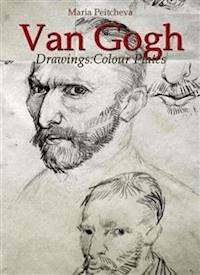
Vincent van Gogh drew thousands of images to better his style. He believed that drawing was “the root of everything”. In just over a decade, he produced more than 2100 artworks, consisting of 860 oil paintings and more than 1,300 watercolors, drawings, sketches and prints. He produced nearly 150 watercolor paintings during his life. Similar to his drawings, Van Gogh often did watercolors as studies before doing an oil painting or as practice. As he continued to refine his technique, he used more and brighter colors in his watercolors. Though often they are far away from his bold brush strokes, the Van Gogh's watercolors are a unique in their use of clear and vibrant colors.
Das E-Book können Sie in Legimi-Apps oder einer beliebigen App lesen, die das folgende Format unterstützen:
Veröffentlichungsjahr: 2016
Ähnliche
Van Gogh
Drawings: Colour Plates
By Maria Peitcheva
First Edition
*****
Van GoghDrawings:Colour Plates
*****
Copyright © 2016 Maria Peitcheva
Foreword
This book demonstrates how fundamental drawing was to Van Gogh's art.
Vincent van Gogh (1853-1890) drew thousands of images to better his style. He believed that drawing was “the root of everything” and completed over 1,000 drawings from 1877 to 1890.
In a letter Vincent wrote in 1880 to his brother Theo:
“Well, and yet it was in these depths of misery that I felt my energy revive and I said to myself, I shall get over it somehow, I shall set to work again with my pencil, which I had cast aside in my deep dejection, and I shall draw again, and from that moment I have had the feeling that everything has changed for me, and now I am in my stride and my pencil has become slightly more willing and seems to be getting more so by the day. My over-long and over-intense misery had discouraged me so much that I was unable to do anything.”
Van Gogh's drawings were mainly done in pencil, black chalk, red chalk, blue chalk, reed pen and charcoal on a variety of paper types these included Ingres paper, laid paper, wove paper. At the outset of his career, he felt it necessary to master black and white before attempting to work in color. Thus, drawings formed an inextricable part of his development as a painter. There were periods when he wished to do nothing but draw. Although his paintings are much more popular than his drawings, Van Gogh is considered a master of drawing.
Drawings
The Magrot House, Cuesmes, 1879/1880,charcoal over graphite on wove paper
The Zandmennik House, 1879/1880, charcoal over graphite on wove paper
Man Polishing a Boot, 1882, black chalk, graphite, and gray wash, heightened with white on wove paper
Detail
Old Man Carrying a Bucket, 1882, graphite with gray and black wash on brown wove paper
Detail
Detail
Beach at Scheveningen, 1882, Transparent and opaque watercolor with charcoal on light brown paper
Detail
Detail
Bleachery at Scheveningen, 1882, Watercolor heightened with white gouache




