


10,99 €
Mehr erfahren.
- Herausgeber: contrasto
- Sprache: Englisch
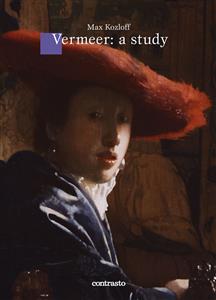
What is the secret of these extraordinary creations we call “icons”? In fresh lucid prose, the writer Max Kozloff explores the impact on viewers of the 17th century painter Vermeer, one of the most emblematic and fascinating artists of our visual history. “Here is an eye of immense power,” Kozloff writes, “unrelentingly trained in every direction all at once.” Acknowledging the “phenomenal radiance” of these Dutch interiors, the “silent eventfulness of light itself,” Kozloff suggests that Vermeer creates an atmosphere of “volatile proximity” that, across centuries and societies, delights and envelops us—and draws us deep into his paintings.“In the history of Western painting, certain works have been accorded a standing higher even than fame. Admired without reserve, they belong to a special class, luminous across time, distance, and varied societies….Popular culture naturally exalts such pictures, though it also has the capacity to degrade them….Yet a work’s familiarity to the widespread public does not minimize, it actually enhances the mystery of its power. In order for an image to become an icon, magnificence may be an asset, whereas charisma is a prerequisite.” Max Kozloff
Das E-Book können Sie in Legimi-Apps oder einer beliebigen App lesen, die das folgende Format unterstützen:
Veröffentlichungsjahr: 2012
Ähnliche




















Vermeer: a study
© 2011 Contrasto due srl
via degli Scialoja, 3
00196 Roma
www.contrastobooks.com
For the text: © the author
Photographic credits ©: Artothek (fig. 17); Blauel/Gnamm/Artothek (fig. 15, 23);
Claus Cordes, Herzog Anton Ulrich-Museum Braunschweig, Kunstmuseum
des Landes Niedersachsen (fig. 11); Collection of the Speed Art Museum,
Louisville, Kentucky (fig. 18); Corbis (fig. 12);
Dea Picture Library (fig. 7); Dea/G. Dagli Orti (fig.10, 16);
Erich Lessing (fig. 2, 6, 8, 9, 19, 20, 22, 24); Joseph S. Martin/Artothek
(fig. 4); Francis G. Mayer/Corbis (fig. 1, 14); Städel Museum/Artothek
(fig. 5); The Metropolitan Museum of Art/Art Resource/Scala (fig. 3);
The National Gallery, London/Scala (fig. 21)
All rights reserved. No part of this book may be reproduced or transmitted in any form or by any means, electronic, magnetic tape or mechanical, including photocopying, recording, or by any information storage and retrieval system, without written permission of the publisher.
Edizione digitale: giugno 2012
ISBN: 9788869654138
Edizione digitale realizzata da Simplicissimus Book Farm srl
Max Kozloff
Vermeer: a study
In the history of Western painting, certain works have been accorded a standing higher even than fame. Admired without reserve, they belong to a special class, luminous across time, distance, and varied societies. However local their origin, these icons are circulated worldwide as never before, courtesy of their afterlife in our media age. Popular culture naturally exalts such pictures, though it also has the capacity to degrade them. Icons are in fact images that pay for their exceptional Alpine status by prolonged exposure to treatment as clichés. Yet a work’s familiarity to the widespread public does not minimize, it actually enhances the mystery of its power. In order for an image to become an icon, magnificence may be an asset, whereas charisma is a prerequisite.




