


8,49 €
Mehr erfahren.
- Herausgeber: Klish T. Kinderman
- Kategorie: Ratgeber
- Sprache: Englisch
Has your child stopped eating his or her favorite food, or does he/she refuse to eat out with friends?
Are you tired of mealtime battles, endless negotiations, and worrying about your child's nutritional intake? Look no further! This empowering book offers a refreshing perspective that will not only change your child's relationship with food but also bring peace and joy back to your dinner table.
Rather than resorting to forceful tactics or giving in to unhealthy eating patterns, this book empowers you with proven strategies to navigate this challenging phase successfully.
Inside this book, you will discover:
Understanding the root causes of Anorexia: Gain deep insights into the underlying causes of your child's food aversions, including sensory issues, developmental factors, and learned behaviors, allowing you to address the problem at its core.
Building a positive mealtime environment: Learn how to create a nurturing and stress-free atmosphere that encourages your child to explore new foods and develop a sense of curiosity, making mealtimes a delightful bonding experience for the whole family.
Practical strategies for picky eaters: Discover a wide range of proven techniques, from food exposure strategies to flavor pairing, texture modification, and gradual food introductions, ensuring that your child's nutritional needs are met while expanding their palate.
Long-term habits for a lifetime: Equip your child with the essential life skills needed to maintain healthy eating habits as they grow, ensuring that their aversion to food is conquered once and for all.
And Much More…
Filled with practical exercises, this book is a compassionate and comprehensive roadmap to help parents navigate the challenging terrain of picky eating.
Break free from frustration and anxiety, and empower yourself with the knowledge and tools to transform your child's eating habits and lay the foundation for a lifetime of health and well-being.
Don't let picky eating hold your child back. Take action today, get a copy of this book right now, and embark on a journey toward nourishing your child's body and mind.
The delicious rewards await you!
Das E-Book können Sie in Legimi-Apps oder einer beliebigen App lesen, die das folgende Format unterstützen:
Veröffentlichungsjahr: 2023
Ähnliche

















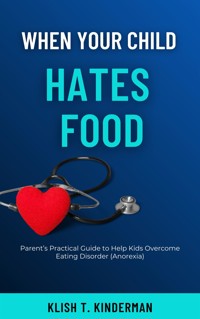
When Your Child Hates Food
Parent’s Practical Guide to Help Kids Overcome Eating Disorder (Anorexia)
Klish T. Kinderman
Copyright ©
Klish T. Kinderman
© 2023 United Kingdom
All rights reserved. No part of this book may be reproduced or modified in any form, including photocopying, recording, or by any information storage and retrieval system, without permission in writing from the publisher.
Table of Contents
Title Page
Copyright Page
Introduction
Understanding Anorexia Nervosa | Introduction to anorexia nervosa
Signs and symptoms of anorexia in children
The underlying causes and risk factors of anorexia in children
The physical and psychological impact of anorexia on children
Navigating the Diagnosis
The importance of early detection and intervention
Addressing common concerns and misconceptions about treatment of anorexia in children
Creating a Supportive Environment
Identifying and addressing family dynamics and conflicts
Promoting Healthy Eating Habits | Understanding the role of nutrition in anorexia recovery
Developing a balanced meal plan that will help kids recover from anorexia
How to encourage regular and adequate food intake
Strategies for managing resistance and negotiating food-related conflicts
Nurturing Positive Body Image and Self-Esteem | Promoting self-acceptance and self-worth
Supporting Mental Health and Emotional Well-Being | Addressing anxiety, depression, and other co-occurring mental health issues
Relapse Prevention and Long-Term Recovery | Identifying warning signs of relapse and developing relapse prevention plans
Understanding the challenges and potential triggers for relapse
Cultivating a positive and nurturing environment post-recovery
Conclusion: Supporting Your Child in their Journey to Recovery
Introduction
Childhood is a critical period of growth and development, both physically and emotionally.
However, for some children, this stage can be marred by the emergence of eating disorders.
Among the various eating disorders that can affect children, anorexia nervosa stands out as a complex and potentially life-threatening condition.
Anorexia nervosa, which is usually referred to simply as anorexia, is characterized by a relentless pursuit of thinness, an extreme fear of gaining weight, and a distorted body image.
Anorexia nervosa predominantly affects girls and young women, but boys and men can also develop this disorder.
It typically emerges during adolescence, a time when body image concerns and societal pressures to conform to unrealistic beauty standards are at their peak.
However, anorexia can also manifest in younger children, and its prevalence among this population has been increasing in recent years.
The causes of anorexia are multifactorial and encompass genetic, biological, psychological, and sociocultural factors, all of which interact to contribute to the development and maintenance of the disorder.
Children with anorexia exhibit various physical and psychological symptoms.
Physically, they experience significant weight loss or failure to gain weight appropriately, leading to growth retardation and nutritional deficiencies.
They usually have a distorted perception of their body shape and size, perceiving themselves as overweight or "fat" even when they are severely underweight.
These distorted beliefs can lead to self-imposed dietary restrictions, excessive exercise, and other compensatory behaviors aimed at controlling weight.
Children with anorexia may engage in rituals surrounding food, such as cutting food into tiny pieces, excessive chewing, or avoiding certain food groups entirely.
As the disorder progresses, they may also develop medical complications such as electrolyte imbalances, hormonal disturbances, cardiac issues, and compromised bone health.
Psychologically, children with anorexia often exhibit an intense fear of gaining weight or becoming "fat."
They may become preoccupied with food, calories, and body image, leading to social withdrawal, isolation, and diminished interest in previously enjoyed activities.
Their self-esteem becomes tightly linked to their ability to control their food intake and maintain a low body weight, which can significantly impair their overall well-being and quality of life.
Academic performance may suffer, and relationships with family and friends can become strained as anorexia takes precedence in their lives.
The impact of anorexia on a child's physical and mental health cannot be overstated. It is a severe psychiatric illness that requires prompt recognition and intervention.
If left untreated, anorexia can lead to severe medical complications, including organ failure and, in extreme cases, death. Early detection is crucial for successful treatment outcomes.
Unfortunately, recognizing the signs of anorexia in children can be challenging, as they may be adept at hiding their behaviors or minimizing their struggles.
In conclusion, anorexia nervosa is a complex and devastating eating disorder that affects children and adolescents. It poses significant risks to a child's physical health, emotional well-being, and overall development.
Understanding the signs and symptoms of anorexia in children is vital for early intervention and improved treatment outcomes.
By raising awareness and promoting education about this disorder, we can work towards creating a supportive environment that fosters early detection, effective intervention, and the well-being of children affected by anorexia.
This book aims to provide parents with a comprehensive understanding of anorexia nervosa and equip them with effective strategies to support their children in overcoming this eating disorder.
Recognizing the immense challenges that parents face when their child is diagnosed with anorexia, this book offers insights, guidance, and practical suggestions to navigate the complexities of the disorder.
By delving into the psychological and physiological aspects of anorexia, the book sheds light on the underlying factors that contribute to its development and maintenance.
It explains the various triggers and risk factors associated with anorexia, emphasizing the importance of early detection and intervention.
Through this knowledge, parents will gain a deeper understanding of their child's experience, enabling them to approach the situation with empathy and compassion.
Moreover, the book emphasizes the significance of creating a supportive and nurturing environment for the child.
It explores strategies for effective communication, including open dialogue, active listening, and expressing genuine concern.




