


0,49 €
Niedrigster Preis in 30 Tagen: 1,99 €
Niedrigster Preis in 30 Tagen: 1,99 €
Mehr erfahren.
- Herausgeber: DigiCat
- Kategorie: Lebensstil
- Sprache: Englisch
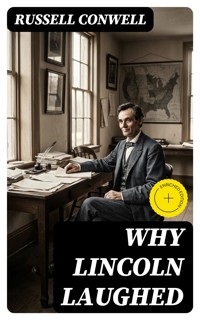
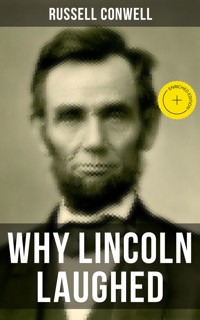
In "Why Lincoln Laughed," Russell Conwell offers a fascinating exploration of the comedic influences that shaped Abraham Lincoln's leadership and political strategy. Through meticulous research and engaging anecdotes, Conwell illuminates the interplay between humor and resilience during one of America's most tumultuous periods. Written in a clear and approachable style, the book navigates the literary context of 19th-century America, emphasizing how Lincoln's wit served as both a coping mechanism and a means of connecting with the American populace. Conwell's keen insights and reverence for his subject matter invite readers to reconsider the role of laughter in the fabric of political discourse. Russell Conwell, an esteemed orator and founder of Temple University, is well-regarded for his dedication to education and social upliftment. His deep-rooted interest in American history and his background in law provide a unique lens through which he examines Lincoln's presidency. Conwell's admiration for Lincoln is evident, compelling him to highlight the transformative power of humor that helped navigate a divided nation and foster a sense of unity. For those intrigued by the intersections of humor and leadership, "Why Lincoln Laughed" is an essential read. Conwell's articulate prose and thoughtful analysis encourage readers not only to appreciate Lincoln's legacy but also to recognize the enduring significance of humor in overcoming adversity. This book serves as a reminder that laughter can indeed illuminate the darkest of times. In this enriched edition, we have carefully created added value for your reading experience: - A succinct Introduction situates the work's timeless appeal and themes. - The Synopsis outlines the central plot, highlighting key developments without spoiling critical twists. - A detailed Historical Context immerses you in the era's events and influences that shaped the writing. - A thorough Analysis dissects symbols, motifs, and character arcs to unearth underlying meanings. - Reflection questions prompt you to engage personally with the work's messages, connecting them to modern life. - Hand‐picked Memorable Quotes shine a spotlight on moments of literary brilliance. - Interactive footnotes clarify unusual references, historical allusions, and archaic phrases for an effortless, more informed read.
Das E-Book können Sie in Legimi-Apps oder einer beliebigen App lesen, die das folgende Format unterstützen:
Veröffentlichungsjahr: 2022
Ähnliche








Why Lincoln Laughed
Table of Contents
Introduction
In this portrait of Abraham Lincoln, laughter becomes the hinge between private sorrow and public responsibility, a practical instrument of leadership that steadied a nation while revealing the depth of a humane imagination, and Russell Conwell follows that hinge to show how levity and gravity can occupy the same chair, how a smile can open doors that force cannot budge, and how a brief moment of shared mirth may gather scattered citizens into a community capable of facing tragedy without shirking duty, inviting readers to consider humor not as escape but as ethical clarity under pressure, a disciplined means of seeing others whole.
Why Lincoln Laughed is a concise work of popular biography and moral reflection by Russell Conwell, an American lecturer and minister known for addressing broad audiences in accessible prose. First appearing in the early twentieth century, it looks back to the United States of the mid-nineteenth century, when national politics and civil war formed the crucible of Lincoln’s leadership. The book’s setting is the social and political world that circled the White House and the wider nation it symbolized, while its genre blends character study with cultural commentary, aiming to illuminate a familiar figure through the specific lens of his humor.
Rather than recounting every milestone of Lincoln’s career, Conwell narrows the frame to the uses and meanings of laughter in public life, tracing how stories, jokes, and gently ironic observations could clarify a dilemma, calm a room, or open a path toward consensus. The voice is oratorical yet intimate, shaped by a lecturer’s instinct for momentum and a pastor’s concern for consolation. The style favors vivid, illustrative episodes over dense documentation, and the tone mixes admiration with practical instruction. Readers encounter a reflective guide who invites them to watch a leader think in real time through the medium of wit.
Several themes emerge with clarity. Humor appears as resilience under strain, a way to bear grief without surrendering purpose. It also works as a democratic bridge, translating legal or military complexity into language ordinary citizens can grasp. Conwell emphasizes the moral dimensions of storytelling: jokes become small parables that test fairness, expose pretension, and affirm the dignity of listeners. The portrait shows how self-command and sympathy are intertwined, how measured levity can reduce hostility without trivializing consequence. In foregrounding these patterns, the book attends to the ethics of speech, suggesting that style in leadership is inseparable from substance.
That focus gives the work a living relevance. In an age marked by polarization, performative outrage, and information overload, Conwell’s study asks how leaders might use humor to humanize rather than to wound, to clarify rather than to distract. The book’s attention to restraint is timely: it models wit that lowers the temperature and broadens understanding. For readers at any stage of civic engagement, it offers a vocabulary for evaluating public rhetoric and a reminder that kindness and intelligence need not compete. The result is a lens for considering today’s discourse through the steadier light of historical example.
This unabridged edition preserves Conwell’s full cadence, allowing the argument to unfurl with the rhythmic balance of a platform address and the intimate steadiness of pastoral counsel. The sentences move quickly, arranging images and moral claims with a craftsman’s economy, and the structure favors clear progression over exhaustive footnotes or archival displays. Readers are guided, not overwhelmed, encouraged to test the book’s claims against their own experience of conversation and leadership. As a listening or reading experience, it is purposeful, succinct, and lucid, offering a compact window into a vast subject without pretending to close the shutters on complexity.
Approached in this spirit, Why Lincoln Laughed complements weightier biographies by concentrating on tone, temperament, and the civic work of humor, encouraging readers to notice how language can carry both mercy and judgment. Conwell does not try to solve every historical question; instead he refines the question of why laughter mattered to one leader and what that might mean for us. The reward is a sharpened ear for public speech and a renewed patience for one another. Entering its pages, we step into a conversation where seriousness and smile are allies, and where understanding begins with attentiveness.
Synopsis
Why Lincoln Laughed (Unabridged) by Russell Conwell is a reflective study of Abraham Lincoln’s distinctive use of humor and what it revealed about his character and leadership. Conwell, known for accessible moral essays, approaches Lincoln not through exhaustive chronology but through an interpretive lens: laughter as a tool of understanding in times of strain. He outlines how humor, far from frivolous ornament, served practical and ethical purposes in Lincoln’s life. The book situates Lincoln’s mirth in the tumult of his era, proposing that his levity complemented his gravity, and that this balance helped him communicate plainly, think clearly, and remain resilient under pressure.
Conwell begins by tracing Lincoln’s penchant for stories and gentle wit to a formative environment in which conversation, anecdote, and plain speech had social currency. The narrative emphasizes that Lincoln’s laughter emerged from empathy and observation rather than mere performance. In Conwell’s telling, the young Lincoln learned that stories could bridge differences and clarify tangled issues. As Lincoln matured, humor became a way to sort ideas and test arguments in a setting where formal education was limited. Conwell presents these roots not as nostalgia, but as the groundwork for a lifelong habit of turning complicated matters into familiar, memorable terms.
The book then follows Lincoln’s rise in public life, describing how he used humor on the platform to make complex policies accessible and to soften rancor without conceding principle. Conwell underscores that Lincoln’s anecdotes were purposeful: they disarmed hostility, invited listeners into the reasoning process, and modeled a civil tone in contentious debates. Laughter, in this account, advanced persuasion because it humanized argument. Conwell does not depict humor as a mask for indecision; rather, he shows it operating alongside conviction, enabling Lincoln to hold firm positions while loosening the rigidity of public discourse.
When the narrative turns to the presidency, Conwell focuses on the extraordinary weight of national crisis and the mental discipline required to face it. Here, laughter appears as relief and regulation, a countermeasure against exhaustion and sorrow. Conwell collects reported episodes in which a well-chosen tale or light remark eased a difficult meeting or clarified a thorny point. The emphasis remains on function over entertainment: humor steadied Lincoln’s colleagues, created a space for careful thought, and maintained continuity of purpose. This portrait highlights a leader whose composure was supported—not distracted—by moments of mirth.
Conwell also examines the psychological dimension of Lincoln’s levity, treating it as a safeguard against despair rather than an evasion of responsibility. Laughter, he argues, helped Lincoln acknowledge pain without being overwhelmed by it. The book avoids romanticizing suffering; instead, it portrays a disciplined practice of turning sorrow into workable resolve. By framing humor as a companion to reflection, Conwell suggests that Lincoln’s cheerfulness was neither constant nor superficial, but a deliberate choice that kept judgment clear and emotions proportioned to the tasks at hand.
Ethically, Conwell distinguishes between humor that uplifts and humor that wounds, locating Lincoln firmly in the former camp. The stories and smiles in these pages reinforce respect for opponents and compassion for ordinary citizens. Conwell credits this quality with building trust: laughter made authority approachable and held self-importance in check. It also supported patient listening, since a leader who can laugh at himself leaves room for others to speak. Throughout, the argument connects Lincoln’s humane wit to civic health, proposing that an ethical mirth can strengthen institutions as surely as stern rhetoric can.
In closing, Why Lincoln Laughed frames Lincoln’s humor as a lasting civic resource: a reminder that clarity often arrives through kindness and that courage can coexist with gentleness. Conwell’s study neither diminishes the gravity of the period nor reduces Lincoln to a collection of jokes. Instead, it suggests that laughter fortified moral purpose, sharpened communication, and preserved balance in leadership. Without spoiling particular illustrations, the book’s enduring resonance lies in its invitation to see humor as a disciplined instrument—capable of easing conflict, inviting understanding, and sustaining hope in public life.
Historical Context
Abraham Lincoln’s public life unfolded in the fast-growing Old Northwest, especially Springfield, Illinois, amid courts, newspapers, and party committees that shaped antebellum politics. Trained as a lawyer on the Eighth Judicial Circuit, he honed a plainspoken style before juries and voters. He served in the Illinois legislature in the 1830s, then one term in Congress in the 1840s, switching from Whig to the emergent Republican coalition. The frontier legal culture prized anecdote and wit, and county-seat institutions—bar associations, taverns, and presses—circulated stories. This setting supplied both the audience and the idiom for the humorous illustrations later associated with Lincoln’s character.
The 1850s national crisis over slavery’s expansion—ignited by the Kansas–Nebraska Act of 1854—propelled Lincoln to prominence. His 1858 debates with Stephen A. Douglas broadcast his arguments through stenographic transcripts and an expanding press network. Elected president in 1860, he led the Union through civil war beginning in 1861, issued the Emancipation Proclamation in 1863, and pressed the Thirteenth Amendment in 1865. War rooms, telegraph wires, and Washington newspapers transmitted his words to soldiers and citizens. Amid immense strain, contemporaries noted his habit of using jokes, parables, and stories to diffuse tension or clarify policy, a coping practice rooted in earlier habits.
Nineteenth-century American humor developed in newspapers and lecture halls, from Southwestern tall tales to the polished lyceum platform. Politicians and lawyers used anecdotes to humanize arguments and hold mixed audiences. Lincoln’s storytelling drew from this culture: he borrowed frontier yarns, Aesopian parables, and Scripture-inflected phrasing to make complex points memorable. Biographers and colleagues—including William H. Herndon, John G. Nicolay and John Hay, and Ward Hill Lamon—recorded his jokes and their occasions, debating their propriety but affirming their frequency. The period’s oratorical norms thus supply a backdrop for interpreting laughter not as frivolity but as an instrument of persuasion.




