


7,99 €
Mehr erfahren.
- Herausgeber: Gramercy Park Press
- Kategorie: Lebensstil
- Sprache: Englisch
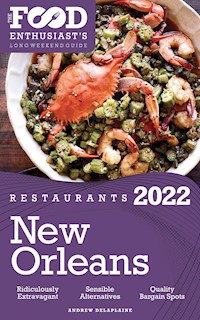
Andrew Delaplaine is the ultimate Restaurant Enthusiast.
With decades in the food writing business, he has been everywhere and eaten (almost) everything.
“Unlike the ‘honest’ reviews on sites like Yelp, this writer knows what he’s talking about. He’s a professional, with decades in the business, not a well-intentioned but clueless amateur.”
= Holly Titler, Los Angeles
“This concise guidebook was exactly what I needed to make the most of my limited time in town.”
= Tanner Davis, Milwaukee
This is another of his books with spot-on reviews of the most exciting restaurants in town. Some will merit only a line or two, just to bring them to your attention. Others deserve a half page or more.
“The fact that he doesn’t accept free meals in exchange for a good review makes all the difference in his sometimes brutally accurate reviews.”
= Jerry Adams, El Paso
“Exciting” does not necessarily mean expensive. The area’s top spots get the recognition they so richly deserve (and that they so loudly demand), but there are plenty of “sensible alternatives” for those looking for good food handsomely prepared by cooks and chefs who really care what they “plate up” in the kitchen.
For those with a touch of Guy Fieri, Delaplaine ferrets out the best food for those on a budget. That dingy looking dive bar around the corner may serve up one of the juiciest burgers in town, perfect to wash down with a locally brewed craft beer.
Whatever your predilection or taste, cuisine of choice or your budget, you may rely on Andrew Delaplaine not to disappoint.
Delaplaine dines anonymously at the Publisher’s expense. No restaurant listed in this series has paid a penny or given so much as a free meal to be included.
Bon Appétit!
Das E-Book können Sie in Legimi-Apps oder einer beliebigen App lesen, die das folgende Format unterstützen:
Seitenzahl: 74
Veröffentlichungsjahr: 2021
Ähnliche













2022
PARIS
Restaurants
The Food Enthusiast’s
Long Weekend Guide
––––––––
Andrew Delaplaine
Andrew Delaplaine is the Food Enthusiast.
When he’s not playing tennis,
he dines anonymously
at the Publisher’s (sometimes considerable) expense.
––––––––
Senior Editor – James Cubby
––––––––
Cover Photo by Cyril Mazarin on Unsplash
Copyright © by Gramercy Park Press - All rights reserved.
The Food Enthusiast’s
Complete Restaurant Guide
Table of Contents
Introduction
––––––––
Getting About
––––––––
The A to Z Listings
Ridiculously Extravagant
Sensible Alternatives
––––––––
Quality Budget Spots
Nightlife
INTRODUCTION
––––––––
––––––––
Where does one even start?
Yes, it is the most romantic city in the world, to my view. Some think that title belongs to Rome, but for me it will always be Paris.
It doesn’t hurt to be in Paris with someone you love. In fact, it makes a discernible difference in your experience there. And while it also helps to be young, that really isn’t necessary. It’s not essential that you be in love, of course. It’s just that there’s an added layer of emotion informing everything you see and do, an extra dimension that imbues your time there with an ineffable invisible coating that will fix the time in your memory till the day you die.
I know that sounds a little dramatic, but it’s absolutely true. It happened to me. Only once, but it happened.
“You only live once, but if you do it right, once is enough.”
Mae West said that.
And before you die, you’ve got to get to Paris.
At least once.
* * *
My word, what can you see in a Long Weekend in Paris? Or better yet, what should you see?
This is a very daunting task, deciding what to see if I were to be in Paris, had 3 or 4 days, and knew I’d never come back.
If this were true—that I’d never go back to Paris—I think I’d make a beeline for the Seine, choose one of the lovely classic bridges—and leap to my death in despair.
This being the case, I’ve tried to winnow away the absolutely unessential things that you can get by without seeing or doing. At the same time, I’ve included enough variety for you to pick and choose if your time is even shorter than my 3 or 4 day Long Weekend.
I would recommend walking around a lot at first, just so you get the feel of the city. The sensory impressions you pick up will remain with you forever. Go into a bistro or a bakery and buy some items for a picnic, whether in a park or back at your lodging.
Don’t visit the churches and museums until AFTER your walk around the town, or the section of town you’re visiting. They aren’t as important as your effort to absorb the city. And I’ll tell you from personal experience, those marble floors are murder on your feet.
––––––––
SPEAKING FRENCH
––––––––
Try to learn a few phrases in French. You can get a little phrasebook anywhere. Just a few words—a greeting, let’s say—will go a long way toward defrosting the notably frosty French attitude toward foreigners.
Or just use a translation app on your phone to get a couple of words before you go into a place.
Personally, even though I’m of French ancestry (going back to the 12th Century in La Rochelle and Nantes), my first experiences with the French were just about as unpleasant as others you’ve heard about.
You don’t have to like the people to accept them as they are. That was the key to my continuing enjoyment when visiting the country. There are far too many pleasures to absorb in France for you to be put off by the people who happen to live there. I know that statement sounds absurd, but it’s not at all.
––––––––
ARRONDISSEMENT SYSTEM
––––––––
What are Arrondissements?
Paris is divided into 20 sections or arrondissements. Starting in the center of the city, they (very confusingly to newcomers) spiral outwards in a clockwise direction. While the arrondissement system may not help the tourist, each arrondissement has its own character and meaning for the Parisians. Most of the famous tourist attractions can be found in one of the central 8 arrondissements. The last two digits of the postal code denotes the arrondissement (example: the postal code 75001 means the address is located in the 1st arrondissement where you can find the Louvre). On street signs the number of the arrondissement is given in Roman numerals (example: the Eiffel Tower is in the VIIe arrondissement). Here’s a list of the 20 arrondissements and some of the more notable attractions to be found in them.
––––––––
Arrondissement 1 - Louvre
This is the center of Paris and the least populated of the 20 arrondissements. Here you’ll find the Louvre Museum, Royal Palace, Tuileries gardens, Forum des Halles, Bourse du Commerce and Vendôme Square. The 1st arrondissement includes the western tip of the Île de la Cité, the Sainte-Chapelle and the Conciergerie. Located on the Right Bank (Rive Droit), this area is one of the expensive areas because it’s within walking distance to the top tourist destinations and restaurants.
––––––––
Arrondissement 2 – Bourse
Located on the Right Bank, this is the smallest arrondissement and primarily a business district. Here you’ll find the Palais de la Bourse, the former stock exchange, the historic National Library and a couple of historic shopping arcades. This is a safe area with affordable accommodations.
––––––––
Arrondissement 3 – Temple
Also a small arrondissement, this area contains the northern part of the historic Marais district that is now a trendy art filled neighborhood. You’ll also find the Conservatoire National des Arts et Métiers (National Conservatory of Arts and Crafts), the Picasso Museum and the Carnavalet Museum. This area has a great Jewish quarter with a variety of good restaurants and shops.
––––––––
Arrondissement 4 - Hôtel-de-Ville
The southern part of the Marais district and the eastern part of Île de la Cité, the oldest part of Paris, are located in this arrondissement. Here you’ll find the Île St-Louis and attractions like Notre-Dame Cathedral, the Place des Vosges, the city hall, the Gothic Tour St-Jacques and the modern Centre Pompidou.
––––––––
Arrondissement 5 – Panthéon
Located on the Left Bank (Rive Gauche), this area is known as the Latin Quarter. Here you’ll find the Sorbonne University, the Panthéon, the Val-de-Grâce church, the St-Etienne-du-Mont church, the Cluny Museum, the Roman-era Arènes de Lutèce and the Jardin des Plantes - the city's botanic garden. This area is known as the intellectual center of Paris filled with bohemian restaurants and bookshops.
––––––––
Arrondissement 6 - Luxembourg
This arrondissement is popular because of the Jardin du Luxembourg, one of the world’s most popular parks. Here you’ll find the Odéon Theatre, the Saint Sulpice church, and the 11th century Saint-Germain des Prés, the oldest abbey church in Paris. Take a stroll along the famous boulevard St. Germain or the rue Jacob where you’ll find former homes of famous authors.
––––––––
Arrondissement 7 - Palais-Bourbon
This is an upscale arrondissement populated with government institutions and major landmarks like the Eiffel Tower. Here you’ll also find the Invalides, Napoleon's Tomb and a variety of museums including: the Musée d'Orsay, the Musée Rodin and the Musée du Quai Branly. Other area attractions include: The Palais Bourbon (National Assembly), École Militaire (Military School) and the UNESCO headquarters.
––––––––
Arrondissement 8 - Élysée
This arrondissement contains The Champs-Élysées, possibly the world's most famous boulevard, and where you’ll discover the glamour and elegance of Paris. There a list of must-see attractions like the Grand Palais, the Arc de Triumph, and Petit Palais, the Élysée - the Presidential Palace, the temple-like Madeleine church and Monceau Park. In this district you’ll find the famous fashion houses and the elegant hotels and restaurants.
––––––––
Arrondissement 9 - Opéra
This arrondissement has quite a mixture of areas with the prestigious boulevards n the south and the Pigalle area, the red light district, in the north. Here you’ll also find the Opéra Garnier - a magnificent opera house, the well-known department store –the Galeries Lafayette, and the majestic Sainte-Trinité church.
––––––––
Arrondissement 10 - Enclos-St-Laurent
The Gare de l'Est and Gare du Nord, two of Paris main railway stations, can be found in this arrondissement. Here you’ll find the Canal Saint-Martin with a variety of restaurants and cafes that line its banks. On Saturday afternoons/evenings and all day Sundays, the streets along the canal become car-free zones for cycling and rollerblading. Here you’ll also find the neoclassical Saint-Vincent-de-Paul church.
––––––––
Arrondissement 11 - Popincourt
The 11th Arrondissement is mostly residential and is better known for its nightlife than its landmarks. Here you’ll find the Cirque d’Hiver, the St. Ambroise church and a nice variety of restaurants. This is a safe area and offers less expensive hotels than the closer arrondissements.
––––––––
Arrondissement 12 - Reuilly
This arrondissement is most residential but you can find popular attractions like the Bastille Opera, the Bercy Stadium and Bercy Park. This area has been revitalized and is popular among the younger crowd who populate the local restaurants, shops and cinemas.
––––––––
Arrondissement 13 - Gobelins
This mostly residential




