


0,90 €
Mehr erfahren.
- Herausgeber: Ktoczyta.pl
- Kategorie: Krimi
- Sprache: Englisch
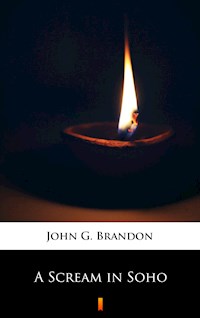
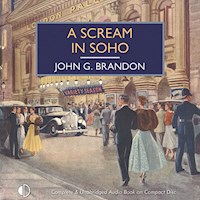
Detective Inspector McCarthy is a daredevil who investigates a murder at a site in Soho. Electricity is cut off throughout London and the mysterious murder of a woman takes place on the same day. Although the corpse was not there when the detective came to the cry. However, he found a clue that would lead to the killer.
Das E-Book können Sie in Legimi-Apps oder einer beliebigen App lesen, die das folgende Format unterstützen:
Veröffentlichungsjahr: 2019
Ähnliche



















Contents
CHAPTER I. A STRANGER IN SOHO
CHAPTER II. DETECTIVE-INSPECTOR McCARTHY DISCOURSES OF THINGS AND PEOPLE
CHAPTER III. THE SCREAM IN THE BLACK-OUT
CHAPTER IV. McCARTHY FOLLOWS A “HUNCH”
CHAPTER V. IN WHICH THE TRAGEDY DEEPENS
CHAPTER VI. THE INSIDE OF THE HOUSE
CHAPTER VII. “DANNY THE DIP” TURNS UP
CHAPTER VIII. THE INSPECTOR SUSTAINS A SHOCK!
CHAPTER IX. THE INSPECTOR GETS YET ANOTHER SHOCK
CHAPTER X. McCARTHY IS TAKEN OFF THE CASE!
CHAPTER XI. MOTIVE
CHAPTER XII. A CHANCE ENCOUNTER
CHAPTER XIII. WITHERS SUPPLIES SOME CURIOUS INFORMATION
CHAPTER XIV. AT THE CIRCOLO VENEZIA
CHAPTER XV. THE PACKET CHANGES HANDS
CHAPTER XVI. EXIT FLORIELLO MASCAGNI!
CHAPTER XVII. “BIG BILL” DOES A SPOT OF SLEUTHING
CHAPTER XVIII. TESSA DOMENICO MOVES UPWARDS
CHAPTER XIX. McCARTHY PARALYSES HIS SUPERIOR OFFICER
CHAPTER XX. McCARTHY STRIKES A SNAG
CHAPTER XXI. THE TABLES ARE TURNED
CHAPTER XXII. A TWO-HANDED RAID!
CHAPTER XXIII. THE INSPECTOR CLEARS THINGS UP!
CHAPTER I. A STRANGER IN SOHO
In that inexpressibly comfortable little Soho café, owned and managed by that dignified Italian lady, the Signora Lucia Spadoglia, Inspector McCarthy sat and waited.
A neighbouring clock had just chimed out the hour of eleven upon a night which might easily have given birth to Henley’s immortal line “black as the pit from pole to pole”, for in the considered opinion of the inspector–not to mention a few million other human gropers at that moment in the metropolis and its environs–it was all that, and blacker.
Outside the cheerful walls of the signora’s oasis the black-out was in full blast, and whatever helpful gleam of light there might have come from the skies in the broader main thoroughfares, the narrow, built-in streets of dingy Soho got none of it. In that truly cosmopolitan area it was, to use the truly expressive term of the good Father O’Hara, creeping about upon his nightly round of visits to the sick and ailing, as “black as the hobs of hell!”
Inspector McCarthy had had what he considered to be his fair share of it that night. For the past three hours, and by the doubtful aid of a dimmed torch, he had been paying visits to those cheaper cafés, and in particular delicatessen shops, in the Charing Cross Road and adjacent thoroughfares, which the Austrian and German refugees were wont to patronize. Harmless people who had suffered miseries almost beyond belief for the greater part, and who were filled with nothing but an immense and overflowing gratitude towards the land which had given them shelter in their hour of direst need. Still objects of pity to the soft-hearted McCarthy, notwithstanding the obvious improvement in their condition since arrival here.
But–and it was a very large “but”–there were others; those ugly little black sheep who creep into every flock and, indeed, are there only for their own ulterior purposes. Gentry, and, sad to say, ladies, who could do incalculable harm if their activities were not speedily checked. Hence the number of Special-Branch operators, expert linguists, he had observed mingling unostentatiously among the patrons of such places.
It was with almost the ecstasy of a devout Moslem gazing for the first time upon the walls of Mecca that he had fumbled his way into the well-blacked-out doorway of Signora Spadoglia’s premises and blinked at its well-lit warmth and comfort, generally.
The signora, as has been written elsewhere, was a protégée of Inspector McCarthy. Time was when the premises were occupied as a pin-table saloon, the rendezvous of as tough a gang of thugs as Soho could show. It was run then by certain Semitic gentry–who combined business in nearby Berwick Street, with horse-racing and, additionally, Detective-Inspector McCarthy proved later, a side line in certain well-camouflaged and extremely payable “fencing” activities.
The inspector having piloted these gentry successfully, first through the Marlborough Street seat of Justice, and then the Old Bailey to durance vile, the place closed down and for a long time it was the home of nothing but cobwebs. Which, as it stood upon the corner of two busy streets and was unquestionably an excellent business stand, seemed a pity.
It was after it had remained in this condition for several months that the Signora Spadoglia, whose evening cooking of spaghetti, macaroni and other cereal edibles beloved of the Italian palate was famed from Soho to Clerkenwell, had her great idea, upon which she consulted the Soho-born Inspector McCarthy.
She had been, she informed him, a saving woman whose personal wants were few. To her had come the idea of redecorating the pin-table blot upon the Sohoan landscape and opening it as a café for the respectable tradesmen of the neighbourhood, where cooking of the best, and wines of a sound quality, would be procurable at a price to suit the pockets of her neighbours.
McCarthy hailed the idea with enthusiasm; interviewed the landlord upon the signora’s behalf and knocked the rent down by nearly fifty per cent, after expatiating at some length to that gentleman upon what a splendid thing it would be for him to realize that he owned at least one piece of property which the police would unhesitatingly class as eminently respectable. So very different to the rest of his possessions in the quarter, which authority relegated to a totally different class, and which might quite easily become the object of unheralded police investigation at any moment.
The inspectors argument worked like a charm. In less than one month from that conversation all traces of the disreputable pin-table dive had disappeared and the Café Milano (Lucia Spadoglia, Ltd.) opened its hospitable doors.
But there was one fly in the signora’s ointment, though the knowledgeable inspector had foreseen it: the erstwhile patrons of the pin-tables saw in the signora’s enterprise a magnificent opportunity for free, and unlimited meals. Here was an establishment which to them was as manna from Heaven! Only a woman in charge; not even a doorman to be dealt with–though he would promptly have been given the “broken glass” treatment had he shown any sign of obstreperousness.
Upon the opening night the “boys” were there in full strength and soon were well under way. The respectable patrons present to honour the occasion looked askance; some stole quietly away before the trouble started. The signora, as became a woman of courage and enterprise, faced it all without the move of a muscle.
Then suddenly arrived a supper party of sixteen, headed by Patron Number One, Detective-Inspector McCarthy. His guests were composed entirely of units of the personnel of New Scotland Yard and a hard, splendidly-conditioned lot they looked. The fall of a pin would have sounded like a thud in the silence which reigned as the inspector and his party took their seats at two tables reserved for them nearby the cash desk at which the signora presided.
The gang being at that time under the leadership of the well-known and rightly-feared Mo Eberstein, the inspector invited that gentleman into an adjacent room for a few words. What exactly transpired has never to this day been made public by either party, but the appearance of the gang-boss suggested that he had not seen eye to eye with the inspector. Both his were bunged tight and rapidly assuming all the colours of the spectrum as McCarthy guided him to the door; the rest of his not really pleasant features were quite unrecognizable.
Before midnight the word had fairly swept through Soho that any member of the gangs who so much as looked cockeyed at the exterior of the Café Milano, let alone the inside, could prepare for personal trouble from Detective-Inspector McCarthy, and in large and ever-increasing doses. It was plenty: from that night the enterprise of the signora had never looked back.
For some twenty minutes now the inspector had been waiting the coming of the person with whom he had a supper appointment, and had spent that interval studying the patrons, regular and casual. Of the former there were fewer than usual, since, nowadays, Soho does not live over its places of business to the same extent as of yore, and the tendency of the black-out was to send suburban dwellers home at the earliest possible moment.
Nor was the casual trade improved by the necessary gloom; to get through Soho streets from either Oxford Street or Shaftesbury Avenue to the well-advertised Café Milano, which was situated about midway between them, was a job, these nights, to make even the stoutest heart flinch.
There were, as in most places of the kind, a fair sprinkling of those refugees, mostly Austrians, drinking that coffee topped by a good inch of whipped cream so dear to the Viennese, two or three tables of Italian business men drinking flasked Chianti with their modest meal and, he could hear, discussing with profound relief the neutrality of the Italian government in the war.
There were also a few groups of sad-looking Germans, people he knew personally to be of long residence in this country, and for the greater part naturalized, and whose sympathy with the aims and ideology of Nazi Germany were absolutely nil.
And then his eyes fell upon one man seated at a single table alone, before him a liqueur which, by the look of his table, was the finishing touch to one of the signora’s most excellent suppers.
In appearance he was a rather singular mixture of colouring; olive-skinned rather than swarthy, with raven-black almost varnished-looking hair and exceptionally white teeth which he showed perpetually in a rather supercilious smile. Not that any of these physiological points were in any way uncommon in Soho. As far as they went McCarthy could have found a hundred similar in a five minutes’ walk. Nothing to hold the eye about them. But the eyes of the man were a totally different thing. They were, without exception, the very lightest shade of blue that the inspector ever remembered to have seen; they were an almost ice-blue, and from the angle at which he watched them they seemed to carry a greenish tinge.
As the man sat, apparently staring at the wall and lost in thought, they seemed to have no expression whatever. They struck him as being of a fixed rigidity–just as are the eyes of a snake who stares through glass with unblinking fixity at an interested visitor to the snake-house at the Zoo. So utterly expressionless did they appear to be, that for a moment McCarthy could almost fancy that the man was blind.
He was well dressed, exceptionally so in comparison with the company present, but to one who prided himself upon his knowledge of matters sartorial, his clothes were obviously not of English cut. There was about them that indefinable, but very definite difference which exists between the art of the best English tailors and their Continental brethren of the same status.
“Now I wonder who th’ divil you are,” McCarthy apostrophized the perfectly still figure. “You’re not Soho, or even temporarily resident here. I’ll stake my life on that.”
The theory that those queer, staring, and utterly expressionless eyes were sightless was exploded when their owner, snapping suddenly out of the deep reverie in which he had been sunk, beckoned to him one of the two little waitresses who were recent additions to the signora’s ménage. From her he took his bill, paid it with what, from the flush of pleasure which came into the girl’s face, must have been a handsome tip. He stood up and then took an overcoat which hung upon the wall near his table, down from its peg.
He was a tall man, six feet in his stockinged feet McCarthy would have put him down as, and had to stoop considerably before the little waitress could get the coat across the broad shoulders. A fine figure of a man, McCarthy granted instantly; clean limbed and as alert as they come, or he was no judge–for all those strange, unmoving eyes.
That he was gently-bred was proved by the bow he gave the girl as he took his hat from her, and also the military bend of his body he gave to the signora as he moved towards the door. There was something in the very leisureliness of his walk, as he moved along the carpeted passages between the tables, which was almost insolent; as if inwardly he was smiling contemptuously at the simple place in which he found himself, and the equally simple people who patronized it. Just for one moment he paused at the door–to take from his overcoat pocket a small torch which he switched on.
As his hand moved towards the handle, the door suddenly opened to admit the person for whom Inspector McCarthy had been waiting–Assistant Commissioner of Police (C) Sir William Haynes. The man with the strange eyes politely dropped back a step until Sir William had entered, then passed out into the inky night.
CHAPTER II. DETECTIVE-INSPECTOR McCARTHY DISCOURSES OF THINGS AND PEOPLE
“Exactly twenty-two minutes,” the inspector greeted accusingly.
“Eh!” Sir William exclaimed, as he divested himself of his overcoat and hat and handed them over to the second of the small waitresses. “Twenty-two minutes late, I suppose you mean. My dear Mac, you’re lucky that it’s not forty. With all due respect to the A.R.P. people, the black-out is the very devil.”
The signora came forward from her cash desk to give proper greetings to her second star patron.
“I hope I haven’t messed everything up, Signora,” he apologized, “but getting from–from our place of business on the Embankment to here has been an almost impossible job.”
“Ever’t’ing weel be-a just ready, Signori,” the signora informed them with her gracious smile. “These-a days I always allowa time for-a da black-out. People, they notta can com’ just-a to time.”
“By gad, and that’s a fact,” the A.C. exclaimed. “Bally lucky to get here at all if they’re in our job. Ready, when you are, Signora–more than ready.”
“I’ve been that for the last twenty minutes,” the inspector mentioned, more to the ceiling than any particular person present. “A divil of a lot of sympathy I get for it. It’s always the way. ’Tis the poor that...”
The Assistant Commissioner smiled.
“... that helps the poor, or perhaps it’s that “bears the brunt of the burden’ this time. One or other of them.”
“Both,” McCarthy returned equably. “Did y’ notice that chap who went out as you came in, Bill?”
Haynes nodded. “Couldn’t very well help it. Queer-looking bird, rather. Strange eyes–for a moment I thought he was blind. Who is he? One of your Soho clients?”
McCarthy shook his head negatively.
“To the best of my belief I’ve never set eyes on him in my life before. But he’s certainly a bit out of the ordinary rut–to look at, anyhow. I just wondered if you’d run across him before. The West End is full of some queer people, these days.”
Sir William sighed. “You’re telling me, as the Americans say,” he said feelingly. “I’ve just been having two solid hours with one of them in my room. A little gent brought in by the S.B. men for questioning.”
“One of the merry little spy lads?” McCarthy asked interestedly.
“Yes; and one of the old hands at that. You’ve never heard such a convincing rigmarole as he’d got all cut and dried and polished up, ready for English consumption. According to him he was an Austrian Social Democrat and had escaped out of a concentration camp to this country, and what he hadn’t been through in the way of physical torture was nobody’s business. The only thing against that tale was that, beyond a few old scars, he hadn’t a mark on his face, but before we knew where we were he had peeled off his shirt and shown us his back. There were plenty of marks there to bear out his statement, but, unfortunately for him, you didn’t need to be a doctor to know that they were of a good many years’ standing. Anyhow, I let him go on and go on.”
“Gave him enough rope to hang himself?” McCarthy suggested.
“We didn’t need that,” Haynes said. “My memory, plus our excellent dossier system, was all we needed. He was about as much Austrian as I am. As it happened, my memory was better than his, for I remembered running the rule over him very definitely in the Great War. He was a much younger man then, of course, and a Belgian refugee from Antwerp in those days. His tale didn’t save him then, and let him down again this time. He’s at Cannon Street station at the present moment, on his way to an internment camp.” He chuckled at some memory which had evidently amused him.
“What’s the joke?” McCarthy asked.
“You should have heard him give us his own private Hymn of Hate when he realized that it was no good and that he was booked.” Sir William laughed. “Man, if everything he promised us comes true there won’t be any England left in a fortnight. We’re going to be bombed right clean off the map, every man-jack of us, and black-outs and A.R.P. and anti-aircraft defences won’t save us. The U-boats are going to put our Navy, as well as our Mercantile Marine craft, down on the bed of the sea inside six weeks–except such cargoes as they’ll take into the German ports, of course. Our civil population are going to be taken en masse as slaves to Poland, to re-build that devastated country under the lash, and... and the Lord knows what else. It was as good as circus while it lasted.”
“ ’Tis you that get all the fun while I’m prowling the streets with me little torch,” McCarthy observed. “All the same, Bill, there are plenty of these gentry, and their femina–don’t forget the ladies–who aren’t all hot air, though they’ve plenty of hate about them, who can do a devil of a lot of mischief if ever they’re given the chance.”
“Not a doubt of that,” Haynes agreed seriously. “And the worst of it is, Mac, that the most dangerous of them are of a totally different class and well equipped for their job in every way. They’re not snooping round, all ears to hear what they can in cafés, or bars frequented by men of the Services. They’re people who are mixing with the higher-ups, the folks who do get odd bits of information out of Whitehall and the Civil Services, generally. The people that you daren’t lay a hand on without some bigwig rushing around declaring that it’s a scandal, not to say a crime, that such excellent people should have an eye kept on them, not to mention be questioned.”
“Now that’s the beauty of my particular “clients’ in Soho,” McCarthy said with a smile of satisfaction. “If you’ve the belief that any of them are taking base gold in payment for that sort of work, ye can lug them out and put the fear of God into them without anyone rushing round to the Houses of Parliament, or anywhere else, to put in a good word for them. Which, as half my particular lot would sell their own mothers for a bob, is perhaps just as well.”
As he spoke the door opened and one unmistakable product of Soho entered.
He was a tall, slim, but powerfully built young man, in years anything from six and twenty to thirty, with the dark olive skin, heavily lashed black eyes, and raven-hued, sleek hair which pronounced him instantly to be Soho-Italian–in all probability London-born of Italian parents. His clothes were of the best, though about them, generally, there was a certain raffishness of cut, helped by the black felt hat he wore pulled down over his eyes in a manner that suggested certain mask-like uses when occasion demanded.
There was an expression of predatoriness not to be missed in the black eyes which switched instantly to the inspector, and a tightness about the mouth which seemed to say that its owner, despite his sleek appearance, was a person it was not wise to run foul of. A large and extremely glittering diamond ornamented one finger of his right hand, whilst a similar stone radiated its sparkling light from his tie-pin. Taken all in all the newcomer might have been accepted as typical of the present-day West End gangster, the greater part of whose daylight activities were relegated to the race-courses and kindred pursuits, while his nights were given up to still more unholy activities in and around the cafés and dance-halls of Soho.
With one quick lift of his eye-lids, McCarthy took him in, then went on with the very excellent supper the signora had provided.
But, strangely enough, this colourful young man, although his first glance had been towards the table not so long since vacated by the man with the ice-blue eyes, stopped and markedly divested himself of his hat and overcoat, which he carefully hung up upon the hat-stand which stood but a foot or so from Inspector McCarthy’s elbow. As he did so, a tiny ball of paper, so small that it might have been a cigarette paper rolled up, dropped from his hand to the inspector’s table where it lay within an inch of that officer’s plate. Without as much as a glance in its direction, the young man moved across to the table he had first marked with his eyes; by the time he had reached it, the tiny ball of paper had disappeared.
“Who is the tough-looking laddie?” the Assistant Commissioner asked in an undertone.
“A certain “client’,” McCarthy answered in the same way. “Not so tough as he looks, Bill, if it really comes to it–unless of course he has his gang with him, and then he’s definitely bad meat. But, like most of them, on his own as harmless as a chicken. A nasty bit of work,” the inspector went on, “in fact, what you might call a messy job altogether. I don’t like using such people, and do so as little as I can help it, but there are times when it is absolutely necessary for a man in our game to get what the little birds are whispering in places not so easy to get into. Though there aren’t many that I don’t breeze into like a brother in full benefit.”
“I see,” Haynes said. “He’s one of those “little birds’ you often quote as whispering things to you. Who is he?”
“His name is Mascagni–Floriello Mascagni,” McCarthy informed him.
“That name is familiar to me somewhere,” Haynes said frowningly.
“If ye’re under any impression that he is any connection of the Mascagni–Pietro I think the name is, but I wouldn’t swear to it–get it out of your mind at once. He’s not; far from it. I’m referring, of course, to the one who gave us Madame Butterfly, and other beautiful operas. There’s nothing of the butterfly about Flo. Mascagni. Divil a bit. In his own way he’s about as dirty a tyke as you’d come across in a day’s walk, but there are occasions when he is useful to me, and this is one of them.”
“Dangerous game for him, isn’t it?” Haynes questioned.
“Not the healthiest in the world, I’ll admit,” McCarthy answered placidly. “But if a man is a born crook and double-crosser he’s going to sell valuable information to someone, sooner or later, and it might just as well be me as anyone else. But one of these days, Bill, they’ll tumble to him and someone will wipe a chiv across his throat as sure as we’re sitting here. Well, at the worst, it’ll get rid of a damn pest, and at the best, it’ll save the country the expense of trying and hanging him. Which suits me admirably.”
“It’s a strange thing, Mac, that crime and particularly crimes of violence have dropped to practically nothing since war. Just a few hoodlums rough-housing about in the black-out, but nothing serious. In this infernal gloom you’d have thought that they’d have been at it with a vengeance, particularly at this end of the town.”
McCarthy’s eyes twinkled. “Most of the younger ones are busy conferring as to the best way to get together and kill the Sergeant Major,” he observed whimsically. “The rest of them are thinking up their spiel for the tribunals, when they appear as Conscientious Objectors to violence of any sort or kind. It’s a queer world, Bill, and there’s some damn funny folk live in it.”
“And this particular part of it has its fair share of them.”
“As one of the denizens of this particular quarter, being born in it and reared in its gutters, I take exception to that remark,” the inspector said with a grin. “It’s no worse, and no better, than any other part of London where you’ve got a mixed population. There are as many entirely respectable people living in Soho as there are in Streatham–though I’m bound to admit,” he emended, “that they don’t take life as seriously there as they do here. And if they’re a bit too inclined to say it with a knife, instead of music, or flowers, you mustn’t forget that’s hereditary, and a strongly-embedded racial characteristic. They can’t be altogether blamed for that. Anyhow,” he concluded dryly, “it keeps the police division operating this district well up on their toes, and that’s something. Just a minute until I read my mail.”
With a dexterous flip of his fingers which showed how used he was to receiving communications of this kind, and without even glancing at it as he did it, McCarthy opened the tiny slip of paper which had been dropped upon the table by Mascagni. When opened he cast one glance at it, to read, and memorize, a certain name and address. After which he tore the scrap of paper into such tiny fragments that not even the most diligent could ever have put them together again.
“Yes,” he observed almost sadly to his friend, “it will be the chiv for our twisty little friend Floriello one of these days. Nothing in the world more certain than that!”
The inspector stood up, and seemingly, fiddled about in his overcoat pocket from which he eventually withdrew his cigarette case. When again he seated himself there, a couple of treasury notes found their way, as though by sleight of hand, into the overcoat pocket of Mr. Floriello Mascagni.
It was very nearly midnight when Sir William Haynes and McCarthy made their way out into the black night again; the latter whistled for a cab, but in vain.
“You won’t get one about here, sir, I’m afraid,” a constable who turned up upon the scene informed him. “It takes them all they know to pick up fares in the main thoroughfares.”
“Then there’s nothing for it but to grope my way to Bloomsbury,” the Assistant Commissioner said, with a wry smile which no one could see.
“That’s the worst of coming out suppering with you, Mac, it’s the getting home afterwards, these nights.”
“The Lord be thanked I’m different,” McCarthy said virtuously. “I don’t put on dog and live in a mansion in a Bloomsbury square. I live near my food and my “clients’. If the worst comes to the worst I can always get home to my bed on my hands and knees.
“And talking about bed,” he observed, “when I get into mine to-night I’m not going to get out of it again for anybody. The spies can go on spying and the murderers can go on murdering, but upon this night Patrick Aloysius McCarthy is going to get his fair share of shut-eye, if he never has it again.”
“Is that to be taken as meaning that you’ll refuse duty if you’re called out?” Sir William said with a laugh.
“Consider it refused in advance. Good night–and don’t lose yourself between here and Bedford Square. The Yard would never get over the loss.”
CHAPTER III. THE SCREAM IN THE BLACK-OUT
Opinions in that particular portion of Soho in which the crime was committed differed as to the exact quality of the terrible scream that rang out at five minutes past one, precisely. Police Constable C. 1285, working a Soho beat, part of which forced him to inch himself through the gloom from Oxford Street the length of Dean Street to Shaftesbury Avenue, was positive that it came from the throat of a woman; anyhow, it stopped him dead. For a scream in the early hours of the morning in Soho, even from a female throat, to stop dead in his tracks a hard-boiled constable who had worked in that cosmopolitan quarter for years, had to be something entirely out of the ordinary, as, indeed, this one was!
He was passing the short entry into Soho Square at the time, and the sound came from the left of him; that is to say from the direction of the square itself. Male or female, it undoubtedly came from the throat of a person in mortal terror and, to judge by the curious gurgling note upon which it finished, the sound had been stopped by someone other than the screamer.
On the other hand, Detective Inspector McCarthy, but an hour or so after leaving Sir William Haynes, and at that moment in the act of switching out his light before stepping into bed, was very positive that the scream came from the throat of a man. Not a matter, it might be thought, of any great moment, but should that scream which penetrated the Cimmerian blackness herald a case of murder, as it certainly sounded to do, it could be of considerable consequence.
The inspector promptly flung up the window of his bedroom which fronted on to Dean Street, and peered out in the direction from which the sound had seemed to him to come. For all he could see he might just as well have switched out his light and peered under the bed.
Pulling an overcoat over his night attire and slipping an automatic pistol hurriedly into its pocket, he groped his way downstairs and was out in that thoroughfare in his slippered feet almost before the echoes of that ghastly sound had died away. To him, also, the direction from which the cry came seemed to be Soho Square, towards which he groped at such speed as he could make, thumbing back the safety-catch of his automatic as he went. The thing he had forgotten to bring was the one most necessary of all–his torch.




