


0,49 €
Niedrigster Preis in 30 Tagen: 1,49 €
Niedrigster Preis in 30 Tagen: 1,49 €
Mehr erfahren.
- Herausgeber: Booksell-Verlag
- Kategorie: Sachliteratur, Reportagen, Biografien
- Sprache: Englisch
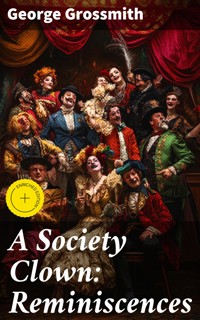
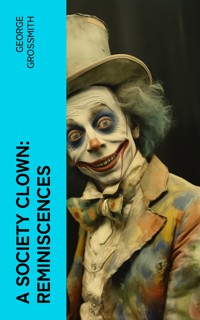
In "A Society Clown: Reminiscences," George Grossmith presents an engaging exploration of the late Victorian theatrical scene, merging humor with keen social observation. Written in a lively, episodic style that reflects his roots in comic performance, the book is structured as a series of recollections that highlight the eccentricities and charm of the society he inhabited. Grossmith's narrative is rich with witty anecdotes and satirical commentary, effectively illuminating both the glamour and absurdity of his era's social dynamics, as he recounts his experiences with notable personalities of the time. George Grossmith was an influential figure in the British theatrical landscape, best known for his performances in the Gilbert and Sullivan operettas. His unique position in society as a comic actor afforded him intimate insights into not just the theater, but also the complexities of Edwardian life. These reminiscences draw from his rich repository of experiences, weaving together autobiography and social critique, thus providing a retrospective view of a vibrant cultural moment that shaped modern entertainment. Recommended for scholars and enthusiasts of Victorian literature alike, "A Society Clown" serves not only as a captivating biography but also as a critical document reflecting the social mores of the time. Readers will appreciate Grossmith's sharp wit and the authenticity of his observations, making this work a delightful read for anyone interested in the intersection of humor, art, and society. In this enriched edition, we have carefully created added value for your reading experience: - A succinct Introduction situates the work's timeless appeal and themes. - The Synopsis outlines the central plot, highlighting key developments without spoiling critical twists. - A detailed Historical Context immerses you in the era's events and influences that shaped the writing. - An Author Biography reveals milestones in the author's life, illuminating the personal insights behind the text. - A thorough Analysis dissects symbols, motifs, and character arcs to unearth underlying meanings. - Reflection questions prompt you to engage personally with the work's messages, connecting them to modern life. - Hand‐picked Memorable Quotes shine a spotlight on moments of literary brilliance. - Interactive footnotes clarify unusual references, historical allusions, and archaic phrases for an effortless, more informed read.
Das E-Book können Sie in Legimi-Apps oder einer beliebigen App lesen, die das folgende Format unterstützen:
Veröffentlichungsjahr: 2019
Ähnliche




A Society Clown: Reminiscences
Table of Contents
Introduction
A performer walks the tightrope between public laughter and private self-possession. A Society Clown: Reminiscences, by George Grossmith, invites readers into the comic craft and social world that shaped one of Victorian Britain’s best-known stage personalities. Without straining for grandeur, Grossmith recounts how a life devoted to eliciting amusement demands discipline, tact, and a steady sense of self. The book offers an intimate vantage on the culture of entertainment in an era when drawing rooms, concert platforms, and theatres overlapped. It is at once personal testimony and cultural document, presenting a career built on timing, observation, and the delicate art of pleasing a crowd.
First published in the late nineteenth century, the volume belongs to the tradition of theatrical memoirs that flourished in Victorian Britain. Its setting ranges across London’s stages and salons and the provincial circuits that fed them, with the Savoy era a point of reference for readers who know Grossmith’s comic work with Gilbert and Sullivan. Yet the reminiscences reach beyond any single venue, sketching a wider map of engagements, audiences, and expectations that defined a performer’s livelihood. The book’s period flavor is unmistakable, but the habits of preparation, travel, and performance it records remain legible to anyone curious about how show business actually functions.
Rather than a strict cradle-to-stage chronology, A Society Clown proceeds as a sequence of recollections shaped by incident and atmosphere. Grossmith recalls the ascent from intimate entertainments toward larger platforms, the composition and delivery of comic songs and patter, and the etiquette required when one’s audience might include private patrons, theater professionals, or both. He lingers on the backstage mechanics that turn levity into labor: rehearsals, bookings, schedules, and the ever-present need to keep material fresh. The result is a brisk, anecdotal portrait of a working artist who treats laughter as a craft, and society as both setting and subject.
Readers encounter a voice that is urbane, self-aware, and wry, affectionate toward foibles without lapsing into malice. The prose favors nimble sketches over solemn pronouncements, and its humor comes from observation, timing, and understatement. Even in episodes that hint at strain, the tone remains composed, more confiding than confessional. The style is compact and performative, as if the author were timing a story for a listening room. Period references and professional jargon appear, but they are carried lightly. What emerges is a memoir that entertains in the very manner it describes, pacing anecdotes with the precision of a practiced monologist.
Several themes run steadily through these reminiscences. The most persistent is the negotiation between persona and person: how a society clown constructs a character that fits an occasion while preserving a private core. Alongside it are reflections on class and access, the unwritten codes of behavior that govern greenrooms and drawing rooms, and the economies of reputation in a closely watched culture. Creativity appears as disciplined iteration rather than sudden inspiration, with collaboration, rehearsal, and revision foregrounded. There is also a quiet meditation on resilience—the practical courage required to face varying audiences, fickle engagements, and the delicate balance between novelty and continuity.
For contemporary readers, the book illuminates structures that still shape performance and public life. It shows how branding precedes the term, how networks and patronage function, and how the work of appearing effortless depends on invisible toil. Those interested in theater history will find a ground-level view of Victorian entertainment; admirers of Gilbert and Sullivan will recognize the milieu that produced their comic operas and the artists who embodied them. Beyond the stage, the memoir prompts questions that resonate in an age of social media: What does an audience expect, what does an artist owe, and how does one sustain a career of delight?
Approached on its own terms, A Society Clown: Reminiscences offers an engaging, spoiler-safe entry into a world where polish and improvisation meet. Expect an episodic structure, period diction, and a steady undercurrent of professional pragmatism beneath the sparkle. The book rewards unhurried reading, letting anecdotes accumulate into a composite portrait of talent, habit, and chance. It stands as both a self-portrait of George Grossmith and a companionable guide to the social theatre that framed his art. For readers today, it is an invitation to listen closely: behind the laughter lies a thoughtful record of a life spent mastering how laughter is made.
Synopsis
A Society Clown: Reminiscences presents George Grossmith’s account of his path from modest beginnings to prominence as a leading comic entertainer of Victorian Britain. The book traces his development across private drawing rooms, concert platforms, and the Savoy Theatre, noting the professional habits and social settings that shaped his work. Grossmith outlines the occasions, engagements, and associations that advanced his career, setting out a sequence of events rather than argument or critique. The memoir offers an organized record of performances, collaborations, and audiences, supplying dates, places, and personalities to anchor the narrative. Its tone is factual, emphasizing the practical side of a performer’s life.
Grossmith begins with family background and early experiences in London, showing how a household familiar with journalism and performance formed his outlook. He recounts clerical and reporting duties at the Bow Street Police Court, where steady observation of character, voice, and behavior became a training ground for later comic portrayals. The routines of punctuality, shorthand, and accuracy provide skills that carry into the stage. He describes amateur entertainments and small public appearances, emphasizing the incremental nature of his progress. Early failures and modest successes establish a framework of persistence, preparation, and responsiveness to audience expectations that guides the rest of the memoir.
The narrative then moves to his emergence as a society entertainer, performing comic songs and spoken sketches at private gatherings and clubs. Grossmith details how invitations multiplied through word of mouth, how programs were adapted to different rooms and audiences, and how a repertory of original material was built and refined. He notes the etiquette of fashionable houses, the demands of late hours, and the importance of discretion in social settings. Engagements at charity events and benefits broaden his reach, while careful scheduling allows increased visibility without overexertion. This period consolidates a reputation that attracts theatrical attention and larger public opportunities.
Grossmith describes his introduction to producer Richard D’Oyly Carte and the collaboration with W. S. Gilbert and Arthur Sullivan that followed. He records joining The Sorcerer and the creation of roles designed for his particular gifts in patter and character work. The book outlines rehearsal practices, musical direction, and the disciplined environment that produced the early Savoy operas. Practical considerations—contracts, costumes, and stage business—are presented alongside brief character sketches of colleagues and managers. Without digression, he marks this engagement as a turning point, moving from drawing-room entertainer to principal comedian in a new, popular form of English comic opera.
Subsequent chapters cover H.M.S. Pinafore, The Pirates of Penzance, and Patience, with Grossmith originating key patter roles such as Sir Joseph Porter, Major-General Stanley, and Reginald Bunthorne. He presents the public reception, the pace of long-running successes, and the need to maintain vocal clarity and precision night after night. The memoir conveys the pressure of consistency, the evolution of stage business, and the management’s attention to detail. Tours and transfers are noted, along with anecdotes of tight schedules and altered casts. The emphasis remains on the working reality of sustaining popular productions rather than on personal opinion or critique.
He continues with Iolanthe, Princess Ida, and The Mikado, highlighting roles including the Lord Chancellor and Ko-Ko. Grossmith explains the demands of rapid patter delivery, ensemble timing, and the shaping of comic character through music and gesture. Rehearsal methods, interactions with composer and librettist, and audience responses are summarized with dates and venues where relevant. The narrative underscores the balance between spontaneity and routine in long runs. He documents changes in cast and staging necessitated by illness or travel, always returning to the central requirement: to keep performances fresh, coordinated, and intelligible to diverse audiences throughout a sustained theatrical season.
The Yeomen of the Guard and The Gondoliers mark later Savoy milestones, including roles such as Jack Point and the Duke of Plaza-Toro. Grossmith recounts the maturing of his stage persona and a gradual shift back toward solo entertainments and recitals. He describes devising programs of songs and monologues, engagements at prominent venues, and appearances before royalty and distinguished guests. Composition, rehearsal, and accompaniment are treated as practical tasks, with emphasis on reliability and adaptability. The book notes how management, publicity, and careful travel arrangements support these ventures, and how prior theatrical recognition helps secure audiences for independent appearances.
Beyond principal productions, Grossmith offers concise portraits of colleagues, choristers, and stage staff, along with the routines of touring: early trains, provincial theaters, and unfamiliar lodgings. He records charitable performances, subscription concerts, and occasional mishaps—missed cues, weather disruptions, and hurried costume repairs—framed as ordinary contingencies of the profession. The memoir touches on press coverage, contracts, and relations with patrons, but keeps personal judgments minimal. He identifies the expectations of different audiences, from small clubs to large theaters, and notes the adjustments required for acoustics and decorum. The cumulative effect is a working map of Victorian entertainment from within.
Closing sections reflect on continuity and change in a performer’s life: the value of preparation, the necessity of health and voice care, and gratitude for collaborators and audiences. Grossmith positions his reminiscences as a record of engagements and methods rather than a platform for criticism. He emphasizes that success rested on punctuality, clarity, and practical cooperation with composers, managers, and fellow players. The overall message is that a “society clown” is built through observation, discipline, and sustained effort across varied stages and salons. The book concludes by preserving names, dates, and practices for readers who wish to understand the craft behind public laughter.
Historical Context
Set primarily in London during the late Victorian decades, A Society Clown: Reminiscences unfolds against the theatrical geography of the West End and the fashionable drawing rooms of Mayfair and Belgravia. The narrative’s lived places include the Opera Comique on the Strand, where the D’Oyly Carte company played in the late 1870s, and the Savoy Theatre, opened on 10 October 1881, near the Embankment. London’s population and appetite for entertainment expanded dramatically under Queen Victoria, and provincial circuits in Manchester, Birmingham, Brighton, and Bath formed a secondary backdrop. The book’s time frame spans roughly the 1860s through the 1890s, charting an era of rapid urban growth, technological innovation, and the consolidation of commercial theatre culture.
Foremost is the rise of the D’Oyly Carte enterprise and the Savoy phenomenon, which reshaped British musical theatre between 1877 and 1890. Richard D’Oyly Carte united W. S. Gilbert and Arthur Sullivan after Trial by Jury (Royalty Theatre, 1875), establishing a regular season at the Opera Comique before building the Savoy Theatre, the first public building lit entirely by electricity (1881). George Grossmith created a series of iconic comic roles: John Wellington Wells in The Sorcerer (1877), Sir Joseph Porter in H.M.S. Pinafore (1878), the Major-General in The Pirates of Penzance (London, 1880), Bunthorne in Patience (1881), the Lord Chancellor in Iolanthe (1882), King Gama in Princess Ida (1884), Ko-Ko in The Mikado (1885), Jack Point in The Yeomen of the Guard (1888), and the Duke of Plaza-Toro in The Gondoliers (1889). His reminiscences are inseparable from this institution-building moment, documenting rehearsal practices, backstage hierarchies, and the professional networks that made Savoy opera a national institution.
International copyright conflicts that erupted around H.M.S. Pinafore (1878) form a second decisive context. Because the United States lacked effective recognition of foreign dramatists, unauthorized productions proliferated across American cities in 1879, depriving British creators of income. In response, The Pirates of Penzance premiered at New York’s Fifth Avenue Theatre on 31 December 1879 to secure U.S. copyright, with the London opening following in April 1880. The Berne Convention for the Protection of Literary and Artistic Works (1886) then laid groundwork for improved international rights enforcement. Grossmith’s career was shaped by these disputes: his roles, touring possibilities, and the economics of royalty payments—recounted in his reminiscences—were conditioned by evolving intellectual property regimes.
Aristocratic patronage and the culture of private entertainments formed a conspicuous social stage. The Prince of Wales (Albert Edward) and the Marlborough House set fostered a milieu in which drawing-room recitals, charity matinées, and invitation-only performances became signifiers of status in the 1870s and 1880s. Grossmith’s “society clown” persona was crafted within this circuit, where appearing at elite addresses in London and country houses translated into reputation and bookings on public stages. The book mirrors this world by detailing engagements, the protocols of performing before titled audiences, and the interdependence of fashionable approval and theatrical success in a court-centered, class-conscious metropolis.
The rapid expansion of London’s leisure economy in the wake of industrial urbanization is another structuring force. The Elementary Education Act (1870) expanded literacy, while cheap periodicals and railway connectivity cultivated mass, punctual audiences. Between 1871 and 1901, London’s population surged from about 3.2 million to over 4.5 million, sustaining new venues such as the Gaiety Theatre (1868), the Vaudeville (1870), and the Savoy (1881). Provincial hubs—from Manchester’s Prince’s Theatre to Birmingham’s Theatre Royal—were drawn into reliable touring circuits. Grossmith’s reminiscences register this infrastructure: tight rehearsal schedules, rapid transfers, and the logistical discipline made possible by telegraph, timetables, and suburban rail, all of which underpinned his meteoric visibility.
Regulation and safety reforms after catastrophic fires shaped Victorian theatre practice. The Theatres Act 1843 left censorship to the Lord Chamberlain but also entrenched licensing controls; by 1889, the newly created London County Council assumed local oversight of building standards. The Exeter Theatre Royal fire (5 September 1887), which killed 186, intensified demands for better exits, fireproofing, and stage safety. The Savoy, innovating with electric light from 1881, symbolized modern, safer playhouses. Grossmith’s era—and his book—reflect a climate that prized “respectable” settings and family audiences: production choices, repertory length, and even costume policies adapted to the combined pressures of censorship, insurance, and municipal inspection.
Moral campaigns against perceived indecency in popular entertainment culminated in high-profile licensing battles. In 1894 the London County Council initially refused to renew the Empire Theatre, Leicester Square, amid National Vigilance Association complaints about the promenade and alleged solicitation, sparking mass protests and the so-called Empire Riots. Although the case centered on music hall and ballet, its repercussions were felt across the West End: proprietors trimmed risqué acts, tightened policing, and emphasized decorum. Grossmith’s comic art—patter songs, topical allusions, and precise social caricature—thrived under these constraints. His reminiscences show how a “clean,” cleverly satirical style could satisfy both the moralists and the moneyed audiences who patronized society entertainment.
As social and political critique, the book exposes the etiquette, hierarchy, and precariousness underpinning late Victorian performance culture. By juxtaposing private aristocratic salons with commercial theatres reliant on ticket sales, it illuminates class gatekeeping and the dependence of artists on patronage, press opinion, and the censor. Episodes set amid copyright disputes and licensing regimes critique uneven legal protections for creative labor and the moral policing of public space. The portrait of relentless rehearsal, low margins, and risk-sharing among companies implicitly challenges complacent views of “light” entertainment, revealing how technological change, municipal power, and elite taste combined to structure opportunity and exclusion in metropolitan Britain.




