


Erhalten Sie Zugang zu diesem und mehr als 300000 Büchern ab EUR 5,99 monatlich.
- Herausgeber: Papillote Press
- Kategorie: Für Kinder und Jugendliche
- Sprache: Englisch
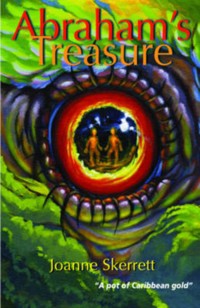
"A moving coming of age story packed with tropical adventure." – Ros Asquith Teenage twins James and Jerome discover that treasure, buried during the days of slavery, is their rightful inheritance. As the boys de-code the clues that will lead to the treasure, they have some strange encounters: there's a helpful parrot, a ghostly figure from the past and a legless man who can walk; they escape from a falling tower and discover a boiling lake. And, of course, there's also an evil stranger who confronts them in an exciting climax. Abraham's Treasure mixes a classical hunt-the-treasure plot with a hint of magical realism to give a real page-turning quality. The twins are typical teenagers who have some very untypical experiences as they desperately strive to reach the treasure – whatever that may be – before their adversary. Great for boys but girls, too, will identify with the twins and also with Petra, an annoying neighbour who is just as smart as they are. And the wild landscape of Dominica makes it a perfect location for a spot of treasure-hunting. Joanne Skerrett was born and brought up in Dominica. She moved with her family to the United States during the 1980s. She graduated from the University of Massachusetts with a BA in English and later attended Northeastern University where she earned an MBA. She also holds a law degree from the University of Pennsylvania. She has been a journalist on newspapers including the Boston Globe and Chicago Tribune. Joanne lives in Washington DC where she works as a lawyer. Abraham's Treasure is her fifth novel and her first book for young people.
Sie lesen das E-Book in den Legimi-Apps auf:
Seitenzahl: 224
Veröffentlichungsjahr: 2018
Das E-Book (TTS) können Sie hören im Abo „Legimi Premium” in Legimi-Apps auf:
Ähnliche













![Tintenherz [Tintenwelt-Reihe, Band 1 (Ungekürzt)] - Cornelia Funke - Hörbuch](https://legimifiles.blob.core.windows.net/images/2830629ec0fd3fd8c1f122134ba4a884/w200_u90.jpg)






By the same author
She Who Shops
Sugar vs. Spice
Letting Loose
My Best White Friend
Joanne Skerrett was born and brought up in Dominica
in the eastern Caribbean. She moved with her family to the United States during the 1980s. She graduated from the University of Massachusetts with a BA in English and later attended Northeastern University where she earned an MBA. She also holds a law degree from the University of Pennsylvania. She has been a journalist on newspapers including the Boston Globe and Chicago Tribune. Joanne lives in Washington DC where she works as a lawyer. Abraham’s Treasure is her fifth novel and her first book for young people.
First published in Great Britain in 2011
by Papillote Press
23 Rozel Road
London SW4 0EY, UK
www.papillotepress.co.uk
www.papillotepress.co.uk/facebook
Copyright: © Joanne Skerrett
The moral right of Joanne Skerrett to be identified as the author of this work has been asserted by her in accordance with the Copyright, Designs and Patents Act, 1988
All rights reserved. No part of this publication may be reproduced or transmitted, in any form by any means, electronic or mechanical, including photocopying, recording or any information storage or retrieval system, without prior permission in writing from the publisher.
All the characters in this book are fictitious and any resemblance to actual persons, living or dead, is purely coincidental.
A CIP catalogue record for this book is available from the British Library.
ISBN: 978-0-9532224-8-3
Cover painting: Lowell Royer
Book design: Andy Dark
Typeset in Bembo
Printed by Short Run Press Ltd, Exeter, UK
For Anthony Lockhart, former headmaster of the Dominica Grammar School, who took me to my first Writer’s Guild meeting
Chapter 1
‘This place so strange.’ Petra’s calves felt as if someone had lit a bonfire inside them. They’d been walking for hours, and the ground underneath her feet was soft and unstable. She caught a ragged breath and looked around. She could see slices of blue sky through the heavy tree cover, but there was no escaping the shroud of deep, dark forest that enveloped her.
‘Mark! Slow down!’ Her cousin Mark patiently turned around. ‘You writing this all down while you’re walking? No wonder you’re all out of breath,’ he scolded. ‘No need to write down everything I say, Petra. It’s just folklore stuff, superstition. No one really believes it. And it’s always rainy up here; that’s why the earth is so soft.’ Mark had recently returned home to Dominica and was starting a touring company. Petra had agreed to go hiking with him for the exercise and to relieve the boredom of the summer holidays.
‘But it’s so interesting…and it could be true…’ Petra wiped her brow with a cloth and turned a page in her notebook. ‘Whew. OK. Let’s start walking again. Slower. But you don’t think this place is…eerie.’ They were midway up a mountain. Trees with golden leaves surrounded them, hiding most of the sun and casting a golden shadiness over the grass. Petra looked off in the distance and thought she saw a shadow moving through the forest, but Mark’s voice interrupted her thoughts.
‘It’s supposed to be eerie. This is the only place on the island where you’ll find these trees. They were supposedly planted here by a slave.’
‘Right, the same slave who got this treasure chest from his master and buried it around here somewhere.’ There he was again! A tall, dark man wearing an off-white long-sleeved shirt and a big hat. The rough material of the shirt stood out to Petra as did the looseness of the man’s pants, which seemed to be held up by a cloth belt. His hat was large and old-fashioned; clearly its main purpose was to fend off an unforgiving sun. She had seen the type of shirt before. ‘Osnaburg,’ her father had called it. His great-great-grandfather, a slave, had been given such a shirt by his master on a plantation. But this particular man was just standing there staring at them. Petra looked over at Mark but he didn’t appear to notice the man.
Mark shrugged. ‘So the story goes. But it’s more likely that the slave owner deeded this land to the slave and his descendants. I don’t think there’s any treasure or anything magical about this place. Doesn’t matter much anyway. No one wants to live up here.’
‘So, what’s that man doing here, then?’ Petra said. She nodded in the direction where she’d just seen the man.
‘What man?’ Mark followed her gaze.
The figure wasn’t there anymore. ‘I just saw a tall man standing between those trees. He was just there!’ She looked around. There was no man. No one else but she and Mark.
Mark narrowed his eyes at her. ‘Maybe you should have some more water. Dehydration can cause…’
‘I know what I saw!’
‘OK. Maybe, it’s one of the villagers just taking a walk,’ Mark said.
Petra sighed, angry at Mark for not believing her. ‘It’s spooky up here. Maybe there’s evil spirits up here.’
Mark laughed. ‘I’m telling that to the next group of tourists I bring up here. They’ll love the thrills of a haunted tropical forest with underground spirits.’ When it came to Dominica there were plenty of crazy stories but this hike was built around the craziest story Petra had ever heard.
‘OK, so tell me again so I can write it down,’ Petra said. ‘It’s going to be part of the history book I will write someday that will make me famous. Oh, and wait till James and Jerome hear about this. They will not believe I found out about this before they did!’
Mark looked at his thirteen-year-old cousin and shook his head. ‘OK, Petra. You really need to stop this battle with those two boys.’
She shrugged. ‘They started it. Now tell me the story.’
Mark nodded. ‘So. Jeremiah Mackey was a very wealthy man,’ Mark said effortlessly as he bounded over tree stumps and rocks.
‘That’s the slave owner,’ Petra wrote as quickly as she could, taking care not to trip on the rocks as she followed Mark.
‘Jeremiah Mackey had been one of the most successful plantation owners in the Caribbean. He owned hundreds of slaves, many houses, businesses. Rich men, poor men; everybody knew his name.
One day, while walking through his cane fields here in Dominica, he saw a group of slaves, laughing, around noontime, I guess – the time when the sun was highest in the sky and the slaves were less likely to want to cut down the cane.
He tried to listen to what the group was so excited about. He heard the small voice of a boy, rising above the laughter. What was he was saying? Reciting some sort of poetry? Jeremiah listened closer. The boy’s voice rang out over the crowd. The boy was reciting words that sounded familiar: it was The Sermon on the Mount, from the Bible.
Jeremiah thought the boy had excellent delivery! He must have been about eight years old, yet his voice was clear, mature sounding and his confidence probably made him sound much better than the priests Jeremiah heard during Mass. He listened and listened. Everyone was clapping as the boy finished speaking.
‘Do it again,’ some of the men cried. ‘Say it again!’
‘Jeremiah wondered who this boy was, how he’d learned and memorised this passage, and who taught him. So he asked. When the overseer saw his boss standing nearby he immediately ordered everyone back to work. The slaves scrambled, as the whip cracked the air, leaving only the overseer and the little boy in Jeremiah’s presence.
‘Who are you? And where did you learn that?’ Jeremiah asked the boy.
‘My Papa taught me, sah,’ the boy said.
‘Who’s your Papa?’ Jeremiah asked. The boy answered. His father, Abraham Mackey, was the preacher who held services every Sunday at the edge of the field. Jeremiah knew the man – one of his best slaves but an agitator who was always asking for favours on behalf of other slaves. It pained Jeremiah, who thought himself a fair master that a man who carried his own name could be conspiring against him with the other slaves. Abraham was also well known for being a hard worker and a man of God.
‘What is your name?’ Jeremiah asked the boy.
‘Abe Mackey, sah,’ the boy said confidently.
‘Mackey is my name too,’ Jeremiah said smiling.
The boy nodded. ‘I know. My Papa told me I might never know my real name so I must carry yours because you are my owner.’
Jeremiah flinched briefly at the sting of the boy’s words. ‘Well…you clearly are a smart young man,’ Jeremiah said. ‘Will your Papa mind if you come to my house this weekend and recite for my dinner guests?’ Mackey asked the boy.
That Saturday evening, little Abe Mackey recited the Sermon on the Mount in Jeremiah’s lavish plantation house before a group of planters, who beamed over their cognacs and smoking pipes as he performed his act full of righteousness. They clapped and laughed and asked him to do it again and again.
And this is how Abe Mackey became Jeremiah Mackey’s personal poet, his entertainer. By the time Abe Mackey was a teenager, he’d learned how to read the Great Books that were in Jeremiah Mackey’s library – even ones the master himself had not read. He was writing poetry and the stories of his fellow slaves at night after a long day of working in the fields. He read his poetry to the master’s friends and they all agreed: this was one fine, young entertaining fellow.
When Abe Mackey got older and married, the master gave him a new house, and said that his wife did not have to return to work in the fields until her babies were old enough to walk. By then Abe’s father had died and he had become the voice of the slaves.
One day, he asked for his family’s freedom. The talk of emancipation was everywhere; news of uprisings in Jamaica and Haiti had spread to Dominica. But Abe’s request bothered Mackey because he did not want to lose his favourite slave. Jeremiah Mackey was now so rich that he felt that he had accomplished everything there was to in life. All he wanted was to hear Abe’s poetry; the soothing dark-as-night sound that never ceased to assure that a reward awaited his soul in heaven.
He made a deal with Abe: ‘Stay on the plantation and I will pay you to write and recite poetry for me.’ Abe agreed on one condition – that his children would be free. Jeremiah Mackey thought this was a huge sacrifice. He did not want to anger the other slaves but he felt he had no choice. Abe’s poetry had often hinted that he thought of running away to a faraway land where a man could be free to be himself. Jeremiah reluctantly agreed.’
‘So he stayed?’ Petra asked.
‘Wait. That’s not the end of the story,’ Mark said. ‘On Jeremiah Mackey’s dying bed, he’d called for Abe and told him that he was leaving him his most valuable possession to be passed down through Abe’s family for generations and generations. And every twin in Abe’s family line would be greatly enriched by it as long as they show that they have the character and strength to own it.’
Petra stopped to take a breath. ‘Wait. So why twins?’
Mark looked back and shook his head at Petra’s sweaty face. ‘You really need to get in shape, cousin.’
Mark continued: ‘Jeremiah Mackey had two sons. Twins. But they were horrible kids. I guess he was hoping for a better legacy by leaving the treasure to Abraham’s line.’
Petra wrote this quickly, thinking that she was almost out of pages in her well-worn diary. But it was worth it. Her goal was to document her entire childhood on paper because she believed without a doubt that she was headed for great things. And people would naturally be curious about every moment of her amazing life.
‘So,’ Mark continued as they trudged on. ‘Old Jeremiah Mackey died. By the time the lawyers and Jeremiah Mackey’s sons were finished with the will, all Abe Mackey got were his little house and a few pounds that kept him comfortable in his old age. He never became rich. He never found out what this ‘valuable possession’ was. On his dying bed he told the story to his son and the story passed down for some generations. But then it got forgotten and no one talked about it anymore.’
Mark took a long swig from his water bottle.
‘That’s it?’ Petra looked around. They were in a kind of meadow surrounded by those yellow-flowering trees. She stayed close to Mark as she searched between the trees, looking for that man.
Mark nodded. ‘Yep. If the story’s correct then this is where the treasure’s supposedly buried. Somewhere around here. Matter of fact, Jeremiah Mackey’s plantation was on this land right here.’
She cocked her head to the side. ‘Do you smell something?’
He nodded. ‘It’s those yellow trees. Sometimes they give off this smell. It can be so overpowering it can cause people to faint. See why no one lives up here now?’
Petra nodded vigorously, wrinkling her nose. ‘This is sooooo interesting. So you think the slave Abe planted those trees here to keep people away?’
Mark shrugged. ‘It’s likely. Again, assuming this is all true.’
Petra breathed excitedly. ‘It has to be true! I want it to be true!’
‘Right. Chapter one of your historic masterpiece.’ Mark winked.
She looked down, not looking forward to the hike ahead. ‘Make all the jokes you want.’
‘We should get back to the village before it gets dark,’ Mark said.
She looked around twice, three times but saw no one. She forgot all about that man in the long-sleeved shirt as they walked down the mountain kidding each other.
Later that night, Petra re-read all she’d written that day as she rubbed her aching legs. Oh, how much she hurt. She left her diary on the desk near her window, as she heard her mother’s voice calling her to supper.
She didn’t hear the laughing outside her window. Nor did she see the hand that moved swiftly through the open window, deftly grabbing the diary that Petra wanted no one to ever, ever read. Until after she became famous.
Chapter 2
‘There’s treasure buried here. Treasure buried here, somewhere,’ James sang as he made long backstrokes into the placid, emerald river. A strong swimmer, his smooth movements barely disturbed the invisible current that pulled the green sheets of water steadily downward. ‘I’m go’n make a rhyme out of this. Treasure, leisure, pleasure, forever.’
Jerome lay back on the big rock in the middle of the river and stared upward at the bright, blue sky. They’d christened the ten-foot high mass of stone the Rock of Ages, because Granny said it had been here since her great grandmother was a slave on the cane plantation across the river.
Treasure. The sky was so much more interesting. What lay beyond all that blue and would he ever get a chance to go there? Jerome’d been hearing his twin brother sing this song for a whole week now and he was growing more irritated each time James’s off-key singing assaulted his ear. It was probably just another trick. James was full of jokes and pranks and games – all of which inevitably left him, Jerome, the victim.
‘You don’t believe me?’
Jerome ignored his brother. Instead, he looked up to the sky and waited for that one doughy cloud to move. It’d been in that one spot all morning. Move, cloud. Move!
‘Father Mackey told me about it.’
‘Uh huh.’ Bald-faced liar! But Jerome wouldn’t even say that. He’d just ignore, ignore until James got tired of this little game.
In July, the weather could change in an instant and it was all about keeping your eye on different things all at the same time – the sky, the sun, the clouds, even the smell of the air. The island’s climate was like a moody, spoiled and unpredictable girl. You never knew what was going to happen.
The river never gave itself away; you never could quite see or feel the water rising if you were in it. If you were on the banks you could smell the wet dankness of the approaching mud, then you’d suddenly see it change: clear to dark green, then brown, then altogether mangled with stones and tree branches. You had to be a strong swimmer to beat the river coming down. If not it carried you down all the way to the Caribbean Sea; then no one would hear of you again.
A breeze made Jerome shift his position and he thought that one cloud shifted a bit, too. Just a little.
‘Rain,’ he said softly but his brother heard.
James’s skinny arms cut a sharp swath in the water then he disappeared underneath.
Jerome peered at the spot where his brother disappeared from his perch high on the rock. But he was sure of it. It would rain soon. The breeze came and went, then the cloud moved east. Ah ha! Jerome saw another little cloud he hadn’t noticed before. And another. Then suddenly his upward concentration broke like that same doughy cloud splitting apart.
‘What all-you doing out there still?’ It was Granny, cracking through the calm like lightning. Her tall, dark figure dominated the river-bank; her long, thin arms were at her sides, demanding and authoritative. ‘I tell you boys, two hours in the river. That’s all! Two hours! You forget how to count? How long all-you been out here?’ Jerome sat upright and waited for his eyes to adjust.
Granny was a tall, wiry woman who wore her gray hair braided into two flat twists on either side of her head. Granny never told anyone her age but Jerome had found her birth certificate in her ‘important papers’ drawer. It said that Marcellina Victory was born on June 24, 1937. To Jerome, that was almost as old as the Ancient of Days himself.
‘Answer me, boy!’ Her eyes burned into his.
He shrugged. Why him? James had begun to scramble out of the water. Jerome jumped down from the Rock of Ages and into the water. It felt cool on his skin. He had to swim from the deep part to the shallow part where James was now tramping toward Granny, apologising.
‘We didn’t know what time it was.’
‘Where the watches Father Mackey give you for your birthday?’
‘You tell us not to wear them to the river,’ James murmured.
Jerome stood with his brother on the bank and looked up into Granny’s face. She wasn’t really angry. She was just being Granny.
‘Rain coming.’ Jerome glanced at James as Granny warned again. ‘Go! Put your clothes on. Go and help Father Mackey before the rain come.’
She handed them each a brown paper bag. In the bag were two bakes, fried round circles of dough with a crispy brown skin, and a grafted mango – the sweet ones with red spots at the base. James opened the bag and immediately began to devour the bakes. Jerome carefully washed his mango in the river after a quick inspection.
Granny shook her head. ‘You think I’d give you a dirty mango?’
‘No ma’am.’
‘If I wasn’t used to your silly ways I’d box you on the ears for insulting me like that.’ Jerome was about to apologise when he heard a sudden roar. Their eyes darted toward the river. James jumped back. A wall of brown liquid was swelling toward the Rock of Ages.
‘Get back, get back!’ Granny held up her long skirt and pulled Jerome’s arm. He’d seen this many times before but the suddenness of it was always fantastic. The river had almost doubled in depth in a matter of just minutes. The rain he could see approaching from the mountains in a tall, slow-moving march like a troop of soldiers made out of mist. That one little cloud was now joined by at least seven or eight of its friends.
‘De river here!’ The Rock of Ages, no longer majestic, was quickly being swallowed up as the aggressive waters swiftly rose up its heights. ‘Let’s go, let’s go!’ Granny said. The river-bank was now covered in ankle deep muddy water.
‘I’ll race you to the house,’ James muttered under his breath.
But a loud clap of thunder had drowned out his voice and before they knew it the skies opened and massive drops of rain had soaked their clothes. As they rushed up the path and onto the main road leading to the house they could hear the angry rush of the river as it thirstily drank in the raindrops.
Chapter 3
Jerome believed that a spirit called Serenity lived at the presbytery and on Sundays she brushed every flower, ancient building, wizened person, even the air, with her soft, calming wings. Of course, he would never reveal such a thought to his brother; but, oh, the beauty and magic of the quiet Serenity brought.
Most of the priests were resting or meditating, grateful for the end of the duties of another Sunday. It was Jerome’s and James’s job to help Granny clean the cathedral and then visit with Father Mackey to see if he needed anything.
‘You think we should go and ask Father Mackey now?’ James picked at his massive afro with a comb. Granny had given up on trying to get him to cut his hair. Jerome thought his brother’s hair was an abomination – but at least it made it easier for people to tell them apart. He ran his hand over his close-cut hair and decided that he needed a haircut already. ‘No. I not going in there till he call for us. Granny going to come by looking to see if we doing our work anyway.’
Granny had been Father Mackey’s personal cook since he had moved to Dominica, which was a very long time ago – way before James and Jerome’s father had even been born.
The way Father Mackey told the boys the story was like this: on his first day in the capital Roseau, he met a beautiful young lady at the market. She sat before baskets and heaps of passion fruit, oranges and guavas laid out on a burlap sack on the ground. He’d never left Australia before that and so he’d never known the sweetness of a guava or the tangy egginess of the passion fruit. He’d asked her to allow him to taste each fruit before he would buy. She told him: ‘Father, I have to feed my children. I cannot afford to give away my fruit. Even to you. I am sure God will understand and forgive me.’
Father Mackey had admired this woman’s sensibility and he’d bought two piles of passion fruit and guava. She gave him a little extra, just to show that she was not a selfish woman – just a person who cared that her children were well fed.
When Father Mackey offered her the job of cook she saw that she could make extra money and took the job with the highest of expectations, determined that it would fulfill all the dreams she held for her children. That was in 1972.
So much had happened since then. Granny had indeed worked hard and her three boys did receive a good education and now had their own families. There had been sad things too: the twins’ mother had died, and their father had left the island for America. She hoped that Jerome and James would join their father there when they were old enough. Maybe it would heal their hurt from losing their mother at so young an age.
Granny busied herself in the kitchen; Father Mackey, like her, was now getting old. Since the last stroke he’d lost a lot of his vibrancy but she knew he’d return to his old self someday. He only ate soup now – on Mondays he ate pumpkin soup; Tuesday, lentil soup; Wednesday, red bean soup; Thursday, chicken soup; Friday was cabbage. On Saturday, she had the day off and still went to the market with her guavas and passion fruit. On Sunday, she made a big pot of callaloo. It was the only day she cooked for all of the priests; the rest of the week she belonged to Father Mackey.
Jerome surveyed the rows and rows of pews and sighed. He hated church cleaning days. The pews were like rows and rows of grain waiting to be harvested – by hand. He remembered stories Granny told him about her days as a young girl working on a banana plantation for five cents a day. She’d said that sometimes she dreamed that the rows of bananas would swallow her up and she’d never see the sun or sky ever again. This is how Jerome felt when he faced off the dozens of old benches in the musty church. It would take two hours to clean them the way Granny wanted, with a dust cloth from top to bottom. Twice. There had to be a better, faster, easier way. Had to be.
James sang as he cleaned his side of the rectory. ‘Treasure. Treasure. I’m going to be a millionaire. And I go’n get a girl that look jus’ like Beyonce.’
‘Boy, you better stop that! You making me crazy, man!’ Jerome couldn’t take it anymore. ‘Lying for no reason when my hand hurtin’ me like mad! Man!’
‘Lying? Lying? Father Mackey tell us about it weeks ago. You was there but you wasn’t listening. That was the day you was faking like you sick. Remember?’
‘I was sick. My head was hurting.’ Jerome tried to remember whether he really was sick that day.
‘Well, that’s your fault. He said the treasure buried somewhere in Dominica and it just waiting for someone to claim it.’
‘I remember what he say,’ Jerome rolled his eyes. ‘That was just one of the old man’s stories. He always telling stories; why you think this one real? The one about the wolf that come down from Mount Diablotin wasn’t real. We don’t have no wolf in Dominica!’
James nodded. ‘That’s true but this one different, man. And he say we should go and find it. He say we have to do it because it is tied to our destiny.’ James was extra-serious as he recited the words ‘tied to our destiny’.
Jerome sighed. ‘I didn’t hear him say that at all.’




