


9,49 €
Mehr erfahren.
- Herausgeber: Achieva Test Preparation
- Kategorie: Für Kinder und Jugendliche
- Sprache: Englisch
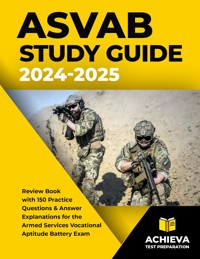
ASVAB Study Guide is an all-encompassing resource tailored for those aiming to excel in the Armed Services Vocational Aptitude Battery (ASVAB). This guide is thoughtfully structured to cover each exam segment, including critical areas like General Science, Arithmetic Reasoning, Word Knowledge, and more.
The book stands out for its in-depth review sections, which meticulously break down complex topics into manageable parts. With clarity and precision, these chapters ensure a firm grasp of the essential concepts across all test subjects. A notable feature is the inclusion of a wide array of practice questions. These are designed to mirror the format of the actual ASVAB and are accompanied by detailed explanations, offering insights into the logic behind correct responses.
Understanding the importance of strategy in standardized testing, the guide also delves into effective test-taking techniques. These strategies range from time management to specific approaches for different question types, equipping readers with easy access to the exam.
The book provides full-length practice tests that simulate the natural exam environment to enhance preparation. Regular updates ensure the content remains aligned with the latest ASVAB formats and question types, making it a reliable study companion.
Additionally, the guide offers access to online resources for a more interactive learning experience. These digital supplements, including additional practice questions and flashcards, provide a comprehensive toolkit for anyone looking to achieve top scores on the ASVAB and advance their military career.
ASVAB Study Guide is more than a study aid; it's a roadmap to success designed to guide and support test-takers through every step of their ASVAB preparation journey.
Das E-Book können Sie in Legimi-Apps oder einer beliebigen App lesen, die das folgende Format unterstützen:
Veröffentlichungsjahr: 2024
Ähnliche













![Tintenherz [Tintenwelt-Reihe, Band 1 (Ungekürzt)] - Cornelia Funke - Hörbuch](https://legimifiles.blob.core.windows.net/images/2830629ec0fd3fd8c1f122134ba4a884/w200_u90.jpg)




Table of Contents
CHAPTER 1
UNDERSTANDING THE ASVAB
Breakdown of the Test Sections
Scoring System and Branch Requirements
Tips for Initial Preparation
CHAPTER 2
GENERAL SCIENCE (GS)
Key Topics: Life, Earth, Physical, and Space Sciences
Study Strategies for Science Questions
Practice Questions with Explanations
CHAPTER 3
ARITHMETIC REASONING (AR)
Types of Problems: Word Problems and Basic Arithmetic
Problem-Solving Techniques
Sample Questions and Solutions
CHAPTER 4
WORD KNOWLEDGE (WK)
Vocabulary Building Techniques
Understanding Context and Word Meanings
Practice Exercises and Answers
CHAPTER 5
PARAGRAPH COMPREHENSION (PC)
Identifying Main Ideas, Themes, and Details
Practice Paragraphs and Comprehension Questions
Tips for Improving Reading Speed and Retention
CHAPTER 6
MATHEMATICS KNOWLEDGE (MK)
Algebra, Geometry, and Basic Trigonometry
Problem-Solving Strategies
Practice Problems with Step-by-Step Solutions
CHAPTER 7
ELECTRONICS INFORMATION (EI)
Important Concepts: Circuits, Currents, and Components
Study Tips for Non-Technical Backgrounds
Practice Questions with Detailed Explanations
CHAPTER 8
AUTO AND SHOP INFORMATION (AS)
Key Automotive and Shop Concepts
Practical Applications and Sample Questions
Review Exercises with Answers
CHAPTER 9
MECHANICAL COMPREHENSION (MC)
Topics: Levers, Pulleys, Gears, and Physical Laws
Visual and Practical Problem-Solving
Example Questions and Solutions
CHAPTER 10
ASSEMBLING OBJECTS
Techniques for Interpreting and Solving Assembly Problems
Types of Assembly Questions and How to Approach Them
Practice Problems with Illustrated Solutions
CHAPTER 11
TEST TAKING STRATEGIES AND PRACTICE TESTS
Managing Test Anxiety and Time
Full-Length Practice Tests with Answer Keys
Post-Test Analysis and Feedback
PRACTICE TESTS FOR ASVAB EXAM
ANSWERS
CHAPTER 1
UNDERSTANDING THE ASVAB
The Armed Services Vocational Aptitude Battery, commonly known as the ASVAB, is a crucial test in the United States military’s recruitment and placement process. This introductory chapter aims to demystify the ASVAB by detailing its purpose and the structure it embodies.
The primary purpose of the ASVAB is to assess a candidate’s aptitude and suitability for roles within the U.S. military. It is designed to determine a candidate’s qualification for enlistment and guide them toward roles where they are most likely to succeed and thrive. Understanding the underlying goal of the ASVAB is essential for candidates as it helps them grasp the importance of each section about military career paths.
In terms of structure, the ASVAB is composed of multiple subtests, each targeting different skill sets such as General Science, Arithmetic Reasoning, Word Knowledge, Paragraph Comprehension, Mathematics Knowledge, Electronics Information, Auto and Shop Information, Mechanical Comprehension, and, in some versions, Assembling Objects. The test is available in two formats: the computer-adaptive test (CAT-ASVAB) and the paper-and-pencil version (P&P- ASVAB). The CAT-ASVAB adapts to the test taker’s ability level, making it a dynamic and efficient assessment tool. In contrast, the P&P-ASVAB provides a uniform set of questions to all test takers, offering a more traditional testing experience.
This chapter will explore each subtest in detail, shedding light on the types of questions candidates can expect and the scoring methods employed. Additionally, it will offer insights into how different branches of the military interpret the ASVAB scores for enlistment and occupational placement.
By the end of this chapter, candidates will have gained a comprehensive understanding of the ASVAB’s purpose and multifaceted structure. This knowledge lays a strong foundation for the detailed study and targeted preparation required for succeeding in the ASVAB, as explored in the following chapters.
Breakdown of the Test Sections
Following the introduction to the ASVAB’s purpose and structure, this part of the chapter delves into a detailed breakdown of the test sections. The ASVAB is divided into several subtests to measure different abilities and skills necessary for military roles.
General Science (GS): This section tests knowledge in life science, earthandspacescience, andphysicalscience. Itassesses a candidate’s ability to understand basic scientific concepts and apply scientific principles to various scenarios.ArithmeticReasoning (AR):Focusingonbasicarithmeticand problem-solving, this section presents word problemsthat require candidates to apply mathematical concepts to real-world situations.Word Knowledge (WK): This section measures the ability to understand the meaning of words through synonyms and antonyms. It evaluates vocabulary strength and, indirectly, communication skills.Paragraph Comprehension (PC): This subtest assesses the ability to understand and interpret written material. It includes reading paragraphs and answering related questions, focusing on the main ideas, details, and implications.MathematicsKnowledge(MK):Thisparttestsmoreadvanced mathematical concepts than the Arithmetic Reasoning section. It includesquestions onalgebra, geometry, andbasictrigonometry.Electronics Information (EI): Specific to candidates interested in electronic and electrical fields, this section covers basic electrical concepts, circuitry, and electronic terminology.Autoand Shop Information (AS): Designed for those leaning towards mechanical and automotive military occupations, this subtest assesses knowledge of automotive maintenance, repair, and shop practices.Mechanical Comprehension (MC): This section evaluates understanding of mechanical principles and physical laws, often through diagrams and practical scenarios involving levers, pulleys, gears, and more.For some candidates, depending on the version of the ASVAB taken, there may also be a subtest on:
Assembling Objects (AO): This section assesses spatial abilitiesandinvolvesquestionswherecandidatesmust determine how different objects will look when assembled.Each section of the ASVAB has a specific number of questions and time limit, making time management a crucial skill during the test. This breakdown gives candidates a clearer understanding of what to expect in each part of the ASVAB, allowing them to tailor their study and practice accordingly. The following chapters will provide more in-depth coverage of each section, including study tips, practice questions, and strategies for adequate preparation.
Scoring System and Branch Requirements
The scoring system of the ASVAB is a critical aspect for candidates to understand, as it not only reflects their performance but also influences their eligibility for various branches of the military and specific job roles within those branches.
Understanding ASVAB Scores: The ASVAB score is not a single number but a series of scores. Each subtest has its score, combined in various ways to create composite scores, often
called line scores. These composite scores determine qualification for specific military occupational specialties (MOS).
The most crucial composite score on the ASVAB is the Armed Forces Qualification Test (AFQT) score. This score is derived from four of the subtests: Arithmetic Reasoning (AR), Mathematics Knowledge (MK), Word Knowledge (WK), and Paragraph Comprehension (PC). The AFQT score is expressed as a percentile ranking between 1 and 99, indicating how a candidate’s score compares to a nationally representative sample of youth aged 18 to 23. For example, an AFQT score of 60 means that the score was as good as or better than 60% of the nationally representative sample.
Branch Requirements: Each branch of the U.S. military has its own minimum AFQT score requirement for enlistment. These requirements are subject to change and may vary based on the needs of the military and other factors, such as education level. Generally, a higher AFQT score broadens the opportunities available to a candidate, including access to more technical and specialized roles.
Army: Historically, it has the lowest AFQT score requirement for enlistment.
Navy: Typically requires a slightly higher AFQT score than the Army.
Marines: Usually has similar requirements to the Navy but can vary.
Air Force: Often has the highest AFQT score requirements. CoastGuard:Similar to the Air Force, usually requiring high scores.
In addition to the AFQT score, the composite scores are essential for qualification in specific jobs within each branch. Each MOS has a required line score combination, which a candidate must meet or exceed to qualify for that job.
Understanding the scoring system and branch requirements is crucial for candidates to set realistic goals and focus their preparation accordingly. It helps identify the areas where they need to improve and make informed decisions about their potential career paths in the military. The subsequent chapters will provide further guidance on preparing for each subtest to maximize ASVAB scores.
Tips for Initial Preparation
Embarking on the journey to prepare for the ASVAB requires a structured approach and commitment. This section provides essential tips for initial preparation, guiding candidates through the early stages of their study process.
Understand the Test Format and Content: Familiarize yourself with the structureof the ASVAB, including thetypes of questions andsubjects coveredin eachsubtest. Knowing what to expect reduces anxiety and helps formulate an effective study plan.Assess Your Current Knowledge Level: Before diving into intensive study, take a practice ASVAB test to assess your currentlevel ofknowledge.This willhelpidentifyyourstrengths and areas needing improvement, allowing you to focusyour study efforts more effectively.Develop a Study Schedule: Create a realistic, structured study plan. Allocate specific time slots each day for ASVAB preparation, ensuring a balanced approach that covers all test sections. Consistency is vital in retaining information and building upon your knowledge.Utilize Quality Study Materials: Use reputable ASVAB study guides and materials. These resources often include practice tests, review sections for each subtest, and strategies for takingthetest. Also, consider onlineresources, includingtutorial videos and practice questions.Focus onWeak Areas: Prioritizestudy time to address your weaker subjects. However, please don’t neglect your vital areas; continue to practice them to ensure a well-rounded performance across all test sections.PracticeTimeManagement:Timemanagementiscrucialin the ASVAB. Practice answering questions under timed conditions to get used to the pace you’ll need to maintain during thetest.Study with Others: If possible, join a study group or find a study partner. Discussing topics and explaining conceptsto others can enhance understanding and retention.Stay Healthy and Stress-free: Regular exercise, a healthy diet, and adequate sleep are essential during preparation. Stress management techniques such as meditation or yoga can help maintain a clear, focused mind.Seek Help if Needed: Don’thesitate to seek additional help if you need help with certain subjects. Consider tutoringor asking for assistance from someone who has successfully taken the ASVAB.Regular Review and Practice: Review whatyou’ve learned to keep the information fresh. Taking periodic practice tests will track your progress and build your confidence as you see improvement.By following these initial preparation tips, candidates can build a strong foundation for more focused and in-depth study in the subjects required for the ASVAB. The key is to start early, stay consistent, and remain committed to achieving the best possible score on the test.
CHAPTER 2
GENERAL SCIENCE (GS)
The ASVAB’s General Science (GS) section is designed to evaluate a candidate’s knowledge and understanding of various scientific concepts and principles. This section is crucial for candidates aiming for technical roles in the military, as it reflects their ability to comprehend and apply scientific information.
The GS section encompasses a broad range of scientific disciplines, including:
Life Sciences: This area covers topics relatedtobiology, such as cell structure, basic genetics, evolution, and ecosystems. Understanding the fundamentals of life sciences is crucial, as it forms the basis of biological knowledge required in many military medical and research roles.Earth and Space Sciences: Questions in this area assess knowledge of geology, meteorology, oceanography, and astronomy. Candidates are expected to understand basic earth processes, weather phenomena, ocean features, andtheuniverse’s fundamental concepts.Physical Sciences: This includes questions on chemistry and physics. Topics might cover the periodic table, chemical reactions, basic principles of physics like motion, energy, and forces, as well as simple machines. A good grasp of physical sciences is vital for roles that involve handling chemicals or machinery.The GS section typically features a mix of direct question-and- answer formats and questions that require the interpretation of diagrams and data. It’s designed to test factual knowledge and the ability to apply scientific principles to solve problems.
To prepare for the GS section, candidates should:
Review basic concepts and terminologies in each of the scientific areas mentioned.
Practice interpreting and analyzing scientific data and diagrams. Take practice tests to become familiar with the format and types of questions asked.
Utilize ASVAB study guides and other educational resources comprehensively reviewing general science topics.
A solid understanding of general science principles not only aids in securing a good score in the GS section but also lays a foundational knowledge beneficial for various technical roles in the military. The following sections of this chapter will delve deeper into critical general science topics and provide strategic study advice and practice questions to enhance candidates’ preparation for this part of the ASVAB.
Key Topics: Life, Earth, Physical, and Space Sciences
The General Science section of the ASVAB encompasses a wide range of topics from various scientific disciplines. Understanding these key areas is crucial for performing well in this section. The main issues include Life, Earth, Physical, and Space Sciences.
Life Sciences:Biology:Basics of cellular biology, including cell structure and function, photosynthesis, respiration, and cell division.
Genetics:Fundamental concepts of heredity, including genes, chromosomes, and basic genetic principles.
HumanBody Systems: Overview of major systems like the circulatory, respiratory, digestive, nervous, and skeletal systems. Ecologyand Evolution: Basic ecological principles, ecosystems, food chains, and the theory of evolution.
Earth Sciences:Geology:Earth’s composition, rock types, geological processes, and internal structure.
Meteorology: Weather patterns, atmospheric conditions, and understanding of meteorological phenomena.
Oceanography: Basic principles related to ocean currents, tides, marine life, and ocean ecosystems.
Physical Sciences:Chemistry: Elements, compounds, chemical reactions, atomic structure, and basic chemical equations.
Physics: Fundamental concepts such as force, motion, energy, electricity, and simple machines.
Space Sciences:Astronomy: Basic knowledge of the solar system, stars, galaxies, and the universe.
Space Exploration: Historical milestones and basic concepts of space travel and the physics of spaceflight.
For adequate preparation in these areas:
Focus on understanding basic concepts and principles rather than memorizing facts.
Utilize diagrams and real-world examples to grasp better and remember scientific phenomena.
Engage with various study materials, including textbooks, educational videos, and interactive online resources.
Practice applying scientific principles to hypothetical scenarios, as ASVAB questions often test application rather than just knowledge.
Understanding these critical topics in life, earth, physical, and space sciences will not only help candidates perform well in the general science section of the ASVABal but also provide a solid foundation for technical roles in the military. The following sections will provide more detailed study strategies, practice questions, and explanations to further aid candidates in their preparation for the General Science section.
Study Strategies for Science Questions
Studying for the ASVAB’s General Science (GS) section requires a strategic approach to grasp the wide range of scientific concepts effectively. Here are some study strategies tailored explicitly for tackling science questions:
Conceptual Understanding Over Memorization:Focus on understanding fundamental concepts rather than rote memorization. Grasping the underlying principles helps in applying knowledge to various types of questions.
Use real-world examples to relate scientific concepts to everyday phenomena. This makes learning more engaging and helps retain information better.
Active Learning Techniques:Engage in active learning by summarizing information in your own words, creating mind maps, or teaching the material to someone else.
Solve practice problems and review explanations for both correct and incorrect answers to deepen your understanding.
Utilize Diverse Resources:Supplement textbooks with diverse resources like educational videos, interactive websites, and science podcasts. These can offer different perspectives and explanations that might resonate more effectively.
Participate in online forums or study groups where you can discuss and clarify doubts with peers.
Focus on High-Yield Topics:Prioritize studying topics that are frequently covered in the ASVAB. Identify these areas from practice tests and study guides.Allocate more study time to your weaker subjects while maintaining a good grip on your more vital areas.Practice with Diagrams and Charts:Many science questions involve interpreting data from diagrams, charts, or graphs. Practice reading and understanding these visual representations.Try drawing diagrams to illustrate concepts to aid in visual memory and understanding.Regular Review Sessions:Regularly review previously covered material to ensure retention. Spaced repetition is a powerful learning technique.Use flashcards for quick and effective review, especially for terms and definitions.Simulate Test Conditions:Takepracticetests under timedconditions toget accustomedto the pace and pressure of the actual exam.Review your performance on these tests to identify areas for improvement and adjust your study plan accordingly.Stay Curious and Engaged:Cultivate a genuine interest in science. Watch documentaries, read popular science books, or engage in simple experiments. This natural curiosity can enhance learning and retention.By applying these strategies, candidates can develop a strong foundation in the science topics covered in the ASVAB. Consistent and focused preparation will lead to a better understanding of the material and a higher score in the General Science section. The following sections will provide practice questions with explanations to further aid in preparation.
Practice Questions with Explanations
Preparing for the General Science section of the ASVAB involves not just understanding scientific concepts but also learning how to apply them to different types of questions. Practice questions are an invaluable tool in this process. They not only familiarize you with the format of the ASVAB but also reinforce your learning and help you understand the application of concepts. Explore some example questions and their
explanations to enhance your understanding and problem-solving skills.
Question: What is the primary function of the respiratory system?Explanation: This question tests your knowledge of basic human anatomy and physiology. The respiratory system’s primary function is gas exchange – taking in oxygen and expelling carbon dioxide. The lungs play a vital role in this process, with the alveoli providing the site for exchanging gases between the air and blood. Understanding the basic functions of human body systems is essential for the General Science section.
Question: Which planet in our solar system is known for having the most extensive ring system?Explanation: This question assesses your knowledge of space sciences, specifically in astronomy. The correct answer is Saturn. Saturn is known for its spectacular ring system, which is the most extensive and visible in our solar system. Such questions require basic knowledge about the solar system and its planets, a topic frequently covered in the ASVAB.




