


0,49 €
Niedrigster Preis in 30 Tagen: 1,99 €
Niedrigster Preis in 30 Tagen: 1,99 €
Mehr erfahren.
- Herausgeber: DigiCat
- Kategorie: Geisteswissenschaft
- Sprache: Englisch
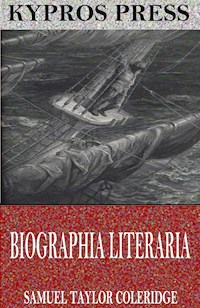
Samuel Taylor Coleridge's "Biographia Literaria" stands as a seminal text in the realm of literary criticism, intertwining autobiography with critical analysis. Written in a hybrid style that melds philosophical discourse with poetic reflection, Coleridge explores the nature of poetry, the creative process, and the qualities that define literary genius. This work is often viewed within the context of the Romantic era, as it delves deeply into the relationship between the individual poet and the wider world, grappling with themes of imagination, inspiration, and the ethical responsibilities of the writer. Coleridge, a pivotal figure in the Romantic movement alongside contemporaries like Wordsworth, was influenced by his own tumultuous experiences—ranging from his struggles with addiction to his philosophical inquiries into the human condition. His dual pursuits of philosophy and poetry informed his belief in the necessity of imagination as a bridging force between reality and transcendence. "Biographia Literaria" thus emerges not only as a reflection of Coleridge's insights into literature but also as a window into his own artistic soul. For scholars, students, and enthusiasts of literature, "Biographia Literaria" is essential reading, offering profound insights into both the creative psyche and the nature of art itself. Coleridge's work invites readers to reconsider their perceptions of poetry and art while providing a philosophical underpinning that continues to resonate in contemporary literary discussions.
Das E-Book können Sie in Legimi-Apps oder einer beliebigen App lesen, die das folgende Format unterstützen:
Veröffentlichungsjahr: 2022
Ähnliche


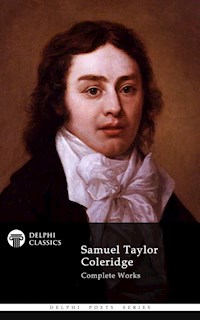
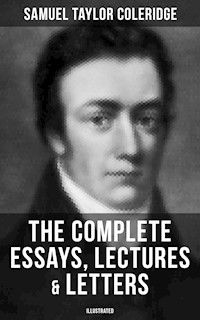

Biographia Literaria
Table of Contents
Introduction
A mind divided between visionary poetry and rigorous philosophy searches for a language strong enough to explain how imagination makes meaning. Samuel Taylor Coleridge’s Biographia Literaria (1817) has endured as a classic because it is at once an account of a writer’s formation and a foundational work of English literary criticism. Few books of its period attempt, with comparable ambition, to connect the making of poems to the nature of thought itself. Its pages helped establish a vocabulary for discussing creativity, taste, and interpretation that later readers and critics could refine, contest, and inherit. Coleridge (1772–1834) wrote in the era now known as British Romanticism, when debates about reason, feeling, and artistic freedom reshaped literary culture. Composed in the years leading up to its 1817 publication, the book emerged after his major poetic collaborations and amid his sustained engagement with philosophy and criticism. It is neither a conventional autobiography nor a simple treatise; it moves between personal history, reflections on reading, and analytical arguments about poetry. The central premise is that understanding literature requires understanding the faculties that produce and receive it. Coleridge frames his inquiry through his own intellectual development—education, influences, and the pressures of literary life—while also addressing broader questions about what distinguishes poetic art from other forms of expression. The work’s method is exploratory rather than linear, using experience and argument to approach problems of imagination, judgment, and the principles by which works are valued. One reason for the book’s classic status is its articulation of imagination as a defining power in artistic creation and perception. Coleridge does not treat poems as mere ornaments or as simple reflections of external reality; he insists that the mind actively shapes experience. By insisting on the mind’s formative role, Biographia Literaria provided later criticism with a durable way to describe how meaning arises through the interplay of language, perception, and creative synthesis. Its literary impact is also tied to its engagement with critical debates of its day. Coleridge writes in conversation with earlier and contemporary theories of poetry and taste, considering what poetry can do that discursive prose cannot. He examines how readers respond to works, how poetic form affects understanding, and why certain kinds of writing move us with a distinctive force. These concerns became central to later criticism, from nineteenth-century aesthetic debate to modern discussions of interpretation. Biographia Literaria matters because it models criticism as a creative and ethical act, not merely a set of verdicts. Coleridge treats the critic’s task as one that requires intellectual honesty, attentiveness to language, and openness to complexity. The book’s shifting form—part narrative, part analysis—embodies the conviction that literary judgment grows from sustained reflection rather than from rigid rules. This approach influenced the tone and ambition of later literary essayists and theorists. The book also holds enduring themes that reach beyond its immediate historical moment: the relation between individual experience and public expression, the tension between aspiration and limitation, and the challenge of reconciling competing demands—artistic, philosophical, and practical. Coleridge’s reflections on vocation and intellectual life speak to how writers form identities through reading, argument, and revision. The result is a portrait of authorship that is both personal and representative of broader Romantic concerns. At the center of the work lies a sustained attempt to clarify how poems achieve unity and vitality. Coleridge’s interest is not only in what poems say but in how they come to cohere as living wholes—through selection, arrangement, and the shaping power of the mind. This emphasis on organic form became a lasting critical idea, shaping the way later readers approached the structure of lyric, narrative, and drama, and encouraging attention to internal relations rather than isolated effects. Its influence can be traced in the way later writers and critics discuss imagination, symbol, and the purpose of poetry. Biographia Literaria contributed to a critical tradition that treats literature as a serious mode of knowledge and not merely as entertainment. By presenting poetic theory alongside personal intellectual history, Coleridge offered a template for thinking about literature in relation to philosophy, psychology, and culture—an interdisciplinary impulse that remains characteristic of much modern criticism. The book’s form and voice are part of its appeal. Coleridge writes with the urgency of someone trying to make his own intellectual commitments intelligible, even when the path is demanding. Readers encounter a thinker working through problems in public, revisiting assumptions and testing distinctions. That candor, combined with the breadth of reference and the seriousness of purpose, has kept the work in circulation as both a document of its age and a stimulus to independent thought. Biographia Literaria remains relevant because it addresses questions that persist wherever literature is read: what it means to create, how language mediates experience, and why certain works continue to matter. In an age still negotiating the relationship between art and analysis, between subjective experience and shared standards, Coleridge’s effort to ground criticism in a theory of mind retains its power. Its lasting appeal lies in the invitation to read more thoughtfully, and to recognize imagination as a force that shapes both art and understanding.
Synopsis
Biographia Literaria (1817) is Samuel Taylor Coleridge’s hybrid of autobiography, literary criticism, and philosophical reflection, written in the aftermath of his central role in British Romanticism. The work opens by situating his project as an account of his intellectual formation and an explanation of his critical principles, especially as they bear on poetry. Coleridge presents himself as both witness and participant in contemporary debates about taste, language, and the aims of literature. From the start, the book frames an enduring question: how can poetry be justified as a mode of truth while still honoring its distinctive imaginative character?
paragraphs
Coleridge proceeds by recounting formative experiences in education and reading that led him toward poetry and speculative thought. He traces early influences from classical study through encounters with modern writers and philosophers, emphasizing how habits of mind are shaped by discipline, friendship, and controversy. Along the way he clarifies why he regards critical judgment as inseparable from a theory of the mind, rather than merely a matter of rules. The narrative of development is used to motivate a broader inquiry into what enables poetic creation and reception. Personal history serves primarily as evidence for an evolving intellectual stance rather than as a self-contained memoir.
He then turns to the literary scene of his day, using discussions of prevailing critical doctrines to mark out the positions he finds inadequate. Coleridge examines approaches that reduce poetry to ornament, imitation, or mechanical adherence to established models, and he argues that such accounts miss the living process by which poems come to be. These chapters introduce his recurring concern with the relation between form and feeling, and with how a poem achieves unity without collapsing into mere uniformity. He also underscores the practical stakes of criticism, claiming it should illuminate how works affect readers and why certain styles endure.
As the argument tightens, Coleridge devotes significant attention to the nature of poetic language. He challenges assumptions that poetry must be written in a special, artificial diction, and contrasts those assumptions with a view that poetic expression can draw upon the language of real life while still being artful. This leads him to consider whether simplicity in language guarantees authenticity, and whether elevated style necessarily produces truth or beauty. His analysis remains attentive to the pressures placed on poets by audience expectations and critical fashion. The underlying issue is how language can be at once ordinary and transformative without becoming either crude or contrived.
A central portion of the book is devoted to engaging, and often disputing, principles associated with William Wordsworth and the Preface to Lyrical Ballads. Coleridge treats Wordsworth with respect as a major poet while scrutinizing claims about subject matter, diction, and the sources of poetic pleasure. He tests definitions and examples, pressing for distinctions between what is theoretically asserted and what is achieved in practice. The discussion becomes a case study in how critical disagreement can coexist with artistic admiration. Through this exchange, Coleridge refines his own criteria for poetic excellence and the standards by which theories of poetry should be judged.
From these literary disputes Coleridge moves into a more explicitly philosophical explanation of the faculties involved in art. He introduces his influential account of imagination and its relation to other mental powers, distinguishing creative synthesis from mere associative processes. In doing so, he aims to explain how the mind can shape experience into coherent meaning rather than simply receiving impressions. This section links poetic creativity to broader questions in epistemology and metaphysics, asserting that a theory of poetry cannot be detached from a theory of human knowing. The shift in register is deliberate, as he seeks foundational concepts capable of supporting critical judgments.
Coleridge elaborates this framework by describing how artistic form arises from an inner principle rather than external constraint. He treats poetic unity as organic, developing from the interplay of parts that mutually support the whole, and he uses this idea to explain why some works feel inevitable while others appear assembled. In parallel, he continues to differentiate imagination from fancy, offering a vocabulary for evaluating invention, imagery, and coherence. These reflections aim to show how poetry can reconcile opposites, including thought and feeling, freedom and order. The argument remains oriented toward practical criticism, presenting philosophy as a tool for clearer reading.
Interspersed with theoretical chapters are further reflections on authorship, criticism, and the conditions under which literature is produced and received. Coleridge considers how readers form expectations and how critics can distort or clarify a work’s intentions. He also addresses the challenges of communicating complex ideas in print, acknowledging the pressures of controversy and the difficulty of presenting a systematic account without flattening the subject. The book’s mixed form becomes part of its meaning, as it models a mind working through problems rather than delivering a single, closed treatise. This self-consciousness reinforces the claim that criticism is an ongoing activity of judgment and refinement.
Historical Context
Biographia Literaria emerged in early nineteenth-century Britain, chiefly centered in London’s publishing world but shaped by provincial and university cultures as well. It was published in 1817, when the United Kingdom was governed by a constitutional monarchy and Parliament, with the Church of England, the universities of Oxford and Cambridge, and an expanding print market acting as dominant cultural institutions. Coleridge wrote in a society marked by intense ideological debate, widening literacy, and the commercialization of authorship. The book’s hybrid form—part autobiography, part criticism, part philosophical argument—reflects a period when literary authority was increasingly negotiated through periodicals, reviews, and public controversy.
Coleridge’s life positioned him at the intersection of older clerical-educational structures and newer professional literary networks. Born in 1772 in Devon and educated at Christ’s Hospital in London, he later attended Jesus College, Cambridge (from 1791) without completing a degree. These institutions mattered historically: elite schools and universities were gatekeepers of classical learning, clerical careers, and social advancement, but they also incubated dissent and debate. Biographia Literaria repeatedly returns to questions of education, reading, and the formation of taste, and it implicitly registers the pressure on writers to translate scholarly and philosophical materials into public-facing prose for a growing audience.
The decade of the 1790s, crucial to Coleridge’s formation, was dominated by the French Revolution and Britain’s polarized responses to it. Revolutionary events in France from 1789 onward provoked British enthusiasm in some circles and alarm in others, and by 1793 Britain was at war with revolutionary France. Coleridge’s early political radicalism, later revised, belongs to this broader climate of hope, fear, and repression. Biographia Literaria’s retrospective tone—recounting youthful convictions, later disillusionments, and the search for stable philosophical foundations—mirrors the trajectory of many British intellectuals who moved from revolutionary optimism to caution amid wartime realities.
British domestic politics during the war years created conditions that shaped both Coleridge’s opportunities and constraints. The 1790s saw increased state surveillance and prosecutions for sedition and radical organizing, alongside a vigorous loyalist press. Although Biographia Literaria is not a political manifesto, its emphasis on the moral and imaginative faculties, and its suspicion of reductive systems, can be read against a culture where political identity was often simplified into slogans. Coleridge’s later insistence on nuanced distinctions—between fancy and imagination, mechanical rules and living principles—responds to an age that frequently demanded clear partisan alignments.
At the same time, the expanding literary marketplace intensified competition and made reputation unusually fragile. The late eighteenth and early nineteenth centuries saw growth in circulating libraries, magazines, and reviews that could elevate or destroy authors quickly. Coleridge worked as journalist, lecturer, and reviewer, and he experienced the volatility of professional writing. Biographia Literaria addresses questions of authorship, originality, and critical judgment within this system. Its detailed engagement with contemporary criticism and its defense of certain poetic principles reflect a world in which literary value was increasingly adjudicated in public forums rather than within small coteries or patronage networks.
Coleridge’s collaboration with William Wordsworth was forged within this changing culture and became a central reference point for the book. Their joint project, culminating in Lyrical Ballads (first published in 1798, expanded in 1800), became emblematic of what later critics called the Romantic movement. Biographia Literaria revisits the aims associated with that volume, including the relation of poetic language to common speech and the depiction of ordinary life. By 1817, these ideas had already been debated and sometimes mocked in reviews, and Coleridge’s work responds to that controversy by clarifying, qualifying, and philosophically grounding claims made in the earlier period.
The Lake District setting associated with Wordsworth and Coleridge also matters as historical context because it intersects with changing attitudes toward nature and travel. In the late eighteenth century, picturesque tourism and writing about landscape became prominent, and the Lakes drew visitors and commentators. Romantic-era nature writing did not arise in a vacuum; it was tied to new forms of leisure, improved roads in some regions, and a growing middle-class readership interested in scenery and sentiment. Biographia Literaria’s attention to the shaping power of imagination resonates with a culture that increasingly treated natural landscapes as sites for aesthetic and moral experience, not merely resources or obstacles.
Philosophically, the book is inseparable from British encounters with German thought. In the aftermath of the 1790s, German literature and philosophy gained attention in Britain through translation, travel, and intellectual exchange. Coleridge spent time in Germany in 1798–1799, studied the language, and engaged with figures and movements associated with German idealism and criticism. Biographia Literaria draws on this context, introducing British readers to concepts and distinctions influenced by German philosophy. The historical significance lies less in a single event than in a broader transfer of ideas that challenged British empiricism and reshaped literary theory.
These philosophical debates had a particular edge because British intellectual life had long been shaped by empiricist traditions associated with thinkers such as Locke and by Scottish common-sense philosophy. Coleridge’s effort to articulate a theory of imagination and to defend poetry’s cognitive and moral dimensions addresses a climate in which poetry could be treated as ornament, entertainment, or subjective fancy. By setting poetic creation within a larger account of mind and meaning, Biographia Literaria participates in a wider early nineteenth-century attempt to reconcile scientific and philosophical approaches with moral and spiritual concerns, without simply reverting to older dogmatism.
The period’s religious landscape also informs the book’s concerns. Britain remained formally Anglican, but it contained strong currents of Dissent and Methodism, along with continuing debates over the relation between faith, reason, and enthusiasm. Coleridge’s intellectual development included engagement with theological questions, and his later career included religious and philosophical lectures. Biographia Literaria’s insistence on living principles rather than mere mechanism can be situated within contemporary anxieties about deism, skepticism, and the perceived spiritual consequences of materialist philosophies. The work does not function as denominational polemic, yet it reflects a culture in which religious and moral authority was contested.
Economically and socially, the book was written in a Britain transformed by industrialization and war. The late eighteenth and early nineteenth centuries saw rapid growth of manufacturing in parts of England, urban expansion, and widening inequality in certain regions. Wartime financing and postwar adjustment contributed to hardship and unrest in the 1810s. Although Biographia Literaria is primarily a critical and philosophical work, it is a product of these conditions: it was composed by a writer who depended on the literary economy for income and who addressed an audience living amid accelerated change. Its search for stable cultural standards responds indirectly to a sense of social flux.
Technological and commercial developments in print helped make such a book feasible and shaped its form. Advances in printing and distribution, alongside the growth of booksellers and the serial press, created a public sphere in which long critical works could circulate beyond narrow elites. Yet these same systems encouraged excerpting, controversy, and rapid judgment. Biographia Literaria’s argumentative density and its engagement with reviewers and critics belong to this environment, where writers needed to defend their intellectual property and their reputations. The book’s mixture of personal narrative and theoretical exposition also matches a market that rewarded both personality and system.
Coleridge’s professional trajectory before 1817 is part of the immediate context. He wrote and edited periodicals, delivered lectures on literature and philosophy, and published poetry and prose across several decades. This background matters because Biographia Literaria draws on a lifetime of public intellectual labor rather than on isolated academic specialization. The book’s references to lectures, earlier publications, and disputes with critics reflect a culture in which public lecturing and reviewing were central to literary life. In that sense, it mirrors the early nineteenth-century emergence of criticism as a recognizable profession and a contested form of authority.
The institutional status of literature itself was changing. While universities still prioritized classics and theology, the early nineteenth century saw rising interest in English literature as a subject of study and as a marker of national culture. Critics and writers increasingly argued about canons, standards, and the moral effects of reading. Biographia Literaria contributes to this transformation by treating poetry and criticism as serious intellectual pursuits requiring philosophical clarity. Its analyses of poetic language and mental faculties helped frame debates that would later matter to Victorian criticism and to the gradual academic institutionalization of English studies, even though that institutional shift became more pronounced later in the century.
The years immediately surrounding 1817 were politically tense, and that tension forms an important backdrop. After the defeat of Napoleon in 1815, Britain faced economic difficulties and widespread agitation for parliamentary reform. The government’s fear of radicalism persisted, and public debates about liberty, order, and national identity remained sharp. Biographia Literaria does not directly narrate these conflicts, but its focus on the conditions of responsible judgment—how minds form beliefs, how language shapes thought, how imagination differs from mere fancy—speaks to a society wrestling with mass persuasion and ideological simplification. The book’s emphasis on disciplined insight can be read as culturally corrective.
Within literary culture, the work also reflects ongoing debates about Romantic innovation versus neoclassical standards. The eighteenth century had developed influential critical norms emphasizing decorum, wit, and rule-governed art, while the Romantic generation promoted originality, feeling, and the authority of individual perception. By 1817 these debates had produced hardened caricatures on both sides. Biographia Literaria seeks to offer distinctions that prevent such caricature: it defends imaginative power while resisting formlessness, and it critiques mechanical rule-following without dismissing tradition. This mediating posture reflects a historical moment when new aesthetic practices required justification in familiar intellectual terms.
As a historical artifact, Biographia Literaria functions as both mirror and critique of its era’s intellectual transitions. It records the movement from revolutionary enthusiasm to reflective reconstruction, from patronage and coterie culture to commercial print and professional criticism, and from predominantly British philosophical frameworks to active engagement with German ideas. At the same time, it critiques the age’s tendencies toward reduction—whether political slogans, critical formulas, or mechanistic accounts of mind—and argues for a richer account of human creativity and judgment. In doing so, it captures an early nineteenth-century struggle to find durable cultural meaning amid rapid political, social, and intellectual change.
Author Biography
Samuel Taylor Coleridge (1772–1834) was an English poet, critic, and philosopher whose work helped define British Romanticism. He is best known for visionary poems that blend the supernatural with psychological insight, and for prose that shaped later literary criticism. Coleridge’s career moved between poetry, journalism, lectures, and dense philosophical writing, often animated by questions about imagination, faith, and the nature of art. Although his most famous poems are relatively few, their influence has been extensive, and his critical concepts became reference points for nineteenth-century and modern discussions of literature.
Coleridge was born in Devon and educated at Christ’s Hospital, a London charity school noted for its classical curriculum. He later attended Jesus College, Cambridge, though he did not complete a degree. In these years he absorbed Enlightenment political debate alongside older literary traditions, and he read widely in philosophy and theology. Early on, he was drawn to radical ideas circulating in the 1790s, and he began to imagine poetry as a vehicle for social and moral reflection. His formative reading also included earlier English poets and contemporary innovators, contributing to a style that fused learned allusion with intense personal feeling.
In the mid-1790s Coleridge entered public literary life through lectures and periodical writing, while forming friendships with other writers who would become central to Romanticism. His collaboration and close association with William Wordsworth proved decisive, encouraging a new poetic direction that favored vivid language, rural settings, and inward experience without abandoning intellectual ambition. The period was marked by energetic experimentation across genres, from conversational verse to political commentary. Coleridge’s voice, at once meditative and dramatic, stood out for its capacity to move from reflective analysis to bursts of imaginative intensity, establishing him as a distinctive presence among the emerging Romantics.
Coleridge’s greatest poetic achievements include “The Rime of the Ancient Mariner,” “Kubla Khan,” and “Christabel,” works renowned for their musical phrasing, symbolic resonance, and uncanny atmosphere. These poems exemplify his fascination with altered states of mind, moral consequence, and the porous boundary between perception and reality. His so-called conversation poems—among them “Frost at Midnight” and “Dejection: An Ode”—use intimate, reflective settings to explore memory, responsibility, and spiritual longing. Even when fragmentary or enigmatic, his poetry came to be valued for its originality and for the way it treats imagination as a serious mode of knowing rather than mere ornament.
A major milestone was the 1798 publication of Lyrical Ballads, produced with Wordsworth; Coleridge contributed “The Rime of the Ancient Mariner,” while the volume as a whole became a touchstone for Romantic poetic practice. In the following years he traveled in Germany and engaged deeply with German philosophy and criticism, especially ideas associated with Immanuel Kant and later German thinkers. This encounter sharpened his theoretical interests and influenced his later prose. Returning to Britain, he continued lecturing and writing for journals, seeking to reconcile poetic creativity with philosophical rigor and religious inquiry.
Coleridge’s mature reputation rests substantially on his criticism and theoretical writings. Biographia Literaria (1817) blends autobiography, literary analysis, and philosophical argument, offering influential accounts of imagination and poetic composition. He also published The Friend, a periodical later issued in collected form, and produced important reflections in works such as Aids to Reflection and On the Constitution of Church and State. His lectures on Shakespeare and other topics helped shape English critical culture, combining close attention to language with broad claims about mind and art. While contemporaries sometimes found his prose digressive, later readers recognized its generative, concept-forming power.
In his later years Coleridge continued to write, revise, and lecture, leaving a large body of notebooks and marginalia that reveal sustained intellectual labor. His final decades were marked by persistent health difficulties, yet he remained a sought-after conversationalist and a significant public thinker. After his death in 1834, his standing grew as Victorian critics and poets drew on his theories of imagination and symbolism, and as modern scholarship reassessed the range of his achievements. Today he is read both for a small canon of enduring poems and for a critical legacy that still informs debates about interpretation, creativity, and the relationship between feeling and thought.
Biographia Literaria
So wenig er auch bestimmt seyn mag, andere zu belehren, so wuenscht er doch sich denen mitzutheilen, die er sich gleichgesinnt weis, (oder hofft,) deren Anzahl aber in der Breite der Welt zerstreut ist; er wuenscht sein Verhaeltniss zu den aeltesten Freunden dadurch wieder anzuknuepfen, mit neuen es fortzusetzen, und in der letzten Generation sich wieder andere fur seine uebrige Lebenszeit zu gewinnen. Er wuenscht der Jugend die Umwege zu ersparen, auf denen er sich selbst verirrte. (Goethe. Einleitung in die Propylaeen.)
Little call as he may have to instruct others, he wishes nevertheless to open out his heart to such as he either knows or hopes to be of like mind with himself, but who are widely scattered in the world: he wishes to knit anew his connections with his oldest friends, to continue those recently formed, and to win other friends among the rising generation for the remaining course of his life. He wishes to spare the young those circuitous paths, on which he himself had lost his way.
CHAPTER I
It has been my lot to have had my name introduced both in conversation, and in print, more frequently than I find it easy to explain, whether I consider the fewness, unimportance, and limited circulation of my writings, or the retirement and distance, in which I have lived, both from the literary and political world. Most often it has been connected with some charge which I could not acknowledge, or some principle which I had never entertained. Nevertheless, had I had no other motive or incitement, the reader would not have been troubled with this exculpation. What my additional purposes were, will be seen in the following pages. It will be found, that the least of what I have written concerns myself personally. I have used the narration chiefly for the purpose of giving a continuity to the work, in part for the sake of the miscellaneous reflections suggested to me by particular events, but still more as introductory to a statement of my principles in Politics, Religion, and Philosophy, and an application of the rules, deduced from philosophical principles, to poetry and criticism. But of the objects, which I proposed to myself, it was not the least important to effect, as far as possible, a settlement of the long continued controversy concerning the true nature of poetic diction; and at the same time to define with the utmost impartiality the real poetic character of the poet, by whose writings this controversy was first kindled, and has been since fuelled and fanned.
In the spring of 1796, when I had but little passed the verge of manhood, I published a small volume of juvenile poems. They were received with a degree of favour, which, young as I was, I well know was bestowed on them not so much for any positive merit, as because they were considered buds of hope, and promises of better works to come. The critics of that day, the most flattering, equally with the severest, concurred in objecting to them obscurity, a general turgidness of diction, and a profusion of new coined double epithets . The first is the fault which a writer is the least able to detect in his own compositions: and my mind was not then sufficiently disciplined to receive the authority of others, as a substitute for my own conviction. Satisfied that the thoughts, such as they were, could not have been expressed otherwise, or at least more perspicuously, I forgot to inquire, whether the thoughts themselves did not demand a degree of attention unsuitable to the nature and objects of poetry. This remark however applies chiefly, though not exclusively, to the Religious Musings. The remainder of the charge I admitted to its full extent, and not without sincere acknowledgments both to my private and public censors for their friendly admonitions. In the after editions, I pruned the double epithets with no sparing hand, and used my best efforts to tame the swell and glitter both of thought and diction; though in truth, these parasite plants of youthful poetry had insinuated themselves into my longer poems with such intricacy of union, that I was often obliged to omit disentangling the weed, from the fear of snapping the flower. From that period to the date of the present work I have published nothing, with my name, which could by any possibility have come before the board of anonymous criticism. Even the three or four poems, printed with the works of a friend , as far as they were censured at all, were charged with the same or similar defects, (though I am persuaded not with equal justice), — with an excess of ornament, in addition to strained and elaborate diction. I must be permitted to add, that, even at the early period of my juvenile poems, I saw and admitted the superiority of an austerer and more natural style, with an insight not less clear, than I at present possess. My judgment was stronger than were my powers of realizing its dictates[2q]; and the faults of my language, though indeed partly owing to a wrong choice of subjects, and the desire of giving a poetic colouring to abstract and metaphysical truths, in which a new world then seemed to open upon me, did yet, in part likewise, originate in unfeigned diffidence of my own comparative talent. — During several years of my youth and early manhood, I reverenced those who had re-introduced the manly simplicity of the Greek, and of our own elder poets, with such enthusiasm as made the hope seem presumptuous of writing successfully in the same style. Perhaps a similar process has happened to others; but my earliest poems were marked by an ease and simplicity, which I have studied, perhaps with inferior success, to impress on my later compositions.
At school, (Christ’s Hospital[1],) I enjoyed the inestimable advantage of a very sensible, though at the same time, a very severe master, the Reverend James Bowyer[2]. He early moulded my taste to the preference of Demosthenes to Cicero, of Homer and Theocritus to Virgil, and again of Virgil to Ovid. He habituated me to compare Lucretius, (in such extracts as I then read,) Terence, and above all the chaster poems of Catullus, not only with the Roman poets of the, so called, silver and brazen ages; but with even those of the Augustan aera: and on grounds of plain sense and universal logic to see and assert the superiority of the former in the truth and nativeness both of their thoughts and diction. At the same time that we were studying the Greek tragic poets, he made us read Shakespeare and Milton as lessons: and they were the lessons too, which required most time and trouble to bring up, so as to escape his censure. I learned from him, that poetry, even that of the loftiest and, seemingly, that of the wildest odes, had a logic of its own, as severe as that of science; and more difficult, because more subtle, more complex, and dependent on more, and more fugitive causes. In the truly great poets, he would say, there is a reason assignable, not only for every word, but for the position of every word; and I well remember that, availing himself of the synonymes to the Homer of Didymus, he made us attempt to show, with regard to each, why it would not have answered the same purpose; and wherein consisted the peculiar fitness of the word in the original text.
In our own English compositions, (at least for the last three years of our school education,) he showed no mercy to phrase, metaphor, or image, unsupported by a sound sense, or where the same sense might have been conveyed with equal force and dignity in plainer words . Lute, harp, and lyre, Muse, Muses, and inspirations, Pegasus, Parnassus, and Hippocrene were all an abomination to him. In fancy I can almost hear him now, exclaiming “Harp? Harp? Lyre? Pen and ink, boy, you mean! Muse, boy, Muse? Your nurse’s daughter, you mean! Pierian spring? Oh aye! the cloister-pump, I suppose!” Nay certain introductions, similes, and examples, were placed by name on a list of interdiction. Among the similes, there was, I remember, that of the manchineel fruit[3], as suiting equally well with too many subjects; in which however it yielded the palm at once to the example of Alexander and Clytus, which was equally good and apt, whatever might be the theme. Was it ambition? Alexander and Clytus! — Flattery? Alexander and Clytus! — anger — drunkenness — pride — friendship — ingratitude — late repentance? Still, still Alexander and Clytus! At length, the praises of agriculture having been exemplified in the sagacious observation that, had Alexander been holding the plough, he would not have run his friend Clytus through with a spear, this tried, and serviceable old friend was banished by public edict in saecula saeculorum. I have sometimes ventured to think, that a list of this kind, or an index expurgatorius of certain well-known and ever-returning phrases, both introductory, and transitional, including a large assortment of modest egoisms, and flattering illeisms, and the like, might be hung up in our Law-courts, and both Houses of Parliament, with great advantage to the public, as an important saving of national time, an incalculable relief to his Majesty’s ministers, but above all, as insuring the thanks of country attornies, and their clients, who have private bills to carry through the House.
Be this as it may, there was one custom of our master’s, which I cannot pass over in silence, because I think it imitable and worthy of imitation. He would often permit our exercises, under some pretext of want of time, to accumulate, till each lad had four or five to be looked over. Then placing the whole number abreast on his desk, he would ask the writer, why this or that sentence might not have found as appropriate a place under this or that other thesis: and if no satisfying answer could be returned, and two faults of the same kind were found in one exercise, the irrevocable verdict followed, the exercise was torn up, and another on the same subject to be produced, in addition to the tasks of the day. The reader will, I trust, excuse this tribute of recollection to a man, whose severities, even now, not seldom furnish the dreams, by which the blind fancy would fain interpret to the mind the painful sensations of distempered sleep; but neither lessen nor dim the deep sense of my moral and intellectual obligations. He sent us to the University excellent Latin and Greek scholars, and tolerable Hebraists. Yet our classical knowledge was the least of the good gifts, which we derived from his zealous and conscientious tutorage. He is now gone to his final reward, full of years, and full of honours, even of those honours, which were dearest to his heart, as gratefully bestowed by that school, and still binding him to the interests of that school, in which he had been himself educated, and to which during his whole life he was a dedicated thing.
From causes, which this is not the place to investigate, no models of past times, however perfect, can have the same vivid effect on the youthful mind, as the productions of contemporary genius. The discipline, my mind had undergone, Ne falleretur rotundo sono et versuum cursu, cincinnis, et floribus; sed ut inspiceret quidnam subesset, quae, sedes, quod firmamentum, quis fundus verbis; an figures essent mera ornatura et orationis fucus; vel sanguinis e materiae ipsius corde effluentis rubor quidam nativus et incalescentia genuina; — removed all obstacles to the appreciation of excellence in style without diminishing my delight. That I was thus prepared for the perusal of Mr. Bowles[4]’s sonnets and earlier poems, at once increased their influence, and my enthusiasm. The great works of past ages seem to a young man things of another race, in respect to which his faculties must remain passive and submiss, even as to the stars and mountains. But the writings of a contemporary, perhaps not many years older than himself, surrounded by the same circumstances, and disciplined by the same manners, possess a reality for him, and inspire an actual friendship as of a man for a man. His very admiration is the wind which fans and feeds his hope. The poems themselves assume the properties of flesh and blood[1q]. To recite, to extol, to contend for them is but the payment of a debt due to one, who exists to receive it.
There are indeed modes of teaching which have produced, and are producing, youths of a very different stamp; modes of teaching, in comparison with which we have been called on to despise our great public schools, and universities,
in whose halls are hung
Armoury of the invincible knights of old —
modes, by which children are to be metamorphosed into prodigies. And prodigies with a vengeance have I known thus produced; prodigies of self-conceit, shallowness, arrogance, and infidelity! Instead of storing the memory, during the period when the memory is the predominant faculty, with facts for the after exercise of the judgment; and instead of awakening by the noblest models the fond and unmixed love and admiration, which is the natural and graceful temper of early youth; these nurslings of improved pedagogy are taught to dispute and decide; to suspect all but their own and their lecturer’s wisdom; and to hold nothing sacred from their contempt, but their own contemptible arrogance; boy-graduates in all the technicals, and in all the dirty passions and impudence of anonymous criticism. To such dispositions alone can the admonition of Pliny be requisite, Neque enim debet operibus ejus obesse, quod vivit. An si inter eos, quos nunquam vidimus, floruisset, non solum libros ejus, verum etiam imagines conquireremus, ejusdem nunc honor prasentis, et gratia quasi satietate languescet? At hoc pravum, malignumque est, non admirari hominem admiratione dignissimum, quia videre, complecti, nec laudare tantum, verum etiam amare contingit.
I had just entered on my seventeenth year, when the sonnets of Mr. Bowles, twenty in number, and just then published in a quarto pamphlet, were first made known and presented to me, by a schoolfellow who had quitted us for the University, and who, during the whole time that he was in our first form (or in our school language a Grecian,) had been my patron and protector. I refer to Dr. Middleton, the truly learned, and every way excellent Bishop of Calcutta:
qui laudibus amplisIngenium celebrare meum, calamumque solebat,Calcar agens animo validum. Non omnia terraObruta; vivit amor, vivit dolor; ora negaturDulcia conspicere; at fiere et meminisse relictum est.
It was a double pleasure to me, and still remains a tender recollection, that I should have received from a friend so revered the first knowledge of a poet, by whose works, year after year, I was so enthusiastically delighted and inspired. My earliest acquaintances will not have forgotten the undisciplined eagerness and impetuous zeal, with which I laboured to make proselytes, not only of my companions, but of all with whom I conversed, of whatever rank, and in whatever place. As my school finances did not permit me to purchase copies, I made, within less than a year and a half, more than forty transcriptions, as the best presents I could offer to those, who had in any way won my regard. And with almost equal delight did I receive the three or four following publications of the same author.
Though I have seen and known enough of mankind to be well aware, that I shall perhaps stand alone in my creed, and that it will be well, if I subject myself to no worse charge than that of singularity; I am not therefore deterred from avowing, that I regard, and ever have regarded the obligations of intellect among the most sacred of the claims of gratitude. A valuable thought, or a particular train of thoughts, gives me additional pleasure, when I can safely refer and attribute it to the conversation or correspondence of another. My obligations to Mr. Bowles were indeed important, and for radical good. At a very premature age, even before my fifteenth year, I had bewildered myself in metaphysics, and in theological controversy. Nothing else pleased me. History, and particular facts, lost all interest in my mind. Poetry — (though for a schoolboy of that age, I was above par in English versification, and had already produced two or three compositions which, I may venture to say, without reference to my age, were somewhat above mediocrity, and which had gained me more credit than the sound, good sense of my old master was at all pleased with,) — poetry itself, yea, novels and romances, became insipid to me. In my friendless wanderings on our leave-days , (for I was an orphan, and had scarcely any connections in London,) highly was I delighted, if any passenger, especially if he were dressed in black, would enter into conversation with me. For I soon found the means of directing it to my favourite subjects
Of providence, foreknowledge, will, and fate,Fixed fate, free will, foreknowledge absolute,And found no end in wandering mazes lost.
This preposterous pursuit was, beyond doubt, injurious both to my natural powers, and to the progress of my education. It would perhaps have been destructive, had it been continued; but from this I was auspiciously withdrawn, partly indeed by an accidental introduction to an amiable family, chiefly however, by the genial influence of a style of poetry, so tender and yet so manly, so natural and real, and yet so dignified and harmonious, as the sonnets and other early poems of Mr. Bowles. Well would it have been for me, perhaps, had I never relapsed into the same mental disease; if I had continued to pluck the flower and reap the harvest from the cultivated surface, instead of delving in the unwholesome quicksilver mines of metaphysic lore. And if in after time I have sought a refuge from bodily pain and mismanaged sensibility in abstruse researches, which exercised the strength and subtilty of the understanding without awakening the feelings of the heart; still there was a long and blessed interval, during which my natural faculties were allowed to expand, and my original tendencies to develop themselves; — my fancy, and the love of nature, and the sense of beauty in forms and sounds.
The second advantage, which I owe to my early perusal, and admiration of these poems, (to which let me add,) though known to me at a somewhat later period, the Lewesdon Hill of Mr. Crowe[5] bears more immediately on my present subject. Among those with whom I conversed, there were, of course, very many who had formed their taste, and their notions of poetry, from the writings of Pope and his followers; or to speak more generally, in that school of French poetry, condensed and invigorated by English understanding, which had predominated from the last century. I was not blind to the merits of this school, yet, as from inexperience of the world, and consequent want of sympathy with the general subjects of these poems, they gave me little pleasure, I doubtless undervalued the kind, and with the presumption of youth withheld from its masters the legitimate name of poets. I saw that the excellence of this kind consisted in just and acute observations on men and manners in an artificial state of society, as its matter and substance; and in the logic of wit, conveyed in smooth and strong epigrammatic couplets, as its form: that even when the subject was addressed to the fancy, or the intellect, as in the Rape of the Lock, or the Essay on Man; nay, when it was a consecutive narration, as in that astonishing product of matchless talent and ingenuity Pope’s Translation of the Iliad; still a point was looked for at the end of each second line, and the whole was, as it were, a sorites, or, if I may exchange a logical for a grammatical metaphor, a conjunction disjunctive, of epigrams. Meantime the matter and diction seemed to me characterized not so much by poetic thoughts, as by thoughts translated into the language of poetry. On this last point, I had occasion to render my own thoughts gradually more and more plain to myself, by frequent amicable disputes concerning Darwin’s Botanic Garden[6], which, for some years, was greatly extolled, not only by the reading public in general, but even by those, whose genius and natural robustness of understanding enabled them afterwards to act foremost in dissipating these “painted mists” that occasionally rise from the marshes at the foot of Parnassus. During my first Cambridge vacation, I assisted a friend in a contribution for a literary society in Devonshire: and in this I remember to have compared Darwin’s work to the Russian palace of ice, glittering, cold and transitory. In the same essay too, I assigned sundry reasons, chiefly drawn from a comparison of passages in the Latin poets with the original Greek, from which they were borrowed, for the preference of Collins’s odes to those of Gray; and of the simile in Shakespeare
How like a younker or a prodigalThe scarfed bark puts from her native bay,Hugg’d and embraced by the strumpet wind!How like the prodigal doth she return,With over-weather’d ribs and ragged sails,Lean, rent, and beggar’d by the strumpet wind!(Merch. of Ven. Act II. sc. 6.)to the imitation in the Bard;Fair laughs the morn, and soft the zephyr blowsWhile proudly riding o’er the azure realmIn gallant trim the gilded vessel goes,Youth at the prow and pleasure at the helm;Regardless of the sweeping whirlwind’s sway,That hush’d in grim repose, expects it’s evening prey.
(in which, by the bye, the words “realm” and “sway” are rhymes dearly purchased) — I preferred the original on the ground, that in the imitation it depended wholly on the compositor’s putting, or not putting, a small capital, both in this, and in many other passages of the same poet, whether the words should be personifications, or mere abstractions. I mention this, because, in referring various lines in Gray to their original in Shakespeare and Milton, and in the clear perception how completely all the propriety was lost in the transfer, I was, at that early period, led to a conjecture, which, many years afterwards was recalled to me from the same thought having been started in conversation, but far more ably, and developed more fully, by Mr. Wordsworth; — namely, that this style of poetry, which I have characterized above, as translations of prose thoughts into poetic language, had been kept up by, if it did not wholly arise from, the custom of writing Latin verses, and the great importance attached to these exercises, in our public schools. Whatever might have been the case in the fifteenth century, when the use of the Latin tongue was so general among learned men, that Erasmus is said to have forgotten his native language; yet in the present day it is not to be supposed, that a youth can think in Latin, or that he can have any other reliance on the force or fitness of his phrases, but the authority of the writer from whom he has adopted them. Consequently he must first prepare his thoughts, and then pick out, from Virgil, Horace, Ovid, or perhaps more compendiously from his Gradus[7], halves and quarters of lines, in which to embody them.
I never object to a certain degree of disputatiousness in a young man from the age of seventeen to that of four or five and twenty, provided I find him always arguing on one side of the question. The controversies, occasioned by my unfeigned zeal for the honour of a favourite contemporary, then known to me only by his works, were of great advantage in the formation and establishment of my taste and critical opinions. In my defence of the lines running into each other, instead of closing at each couplet; and of natural language, neither bookish, nor vulgar, neither redolent of the lamp, nor of the kennel, such as I will remember thee; instead of the same thought tricked up in the rag-fair finery of,
—— — thy image on her wingBefore my fancy’s eye shall memory bring, —
I had continually to adduce the metre and diction of the Greek poets, from Homer to Theocritus inclusively; and still more of our elder English poets, from Chaucer to Milton. Nor was this all. But as it was my constant reply to authorities brought against me from later poets of great name, that no authority could avail in opposition to Truth, Nature, Logic, and the Laws of Universal Grammar; actuated too by my former passion for metaphysical investigations; I laboured at a solid foundation, on which permanently to ground my opinions, in the component faculties of the human mind itself, and their comparative dignity and importance. According to the faculty or source, from which the pleasure given by any poem or passage was derived, I estimated the merit of such poem or passage. As the result of all my reading and meditation, I abstracted two critical aphorisms, deeming them to comprise the conditions and criteria of poetic style; — first, that not the poem which we have read, but that to which we return, with the greatest pleasure, possesses the genuine power, and claims the name of essential poetry; — secondly, that whatever lines can be translated into other words of the same language, without diminution of their significance, either in sense or association, or in any worthy feeling, are so far vicious in their diction. Be it however observed, that I excluded from the list of worthy feelings, the pleasure derived from mere novelty in the reader, and the desire of exciting wonderment at his powers in the author. Oftentimes since then, in pursuing French tragedies, I have fancied two marks of admiration at the end of each line, as hieroglyphics of the author’s own admiration at his own cleverness. Our genuine admiration of a great poet is a continuous undercurrent of feeling! it is everywhere present, but seldom anywhere as a separate excitement. I was wont boldly to affirm, that it would be scarcely more difficult to push a stone out from the Pyramids with the bare hand, than to alter a word, or the position of a word, in Milton or Shakespeare, (in their most important works at least,) without making the poet say something else, or something worse, than he does say. One great distinction, I appeared to myself to see plainly between even the characteristic faults of our elder poets, and the false beauty of the moderns. In the former, from Donne to Cowley, we find the most fantastic out-of-the-way thoughts, but in the most pure and genuine mother English, in the latter the most obvious thoughts, in language the most fantastic and arbitrary. Our faulty elder poets sacrificed the passion and passionate flow of poetry to the subtleties of intellect and to the stars of wit; the moderns to the glare and glitter of a perpetual, yet broken and heterogeneous imagery, or rather to an amphibious something, made up, half of image, and half of abstract meaning. The one sacrificed the heart to the head; the other both heart and head to point and drapery.
The reader must make himself acquainted with the general style of composition that was at that time deemed poetry, in order to understand and account for the effect produced on me by the Sonnets, the Monody at Matlock, and the Hope, of Mr. Bowles; for it is peculiar to original genius to become less and less striking, in proportion to its success in improving the taste and judgment of its contemporaries. The poems of West, indeed, had the merit of chaste and manly diction; but they were cold, and, if I may so express it, only dead-coloured; while in the best of Warton’s there is a stiffness, which too often gives them the appearance of imitations from the Greek. Whatever relation, therefore, of cause or impulse Percy’s collection of Ballads may bear to the most popular poems of the present day; yet in a more sustained and elevated style, of the then living poets, Cowper and Bowles were, to the best of my knowledge, the first who combined natural thoughts with natural diction; the first who reconciled the heart with the head.
It is true, as I have before mentioned, that from diffidence in my own powers, I for a short time adopted a laborious and florid diction, which I myself deemed, if not absolutely vicious, yet of very inferior worth. Gradually, however, my practice conformed to my better judgment; and the compositions of my twenty-fourth and twenty-fifth years — (for example, the shorter blank verse poems, the lines, which now form the middle and conclusion of the poem entitled the Destiny of Nations, and the tragedy of Remorse) — are not more below my present ideal in respect of the general tissue of the style than those of the latest date. Their faults were at least a remnant of the former leaven, and among the many who have done me the honour of putting my poems in the same class with those of my betters, the one or two, who have pretended to bring examples of affected simplicity from my volume, have been able to adduce but one instance, and that out of a copy of verses half ludicrous, half splenetic, which I intended, and had myself characterized, as sermoni propiora.
Every reform, however necessary, will by weak minds be carried to an excess, which will itself need reforming. The reader will excuse me for noticing, that I myself was the first to expose risu honesto the three sins of poetry, one or the other of which is the most likely to beset a young writer. So long ago as the publication of the second number of the Monthly Magazine, under the name of Nehemiah Higginbottom, I contributed three sonnets, the first of which had for its object to excite a good-natured laugh at the spirit of doleful egotism, and at the recurrence of favourite phrases, with the double defect of being at once trite and licentious; — the second was on low creeping language and thoughts, under the pretence of simplicity; the third, the phrases of which were borrowed entirely from my own poems, on the indiscriminate use of elaborate and swelling language and imagery. The reader will find them in the note below, and will I trust regard them as reprinted for biographical purposes alone, and not for their poetic merits. So general at that time, and so decided was the opinion concerning the characteristic vices of my style, that a celebrated physician (now, alas! no more) speaking of me in other respects with his usual kindness, to a gentleman, who was about to meet me at a dinner party, could not however resist giving him a hint not to mention ‘The house that Jack built’ in my presence, for “that I was as sore as a boil about that sonnet;” he not knowing that I was myself the author of it.
CHAPTER II
Supposed irritability of men of genius brought to the test of facts — Causes and occasions of the charge — Its injustice.
I have often thought, that it would be neither uninstructive nor unamusing to analyze, and bring forward into distinct consciousness, that complex feeling, with which readers in general take part against the author, in favour of the critic; and the readiness with which they apply to all poets the old sarcasm of Horace upon the scribblers of his time
—— — genus irritabile vatum.
A debility and dimness of the imaginative power, and a consequent necessity of reliance on the immediate impressions of the senses, do, we know well, render the mind liable to superstition and fanaticism. Having a deficient portion of internal and proper warmth, minds of this class seek in the crowd circum fana for a warmth in common, which they do not possess singly. Cold and phlegmatic in their own nature, like damp hay, they heat and inflame by co-acervation; or like bees they become restless and irritable through the increased temperature of collected multitudes. Hence the German word for fanaticism, (such at least was its original import,) is derived from the swarming of bees, namely, schwaermen, schwaermerey. The passion being in an inverse proportion to the insight, — that the more vivid, as this the less distinct — anger is the inevitable consequence. The absense of all foundation within their own minds for that, which they yet believe both true and indispensable to their safety and happiness, cannot but produce an uneasy state of feeling, an involuntary sense of fear from which nature has no means of rescuing herself but by anger. Experience informs us that the first defence of weak minds is to recriminate.
There’s no philosopher but sees,That rage and fear are one disease;Tho’ that may burn, and this may freeze,They’re both alike the ague.




