


5,49 €
Mehr erfahren.
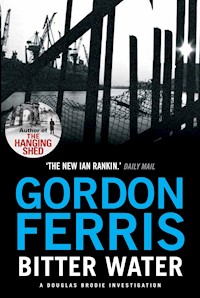
Shortlisted for the 2012 CWA Ellis Peters Historical Dagger Ferris is a writer of real authority, immersing the reader into his nightmare world with a brand of scabrous writing reminiscent of William McIlvanney's Laidlaw... everything speaks of an original voice. - Independent Glasgow's melting. The temperature is rising and so is the murder rate. Douglas Brodie, ex-policeman, ex-soldier and now newest reporter on the Glasgow Gazette, has no shortage of material for his crime column. But even Brodie baulks at his latest subject: a rapist who has been tarred and feathered by a balaclava-clad group. Brodie soon discovers a link between this horrific act and a series of brutal beatings. As violence spreads and the body count rises, Brodie and advocate Samantha Campbell are entangled in a web of deception and savagery. Brodie is swamped with stories for the Gazette. But how long before he and Sam become the headline?
Das E-Book können Sie in Legimi-Apps oder einer beliebigen App lesen, die das folgende Format unterstützen:
Veröffentlichungsjahr: 2012
Ähnliche













Also by Gordon Ferris
DREAMING OF A SONG
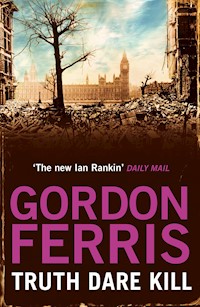
TRUTH DARE KILL
THE UNQUIET HEART
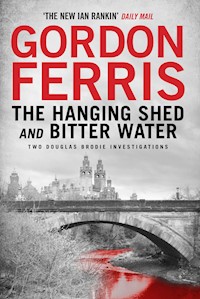
THE HANGING SHED
First published in Great Britain in 2012 by Corvus, an imprint of Atlantic Books Ltd.
Copyright © Gordon Ferris 2012.
The moral right of Gordon Ferris to be identified as the author of this work has been asserted in accordance with the Copyright, Designs and Patents Act of 1988.
All rights reserved. No part of this publication may be reproduced, stored in a retrieval system, or transmitted in any form or by any means, electronic, mechanical, photocopying, recording, or otherwise, without the prior permission of both the copyright owner and the above publisher of this book.
This is a work of fiction. All characters, organizations, and events portrayed in this novel are either products of the author’s imagination or are used fictitiously.
9 8 7 6 5 4 3 2 1
A CIP catalogue record for this book is available from the British Library.
ISBN: 978-0-85789-604-9 (Hardback) ISBN: 978-0-85789-605-6 (Trade paperback) ISBN: 978-0-85789-606-3 (eBook)
Printed in Great Britain.
Corvus An imprint of Atlantic Books Ltd Ormond House 26-27 Boswell Street London WC1N 3JZ
www.corvus-books.co.uk
‘Shall there be evil in a city, and the Lord hath not done it?’
For Jenny Ferris
(1929–2011)
CONTENTS
ONE
TWO
THREE
FOUR
FIVE
SIX
SEVEN
EIGHT
NINE
TEN
ELEVEN
TWELVE
THIRTEEN
FOURTEEN
FIFTEEN
SIXTEEN
SEVENTEEN
EIGHTEEN
NINETEEN
TWENTY
TWENTY-ONE
TWENTY-TWO
TWENTY-THREE
TWENTY-FOUR
TWENTY-FIVE
TWENTY-SIX
TWENTY-SEVEN
TWENTY-EIGHT
TWENTY-NINE
THIRTY
THIRTY-ONE
THIRTY-TWO
THIRTY-THREE
THIRTY-FOUR
THIRTY-FIVE
THIRTY-SIX
THIRTY-SEVEN
THIRTY-EIGHT
THIRTY-NINE
FORTY
FORTY-ONE
FORTY-TWO
FORTY-THREE
FORTY-FOUR
FORTY-FIVE
FORTY-SIX
FORTY-SEVEN
FORTY-EIGHT
FORTY-NINE
FIFTY
FIFTY-ONE
FIFTY-TWO
FIFTY-THREE
FIFTY-FOUR
FIFTY-FIVE
FIFTY-SIX
FIFTY-SEVEN
FIFTY-EIGHT
FIFTY-NINE
SIXTY
ONE
Bubonic plague starts with one flea bite. Spanish flu with one sneeze. Glasgow’s outbreak of murder and mayhem began simply enough and, like a flea bite, hardly registered at the time. In a volatile city of hair-trigger egos one savage beating goes unnoticed, a single knife wound is nothing special. Fighting goes with the Celtic territory, runs with the Scottish grain, is indeed fuelled by the grain, distilled to 40 proof. These belligerent tendencies explain my countrymen’s disproportionate occupation of war graves across the Empire.
So it’s just as well Glasgow’s a northern outpost of civilisation. The cold and damp keep tempers in check for much of the year. It’s just too dispiriting to have a rammy in the rain. But even Glasgow knows the taste of summer. When the tarmac bubbles, and the tenement windows bounce back the light. When only the great green parks can absorb and dissipate the rays. When the women bare their legs and the men bow their bald pates to the frying sun. When lust boils up and tempers fray.
When suddenly, it’s bring out your dead . . .
For the moment, in blithe ignorance, Glasgow was enjoying a hot July and I was enjoying Glasgow. It had been seven long years since I’d last stomped its checkerboard streets and bathed my ears in the tortured melodies of my countrymen. Six years of fighting across North Africa and Europe and one year trying to get over it.
What had I to show for it? They’d taken back the officer crowns and my life-and-death authority over a company of Seaforth Highlanders. A burden removed but my heart went with it. Now I queued with the housewives and the gap-toothed old fellas for a loaf of bread and a tin of Spam. I hated Spam. I had no more ration coupons than the wide-boy who’d spent the war dodging the call-up and pestering the lonely lassies. I had no wife to set my tea on the table or light the fire in the grate. I had no children to cuddle or skelp, read to or protect.
On the credit side, I had the clothes I stood up in – secondhand, having discarded my Burton’s demob suit in the Firth of Clyde. Not a sartorial statement, merely a choice between wearing it or drowning. My officer’s Omega had survived the dip as it had survived bombardments, desert dust and machine-gun vibrations. In a box in my digs, wrapped in a bit of velvet, lay the bronze stars of action in Africa, France and Germany. But they were common enough currency these days. Even the silver cross with its purple and white ribbon had little rarity value; not after Normandy.
I had a degree in languages; my French now sprinkled with the accents and oaths of the folk whose homes we razed in our liberation blitzkrieg; my German salted with the vocabulary of the tormented and the tormentors in the concentration camps I’d worked in after VE Day last year.
Outweighing all the negatives, I had a job. Not any old job. The job I was meant for after too many years of detours through academia and law enforcement. I was the newest and no doubt worst-paid journalist on the Glasgow Gazette, the voice of the people, by the people, for the people. Understudy and cup-bearer to Wullie McAllister, Chief Crime Reporter. The stories I’d fed him back in April about the wrongful hanging of my old pal Hugh Donovan had given him a spectacular series of scoops which had axed the inglorious careers of several prominent policemen. In return, when I came looking for a job on the Gazette, he’d opened doors for me. Mostly saloon doors, but that was part and parcel of the job.
It was another man’s death that called me to witness this morning. Big Eddie Paton, my editor, scuttled up to my desk in the far corner of the newsroom.
‘Get your hat, Brodie. McAllister’s no’ around. They’ve found a body. Foul play. Go take a look and bring me back a’ the details . . .’
Big Eddie rolled the words ‘foul play’ over his tongue as though he was savouring a single malt. I’d only been on the job a fortnight but I knew that when he said ‘details’ he meant as grisly as possible. Yet I liked Eddie. Beneath his rants and rages he was a newspaperman right down to the ink in his varicose veins. He could turn a run-of-the-mill tale of council overspend into a blood-boiling account of official corruption and incompetence.
The ‘big’ in front of Eddie was of course ironic. If you put a ruler alongside Big Eddie toe to top, you’d run out of Eddie about the 5’ 2” mark. He earned his name from his girth. And his mouth. His office attire was braces, tartan waistcoat and armbands. He was fast on his feet and could materialise by your desk like a genie, fat hands tucked into his waistcoat pockets or fingering his pocket watch. Time was always running out for Eddie.
‘How did you hear?’
Eddie tapped his pug nose. ‘Ah’m surprised at you, Brodie. One of your ex-comrades tipped us the wink.’
In my time in the police I’d been aware of a cosy arrangement between a few of my fellow coppers and the press. For a couple of quid they’d make a call to an editor to leak some newsworthy bit of criminality, such as a prominent citizen being arrested for drunken or obscene behaviour. I’d tried to stamp it out, but now I was on the other side, my scruples seemed a wee bit quaint. It could be seen as a useful public service. Is that what six years of war does to you? You lose your moral footing?
I assumed Eddie’s instruction about my hat was figurative. It was broiling outside. I’d have left my jacket too if I’d had more confidence in the office protocol for greeting the dead. I grabbed my notebook and a couple of sharp pencils and set off into the sweltering streets of Glasgow. I hopped on a tram on Union Street and got off down by the dockside at the Broomielaw. I walked past the shuttered faces of corrugated iron and wood till I spotted the police car parked askew outside a shattered goods shed. The warehouse had taken a pasting in the blitz of ’41, and Glasgow weather and hooligans had been putting the boot in ever since. The big sliding door was jammed open with rust and distortion. There was a gap wide enough to slide through into a great echoing furnace. And there was a stench.
On the far side, in a shaft of sunlight slicing through the torn roof, stood a clutch of mourners. Two uniformed policemen and one civvie, presumably a detective, but all with their jackets over their arms and braces on show. They were gazing at a long pale lump that lay between their feet. They were arguing.
‘Should we no’ wait for the doctor, sir? And the forensics?’ said a uniform. His pale young face and the sergeant’s stripes on his jacket glowed white in the gloom.
The detective bristled. ‘And what’s that gonna tell us? That he’s deid? Ah can see he’s deid. Would you no’ be deid if you’d had that done to you? Ah just want to know who he is!’
I walked nearer and could see the dilemma. It was a body all right. A man’s. Podgy with skinny white legs. Shockingly naked apart from a pair of fouled pants. His mother would have ticked him off. His hands were tied behind him and his feet strapped together, with his own belt. But no matter where you looked, your eyes were always dragged back to the head. Or where the head should be. For the moment it was merely a presumption. It reminded me of a curious kid at the infirmary with its head stuck in a pot. To see if it would fit. But this very dead man-child had chosen a bucket. A grey knobbly bucket.
As I joined the crowd the officers turned their eyes to me. The impatient one snapped: ‘Who the fuck are you?’
‘Brodie. From the Gazette.’ Our eyes met in a spark of mutual recognition. And dislike. His name would come to me.
‘Brodie, is it? Aye well, here’s something to wake up your readers, Brodie.’
‘Who is it?’ Then I realised what a stupid question that was. ‘I mean any identification? Anyone reported missing?’
I cast my eyes around the shadows looking for a pile of clothes. There was just a shovel and a small mound of grey. The sergeant cut in: ‘We’re just waiting for the man wi’ the X-ray machine to come by.’
That earned some guffaws. The detective tried to trump the witticism.
‘Are you like this on Christmas Day, Brodie? Desperate to open your presents?’
Now I could see properly. The body wasn’t wearing a bucket. He was wearing the contents of the bucket. I could also see the long rope trailing away from his ankle strap. I looked up. Sure enough there was a beam above us. I guessed this poor sod had been hung upside down by his ankles and then lowered until his head was fully in the bucket. Then they would have poured in the concrete. Whoever did it must have waited patiently until it set, and hauled the dead man up a couple of feet to get the bucket off. Prudence? Meanness – was it their only coal scuttle? Or to remove all evidence? Then why dump the shovel? Maybe it was as simple as wanting to leave as brutal a message as possible. This man had to be silenced and that’s what they’d done. I shuddered at the horror of his last moments.
I glanced again at the detective: rheumy-eyed and mean-mouthed, long broken-veined nose. Hat pushed back on his head. The name came back. Sangster. Detective Inspector Walter Sangster. I’d run into Sangster before the war when I was a sergeant with the Tobago Street detectives. By reputation he was volatile, someone with a short temper and an even shorter concentration span. I had taken an instant dislike to him in ’37 and found no reason to change my mind on renewing our acquaintance today.
Sangster turned to his fresh-faced sergeant, whose forehead was sheened in sweat. ‘Get me something heavy.’
The sergeant flicked his head at his even younger constable. The lad handed his uniform jacket to his sergeant and set off into the piles of rubble. He eventually came back with a silly grin and a torn strip of steel girder.
Sangster sized it up. ‘What are you waiting for, man? Hit it!’
The constable raised the girder in both hands and swung it at the dead man’s thick head. A lump of concrete broke off. Encouraged, the young officer swung again and more cracks appeared.
‘Go canny, now. Don’t smash the face up or we’re back to square one.’
The officer began delicately jabbing at his target using the steel like a spear. Suddenly the bucket-shaped lump broke in two. Too much sand in the mix. The constable used his boot to push aside the two halves of the concrete death mask and revealed the face itself. The tortured skin was bleached and burned by the lime. The nose and cheekbones were blue where the sadists had beaten him before drowning him in cement. His last moments had contorted his face in terror and anguish.
‘Jesus Christ!’
‘In the name of the wee man!’
‘You ken who that is?’
I’d been otherwise engaged for the last seven years, so I asked the dumb question. ‘Who?’
Sangster curled his lips. ‘Ah thought you were a reporter? Do you no’ recognise Councillor Alec Morton?’
I stared down at the man. He looked worse with a name. My spirit revolted at this latest addition to my mental gallery of violent deaths. Was there no end to it? Then, behind us, came steps and a familiar cigarette- and booze-roughened rasp.
‘Did I hear you right, Chief Inspector?’ he called out.
I turned to see Wullie McAllister, doyen of crime reporting at the Gazette, strolling towards us. He was able to pose his question despite the fag jammed in the corner of his mouth. He had his jacket slung over his shoulder and his sleeves rolled up. His thin scalp shone in the greasy light. The years of mutton pies and booze had not been kind, nor had his choice of profession. He would be lucky to draw his pension for a year beyond retirement. Glasgow statistics were against him, against all of us. Was he my ghost of years to come?
I assumed Wullie’s query was aimed at Sangster. Seems Sangster had taken advantage of the war to get himself promoted.
Sangster turned to me. ‘The organ grinder’s arrived. You don’t have to rack your brains coming up wi’ penetrating questions any more, eh, Brodie?’ The remark garnered some sycophantic chuckles from his cronies.
‘Your sense of humour hasn’t kept up with your promotions, Sangster.’
I had the satisfaction of wiping the grin off his sallow face.
Wullie got between us. ‘I see you two are getting on like a hoose on fire.’ Then he saw what – who – lay at our feet.
‘Alas, pair Alec! I knew him, Brodie: a fellow of infinite jest, who liked his pint. That’s an awfu’ way to go.’
Wullie and I didn’t stay long. No one knew anything. No one had any idea why Morton had been murdered, far less why it had been so brutal. Sangster had run out of sarcasm. We left them to ruminate and walked out into the blinding light.
‘You knew Sangster, then?’ he asked me.
‘I knew of him. Saw him about. But never had the pleasure of working with him.’
‘He’s a hard bastard, but fairly clean. Relatively speaking, of course. Not the sharpest truncheon on the beat. More low cunning than great deductive brain. Watch your back, Brodie.’
TWO
Wullie let me try my hand at writing up the story. Though, truth to tell, apart from the gory details, all we had was speculation. The gore was enough for Big Eddie. Though many’s the voter might have cursed their representative by inviting them to go stick yer heid in a bucket, it would still be a shock to read about the gruesome reality of it over the toast and jam in the morning. Next day I had the dubious delight of seeing my words – most of them, and not necessarily in the order I’d submitted – appearing in bold print on the front page of the Gazette. A fortnight on the job and making headlines. That’s not to say Wullie was yet ready to share the credits with me. Your time will come, Brodie, soon enough.
As to the crime itself, the police remained at a loss, despite blustering statements from the Chief Constable’s office. Alec Morton had gone missing the night before. His panicking wife had phoned in about eleven o’clock, long after the pubs had closed. The search had commenced properly this morning at first light, but it had been a bunch of wee boys playing in the ruins that had found the murdered councillor suspended from the beam. They’d gone screaming to their mammies, who’d raised the alarm. And someone within the central nick at Turnbull Street had passed the word to Big Eddie.
There were no obvious clues about Morton’s private or public life that might have earned him such a miserable death. But Wullie seemed more than a little excited. I was beginning to find that murders always raised his pulse.
‘Ah’m no’ saying anything just for the moment, Brodie. But there’s a smell here. A stink. Something big is under way and I will pursue it!
‘Bigger than murder? What was Morton’s role on the council?’
‘Finance,’ said Wullie, caressing the word like a pair of silk stockings. ‘He was head of the Finance Committee.’
‘How do we follow this up? Do you want me to have a go at the police? See if any of my old pals are around and want to talk?’
‘Aye, you can do that, Brodie. But I think you and me need to interview a couple of Morton’s fellow councillors. I’ll set it up. It’s time you got your hands dirty.’
I made a few calls to Central Division, where I assumed Sangster was based. But I ran into either a blank wall of ignorance or deliberate obtuseness. My name and my time on the force before the war meant nothing to anyone I talked to. Or maybe it did? Nobody wanted to comment on a hot potato like the savage murder of a prominent official. I got some mawkish guff from the Provost’s office about it being a terrible tragedy and how Mr Morton was irreplaceable. But nothing that gave any insight into who or why.
I left the newsroom just after six. I had a clear evening, no plans or commitments, the sun was shining, and I felt I’d earned a pint. Or two. As I walked down the narrow slice of Mitchell Lane I became aware of footsteps quickly gaining on me. I glanced back. A tall gangling man was striding towards me. The gap was about twenty yards and closing. His head was up and he was staring straight at me, an intent look on his face, as though he held a knife and had just decided to use it. On me.
I walked another couple of steps, then stopped, turned and faced him full on. Automatically I found myself crouching slightly and moving on to the balls of my feet. The man came on, his face alight. When he was about ten feet away he stopped dead and stared at me with blue unflinching eyes, the hue accentuated by the shock of red hair.
‘Mr Brodie.’ It wasn’t a question. He knew who I was.
‘What do you want?’
‘Talk. I need to talk. I have to talk.’
There was the lilt of the North in his voice. A Highlander. And therefore referred to contemptuously by all we Lowlanders as a Teuchter. I once looked it up in the university library. Probably from the Gaelic: peasant or drink. It was in retaliation to Highlanders calling us Sassenachs, Saxons.
I sized him up and down. About my height but thin to the point of emaciation, though there was a hint of wiry strength. I thought I could take him. Unless he had that knife and knew how to use it. The face was all bones and angles, the eyes unslept and fevered. Despite the heat he wore leather gloves and a faded ex-army pullover. His trousers had perfect creases but they ran down into frayed cuffs. If this had been a dog I’d have diagnosed rabies. And run for my life.
‘So, talk. What do you want?’
‘Not here. I need help. We need help. We must have help.’ His voice was rising.
‘If it’s money, I could give you a couple of bob.’
He shook his head. Annoyed. Affronted even. He took a deep breath. ‘I read about you. You and your lawyer woman, Campbell. You tried to save your pal from a hanging.’
His words stung. It had been over three months ago, in all the papers, but people kept bringing it up. I’d been quietly pulling my life together in London, easing up on the booze, making some inroads into a new career as a freelance journalist when I was summoned north by advocate Samantha Campbell to try to save the life of a man on HMP Barlinnie’s death row. Not just any man, my boyhood pal, Hugh Donovan. We failed. But Sam and I had the bitter satisfaction of proving they’d hanged an innocent man. The coppers had framed Hugh for murder. He’d died on the gallows because it was easier to blame him than do some proper police work.
‘What about it?’
‘I’ve got a pal. A good soldier. We served together. He’s in trouble. Can. We. Talk?’
I had a choice. I could turn and walk away and have him jump me. Or I could knock him down and then run for it.
‘Can we talk, Major?’
That got my attention. The press had mentioned my old army rank but only in passing. Someone had paid attention.
‘Not here.’ The smell of piss wafted at us down this dark tunnel between the lowering buildings.
He straightened. ‘First pub? I’ll buy.’
‘OK, pal, here’s how it works. You’re going to stand there until I’ve walked ten paces, then you follow, keeping that distance. Fair?’
He nodded. ‘Fair.’
I started to back away and when I was two or three steps distant I turned and walked on, trying not to run, trying not to squeeze my back muscles which were tensing in anticipation of the thrown blade. Or bullet. I counted to ten and heard him start. His pace matched mine and we emerged into Buchanan Street. I crossed over, sidestepping the buses, and slid into McCormick Lane. You’re never more than a thrown bottle from a pub in Glasgow. It was a rough dive but this didn’t feel like a social occasion. Besides, I still had my thirst. I pushed through the doors and went to the bar.
‘Two pints of heavy please.’
I heard the door behind me swing and clunk into its frame. He materialised by my side.
‘I will get these,’ came the soft, correct lilt. A reminder of some of the men under me in the Seaforths. He was beside me, staring at the barman whose eyes flinched first. From the Highlander’s worn clothes and wild manner I expected him to smell. Just another demobbed soldier prowling the dark lanes and sleeping rough. He didn’t. A small personal triumph, at some cost, I imagine. He was freshly shaven, the nick on the jaw a recent encounter with a blade. Between gloved finger and thumb he held out half a crown for inspection. The barman took it, hit the till and dropped the eight pence change back in the Highlander’s still outstretched hand. He clenched his hand round the coins, opened it and counted the money. I almost said, I’ll get them. But he’d forced this meeting.
I looked round the pub. Décor: functional brown. Sawdust: fresh. Clientele: seasoned drinkers and domino champions. Atmosphere: growing fug.
‘Over there,’ I said and nodded to a dark corner table. We sat. I supped my beer and took out my fags. ‘You’ve bought yourself five minutes,’ I said. ‘Let’s start with your name. You seem to know mine well enough.’
A twitch ran across his fleshy lips, as though he was stifling a grin.
‘Call me Ishmael.’
I snorted. It was as good a nom de guerre as any, and showed some wit.
‘Son of Abraham or hunter of whales?’
‘We’re all sons of Abraham,’ he said with a serious shake of his head. ‘It’s my friend I want to talk about.’
‘I’m listening, Ishmael.’
He began. ‘One of my pals is in trouble. Johnson. He was caught stealing. He broke into one of those fine terraced places looking for money or something to sell and they set a bloody Alsatian on him. Ripped his arm and face and kept him there till the police came.’
I shrugged. ‘Bad luck for your pal Johnson. But good luck for the owner of the house, I’d say.’
Ishmael’s eyes tightened. The muscles on his jaw bulged. ‘Aye, I suppose it is to you. But here’s the thing. The man was starving. He fought for king and country and now he doesn’t even have a roof over his head. Nor a penny in his pocket. Nor a bit of bread in his mouth.’
I felt a twinge of shame. It was an everyday story. Men like Ishmael and his pal Johnson helped win the war a year ago and came home to . . . nothing. No job. No family. No future. I’d been only a hair’s breadth away.
‘I’m sorry to hear that, but he broke the law.’
‘That or starve!’
‘We have soup kitchens! Others manage. It’s rotten out there, but we need rules or it’s chaos.’
His eyes grew cunning. ‘Rules? Is that what you played by? If you’d followed the rules back in April would the police have been shown up for what they are? This city is corrupt.’ He relished the word. ‘The only way to get justice is to take it yourself.’
He had a point. And he didn’t know the half of it.
‘What do you want from me?’
‘I want you to ask your fine lawyer lady friend if she’ll defend Johnson. He’s in Turnbull Street. He’ll be in the Sheriff Court on Friday. He’s facing years inside.’
‘But he’ll have a defence lawyer. The court will have appointed one if he’s got no money.’
‘Their man is a charlatan. He spent ten minutes with Johnson and the useless solicitor. As far as the advocate’s concerned it’s open and shut. He’ll take his pieces of silver, say a few pious words and wave my friend farewell as they cart him off to Barlinnie. We need help!’
I thought about what he was asking me. Thought about Samantha Campbell. And wondered if she’d even take my call, far less take on a case for a mad stranger whose pal, by the sound of it, didn’t stand a chance. Three months back, in the traumatic finale to our search for justice for Hugh Donovan, I thought Sam and I might – quite literally – sail off into the sunset together in our commandeered yacht. Sam’s ill health threw a dose of cold common sense over me. Then, amidst the subsequent and seemingly endless police inquisitions and newspaper frenzy, we decided – well, she decided – we needed some distance and time apart to see how we felt. In short she threw me out. We hadn’t spoken in a fortnight.
I studied his clenched jaw and his red eyes. ‘Give me one good reason why I should.’
His voice dropped to whisper. ‘Because you owe him.’
‘I’ve never met the man!’
He sighed. ‘He says he’d heard of you. He was at Saint-Valery. In your old division. But he was taken. Five years as a prisoner of war. He’s served enough time, don’t you think, Major?’
The name – Saint-Valery-en-Caux – punched me in the midriff. Ten thousand men of the 51st Highland Division, my division, were trapped in that pretty little fishing village just along from Dunkirk in 1940. A few of us slunk away and made it back to England to fight again. Most didn’t.
‘Which regiment?’
‘Black Watch.’
Not mine, but still. ‘Poor bastard.’
‘Will you help?’ he asked again, this time knowing the answer.
I found a box and dialled her number. It was now six thirty. She should be home. When I heard her voice, I pushed button A and the coins clattered in.
‘Sam? It’s Brodie. How are you?’
There was a brief lull, then: ‘I thought you were in the huff with me.’
Just like a woman. ‘Me? You were the one who flung me out!’
‘You walked out, Brodie. By mutual agreement.’
‘Sam, I’d love to debate this with you some other time, but I have a favour to ask you.’
‘You want a bit of red-hot gossip from the courts? An inside track on my latest case? Or you’ve got a poke of chips in your pocket and nobody to share it with?’
‘Samantha Campbell, will you just listen for a minute?’
‘I’m all ears.’
I told her about Johnson and the plea from his mad pal. Her response was an echo of mine.
‘Give me one good reason why I should, Brodie.’
It was unfair. I’d prepared my line. ‘Because we didn’t save Hugh.’
The pause went on for long seconds. ‘That’s playing dirty, Brodie.’
‘I know.’
‘Right. If I’m doing this, you’re involved too. Meet me at Turnbull Street with this mad Highlander of yours tomorrow at ten. Tell him he needs to bring Johnson’s solicitor with him. And any paperwork.’
‘Thanks, Sam, I’ll . . .’ but the line was already dead and the tuppence change was clattering in the box. I hadn’t told her the mad Highlander’s name in case she thought the whole thing was a prank. A ploy to get to see her again. I wasn’t that desperate.
I looked through the pane. No ploy. Ishmael was standing staring at me about three feet away. I nodded. His shoulders went down.
I got to Turnbull Street just before ten. I was jittery. This was likely to be a meeting full of undercurrents and strained emotions. And that was without the presence of the accused man.
The Highlander was already there and haranguing a sweating man in a three-piece suit, presumably the court-appointed solicitor. The cornered man was clutching a battered briefcase to his chest for protection against the Highlander’s jabbing finger. I caught the tail end of a diatribe about the unfairness of the law. About how the rich could buy their justice and the poor got shafted. I had some sympathy with that view but confined myself to simple introductions. The solicitor – Carmichael – clutched my hand as if I were his long-lost brother.
I heard heels clicking towards us and turned in time to greet Sam striding forward, ready for battle. Grey suit, glistening white blouse, black briefcase swinging by her side. Her ash-blonde hair combed and clamped to her head like a helmet. She jammed her glasses further up her nose to properly line us up in her sights. From ten feet away she was the dashing, top-flight advocate, completely in control. Up close, as she did the rounds of handshaking, I could see the lines round the eyes. Her make-up was thicker than I recalled it, the cheekbones pronounced.
She got to me last and held my hand and eyes for a brief second longer than the others.
‘Hello, Mr Brodie. I trust you’re well?’
‘I’m fine, thank you, Miss Campbell. Thank you for getting involved.’
‘I’m not involved yet. Mr Johnson and Mr Carmichael need to appoint me. And I need to square it with the court-appointed advocate.’
The sweating solicitor jumped in. ‘Oh, I’m sure that will be no problem, Miss Campbell. I had the honour of working with your father when he was Procurator Fiscal.’
‘That was a while ago, Mr Carmichael.’
‘Nigh on twenty years. I was—’
‘This is all verra cosy. But my friend is in court in two days.’
Sam turned to the Highlander. Through her eyes I saw an unexploded bomb with a hair-trigger fuse.
‘This is . . . Ishmael,’ I said.
She blinked at me, but then smiled at him. ‘Mr Ishmael, is it? I agree. Let’s cut the pleasantries. If Mr Carmichael will allow me, we’ll go and have a wee chat with your friend.’
She called me later at the newsroom and asked to meet me at George Square. It was past lunchtime and the secretaries and other office workers had reluctantly dragged themselves inside away from the blessed sunshine. We found a bench.
‘It’s good to see you, Sam. You’re looking well.’
‘Am I?’ She took off her specs and rubbed at the bridge of her nose. ‘God knows why.’
I studied her profile. In the harsh light, the dark shadows under the eyes were visible. The lines round the mouth sharper. She turned to me.
‘What do you see, Brodie? An old woman, past her best?’
‘It works for me, Sam,’ I said gently. She turned her head away and slid her glasses back on.
‘I’m just tired. Always tired these days, Brodie.’
‘What you went through . . .’
‘It’s been three months! It’s time I sorted myself out!’
I let her settle. ‘What about Johnson?’
‘He’s for the high jump.’
‘Tell me.’
‘Caught in flagrante. Poor bugger is skin and bone. And stitches. That bloody Alsatian fair chewed him up.’
‘Any previous?’
‘No. First offence. Well, first time he’s been caught.’
‘So he might get off with six months?’
She shook her head. ‘He killed the dog.’
‘Self-defence, surely?’
‘With a gun.’
‘Idiot!’
‘So he’s on trial under Solemn Procedure in the Sheriff Court.’
‘Remind me?’
‘It’s for serious offences. Jury and judge. He could get five years.’
‘Ouch.’
‘If he’s lucky. The judge might want to kick it upstairs to the High Court to give him a longer sentence.’
‘God, why? Don’t tell me he raped the wife?’
‘Not quite. But he chose the wrong house to break into.’
‘Who’s?’
‘Mairi Baird’s.’
I shrugged.
‘Maiden name McCulloch. Sister of Malcolm McCulloch.’
‘The Chief Constable? She wants his head.’
‘On a silver platter. With an apple in the mouth.’
‘Are you taking the case?’
‘Are you always going to be my conscience, Brodie?’
‘You don’t need me. Not for that anyway.’
She turned and looked at me, and smiled for the first time since I saw her this morning. ‘I told your pal, Ishmael, I’d have a go, even though it’s not looking good. Is that his real name or is he just a Melville fan?’
‘Could be both. How did he take it?’
‘He didn’t fall to his knees in gratitude. Just nodded, as though it was my duty. He seems to know about police work.’
‘Did you tell him about the special circumstances?’
She sighed. ‘I mentioned that emotions might be running high among the upper layers of Glasgow society.’
‘And?’
‘He had a wee fit. I was glad Carmichael was with me. I got a lecture and a bit of scripture thrown at me.’
‘What bit?’
‘The old “vengeance is mine, saith the Lord” stuff. I don’t think your pal is a’ there, as they say.’
‘I think I’d better be there on Friday when the verdict comes through.’
‘Can you bring a big stick?’
We parted; this time she reached up and held my shoulders and I bent to get a peck on the cheek. I smelled her hot skin beneath the smudge of her perfume. I wanted to take her in my arms and hold her and tell her it would get better. Tell her that the trauma would pass. But she’d have pushed me away and accused me of being patronising. When all it was was caring.
I got back to my desk just in time for Wullie McAllister to grab me.
‘C’mon, Brodie. We’ve got a date.’
‘Who with?’
‘James Sheridan, esquire. Glasgow councillor and Chairman of the Planning Committee. Oor Jimmie has graciously agreed to give us an interview about the vile murder of his pal, Councillor Alec Morton.’
THREE
As we walked towards George Square and the council offices, Wullie reminded me about Man of the People, sometime philanderer and rabble-rouser. Not that I needed much reminding. Sheridan was one of the larger-than-life characters that Glasgow throws up from time to time whether it needs one or not. Cometh the hour, cometh the fast-talking populist. I watched his rise before the war, continually surprised by voters forbearance. They were smitten by his rhetoric and tolerant of his amorous escapades. was the forgiving response to the latest impropriety.
Lesen Sie weiter in der vollständigen Ausgabe!
Lesen Sie weiter in der vollständigen Ausgabe!
Lesen Sie weiter in der vollständigen Ausgabe!
Lesen Sie weiter in der vollständigen Ausgabe!
Lesen Sie weiter in der vollständigen Ausgabe!
Lesen Sie weiter in der vollständigen Ausgabe!
Lesen Sie weiter in der vollständigen Ausgabe!
Lesen Sie weiter in der vollständigen Ausgabe!
Lesen Sie weiter in der vollständigen Ausgabe!
Lesen Sie weiter in der vollständigen Ausgabe!
Lesen Sie weiter in der vollständigen Ausgabe!
Lesen Sie weiter in der vollständigen Ausgabe!
Lesen Sie weiter in der vollständigen Ausgabe!
Lesen Sie weiter in der vollständigen Ausgabe!
Lesen Sie weiter in der vollständigen Ausgabe!
Lesen Sie weiter in der vollständigen Ausgabe!
Lesen Sie weiter in der vollständigen Ausgabe!
Lesen Sie weiter in der vollständigen Ausgabe!
Lesen Sie weiter in der vollständigen Ausgabe!
Lesen Sie weiter in der vollständigen Ausgabe!
Lesen Sie weiter in der vollständigen Ausgabe!
Lesen Sie weiter in der vollständigen Ausgabe!
Lesen Sie weiter in der vollständigen Ausgabe!
Lesen Sie weiter in der vollständigen Ausgabe!
Lesen Sie weiter in der vollständigen Ausgabe!
Lesen Sie weiter in der vollständigen Ausgabe!
Lesen Sie weiter in der vollständigen Ausgabe!
Lesen Sie weiter in der vollständigen Ausgabe!
Lesen Sie weiter in der vollständigen Ausgabe!
Lesen Sie weiter in der vollständigen Ausgabe!
Lesen Sie weiter in der vollständigen Ausgabe!
Lesen Sie weiter in der vollständigen Ausgabe!
Lesen Sie weiter in der vollständigen Ausgabe!
Lesen Sie weiter in der vollständigen Ausgabe!
Lesen Sie weiter in der vollständigen Ausgabe!
Lesen Sie weiter in der vollständigen Ausgabe!
Lesen Sie weiter in der vollständigen Ausgabe!
Lesen Sie weiter in der vollständigen Ausgabe!
Lesen Sie weiter in der vollständigen Ausgabe!
Lesen Sie weiter in der vollständigen Ausgabe!
Lesen Sie weiter in der vollständigen Ausgabe!
Lesen Sie weiter in der vollständigen Ausgabe!
Lesen Sie weiter in der vollständigen Ausgabe!
Lesen Sie weiter in der vollständigen Ausgabe!
Lesen Sie weiter in der vollständigen Ausgabe!
Lesen Sie weiter in der vollständigen Ausgabe!
Lesen Sie weiter in der vollständigen Ausgabe!
Lesen Sie weiter in der vollständigen Ausgabe!
Lesen Sie weiter in der vollständigen Ausgabe!
Lesen Sie weiter in der vollständigen Ausgabe!
Lesen Sie weiter in der vollständigen Ausgabe!
Lesen Sie weiter in der vollständigen Ausgabe!
Lesen Sie weiter in der vollständigen Ausgabe!
Lesen Sie weiter in der vollständigen Ausgabe!
Lesen Sie weiter in der vollständigen Ausgabe!
Lesen Sie weiter in der vollständigen Ausgabe!
Lesen Sie weiter in der vollständigen Ausgabe!
Lesen Sie weiter in der vollständigen Ausgabe!




