


Erhalten Sie Zugang zu diesem und mehr als 300000 Büchern ab EUR 5,99 monatlich.
- Herausgeber: Pushkin Press
- Kategorie: Abenteuer, Thriller, Horror
- Sprache: Englisch
High up in the rainforest canopy sits a stranded pirate ship, many miles from the sea. On board, Captain Henry Morgan lies dying, surrounded by magnificent jewels, artefacts and coins accumulated over a lifetime. Centuries later, Severo Bracamonte arrives in a remote Venezuelan village in search of the captain's legendary hoard. He is given lodging by the Otero family, to whom he promises a share of his find, but, despite his relentless efforts, the treasure seems destined to remain undiscovered...Miguel Bonnefoy's captivating fable on the evils of greed is also a fascinating portrait of Venezuela's development in the twentieth century.
Sie lesen das E-Book in den Legimi-Apps auf:
Seitenzahl: 189
Veröffentlichungsjahr: 2025
Das E-Book (TTS) können Sie hören im Abo „Legimi Premium” in Legimi-Apps auf:
Ähnliche
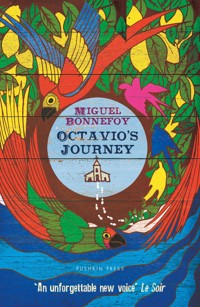
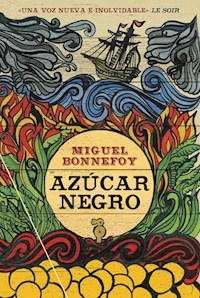
















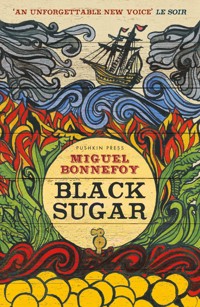
Black Sugar
By Miguel Bonnefoy
Translated by Emily Boyce
First published in France as Sucre Noirby Editions Payot & Rivages
Copyright © Editions Payot & Rivages, 2017
First published in Great Britain in 2018by Gallic Books, 59 Ebury Street,London, SW1W 0NZ
This ebook edition first published in 2018All rights reserved© Gallic Books, 2018
The right of Miguel Bonnefoy to be identified as author of this work has been asserted in accordance with Section 77 of the Copyright, Designs and Patents Act 1988
This ebook is copyright material and must not be copied, reproduced, transferred, distributed, leased, licensed or publicly performed or used in any way except as specifically permitted in writing by the publishers, as allowed under the terms and conditions under which it was purchased or as strictly permitted by applicable copyright law. Any unauthorised distribution or use of this text may be a direct infringement of the author’s and publisher’s rights, and those responsible may be liable in law accordingly.
ISBN 9781805333869 epub
I
The dawn light revealed a ship marooned in the canopy of a vast forest. A square-rigged vessel with three masts and eighteen cannon, the ship’s stern was wedged into the crown of a mango tree many metres tall. On the starboard side, fruits hung amid the rigging. To port, the hull was covered in thick undergrowth. The ship had dried out, the only remaining trace of the sea a line of salt between the planks. There were no tides, no waves, only hills stretching as far as the eye could see. From time to time a breeze heavy with the scent of dried almonds blew in and the whole carcass of the ship from the topmast to the hold creaked like an old treasure chest being lowered into the ground.
For several days now, the crew had been struggling to survive. Aboard the ship were a motley group of non-commissioned officers, one-eyed bandits and black slaves with teeth cracked by rifle butts, who had been put in chains on the coast of Senegal and bought at a London market. For hours on end they stood at the ship’s rail, their elbows resting on damp moss as they scoured the horizon for signs of the ocean.
Whole days went by with nothing to see but the green of the trees and birds flying out of the foliage. Dressed in loincloths, the men came and went, wandering from one side of the ship to the other, stepping over the brambles that grew between the planks.
Some hung their hammocks high in order to avoid the climbing ivy. Others played dice, sitting on sacks of rubble. They no longer scrubbed the decks or cleared the hold. Only the first mate, a Haitian giant, cut a notch into the mast each day and listened out for sounds from a nearby port or the splash of an anchor amid the lapping of the forest’s surf.
The frigate had sailed from Weymouth harbour several months earlier loaded with goods. It was built from mahogany, said to resist both rot and woodworm, and its sails had been coated in tar to withstand the wind. Just before its departure, a chaplain had conducted a service on the quayside and a shipwright had written the vessel’s name on the bow for luck.
Sacks of lentils, beans and pulses were piled high on the ’tween deck; barrels of salted pork wrapped in strings of garlic stood next to a hundred pounds of honey from the viceroy of a distant province. The men had even brought a giant turtle on board and kept it alive on its back for weeks before cutting it open.
But the voyage was long. In the days following the shipwreck, biscuit and wine had to be rationed. Soon they could no longer rely on their provisions. The stifling heat had dried out the barrels, the pork joints rotted on the parapet and barely a drop of honey remained. When they ran out of lentils, they supped on herb soup from tin bowls. The biscuit became a larvae-covered powder to be gulped down with sawdust.
Warmed by the sun, the casks of water turned as black as a smithy’s basin. The paintwork was flaking, rendering the ship’s name illegible. The cannon turned into nests for birds of prey, the portholes becoming cages for bats. When at last the men went to eat the turtle, they lifted the shell to find no flesh left inside. All that remained were a few handfuls of red sand swirled into mysterious shapes – a black magic alphabet according to a slave with knowledge of the occult.
The crew resolved to launch a land expedition to explore their surroundings. The first mate lowered himself on a chair attached to a rope and pulley. As he slid down, he made out the ship’s belly through the gloom, its side gnawed away by moss. Fifty metres further down, a vast, sludgy, dark and swampy lagoon spread over hundreds of leagues into the heart of the forest.
The ground was muddy. The only trees were aquatic varieties whose roots were submerged. Intermingled tree trunks floated like rafts above the mangrove, woven with creepers and branches; channels wound beneath the arches of foliage and swallow carcasses lay suspended in the mud.
There was nothing of the ocean here. It was then that the first mate realised they were lost in the middle of a strange land where all the forces of nature appeared to stand in the way of their return to the sea. Returning to the deck, he said, ‘The captain must be informed.’
Henry Morgan slept in a nook below deck which had no door, only a curtain strung across the entrance. The ship was under his orders, but he had not been seen outside his hideaway since the vessel had run aground.
The first mate lifted the curtain and entered the low-ceilinged room. In order to pass the threshold, he had to cut his way through with a machete. All kinds of tropical flowers were growing through the hatches. A thick layer of greenery had forced its way between the joists. Lemon tree wardrobes were now wrapped in foliage and heavy furniture green with fern creaked gently in the shadows.
The space was filled with curiosities from far-off places, spoils of plunder used as currency in foreign ports. Quintals of Moluccan cloves, Siamese ivory, Bengali cashmere and Timorese sandalwood were piled up on a table. The air carried the scent of Malabar pepper, kept fresh in a china pot.
On another table in the centre of the room, several coffers lay open, brimming with compasses and lizard-skin prayer books, with bottles of castor oil and Cayenne rum perched on top. Old nautical maps with Latin inscriptions, bound and gilded in Venice, were strewn about, and in the middle, set with strips of metal and twelve silver studs, stood an open oak chest that contained hundreds of écus, Louis, crosses and chalices, morocotas, several sabre handles, the neck of an Etruscan vase and the Golden Horns of Gallehus.
None but the first mate suspected that amid the stench of misery, hunger, rotten meat and inedible biscuit, a treasure trove lay dormant beneath the muddy planks like an angel languishing at the bottom of a pigsty.
The first mate spoke into the darkness.
‘Captain, the men are growing restless.’
Something moved at the back of the room and, through the murk, a shape became visible on a four-poster bed.
The captain lay pale and thin, his head resting on nine pillows. He looked almost dead. He was staring at the branches coming in through the porthole. The smell of sickness hung in the air. Around him, the forest rumbled like a wave.
‘Let them,’ Henry Morgan replied hoarsely. ‘It’ll take their minds off their hunger.’
The first mate lit a candle, illuminating the captain’s face with its French-style moustache, long hair caked with grease and hemp, and eyes bloodshot from forty years of piracy. The flame reddened his teeth and tinged his skin yellow. Mauve shadows gnawed away at his cheekbones.
He had the face of an old man, with deep wrinkles carved by his salt tan. Even in bed, he wore a grey leather coat with pistols tucked into the inside pockets and a tatty old tricorn hat with the look of something twelve-month oak-aged. Between his fingers he rolled hinged gold rings he had stolen in Barbados.
Henry Morgan leant over to the bedside table and poured himself a glass of rum with a squeeze of lime.
‘If I had legs, I’d show them how a pirate survives,’ he sniggered. ‘Even on land.’
The captain lifted the sheet, revealing legs as fat as church bells with puffy, bluish, dropsy-ridden skin. Years of the bottle had put his veins under immense strain. The capillaries had leaked and the muscle tissue was swollen with fluid.
His only relief came from pomegranate bark infusions, vinegared pine broths and preparations of goat’s milk mixed with ten ounces of cider.
The man who had been by turns privateer, commander in chief, brother of the coast and Governor of Jamaica now slept for fourteen hours a day and pissed in his bed at night.
Shrivelled poultices lay beside blood-stained rags on the floor. An old slave put drains in his stomach and made ointments from aniseed and Mexican coriander, but Henry Morgan was dying in the depths of his ship, pitiful and alone, plunging his hands into treasure that could not save him.
‘I’m not to be disturbed again,’ he said.
He lay back down, adding,
‘In a hanged man’s home, there’s no talk of ropes.’
The first mate saw immediately that the absence of a captain in a situation such as this could only end in mutiny. Yet hunger led the men not to revolt, but to hunt.
As if at sea, they strung fishing lines between hooks and hung nets on them to catch the birds which flew over the ship in their hundreds, like shoals of fish. But the traps yielded only tiny rodents, inedible iguanas and surprisingly cunning young monkeys, who escaped to steal the ship’s tin plates. Lizards bit through the nets and bolted up the lines, slipping out of the sailors’ grasps.
The first mate wove a basket of split reeds and creepers, placed a few pieces of fruit inside and attached it to a length of rope. Soon sharp tugs were felt. When the trap was opened, an animal emerged very slowly, setting its claws down on the planks.
It was a grey sloth, ugly as anything, with arms so long they doubled its overall size. It had no ears, eyes rimmed black as if with kohl, a squashed nose, flat face and thick fur. With slow, sad movements, it rocked its head from side to side as the crew crowded curiously around it.
‘They’re supposed to taste like lobster,’ claimed the cook.
So they set up a brazier and barbecued the sloth to the sound of sea shanties.
They served it with a few mangos picked straight from the tree and a pair of fairly fleshy parrots caught in their migration south, marinated in lemon juice for two hours and cooked in banana leaves.
To save on salt, they used allspice. In place of crabs, they caught toads. And so this band of pirates used to feasting on piles of shrimp and shellfish, who had sailed the world many times but knew nothing of the fruits of the land, enjoyed their first and only rustic banquet aboard the ship.
A month later, the weather turned. The sky clouded over and a gale blew through the forest. Cold air was coming in from the sea. The frigate reeled and its stern rammed against the mango tree.
In the middle of the night, a powerful storm broke over the ship. The sails billowed. Leaves rained down, sailors were floored by falling branches and everyone clung to the parapet, tied to the rigging which was straining almost to breaking point. The frigate swayed in every direction, bobbing among the trees like a fishing float. Men were running, crawling, praying, barely able to stay upright on the slippery deck.
They battled the storm all night long. The keel moaned until dawn and one sailor took such fright that the very next day, out of patriotic superstition, he hoisted the national flag onto the jack-staff.
By morning, the hull was cracked and water was coming in from all sides. The wood was so rotten it smelt of old yeast. Though the ship had stopped swaying, the men still stood with their legs wide against the roll.
The first mate ordered an immediate inspection of the damage. From the keel to the mast-tops, six mariners compiled an inventory of every frayed rope, flattened screw and rusted nut. From the top, the lookout sent reports of sails and ropeladders torn down by the winds.
The first mate set a handful of the fittest sailors to tarring and caulking, sharing hammers, buckets of pitch and wet tows between them. Tied to one another with ropes, they had to saw up branches to replace planks, cut beams and secure the base of the mast. Heavy barrels were placed on the port side as counterweights. Hemp sheets were laid over the powder and when there was no tar left for sealing cracks, they resorted to mangrove sap.
The first mate summoned the men to the mess. He stood up solemnly to address the crew and said in a low voice, as if the devil were listening,
‘Gentlemen, we are too heavy.’
Anything surplus to requirements was to be thrown overboard to lighten the load. They began with seven cannons and several kilos of lead used for smelting arms. Next they disposed of the fire boxes, grenades greased with lard, all the paraphernalia of war. Troughs of plants that had been growing in the hold were thrown into the abyss, and the last sulphur bombs were let off, scattering the vultures.
The ship went on creaking and sinking ever lower. The men were forced to throw out cabinets stolen during raids, globes all the way from Rome, and two large mirrors. It took several sailors to detach the chain from the anchor. Soon they were running in every direction, silhouettes spooked by the ship’s groans, arms full of provisions and pine chests, rolling leaky barrels along the deck.
Coffee and dried fruits were carried off, but the first mate forbade anyone to touch the spices, because in Europe a peppercorn was worth more than a man’s life.
The forest was covered in goods, silks and pillaged paintings. A sail came loose, landing bonnet-like on distant treetops. Feathered hats, velvet breeches and ladies’ undergarments hung from the branches. Fragments of the ship, topsails and oars were discarded, while barrels of Madeira wine were brought up on deck to be drunk in haste.
Birds clutched copper and silver bracelets in their beaks. Marquises’ dresses floated in the breeze on the canopy and monkeys played with laces, jumping from tree to tree, tearing up the pirates’ black flag.
Yet still the frigate remained too heavy and still it sank deeper. The men were losing patience. The first mate drew aside the curtain of the captain’s nook, with two sailors following behind.
Henry Morgan was alone, lying on the bed in his hideout. By the light of a candle, he was counting his gold coins before an open chest. When he saw that the men were armed, he quickly sat up and reached for his pistol.
‘Captain, we must clear this room,’ said the first mate.
Henry Morgan aimed his gun at the doorway. His face, ravaged by alcohol, had turned deathly pale. The weapon shook in his hand.
‘No,’ he replied. ‘First we must clear the ship.’
He opened fire and one of the sailors fell. The men took out their sabres and a furious battle broke out on deck.
As each man fell, the bodies were thrown overboard. Henry Morgan yelled, shooting into the crowd and promising a share of the booty to all those who would protect him. A circle formed around him.
A jumble of shots, black sabre clashes, rusty scythes and wooden legs ensued. All were fighting, the seaman to defend his freedom, the slave to gain his, and as the brawl went on the boat pitched in the canopy.
The skirmish lasted two hours. There were thirty dead, eleven deserters, and the cook was found stabbed in the fork of a tree. By the end, only the captain, ten men who had protected him and the gravely injured first mate remained.
Henry Morgan lay on his bed, delirious with exhaustion. The ground was littered with rubbish, severed fingers and broken pots. Several bodies had not been recovered. The captain knew he could not tolerate a mutiny under his leadership and since he had the right by royal decree to put crew members to death, he was determined to make an example of one of the culprits.
The first mate was shivering in the corner, clutching his side to stem the flow of blood. Without further ado, the captain ordered he be tried for sedition. To assert his authority, he wished to follow the procedure of the English courts, invoking divine justice and the tradition of the worst executions at the Tower of London.
On deck, a pirate was dressed as a clerk and the wounded were called as witnesses. The sole crew member able to read and write was asked to record the proceedings. A one-armed man overseeing the trial rushed through the hearing and pronounced the verdict at midday. Henry Morgan donned a judge’s wig and signed the ruling himself, punishing a crime by committing another.
Half an hour later, in this remote land in the middle of a rainforest, the barbaric punishments of the European courts were carried out thousands of miles away in the green light of the almond trees, as the first mate was beheaded with an axe.
Henry Morgan was building his legend and losing his mind. He demanded to be taken on deck to watch the head roll. Four men were lifting the bed onto their shoulders when suddenly a load crack was heard nearby, as if a huge chunk of the ship had broken free. A dull thud followed and the floor beneath them began to rock from side to side. Henry Morgan had to cling to the bedpost to avoid falling out.
At that moment, a sailor came in, buffeted by the ship’s seesawing motion.
‘Captain, the keel’s just snapped.’
He added,
‘The stem is torn and the hull is split. The ship is crumbling like a sugar lump.
The rain will soon be upon us,’ he went on breathlessly. ‘The ship cannot withstand another storm.’
All around, planks were snapping. The trees could no longer support the hull.
Standing near the bed, the sailor took a look at the chest Henry Morgan was clutching in his arms.
‘Captain, gold is heavy. Allow me to help.’
As he held out his hand, Henry Morgan spat globules of blood in his face. His mouth was twisted in a wicked cackle.
‘I’m taking it with me,’ he said. ‘Death must come at a price.’
The weight of the boat uprooted the trees and dragged the ship down into the abyss. A cloud of dust rose and filled the sky. Animals took fright at the commotion. And so it was that Henry Morgan’s frigate was so entirely consumed by nature’s passionate, swampy depths that no trace of it was ever found, and the treasure lay buried amid scraps of sail and a pirate’s corpse, preserved within the belly of the Caribbean.
II
Three centuries later a village was built where the boat had disappeared. At that time it was no more than a small, remote community at the edge of a forest, living off what it produced. Milk was delivered to people’s homes, ice was a luxury and villagers set their watches by the flight of the birds.
The women carried baskets of fruit on their heads to a nameless, statueless square along streets which were not yet paved, the paths dusty in dry season and muddy when the rains came. Before a line of trees a valley opened up, striped with fields of sunflowers whose long leaves bent with the breeze. In the distance stood the ruins of a chapel where an English pirate ship was said to have come aground.
A man passing through the village had once attested to the legend of Captain Henry Morgan’s lost treasures, having heard the story from missionaries who had found coins of untold value in the marshes. Although the news spread quickly, the countryside was not suddenly overrun by bearded, chattering gold-diggers with spades slung over their shoulders and sieves in their hands.
The peasants in this quiet backwater could not read a map or calculate a meridian, only work a sickle, grow maize and grind it by hand. Since there was nothing to buy and everything to build, gold was worth less than iron. They knew nothing of pirates and most had never seen the sea.
No longer a tribe, nor yet a people, they were born into a static existence governed by the slow pace of the harvests and died, leaving flimsy structures in the valley behind them.
The poorest dwellings in the west had gardens enclosed only by natural barriers, surrounded by guava fields from which floral scents drifted for leagues on inland breezes. In the east, fine planters’ residences had been built in colonial style with pitched roofs, bronze gates and balustraded balconies that looked out over the plantations.
In between, coffee, bananas and sugar cane were grown on small farms on a quiet plain at the edge of the forest.
The Otero family’s farm was white-walled with ruby-red roof tiles and had been built to face the sun. The front door, with its knocker shaped like an open hand in welcome, led into a large living and dining area furnished with monastic simplicity.
Freshly picked flowers spilled from terracotta vases and every room had a window looking out on the road or the gardenia-filled back yard. Here stood brick ovens and, at the back, a large outbuilding constructed for the breeding of fighting cocks but which now housed only a handful of sickly hens.
The Oteros had bought the property for a song, when, neglected for decades, the land had plummeted in value and had had to be put up for sale.




