


7,99 €
Niedrigster Preis in 30 Tagen: 7,99 €
Niedrigster Preis in 30 Tagen: 7,99 €
Mehr erfahren.
- Herausgeber: BQB Publishing
- Kategorie: Für Kinder und Jugendliche
- Sprache: Englisch
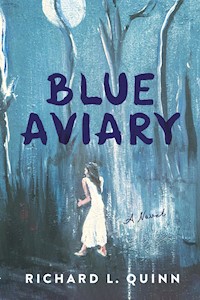
Richard Quinn welcomes his readers with a warm portrait of southwest New York State's majestic landscape, which is home to Ben Bowden, his wife Angela, and their two children.
The Bowden family is likable, imperfect, and relatable. Their story is a personal and poignant tale told through the eyes and narrative of young daughter Sydney whose storytelling allows readers confidante-level access to seemingly ordinary lives nestled deep within the woodlands of the Catskill Mountains watershed.
When a single mother and her troubled son move in and upend their quiet community, the Bowden clan's outwardly idyllic existence slowly finds itself facing hurdles. Surfacing family dysfunction, mental instability, bullying, harassment, sexual assault, and a traumatic death all threaten the preservation of life and family security as they know it.
Their efforts to regain a sense of normalcy sheds light on both their resourcefulness and limited life experience in this coming of age tour de force.
Das E-Book können Sie in Legimi-Apps oder einer beliebigen App lesen, die das folgende Format unterstützen:
Veröffentlichungsjahr: 2023
Ähnliche











![Tintenherz [Tintenwelt-Reihe, Band 1 (Ungekürzt)] - Cornelia Funke - Hörbuch](https://legimifiles.blob.core.windows.net/images/2830629ec0fd3fd8c1f122134ba4a884/w200_u90.jpg)





Blue Aviary
© 2023 Richard L. Quinn. All rights reserved.
No part of this book may be reproduced in any form or by any means, electronic, mechanical, digital, photocopying, or recording, except for the inclusion in a review, without permission in writing from the publisher.
This is a work of fiction. All of the characters, names, incidents, organizations, and dialogue in this novel are either the products of the author’s imagination or are used fictitiously.
Published in the United States by BQB Publishing
(an imprint of Boutique of Quality Books Publishing, Inc.)
www.bqbpublishing.com
Printed in the United States of America
978-1-952782-87-9 (p)
978-1-952782-88-6 (e)
Library of Congress Control Number: 2022947959
Book design by Robin Krauss, www.bookformatters.com
Cover design by Rebecca Lown, www.rebeccalowndesign.com
Cover artwork by Richard Quinn
First editor: Caleb Guard
Second editor: Allison Itterly
for Sarah
CONTENTS
ACKNOWLEDGMENTS
CHAPTER ONE
CHAPTER TWO
CHAPTER THREE
CHAPTER FOUR
CHAPTER FIVE
CHAPTER SIX
CHAPTER SEVEN
CHAPTER EIGHT
CHAPTER NINE
CHAPTER TEN
CHAPTER ELEVEN
CHAPTER TWELVE
CHAPTER THIRTEEN
CHAPTER FOURTEEN
CHAPTER FIFTEEN
CHAPTER SIXTEEN
CHAPTER SEVENTEEN
CHAPTER EIGHTEEN
CHAPTER NINETEEN
CHAPTER TWENTY
CHAPTER TWENTY - ONE
CHAPTER TWENTY - TWO
ABOUT THE AUTHOR
ACKNOWLEDGMENTS
First of all, allow me to express my undying gratitude to my female family and friends who allowed me glimpses into the female psyche. Admittedly, I am not certain when the learning began . . . but I do know it never stops, nor should it. A special thanks to my niece, Dr. Jennifer Towns PhD, who aided me in my early attempts to clarify the trauma experience.
A special thanks to Thomas and Emily Cusson, who produced valuable marketing materials for Blue Aviary.
And to Norma Brown Dalessio and Claire Hughes, who both gave the book an early read. Your generous encouragement proved vital to the completion of this work.
And most importantly, the hugest thank-you of all to the best technical support, my dearest friend and dearest love, Laura Betters Smith. Without you, Blue Aviary would not have come to be. I love you.
CHAPTER ONE
The air is cool September mornings up on Trumpet Hill. Dampness settles in shadowy places. The early hour promises warmth. A sun-drenched day begins to reveal itself through the big hemlock that lays its lower branches just above the aviary hard deck. Pigeons race in an orbit around the Bowden farm. They test the limits of their trespass, flying just above neighboring fields and yards. I came early this morning to spring the flyway gate. In a frenzy of beating wings, twenty birds escape the aviary confines. I settle into a familiar hollow along the rock wall to watch the flock pass between me and a splash of orange morning sky.
I am happy here these days, this little farm nestled deep within the Catskill Mountains watershed. Down below, Esopus Creek guards the eastern flank. It winds its way beside a two-lane road that mirrors it for a stretch, both of them cutting channels through the thick green forest of southeastern New York State. The creek rolls through hamlets buried quietly in the pines, past Kingston, the seat of Ulster County, all the while collecting the tithes of a hundred lesser tributaries trickling down from up above. Near Saugerties it pours its Appalachian ginger brew into the mighty Hudson River.
Some mornings I ascend the mountain to an outcrop just beneath the clouds, where the Village of Saugerties appears as a loosely assembled clutch of chalky buildings, strewn up and down the Hudson’s west bank. But I must go early to catch first light, to see my world in its entirety from the top of Trumpet Hill. A sprawling patch of mountain green wraps the Bowden farm and extends for a mile or more in every direction. There are people. There are fallen-down barns and built-up barns, a milk cow, a fattened-up pig or two . . . all that is familiar to me. As far back as I remember, I have looked upon this swath of green and all that thrives within it to be my neighborhood . . . my nearby earth.
The pigeons stall in flight with each pass above the aviary. They anticipate a breakfast of cracked corn and scraps from the kitchen. When no call comes, the flock continues on its way, lost in one moment behind the woodshed and the barn. The birds rise to clear the treetops that lend cover to a brook, and a teepee showing its age. It teeters on a dozen spindly legs. We played there, Zach and I, and almost daily the flight of the birds turns my head to that place.
The tight flock swings south over Jolly’s pond. If rumors are to be believed, the pond is an abyss that harbors demons in its depths, demons that devour small children, toddlers eaten and just as quickly forgotten . . . because none truly went missing, none that I ever heard about. Even Ol’ Jolly himself, who dug the hole in the earth decades ago, scoffed at the rumors, calling them sensational and ridiculous.
There will always be mornings that tempt me from my room with my notebook in hand. This day is one of them. I am Sydney Bowden, a woman of twenty, by now. I am a little tall and a little lean. I am smart, a little. I’ve been told I am a little pretty, but I don’t hear that often enough. Grandmother always said my hair was a little auburn. I get that from my father, who got it from her.
I was precocious even as a toddler. But I was indeed a child then, and far too young to fathom the complexities of added burdens in my life. As I grew older, I was declared gifted, and assessments of my intellect were bandied in hushed tones. That might have been the extent of it. Cautious journeys were undertaken to measure my mental acuity. They continued for a time but failed to unearth the grail.
It was my father, when I was seven, who made sense of it all in his own way. “Genius assumes great things, darling . . . postulating life on Neptune and a dependable way to get there by morning,” he said to me. “Gifted requires proficiency at the piano by age six.”
I thought about it and said, “I don’t play piano, and I’m seven.”
“Aye,” he offered in his best pirate’s voice. “It must be good to know you can do it if you choose.” But that was my father, and he often left me wondering if my shoes were on the wrong feet.
Suffice it to say, I knew some things at seven. I knew postulating meant guessing, and I knew if I were proficient, that meant I would be good at something. So, my vocabulary alone might have been ahead of the game for my age. Perhaps to prove his point, a week later an old upright piano appeared against the wall opposite the front windows.
Chronology, I’ve determined, is not always so easy for a child. In my world, even an eternity has to start someplace. I recall the very day I became a living, bleeding person, and it had little to do with genius. I was sitting in the front seat of Grandmother’s big car examining my knees for fresh skins and scrapes. Upon inspection, I discovered jagged circles of dried blood crusting like mud pies and lifting loose at the edges. Even at my earliest emergence into consciousness, I was counting my blessings.
I cannot be certain why I was not forced into the kid seat in back. While Grandmother’s boat of a car bucked over potholes and broken pavement, I grappled to get hold of anything that might safely secure me aboard. We laughed all the way to the garden store at the top of the hill. A stick-figure rendering, done in blue crayon, preserves the occasion, depicting Grandmother, the tiny woman dangling from the helm like a shrunken boatswain. To this day the picture hangs on the wall above my bed. It was a day to remember, and I have done that—the two of us, Grandmother and me, hunting petunias for her garden.
I adjust my position on the stone wall, remembering those days of my childhood when I sat in this very spot near the aviary, scribbling pieces of a story, waiting for the kitchen door to rattle open and then go quietly closed. It was the sound that signaled Beepah’s arrival. It was a familiar noise then, and remains a comfort all these years later.
Beepah is how I knew him, the man fifty years my senior. He took care of the farm, the gardens and the birds, and brother Zach and me. Beepah was not a name ordained by a christening. That name was Benjamin Bowden. Beepah was the name I bestowed on him when I was but one or two. By challenging phonetic norms, or some such thing, Beepah is the name I gave to my father. I refused to be taken to task or corrected. Either way, it stuck, and all other names lost favor . . . at least with me.
Every morning, Beepah raised his eyes skyward. The birds recognized Ben Bowden heading toward the kennel gate, swinging a scrap pail in one big hand. Their reaction was immediate. They’d adjust their flight and began descending to the aviary hard deck. Mass hysteria ensued when news leaked that breakfast was arriving. The birds would push and bump their way through the trap gate.
Rare mornings might even deliver a stranger to the mix, a bird with unique plumage, nervous and uncertain, questioning the impulse to enter. I might have seen him and recognized him as an outlander, but I rarely inspected the coop like Beepah did. Outlanders were welcome in the aviary. Other times it was a weasel that stirred a calamity and put the flock on edge. I recall those mornings when a successful raid was evident by the carnage confronting Beepah. Uneaten flesh lay stringing from disjointed bones. Bloody feathers lay in a matted tangle, stirred into the dirt floor where a sacrifice played out in the black of night.
Beepah had an uncanny sense of when things were amiss. He would stand just inside the kennel gate peering upward through the hemlock branches until the chilly air above quieted. He’d pull at the coop door, step inside, and let the door slap shut. Those mornings the sun played on him through the grid of chicken wire. Part of him was in shadow and some of him in the coolest morning light. He studied the scattered bones and feathers and quietly calculated there were two carcasses ripped and torn apart. Those he would deliver to a common grave back of the barn when his chores in the coop were done. There would be no ceremony for them, but the task was filled with unpleasantness. It had to be done. Rotting flesh on the aviary floor would only attract more scavengers.
Some mornings, and without a word, Beepah knew I was there, sitting in the shadows of the hemlock, or basking in the early sunshine that pushed fingers of light through the wrought iron kennel fence. I would watch him patiently and often in silence while he inspected the coop for interlopers and assassins.
Beepah was tall, six feet and something. Sinewy might best describe his build. Some mornings were greeted with a smile, a broad one. He was good for that. The bloodbath in the coop denied his smile that day. He removed his baseball cap and scratched at his thinning hair. His eyes came up to me finally. “Morning, Syd,” he said.
“Morning, Beep.”
“What’cha writing?”
I put a hand on my notebook and gave it a moment’s pause. Beepah was always respectful of my notebooks, encouraging me almost daily, ever playful in his inquisitions. Some days I revealed my literary endeavors. Other days I would clutch my notebook tight to my chest and Beep would laugh a little, acknowledging the deepest secrets I held.
“I was thinking about Grandmother. We still talk some mornings.”
“Yeah, I miss her,” he said, his eyes drooping again. “She’s been gone a long time. I’m surprised you remember her so clearly. She died when you were little.”
“We planted flowers in her garden that last summer. I was writing about that day. I remember you told me she had to sleep in the cold building at the cemetery until the ground thawed enough to bury her. The school bus still stops near that awful place on its way. I thought about Grandmother lying in the cold in her blue dress. I must have cried every day until spring.”
Beepah stabbed his toe against the kennel dirt. I could tell he instantly felt bad. The little gesture was enough of an apology for me after so many years, and him unaware of the sadness his words had stirred in me back then. We saw the world differently, Beep and me. I dare say, he might have even considered it a comfort for me to know where Grandmother passed the rest of that winter. Only now am I beginning to recognize the small differences between a hole in the ground and an icy bed above it. Cold places both.
“We lost the Goochie Doll,” Beep identified one of the chickens, dead in the coop. The Goochie Doll was a good egg layer, but more spectacular for her name alone. Beepah was good for naming animals, just like our neighbor Ol’ Jolly. It seemed like half the time they were in competition. Chickens were included, and pigs and geese and goats. Even pigeons earned a moniker if they stayed long enough. Beep often reminded me that every creature deserves a name, and he kept busy imparting names on any new arrivals. Even counting the pigeons in the rafters, I could name most of the birds. I knew them, but deaths in the aviary rarely moved me to tears any longer.
“I wasn’t sure who they got,” I admitted, offering a sad frown for the Goochie Doll. “I didn’t look at it for very long.”
“Any stragglers?”
“Jolly was out back tossing pellets by the pond,” I said. “He gets a few birds to drop by. Buddy and Beebo were noisy. Did you hear them?”
“Crazy goats,” Beep grumbled. “That’s trouble, those two.”
“The geese fight them for food,” I said. “Ol’ Jolly throws pellets on the water so the geese get their share. The goats won’t swim for them at least.”
“What was Jolly thinking, bringing those bad seeds aboard? Noah himself would have kicked their asses off the ark,” Beep said with a smirk. “Anyways, Jolly’s pellets bloat the pigeons. They sit up in the rafters all day like they ate a box of rocks. I ask you, what good is a pigeon if he can’t fly for my amusement?”
Beepah went to the coop door. He reached above it and took down the call can. He gave it a shake. The familiar rattle stirred the quiet morning air. Sure enough, seconds later three stragglers arrived on the hard deck acting indignant and confused. They pushed their way toward the wire entry trap, then the three, reluctant to join the flock inside the aviary, dropped to the churned earth inside the kennel to battle the chickens for food. He tucked the call can back above the door. “Goats,” he grumped. “I caught those two bad sores on the kitchen table a few days back because somebody left the backdoor open.” He gave me a punishing glare. “In they walk, the two of ’em, jump on the table and kick over the sugar bowl. They’re grazing in ambrosia when I come in. They’re lickin’ up sugar like they died and gone to billy goat heaven.”
Right away it became clear to me, Beepah was inventing a new tale and trying it out on me before he took it on the road.
“I swear, Syd, to top it off, the two of ’em had found the motherload on a chokecherry bush. Goat turds dropping out of their ass-ends like caviar on a biscuit,” he said. “Purple goat turds falling on the kitchen table right where you sit at dinnertime.”
“No way!”
“I swear,” he said again, this time throwing his right hand in the air to attest to the truthfulness of the tale. “Hey, I wiped the table off. It’s all good. I doubt you’ll even notice. It’s still a little purple though, but everything fades with time.” He enjoyed teasing me, leaning down as if to pass his eyes over the very spot on the table where the goat turds landed. “Those chokecherries stain like blood.” He gave a shrug. “If I’da had a gun, I’da shot those two scabs.”
Beepah slung the scrap pail at arm’s length, scattering eggshells and moldy bread crusts and corn cobs from dinner the night before. He stepped back inside the coop and gave the feed bucket a few kicks until it popped open. He scooped cracked corn into the scrap pail, then tossed handfuls to the dirt floor. Pigeons descended from the rafters in a cloud of dust and pin feathers. Chickens were roused from nesting boxes along the back wall. They bounced down the pyramid of roosting poles like puffed up ballerinas.
“I chased them goats off,” Beepah kept on, talking through the chicken wire. He stopped his corn dispensing long enough to chuck the two bloody chicken carcasses into a heap near the kennel gate. Then he cast a smirk in my direction. “I swear, Syd, what an outrage, those two. They jumped off the table and ran across the yard high on sugar. What a couple nitwits.”
Beep shook his head and laughed at the thought of it, real or otherwise. I was left to believe it was only possibly true. But then, to challenge his recounting of the tale only meant he may relinquish a portion of it to absurdity and swear to the rest. I chose to let this one die on the vine, especially since it was clear he fingered me for leaving the door ajar, which would have been slanderous had he uttered it aloud.
Beepah removed the blocks from the swing door. A half dozen laying hens strutted toward the scratch yard. Leading the way was a foul-tempered rooster who went by the name Cowboy, although he never answered to it. Ol’ Cowboy used his head like a battering ram. He hit the swing door at top speed and tumbled into the kennel scratch yard before his landing gear was fully deployed. Beepah referred to the maneuver as, “Cowboy’s ass over tea kettle three-point landing.” Beep said it was unique in the animal kingdom.
Cowboy skidded to a stop in the loose earth. He stood in the sliver of light that sliced through the hemlock branches. His eyes went instantly into frantic search mode, seeking anything familiar. When he caught sight of me sitting on the rock wall, the orange feathers on his scrawny neck bristled. His eyes burgeoned indignation the moment he realized I had arrived in the scratch yard ahead of him.
The old rooster had been a fixture in the aviary and the surrounding kennel almost as far back as my memory allowed. He arrived with the first brood of chicks, a dozen infant egg layers in a shoebox with head holes cut out. The yellow and orange noggins that poked through twisted with excitement and curiosity. Cowboy was among them, an interloper of the highest order, defying the gender-specific order for girl chickens only.
The crotchety old bird had outlived several generations and had grown into the aviary’s crabbiest resident. He even chased me in his earlier years, pecking at my legs and hands while I battled to fend him off. Nowadays, he wakes me. Each morning at sunrise, his garbled baritone stirs me from sleep.
Cowboy got his name because of his bravado and nothing more. At the very least, it was a name designed to shield me from Beep’s clumsy explanations about the bony chicken’s appetites, and we’re not talking cracked-corn casserole here. One morning, when I was small, I witnessed the crazy rooster riding a hen around the scratch yard. I was perplexed at the sight, all chickens being equal to me in those days. But this behavior was worth inquiry. So, I braved the question, “Beepah, what is he doing to her?”
Beep’s eyes quickly located the scrawny rooster astride a little red hen. She was doing her best to toss the brute face first into the kennel mud. The crazy rooster only dug his spurs in deeper. Beep pushed his baseball cap high on his forehead and gave his tangle of hair a scratch. “He’s a cowboy all right,” was all he said. The name stuck.
Early on, Beep discovered my willingness to rise with the sun. When I was four, he began taking me with him when he went out to work on chores before breakfast. I would often sit an hour or more in the quiet when the air was warming. Beep had a gift. He could lie about any number of things and swear to them.
“There’s Neptune,” he once said, pointing at a star still twinkling low in the horizon to the west. “Neptune is really a planet, not a star. If you lay in the meadow after the sun goes down and look into a clear sky, you’ll see it. It’s blue.”
It was some years later I learned that nobody has ever really seen Neptune, not with the naked eye anyway. Rather than dismiss Beep’s certainty in the matter as heretical, I simply developed a healthy dose of skepticism. By then, Beep’s brainwashing had established a foothold in me. It wields influence to this day. I still lay in the meadow looking up on clear nights. I harbor hopes that Neptune is there, that I will someday see its blueness shining down on me.
CHAPTER TWO
The dilapidated kennel, built years before, was designed to hold a dog. Beep worked tirelessly to ready the enclosure with new posts and wrought iron fencing. Little Tilly arrived for my brother Zach’s sixth birthday. She was a rolypoly bundle of a little yellow lab. The very first day, Zach threw her into Jolly’s pond to teach her to swim. Instead of struggling to save herself, she loved the water. She used her little club of a tail like a boat tiller, and that’s how she got her name, Tilly. She quickly endeared herself so completely to the entire family, imprisoning her in the kennel was never a real option, so she slept in Zach’s bed every night.
Instead, the kennel became a place for the birds with the addition of a coop. First there were chickens. Chickens, after all, legitimized the little farm. “We’re a going concern,” Beep said of it once the members of the first class of infant egg layers began to fulfill their God-given purpose. First there was one egg, then a few days later maybe two or three. It wasn’t long before the Bowden farm was in full production. Eight, ten eggs a day almost filled my little cane basket.
The pigeons came a year later. It was Zach who first imagined a place for pigeons. He put the idea to Beepah one morning while standing at the kennel gate eating a dirty carrot yanked fresh from the garden. If I recall, it was a Saturday, Zach’s favorite day by far. I was five or so, and there to collect eggs at Beep’s insistence. I scissor-stepped across the bales of straw, shooing chickens from their nests. I gathered the warm eggs in my basket or Beep’s baseball cap.
“I was just out there checking my rabbit trap,” Zach said. He pointed with his carrot toward the garden out back, as if Beep needed a reminder as to the whereabouts of the infamous rabbit trap.
Beepah was always inquisitive. “Get anything?”
“Just this toad.” Zach clutched the fat amphib in his hand opposite the carrot. He raised it over his head for inspection. “He jumped in there in the middle of the night. Toads like the dark. Anyway, he’s the biggest toad I ever caught. I might keep him for a pet. A toad’s a toad,” he said, giving a shrug. It was a small victory by Zach’s standards, and his frustration showed. He kicked at the iron gate. “A rabbit would make a good pet.”
Beepah used a pitchfork to move old straw to the scratch yard where chickens churned it up in their hunt for cracked corn and bugs. “Rabbits are generally gentle creatures,” Beep said. “Their talents are limited. They don’t fetch or herd cattle. They’re lousy swimmers too. I tried to teach one myself when I was about your age. It didn’t end well.”
Zach was familiar with Beep’s teasing and this time it bothered him. “I don’t care about that stuff. I don’t need a rabbit that can swim. That’s just dumb anyway,” he grumbled.
Beep laughed and jabbed at Zach again. “It’s a good thing you think so,” he said. “It’s not easy sorting the smart rabbits from the less gifted. Much like people in that regard.”
Zach snapped off a bite of his dirty carrot and chomped on it until it was chewed fine enough to swallow. I could tell his mind was grinding over Beepah’s digs. He chomped off another bite and crunched it in his teeth. All the while, his eyes surveyed the kennel and the coop. At last he spit the carrot chunks to the ground, inciting a rush of hungry chickens. “You know what this chicken coop needs? A whole bunch of pigeons, that’s what,” Zach declared.
Beep leaned on his pitchfork and cocked his head to watch the last of the orange sunrise drain from the morning sky to the east. He smiled. “You might be onto something, Zach boy,” he said.
I remember clear as day how Zach’s simple suggestion started things rolling and how a lowly chicken coop became an aviary. Quickly there was progress made. One afternoon I came home from school to discover an odd contraption mounted on the roof of the coop. It was an entry trap. Pigeons could learn to enter the coop through the trap, but they could not exit. It was an ingenious idea. Beep said he saw it in a sporting-bird magazine.
After church that day, Beepah loaded Zach and me into his old Chevy van. Zach sat up front, and I slid into the back seat behind Beep and off we went. All the way down Trumpet Hill, Beep explained what he had learned about pigeons and his rationale for driving into the big town of Kingston on a Sunday.
“Here’s the plan,” he said. “Parking lots are empty on Sunday, except if there’s a concert, or a flower show, or something.” Then at a red light, and complete with hand gestures, he said, “We swoop in there and set up the trap and haul off with a load of city pigeons while the townsfolk are still scratching their behinds.” There was no talk of legal entanglements. The purpose was to capture pigeons, pure and simple. Jail times were barely discussed.
The plan got Zach’s attention. “Like Vikings on a raid!” he jumped in. “Only they don’t use traps. They chop up all the boys and haul off all the girls. Go figure that, Sydney!”
“The cattle raid of Cooley!” Beep blurted out of the blue. His sudden outburst even in cited his own laughter.“Your grandmother told me the story many times. Cooley . . . that’s where her people come from. Your grandmother lived there until she was ten. She had a way of telling a story, the dear woman,” Beep said.
“She sang to me at bedtime,” I said.
“She had the sweetest Irish lilt till her dyin’ day,” Beep said. “It seems the Queen of Connacht became jealous of the Cooley bull, the most magnificent bull in all of Ireland. She sent her army to steal the beast away,” Beep said. “Ah, but there is a hero to this tale: a boy named Connell.
Zach spoke up. “Hey, that’s my name!”
“Yup, Zachary Connell Bowden. It was your grandmother’s idea. In her story, it’s Connell who drives off the army with nothing but a slingshot. He saves everybody, and the family bull too.”
“I got named for him?”
“Yes, you did, Connie boy.” Beep reached across and gave Zach’s sandy brown hair a scrub with his knuckles. Beep rocked back in the driver’s seat and wheeled the old van off the highway and onto a quiet Flatbush Avenue. The van rolled past a gas station guarding the entrance to the town. Zach’s excitement was palpable. It was that very kind of derring-do, accompanied by bold talk, that had become Zach’s modus operandi and Beep discovered the willing spark in Zach over his first seven years of life.
The morning of the great pigeon raid might have been a story onto itself. But alas, we were not confronted by an angry mob of townsfolk seeking to waylay our planned plunder. None gave our raid the simplest notice. Strangely, after Beepah’s old van rolled to a stop in an empty parking lot, I stood with my eyes pointing skyward. My head turned to engulf the enormity of the universe in one swift pirouette. Suddenly, I passed from almost invisible to very conspicuous.
Zach was quick to point out the obvious, all of it said to frighten me. “Look at all those windows, Sidney!” he blurted. “Just because it’s Sunday doesn’t mean there’s not people up there watching everything you’re doing. If they catch you stealing pigeons, they’ll put you in jail!” He cupped his hand to his mouth and brought it near my ear. “And girls don’t get their own cage neither,” he warned me. I did my best to ignore him.
Beepah stood for a moment studying the building tops with his hand shading his eyes. He walked to the rear door of the van and swung it up and open. He removed the wire mesh contraption he had fashioned for capturing pigeons and set it on the pavement a few feet away. He raised the mesh door and strung a string from the trap to the van’s side door. I crawled back into the van. It seemed a more secure perch. Based on Beepah’s stories, I suspected a rain of pigeons was about to descend from the building tops to our little spot in the world.
“Hold this,” Beep said to me, and he handed over the string. He went to the back of the van again and retrieved a can of cracked corn and held it out to Zach. “Scatter a handful around the trap. Not too much. Just let them see it.”
Zach came prepared. “I got corn in my pockets,” he said. “I’ll use my own.” He reached into his jeans and hauled out a fistful of cracked corn and scattered it on the pavement. All the while his eyes were trained on the building tops. “Most of it goes in the trap. I caught squirrels this way before.” He swirled another handful inside the wire trap.
It took only a second, maybe two. The first pigeon dropped from an almost invisible flock strung from one end of the towering eave to the other. And, whether the bravest or the hungriest, he dropped in with barely a beat of his wings, almost skidding to a stop near the trap. Zach backed his way slowly toward the van where Beepah leaned quietly against the open side door. He watched as the awakened flock took flight overhead, circling more cautiously in its descent.
Zach poked his head into the van. “Give me the string, Sydney.” He snatched it from me before I offered. “I did this with squirrels, even a skunk once.”
Sure enough, the flock descended almost like a swarm, piling onto the pavement, muscling toward the trap door. Each was ravenous, desperate to get a fair share. Zach truly was a pro at catching animals. He waited just long enough. He gave the string a yank and held on tight to keep the contraption closed.
Beep made the few steps to the trap and snatched it up. He held the wire door closed in his big hands and hurried to the back of the van. He pushed the trap inside and tossed an old army blanket over the contraption to keep the birds quiet. After that, he pulled the tailgate door shut and slapped his hands together. The entire operation took less than five minutes. It was slick. It was stealthy, as much as daylight and a disinterested citizenry allowed.
We talked about the raid during the ride back home. Even though he had instigated the entire operation, Beepah suggested it was unfair to the birds, who had no say in the matter. They could have chosen freedom. They could have remained high up under the eaves. They were betrayed by human behaviors they had been conditioned to trust. People tossed breadcrumbs in the park and popcorn on the sidewalk in front of the movie theater. Beep said it was generosity without consequence until we showed up.
I think often about that first raid, its cruelty perhaps. I went only twice more during the year that followed, in part because Beepah and Zach would go off quietly on Sunday mornings and return a few hours later with a basket of birds. Even at an early age the practice weighed on me a little, but I was too young to truly measure the worth or the cruelty of it. I waged little skirmishes against the practice. Zach did his best to make me cry, and sometimes he succeeded. Beep took me on his lap on those occasions. “You can let the birds out in the morning,” he would promise. “If they come back, they’re welcome to stay another day.”
Like Beep promised, there were many mornings I sprung the entry trap. Out they went, led by a handsome male Beep dubbed Ralph Loren “Because he has sex appeal,” Beep said. Ralph led the flock all around the place, over the forest rim and out over Jolly’s pond, and almost always with his little coffee-colored mate as wingman.
My repugnance for the raids did not diminish during the year or two that followed. I won’t deny a healthy militancy had reared its head in me, prematurely perhaps. But my efforts were rewarded with compromise, and after a time, the raids on the city pigeons ceased. The population in the aviary became self-sustaining. Mating dances were at a healthy frenzy, and when spring arrived, a rash of babies hatched in the rafters overhead.
CHAPTER THREE
It was dark and I was dreaming of sleep. Dreaming of sleep is not the same as sleeping. If you’re sleeping and dreaming of sleep, you have settled into a doubly deep abyss, pleasant and lingering. I stared up at the ceiling, noticing the cracks.
I remember one morning when I was six. It was a moment of discovery, where dreams and reality mingle. I pushed my cheek against the pillow and rolled my head just enough to allow one eye to open a sliver.
A glint of blue light settled on the lower sash of my window. Cowboy crowed in his emerging baritone. It was early sunrise on a late summer morning. It struck me then, I was dreaming in color, because sunrise is often yellow, or orange, or even blue, but that night I had laid awake, awaiting its arrival.
Sunrise on a Friday, Zach’s second favorite day. Friday was special to Zach for only one reason: it was next door to Saturday, a day without school, without church, especially in the summer. It was a day designed for turtle hunting and hiking to the top of Trumpet Hill. There were even apple wars with kids down the hill. We were blessed with a wild apple tree that produced ammunition to support just such a war. Apples grew green and hard, and almost each had a worm. The tree was wild because of its location, not its ancestry. It stood hunched over and twisted in a meadow just beyond the stream. According to Beepah, it might have been planted by Johnny Appleseed himself. That would make it very old indeed, if it were true.
I slid from my bed and went out into the faint light in the hallway. I was hoping to be first to announce Friday’s arrival. Zach’s door was open. I could hear him breathing as I crept across the floor. I put my hand on his shoulder and gave him a gentle shake. He rolled a little, opened an eye just enough to catch the glint of light coming in beneath the shade.
“What? What?” and he jerked awake.
“It’s almost Saturday,” I whispered.
Zach curled his arms around his pillow and pushed his head in deeper. “I’m sleeping, Sydney.”
I put my mouth near his ear. “Are you double sleeping or only sleeping?”
“Scram!”
Grasping the concept of double sleep was no small task when I was six, but especially not for Zach, even though he was older. I silently forgave him and made my way back into the hallway. After all, who chooses to abandon sleep only to dream of it? I was certain Zach was already clawing his way free of the pleasant and lingering effects of double sleep, and would soon, in the wee hours of morning, be his happy, obnoxious self.
I went down the hallway to the big room with its bold beams and a pale green ceiling vaulting upward to a peak above the bed. I often lay there alone when I was younger, staring into the empty space above. Mom and Beep slept there, although there were nights Beep snuck off to sleep in the basement. Who knew why? As much as I knew, it was just Beep’s way. I climbed up on the foot of the bed and bounced my way to the gaping space between them. There was room aplenty. I was convinced the giant bed was built for no less than three people, and big people at that.
Mom rolled over and kissed my cheek. She put her arm over me and pulled me close. A heavy thud shattered the quiet and when I looked, Beepah was gone.
A gasp escaped Mom, and her head jerked from the pillow. “What the fuck, Ben?”
Beepah’s tangled patch of hair poked above the edge of the bed. He saw me and offered little more than a stunned expression. “I fell out of bed,” he admitted with much reluctance.
It was not the first time. I’d heard about it plenty. It drove Mom to distraction. Doctors at the veteran hospital referred to his frequent animations as a sleep disorder, at least that’s what I heard at breakfast one morning. This particular episode left him pulling his way up from the floor, groggy and confused. Mom never did explain the VA’s diagnosis, at least not back when I was even smaller. But even I suspected the occasions precipitated his trips to the old basement couch.
Mom’s head flopped back down. “Jesus, my luck,” she muttered into the pillow.
“I had that fucking dream again, Angela, if you care,” Beepah said. “You know . . . where I jump off the bridge.” He peered above the edge of the bed, his head clearing enough to recognize me there. “Oh, good morning, Syd,” he greeted me with some surprise.
“You guys both said the “f-word.”
“It doesn’t count, Syd. I didn’t even know you were there. Besides, I got that nasty habit from your mother,” he grumbled. He pushed himself up a little and sat on the bare floor rubbing his knees. He was annoyed that his precarious position at the edge of the bed had caused him to be flung to the floor yet again. “Christ, Angela, I was holding on by my toenails, if you give a damn.”
Beepah falling off the bed happened plenty. In fact, I even witnessed it one other time. I was certain Beep fell out of bed only to make me laugh, and it worked. He poked his head up and showed the world his best bewilderment, and I laughed. But this time the inflection in his voice attributed blame, and Mother was the culprit. In his mind, it was Mother who forced him to the precipice at the edge of the bed, where peaceful sleep was not possible for him, especially when dreams invaded his nights. I realize now that Beep was troubled even then.
Mom’s head popped up from the pillow again. “Nobody put you over there, Ben,” she snapped at him. “You did that to yourself.”
Beepah’s hand inspected the crown of his head for blood. “I don’t know why I have that dream. It wasn’t the worst of it,” he said. “In my dream, there’s four of us, standing on a footbridge—me, Hoby, John, and Dick, maybe . . .” Beep shrugged, suddenly unable to summon the rest of the names. “There was fire all around, both sides of the river, napalm ripping everything. I was watching it, like watching a bad movie. We weren’t even supposed to be there. We should’a cleared out hours before. We got trapped.” His eyes grew wide with the memory of it. “I went ass over teakettle into the river. What a shitstorm.”
“You said shitstorm!”
My outburst seemed to bring him from his trance. Talk about the war was rare. Nam, he called it. And I heard the word shitstorm from time to time, from Beep or one of his friends. I was rarely allowed to say it. Shitstorm and plenty of other bad words were reserved for grown-ups. Sometimes the only way to know for sure was to throw it out there. Zach was good for that. “Shitstorm! Shitstorm!” Zach sometimes tested correctness without warning.
Beepah’s hand continued to search his scalp for blood. He found none and finally gave up the hunt. “When I came up, I was swimming beside a water buffalo, believe it or not,” he said. “There was a little band of fighters just downstream. They were onto me . . . bullets splashing all around. The river was pulling me down. There was a leather strap stringing from the buffalo. His horns were tangled in it, and I grabbed hold and he dragged me into the bushes.” Beep gave his head another scrub with his hand and crawled up from the floor. “I would’ve drowned or got shot, or washed down into the jungle with all the fire. Anyways, I laid there on the riverbank for a couple hours until the boys found me.” Beep shrugged.
“You got saved by a buffalo?”
“True story,” Beep declared with a raised hand, then he bent to rub his bruised knee again. He grumbled and limped to the bathroom across the hallway. He stood in front of the mirror twisting his body to explore for contusions. “You kicked me,” he sang out after peeling his boxers down to expose the red welt on his hip. “This footprint on my butt is all the proof I need.”
Mom laughed. “Justified ass-kicking,” she said.
He leaned back through the doorway. “Did you kick me out of bed, Sydney?”
“What happened to the buffalo?”
“Oh, he ran off into the jungle before he gored me to death,” Beep said, which made me laugh too.
Beepah hobbled back to the bed and snared me by the foot. He twisted it and gave it a thorough inspection. “Nope,” he said finally. “There is no way this little foot made this giant bump on my butt. It had to be this clodhopper here . . .” and he grabbed Mom’s foot and gave it a twist. “We’re sleeping in the teepee tonight,” Beep said. “Dress warm.”
Mother declined immediately. “No thank you. Can’t.” She jerked her foot from his grip. “I have prep work for my trip. I’m not even packed. Anyway, I’m not spending my Friday night scratching the lumps out of that patch of mud in the woods.” She rolled over again, driving her face into the pillow. “You do it. You’ll be safe stretched out in the mud. You can’t do any bridge jumping out there,” she said and laughed again.
“Okay, then,” Beepah conceded, slapping his hands together to seal the deal. He grabbed me by the foot again. “It’s you, me, and Zach, and a pack of dogs,” he said.
He headed for the bathroom again, then turned back one more time. He showed a pensive face to the shadows playing on the window to the west. “We ran upon the buffalo in the jungle,” Beep recalled. “He was sprawled in the dirt, snorting up a cloud of dust. There was a bullet hole behind his ear oozing blood. He was dying for sure.” Beep aimed his finger and made a popping sound with his lips. “I could have ended it just like that. Pop! The boys said no. Too many gooks around. We just wanted to slip out of there without getting skinned alive.” He knocked his knuckles against the doorjamb and shrugged. “We left him there. It still feels like unfinished business.”
Mother rolled to her elbow. “You never told me that story.”
“I save those tall tales for the boys at group,” he said, slumping into the bathroom. “They eat that stuff up.”
I thought about it often during my childhood, Beep’s story about a buffalo that saved his life in the jungles of Vietnam. He didn’t return the favor by ending the suffering with a bullet to the head. Neglecting it inspired an occasional leap from a bridge into rushing water. It made me sad for the buffalo, but near as I could tell, nobody else died that day. I was left to find the message, if there was one. It may have been just another colorful yarn. Beep was good for those.
The first time Emily Lipton showed up at the school bus stop with her son Jason, was a day in early September. Emily was pretty and about thirty-five, the same age as Mother. Over the days and weeks that followed her arrival, I found out from Beep that Emily was a dental hygienist. She was almost always dressed in her pure white hygienist dress or white scrubs. She had brown hair that she pulled back for work. And she had round breasts she pushed way out. That much even I noticed.
It was easy enough to see that Beepah liked Emily Lipton. She stood very close to him while they talked. From the start, Beep’s unease was apparent, but once he became comfortable with the behavior, he allowed her aura to engulf him. Even I could tell it pleased him.
Jason Lipton was older than Zach and me. He was in sixth grade. In fact, he was the oldest kid at the bus stop, a couple grades ahead of Zach, although his size defied his age. He was short in stature, with fair skin and shaggy blond hair faintly tinged with red.
The two of them arrived from Philadelphia during the summer and settled into the old Rubin Smoran house at the bottom of Trumpet Hill Road. In disposition alone, Jason was the exact opposite of his mother. While she was ready with a smile, Jason was sullen and abusive. Beepah said it was his uprooting from Philadelphia that was his reason for attacks on the younger kids. To me, it was cruelty, plain and simple. Jason Lipton was just mean.
Beepah stepped in on occasion with his form of gentle diplomacy. “Jason, leave the kids alone,” Beep would say and shake his head in disbelief. There was nothing physical. Jason never directed his wrath toward me, but from the beginning his very presence put me in fear. I rarely left Beepah’s side at the bus stop when Jason Lipton was nearby.




