


Erhalten Sie Zugang zu diesem und mehr als 300000 Büchern ab EUR 5,99 monatlich.
- Herausgeber: Pushkin Children's Books
- Kategorie: Für Kinder und Jugendliche
- Sprache: Englisch
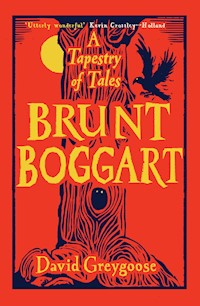
A unique and very English novel composed of a cycle of beautiful and mysterious fantasy folk tales which combine to tell an unforgettable story NOMINATED FOR THE CILIP CARNEGIE MEDAL 'A rich, primordial dreamtime... A wonderful excavation of the story traditions that our ancestors huddled around for warmth... highly recommended'Alan Moore, author of Watchmen This is a book like no other: a magical tapestry of folk tales, woven together to build a world that is as strange yet familiar as a half-remembered dream. It is an old world, a world of enchanted corn dollies and wild dances in poppy fields, a world of tricksters, lovers and fools. Through this world, Greychild must journey in search of his mother: from the village of Brunt Boggart, down to the treacherous Pedlar Man's track, all the way to the distant Arleccra, a city of treasures and temptation. If you follow him, a part of you will never come back. David Greygoose was born near Northampton and now lives on the edge of Liverpool. In 1976 he co-founded The Windows Project which runs writing workshops in schools and community venues. He has published three collections of poetry under the name Dave Ward, and his stories and poems have appeared in over 100 anthologies as well as being broadcast on TV and radio. Brunt Boggart is his first novel and was nominated for the CILIP Carnegie Medal.
Sie lesen das E-Book in den Legimi-Apps auf:
Seitenzahl: 585
Veröffentlichungsjahr: 2018
Das E-Book (TTS) können Sie hören im Abo „Legimi Premium” in Legimi-Apps auf:
Ähnliche








![Tintenherz [Tintenwelt-Reihe, Band 1 (Ungekürzt)] - Cornelia Funke - Hörbuch](https://legimifiles.blob.core.windows.net/images/2830629ec0fd3fd8c1f122134ba4a884/w200_u90.jpg)


PUSHKIN PRESS
Brunt Boggart
“These are utterly wonderful new-old tales. In his bones, David Greygoose understands the rhythms of great storytelling, with its incantations, repetitions, knowing asides and snappy dialogue, and he has a frankly marvellous ear for the music of language. This tapestry is inventive and witty, dramatic and moving, and deeply earthed in the superstitions and folk beliefs of old England. Now that I’ve stepped into Brunt Boggart, I know that part of me will never leave it”
KEVIN CROSSLEY-HOLLAND, AUTHOR OFTHE ARTHUR TRILOGY
“In Brunt Boggart, David Greygoose conjures a rich, primordial dreamtime from the sullen hedgerows and fields. A wonderful excavation of the story traditions that our ancestors huddled around for warmth, and highly recommended”
ALAN MOORE, AUTHOR OFWATCHMEN
“It tastes fabulously medieval, it smells uncanny, it looks like the roots of half-forgotten herbs, and it sounds like verbs of thunder and earth”
JAY GRIFFITHS, AUTHOR OFWILD: AN ELEMENTAL JOURNEY
“David Greygoose is a master-storyteller, creating the visceral netherworld that is Brunt Boggart. Greygoose draws deeply on the riches of Britain’s folklore to conjure up dark and whimsical tales of an imagined village. I found myself lost in the wildflower meadows, mossy hollows and wolf pits of Brunt Boggart”
EMILY PORTMAN, FOLK MUSICIAN
“Brunt Boggart is a skilfully crafted collection of timeless tales which connects the reader on a visceral level. Each is as true a tale as ever was told. Just as a great sculptor sees the divine form within the slab of granite, Greygoose has stripped away all that is extraneous exposing the primal folk-tales which lay buried within us all”
JOHN REPP ION, CO-AUTHOR OFALBION
“A strange and beautiful book”
THE SCHOOL LIBRARIAN
“A fascinating book by a storyteller immersed in the dark folktales of another time”
BRIAN PATTEN, AUTHOR OF MONSTER SLAYER
“Folklore and nature collide in Brunt Boggart. Greygoose’s inventive language makes these tales a joy to read aloud – in true storyteller style”
ANTONIA CHARLESWORTH, THE BIG ISSUE IN THE NORTH
For K.F.W.
The Tapestry…
Let me tell you… I lived in this place before you were born – when it was just a tiny village on the banks of the river, where I used to fish. The river flowed down to the city beside the great blue – and yes it was truly blue – ocean. I still live here now. And I am still fishing. I fish for dreams. I am the dream-fisher. I catch the dreams of the sleeping-wakers, of the waking-sleepers. And what do I do with these dreams? Why, I hang them up in bottles. I tie them onto leaves. I leave them under flowers. I freeze them in a snowflake. I let them rest, and sing, and listen – and then, when they are ready, I turn them into stories.
Let me tell you… I can see it all. Remember, I can see you now.
I know what you are doing. You are part of someone’s dream – not mine, not your own. Maybe someone you do not know, someone you only saw once, one day in the street. You may not have noticed them, but they saw you, and they remembered – and now you are in their dream…
BRUNT BOGGART
Crossdogs and the Wolf Pit
Let me tell you. Let me tell you… once there was a village – not a big village, not a small village, just a middling village, much like this place used to be. And what was the name of that village? – I know what you’re asking. Why, that village was known as Brunt Boggart. And who was it who lived there? Let me tell you. I can see that you’re curious. I knew that you’d want to know. If I didn’t tell you, you’d make up your own stories.
And that’s just what the boys did who lived there: Hamsparrow and Bullbreath, Larkspittle and Longskull, Shadowit, Scarum, Scatterlegs and Crossdogs – they all made up stories. Every night when the old’uns were busy, weaving and sewing and sleeping off their supper, all the boys who thought they were men and all the men who wished they were still boys, they’d all come and gather in the mossy hollow that lay in the middle of the Green that was in the middle of Brunt Boggart. A middling village, just like I told you. Much like this place used to be.
What stories did they tell? I knew that you’d ask me. Every tale is worth telling, even if it’s half-forgotten. And for every tale there is to tell, there must be someone to listen. So – are you listening? Good. Let me tell you…
The boys would sit around in the mossy hollow and tell each other stories of the wolf who lived in the woods: how big he was, how strong. How sharp his teeth, how long his claws. In each boy’s tale the Wolf grew more terrible. They said he did dreadful things. They told how he came to the village each night and gobbled up all the food. He broke down the fences and tore leaves from the trees and smashed the window of Old Mother Tidgewallop’s cottage. He drank the water in the well. He stole the wine from Snuffwidget’s cellar.
“That’s nothing,” said Longskull, the next boy in the circle. “I know the Wolf steals more than food and wine. I think he tries to steal our sisters. Why, where are they now while we’re all sat here? They’re not indoors neither, safe and sound. They’ve sneaked out same as we did while the old’uns are creeping and slopping and sleeping. Listen – you can hear them laughing, hear them tittering, hear them shrieking – over there by the woods. That’s when the Wolf comes to take them.”
Bullbreath and Scarum looked over and nodded. They could hear the wind howl through the tall whining trees. They could hear the snapping of branches. They could smell hot smoke like wolf’s breath in the breeze.
Then Larkspittle spoke. His voice was so quiet it was almost a whisper. All the other boys gathered round, crowded in close, so that they could hear.
“I think my sister’s new baby must have come from the Wolf.”
The boys were aghast. They were shocked and surprised. But then they realised – yes, it could be true.
“Her baby does not look like us. It is hairy and howls every night at the moon.”
“It is not one of us. It does not have our ways. It has a long chin, long ears and a long pointy nose. Larkspittle is right. His sister has been taken by the Wolf!”
Across the way and over they could hear their sisters laughing. They could hear their sisters skittering, screaming and shrieking.
Crossdogs sprang up.
“We must drive the Wolf away!”
Hamsparrow nodded. “Better to catch him. Catch him and kill him.”
“How shall we do it?” Larkspittle asked them.
“With a net!” bellowed Bullbreath.
“Dig a pit!” clamoured Scarum.
“Hit him and hit him…” Scatterlegs gibbered.
“… with sticks,” muttered Longskull.
“… with staves,” echoed Shadowit.
“… with stones!” they all cried.
The boys danced in a circle, in the middle of the Green. They were maddened. They were angry. They fixed their gaze on each other’s eyes.
“Listen!” hissed Longskull.
They stopped their cavorting.
“I can hear nothing,” Scatterlegs wheezed.
“Nothing is not what we heard before,” Longskull retorted. “We heard our sisters laughing and shrieking. Now it is silent.”
“Where have they gone?”
“The Wolf’s come and taken them!”
“Let’s go and find him and bring our sisters home.”
The boys stood quite still and watched each other, waiting to see who would move, who would lead them, who would be the first to tread the path to the edge of the wood. Out of the darkness they heard an owl’s mournful wail, the whisper of the wind. The crack of a branch. And then silence. Nothing more. Nothing more. None of them moved.
Where were their sisters? I know what you’re asking. Why – they’d crept up behind the boys on their way back home. Ravenhair and Silverwing, Moonpetal and Dawnflower, Duskeye, Scallowflax, Dewdream and Riversong: they rushed out of the darkness, chasing their brothers all the way to the cottages where the old’uns were waiting beside warm glowing fires.
Who would be Wolf Slayer? All the next day, all through the village, the boys watched each other with wary eyes – circling and staring, growling and crouching, like wolves themselves. Then as late day turned to evening, turned to dusk, turned to night, by the light of flickering torch flames they sat in a circle, squatted in the hollow in the middle of the Green. And they raised the torches high as they began to dance, whirling sticks, clashing staves, dashing stones.
“Wolf Slayer.”
“Wolf Slayer!”
They shouted and taunted, each of them trying to hit harder, throw farther, leap higher than the rest. A glint in the eye. A flashing of teeth. Arms grabbing arms to wrestle, to grip. Tippling and rolling across the hard ground, punching and clawing, pulling each other down. Muscle and sinew, spittle and blood – they struggled and grunted and threatened and stood. Until Crossdogs, the tallest of them all, howled “Stop!” And they stopped. And they listened. And from the woods they heard a wailing.
Could be owl, could be wind. Could be Wolf.
And then a snapping-off of twigs and a clatter through the branches.
“Wolf is come!” they cried, “Wolf is come!” snatching up sticks and staves and stones.
But it was only the girls running home before Silverwing’s mother came out to fetch her daughter and drag all of the rest of them away from the woods.
Night after day after night the boys would meet and fight. Fight each other for the right to be “Wolf Slayer”. But none of them deserved it, for they would only fight with each other in the middle of the hollow at the middle of the village green. None of them would go into the woods. No-one would go alone. And the girls would watch them and jeer them and taunt them, crying, “Who is Wolf Slayer now?” And the boys would grow maddened and chase them away but then rush after to save them.
“From what are you saving us?” Ravenhair asked them.
“From the dark.”
“From the night.”
“From the Wolf.”
Then Silverwing laughed and Dawnflower giggled and Scallowflax tittered behind her fingers.
“We’re more afraid of you,” cried Duskeye and Dewdream, while Riversong and Moonpetal said nothing at all as they linked arms and walked away.
Day after night after day, the old’uns would wake and find fences broken and food had been stolen and daughters had been dragged to the dark wood and back. But no-one ever saw who had done it.
“Wolf,” they muttered.
“Wolf,” they cried.
“Wolf!” they howled.
“Wolf has been and gone again and no-one saw him come. But Wolf has been here, we know.”
“We will find it,” cried the boys, brandishing their sticks and staves. “We will slay the Wolf.” And they marched up and down the village streets, smashing fences as they went, grabbing food to give them strength and chasing after the girls.
“Look at them,” Old Mother Tidgewallop exclaimed. “There is no Wolf at all. Only the boys. Not fit to grow into men. Why, my son Larkum is worth ten of them.”
The girls got to hear her and the gossip spread in whispers and the whispers spread in catcalls, leering and jeering.
“There is no Wolf,” taunted Ravenhair. “You only say there is so that you can march around the village with your sticks and your stones and your staves. As for trying to save us, you’re as useless as a cuckoo. We’d be safer with a wolf than any one of you!”
Crossdogs gathered all the boys together, the boys who thought they were men and the men who still wished they were boys.
“Listen to what the old’uns are saying. Listen to what our sisters are whispering. We’ve spent too long watching and waiting – it’s time to go to the wood!”
Suddenly silent, the boys picked up their sticks and reached for their stones and their staves. Then they shuffled single file towards the shadows of the wood. They trudged between the tall dark trees, dragging their feet through crisp fallen leaves.
“Perhaps there is no Wolf,” whispered Shadowit. “Perhaps we imagined it all.”
“Shsh…” cautioned Hamsparrow. “The Wolf will hear you. And there must be Wolf. Remember Larkspittle’s sister’s baby. Remember its nose and its long pointed ears.”
“Look!” cried Scatterlegs.
He pointed to the trunk of a tall gnarled tree. Its bark was scratched. The twigs on its lowest branches were broken and snapped.
“Wolf has been here,” Scatterlegs said.
The others nodded.
“Look! Look at this.”
Strands of grey fur clung to the thorns of a bramble bush.
“Wolf been here. Wolf been close.”
Scarum shook his head.
“Could be anything, that,” he said. “Could be tomcat, or badger or an old mangy fox.”
“Could be, true,” Shadowit replied. “But tomcats don’t break fences, badgers don’t steal our food and foxes don’t take our sisters.”
Longskull shook his stave with his strong hairy arm. His long chin quivered, his long nose twitched and his pointed ears flushed with anger.
“No-one must touch our sisters. Anyone who does must be punished. That’s why we come here. Come to find Wolf.”
“Find Wolf!”
“Find Wolf!” they chorused, rattling staves and banging sticks and flinging loose stones into the bushes.
“Look there! Look there!” Hamsparrow shrieked.
What did he see? A shadow running. So quick that before the others could look where he was pointing, it was gone. Just a darkness of quivering leaves and snapping of twigs. And way in the distance a lost howling sound.
“It was here. Was Wolf. I saw him. I’m sure!”
The boys stood rooted as the trees around them.
“Wolf!” howled Crossdogs.
“We found him,” Hamsparrow gloated.
“Let’s chase him.”
“And catch him.”
“And stone him.”
“And kill him.”
But none of them moved.
Crossdogs stood and looked at them.
“We’ll never find him now. He knows this wood much better than us. Let’s go back to Brunt Boggart and plan what we should do.”
“Yes!” cried Hamsparrow. “Let’s go back. Let’s tell old’uns and sisteren what we seen. They got to believe us now.”
Next day the boys gathered again. Gathered up all the things they needed to go and hunt Wolf. Nets to drag the undergrowth. Axes to hack a way through the woods. Horns to blow to make a hubbub – to drive Wolf into their trap.
“There they go!” laughed Moonpetal and Riversong as they waved them on their way. “There they go with their sticks and stones and those daft silly horns that will let Wolf know a mile off that they’re coming!”
“Tain’t to frighten the Wolf, my dears,” Old Mother Tidgewallop nodded. “Tis to scare their own fears away.”
But the boys set off all the same, clamouring and chanting and blowing on their horns and rattling their staves in the air. Into the woods they came stamping and hacking and thrashing through the brambles.
“This is where he was. This is where we saw him!” shouted little Larkspittle.
They looked for the shadow. They tried to find the signs. They even stopped blowing on their horns to listen, to catch the echo of a distant howling. But there was nothing. Only the scuttle of a startled rabbit, a hare clattering out to the open fields, the dirt from a newly-dug badger’s burrow. The flash of a red fox’s brush.
“Wolf ain’t going to come,” Hamsparrow muttered. “The girlen were right. We make too much noise. Wolf can hear us, see us coming. Best we go back, come again another day.”
The next day the boys all waited till dusk. They left those great horns behind and they set out stealthily, just as the moon rose, wearing dark colours so Wolf wouldn’t see them – moving like shadows from ditch to hillock to tree. Instead of the horns they carried shovels and torches, and in the centre of the wood they started to dig. Shallow at first, then deeper and deeper, throwing up the dark earth to make a great pit. Down at the bottom they spread out a net then covered it over with branches and twigs. On top of it all they placed leaves and dry grass till under the stars no-one could tell that the trap had been set.
The trap had been set, but would the Wolf come? They watched and they waited, shivering and coughing behind the dark crouching bushes.
“Tain’t coming,” mumbled Hamsparrow.
Larkspittle chided him. “He won’t come at all if he hears you chittering.”
“Shshsh, stop your racket,” Crossdogs commanded.
They kept quiet. They waited. They waited and listened, but there wasn’t a sound.
“Maybe there ain’t no Wolf after all,” Larkspittle stuttered. “Maybe Old Mother Tidgewallop is right.”
“Then who is it steals all the food from the larders and drinks all the wine from Snuffwidget’s cellar? Who is it breaks the fences down?” Hamsparrow reminded him. “Tain’t none of us.”
“And none of us steals away sisteren, neither. Specially not yours,” Longskull said quickly.
“Stop your chattering,” Crossdogs cut in. “Something is coming.”
A snap of a twig.
A light padding footstep.
A smell on the breeze.
“Wolf!”
“Wolf!”
“Wolf!” they all whispered, gripping their sticks and flourishing staves.
“Down, stay down,” Crossdogs snapped tersely. “He won’t come by the trap if he hears all your noise.”
They watched and they waited but no Wolf could they hear.
“He’s gone.”
“Let’s go after him. Let’s chase him back here to the trap.”
They moved through the wood, smelling out Wolf. Padding and pausing, loping and stalling. Listening to the wind. Then they saw the shadow again, just the way they did before – running and skittering in between the trees. The rustle of leaves, the cracking twigs. The howl.
Then a shadow running through the shadows, a figure hunched and hurrying. This time they gave chase – beating sticks, swinging axes that glinted silver in the moonlight. Their own jaws set and snarling, teeth bared, dribbling spittle. Baying and howling they ran through the wood, chasing the shadow, chasing the Wolf, back and forth through the brambles and nettles, back and forth, back and forth till they came to the clearing where they had laid the trap.
The Wolf-shadow broke out into the moonlight, heading straight for the branches with the grass strewn on top which hid the pit beneath. With a snap the trap gave way and the darkness swallowed him up. Crossdogs stopped and waved the others back. They all stood still and silent, ranged around the edge of the clearing. Then slowly they advanced towards the pit, holding up torches to see what they would see.
Larkspittle ran forward.
“Wolf! Wolf!” he spat.
But Crossdogs grabbed him quickly.
“Stand away. Keep back. If Wolf is cornered he’ll be twice as dangerous.”
They waited. Watched in the shadows, in the torches’ flickering flames. But Wolf made no move. Wolf made no sound. So then they stepped forward, staves at the ready, to peer down into the bowels of the pit to see the Wolf creature thrashing round at the bottom. Thrashing then whimpering. Whimpering then howling.
“Wolf!”
“Wolf.”
“We have him now.”
Crossdogs stepped right up to the mouth of the pit. He raised his hand and paused.
Hamsparrow leaned forward.
“Tain’t no Wolf,” he exclaimed. “Tis a Boy!”
“Tis a Boy…”
“Tis a Boy…”
The others whispered in puzzlement.
“What is a boy doing in the Wolf Pit?”
“How did he get there?”
“Twas Wolf we chased through the woods.”
“Sure enough – I saw him.”
“I saw him too.”
“Maybe he’s a shape-changer, like the old’uns told us.”
Crossdogs shook his head.
“No – maybe just boy. Just boy like me and all the rest of you.”
Crossdogs dropped into the pit and held out his hand to the skinny bundle of bone and rags that was cowering there, wide-eyed and shivering. Crossdogs tried to grab him but the Boy just flinched away.
Crossdogs spread his hands and whispered gently.
“Come on. Come on. We ain’t going to hurt you.”
He waved to his companions.
“Put down your sticks and staves.”
One by one the boys dropped their weapons.
“Put out your torches.”
The clearing was plunged into a sudden eerie darkness. The Boy darted past Crossdogs as if he might run. Scrabbled at the sides of the slippery pit, but then slithered back down. His shoulders shook with sobbing. This time he did not resist when Crossdogs took his arm and pulled him to his feet. Hamsparrow and Bullbreath leaned down and slowly they raised him out of the pit. He stood there looking at them, blinking in the moonlight. His breath was quick and even from the chase. The boys all gaped at him. He was boy, right enough. Same age as them. Dressed in a strange mess of rags and pelts and bits of dried leaves. His face was grimy, just like them, and strands of whisker were beginning to appear, except that maybe his had grown longer, more straggly.
Longskull strode forward. “What’s your name?” he demanded. “What are you doing, hiding out here? Are you the one? Are you the one who steals food, steals wine and breaks all the fences? Are you the one who took Larkspittle’s sister? I know you must be. You may not be Wolf but you look like Wolf. If look like Wolf then act like Wolf.”
Longskull swung round, addressing his companions.
“And if act like Wolf then is Wolf, true enough. And if Wolf, then I say killum. We come here to kill Wolf, and this be Wolf now!”
He grabbed up his stave, but Crossdogs and Hamsparrow held him back.
“Tain’t no Wolf, Longskull. Tis boy. You can’t be killing one of our own.”
Larkspittle and Scatterlegs threw their arms round the Boy. His eyes were wide, bewildered, as he knelt at the edge of the pit they had dug – one moment minded to dart away, the next too scared to move. And as he shivered in the moonlight, he looked at them and they just looked at him.
“Who are you?” Crossdogs asked.
WolfBoy’s eyes were wide and soft. He opened his mouth. No sound came out. He pointed at the woods, at the darkness. At the trees. He pointed at the wind, and then at himself. Crossdogs shook his head.
“I am Crossdogs,” he said. “Who are you?”
The Boy shook his head, just as Crossdogs had done.
“I am Crossdogs. This is Hamsparrow, this is Bullbreath. This is Larkspittle, Longskull, Shadowit and Scarum. And this is Scatterlegs over here.”
The Boy listened, shuffling, his eyes darting from one to another, his lips reading Crossdogs’ words, shaping the names. Then he smiled. Slowly he started to make a sound. It was not a howling. It was not a wailing. It was a soft voice, gentle and high. It did not seem to be his own. It was a lost voice he remembered as his eyes roamed up to the stars:
“Coddle me, coddle me,
My darling son.
I’m leaving you here
Till the crying is done.
Back in the village
They’ll look at you strange,
But here in the forest
You’re safe from their gaze.
Coddle me, coddle me,
My darling son.
I’m leaving you here
Till the crying is done.
I’ll bring you sweet milk
And I’ll fetch you fresh bread.
The trees are your chamber,
Green moss is your bed.
Coddle me, coddle me,
My darling son.
I’m leaving you here
Till the crying is done.”
And then he sat down. Sat down on the ground and wrapped his arms around his head and curled like a baby sobbing. His body shook, but he did not cry.
“Tell us more,” demanded Bullbreath.
“Who are you?” quizzed Shadowit.
“Where did you come from?” Larkspittle asked him.
“Why are you here?” Hamsparrow prodded.
“Is it you who steals food from the village?” Longskull snarled darkly. “Is it you drags sisteren into the wood?”
But the Boy just covered his ears to the gibbering.
“Stop, stop. He’s confused. One at a time,” Crossdogs commanded. Then he turned to the Boy and started again, speaking very soft, very slow.
“I’m Crossdogs,” he gestured. “Who are you?”
He paused while the Boy sat up. He had stopped shaking now and opened his mouth, moving his lips. He was trying to make words. They all craned forward silently, waiting to hear what he would say. And what did he say? I’ll tell you. He sang the song again. But slower, lower, more in his own voice. More like the voices of the boys. They waited till he’d finished and then stepped away, confused.
“It’s a trick,” hissed Longskull. “How do we know he’s not dangerous? We set a trap for him. How do we know he’s not trapping us? I say we kill him still. Still while the moon is high.”
“No, no,” Crossdogs insisted. “He’s no Wolf at all. He’s Boy – you can see that. He’s Boy, same as us. Take him back with us. The old’uns will know. They’ll know what to do. Take him back to the village.”
So they took the Boy, who was Wolf, who was Boy, all the way down the long path home. And on the way they tried again to tell him their names, and the Boy tried again to say them, but all that would come from his trembling mouth was the song that he’d learnt so long ago. And by the time they got back to their homes round the hollow in the middle of the Green, the boys knew every word.
And the Boy who was Wolf who was Boy, where did he stay in the village? I knew that you’d ask me, and I’ll tell you. He stayed with Old Granny Willowmist, whose house had been empty for many a year. He stayed there and she loved him like a son, and all of the old’uns loved him too. And all the girlen as well. Straight away next day they crowded round to see him, this BoyWolf the boys had brought home.
“Isn’t he pretty?” Moonpetal crooned.
“What shall we call him?” Scallowflax mused.
“Call him Greychild,” Old Willowmist had suggested. And from that moment on, Greychild was his name. And all the girlen wanted to touch him and stroke him and run their strong fingers through his long matted hair.
But Greychild was scared. His dark eyes were staring. Where was he gazing? Back to the forest, back to the sky. Back to the trees and the fields. He skittered and scatted this way and that, running round the village while the girlen chased after him, trying to tug at his raggedy clothes.
“Look at him go,” muttered Longskull. “He knows his way around. He’s been here before, let me tell you. Tis him that drank the wine from Snuffwidget’s cellar and knocked all the fences down.”
“Maybe so, maybe so,” said Crossdogs. “Course he’s been here. He had to get food. But don’t mean he’s Wolf. Only boy, same as us. Same as us he came from here. Someone took him out to the woods. Someone left him there. Someone used to take him food. ‘I’ll bring you sweet milk and I’ll fetch you fresh bread’ – just like it says in the song. That’s why he sings it – it’s all that he knows.”
Way over on the village green they heard laughing and singing. The girlen had caught Greychild and sat him in the middle of the mossy hollow and they’d twined his hair with flowers and covered his cheeks with kisses and now they were trying to mend his clothes and wrap a long shawl around him. And Greychild had stopped running. He seemed to be pleased, he was smiling. And he was teaching the girlen the song, till they were all singing it too.
“Tain’t natural,” muttered Longskull. “He shouldn’t be here.”
And some of the old’uns agreed.
“Tain’t natural,” they said. “He’ll just bring bad luck. Look at him there with the girlen, hugging and kissing with eyes like the moon. Tain’t natural at all.”
“Where did he come from?”
“He came from the wood.”
“How did he get there?”
“Nobody knows.”
“Let’s take him back,” said the men. And the men were bigger than the boys. They drove the girlen away, screaming and shrieking back to their houses. And then they turned to the Boy who was Wolf who was Boy, who was Greychild. The crows in Black Meadow scattered and cawed, flapping their wings in the darkening sky. Then the men took up cudgels and stood round the Boy with fists huge as stones and dull loathing in their eyes.
“Stop!”
Who was that? Quick as fox, Crossdogs leapt between the men and the Boy, between the Boy and the men.
“Stop!”
“Out of our way,” snarled Oakum Marlroot, who stood head and shoulders above the rest of them. “Who are you to be meddling? You’re a spit of a boycub, you ain’t one of us.”
Crossdogs stood up straight and proud, as tall as any of them.
“You know who I am. I’m Crossdogs. I am son of Redgut, Slipadder’s son. This is our Boy. We brought him here: Hamsparrow and Bullbreath, Larkspittle and Longskull, Shadowit, Scarum and Scatterlegs. Tain’t none of your business. When we thought there was Wolf – old’uns, young’uns, girlen – who was it went to go get him? Was it any of you? No, it was us boys. You were too busy in the taverns and the fields. You were stinklazy, gutted up by the fire. This is our Boy. This is Greychild. We brought him here. He’s one of us now. Old Granny Willowmist has taken him in. Put down your cudgels. Leave him alone.”
Even the yard-dogs were silent. The leak of the waterbutt stopped dripping. The rooster in the scrat-pen ceased crowing. A cloud crept in front of the sun. But as it stole on, the light tumbled down on the buttercups twined in Greychild’s hair and one by one the men dropped their staves and trudged off sullenly while the old grannies stood and watched as they leant on the steps in front of their houses.
Old Nanny Nettleye folded her arms.
“Look at him – look,” she said. “Shouldn’t be here. Shouldn’t be there.” She nodded her head towards the wood and spat. “Shouldn’t rightly be anywhere.”
“But he’s here now. Now he’s here,” Willowmist insisted.
“Sure he’s here. You’ve took him in. You always were too soft. He don’t belong here. Don’t belong nowhere. I says send him back.”
“Can’t send him back if he don’t belong nowhere. Where’s your sense, you great lumpen? He came from here, as much as you or me. Look at him now, running with the girlen, wrestling with the boys. He’s one of us, sure enough.”
“Then what was he doing in the woods?” Old Nanny Nettleye quizzled. “All by himself – all of this time? How did he get there?”
“How did he get there?” Willowmist reasoned. “How do you think? Nobody lives there. And he ain’t no acorn, no child of the trees. Somebody left him there.”
Silverwing’s mother came sidling over.
“My sister had a baby. None of you knew. None of us said. Nobody knew whose baby it was. She never said any one man. She just waited round the woods at night when that feeling came on her, just like the girlen do now, and all the boys would go there. Nothing seems to change. Then she grew bigger and bigger, and then the baby came. No-one would come to help her, we were all too ashamed. One day my sister went out to the woods and then the baby was gone. We never saw it again.”
“Coddle me, Coddle me, my darling son…”
They heard the girlen singing, sitting in a circle holding up their hands, clapping and slapping along with the song, while Larkspittle’s sister held her baby and looked on. Greychild was rolling and tumbling in the dust, spitting and gnawing, laughing and falling as he wrestled with the boys.
“We would watch our sister every night, stealing off to the woods again. At first we thought she was back to her old ways, waiting to meet the boys, the boys who would be men. But no – she did not run with them. Every night she took a basket, covered with a soft linen cloth. And sometimes we noticed that milk was missing from the top of the pantry shelf. And sometimes bread and later tatties and sometimes turnips and apples too. But no-one said anything. Baby boy was gone and she was gone too, some while after. Died of the shivering fever.”
The old’uns nodded, listening, thinking. Figuring it all through. Greychild was playing chase with the boys, fleetfoot down the alleyways in between the houses.
Old Nanny Nettleye pointed.
“In and out and up and down. He seems to know his way around. And twelve moons back the first food went missing and then Snuffwidget’s wine. And then all the fences got broken down.”
“And then boys said there was Wolf.”
“There was Wolf, there was Wolf,” muttered Longskull, as his long chin quivered, his long nose twitched and his pointed ears flushed with anger. “This ain’t no Wolf. This just boy. I could snap his neck with a twitch of my thumb. But must be Wolf in that wood. I could feel it. I could smell. Could sniff it in the wind. Crossdogs ain’t no wolfslayer. Look at him now. First time he takes us there and finds this boy he kids us it’s Wolf. But not Wolf. Won’t killen. Says his work’s done. Tain’t done at all. Must be Wolf, Larkspittle. Who else took your sister into the woods? Who else give her that child?”
Longskull was talking to Larkspittle. Longskull was twisting Larkspittle’s arm high up his back. Longskull was shoving his fist in Larkspittle’s face.
“All your fault. It’s all your fault. Want to take better care of your sister. Shouldn’t let her roam off into the woods. Anything could happen when there’s Wolf about.”
Larkspittle whimpered, a muted smothered moan. Then a shadow came.
“Let him go.”
Longskull looked up. Crossdogs stood over them as they wrestled on the ground. Far off in the houses they heard a baby cry.
“You be so sure there be Wolf,” Crossdogs declared, “then you go there and finden.”
Longskull stood up.
“Wolf – there was Wolf,” he snarled. “Come Hamsparrow, come Bullbreath. Come all you boys. Don’t need Crossdogs no more. He can’t find no Wolf. Can only find Boy. Come all of you. Come with me. Blow horn. Gather staves, sticks and stones. Come with me. There was Wolf. Wolf is there. Wolf is there.”
And the boys all came. Came as he called. And what did Greychild do? It wasn’t him they were looking for now. He watched as the boys all rattled their sticks and waved their long staves and blew on the horn, and uttered a cry:
“Wolf must die. Wolf must die!”
Greychild clutched at Crossdogs’ arm.
“Hush,” whispered Crossdogs. “They mean you no harm.”
And Greychild stood and watched as the boys ran and ran, ran with their sticks and their staves and their stones. Ran and ran with their loud hunting horn. And they ran and they ran, beating their way, lighting torches, swinging axes – their jaws set and snarling, teeth bared, dribbling spittle. Ran and ran after Longskull, all the way to the edge of the wood.
“Wolf must die! Wolf must die!” Longskull cried.
“Wolf must die!” the boys replied, as they raised their weapons high to the sky.
“Into the wood!” Longskull commanded.
“Into the wood, into the wood,” chorused Hamsparrow, Bullbreath, Larkspittle and Scarum.
“Into the wood,” echoed Scatterlegs.
Deep in the wood was a rattle of crow wings. Deep in the wood a fox’s voice wailed. Deep in the wood the dark shadows beckoned.
“Into the wood,” croaked Longskull again and turned to look at the boys. The boys who stood behind him, brandishing stones and sticks and staves. He looked into their moon-struck eyes.
“Into the wood, Longskull,” Larkspittle told him.
And Longskull ran. Ran and ran into the darkness of crackling branches. But the boys turned around and marched back, back to Brunt Boggart. Not a big village, not a small village. Just a middling village, much like this place used to be.
Snuffwidget and the Crowdancers
Let me tell you… Let me tell you… as Snuffwidget woke in his cottage he could taste a taste dark as thunder deep at the back of his throat, sharp as ginger, sickly as cinnamon. He stumbled across the cluttered room and stood in the doorway, shivering. In the street outside, dull puddles squinted between the ruts, but the rain had gone and the dust was slaked. Snuffwidget stretched and turned to look round his room. It was full with barrels of wines and potions brimming with goodness. Goodness of bluebells and tatties and clover. Goodness of honey and heather and dew.
Snuffwidget had been brewing potions and wines for all the folk in Brunt Boggart for as long as he could remember. He used to help his Grandmother, old Corbin Night-thorn, used to help her gather the goodness, used to help her stir the brew, used to help her fill the barrels, then tap out the ferment into old stone bottles – and then sit on the doorstep and sell’em. Oh yes, Snuffwidget knew everything that old Corbin Night-thorn knew. Or almost everything. All except one thing. Old Nanny Corbin had one special brew, they called it Night-thorn’s Morning Sunrise. People would queue round the houses to buy it when word went out that she’d brewed a new brew. It was a special recipe all of her own, though some say she got it from her grandmother – and she got it from her grandmother before her.
She would pick forest berries, just before daybreak and mix them with elderflower, nutmeg and basil and simmer them with honey in a big mixing vat. And when it was ready and when it was bottled, mothers would use it as a healing potion, fathers drank it to bring back their strength, while children would clamour at the doorway for Snuffwidget to sell them a glass for a penny, mixed with fresh water from Old Mother Tidgewallop’s well. Back in Nana Night-thorn’s day they would line up down the street to taste her new brew, but now bottles of Morning Sunrise sat covered in cobwebs on Snuffwidget’s shelves. He tried his best to make it just the way that his grandmother had, just the way that she’d whispered it to him as she lay on her dying bed – but it never came out the same.
Mothers complained that as a cure it was no use at all. They used to take a spoonful for dropsy and coughs but now they said they might just as well drink water from the muddy ditch out by Oakum Marlroot’s fields. Fathers said it took more strength to open the bottle than ever the brew gave them back. And little’uns would rather play hopscotch in the dust than line up for a glass.
Snuffwidget didn’t know what to do. The other potions and wines all sold well enough, but anyone could make them. Corbin Night-thorn’s Morning Sunrise had been his pride and joy. He had waited all his years to be the one who brewed it, but now it just came out wrong. He was sure there must be something Nanny Corbin had not told him. She must have forgotten one last ingredient – but it was too late for her to tell him now.
Snuffwidget looked at the barrels and sighed and went back to stand in the doorway again. The street was silent, no-one had woken – then out of the alleys which leaked between the shadows, the dancers tumbled one by one by two by two – dressed in tatters, dressed in rags, their masks askew and dreaming still. They danced in silence, their heavy limbs dragging to the beat of the drum which sounded out from the distant field: footstamp and handclap, twisted wrist and backsnap. Snuffwidget looked on, his fingers twitching. Snuffwidget stood in the doorway and listened, his spindle limbs thrilling to the echoing rhythm, watching as the dance moved on, waking the morning between the squat houses, crawling away down Brunt Boggart’s narrow streets and out to the waiting fields.
Snuffwidget watched the procession move off – Hamsparrow, Ravenhair, Scatterlegs and Silverwing, Scarum and Moonpetal, Shadowit and Dewdream. He remembered seeing them grow, all of them little’uns, younger than him. Remembered them struggling and fighting and running, roaming the backstreets and tossing up pennies as they chased the sun; the days sharing sweets under the shadows of the chimneys, the nights stealing secrets when the starlight had gone. Now every morning Snuffwidget watched them leaving, out to the field by the Fever Tree. They left every morning and trailed back in the evening, just as the sullen sun was sinking. They trailed back decked in night-dark feathers, flowers dangling from their brightly-patched tunics, streaked with daubs of tawny clay. They came back laughing, weary from dancing, spinning words in broken whispers which Snuffwidget could never understand.
He turned around and started to count the bottles, just as he did every morning. Then he sluiced his face with a shudder of water scooped from the bucket in the corner. He paced up and down the dusty room and began to sieve the sediment of fruit which had mulched overnight, and then poured the clear liquid again and again. But his hands were trembling and he set the jug down. He could still hear the rhythm of the distant drum, beating from the Echo Field. Snuffwidget’s limbs were shuddering and shaking. The sunlight was calling from the open door.
He hauled on a shirt and paused to snatch a scrag of mottled feathers and twist it through his hair. And then he ran. He raced, gawkish and squinny-limbed, away from the house where Nanny Night-thorn had lived. He raced down the clumsy-footed street, following the trail of the morning dancers, following the beat of the drum as he stumbled between dull-eyed houses. Dogs appeared at bleary windows, clawing the shredded curtains, singing in twisted shrivelled voices. Snuffwidget ran, skittering between the crawling puddles, glints of thunder still reflected in their sheen. Snuffwidget ran, away from the suffocating stench of the village, out to the mud-slicked lanes.
He could hear the beat of the drum, pounding from the Echo Field. He could hear the trudge of the morning dancers slipping between the cross-tracked ruts. He pounded on, his legs mud-splattered, till round the next bend he spied them, stumping sullenly between silent hedges, stumbling through slurry and overgrown ditches.
Snuffwidget called out – but they did not hear him. They just gazed ahead, their eyes glazed with hunger, clutching gouts of silent thunder, lured by the rhythm of the beckoning drum. He tagged on at the back of the procession, prancing and pirouetting, spinning round and round. But the others still did not notice him as they trudged on, mulligrubbing and muttering till they came to the gate of the field. The field was filled with a fever of poppies, red as boar’s blood, swaying and beckoning. In the corner beside a stricken tree crouched the figure of the hooded drummer, his long hands moving in a blur of shadows, beating out the pulsing rhythm under the blackened branches.
Snuffwidget watched as the dancers moved around the field, plucking the heads from the wafting poppies, smearing the petals across their faces, across their arms and over their bodies, stuffing the redness into their mouths, choking on the heady nectar, until the petals dribbled out again, through their nostrils, through their ears. Red tears trickled from swollen eyes.
Snuffwidget watched. He saw how the dancers gorged on the poppies. Saw how Ravenhair tossed her tresses and how Hamsparrow pursued her. Saw how Ravenhair seemed to encourage him, even though Snuffwidget knew what everyone knew, that Ravenhair yearned after Crossdogs. Snuffwidget watched Silverwing flutter her eyes at Scatterlegs while Moonpetal danced a slow dance, winding herself around Scarum, wrapping him in ribbons. And Shadowit and Dewdream, they just lay there in the ditch and giggled as they covered each other all over in a bed of petals, warm and red.
Snuffwidget watched, then joined the dancers, joined their swirling dervish dance, a frenzy trance, driven by the rhythm of the crouching drummer in the corner of the Echo Field. Then one by one the dancers stumbled, tumbled into the arms of the waiting ditch. The drumbeat slowed. Slowed to walking, slowed to heartbeat. Dark crows flapped across the field, shadows black against the scarlet poppies. They sat in lines along the fences, perched on thorn bushes, massed on hedge tops, ranged along the branches of the Fever Tree. Their heads nodded in time to the rhythm of the drummer as his hands beat slower, slower than breathing, slower than dreaming. Then the drumbeat stopped and the dark crows rose, spiralling high above the poppies then swirling downwards, lower and lower till they plunged to the ditch where the dancers lay.
Snuffwidget screamed. He felt his body rack and shake. He screamed out names he could not remember. He clenched his fists and arched his neck. One huge crow straddled over his face, drawing sharp claws across his flesh. Snuffwidget screamed, but no sound came. No sound left his muted lips as the crow flapped and strutted, clattering its jet-black wings. Snuffwidget screamed, but no sound came as the crow lurched down with baleful beak and plucked away his eyes.
Snuffwidget writhed and shuddered, then in the ditch he slept. Slept in blinded, wild-eyed sleep, slumped against the other dancers – propped up next to Hamsparrow and Scatterlegs, lolling into Silverwing, toppling into Moonpetal’s lap. Snuffwidget slept, lost in the depths of the ditch at the end of the Echo Field, the heads of the poppies drooling their redness, while the drummer played on and on.
Snuffwidget dreamt dreams he had never dreamt before. Dreamt he was flying, a crow himself, high above treetops, plunging down to skim just above the reach of the hedgerows, swooping over the rough stone walls. He could see. Could see the scrawny-tailed cats who glowered at him from the dank shadows of backyards. He could feel the breath of the ravaging dogs who snarled at his tail feathers as he twisted away. He could smell the dew of the morning’s awakening turning sour as it seeped into moss-festered walls.
In a clearing in a forest, he saw a house crouching, walls of grey silence spun with silver webs. The door opened slowly and out stepped a woman, taller than her shadow, her hands reaching up for the sun. Her hair was long and black, spilling across her shoulders, cascading in rivulets down towards her waist. She wore a gown of darkness, darker than the night, darker than the darkness sealed in a cellar for an age of sleepless years. Her house was surrounded by a ring of moon-white stones and as she walked around them she reached inside her dress and placed a bright red seed on the top of every one.
Snuffwidget settled his feathers and gazed at the woman. He knew that she was beautiful. He knew he wanted to embrace her and kiss her full on the lips, but as he hurried forward he heard his dark wings clattering and saw her face turn from the hack of his bone-sharp beak. Snuffwidget flapped away and perched on the branch of a nearby tree. He tried to call out to her, but he knew she could not hear him. Only the broken darkness of his rough and rusty “caw”. Instead he sat and watched her, his head on one side. He could see that she was singing but he could not catch the words.
He sat with his head cocked, watching as she continued, placing a bright red seed on top of every milk-white stone. Then when she had completed the circle of her house she went back inside and closed the door. Snuffwidget hopped down from the tree and strutted round the clearing. Then he flew up onto the window-sill and peered in through the glass.
She was combing her hair in front of the mirror and as he watched the movement of her long pale hands he was struck by something familiar about the way she was standing, the rhythm of her arm, the way she tilted her head. For a moment he blinked and imagined her hair not black but silver – and knew that this could be none other than his own grandmother, Corbin Night-thorn. Except that he knew this could not be, for old Nana Corbin was long since dead. But this was her, and she was alive. And she was not old, she was here and young.
He could see her eyes smiling at him, just the way his grandmother had, and he could see that she was singing, but he could not hear her song. He felt his head spinning and he hopped down from the window. He hopped out to the circle of milk-white stones and pecked at one of the bright red seeds that Corbin Night-thorn had placed there. The seed was sweet – sweeter than honey, sweeter than dew, sweeter than the rainbows that float in the river and run to the ocean when the moon is still new.
Snuffwidget rose with the seed in his beak and felt himself flying away from the clearing, high over the forest, away from the house, away from Corbin Night-thorn and her ring of milk-white stones. He soared and he soared till the sun scorched his feathers and then he dropped down towards the Echo Field once more, where the drummer still beat out his rhythm in the corner, hunched in the shadow beneath the Fever Tree. And the poppies still nodded, their heads torn and ragged, their petals strewn across the dancers who lay sleeping in the ditch.
Snuffwidget woke. Felt the weight of the crow who perched on his face. Felt the clutch of the claws which clung to his neck. Felt the pulse of his eyes as they opened soft and gentle as the crow pulled back its beak then slowly flapped away.
Snuffwidget could see. See daylight and field. See drummer and poppies. See the lengthening shadow of the Fever Tree. Could see Hamsparrow and Ravenhair, Scatterlegs and Silverwing. Could see Scarum and Moonpetal, Shadowit and Dewdream. Then the drumbeat stopped. Darkness was crawling. All around the field, sleepers rose from the ditch, reaching out to pluck fresh fistfuls of poppies, frail petals spilling from their mouths to the ground.
Bedraggled down the rutted lane, the procession struggled home, decked in crow-black feathers, their masks askew, flowers dangling from their tunics, streaked with daubs of tawny clay. Back to Brunt Boggart, back to the alleys, back to the warmth of their homes.
Snuffwidget stumbled in through his door, sleepy and tired from the long dreaming day. His head was spinning, his pockets still stuffed with fading poppies. He slept long and dark. He dreamt of his dreams. Dreamt of the crow and Corbin Night-thorn’s cottage. Dreamt of the poppies and the straggle of dancers. Dreamt of the drummer out under the tree.
Snuffwidget woke early next morning. The sun shone brightly in through the window and his head felt as clear as a fast flowing stream. He sprang out of bed and opened the door to let in the light and the blackbird’s clamouring song.
The Crowdancers were leaving already. One by one, by two by two, silent as shadows as they wandered off along the lane in their ragged tunics still smirched with clay and feathers. Snuffwidget sat on the step and watched them disappearing, out beyond the edge of the houses. He could feel the drum-beat throbbing as if it was inside his head. His fingers twitched restlessly and his toe tapped out of time. But he didn’t want to dance. The sleep was stealing into his head and he could taste dark thunder at the back of his throat, just as he had the day before. He could see the dreams in front of him, more real than the dusty room. Could see the crows come pecking, could feel the tug in his arms, as if they were wings. Could see the cottage in the woods and Corbin Night-thorn come to the door. Could see her face smiling, could feel her eyes turn on him. Could read her lips as she spoke.
“Where is the seed?” she seemed to be saying. “Where is the seed that I put on the stone? Was it you who took it, Snuffwidget Night-thorn?”
Snuffwidget stood up. His hands were shaking.
“Oh, Nana Night-thorn, I didn’t mean to. I’ll find it in my pocket, you know that I will. I’ll find the seed in my pocket and then I’ll bring it back.”
Snuffwidget thrust his hand in his pocket to find a pebble, a string, a rusty old key. A dead moth, a penny, a dry shrivelled leaf. But the seed wasn’t there. Then he put his hand in the other pocket, thrust deep and groped along the lining. There in the shadow of the shadows, there was the bright red seed that had lain on the stone in the woods outside Corbin Night-thorn’s cottage. But how could he take it back to her? He would have to go with the dancers. He would have to go to the Echo Field and dance around the Fever Tree. He would have to lie in the dreck of the ditch and wait for the crows to come. He would have to give them his eyes again and see what he would see.
Snuffwidget rushed around the room, grabbing up his coat and pulling on his boots.
“But what if the crows don’t come?” he asked himself as he tied his laces tight. “Or what if they do and they take me somewhere else? What if I never see Nana Night-thorn again?”
“Stop!” Her voice came again.
“Snuffwidget, there’s no need to bring the seed to me. The seed is for you. Take care of it. Plant it in your garden. Tend it and water it well and see what will grow.”
Snuffwidget looked around. He could hear Corbin Nightthorn’s voice though no-one was there. But he did what she said. He took the tiny seed out into his garden, the little plot of dark black earth out at the back of his cottage, where he reared his spinach, his turnips and his tatties, where he tended his long white parsnips and his sweet green beans.
Snuffwidget scooped out a hole in the moist rich soil and dropped in the bright red seed as the morning sun rose high in the sky and peered down over his shoulder. He scattered warm earth on top of the seed and patted it flat with the palm of his hand. Then he fetched a can and watered it and trod the soft mulch down. And the warm wind blew and the sweet rain fell and the sun gazed down every day as Snuffwidget tended his seed, every moment he could spare away from the bottles and the barrels and the brewing.
Still they would come, the mothers and the little’uns for a pennyworth of gobstopper and a taste of lemonade. And the Crowdancers would stop by too on their way to the Echo Field. He was always pleased to see them but he wished that they would leave so that he could go out into his garden and see if the seed had started to grow. Finally they drifted off to the beat of the distant drum.
Moonpetal waited behind.
“Why don’t you come with us, Snuffwidget? Come back to the Fever Tree. You’ve only tasted the poppies once. Come and dance and lay down with us.”
She smoothed her skirt and fluttered her eyes, but Snuffwidget looked away.
“Not today, Moonpetal,” he said.
Moonpetal sighed and planted a playful kiss on Snuffwidget’s cheek, then hurried away to catch up with Scarum and all the other dancers. Snuffwidget closed the door and sat in the shadows of his room, counting up the gleaming bottles which were glinting in the gloom. He put on his coat and went outside and then his tired eyes opened wide.
The seed had sprouted! One tender green shoot had sprung up from the ground. Snuffwidget seized his can and watered it again. And day after day he did the same, until the shoot was a stem, was a bush, was a shrub, was grown almost to a tree. And blossom flowered and faded and fell and then there were berries which bore the branches down. And the berries were green, then red, then golden brown.
Snuffwidget took a basket from the cellar. He wiped it around to take the dust away and inside it was stained the colour of the berries and then he knew this basket must have been old Nana Night-thorn’s own. So he went out into the garden and he picked and he picked just as quickly as he could till the basket was brim full and all glistening with dew.
That day when he brewed Night-thorn’s Morning Sunrise, the elderflower, nutmeg and basil, simmered in honey – he mixed in the berries too. Then he sat and he waited and watched the street go by, the mothers and the babies who came knocking for their sweets, the men on their way to the fields who needed a jar of lemonade to help them on their way. And the draggle of dancers still tottering on to the beat of the distant drum out under the Fever Tree.




