


9,49 €
Mehr erfahren.
- Herausgeber: Darf Publishers
- Serie: The Ghorba Ghost Story Series
- Sprache: Englisch
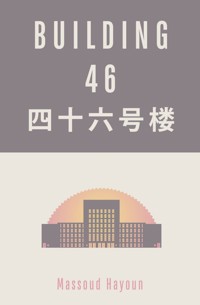
Building 46 draws its reader into the darkest, quietest spaces of China's vast capital. Set just before the 2008 Beijing Olympics, this queer coming-out-and-of-age story explores the interplay between so-called Eastern and Western superpowers, between humans and halls of power, and between light and dark. It is a love letter to Beijing. It is an expression of love for its intellectuals, its imams, its waitresses, its foreigners, its wanderers, its middle-aged moms, its shadow men, its DVD bootleggers, its migrant labourers. It is a love letter to a people very different to their mono-dimensional portrayals in foreign correspondence. From the author of the award-winning and critically acclaimed nonfiction book When We Were Arabs comes a stunning, poetic fiction debut that aims to decentralise and destabilise the status quos of the anglophone book industry, to make room for a new and a fresh cannon of enthralling, delightful, and consciously political writing for an emerging and indignant generation of readers.
Das E-Book können Sie in Legimi-Apps oder einer beliebigen App lesen, die das folgende Format unterstützen:
Seitenzahl: 336
Veröffentlichungsjahr: 2022
Ähnliche



















Darf Publishers, 2022
277 West End Lane
West Hampstead
London, NW6 1QS
Building 46by Massoud Hayoun
The moral right of the author has been asserted
Copyright © Massoud Hayoun
All rights reserved
Cover designed by Luke Pajak
ISBNPaperback:9781850773450
ISBN eBook: 9781850773467
This book is sold subject to the condition that it shall not, by way of trade or otherwise, be lent, resold, hired out, or otherwise circulated without the publisher’s prior consent in any form of binding or cover other than that in which it is published and without a similar condition, including this condition being imposed on the subsequent purchaser.
Contents目录
Prologue序幕
1. Ping Pong Room乓球厅
2. Starlight星光
3. A Prayer for Lost Things为了寻找丢失的东西之祈祷
4. Question Mark Man问号之男
5. In the Basement在地下室里
6. The Humming哼声
7. Best Foot Forward全力以赴
8. Three’s a Crowd三P之舞会
9. Wanderlust旅游欲
10. Dead End死路
11. Hide and Seek捉迷藏
12. Bottom Up自下而上
13. Down Below下面
14. Cat and Mouse猫和老鼠
15. Heart of Glass玻璃之心
16. Alleyway Man小巷人
17. Best Wishes祝好
Epilogue结语
For Nadia, who teaches me night vision
为了教我夜视能力的娜迪亚
For Zhao Meifeng, wherever you are
为了找美风,不管你在哪里
For that Beijing
为了当时的北京
生活是一袭华美的袍,爬满了虱子。张爱玲
Life is a resplendent gown, crawling with lice.Eileen Chang
Prologue
序幕
What happened in the dark quiet is up for interpretation. As with Chinese-English interpretation and its reverse, the best I can do for you are words approximating the full truth. You’ll have to take yourself the rest of the way.
First, you ought to know that Beijing is the world. A crush of people from far afoot, so vast and frenzied, pushed together so closely that the city lays bare the best and worst of people. That night, there were people from across China and around the globe, colliding in the breathtaking sea of human flesh that is the Xizhimen subway transfer, a station vast and overwhelming as transportation hubs in similarly crowded places like Cairo, Mexico City, and New York.
That night, in an alley far from Tiananmen Square, the Haidian District universities, the Chaoyang District bars, and Beijing’s other centres of gravity, you would have found it impossible to recognise the neighbourhood in question as a suburb of the Chinese capital. What’s more, there was a remarkable absence for miles around of the hubbub that once gave Beijing its shape. Even as the Olympics seemed to disappear that of Beijing which had been especially human — as it seemed to hush and polish away the loud, warm embrace the city had once been — this little corner of Beijing that is the focus of our attentions seemed to remain the same. Unruly. A question mark of a place, deceptively ordinary and peaceful. A perfect place for things to go unseen, unheard. Innocent-looking, it could have been the more shadowy corners of Central Park or Meiji Shrine or any such borderland between urban sprawl and the wilderness, the spaces where nature and its lovers have resisted asphalt. But that night, something obscured and jolting happened there.
In the calm of that Beijing suburb, nestled in an alley down the side of a small restaurant after closing was a little sedan. If the frenzy in that car startled, it was because it began not with a fracas but an exchange of placid, little platitudes between the driver and the passenger.
It’s hard to know whether what happened in that small vehicle was an act of love or violence, likely because that love or violence was shrouded in an unusual absence of light in an otherwise well-lit city. There were lamp posts a quarter-ofa-mile away in either direction along the road on which the restaurant was perched, and the alleyway, where customers were meant to park, stretched into the gloom just to the left of the establishment. So you would have needed some sort of special sight to see that there were two people sitting beside each other in that car, in one of the quieter zones of Beijing’s outskirts.
From outside the car, I am uncertain whether you, as an outsider, would have heard the banter that preceded the frenzy. Some cars seem to block out surrounding noise and keep quiet conversations in, which would have been welcome in Beijing, at that point constantly under construction. It was a decent car — a far cry from some of the dusty tin pickup trucks that ferried migrant labourers in and out of the capital’s centre, where they were busily building large stadiums on the ash heaps of what had been known to its admirers as Old Beijing.
Perhaps to have heard how things went down in the car would not have helped us to arrive at an accurate interpretation of events. Great pleasure and great pain sound the same. Ultimately, both feelings inspire cries in people — gusts of breath. If you possessed some sort of occult power of voyeurism, you would have been startled by the way one of the two people in the car pounced on the other. If you were an especially empathetic person, you would have heard the beating of their pulses ringing in your ears. You would have seen a decisive thrust, but even as a fly perched on the dashboard, you would have been hard-pressed to determine whether it had come from the person above or from the person below, perhaps then as a sort of self-defence. All you would have seen would have been the contorted look on one of their faces as a shock gripped the heart.
The rest would have been unclear to you, even as a nonparticipant in the car, because it had come to pass in the most intimate space between two bodies that had gravely misunderstood each other.
In Beijing, it is difficult to find the dark quiet that made this sort of embrace — if it could be called that — possible. The unusual silence of a sedan parked down an alleyway, off of a dark suburban road. It was as though whatever happened in that vehicle had been planned for a very long time. Maybe from the moment the driver and passenger had met, one or both had been quietly plotting this.
To better interpret exactly what happened, we must shift our focus to another space that like the alley was exceptionally dark and quiet — also with a few remarkable exceptions.
1. Ping Pong Room
乓球厅
From the moment Sam Saadoun first passed the ping pong room of Building 46 in autumn 2007, he was intrigued by it. He had passed it when he first arrived at the Grand Hall of Building 46 to register for class. At that point, he noticed the ping pong room’s strange doors, the peculiar darkness behind them. But then he quickly forgot the ping pong room, until he found himself taken with and by it. Even as Sam sat, one of the two bodies in the small car in an exceptionally dark and quiet Beijing alleyway, part of him would remain locked in the bowels of Building 46.
The ping pong room of Building 46 is located in its basement, down two flights of stairs, past two separate doorways, the first with a flimsy set of saloon-style swinging doors, then down the flights of stairs, a single sturdy metal door leading to it. A thick damp in the air down in the ping pong room muffles some sound, like a hand firmly clasped over the mouth. But does it drown it out entirely? No. Even a gagged mouth makes a humming noise. Try it.
If you did hear the sound of the ping pong room, down in the basement of Building 46 — assuming there is sound there, on occasion — what would you hear? Would it be theclack, clack, clackof wooden paddles hitting a small plastic ball? Would you hear people calling scores? Or would you hear people settling scores — people hidden from view? No one seemed to know for certain, back when Sam found himself asking. Still, the question bears asking.
The ping pong room was removed from the frenzy of activity in Building 46 and, beyond it, Beijing. That is to say, the ping pong room is a singular quiet place in one of the world’s most eternally awake cities. Would you hear a cry coming from the ping pong room, if you passed by it on the ground level? What sort of cry might you hear? When people play passionate, physically exhausting tennis on TV — even just table tennis — they seem to let out absurd cries, like little bursts of breath that sound alternatively like terror and orgasms. Building 46 had, of course, seen its share of sex; it was infamous for it among the more prudish people at伟大大学- Wei Da Da Xue - Wei Da University, where the building was located. Agony and ecstasy sound so similar. Which might you hear, if you could hear the sounds of the ping pong room?
What’s more, if you are an especially curious person, would it be possible for you to welcome someone down to the ping pong room — the乓球厅- pang qiu ting, as it was called in Chinese — and play a round against the bare concrete walls, so you could listen to what human life sounds like down there, as heard from the ground level of Building 46? Would anyone you know — anyone normal — agree to go down there, alone? Worse yet, if you asked the wrong person to help you hear such sounds, if such a thing is possible, would they inform a higher-up who would put some sort of block — a physical barrier or an actionable rule — between you and the ping pong room for good, to be certain you’d never know the answers to these questions?
I may as well just ask: Would you go down to the ping pong room so I could hear the sound of it? I’ll understand if not. But what if I went down with you?
Building 46 was typically abuzz with activity around the clock, but that was not immediately apparent to its own inhabitants. The building was constructed in such a way that each of its many moving parts were sequestered from each other. You could not hear what transpired in the building’s little restaurant from the dorm rooms, and you could not hear what was happening in the classrooms from the ping pong room. And yet there was quite a lot happening throughout the building, always. With the exception of birth itself, all of life’s stages seemed to transpire in Building 46, which was for the most part comprised of foreigner dorms. The dorms were a veritable petrie dish of human bacteria. Late at night, the foreign students would ascend to their rooms — often drunk, according to the staff’s accounts of the debauchery that the university had welcomed from outside China. And there, in their rooms, very modest affairs with no heat to fight the blistering winds from the Gobi Desert and certainly no air-conditioning to cure them of their bodies’ natural embarrassments, they would loudly copulate, as the campus staff would tell it, often in hushed tones, with the exaggerated oratory peaks and valleys of Beijing radio theatre. And then the foreigners would shower — often together, the campus staff was sure to note — in communal showers made of asphalt and corroded metal.
On the exterior, Building 46 looked like a caricature of a low-level Soviet government building. Eight storeys tall. Windows dotted an unadorned block-style building that wrapped around a large patch of grass with signs forbidding people from treading on it that no one, Chinese or foreign, obeyed. On either side of the grass, the building’s arms extended, so that viewed from the front, it seemed Building 46 would pick you up and put you in one of the cubbies behind the little windows. The architecture of this building could make you feel insignificant and oppressed or inspire you to feelings of belonging that could cure the loneliness of the absolute capitalism you’d known in your own country. You could become one of the many sequestered parts of Building 46, in the frenzied Charleston of human bacterial exchange happening there.
In the frequent nighttime power outages of Building 46, in the dead of night, you could see flashlights moving from room to room, from outside on the grassy field below or from your spot in one of the embracing arms of the building.
Through the building’s entrance was a spacious hall with a small office for the building attendants and a janitor’s closet. Flanking those rooms were a series of large Chinese flags and Wei Da University’s own standards, laying limp among a few folded chairs, abandoned, awaiting a grand occasion that never seemed to present itself but that remained forever just out of reach in the minds of Wei Da University administrators. Nearly all of those administrators were, of course, Party members, and all of those Party members tried at least to appear more or less purposeful in their approach to the future.
Past that first foyer was a broad staircase that led to the upper floors. Behind that staircase on either side, the building continued, a long narrow corridor that was typically empty of activity. The back part of the building had its own entrances — each part of the building could be reached without passing through that corridor, and people seemed naturally inclined to avoid it. That is perhaps because it was especially dark in the corridor, even in the daylight. There was only just enough sunlight to turn the corridor a cool periwinkle in the summer at midday. There were no windows. And no security cameras.
Toward the end of the corridor were the two dilapidated swinging doors that did not extend from roof to floor, two withered planks of wood on hinges replacing what had likely been a regular door. These two saloon doors were held together with a piece of wire through some makeshift holes. Past those doors and down two flights of stairs and then behind the heavy metal door was the ping pong room that is the object of our wonderment.
Behind the corridor, still on the ground level, past the odd doors leading to the ping pong room was the Grand Hall of Building 46, where the university’s Department of Foreign Students of Chinese held orientation, registration events, and placement testing. In a corner of the Grand Hall was the small restaurant. That door looked a bit like a utility closet. There was another, more clearly marked entrance to the restaurant on the building’s exterior.
Up the stairs before the isolated corridor were the students’ rooms, and at the centre of each floor, flanked by dorm rooms on either side, there were classrooms. There were also administrative offices tucked into odd corners of the building and the offices of some professors, not just in the Department of Foreign Students of Chinese, but regular Wei Da instructors whose own departments had put their offices there, either due to lack of space in the relevant departments or as a sign that they were, for any number of reasons, losing at the rat race that Wei Da was for teachers and students alike.
The Department of Foreign Students of the Chinese Language was a bit of a joke. The engineers, for instance, frequently suggested that enemies transfer to the Department of Foreign Students as an attack on one’s character. Any Chinese speaker can teach Chinese, was their meaning. They of course ignored that the instructors there had devoted years and great effort to learning pedagogical methods and contemplating the structure of a language that the engineers considered a mere vehicle to convey their own science. But the engineers were not totally wrong; Chinese classes for foreigners lasted for four hours a day at most, unless students opted to do more schoolwork that was unlikely to translate to credits in their home countries, unless they came from places like Singapore and Pakistan, where China was well-respected. That is to say, universities in the so-called West were unlikely at the time to accept Chinese credits, even from a top university.
It was quite remarkable to the foreign students themselves how they had applied to study at the increasingly world-renowned Wei Da University only to find themselves sequestered to its Western-most edge, in a sort of half-humorous symbolism. Many of the students who could afford it lived closer to the bars in the university district. There were students from around the world living in the dorms at Building 46. There were Koreans, Japanese, Spaniards, Senegalese, Cameroonians, Pakistanis, French, two Swedish sisters, a Tunisian. The vast majority of Wei Da’s many American study abroad students lived not at Building 46, but a 15-minute walk from campus, in a gigantic luxury apartment complex called Dai Er Fu -代二富that had a Subway Sandwich, a 7-Eleven, a McDonald’s, and a coffeehouse that served American-style breakfasts called Honeybib.
It was astounding to Chinese people — instructors, building staff, and others — how many of the students who lived in Building 46 had sequestered themselves from what was happening around them. For instance, many foreign students ordered delivery from a nearby 24-hour McDonald’s, totally unaware of the little late-night restaurant on the ground floor. But their obliviousness was not the students’ fault, entirely; they had been blissfully unaware of the realities transpiring in Building 46’s other sequestered parts.
The students were also distracted by the luxuries of their situation. The exchange rate for students from well-to-do countries was favourable at that time, before the internationalisation of the yuan, at the moment just ahead of the 2008 Beijing Olympics and China’s foray into the wild world of soft power once monopolised by Hollywood, a foray bedazzled with pomp and spectacle. You could come from a bourgeois American family and buy an outfit a day for $5 in Beijing. You could go to a fancy restaurant in the Chaoyang foreigner district and order a bit of everything for $20. For middle-class foreign students for whom money was suddenly little or no object, few slowed their roll long enough to play ping pong in the ping pong room — or to at least go down there and try.
If they did go down to the ping pong room, its peculiar blackness would soon elicit a great many questions. For instance: What if the blackness there was a kind of all-consuming love? What if everything we’ve been taught about the dark is a lie? What if it’s the light that should be terrifying? What if terror is a kind of joy?
We’re taught — in our engendering toward capitalist pragmatism in the so-called West and our engendering toward socialist realism in China — that magical spaces only exist in the imagination and its kin. If you passed such a curious thing as the two saloon doors in the lost corridor and you possessed the ability to appreciate odd, little things, and you began to imagine the world of the ping pong room, you’d be an imbecile not to go down there.
That’s all to say, Would you go down to the ping pong room? For us both. One of us has to go down there to know what sound can come from that most curious hollow in the belly of a behemoth. If you won’t go alone, which is admittedly wise, I’ll go too. Let me take you down there. Give me your hand.
2. Starlight
星光
The woman Sam was told to call Ayi was by all appearances a run-of-the-mill Beijing mom. But she reminded him of the poetic lady gangster in a movie that set his adolescent heart alight.
In Wong Kar-wai’s filmChungking Express, Lin Qingxia portrays a mobster who for Sam was like living verse. She is surrounded by trash. Her white mob boss boyfriend is a shadowy marionette who casts her like a stringed puppet into a treacherous underworld of drugs and violence. He is cheating on her with a bar-back floozy. Lin’s character wears a blonde wig, sunglasses, and a raincoat. She is unknowable. She is also deliciously indifferent — unimpressed by life, even at its most precarious. There is a dignity in her nonchalance. She cares to live, or she would not run as she does from her would-be assassins through the streets of Hong Kong’s Tsim Sha Tsui commercial district. She won’t be made a fool for life. Perhaps it was because Sam felt himself too childish and emotional that he admired the gangster’s restraint.
The beauty of a few lines of the gangster’s dialogue, noir and fantastique, helped to fuel Sam’s study of the Chinese language in his first year of undergrad at Golden State University in Los Angeles. Lin’s character ambles down a bustling avenue lit by Hong Kong’s characteristic neon lights, and she says,
Chinese:不知道什么时候开始,我变成一个很小心的 人,每次我穿雨衣的时候,我都会戴太阳眼镜,你永远 都不知道什么时候会下雨,什么时候出太阳。
Pinyin (the standardised pronunciation of the Chinese in Roman alphabet characters): Bu zhidao shenme shihou kaishi, wo biancheng yige hen xiaoxin de ren, meici wo chuan yuyi, wo dou hui dai taiyang yanjing, ni yongyuan dou buhui zhidao shenme shihou hui xiayu, shenme shihou chu taiyang.
English: I don’t know when it started, I became a very cautious person. Every time I wore a raincoat, I’d wear sunglasses. You never know when it will rain and when the sun will come out.
These lines set Sam’s 18-year-old heart aflame in his freshman year of college. Her get-up was an affectation — a poetic expression of both vulnerability and a desire to look tough and guarded that was accessible even to a kid like Sam, who had never ventured too far from home.
Sam was given to this sort of excitement about art. For context, when Sam graduated from high school, he sold back all his books except his copy of Albert Camus’The Plague, which made him feel like living purposefully. He loved the strange moral ambiguity of the filmGhost World, because he had never attended a single high school party let alone had an affair with a sad, older man and ruined his life in the way Thora Birch’s character obliterated Steve Buscemi’s. He also loved the compassionate trans and cis women of PedroAlmodovar’sAll About My Mother, but that film was about Queer and HIV+ lives, so it was impossible for him to appreciate it as unreservedly asChungking Express, deep in the closet as he was and certain as everyone seemed at the time that HIV and AIDS were foregone conclusions of gayness.
Lin’s character inChungking Expressis a caricature of a mobster, in her conspicuous blonde wig, unseasonal jacket, and sunglasses. Ayi looked nothing like that. Ayi’s hair had been dyed black, permed, and lightly curled, like the hair of many middle-aged, middle-classed Beijing women at the time. She wore collared cream-coloured blouses, sensible knee-length skirts, and the lowest-possible heels. Lin’s character smoked pink lady cigarettes with exquisitely manicured hands — hands pale as a ghost’s. Ayi had more melanated hands, meticulously self-groomed and unvarnished, and no perceptible vices. She didn’t even smoke at a time in Beijing when people could and often did light up in hospital waiting rooms. Lin had an especially deep voice. Ayi spoke in a sober tone, without any sort of inflection to feminize herself, but Ayi’s was not an unusual register for a serious person and a Beijing woman of means.
In sum, there was really no immediately discernible resemblance between Ayi and Lin’s character. And yet Sam had sensed an energetic similarity between the two — a deceptive grace, a thinly veiled darkness, and a grit-clad dignity — that drew him to Ayi when they met during his month-long internship at Beijing’s famous Wei Da University, the summer after his freshman year.
Sam was one of several student instructors from Golden State University who got a free room and board in Beijing for the month as payment for leading an English-language discussion group for just a few hours each day. That summer had been a pivotal one for Sam. In just a few weeks in Beijing, he met several people whose impression on him would change the course of his life. At the time, Ayi was one of the less prominent in that cast of characters.
In the year after Sam’s return from his month in Beijing, Sun’s emails were the rarest, after Ayi, who never emailed at all, because she did not care to learn how to use computers for recreational triflings like personal correspondence. Sam had received dozens of emails from the other friends he had made and only one full-fledged email from Sun. But one email was all it took forStarlight! Muse’s rock ballad,Starlight, about traveling very far from everything familiar for love. It was the soundtrack to that moment in Sam’s life. He felt especially human — a stirring of the soul in his chest — when he heardStarlightand thought of Sun.
Sam printed Sun’s email. Sam could not suffer for it to exist only digitally, when it had meant things much more human and necessary than the internet.
Sam and Sun had been the only two guys in a circle of friends that, in just a month, came to feel like the sort of friend groups that are only possible in classic television shows like Living Single and Cheers. It is easy for people to adore each other for a month, before hell becomes others.
For his internship at Wei Da University, Sam and the other English-language instructors were paired with fully bilingual Chinese counterparts who attended classes as observers to make sure that the foreigners were never woefully lost in translation. Sam’s partner had been Jiaxin, a young woman who studied communications at Tepington College in Toronto and was visiting home for the summer. Jiaxin’s mother worked as a secretary for the Wei Da Department of Clinical Psychology. Jiaxin had received the position at the English-language summer program through her mother’s friend, an administrative assistant in the English Department. Jiaxin’s father was a low-level executive at a high-profile national construction company.
Nearly every day, between the morning and afternoon English discussion groups, Jiaxin’s mother — It had been Jiaxin who told Sam to call her mother阿姨- Ayi or Auntie — took Jiaxin and Sam to lunch at a restaurant, usually fancy compared to the cafeterias and street food stalls where Wei Da students ate on and around campus.
Ayi, in addition to her gangster energy, was also a woman of understated style. Her stride was cat-like — especially refined and aware of the machinations of each moving limb. Beholding her, Sam on occasion wondered if she’d been to finishing school or some sort of certificate course for receptionists or the wives of corporate executives. Ayi would meet Sam and Jiaxin after morning discussion groups and walk through the campus to lunch. Ayi took these opportunities to give Sam and her daughter a tour of the university where she worked. With a hand elegantly outstretched like a dancer, Ayi would point to a building and share with Sam a bit of local lore.
‘This conservatory is where Chen Weiguo penned the balladInternational Workers Unite,’ she would say, extending her hand to the building, palm up, as though she were ice-skating. ‘This building is where Wei Da scientists discovered Cromanium Manganese.’ ‘This is the site where, before the university’s construction, the Qing Dynasty Emperor Qianlong is said to have come to pluck winter jujubes, fresh from the tree.’
As the weeks passed, the lore became less wholesome and more colourful. Ayi had evidently ceased to care whether her daughter’s foreign colleague thought Wei Da to be a vast or respectable place; her patience with her own pretence had run out, and she was sure that Sam would not tell anyone important anything sensitive.
‘This is the building for foreign language studies,’ she said, with a subtle tilt of the head and a raised brow. ‘A French teacher’s assistant from Henan impregnated a freshman, then both of them disappeared. I hear they work at a bar in Shanghai now.’
One day, they passed Building 44. They had passed it before, but this time, for whatever reason, it occurred to Ayi to speak on it.
‘You see that big, ugly building? How could you miss it! That’s Building 44, the tallest building on campus — the so-called Suicide Department,’ she said. Building 44 appeared as a gargantuan overcooked waffle, standing on 10-foot-tall concrete stilts. ‘Yes, that’s right, we call it the Suicide Department,’ she said in a tone of voice only slightly lower than usual. Her lowered volume was as a vestigial appendage — an homage to another time in her life when she would have cared whether someone overheard her.
Sam and Jiaxin looked at her with widened eyes.
‘Every year, a few people commit suicide there. There’s no way to know exact numbers, but quite a few. Imagine the pressure at one of the top universities in all the nation,’ she said. ‘It becomes too much for some students, so they end it, probably before anyone around them can see the warning signs. Not a lot of people know this. Non-Wei Da people, that is.’
‘Why don’t more people know about it?’ Jiaxin asked.
‘The university has people whose job it is to make sure Wei Da maintains its good reputation,’ Ayi said. ‘Imagine if people started talking about the Suicide Department at Wei Da, and then someone made a horror film about it or something equally tasteless.’ She paused a moment. ‘Actually, I’d love to watch it.’
‘So they’re covering up all these deaths?’ Jiaxin asked, absorbed.
‘Of course they are,’ Ayi said, smiling at her daughter as if to suggest that the question had been naive.
During Sam’s freshman year back in Los Angeles at Golden State, there had been a girl a year ahead of him who it was said hanged herself in her dorm room with a string of Christmas decorations, the ones that several students used to brighten their somber, little rooms. She had been Queer, or so Sam had heard — and bullied for it. But the suicide never made the news, because of Golden State’s talented public relations team. What so many people fail to realise, Sam thought, as Ayi spoke, is that universities — at least in China and the US — are like very small city-states, pouring enormous energy and funds into propaganda that intermittently props up a semblance of stability and progress and constricts the flow of evidence to the contrary.
‘How do they die?’ Sam asked, enthralled. His voice was quiet and lyrical.
‘They jump, mostly,’ Ayi said, without flinching. Like an unlikely gangster, the gruesome facts of these deaths had been to Ayi as minor details of life. ‘The building is so tall, the neck probably snaps before they hit the ground — At least, one would hope. First they were jumping from the windows in the classrooms, and then those were sealed shut to prevent more suicides. Then it was from the roof.’
Ayi explained that there was a courtyard in the centre of the building with wrap-around balconies and stairs in the open air leading to each classroom. When the university blocked access to the roof, the suicides started making use of the balconies. It seemed that no matter what the university did, there was no way to stop students from killing themselves from somewhere on Building 44.
‘And it doesn’t cause a scene?’ Sam asked, wondering if this was all hearsay. ‘There must be a lot of blood on the pavement?’
‘The kids typically do it at night, so no one will stop them. In the morning, the campus cleaning staff start their work before daylight so as not to get in the way of all the students running from class-to-class. By the time the sun comes up, the asphalt is washed with high-pressure hoses or painted over. Several times a year, I arrive to work in the early morning, and if they haven’t had a chance to clean, they put up scaffolding around the building, and there are signs on the scaffolding saying the building is closed that day for minor repairs. You’ve never seen a building under repair more frequently than Wei Da University’s Building 44. You ask around a bit further — which is always a mistake, of course — and it’s the plumbing or an electrical issue. The people who run the university have an answer for everything. And the chancellor and the other top-level staff are only the forward-looking faces. The people who really make the decisions, I’ve never met and you’ve never met and your friends have never met, and we’ll likely never meet them.’
Ayi had proven herself a straight-shooter in her interactions with Sam, but in that moment, there was a flavour of theatrics — both in her delivery and Sam’s reception of her account. She enjoyed telling this macabre story, Sam thought — she savoured it. Perhaps this was the moment he began to appreciate her as a punk icon, without the kinky fashions that made Blondie and the Ramones more obvious members of that tradition.
Ayi had experience entertaining; that was immediately evident when they arrived at lunch each day. She ordered several dishes — she knew what would suit people’s palettes and dietary caprices. Sam did not eat pork, for instance — Ayi was always conscious of this in her choice of restaurants and dishes. There were always protein and vegetables. She frequently did not partake of these meals. She sat and watched her daughter and Sam eat, while she nursed chrysanthemum tea with several lumps of rock sugar. Ayi had a remarkable sweet tooth. On occasion, she would order herself a hot, sweet tofu pudding called豆腐花- doufu hua.
Ayi’s lunchtime chatter was entertaining. It was not all as morbid as the discussion of the Suicide Department. Frequently she seemed to entertain herself with little observations about the world around her — things she felt might amuse a foreigner like Sam. She spoke of how Beijing had changed so quickly, particularly as the Olympics approached.
‘You know the Big Mac Index?’ Ayi said one day, as they ate woodier mushrooms with egg, Japanese soft tofu with tomato, and fish-scented eggplant. When Ayi said ‘big-uh mak-uh,’ in her thick Beijing accent, Sam thought it was a Mandarin phrase he’d never learned. Sam had studied Chinese in his first year of college because his grandmother Nora, who had raised him, had always said that despite coming from Algeria, they had some distant Chinese ancestry — an unlikely story. That and Nora felt Mao was handsome in his youth and had expressed hopes that China would triumph in the face of Western hegemony.
Jiaxin explained in English: ‘She’s talking about theThe Economist’s Big Mac Index: It’s a measure of Purchasing Power Parity. The cost of a Big Mac in different countries is published to measure the cost of living across different economies.’
‘Well in China, it’s pork, not Big Macs,’ Ayi said, not terribly concerned with her daughter’s translation or whether Sam understood. Ayi was going to say what she was going to say. She had arrived at a point in her life where outcomes no longer mattered — Only intentions did. ‘You can hear old ladies on the bus complaining that the cost of pork is going up, and that’s how you know the cost of living is rising.’ A moment passed. ‘Sorry if that story was in poor taste; I know you don’t eat pork,’ Ayi told Sam. Sam shook his head with a smile, ‘We can still talk about pork.’ Sam had not given up pork to go to heaven; he had promised his grandfather, Wassim, who had died three years prior, that he would never eat it. He appreciated that Ayi was so empathetic that she was worried to mention pork at their lunch table, as though even the word would cause Sam great unease. When Ayi took them to one of the several Muslim Chinese restaurants around Wei Da, she would only say the word ‘pork’ in a whisper, as though it were pornographic to the people who go to such great lengths not to eat it or cook with its fat, in a nation where both were ubiquitous.
‘I tried a Big Mac,’ she continued, changing the subject. Jiaxin looked at her, perplexed. ‘It sat on the stomach,’ Ayi continued.
Ayi chuckled, but Jiaxin became upset. ‘You went alone to McDonald’s and ate a Big Mac?’ Jiaxin asked her mother, visibly pained by the mental image of her mother sitting alone at a McDonald’s, probably while Jiaxin went bar-hopping in Toronto with her schoolmates.
At that time in Beijing, McDonald’s was not just McDonald’s; it was even sadder. McDonald’s had gone through several changes in cultural significance. When it arrived in Beijing in 1992, it was a symbol of the extent to which the country’s helms people were internationalising the economy. It was a shock and a novelty. Then in the mid-to-late 90s, it became a symbol of Western luxury and fuelled a neocolonial fascination with the English-language and all things American. For the price of a full sack of groceries, people could eat a sandwich that did not particularly suit the palette. Big Mac’s were a pointless extravagance in a city where you can buy a dozen spicy, tangy dumplings, all made from scratch, for under $1.
By the time this conversation on Ayi’s lonely Big Mac came to pass, McDonald’s continued to represent all these things. But it had also become a 24-hour establishment at many locations and, therefore, home to the city’s homeless — mostly migrant labourers, newly arrived from faraway provinces, often Gansu Province. Sam had been to the McDonald’s in the university district. On the second floor, there were several people who had set up camp. That is to say, McDonald’s had also become a place for people without a place.
‘Yes, I was there alone. Your father was on a business trip, of course,’ Ayi said, stone-faced, adding some more rock sugar to her chrysanthemum tea. Ayi looked ahead, not at Sam or Jiaxin, but into some unseen space where she saw her husband and whatever had transpired between them. Jiaxin was not looking at her mother either. Instead, she seemed to carefully inspect her food as it traveled, balanced on pea-green plastic chopsticks, from bowl to mouth. Sam noticed that Jiaxin never looked her mother in the eye when Ayi spoke of her father. And that in every story Ayi told, Jiaxin’s father seemed to have been on a business trip.
Before Sam went home, he went to Chaoyang, the foreigner district, to a grandiose shopping centre full of expensive Western decadences, and bought Ayi a small, golden box of Godiva chocolates, a token of appreciation for all the lunches.
‘Chocolate is good for women,’ Ayi said, upon receiving the gift. ‘I read a study in a psychology magazine that said sweets make women feel the sensation of being loved. That’s why sweets are given on Valentine’s Day in the West. Isn’t that so, Jiaxin?’ she said, turning to her daughter at the last of their lunch tables. Jiaxin avoided her gaze. It so happened that when Sam gave Ayi the gift, they were eating Korean food at a restaurant called사랑방- Sarang Bang - Love Room.
Sam wondered if Jiaxin’s father was an especially bad man or if he had freed himself from the confines of a dead marriage in a way that had been frowned upon in their generation. Sam had come to love Ayi in that month; he had grown fond of her lunchtime stories and her understated resentment of her husband. He hoped, in the back of his mind, that she had taken a lover. A young Wei Da student — an athlete or a thin, goateed type from the Philosophy Department or the Department for the Study of Socialism with Chinese Characteristics. Someone cerebral enough to merit such an exceptional lady, a lady more dark and curious than anyone would have assumed, if they passed her on the street.
In the balance of the day following the afternoon classes, Jiaxin and Sam would meet Jiaxin’s childhood friend Tianliang, an office assistant from a Manchurian Old Beijing family who was dating a young soldier in the People’s Liberation Army. Ayi disliked Tianliang and made it clear, in her way. ‘You’re seeing her again today,’ she would remark to Jiaxin at lunch, with a lifted brow and a pointed absence of enthusiasm. ‘How nice. Send her my hello.’ Ayi and Jiaxin avoided each other’s glances when Ayi said this.




