


9,49 €
Mehr erfahren.
- Herausgeber: Darf Publishers
- Kategorie: Gesellschafts- und Liebesromane
- Serie: The Ghorba Ghost Story Series
- Sprache: Englisch
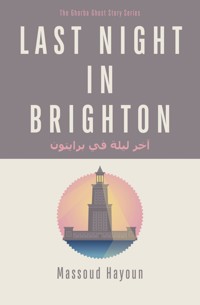
In this dazzling finale - both of the Ghorba Ghost Story Series and award-winning author Massoud Hayoun's brief career as a novelist - Darf Publishers brings you a Jewish Egyptian Wizard of Oz, radiating "crushed velour and luxury" and "sensuality, once more". Sam Saadoun, not to be confused with the gay Jewish Arab protagonist of Building 46 of the same name, had planned to spend a final night in Brighton Beach, Brooklyn with the last of many lovers. But amid their frolicking through that American immigrant enclave's Post-Soviet attractions, Sam finds himself cast back to the heart of the matter: Alexandria, Egypt in the 1930s. With the biting satire and folly of a Luis Bunuel film and the delicious melancholy of a Beach House ballad, Hayoun offers us a striking last look at the Ghorba Ghost World's longing, love, and lust as well as the political intimacies that have shaped the 21st Century Arab world and North African diaspora. This is a parting glance that is bound to haunt and delight.
Das E-Book können Sie in Legimi-Apps oder einer beliebigen App lesen, die das folgende Format unterstützen:
Seitenzahl: 310
Veröffentlichungsjahr: 2022
Ähnliche




















Darf Publishers, 2022
277 West End Lane
West Hampstead
London, NW6 1QS
Last Night in Brighton by Massoud Hayoun
The moral right of the author has been asserted
Copyright © Massoud Hayoun
All rights reserved
Cover designed by Luke Pajak
ISBN Paperback: 9871850773504
ISBN eBook: 9781850773511
This book is sold subject to the condition that it shall not, by way of trade or otherwise, be lent, resold, hired out, or otherwise circulated without the publisher’s prior consent in any form of binding or cover other than that in which it is published and without a similar condition, including this condition being imposed on the subsequent purchaser.
Contents
1. The Yawn
التثاؤب
2. Regression
للتراجع
3. Falafel
فلافل
4. Exodus
مصر
יציאת
5. Last Night
تۈنۈگۈن كەچ
6. ONE
واحد
7. He is Risen!
Он воскрес!
8. Lighthouses
منارات
9. The House on Flower Street
دارنا بشارع الزهرة
10. Kalinka
Кали́нка
11. Egyptian, Modern
12. To the Moon
إلى القمر
13. Have Fun Tonight
14. A Light - Du feu
15. Have Fun Tonight
16. A Trap
فخ
17. Russian Dolls
матрешки
18. Origin Story
19. The Temple
الكنيس
20. Joy of All Who Sorrow
Всех скорбящих Радость
21. Waiting Room
غرفة الانتظار
22. Freedom Street
01000110 01110010 01100101 01100101 01100100 01101111 01101101 00100000 01010011 01110100 01110010 01100101
23. Hourglass
الساعة الرملية
24. Bed
01100010 01100101 01100100 00001010
25. Closed Port - Huis Clos
26. The Air
الهوا
27. Breakthrough - Durchbruch
28. Farewell
وداعا
29. Men
الرجال
30. Stillwell
31. Aircraft
الطائرات
32. Take My Breath Away 讓我屏住呼吸
33. 讓我屏住呼吸
تخطف الانفاس
34. Last Train Out of Brighton
35. Fun House
36. Tomorrow
بكرة، كمان وكمان
لنادية
For Nadia
زورونی کل سنه مرة
حرام تنسونى بالمرة
سيد درويش الاسكندراني
Visit me once a year
It would be a shame if you suddenly forgot me
Sayed Darwish, the Alexandrian
1. The Yawn
التثاؤب
If I was in Brighton Beach, Brooklyn, I was partying on my own. In the celebratory sense, yes. But also, I’d probably smoked a little weed. And if I was out of weed, I’d taken one or five shots at a Russian restaurant on the boardwalk. That’s because, if I was in Brighton — which I often was — it didn’t just happen. I couldn’t just will myself there. I had to get there physically, on an hour-long express train from Manhattan, and then mentally, to the spiritual space of Beach House ballads and Costco buttercream cakes. Coat my insides in crushed velour and luxury.
It was the weed that night, at first. Premium. Sensuality, once more.
As usual, I went at dusk, before the shops closed. The sky was a clement, monotone periwinkle at that hour. The ocean matched the sky, of course. That’s science.
I stood in the ocean, up to my knees in murky, sudsy waves, and I felt the half-hearted clemency of low-tide rush over me . I liked to see the periwinkle of that hour against the grey and brick backdrop of the austere Soviet-style flat blocks. Those buildings signified to me that we are small, in our little cubbies, that only when we are together do we have any heft. I liked to half-see the Coney Island Parachute Jump — the lit-up Bethlehem steel skeleton of a once-great and gaudy attraction — glow in the distance, closer to the Coney Island subway station where I typically arrived, alone, and walked a couple of miles up the coast, to Brighton.
That April evening, someone in charge of the lights at Coney Island had set the still and skeletal Parachute Jump in the colours of the American flag, in the way maintenance staff likely put lipstick on Mao, Lenin, and Evita’s embalmed, slowly festering corpses. I was about two miles up the coast from the Parachute Jump when I was partying alone in Brighton. And yet I could see it shimmering in the distance. I was not on the Parachute Jump when I was in Brighton, but I was often in free fall. That’s life.
This was a farewell party.
I regretted, suddenly, that I was high. I felt an urge to remember. Everything would change the next day.
A man on the boardwalk cycled past, a few yards from where I stood in the ocean. I could hear his bicycle tires dancing along the boardwalk planks, and overlaying that, the sound of a radio speaker, probably in his backpack. It played Will You Still Love Me Tomorrow? by the Shirelles.
A little too perfect, I thought, but still poetic enough that I should write it down somewhere. That’s the predicament of the pot smoker, isn’t it? You have all these powerful, profound thoughts and emotional moments, and even if you have the courage to collect yourself and write them down, they depreciate in value when you sober up and read them over. Slippery thing, meaning.
I was not, to be sure, like the protagonist of that song — a sorrowful woman. I am not as she was, begging for tonight to spill over into tomorrow. In fact, I’d already done my best to make certain it would not.
Kashkar Cafe was not far from the shoreline, in reality. But time played tricks when I was high. It either sped up or slowed down. When it sped up, that meant I was high enough to forget from one minute to the next that I had been walking from my habitual starting-off point, knee-deep in the waves at Brighton Beach, to Kashkar Cafe. It meant I was too high to care very much about where I was going. If I wasn’t high enough, I’d remember on occasion the forgotten moments from before, and I would feel like I had been walking the same road for an eternity, locked in a haze, like a spiritual prison.
It is a sin to wish your life away, but if I had my druthers, time would have always sped up, on the road to Kashkar. Britney Spears said in an interview once that the secret to happiness is a bad memory. I agree. I wanted to forget where I’ve come from, so the trek would be easier. And I was able to choose, horrific as it may seem, to live in a state of perpetual amnesia. I was a constitutionally unsentimental and unafraid person. I did not attend my high school, undergraduate, or masters graduation ceremonies. I never kept in touch with my schoolmates. Or former work colleagues. I liked a good, clean break. No cooing goodbyes. I was tired of those. Nothing precious. No time.
At least for me, pot can have a number of side effects. Of course, there’s the hunger, which is another reason why I prefer a quick hike over to Kashkar Cafe. And then, there is the worst possible outcome of 420— the reverse of my intentions: The pot magnifies my usual anxiety ten-fold and seals it with newfound paranoia — the mother of all side effects. Ironically, that night I had taken my pot in the form of a little chocolate biscuit, to calm me.
I wondered if I had made a grave mistake. Standing beneath the metro overpass, the sound of the express Q train rushing overhead drove up my heart rate, until I felt myself locked in a fit of frenzy. I squatted down, back against the wall of some bank. I held my head in my hands until the train passed. When I heard the sounds of relative calm, I looked around. To my left, a few metres away, was a rotund woman with a short, bouffant hairdo. She wore a tight black and grey Justin Bieber shirt from one of the Brighton discount clothing shops over a short, frilly, rainbow-coloured skirt. She smoked a long, thin lady cigarette, back against the wall. She looked up at the subway overpass that had become the bane of her existence, with its near-constant noise. I wanted her release. I wanted to see the hot air expel from my chest and disappear. I felt the urge. I had been a smoker for a decade until recently, until the cigarettes and I had abandoned each other, and I came to feel on occasion as though there was a little phantom limb between my index and middle fingers.
I yawned. I felt a profusion of oxygen — mixed with the roadside smog and some of the woman’s second-hand smoke — inflate my lungs. The urge subsided. Like magic. I marvelled at how simple it had been. A little yawn.
In a moment’s lucid salvation, I recalled Kashkar Cafe. I recalled that I was hungry and that Kashkar was located several blocks to my right, past a synagogue, a few markets, and a surrealist pastry shop that serves cream cakes by the self-service slice. Cakes with all the whimsy of the psychedelic onion-shaped domes atop St. Peters Basilica. A great many things could pull me aside en route to Kashkar, high as I was . That evening, I stayed the course. It took unusual commitment, but I pulled myself together and moved onward.
What awaited me on the other side of my journey were meaty, little parcels of something resolutely in-between: Dumplings with noodle dough in the Chinese style, filled with a Turkic sort of seasoned lamb, topped with dill and served with sour cream to suit the Slavic and other post-Soviet palettes of that neighbourhood. Maybe that’s why I love Kashkar Cafe. It was a borderland like Tijuana — a place where all the road signs point elsewhere. A place full of dissatisfied people with the courage to abandon the past for a vast and violent unknown. That night had been a borderland between the me of that day and the next. It was a fitting last supper.
2. Regression
للتراجع
‘You think I’m bullshitting you,’ she said.
He did.
‘I’m here, aren’t I? I paid upfront,’ he replied. He wanted to sound confident in his decision, but he had not slept the night before, and his feet were tired. He wanted to spread his toes, but his shoes were full of sand. He hoped she wouldn’t notice little grains of it on her wooden floors. He reckoned he looked like a ghost — or worse, a drug addict — large, puffy circles under his eyes. But then again, maybe she was used to this class of people — the ghost and/ or junkie class of people. Half-living people.
‘Because if you actively disbelieve it, it won’t work,’ she continued. ‘Because I can’t guarantee your satisfaction.’
‘What does that mean?’ he asked, a bit worried.
‘It means that if you don’t get there, that’s on you,’ she answered, looking at him with intent, motherly eyes. ‘No refunds.’
He looked her in the face. She had a strange twitch — a nervous, little seizure in her left eye, barely perceptible.
‘I made a very clear decision,’ he assured her. After a moment’s quiet, he continued: ‘No refunds. I am aware of the possible pitfalls, Doctor Fahmy.’
‘I’m not a doctor,’ Doctor Fahmy said. ‘I need you to be fully aware of what’s happening for legal purposes. I am a hypnotherapy practitioner. You can call me Lana.’
‘I would feel more comfortable calling you Doctor Fahmy,’ he said. Doctor Fahmy frowned. A moment passed.
‘Alright, Lana,’ he conceded.
‘Alright, we’ll begin with the formalities,’ Doctor Fahmy said. She stood and escorted him from the sofa in her narrow foyer through her kitchen to a small pantry she had converted into a makeshift office with the help of some Ikea furniture. He reclined on a chaise lounge. On one side of the chaise hung a framed diploma from Jackson Heights Hypnotherapy Institute, and below it was a small bookshelf of self-help titles. Doctor Fahmy sat on an armchair on the other side of the chaise. On a small desk beside her armchair was a notepad, paper, a pen, and some spectacles.
‘Would you like a blanket?’ she asked.
‘No, it’s hot outside — Why do you ask?’ he returned. She had offered him a blanket in their previous session, which had been their first, but he felt uncomfortable asking why. He was still irritable from that session. An expected side effect.
‘It comforts some people,’ she said. ‘That’s another point I’d like to get over to you: The purpose of this is to find answers. Finding answers comes at the cost of living in blissful ignorance, right? What you are about to experience may bring up some trauma for you. That pain is not only natural, it can be a goal. A healing crisis. Ultimately, what we’re about to do here together today is about addressing how things stuck in the distant past are still informing and obstructing the present.’
‘You’re not responsible,’ he said, hurrying her.
Doctor Fahmy nodded. ‘You have signed paperwork to that effect and are completely aware of what you have signed. You are aware that I am recording the audio of this session. You are fully conscious of your decisions and are under no form of duress. You are free to leave anytime,’ she said. He inspected the room. There was a large tape recorder from the 1990s sitting on the floor, in the corner of her pantry-office. Doctor Fahmy reached out her hand to signal that he should respond to her disclaimers verbally.
‘Yes, I consent to all of this of my own free will,’ he said, unsettled by the recording device.
‘You are also acknowledging that your requested treatment is non-standard. We have worked out the details. You have agreed to and pre-paid your fees,’ she said. He nodded. She lifted a hand signalling him to speak.
‘Yes,’ he said.
‘The treatment you are about to receive is, per our discussions prior to this session, not Past Life Regression Therapy,’ she continued. ‘You are about to undergo an amended Past Life Regression Therapy. It is tailored to your specific requests. What you are about to experience should more accurately be called just a Time Regression Therapy. It employs many of the same techniques of my Past Life offerings, but the purpose is to travel to a space at once familiar and unknown to you.’
He asked for a glass of water. In the minute it took her to retrieve it from the adjacent kitchen, thoughts raced through his mind. He had already paid several hundred dollars for this session. He could leave. He realised that once he had entered a state of hypnosis with Doctor Fahmy, it would be difficult for him to rouse himself to a fully conscious waking state. What sort of pain? he wondered. Does anyone not come back from a Past Life Regression therapy? Surely not — It would be all over the news: MAN DIES IN (BULLSHIT) HYPNOTHERAPY SESSION. What if the emotional trauma of such a thing is so severe that the person who returns is only a fraction of who they had been? He quieted his thoughts. If he shared any of these doubts with Doctor Fahmy, she would have refused to treat him. He had come too far. He thought about his first session, which had been a remarkable success. Doctor Fahmy handed him a glass of lukewarm tap water. He downed it and placed the glass on the floor beside his chaise lounge.
‘The sensations you are about to experience are true to life. Some say their experiences in that state are as vivid as this reality. Sometimes they are even more intense than your life here and now. There is a great deal of disagreement among practitioners about what it is that you will experience — whether it’s simply what exists in your subconscious or an alternate dimension. Of course, there are things that are not explained by science. Scientists themselves are the first to say that they arrive at a certain point, and beyond that point is an inexplicable divine, always just out of reach of our comprehension. Within the study of physics there are a great many proponents of the idea of parallel universes or parallel realities. There is some possibility that what you are about to experience will affect another reality. It is also not unthinkable that after our session, you will feel yourself to have returned to a reality very different to the one you are experiencing now. In my view, as a hypnotherap ist, there are no hard and fast answers. You decide the significance of the world you are about to enter. Upon return to this — or that — reality, you may experience feelings of depression or thoughts of suicide. You bear responsibility for seeking the necessary professional help if you experience these emotions. The intent of our undertaking, however, is to resolve issues and hopefully set you on track to healthier, more mindful living. Is that clear?’
He nodded. A moment passed until he recalled the recorder. ‘Yes,’ he said aloud.
‘What are the objectives of your requested Time Regression Experience?’ she asked. ‘What is it about your present that you are trying to fix?’
‘I’d rather not say, if that’s alright,’ he said. She paused again. ‘As you say, it’s for me to deal with how these experiences impact whatever life is like after our session,’ he said.
‘Fair enough. Hypnotherapy is indeed mostly a solo enterprise. I can lead the horse to water, so to speak, with the tools I’ve received in my training. But if you don’t actively believe in and want to undertake this journey, you’ll just be a man in a chair in Bay Ridge, Brooklyn in 2019,’ she said.
‘Why was there none of this preamble for our first session?’ he asked.
She paused.
‘That was a very different sort of session. This is the protocol for a non-standard session,’ she said. He nodded.
‘I brought a photograph. I’m not sure if it’s any use to you,’ he said.
‘It’s not necessary, but you may hold it, if it makes you feel more comfortable,’ she said.
He felt discomforted by her insistence that he get comfortable. He had not brought the photo to serve as a security blanket. He brought it as an object to lead the way to back to the dead. He had read once in high school, for AP World History, about the Egyptian Book of the Dead. He read that there were several writings out of Ancient Egypt that described the path from the world of the living to the afterlife. Those journeys involved amulets and spells and all of the deceased’s riches, packed into the colossal monuments to mourning that are the pyramids of his and Doctor Fahmy’s most distant ancestors. Where Doctor Fahmy saw a security blanket, he saw a photographic amulet. He assumed that Doctor Fahmy, in Bay Ridge, in the enclave of Egyptian and other Arab Americans who live in that space, would have recognised the photo for what it was. He was disappointed that she had not. But he could not show it. He would not turn back.
‘May I see the photo?’ she asked. He handed it to her.
‘!حاجة حلوة، الصورة دي’ - Haga helwa, elsoura di, she said - What a beautiful photo!
‘I think a great many people would like to experience what you’re about to experience,’ she continued. ‘They just haven’t asked or encountered anyone willing help them. I suppose my methods are a little out-of-the-box, even for hypnosis. How do you feel?’
Sam looked into Doctor Fahmy’s face. He noticed her eye twitch as he had before. A sign of anxiety. The sort of small muscles that he reckoned caused crow’s feet seized up and then released, seized up and then released.
‘Does it matter?’ he asked her. And then, realising that he was being disagreeable, he felt contrite. ‘I’m sorry,’ he offered Doctor Fahmy. ‘It’s the withdrawal, and I’m overcome with nerves, as you can imagine.’
‘You are about to return to the people in this photo,’ she said. ‘We are about to undertake something new and intrepid for us both. I absolutely understand the tension. But we have to march adroitly into this, or it won’t work.’
Doctor Fahmy explained that she would count backward from 10 and that by the time she had arrived at 1, he would exist decades ago, across an ocean and a sea, in a land of great, big triangular monuments to mourning.
As she counted, Sam felt his hand dig into the chaise lounge armrest, like his seat was about to take off for flight. He turned his face from Doctor Fahmy so she would not see tears roll down his cheek. He was afraid that she — or he — would misinterpret them as tears of sorrow and stop.
3. Falafel
فلافل
They said Mamoun’s in Downtown Manhattan served the best falafel place in New York. That’s saying something in a city with an Egyptian falafel cart on every corner.
At the time, I lived on the Lower East Side, not far from St. Mark Place, the street full of bars, crust punks, tattoo parlours, and Mamoun’s — a little out of place, like a warm embrace. I would have sooner gone to Brighton that night too, but the express train wasn’t running. I didn’t choose Mamoun’s; Mamoun’s came to me at the right time. I began wandering Alphabet City, then I headed downtown through Nolita and Chinatown, then West through Soho and around Greenwich Village, then back east toward St. Mark’s and Mamoun’s. I passed what must have been at least a hundred restaurants, many of them serving good and affordable food. I was hungry and tired. I felt my blood sugar descending. But frustratingly, I couldn’t settle on a place for dinner. Everything was wrong.
Before I arrived at Mamoun’s, I realised why I was being so maddeningly indecisive. That’s what happens when you wander about town like that, like a pained soul. You sort things out in your head. That’s why I habitually came to Brighton high or hammered: to stop my constant self-interrogation, where I was both the good and bad cops.
I realised that night on St. Marks, probably at the very moment the chef dropped my falafel into the deep fryer, that I was still hungry like a human, but I was beyond food. The body functioned; the soul, or whatever it is in us that produces appetite and taste, did not. I had lost my flavour for living.
I had never been to Mamoun’s before that night, much as I had heard about it. I had spent much of my life not eating fattening and greasy foods, in part to make myself beautiful enough for a Hollywood romance that merited what is heavy for me about being gay. Even growing up, we seldom ate falafel, because I was raised by my grandparents, who suffered from conditions of the heart. By the time I was born, our family was already beyond the deliciousness they had known. That’s what happens when you are raised by old people who, in turn, were raised by young people, without the same concerns about longevity: From the start, you are raised on reminiscences. Nothing seems to happen in realtime. Gone before my time were the days of falafel, their heft, their cholesterol. Cherished in the rearview were the youthful falafel, like the time-before land from whence we came, like Egypt.
That night, I stopped caring about any of it — about my heart, about being fat or greasy or too far from home. There was a sainted stillness in me. An indulgence.
I did not order a sandwich. I’d have loved a sandwich, to be sure, with an oven-baked pita, fresh salad, pickles, and tahina. But I wanted to really taste the falafel. I was uncertain I would even recall its flavour, since I had kept myself from it for so long. I ordered three à la carte orders of falafel, four nuggets per order. The cashier offered tahina on the side for dipping. ‘No thank you,’ I said, anticipating a reaction. The cashier looked down at the register with a grimace, as if to say I was foolish. We both knew: Tahina is a marvel of the Arab traditions of culinary and scientific innovation. Our pioneering and imaginative ancestors had performed a kind of alchemy — They had conjured a cream from sesame seeds. But I had come for falafel, not tahina. I had come to settle a score with falafel.
Mamoun’s was a crowded establishment, not just because the falafel are among the best in the United States, but because New York City restaurants — like New York City flats — are small. You always have to slide into a seat with your ass in other diners’ faces. That night, I wedged myself into a spot at the window-side table, between a beautiful, fat woman with very small pores who was entirely unconcerned with me as she enjoyed the sensual experience of her sandwich and an straight couple with unimpressive faces who had already finished their meal and, in their otherworldly canoodling, had neglected to yield their space to the hungry people waiting for seats.
I counted 12 falafel. I lifted one to behold it. I bit into it and marvelled at the innards — the way the parsley in the falafel batter had yielded such a dazzling emerald-tinted nugget. The perfect taste. Not too much grease. With other non-Egyptian falafel I had eaten in the past, I lamented the use of chickpeas in place of the Egyptian fava bean, our life source, our shit in the figurative sense, and literally, since it was the main source of fibre in our Egyptian-American diets. But Mamoun’s non-Egyptian falafel was beyond reproach. My eyes began to cross as I inspected the insides for whatever it was that made them so delicious. I realised I would never make another falafel again, with fava or chickpeas. I popped it into my mouth. And then I put another into my mouth and another, until my cheeks were full, and I was forced to breath through my nose. I was uncertain whether the sensation of occlusive moisture on my face was grease or my tears. My eyes began to burn, so I closed them. I popped another falafel in my mouth. A groan — a gust of air, like a door creaking — came forth from somewhere in my chest. Rather loud, I immediately recognised it as having come from a place of despair. A release.
When I opened my eyes, the straight couple were staring and smiling.
‘You alright, buddy?’ the man asked.
I looked at him blankly, until it became apparent that he should look away.
Six falafel remained. I put my hand in my plate. I wanted to feel the falafel grease. I wanted to know the oil intimately. I could feel the straight man looking at me timidly out of the corner of his eye. Of its own volition, my hand seemed to wrap around the remainder of the falafel in their little paper basinet, strangling them out of shape, back into a state resembling the batter from which they came. This child’s food-play had become a performance for the straight man. Then I began to ball the batter again. Slowly. Muscle memory. I had only ever made falafel once. And that was all it took. I would remember the motions of it for the rest of my life.
I was certain now that I was crying, as a tear rolled down my cheek, cutting through the sweat and grease on my face. I should have been ashamed. I was miserable as ever. But I was also happy. It had been some time since I could cry.
When I had prepared the reconstituted falafel, I used the clean back of my right hand — for I am an old-fashioned gentleman — to nudge it over to the straight man who had manifestly been waiting for the climax of our time together. I arose and walked to the door. I wondered as I left if I was the weirdest person the straight couple encountered that evening on St. Marks.
‘صحة وهنا’ - Saha wa hana, I had leaned down and told the straight people, as I passed through the exit beside them. To your health.
4. Exodus
مصر
יציאת
I never anticipated I would even want to go back, until I could not. So maybe I deserve exile. I squandered my chance.
I had not slept much the night before. When I woke, the sun had risen over the pyramids, visible so clearly in the distance from my little hotel room in Giza. I left the room tidy. I did not want to leave a bad impression. The door was heavy. It closed with a thud. Then whatever mechanisms lock the door electronically — incomprehensible to me, who had never been good with tech — made a little hiss, and it was done. Sealed. The cab to Downtown Cairo sputtered along grand motorways with what felt like a dozen lanes, wrapping around large apartment buildings and a frenzy of billboards for Lipton Tea and politicians. The cabby offered me a Cleopatra cigarette. With my sallow, mournful, unrested face and bloodshot eyes, I must have looked like I needed a cigarette. I thanked him and inspected it before putting it in my mouth. He seemed to have ripped off the filters. Go hard, I thought, with appreciation.
‘You’re headed to the airport shuttle?’ he asked, speeding along. I noticed his teeth were the colour of dried tobacco leaves.
I nodded. I looked away, out the window, at the frenzy of Cairo on its way to work, my arm perched on the windowsill. If I could have known it would be my last time, I would have stared more intently and made mental notes of everything. I would have filled my pockets with dirt.
‘I was visiting my grandfather who raised me,’ I said.
‘Why were you at a hotel then?’ the cabby asked. ‘And why is your Arabic accent so poor?’
I rifled through my carry-on backpack, sitting between my feet. I withdrew my smartphone and pulled up a photo of my grandfather Wassim.
‘He left Egypt when he was my age,’ I told the cab driver. ‘He never came back.’
‘My goodness. He was handsome, wasn’t he?’ the cabby exclaimed.
‘You mean to say I look like a steaming pile of trash, by comparison,’ I said. We laughed. I wasn’t offended. I am happy to be ugly by comparison.
‘So you came here alone?’ the cabby asked.
‘I came here to see him. I dreamt I would meet him here again’ , I said.
‘I’m sorry — I’m afraid I don’t really understand,’ the cabby said.
‘I had a dream. In the dream, his ghost was waiting for me in Egypt,’ I said.
‘And what happened?’ the cabby said, suddenly very serious.
‘I didn’t find him,’ I replied. ‘He’s dead.’ The cabby nodded.
I flicked my cigarette butt out the window. I saw it in the rearview, little sparks as it tumbled back wards.
‘What can I say?’ I continued. ‘My dreams are misleading. I guess I’m not psychic’ .
‘Thank Heaven,’ the cabby said. ‘Who wants to know the future?’
‘Thank Heaven.’
My trip to Egypt had almost cost me my life. Maybe I would have seen my grandfather Wassim if that were the case. But I do thank Heaven I don’t have the foresight to have known how difficult that trip would be, or I wouldn’t have gone. And if I had not gone back at that moment in my life, I would have never seen it at all — the time-before land. Not in this reality, at least.
There were just a few people on the airport shuttle bus in the very particular situation of needing to catch a flight from a much smaller airport than Cairo International, an airport several hours north. There was a single empty seat next to me. Twice, in between surveying the large expanses of nothing, punctuated on occasion by some fields, a little hamlet, a small and stately mosque, I put my hand on the arm rest between us, my palm facing upward, fingers parted where his hand would have been.
I thought about Passover during the three hour bus ride. Jewish Egyptian people frequently use the term Exodus when they describe how we were made to leave Egypt after the occupation of Palestine in 1948. The Passover comparisons are a bit overdone, but it is indeed worth a moment’s amusement that since time immemorial, our ancestors celebrated a holiday marking the Jewish departure from Egypt while we were a part of that land and that people. Several things, beyond Egypt and my departure from it, struck me as a kind of Passover in that moment. First, the Passover liturgy says specifically that in each generation, we must see ourselves as going out of Egypt. And then there was the fact that customarily, Jewish families — not just Egyptian — set an empty place for the Prophet Elijah at the Passover table. I was predisposed by my faith to nourishing things I cannot see or hold. I felt embarrassed for having come to Egypt. And yet the cabby that morning seemed to have understood the undertaking, even if he had never had the privilege of enough disposable income to go on a long international flight, chasing ghosts and dreams.
Only as the bus driver turned into the airport — Borg el Arab — did I discover that it was located just outside of the Alexandria city gate, built in a Greek style, with grandiose columns and the city name in Arabic and Greek. It was a cruel and unexpected coincidence. I had meant to travel to Alexandria, to the street where Wassim lived. I never made it there because of my fucking mental fragility.
In the airport waiting area, there was a bride fully prepared to get married upon our descent to my connecting flight in Dubai. She looked like a cream cake — lace and chiffon cascading from head to toe. She sweated like a pastry in a bakery window, her frosted makeup running like watercolour paints. She was trapped and suffocating in what was meant to be a place of joy. That was how I found Egypt, until I realised I could not go back, years after that departing flight.
A man on that plane to Dubai took the small, stale Arab bread the Emirates flight gave us, plastered it with butter and drizzled a packet of sugar on top, as you would have done. Only in that moment it occurred to me what a fool I had been to leave a place abundant with living memories of you. The most populous Arab nation, CNN always says.
At the end of the 1978 Egyptian film الصعود إلى الهاوية - El-Soud ila El-Hawiya - Rise to the Abyss, a traitor against the Egyptian people who has sold national secrets to the nation’s Western enemies realises the weight of what she has done when an intelligence agent repatriating her for trial tells her to behold the pyramids and the Nile.
‘This is Egypt, madame,’ he says.
Her face betrays a shot to the heart that prefigures her execution. My experience in that moment was similar, only it was not the pyramids or Nile that sobered me to my childish running from that exalted place, but an unhappy bride and a man making the best of a bad piece of pita — people like myself, taking the same ill-advised flight to a wealthy place.
5. Last Night
تۈنۈگۈن كەچ
I fell into myself in the mirror at Kashkar Cafe’s tiny bathroom, painted a Soviet pink, like many blocks of flats in North Korea and Russia’s Far East. It was a stark, pale rose, dolling up a drab situation.
I felt as though I had been in the bathroom for an eternity. I was uncertain whether I was coming or going. Had I peed? Should I pee? In reality, I had only just arrived at Kashkar and was in the bathroom to wash my hands. Then I became transfixed by the size of my pores. My attention set on the pinkish hue of the whites of my eyes. I wondered if it was the weed or the pink walls reflected on my eyeballs that had turned my eyes that colour. I lost myself in my eyes for what felt like minutes, but who’s to say how long it was? Time was taken by T.H.C.
I recalled the words of Will You Still Love Me Tomorrow. They came to me as a spoken word poem — no rhythm, just expressions of anxiety. The song had been a stray cat I had found out on the ocean that wandered into my head and curled up on a brainwave.




