


9,99 €
Mehr erfahren.
- Herausgeber: Titan Books
- Kategorie: Abenteuer, Thriller, Horror
- Sprache: Englisch
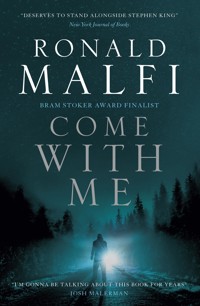
A masterful, heart-palpitating novel of small-town horror and psychological dread from a Bram Stoker nominee. "Malfi is a modern-day Algernon Blackwood... I'm gonna be talking about this book for years'' - JOSH MALERMAN, author of Bird Box Aaron Decker's life changes one December morning when his wife Allison is killed. Haunted by her absence—and her ghost—Aaron goes through her belongings, where he finds a receipt for a motel room in another part of the country. Piloted by grief and an increasing sense of curiosity, Aaron embarks on a journey to discover what Allison had been doing in the weeks prior to her death. Yet Aaron is unprepared to discover the dark secrets Allison kept, the death and horror that make up the tapestry of her hidden life. And with each dark secret revealed, Aaron becomes more and more consumed by his obsession to learn the terrifying truth about the woman who had been his wife, even if it puts his own life at risk.
Das E-Book können Sie in Legimi-Apps oder einer beliebigen App lesen, die das folgende Format unterstützen:
Veröffentlichungsjahr: 2021
Ähnliche


















Contents
Cover
Title Page
Leave us a Review
Copyright
Dedication
Part One: Headlight Ghosts
Chapter One
Chapter Two
Chapter Three
Chapter Four
Part Two: The Floating World
Chapter Five
Chapter Six
Chapter Seven
Chapter Eight
Chapter Nine
Chapter Ten
Chapter Eleven
Part Three: The Other You
Chapter Twelve
Chapter Thirteen
Chapter Fourteen
Part Four: The Missing Circle
Chapter Fifteen
Chapter Sixteen
Chapter Seventeen
Chapter Eighteen
Chapter Nineteen
Author’s Note
Acknowledgements
About the Author
“There’s such an assurance of narrative voice here, it’s easy to call Malfi a modern-day Algernon Blackwood. Mystery and mystique, yes, but the real wonder is how well it’s done. I’m gonna be talking about this book for years.”
Josh Malerman, New York Times bestselling author of Bird Box
“This is what it is to be transported: you might think you’re on solid ground, but Come with Me is a story that will carry you, inescapably, into the uncanny, the horrific.”
Andrew Pyper, author of The Residence
“Shines as both a nightmare journey of shadows and secrets, and a poignant testimony to love and loss. I read it in a single day because I had no other choice: it’s that damn good.”
Richard Chizmar, author of Gwendy’s Button Box
“A must-read for fans of Stephen King. Come with Me is so damn good, truly chilling and suspenseful, yet also hauntingly nuanced.”
Christopher Golden, author of Ararat
“Come with Me is Malfi’s masterwork – a haunting, heartbreaking novel about grief and secrets. Utterly engrossing and terrifying. Highly recommended!”
Brian Keene, author of The Rising
“An exploration into grief, and into the dark secrets within a seemingly perfect marriage. Part mystery, part ghost story, Come with Me chimes with rare beauty and page-turning brilliance. I surrendered to it completely.”
Rio Youers, author of Lola on Fire
LEAVE US A REVIEW
We hope you enjoy this book – if you did we would really appreciate it if you can write a short review. Your ratings really make a difference for the authors, helping the books you love reach more people.
You can rate this book, or leave a short review here:
Amazon.com,
Amazon.co.uk,
Goodreads,
Barnes & Noble,
Waterstones,
or your preferred retailer.
Come with Me
Print edition ISBN: 9781789097375
E-book edition ISBN: 9781789097382
Published by Titan Books
A division of Titan Publishing Group Ltd.
144 Southwark Street, London SE1 0UP
www.titanbooks.com
First edition July 2021
10 9 8 7 6 5 4 3 2 1
© Ronald Malfi 2021 All rights reserved.
Ronald Malfi asserts the moral right to be identified as the author of this work.
This is a work of fiction. All of the characters, organizations, and events portrayed in this novel are either products of the author’s imagination or are used fictitiously.
No part of this publication may be reproduced, stored in a retrieval system, or transmitted, in any form or by any means without the prior written permission of the publisher, nor be otherwise circulated in any form of binding or cover other than that in which it is published and without a similar condition being imposed on the subsequent purchaser.
A CIP catalogue record for this title is available from the British Library.
For Wendi Winters
May 25, 1953 – June 28, 2018
PART ONE
HEADLIGHT GHOSTS
CHAPTER ONE
1
Every marriage has its secrets. I understand this, Allison. I get it. Secrets are what allow us to cling to our individual selves while also being one half of a matrimonial whole, and can be as vital as breathing. Fleeting desires, errant daydreams—private things reserved for just one person, the keeper of those secrets, the attendant at the door of the vault. The small secrets are easy to keep hidden—easier, say, than the big secrets, the whoppers, the infidelities and closet addictions that, like some underwater beastie that must ultimately ascend to the surface for a gasp of air, don’t remain secrets forever.
I began the process of learning your secret, Allison, something like three months after your death. I call it a “process” because, much like a haunting, it did not reveal itself to me all at once, but rather as a gradual widening and clarity of circumstance. That’s just like you, too, Allison—layers of depth upon depth that require effort, require work, to piece together. There had never been anything surface level about you, and the secret that, like reverse origami, I unfolded after your death was no different. It’s possible, had I had my wits about me, I would have put the pieces together more quickly. Give me credit, okay? But as it was, I spent those first few months after your death in a sort of hypnagogic trance. You see, part of me had blinked out of existence right along with you—another consequence of the marital union—and what was left in the aftermath only retained the barest essence of a human being.
A cardboard box wrapped in packing tape on our front porch. So commonplace a way to have a piece of your dead wife’s hidden life come to light. And I’ll admit this right from the start, just so there is no confusing the issue later: I am not proud of where my mind went. Not at first. Something the casual observer may have overlooked… but I was your husband, not someone snatching a glimpse of your life through a window. And just like that, the aperture had opened. And then it widened. And then it widened some more.
I’m of the opinion that when it comes to secrets, there is no end to what we don’t know about a person. Even the person who sleeps next to us and shares our lives.
2
It was your darkness that made me fall in love with you, Allison. Darkness of depth, I mean. The way we can peer down a narrow little hole and have our vision robbed by the mesmeric distance of it all. The never-ending-ness of it. You were pretty, yes, but it was the unconventional predatory aura that clung to you—those deep flashes, like flares shot up into the night, that I would sometimes glimpse behind your eyes—that slowly drew me in. Your dark, caustic smile that hinted at some secret knowledge. The cruel way you gnawed at your fingernails, and how, on our first few dates, there were always specks of chartreuse nail polish sparkling along your lower lip. Some grand mystery in the form of a person.
I first glimpsed you alone on a johnboat at the mouth of Deep Creek, where the creek opens up into the bay. You were sitting there with your head down, a dark silhouette, getting drenched in the middle of a springtime downpour. I watched you from beneath the awning of the marina’s snack bar, curious about this lone figure bobbing along the choppy waters in the storm. Admittedly, I didn’t even know you were female at first—the distance between us, confused by the rain, made you look like an indistinguishable, immovable lump, sorry to say. I started to formulate a story about you, and how you ended up floating out there in the rain on that boat—that maybe you were contemplating suicide after suffering a broken heart… or maybe you were already dead, a casualty of a jealous lover, who had propped your body upright on that boat before casting you out toward the bay.
The scenario only grew increasingly more peculiar when three figures emerged from the water around you, slick as seals in their black wetsuits, and climbed into the boat with you. Only then did you move—a slight tilt of your head, perhaps to posit a question or to extend an order. One of the wetsuited fellows engaged the outboard motor and the johnboat carved a wide arc around the channel of the creek. When it stopped again, farther away from me, I watched as the wetsuits dropped over the side of the boat and vanished again beneath the turbulent, storm-churned surface of the water. You remained curled there in the rain, a dark semicolon rocking on the waves, your head down as if scrutinizing something life-changing in your lap.
The boat ultimately dropped you off at the marina before vanishing into the rainy mist. You had on an army-green slicker, your dark and shiny hair pulled back into a soaking-wet ponytail. Your face was pale, unblemished, almost boyish. You carried a notebook and a camera in a see-through waterproof bag.
I watched you from across the sparse floor of the marina’s snack bar as you took up a table far from me, ordered a coffee (black, no sugar), and began scribbling furiously in your notebook. For the next twenty minutes, I alternated between reading a Japanese-language edition of a Haruki Murakami novel and watching you. Finally, when I had summoned enough courage to approach, you didn’t even look up at me as you said, “We were searching for a dead body.”
This statement—a lie, you would later confess; you were out with divers from the Naval Academy examining oyster beds for an article you were writing for a local newspaper—rendered me speechless. And when you did look up at me, I could see that this had been your intention all along. To render me speechless; to knock me off kilter. And that was when I thought for the first time, Who is this girl?
So, in that regard, I can hardly blame you for your darkness. I can hardly claim that I was caught unawares by this most recent development. Not completely. I had been forewarned by the first thing you had ever said to me, the first words out of your mouth to a tall, gangly stranger with reading glasses and a chunky, tattered Japanese paperback in his hands. A lie meant as a joke that edged on darkness.
Who is this girl?
After your death, and after five years of what I would consider a pretty goddamn good marriage, I found myself asking that very same question all over again.
3
No one thinks when they first meet a person that there is some cosmic clock counting down the years, months, weeks, days, hours, minutes, seconds until you will stop knowing each other. It doesn’t occur to most people when you meet the person with whom you wish to spend the rest of your life that, at some point, one of you will leave. Sure, everyone knows this on a practical level—everyone dies, no one lives forever—but no one looks their spouse in the eye on the night of their wedding and actually hears the ticking of that clock. Its sound is buried far beneath the flash and glamour of what we think our futures hold for us. But it’s there; don’t be fooled. It ticks for all of us.
You—Allison, my wife—died on an unseasonably warm and rather peaceable December morning, all things considered. At the time of your death, I was most likely wrapping your Christmas present, wistfully ignorant that you were hemorrhaging blood onto a scuffed linoleum floor. I was still in bed when you left the house that morning, awake but with my eyes closed against the bright sheet of daylight pressed against the bedroom windows. I ran a hand along your side of the bed as I stirred. The sheets were cold.
“Hey,” you said, bustling into the bedroom. “Did I wake you?”
“No, I need to get up. Where are you going?”
You were wearing a scarlet beret, ringlets of inky black hair corkscrewing down both sides of your face, and a houndstooth topcoat that looked like it might be too warm for such a pleasant and mild December morning.
“Harbor Plaza,” you said, hunting around the top of the dresser for something. “I need to pick up a few things. We’re going to the Marshalls’ tonight for that cookie-exchange thing.”
“Ah, that’s right.”
We would not be going to the Marshalls’.
“If I can find my damn keys, that is…”
“Check the mystic pedestal,” I suggested.
You tucked a tress of hair behind one ear as you crossed the bedroom and vanished into our walk-in closet. A few years ago and on a whim, you had returned home from a garage sale with a two-foot-tall marble pedestal. I had helped you drag it out of the car and up three flights of stairs—Lord knows how you managed to get it into the car on your own—and, after a time, it had somehow taken up permanent residence in our bedroom closet. It served no purpose other than to attract, inexplicably, random items thought lost from around our townhome with all the force and mystery of a black hole.
You returned from the closet dangling the keys from one hand. “Did you put them there?”
I shook my head.
“Well,” you said, “that sufficiently creeps me out. There’s no way I left them in there on that thing.”
“All hail the mystic pedestal.”
You smiled at me, standing there at the foot of the bed in your scarlet beret and topcoat. Something was on your mind—I could sense its urgency in you, desperate to come into the light of day. Something had been on your mind for a while lately. It had risen up like an invisible pillar between us. Over the past month or so you had grown distant toward me, had begun to close in on yourself. My attempts at drawing whatever it was out of you had been met with denial—everything was fine, you were just under a lot of stress at work, this too shall pass. But I knew better. I knew you better.
“Come with me,” you said.
I rolled over and looked at the clock on your nightstand. It was a quarter after eight. “Too early for me,” I confessed, spilling back onto my mound of pillows. Beyond the windows, I could see what looked like a hawk wheeling against a sky the color of bone. “Besides, I wanna try and get some work done.”
“Are you sure? We can get breakfast at the Rooster.”
Normally, I’d kill for a plate of French toast from the Fat Rooster Café—two slices of artesian bread as thick as Bibles, a dusting of powdered sugar, maple syrup as dense and rich as tree sap. Yet the prospect of negotiating around a throng of last-minute Christmas shoppers overrode any desire I had for French toast.
“Vile temptress,” I said, “but I’ll have to opt out, love.”
“Suit yourself.” You came to the bed and kissed the top of my head the way a mother would a sick child. “There’s coffee downstairs.”
“You’re a peach.”
“I thought I was a vile temptress?”
“Malleable persona. It’s part of your charm.”
“Oh, it’s true,” you said, and left the room.
It was the last time you and I would have a conversation, Allison. The next time I would see you would be in the county morgue, your body laid out on a steel table with a plain white sheet tucked up to your collarbone, an index card placed discreetly over the bullet hole in your skull. And, of course, I can still hear you saying it, over and over, like a curse or maybe a prayer: Come with me. Some may say that our destinies are etched in stone from the moment of our births, but I don’t believe that. I think that life is what you make of it and the choices are yours. Free will asserts that we all must live with the consequences of our actions… which is why it torments me to close my eyes and hear you say it, even though it’s only now just inside my head, Come with me, as if the more I think of it the closer I may be to cracking the code to all of space and time and finding a way to slip behind the bulwark of it all, the window dressing and beams and girders that make up the tangible world, and escape with you into that enigmatic, floating sea. Just go. Because my presence with you on that morning, had I gone, may have changed the outcome of what happened.
Some attack of urgency ushered me out of the bed soon after you’d gone. It was like ghost hands leveraging me up and off the mattress, forcing me into the approximation of a sitting position. I climbed out of bed and stood there in a daze until the vestige of that sensation fled from me. Running my hands through my hair, I went to the closet and shut off the light. You were always leaving that light on, Allison. All the goddamn time.
Rubbing the sleep from my eyes, I went to the windows that looked down on our uncomplicated little spot in the world—the fishhook that was Arlette Street, the parade of townhomes the uniform color of sawdust, the brown hills beyond bristling with the barren, skeletal lightning bolts of trees. I watched you come out of the house and wave to Greg Holmes, out for his morning jog in his headband and gray sweatshirt with the dark armpit stains. You said something that made him laugh before he chugged onward toward the four-way intersection at the end of our development. I watched you get into the Subaru (what you’d always referred to as the Sube), crank over the engine, and pull out of the driveway. Overhead, my friend the hawk was still there, describing pinwheels against the backdrop of silver clouds behind which the morning sun struggled to poke through. I watched the taillights of the Sube flash as you changed gears. Watched you snap your seatbelt into place (you always did this once you were in the street and never while you were still in the driveway, as if wearing your seatbelt made it impossible to drive in reverse). I watched you adjust your beret in the rearview mirror before you drove away. I watched all of these simple contrivances—things I had observed you to do innumerable times before—without so much as an inkling that all the while, that great and terrible cosmic clock was winding down, tick, tick, tick, mercilessly close to coming to a full stop on our time together in this life.
4
That article that the Herald did on you? Reporter of the Year? For your Christmas gift, I had it laminated and inserted into a polished wooden plaque so you could hang it on the wall of our shared home office. You were always too modest for such showmanship, but I was proud of you. There was the photo of you on the front page of the Community section, an enlarged version of the one that usually accompanied your byline. You look sly and dark in that photo; that unassuming pink scarf-thing you’re wearing around your neck does nothing to cloak your depth. You’d received the honor for your work with teenage girls interested in journalism, offering them space within your column to speak their mind about important issues. These were girls mostly from broken homes, girls who worked part-time while also attending school to help their parents—usually a single mother—pay the bills. For the most part, they did not live in the middle-class neighborhoods the Herald serviced, but that didn’t stop you from seeking these girls out and lending them a voice. You’d been touched by the gesture when they presented you with the honor at that banquet dinner at the Chesapeake Club, but then confided in me on the drive home (and after quite a few gin and tonics, if we’re being honest) that the money spent on the banquet could have been put to better use helping those very girls for whom you’d received accolades for helping. You also said reporters were by their very nature supposed to report the stories, not be the stories.
“Unless sometimes they are,” I’d told you.
After you left the house that morning, I dug out some wrapping paper from the hall closet and swaddled the plaque in chintzy Santa Claus and reindeer foil. I stuck a festive red bow on one corner. Voilà!
It was no secret to either one of us where we hid each other’s gifts. Hell, it was very nearly a game of temptation, wasn’t it? Ours was a modest-sized townhome but that walk-in closet off the master bedroom was enormous. All my clothes and personal belongings neatly filed away on my side of the closet, all your stuff strewn and cluttered and heaped on your side of the closet. Christ, Allison, we were the original Odd Couple, weren’t we? Our stuff appeared caught in some perpetual standoff, like cowboys facing each other at opposite ends of a dusty dirt road.
I always kept your gifts in my (faux) alligator-hide footlocker, which I’d humped around with me since my days at the University of Maryland. You always hid mine away inside your hope chest, which you kept shoved beneath a rack of what you called your “office clothes” and looked for all the world like a child’s coffin.
I knelt down before my footlocker, lifted the latch, and prised it open amidst a chorus of squealing hinges. As always, the smell of old books and gym socks slapped me in the face. This was the case no matter how many pine-scented air fresheners I dumped in there. Among my old high-school yearbooks, some academic texts, and a few boxed-up novel manuscripts I’d written in longhand on yellow legal pads while still in college (all of them terrible), there were a few wrapped Christmas gifts for you already in there. I moved them aside and made room for the newly wrapped plaque.
I shut the footlocker’s lid, grunted as I rose to my feet, and was about to head out of the closet when I noticed something peculiar. At some point, Allison, you had put a lock on the lid of your hope chest. A metal clasp and eyelet with a padlock running through it. It was possible you had done this some time ago, but I was only noticing it now. Something about it struck me not only as odd, but caused a flicker of disquiet to come alive in the pit of my stomach. People put locks on things when they want to keep them safe. People put locks on things when they don’t want other people to see what they’re hiding inside.
I tugged on the lock. It was sturdy. I couldn’t tell how new it was just from looking at it.
Probably got me one hell of a Christmas gift this year, I told myself, though this didn’t help settle the disquiet that had risen in me at the sight of that lock.
Ignorant to the fact that, by this time, the trajectory of my life had already been wholly and irrevocably altered, I went downstairs, clicked on the television, then poured myself a large mug of coffee in the kitchen. It had cooled in the pot, so I popped it in the microwave then stepped out onto the back deck for a cigarette while it reheated. Although the day was abnormally warm, the overcast sky looked ready to dump some snow. While I smoked—I did this whenever you were out of the house; you abhorred me smoking—I searched the sky for the hawk I’d spotted twice earlier, but the fellow was nowhere in sight. Somewhere in the distance, probably out by the highway, I could hear police sirens. Closer, a dog barked incessantly into the gray late morning.
When I went back inside, I realized that at least some of the sirens I had been hearing were coming from the TV. I retrieved my coffee from the microwave then stood looking over the counter at the image on the television screen. And, for a moment, I wasn’t able to reconcile what I was looking at. In a way, it was like hearing my own voice coming out of a tape recorder—familiar yet momentarily unidentifiable. But then I realized what I was looking at: Harbor Plaza, the outdoor strip mall out by the highway, with its tidy row of shops now partially concealed behind the flashing rack-lights of several police cruisers. Superimposed at the bottom of the screen were the words ACTIVE SHOOTER.
I set my coffee on the counter before I could drop it to the floor. The TV remote was on the counter, so I grabbed it and thumbed the volume louder.
“…where police have shut down the road until they are able to gain control of the situation, where, as we’ve been reporting, a man opened fire less than twenty minutes ago in the Ease of Whimsy boutique here at Harbor Plaza…”
The image on the screen changed. A different angle of the Harbor Plaza shopping center, I could see police cars blocking the entrance to the parking lot. There was an ambulance in the background. A snarl of traffic was being redirected by police waving flares. Switching to a third angle, I could see people being speedily escorted by police from the Fat Rooster Café with their hands on their heads. I recognized none of them.
It was always a scavenger hunt to locate my cell phone, but somehow I managed to find it right there beside the coffeemaker. I dialed your number, Allison. It rang six times before it went to voicemail. In the time it took, my body had exuded a staggering amount of sweat and my scalp had gone prickly. I felt like a piece of uranium radiating poison into the atmosphere. I disconnected the call and immediately called you back. Again: six rings, then straight to voicemail.
There’s probably too much going on for you to stop and answer your phone, I told myself. Maybe you even lost it in all the commotion. It was a mantra I repeated over and over to myself as I got in my Civic and sped down Arlette Street toward the highway. There was a ridiculous amount of traffic, which I attributed to the police blocking off the roads surrounding Harbor Plaza. I sat, unmoving, behind a Chevy Equinox with its blinker flashing and a bumper sticker that said KEEP EARTH CLEAN, IT’S NOT URANUS for what felt like a decade. I was no longer a glowing rod of uranium, but rather had transmogrified into some amphibious thing, clammy with perspiration, fingers joined together by a translucent connectivity of webbing as I clutched the steering wheel.
“Fuck it.”
I spun the wheel and tore across the rumble strip at the shoulder of the road, thump-thump-thump-thump-thump, loose change in the cup holder rattling, a half-empty bottle of spring water jouncing in the passenger-side foot well. Car horns blared at me. I hit redial on my cell phone and the Bluetooth automatically engaged the car’s stereo. The ringing of your cell phone caused the speakers to crackle. Six rings then straight to voicemail. Your perfunctory prompt to leave a message. For the first time in five years of marriage and thousands of times calling your cell phone, I noticed you don’t say your name—just a cursory order to leave a message.
None of those people hurrying out of the Fat Rooster with their hands on their heads were answering cell phones. Maybe the police won’t let them.
I bypassed the highway exit and instead took the winding back road through a small subdivision. At the end of the road, just as I approached the plaza’s intersection, another knot of traffic brought me to a sudden halt.
“Come on, Allison,” I said, redialing your number. Ringing and voicemail. Ringing and voicemail. “Answer the damn phone.”
It’s not like you always answered your phone when I called. I often got your voicemail when I tried to reach you. This was no different.
Up ahead, I could see the lights of the police cars reflected in the shop windows on the far side of the street. Two uniformed officers were rerouting traffic, cars trundling over the grassy shoulders and redirecting themselves. Cars passed by me, heading in the direction from which they’d just come, moving with the cautious, halting crawl of someone who was lost. There was a 7-Eleven gas station to my left, a small collection of people standing out by the pumps observing the situation. I spun my wheel and hopped the curb, scraping the undercarriage, until I was in the gas station’s parking area. I jumped out of my car and jogged toward the mob of people, calling, “What’s going on? What’s going on?”
“Some guy shot up the strip mall,” said a woman. She looked stricken, like someone forcefully roused from a nightmare.
“He’s dead, he’s dead,” said a tall man wearing a blue turban. He had a great white moustache that curled to points on either side. He had his cell phone to one ear, a finger screwed into the other.
“Who?” someone else said.
“The shooter, I think,” said the man in the turban. “Wait, wait…” He uncorked his finger from his ear and pistoned it above his head. He began speaking into the phone in a language I did not understand.
My cell phone still clutched in one hand, I proceeded to run toward the two police officers directing traffic at the intersection. One of them saw me and shouted something at me but I didn’t understand. It felt like bees were swarming around inside my head. Only when the officer came out of the intersection and approached me at a quick clip, one hand held up at me in a stop-running-you-idiot gesture, did I pause halfway across the road.
“Get back!” he yelled.
I uttered something about my wife.
“You’re going to get hit,” he yelled, motioning toward the confusion of traffic that was trying to reroute in my direction.
I jumped backward onto the curb. From here, I could see the parking lot of the plaza. People were clustered together by the First National Bank. I headed in that direction, vaguely aware that someone—probably that cop in the middle of the street—was once again shouting at me. A truck screeched to a stop as I hurried across the road toward the plaza, the shiny chrome of its bumper mere inches from me. The driver laid on his horn and shouted something while I was simultaneously startled by the sudden whirring of helicopter rotors directly overhead. The thing appeared out of nowhere and cut low as it circled around the plaza, over the street, the nearby trees, the baseball field and firehouse on the opposite side of the road, then back again.
People sat on metal benches outside the bank and stood like herded cattle at the farthest point of the parking lot. Most of them were on cell phones, including a teenage girl who sobbed uncontrollably as she held her iPhone to one ear. I passed through them like a ghost, gripping dark-haired women by their shoulders to turn them around so I could see if one of them was you, Allison. None were. I shoved my way through the mob until I could see a shimmer of broken glass collected on the sidewalk outside the boutique. There were cops and paramedics everywhere. I saw some news trucks and cameras out there, too. Overhead, the helicopter made another pass. I tried to advance up the sidewalk toward the boutique, but another police officer—a woman with striking green eyes and a no-bullshit expression—shoved me back with a hand on my sternum.
“I’m looking for my wife,” I said, and held up my cell phone as if it was some verification required for admission. “Her name’s Allison Decker.”
“Sir, you’ll have to stand over there with the others.”
“She’s wearing a red beret,” I said.
The cop’s stern expression did not change when she grabbed me around the forearm and led me back toward the crowd. My whole body felt weightless; this police officer could have lifted me over her head with one hand, had she wanted to.
“Listen to me,” she said, once we’d reached the outskirts of the parking lot. “See the fire station?”
I’d seen it a million times, of course, but I followed her gaze across the street to where the Harbor Volunteer Fire Department’s two-bay brick building stood among a corral of fir trees. Like a dummy, I nodded my head.
“Go there,” said the cop.
“But my wife—”
“You need to go there. It’s a rally point. Do you understand?”
I didn’t—it was as if she were speaking gibberish—but I felt myself nodding my head.
“What’s your name, sir?”
“Aaron,” I managed. “Aaron Decker. My wife is Allison. She’s wearing a red beret.” Because how many goddamn red berets were out here bobbing around in some suburban Maryland parking lot?
“Go across the street and wait, Mr. Decker.”
Still nodding like an imbecile, I backed away from her until my shoulders struck a van parked alongside the curb. I turned and saw a face in the van’s window—a young girl, maybe eight or nine, staring right at me. The fear in her eyes was unmistakable. I glanced around again at the crowd of people, their faces filled with equal parts terror, grief, shock, confusion. One woman was clutching a small boy to her hip, tears streaking down her face. A man in a puffy green jacket kept touching a small cut on his forehead then looking at his bloodied fingertips with incomprehension, a robot programmed to execute some repetitive motion.
When there was a break in the traffic, I hustled across the street toward the fire station. Both bay doors were open. Folding chairs had been set out, many of them occupied by people who had presumably been instructed to do just as I had by the police—come here and… what? Wait?
It occurred to me that you might be here now, Allison. Like me, some no-nonsense police officer may have directed you to come here and wait for the proverbial smoke to clear. That was possible, wasn’t it? I dialed your cell phone again as I maneuvered through the crowd inside the fire station looking for you. I saw that other people were doing the same—nearly everyone had a phone to their ear. The difference was, these people were all talking to someone on the other end of the line. Me? Six rings and then voicemail.
A woman with a clipboard came over to me and asked my name. I gave it to her, then told her I was looking for my wife. I gave her your name. She consulted her clipboard then looked up at me with a solemn expression. My wife was not on her list.
“What does that mean?” I asked.
“It means she isn’t here.”
“What does that mean?”
“We’re just gathering information, Mr. Decker. We’re trying to make sure people find who they’re looking for as quickly as possible.”
“My wife. I’m looking for my wife. She won’t answer her phone.”
“There’s a lot going on at the moment,” she said, as if by way of explanation.
“Could you tell me what exactly happened?”
“I don’t exactly know,” said the woman. She was middle-aged, overweight, a frizz of dyed red hair like a helmet encapsulating her head. But her eyes were sympathetic. “A man started shooting at people in one of those stores.”
“Someone said he’s dead.”
“I believe so.”
“Who else? Was anyone else hurt?”
She touched my arm. My whole body was shaking, and I thought maybe she could feel it. “We’re just trying to piece everything together right now, Mr. Decker. In the meantime, you could have a seat. It’s best if you sit down. I can bring you some water or maybe a coffee.”
“I don’t want anything.”
“You should sit down.”
I found an empty folding chair beside a large metal trashcan. I sat down and stared at the assortment of Styrofoam garbage in the can. In my lap, my cell phone’s screen went dark. I didn’t dial your number again, not just then, but instead I focused all my attention on it, willing it to come alive, to vibrate and chime with your specific ringtone (birds chirping), for your name to fill the screen, for you to reach out to me and let me know that you were safe somewhere close by, that you had decided to go to the Annapolis mall instead of the plaza, and you were only now hearing about what happened, and shit, so sorry for all the missed calls, but you’d left your cell phone in the car.
An ambulance peeled down the road, sirens blaring. People stopped and watched it go. I bolted out of my chair and wandered toward the street. The fire station was too claustrophobic; I needed fresh air. The mild December afternoon had grown cold beneath the cloud cover, but I didn’t care. I shivered, hugging myself, then looked at the sky. Goddamn if the hawk wasn’t back, spinning those lazy circles against the low-slung clouds. Only now, from this proximity, I could see it wasn’t a hawk at all, but some large carrion bird waiting to feast on something dead or dying on the ground below.
5
By two-thirty, most of the people who had gathered at the fire station had gone. Those who remained looked like zombies, like the last kids picked for dodge ball; there was a contagious scurviness about them that prompted me to keep my distance and refuse eye contact. The crowds across the street had dispersed as well, with the exception of the police and the news crews. The road was still closed.
Still at the fire station, I sat in my chair holding a paper cup of lukewarm coffee. Police officers would periodically come in and converse in hushed voices with the woman holding the clipboard. I recognized one of the officers as the green-eyed, stern-faced woman who had instructed me to come here and wait. The rally point, she’d called it. No one here was rallying. Two minutes earlier, a woman in jeans and a fur-collared jacket had been led away howling. Before that, a guy in a turtleneck had passed out.
I lost count of how many times I called your cell phone. A part of me wanted to just get up, go to the 7-Eleven for my car, and drive home. Chances were good you’d be there waiting for me. I would have bet money on it. Yet something kept me rooted to this uncomfortable metal folding chair.
The green-eyed, stern-faced officer spoke to the woman with the clipboard. The woman with the clipboard regarded her list of names, tracing down the list with a blunt white finger. Then they both looked up and surveyed the remaining population in the firehouse. I was staring straight at them when they both directed their stares at me.
“Aaron Decker,” said the officer as she approached. Her face was still stern, but there was something else there now, too. Something I thought might border on compassion.
“Yes,” I said, and rose up from the chair.
“I’m sorry to have to tell you this,” she said.
And you, of course, Allison, know exactly what she said.
CHAPTER TWO
1
When someone dies of natural causes, the mourning can be a private affair. When they die the way you did, Allison, we’re forced to share our grief publicly, at least for a little while. For days after the shooting, I couldn’t turn on the news without hearing your name, seeing your face, listening to recounts of what transpired in that little boutique. The Herald had provided a photo of you to other media outlets, and that was the one that kept popping up—you in that ridiculous pink scarf.
Around the time you had said Come with me that morning, a twenty-three-year-old sociopath named Robert James Vols woke up in his parents’ basement. He ingested a bowl or two of Frosted Mini-Wheats (according to the coroner’s report), played Fortnite, then shot his sleeping parents in the head at point-blank range with a 9mm Smith & Wesson. The pistol, owned by Robert Vols’s father, had been legally purchased, and was kept in a lockbox in their bedroom closet. The key to the lockbox was in the top drawer of the nightstand. I guess it was a no-brainer. After the slayings, Vols left the house in his parents’ Mercedes. He did so with the pistol tucked into the waistband of his jeans and a hooded fleece pullover concealing it from sight. According to police, he drove straight out to the Harbor Plaza and parked the Mercedes right in front of the Ease of Whimsy boutique, where his ex-girlfriend worked. He entered the boutique with the hood of his pullover up, his hands in his pockets. He stopped and asked another clerk if his ex-girlfriend was working that morning, although he must have known this, because he had parked next to her car, a black Toyota Camry. This clerk—one of the survivors—said Vols’s ex-girlfriend was in the backroom. Vols thanked the clerk, and began to meander around the store, feigning interest in the various sundry items the eclectic little boutique had to offer. He peered at his reflection in ornamental mirrors, shook snow globes, poked a finger at bamboo wind chimes, left fingerprints along the stem of a champagne flute. Minutes later, when his ex-girlfriend appeared, Vols walked up to her and shot her in the face. He then turned and proceeded to fire randomly throughout the store. Three more people were killed, including you, Allison. The clerk who survived—a young girl who, I fear, will be forever traumatized by this event—later told me that you were the only person who rushed toward the gunman at the sound of gunfire. She said she saw you shouting at him, waving your hands, and rapidly approaching him. She said it looked like you were trying to confuse and disorient him to buy everyone else some time to get out of the shop. Maybe it worked; several shoppers managed to escape the store during the melee. It also got you killed, though, Allison; the shooter paused for perhaps a second or two, but it wasn’t long enough for you to strike him, disarm him, or just get the fuck out of the way. He shot you once in the head, and you went down. He then put the gun in his own mouth and pulled the trigger, abruptly ending the madness.
There was a candlelight vigil held for the victims and their families in downtown Annapolis. I did not attend, but I saw some footage of it on the news: Main Street a somber tributary of people flowing toward Church Circle, a sea of black armbands and slender white candles tipped in a flicker of dancing light like wands capable of magic. There was a celebration of your life held at the Maryland Hall for Creative Arts, where a large poster of your face was set on an easel in the main hall and bordered in a heart-shaped wreath of flowers. I did not attend that service, either.
My sister Trayci came to stay with me for just over a week. She was a rock during the funeral and fussed about the house in that same fastidious, workmanlike way Mom had done when we were kids. Trayci was three years older than me but possessed the spirit and the sheer determination to outlive me by two decades, if she wanted. She’d aged in the time since our last visit, however, which was maybe a year or so ago (too long), and there were now brash streaks of silver in her sandy hair, and the lines that bracketed her mouth had deepened. As she swept crumbs from the kitchen table, manipulated the TV remote, held her glass of Cabernet by the stem, I found myself hypnotized by her hands. Somewhere over the course of this life, Trayci had begun to wear the hands of our mother—thin, precise, cautious fingers, and a soft creping of the skin on the backs of her hands that somehow made them look both fragile and sturdy at the same time. Our mother long dead and our father, the playboy, living in Europe, Trayci was all the family I had left. She permitted herself one good cry—for me, I suppose, but for you too, Allison; she’d always loved you—and then she swiped at her eyes, cleared her throat, and got down to business. She answered the door when people stopped by to drop off food or pay their respects. I was in the mood to greet no one, and remained, for the most part, on the back deck of our townhome despite the rapidly plummeting temperatures. Twice it snowed while I was out there, and Trayci appeared, dusted the snowflakes from my hair and my eyelashes, then draped a coat around my shoulders. Sometimes she’d bring me hot cocoa.
Reporters came to the house. Trayci kept them at bay, shooing them from our property the way you’d try to scare off a pack of stray dogs by making loud noises. Had she owned a flare gun she would have discharged bright spangles of light at them, I had no doubt. My cell phone became a portal through which news anchors, political aides, NRA representatives and all species of carrion birds could clamber out, rattle their dusty black wings and unspool their hectic, pitiless platitudes into my ear. On the rare occasion when I inadvertently answered one of these calls, the hunger and eagerness in the creature’s nearly human voice left me feeling violated. I stopped answering my phone altogether. When the battery eventually ran dead, I let it stay dead. Good riddance.
The sensation of you simultaneously having fled from me and yet seeping into my pores invaded my brain, blurred my sight. There was a presence in the house now. I would catch a whiff of your Tommy Girl perfume in the upstairs hallway. I would glimpse movement in the periphery of my vision, but whenever I looked, there was nothing there. In bed, I’d be sliding toward sleep only to feel your lips brush my forehead, just as they did on the morning you died. The hopeful and hallucinatory mind of the aggrieved, perhaps, although I began to wonder if there wasn’t some echo of you that persisted in this house—the dark stain of you, and the life that had been cut short. One evening, after climbing out of the shower, I glanced up at the steamed-over bathroom mirror to find a partial impression on the glass, as if you’d glided in here and pressed your face to the fogged-up mirror. I could make out all the details of you. This shook me, weakened something vital and upright inside me, and I had to brace myself against the wall to keep from collapsing. Had you come in here and done this while I showered? Some leftover piece of you? I went out into our bedroom, walked out onto the landing, my mind frantic and irrational and feeling as if it were speedily unraveling. Was I expecting to find you out here? Back in the bedroom, there were damp footprints stamped along the carpet, moving in a semicircle around the bed. I cried out, an anguished, grief-stricken mewl, and then realized they were my own footprints. I returned to the bathroom, only to find the image of you already faded from the mirror. I felt like I had missed something important, and that the missing of it brought about some irrevocable tragedy. As if we needed more tragedy. It was then that I wept, my hands planted on either side of the sink, my flushed and hot face staring down into the unblinking eye of the sink drain. I saw a flash of white light down there at the bottom of the drain, an impossible wink of white illumination, there and then gone. And in that moment, I heard—or thought I heard—a disembodied voice, distant yet clear as day, issue straight up from the drain: “Who’s there? Is someone there?”
I jerked away from the sink, my skin prickling as if some spirit had reached across the void of infinite space and prodded me with an icy finger at the base of my spine. Steeling myself, I peered back down the drain, and saw that it was nothing but an unremarkable black hole once again.
I was losing my mind without you, Allison. Because that’s what grief does. It robs us of a part of ourselves, leaving a crater of madness and irrationality in its place.
What if I’d gone with you that day? What difference would that have made? My mind was a never-ending loop of alternate possibilities, of planes of existence where I had gone with you and you had survived, those other versions of us still living happily in the blissful ignorance of my grief. Twice, the stupid Alexa speaker, unprompted, began playing your eighties playlist, Patty Smyth belting out “The Warrior.” I let it play, and I cried.
For the first time, I was glad you had no living relatives, Allison. Your father had been killed in an automobile accident when you were just a child, your older sister had drowned when you were both teenagers, and your mother had drunk herself to death years ago, probably due to the misery that had plagued your family. Perhaps this lost family was the reason for the darkness that reflected out of you—that bottomless, lightless cavern that was your soul. You rarely talked about them, although I got the sense that you missed them, or at least longed for the familiarity and warmth of a family beyond just the two of us. It sounds terrible, but in the days following your death I was grateful they were gone, because I didn’t think I would have been able to make those phone calls. I wouldn’t have been able to have those people in our house, where I’d be forced to interact with them and address their grief and move about like a real live man. I just couldn’t have done it.
In my dreams, I was constantly pursuing you through abandoned houses, searching for you among junked cars and through mazes of wire fencing. Dogs wearing the faces of people barked at me. I saw you standing at a bus stop in the rain, then climbing into a boat with men in balaclavas. I saw you in the window of the Fat Rooster Café, eating a plate of French toast, but when I went inside, all the tables were empty, except that your half-eaten breakfast was still there in front of a vacant chair. You sometimes stood at the far end of Arlette Street, in the center of the four-way intersection like a crossing guard, and I would run to you, slow as molasses (as they say), my bare feet pulling hot, tacky strands of asphalt up from the ground, as if I were running through a tar pit. I never reached you in time—you always vanished before I got there. Sometimes, you’d run so fast you’d leave Allison-shaped streaks of light in your wake. Fast and transitory as a comet. And as bad as these nightmares were, it was worse to awaken and realize you were gone in real life.
The cardboard box containing the first clue to your secret life arrived at the house a few days after your funeral. Some UPS guy had placed it on the porch, anonymous as a shoulder-bump in a crowded room. Trayci retrieved the parcel and set it on the kitchen counter, among Tupperware containers full of cookies from our neighbors and a thickening stockpile of mail. I glanced at the box just once and saw that it had been sent from your office at the Herald. Presumably, one of your colleagues had cleared out your desk, fitting the culmination of your entire career at the newspaper in a box just slightly larger than a basketball. I contemplated not opening it, and just carrying it directly to the fire pit in the yard where I would set it ablaze. Things would have been drastically different had I done that, of course. But that’s not what I did. As days turned into weeks, I just simply ignored it, letting it sit there on the counter. Forgotten.
2
“Why don’t you come back with me?” Trayci suggested on the night before she was to return home. “Owen’s been traveling but the kids would love to have you.”
“I don’t think so, Tray. Not just yet.”
“Well, I don’t like you being alone right now.”
“You can’t babysit me forever.”
“It’s still so soon. I wish I could stay longer.”
“You’ve stayed long enough. And I appreciate it. But you’ve got your own family.”
“You are my family, Aaron. My little brother.”
I summoned an exhausted smile. “Thank you, Trayci.”
“Christ, Aaron. What a mess, huh?” For the briefest moment, her face softened. But then she firmed up once more. She hugged me, and when she spoke again, it was with the tone someone might use to talk sense into someone with a mental deficiency. “You listen to me, Aaron. If you change your mind, there’s always a spare bedroom back at my place. You know that. For as long as you need it.”
“I do,” I told her. “I know that.”
“Also, I’ve made you a list of daily chores.”
“Are you kidding?”
“Just some things you should remember to do—like eat, take a shower, breathe. Take it slow when you need to. Those kinds of things. I’ve stuck it to the fridge.”
“You’re just like Mom, you know that?” We were on the couch having some beers. I looked at her hands and felt a strange, sad nostalgia for my childhood.
“I just want to make sure you do things. And don’t just stay bottled up in this house. At least go for a walk around the neighborhood or something. Get some sun on your face. Anything, Aaron. Keep active. Grief hates a moving target.”
“Don’t worry, Tray. I promise to eat and breathe. All those things. Anyway, I’ve got my work. I’ll just get back to work.”
And that’s what I did, Allison. For a while, anyway. At the time of your death, I was halfway through translating a Japanese-language Shunsuke Ogawa novel to English. You know I’ve always been passionate about my work, but I now clung to this Ogawa novel like someone drowning would cling to a life-preserver. On our first date, when I told you I translated Japanese novels for a living, you thought I was pulling your leg. I may have possessed the industrious quality of a career academic, but you were not expecting a white guy from suburban Maryland to have majored in Japanese literature, to have practiced writing Japanese characters with the care and dedication of a surgeon, to delight in the mental acrobatics of finding commonality in two languages where no etymological kinship exists. “It’s the alien quality of it all that makes it so beautiful,” I had explained to you. Strangely, you’d understood.
I found it also to be a temporary respite from my grief. There is a switch that is flipped when I work, a notable alteration in my brain when I’m operating in Japanese. In the days and weeks after your death, I found that this other-Aaron had somehow remained fully intact and unencumbered in the aftermath of your death while the real-life Aaron—your husband; me—had transitioned into a vaporous phantom who slept for maybe a fitful two hours a night and who wandered the darkened corridors of our townhome like something that should be rattling chains and frightening children. I retreated wholly into other-Aaron during this time. I let him take over. Not just while working, but also in my daily routines. Other-Aaron showered for me, ate for me, went to the grocery store, paid the bills. He donned a windbreaker and slippers so he could traverse the length of our driveway to retrieve the mail. He was thinking and functioning in Japanese, a stranger untouched by the grief that had crippled me, wholly unfamiliar with all of grief’s alien aspects and human weaknesses.
Given the situation, I could have asked my editor for an extension on the delivery date of the Ogawa manuscript, but I didn’t need one; other-Aaron was fully focused, on target, operating like some mechanical thing engineered to do so. Occasionally, I would peer out of other-Aaron’s eyes—formerly my eyes—and marvel at the industrious, goal-oriented, emotionless fervor of him. Look at this strange and beautiful thing that had been living inside me all these years. I had no idea he was capable of such majesty.
In the breaks between working on the manuscript and hiding in the shadow of other-Aaron, I began on occasion to peek out into the light of day. Check my email, power my cell phone back on, flip on the television in the living room. I did these things gradually, almost skittishly, tempered by the expectation of you waltzing in the door at any minute, as if this had all been some horrible nightmare. As if to go back to some simulacrum of normality might summon you back into existence. But I was a wreck; indeed, there was something fawnlike about me in these moments, terrified of anything and everything, trembling and vulnerable to the slightest shift in mood. I had avoided the outside world in the weeks after your death, heartsick at the prospect of hearing your name or seeing your face on a screen somewhere. But this is America, where tragedies roll along on a conveyor belt with alacrity. One is boxed up and shipped out just as another arrives, shiny and new, on the showroom floor. Soon, the shooting at Harbor Plaza was replaced with a news story about the search for a missing teenage girl somewhere down south. Sore ga jinsei da—such is life.
3
It was other-Aaron who opened the cardboard box that had been sent from your office. I wouldn’t have had the courage. Inside were notepads containing your illegible scrawl; a mug that said stop the presses: we’re out of coffee; the nameplate from your desk; random office supplies; some folders containing various people’s contact information; a stress ball that looked disconcertingly like a cow’s udder; and various other work-related paraphernalia.
The folded sheet of paper was nearly overlooked, Allison. Other-Aaron picked it up, unfolded it, and would have cast it aside had I not been peering out of his—my—eyes at that very moment. It was a receipt for a two-night stay at The Valentine Motel in a place called Chester, North Carolina, back in late October. According to the receipt, you paid not with a credit card but with cash.




