


1,19 €
Mehr erfahren.
- Herausgeber: Dean Street Press
- Kategorie: Krimi
- Sprache: Englisch
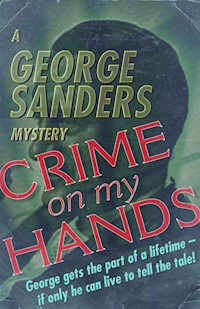
Description George Sanders is frankly bored. Lionized the world over as the ultimate on-screen bounder, cad and ladies' man, he is in serious danger of becoming typecast as the particular kind of gentleman sleuth seen in his long-running film series The Saint and The Falcon. George would actually be quite happy at home, tinkering with his inventions, but if he must act he wants something he can sink his teeth into. Now George's firecracker agent, Melva, has got him the part of a lifetime - the lead in a hot new western, starring alongside screen goddess Carla Folsom. But when shooting begins, someone takes the term a little too literally, and the dead body of an extra is found. That wasn't in the script - and neither was George's unwilling debut as real-life private detective, only this time he's also been cast as the police's number one suspect. Before you can shout 'action' the game is afoot and the victims start to mount up, with George remaining just one step ahead of the law until the final denouement. Crime on My Hands, the debut George Sanders mystery, is a suspenseful and highly entertaining backstage crime novel, which perfectly captures the wit and charm of George Sanders, especially his quintessentially polished, sardonic dialogue. Anyone who loves All Abour Eve, or enjoys golden age crime fiction, will find Crime on My Hands irresistible. Praise 'Lots of fun and a sufficiency of bloodshed.' New York Times 'Fast and funny.' Saturday Review 'A highly readable thriller with laughs on the side.' New York Herald-Tribune
Das E-Book können Sie in Legimi-Apps oder einer beliebigen App lesen, die das folgende Format unterstützen:
Veröffentlichungsjahr: 2015
Ähnliche



















George SandersCrime on My Hands
George Sanders is frankly bored.
Lionized the world over as the ultimate on-screen bounder, cad and ladies’ man, he is in serious danger of becoming typecast as the particular kind of gentleman sleuth seen in his long-running film series The Saint and The Falcon. George would actually be quite happy at home, tinkering with his inventions, but if he must act he wants something he can sink his teeth into.
Now George’s firecracker agent, Melva, has got him the part of a lifetime – the lead in a hot new western, starring alongside screen goddess Carla Folsom. But when shooting begins, someone takes the term a little too literally, and the dead body of an extra is found. That wasn’t in the script – and neither was George’s unwilling debut as real-life private detective, only this time he’s also been cast as the police’s number one suspect. Before you can shout ‘action’ the game is afoot and the victims start to mount up, with George remaining just one step ahead of the law until the final denouement.
Crime on My Hands, the debut George Sanders mystery, is a suspenseful and highly entertaining backstage crime novel, which perfectly captures the wit and charm of George Sanders, especially his quintessentially polished, sardonic dialogue. Anyone who loves All About Eve, or enjoys golden age crime fiction, will find Crime on My Hands irresistible.
Praise for Crime on My Hands
‘Lots of fun and a sufficiency of bloodshed.’NEW YORK TIMES
‘Fast and funny.’SATURDAY REVIEW
‘A highly readable thriller with laughs on the side.’NEW YORK HERALD-TRIBUNE
TO CRAIG RICE, WITHOUT WHOM THIS BOOK WOULD NOT BE POSSIBLE
G.S.
Foreword
It’s possible the early 1940’s witnessed the origins of the modern celebrity novel. Celeb-fiction has since evolved into a genre which comes and goes, enjoying only a middling reputation and frequently a shelf-life shorter than yoghurt. But English actor George Sanders’s two novels, Crime on My Hands (1944) and Stranger At Home (1946), have justifiably enduring appeal. They are not only fine examples of forties crime fiction in their own right, but also highly effective evocations of Sanders’ sardonic, charming and intelligent screen persona which, if his later autobiography Memoirs of a Professional Cad is any guide, had more than a hint of the real man behind it. To allude to a more recent generic literary trend, the novels could almost be termed authorized fan fiction.
They had an important precursor in Gypsy Rose Lee’s The G-String Murders (1941), a classic backstage murder mystery novel starring the author herself as narrator, and which was later made into the entertaining if slightly sanitized film Lady of Burlesque starring Barbara Stanwyck. (Stanwyck also gets a mention in Crime on My Hands, completing a circle of connections.) Opinion remains divided on the extent to which The G-String Murders was penned by Lee alone, or was predominantly the work of the popular crime writer Craig Rice – most accept however that both were important contributors to the finished novel.
The same publishers, Simon and Schuster, released Sanders’ novels a few years later. This might suggest the publishers were taking the lead, especially as Craig Rice was again the chosen co-author. But Sanders and Rice were not strangers: the latter happened to have written screenplays for two films in which Sanders had recently starred, so there were other possible sources for their literary collaboration. There is certainly forensic evidence that Sanders contributed substantially to Crime on My Hands. The dedication could only have come from Sanders’ polished pen, and there are numerous flashes of trademark wit in the dialogue (a style Sanders later brought to a consummate shine in his memoirs). The novel is strewn with facts about his life, such as his second career as an inventor, and his cooking ability (a mouthwatering pie is prepared by our hero in the course of the novel).
The story also reflects Sanders’ own situation at the time. Crime on my Hands is a clever spoof on Sander’s screen persona, and his fears (probably only too genuine) that he was becoming typecast as a screen detective in the mould of The Saint or The Falcon, two roles he’d had recently played in long-running film series. Ironically, though the novel starts with him getting a big break and a starring role in a Western, after shooting commences he is thrown headlong into a murder case. In order to clear himself he is obliged to don his metaphorical gabardine mac once more, but this time as Sanders playing Sanders.
Stranger At Home, the second novel, takes us into darker territory: a view of southern California recognizable to readers of Raymond Chandler. It is a place of wealth and glamour, but also graft and exploitation. This time the accomplished novelist Leigh Brackett was chosen for the project and, though she abandons the first-person narrator of the earlier novel, in Michael Vickers she created a disturbingly convincing alter-ego for Sanders. It’s a nuanced role Sanders would have played wonderfully well on screen, had it ever landed there. As it was, Sanders had to content himself with ‘a fling at printer’s ink’, to use his own words. It is a honour and a pleasure to re-publish both novels, and we hope you enjoy them.
THE PUBLISHERS
Chapter One
I squatted, rather than knelt, over the prostrate form. I tried to concentrate on how, and at whose hand, she had met her death. Try as I might, though, I couldn’t make myself believe that the wretched girl was dead, and I simply didn’t give a damn who had killed her, or why.
For one thing, the heat was getting me. I was wet with sweat and my newest shirt was a six-dollar wreck. My Shetland jacket was going to be a headache for my cleaner. And I was so tired that I squinted against the bright light.
But I had to solve the case, and the important clue was in plain sight. That is, it was in plain sight to my trained eyes. The ordinary person would have missed it. The ordinary detective would have missed it, for that matter. But I, George Sanders, would see it.
I examined the body.
Her name was Velda Manning, and she was a spy. She had been killed because she had been careless. Served her jolly well right. She wasn’t very likeable, anyway. She had always been too certain of her great beauty, too proud of her legs, which she flaunted at the drop of a glance.
They were on parade, even in death. She lay on her side, with her right leg extended. The left leg was bent at the knee, and the inside of her thigh was visible to an almost embarrassing extent. It seemed to me that several yards of bare, pink flesh was exposed to distract me from the more important problem of the body as a whole.
I lifted my eyes to the wound, a red mass in her chest. Her strutting breasts were not bare, but they gave that impression. As a matter of fact, she was much more exciting as a corpse than she had been as a flaunted body.
The clue. Oh yes, the clue. Must find it. Where was the damned thing? It had to be here. Ordinary eyes might pass it by, but not mine – not mine. This keen and flashing glance should seek it out, this incisive brain weigh its significance, this objective voice reveal all. And then, maybe this splendid body could go dunk itself in its private pool.
If only that bare leg were covered. I pulled her skirt down, and went back to the search. My legs were beginning to ache, just behind the knees.
I stood up. “The clue is missing,” I said.
I knelt, later, on my spread handkerchief, to examine the body. I wasn’t going to get my trousers dirty just because a weak-minded girl had got herself rubbed out. I wanted to wear those trousers to Melva’s party that night. Provided I ever got away from this silly case.
Her leg was bare, but I was inured by now. This time I would find the clue. Now it peeked out from under the hem of her dress, a tiny gleam of brass that other eyes would have missed. Not mine.
I picked it up. I turned it between my long, tapering fingers. I frowned. This was a hard problem. She had been stabbed. Why, then, was this cartridge here? Had she been shot, too? A thorough person, this unknown murderer. Perhaps she had been strangled also.
Yes, there were the marks on her lovely throat. I hadn’t seen them before, but t once my keen mind took hold of the problem, my eyes knew where to look. I touched the bruises on her throat with thoughtful fingers. Silk had been used, a silk scarf.
I looked at the cartridge again. I stood up. “This,” I said furiously, “is the wrong caliber!”
When I took up my examination again, I stood in a half crouch. It was a more comfortable position than the others, and it didn’t wrinkle my pants.
The leg. Hello, leg. I was beginning to know every pore of that leg, every vein in delicate tracery just under the skin. That tiny hollow, just above her dimpled knee, the gentle curve of her calf.
Now, the wound. She had been shot. She had died instantly. Next, she had been stabbed, and then strangled. These latter acts were to cover the fact of shooting, to confuse George Sanders, detective. But they did not. The murderer had left his signature, just as surely as if he had written a confession and pinned it to the bulging bosom of her dress. This cartridge, this thing of metal, was an odd size, an unusual make. Only one man would have such a gun as fired this shell.
That man was the last person you would suspect, but as his name flashed in my head, the pattern was clear. His philanthropies, his kindliness, were a cloak for his true nature: spy, traitor, murderer.
I turned the cartridge thoughtfully between my clever fingers. I looked at it as if it were a crystal ball in which I saw the face and name of death.
“Channing Wommack,” I mused aloud. “He is the man.”
I stood quite still for a few seconds before I nudged the recumbent form with my gleaming shoe. “You can get up now, Pat,” I said. “And pull your dress down.” I turned as Charlie ran over to shake my hand. He was almost maudlin, his round face flushed with satisfaction. “George, you were terrific. You were colossal.”
I shrugged my shoulders. ‘I’m thirsty and hot. Can’t somebody turn off those damned lights?” Charlie yelled at the roof, “Save ’em!” and an electrician threw the master switch to plunge the sound stage into welcome gloom.
“If we don’t get an Oscar for this one, there ain’t no justice,” Charlie said. He said it after each picture he directed. Thus far both justice and the Academy Award Committee had remained blind. “You wanta see the rushes, George?”
“Frankly, no. I don’t care, somehow, after all those retakes.”
‘I’m going to fire that prop man,” Charlie said.
The prop man who had put the wrong cartridge under Pat’s dress had been married just the day before. He was a nice kid.
“Don’t fire him,” I said. “He’s tired. Send him home to get some sleep.”
Charlie leered, and I went away.
Melva was in her office, her secretary told me with a roll of pretty eyes. “That’s a lovely shirt, Mr. Sanders,” she added. I patted her blonde permanent and left her happy.
Melva’s green eyes had a gleam as they surveyed me.
“Just the type,” she said. “You’re a handsome beast, Georgie.”
“Hello, Red.”
She scowled, looking like a piqued pixie. “Don’t call me Red!”
“Don’t call me Georgie!”
“You look so boyish in that fancy shirt, George. Sit down and rest your big feet. I want to talk to you.”
She leaned back in her swivel chair, so that the sunlight through the Venetian blind slatted her green blouse with gold.
“Why don’t you take a whirl at acting?” I asked. “A screen test in that outfit, with that pattern of shadows, would get you a fat contract.”
“I’d rather be your agent, dear,” she said. “Besides, my nose is too snub. I’d never be able to look down it, and if I can’t look down my nose the way you do, I don’t want to act.”
“I don’t look down my nose at people.”
“It’s your most valuable asset, George. Tell me about Die by Night.”
I crossed my legs and lighted a cigarette. I slid my case across her desk. “This will be a shock to you. I suggest that you light up. If there’s a drink in the place, I suggest that, too.”
She sat up, leaning slightly forward. Concern darkened her eyes. “What’s the matter, Georgie?”
“Red!”
‘I’m sorry, George. I won’t do it again. Tell.”
“I have played my last role as a detective.”
She didn’t scream and wring her hands. She just sat, calm and unruffled. “Why?” she asked.
‘I’m tired of detectives. And don’t wisecrack about that. Here is why. The vogue is for the light-hearted playboy with a butter-heart and iridium brain to become involved in a murder situation. Now the audience knows that I, as that amateur detective, am going to triumph in the end. There’s no suspense, except of an intellectual nature. The melodramatic action seeks to cover that dramatic fault, but I know suspense is lacking. I can’t be whole-hearted about it when I know that I will win, no matter what.”
“And so?” she prompted.
“And so the character I portray becomes a rather stereotyped person who is slightly bored with it all. I’m not acting any more; I’m just walking through the part.”
“That boredom,” she pointed out, “is what got you a two hundred and fifty dollar raise in Die by Night.”
“Two hundred and twenty-five,” I corrected, “after you take your cut.”
She shrugged. “You don’t think I’m going to give it back to you? I got you the raise.”
“And that dress. I keep you well. What will you do when I quit acting? I have enough money to go along my own merry way. But I’m your only important client. Is this streamlined furniture paid for?”
“You paid for it,” she said. “But you’re not going to quit acting.”
“No?”
“No. You can’t. It’s part of you. I propose to see that you get paid for doing something you’d do anyway.”
‘I’m not playing detectives any more, and I’m so typed I doubt if anyone wants me to play anything else.”
“I do, George,” she said. “I want you to play Hilary Weston.”
“Fat chance,” I scoffed.
“Fat contract,” she substituted. “You’ll put the government back in the black with your new salary.”
She was serious. My mouth didn’t exactly drop open, but it felt open. I’d have given my right profile to play Hilary Weston, and here she was dropping it in my lap. I had no idea I had even been considered for the star part in Seven Dreams. It was a part for which any actor would give his press clippings. That gentleman pirate who took frontiers in his stride, who left behind him a peopled wilderness and tax collectors, whose philosophy contributed so much to our present civilization, whose loves were as torrid as they were numberless, and who coffined his enemies while stealing their wives and fortunes – he had the color and variety of greatness. And I, George Sanders, was to play him.
“Are you kidding?” I asked Melva.
“It’s all over but the signing,” she assured me. “I didn’t mention it to you before because I wanted to surprise you. Did I?”
“More than if you’d stuck a knife in my throat. Baby, you’re wonderful. I am going to kiss you.”
“Only in front of Fred, George. You leave Monday on location. Riegleman wants to get the desert shots out of the way while we have good weather. If you want the part.”
“I’ll do it for nothing, if necessary.”
She was horrified. “Shut your big mouth!” She took up her telephone. “Get me Riegleman,” she said. Presently she repeated, “Mr. Riegleman, please. This is Melva Lonigan... Mr. Riegleman?... Fine, how are you?... That’s good. Look, I talked to George before he left. He’s taking a vacation, you know... Left an hour ago. He’s been working hard and he needs that vacation. He wants me to thank you for the thought, and he realizes that it’s a good part.. All right, a great part.”
‘I’m working on an invention,” I muttered.
“Besides, he’s working on an invention that should make him a fortune. So I’m afraid he’d have to have a thousand dollars a week more than you offer.” (Inventions are my other hobby – G. Sanders.)
I came out of my chair to throttle her. She waved me back and listened for a moment.
“Well,” she said into the phone. “He was definite. And there’s no question, of course, that he’s worth even more than that. But I know you’ve got to stay inside your budget, and it’s an expensive picture. Still–… that’s fine, then. I can still catch him at Las Vegas and he’ll fly back on the six o’clock plane... Yes, he’ll be ready to leave Monday morning.”
She hung up and grinned at me. “That’s a hundred bucks more for baby each week.”
“That was idiotic,” I said. “He might have told you to go peddle your flesh elsewhere.”
“He didn’t, though. He came through. I should have asked for two thousand.”
“I’ll buy you a drink,” I said.
“Not in public. At least, not until after the six o’clock plane comes in.” She frowned. “Now why did I tell him you were leaving on a vacation? Suppose you couldn’t get a seat on the plane?”
“Then tell him I crawled back on my hands and knees over broken glass. I’d do it. I’m that tired of bending over corpses and looking deductive.”
I should have kept my mouth shut. If there are Fates watching us, whiplashing us at the end of their strings, I must have given my particular Fate an inspiration. For it was less than a week later that I was bending over a corpse again, in the blazing light of a malignant sun, searching for clues. But when I nudged that sprawled and bloody figure, it didn’t get up.
It was dead.
Chapter Two
By referring to the shooting script, I can recreate the scene almost exactly. It was the sequence in the picture where the wagon train was attacked by white thugs in Indian costume. The wagons had filed past the cameras as the sun rose over giant sand dunes. I, as Hilary Weston on a cream-colored Arabian gelding, had carried on my flirtation with Betsy Collins, screen wife of huge Hank Collins, my wagon boss, under his eyes, which narrowed with sullen speculation.
She, Carla Folsom, could wear her Mother Hubbard as if it were a black-net nightgown, and she was adequate in the part. Frank Lane, cast as her husband, could mutter in his beard with the best, and the morning had gone well. Riegleman was happy.
“It has life,” he told me, as we sat under umbrellas while the technical crew set up for the battle scene.
Carla gave me a dark-eyed look over the rim of her glass of Coca-Cola. “We played that scene,” she drawled, “like boy scouts rubbing sticks together, knowing that a flame would break out any moment.”
An extra came over to our exclusive little group, a tall, slightly stooped man of middle years. He sort of pinned Riegleman with flashing black eyes. “Mr. Riegleman,” he said, “I have not yet been told why I am here.”
Riegleman’s gloomy blue eyes scanned him as if he were a sand flea. “See Sammy,” he said, in his clipped voice. “He’ll explain it.” As the man hesitated, Riegleman said sharply, “Well? We’re busy here.”
The man went back to the lounging group of bearded men and pioneer women.
Riegleman turned his long face to me. “I want you to keep one point in mind, George. During this battle, you will not quite forget the romance which is brewing between you and Carla. Hilary Weston was that kind of a guy. Even in the most critical situation, he never forgot what he had on the fire. So you will direct Frank to his post of danger, not only because he is your best man, but also because you hope he’ll get an arrow through his heart and save you the trouble of killing him later. I don’t want you to forget that, even when the lead wagon is set afire.” Riegleman paused, caught his breath, and said, “You understand, George.”
I nodded. “Something comparable to the situation in the Bible when David sent Bathsheba’s spouse into battle hoping he’d be killed.”
“Now we’re stealing scenes from the Bible,” Curtis, the boss cameraman grunted.
“Not a bad source,” Riegleman said coldly. He added, “Besides, it’s in the public domain.”
Sammy came over, mopping sweat from his face.
“We’re ready, chief. I hope to God,” Sammy said fervently, “we don’t have to do retakes on this. I’ve lost ten pounds already this morning.”
Riegleman grinned at Sammy’s tubbiness. “If you lose fifty more, Sammy, I’ll make a matinee idol of you.”
Sammy patted his paunch. “I wouldn’t play such a dirty trick on my best friend.”
After a final check, we went into action. I rode back and forth before a camera, shouting orders, placing my men, forming the wagons into a circle. I gave Carla a long, calculating look, and sent Frank into the front line.
The marauders poured over a sand dune on calico ponies, and the air was scrambled with shots and shouts. They shot several hundred feet of film, with pseudo-redskins galloping idiotically around the circle of wagons, the grim pioneers potting away, with me firing my two Colts at random, but with uncanny accuracy.
Then, signal whistles broke through the din, and the battle was over. Cameras were moved, to record the retreat of the thwarted thugs, while we shot gay, blank charges into their dust cloud. I registered mild disappointment, in a close-up, that Frank was still among the living, flicked Carla another significant glance, and we knocked off for lunch.
Prop men gathered up the guns. Sammy himself took mine, as they were museum pieces. Corpses, scattered inside and out of the wagon circle, got to their feet and ambled over to the commissary. I washed my hands under a pressure tap and started for my chair, where somebody would bring me some lunch.
That was when I saw the body, sprawled realistically behind a wagon wheel, carbine beside it. Some overly-conscientious extra, I thought, who supposed that he had to play dead until he was carried off on a stretcher.
“Chow!” I called to him. “Comb the sand out of your beard, fella, and come after it.”
The figure didn’t move, and I knew that he was dead. The body had a look of death about it. It isn’t exactly describable, but my sensation was definite. I walked over for close examination.
I knelt over the body, thinking that some poor devil had suffered a heart attack. I tried to rouse him, even then not fully believing that my conviction was justified. I nudged him. He didn’t move, and the reason was there in plain sight: a small, blackened hole in his right temple.
I thought of the many times I had knelt so, before cameras, and of my scripted reactions. Here was death. Analysis was necessary, and sufficient, to determine the cause of death and to map an unerring path to the killer. But I didn’t react in that fashion. I felt helpless. This keen and flashing glance did not seek out the tell-tale token dropped in haste. There was no clue, and if there had been, this incisive brain would not have weighed its significance.
My thoughts were completely on the sad side. This man had hired out for fifteen dollars a day, so that he could pay his back rent, perhaps. It was a sad thing that he had met death here, accidentally.
It had to be accidental homicide. The carbines which had been fired with such effusion had been loaded with blank cartridges. Responsibility for this devolved finally on Sammy, but it was quite conceivable that, somehow, one of the cartridges had not been blank.
That it had found its way so exactly to a vital spot in one of the actors, rather than having been shot harmlessly over the head of balked bandits, was a long coincidence, but possible. I’ve collected on some of the four-legged ones.
I kept in mind, however, the possibility of murder, as I went for Riegleman. It would have been a good stage setting for murder, with the cavorting, the shooting, the hubbub of make-believe. Yes, an enemy could have drawn a bead on his victim and let him have it, with a good chance to escape later reckoning with the law.
But if that was the way it had happened, it was possible that the murderer had been photographed in the act. A battery of cameras had recorded the scene from various angles. I filed that thought away for future reference, too.
“I say,” I said to Riegleman, “come for a short stroll with me. We have a corpse to contend with.”
He put down his paper plate and fell into step. “I was afraid of something like this,” he muttered. “Too much sun, I suppose, for some guy with a hangover.”
“A bad combination, “ I agreed, steering him toward the fatal spot. “But it seldom shoots a man through the right temple.”
Riegleman halted. “My God!” he said, in stunned tones. “You’re kidding.”
‘I’m sorry. I wish I were.”
“But it’s impossible! All the guns were supposed to be loaded with blanks!”
“Apparently somebody improved on the script.”
“How in the hell,” he demanded, “will we ever find who fired the shot?”
“Someone in that moil of beards probably fired it,” I suggested. “But I’m not sure that determining who will be necessary, provided that we can prove it was accidental.”
“Prove it? Of course it was accidental. By the Gods,” he went on grimly, “if I can find out who was responsible for a loaded shell getting into a gun, I’ll have his hide.”
“First of all,” I said, “we’ll have to get the local authorities out here. It’s a matter for the sheriff and the coroner.”
“There goes my shooting schedule,” Riegleman groaned. “Well, let’s have a look at the poor guy.”
Riegleman scowled down in accusation at the corpse. This was a monkey wrench in the machinery. This meant delay, which in turn meant loss of money, which in turn was painful to him.
“Just a young fellow,” he said. “Too damned bad.”
“Do you know him?”
“Never saw him before. Maybe Sammy knows him.” He took a whistle from his pocket, blew it, and beckoned to Sammy, who was carrying two plates from the commissary.
Sammy gave the plates to a man near him. His gestures indicated that the plates were to be guarded to the death, if necessary. Then he approached us unhappily, sinking deep into the sand at each step. He said, “George, about your pistols–”, but fell quiet as the director waved a hand.
Riegleman indicated the body. “Do you know him?”
“Oh, God!” Sammy moaned. “He’s dead!”
“Don’t go psychic on us,” Riegleman snapped. “Who is he?”
“I don’t know. Maybe Paul will.”
“Get him!”
Sammy turned a white, round face upward at Riegleman. “Please, chief. I don’t feel so good. I’ve got to sit down somewhere.”
“I’ll go,” I said. “Who is Paul?”
“He’s the casting director.”
Paul looked as if he had just run three blocks to catch a Brooklyn bus in July. “My God,” he said. “What does that slave driver want now? I’m busier’n a tick at a horse show. Oh, well!” He came out of his trailer-office. “What gives?” he asked me.
“One of the extras got himself killed. We thought you might be able to identify him.”
“So that’s why we had one lunch left over? I thought at first Sammy maybe only took one. I’ve been checking the cast to see if we’re paying somebody who’s not here.”
“Did you find anyone missing?”
“Yeah. Guy named Herman Smith. Didn’t get his lunch. Showed up for work, turned in his slip okay. So I guess he’s it. What’d he do, get a horse hoof in his face?”
“He got a bullet in his head.”
“Yeah? Thought they shot only blanks.”
“That was my impression, too.”
We walked over to Riegleman. He stood some distance away from the body. Sammy was under a wagon near him.
“Well, we know who he is,” I told Riegleman.
“Yes, Mr. Riegleman,” Paul said eagerly.
“The chef informed me that we had an extra lunch, and I checked to see if somebody had turned in his work slip and then taken a powder. I watch that sort of thing very closely.”
Riegleman nodded shortly. “Will you take a look, Paul? I have sent for the police.”
Paul looked down at the bearded face. He frowned. He looked up at Riegleman, then back at the corpse. “I’ll be a son of a gun,” he said. “That ain’t Herman. I never saw this guy before.”
Chapter Three
Have you ever seen a group of youngsters rough housing each other? Remember how, if one falls unconscious from an accidental blow, they all stand aimlessly for a few moments staring blankly at the unlucky victim?
We did just that. We looked down at the nameless corpse as if we hadn’t seen it before. With a name, it would have been one of us, and our emotions would have been personalized. Nameless, it was a stranger in our midst, and we eyed it curiously, as Kentucky mountaineers were reputed to examine a well-dressed stranger. Was he just a visitor, or was he a revenuer? Riegleman showed resentment rather than any other emotion. His razor-thin mouth was a tight, angry line, and his hard blue eyes seemed to send out sparks of indignation. This was understandable, knowing Riegleman. A corpse – worst of all, a nameless corpse – was threatening his already tight shooting schedule.
Paul pushed a thin white hand through black hair and frowned at the unknown. His thoughts were fairly obvious. A “ringer” had slipped in on him, and Riegleman would want to know how it had been done. Paul’s thoughts were concerned with his job.
Sammy just gaped. If Sammy had thoughts at the moment, they slumbered.
I tried to analyze my own feelings. When Paul had said that one Herman Smith was missing, I had immediately begun to wonder why anyone should want to kill him. For I held to the possibility of murder. If it should prove to be accident, the matter was done. But if it were murder, there was need for thought and investigation, all necessarily based on his identity.
And here we had a stranger. A dead end for thought. You cannot find a motive for the murder of a completely anonymous person. You must know his habits, associates, and enough of his background to determine why his death was desirable to one or more persons. It would be possible for a murderer to kill with impunity as long as the corpse remained anonymous.
I became aware that Riegleman, Paul, and Sammy were looking at me. I gave them what has come to be known as my quizzical expression and said nothing, loudly.
“This is in your field, George, old boy,” Riegleman said.
I tapped a cigarette against my thumbnail, looked as disinterested as I could under the circumstances, and said, “Oh?”
“It’s a mystery,” Paul said. “That’s your dish.”
I didn’t like the way he said it. He was too eager to place a burden on me, too eager to overlook his particular responsibility.
“I was under the impression,” I said casually, “that the casting director was expected to be familiar with the extras.”
Paul flushed as Riegleman’s gaze swung to him. “It’s the beards,” he said apologetically to Riegleman. “You can’t expect anybody to tell ’em apart. This guy’s supposed to be Herman Smith, according to my records. Everybody else was checked off at lunch. If he’s somebody else, can I help it?”
Riegleman didn’t answer, and Paul flushed again. He flashed me a venomous glance and turned away.
Sammy made his single contribution to the investigation. “Hey,” he called from under his wagon refuge, “how about a social security card?”
“Of course,” Riegleman snapped, and knelt by the body.
“Uh-uh,” I said. “Mustn’t touch. Clues, you know.”
Not that there were any clues. At least, I couldn’t see any. How different this was from my screen plays. As The Saint, or The Falcon, I had been confronted many times with situations more baffling than this, and always I had penetrated brilliantly to the heart of the matter, seen a clue, reconstructed the situation and acted unerringly. But here was a nameless bearded corpse sprawled inside the circle of wagons on baking sand. There were no dropped collar buttons, no cartridges of an odd caliber, no telltale footprint with a worn heel, no glove lost in haste.
It seemed as if somebody had simply thrown away an old corpse he no longer needed.
I began to wish that we could throw it away too. If there was one object that we didn’t need, it was a corpse. Especially one with a beard, with no name, and with a spurious work slip.
I could almost hear wheels of thought spinning in Riegleman’s long skull as he glared down at the body. Seven Dreams was on a tight budget. He had planned to shoot these outdoor scenes in two or three days. An investigation into the death of this man would throw the shooting schedule off.
An investigation was under way even at that moment. The rest of the company, with an almost clairvoyant curiosity, was moving toward us in a closepacked, muttering group. I walked to meet them.
“Don’t come any closer!”
They stopped. I told them that a man was dead, and that they should stay away until called. “One of you may be able to identify him, but the police should look over the scene before we track it up. Please go back and make yourselves comfortable.”
They did, and I returned to Riegleman’s side. “I hope you don’t mind my taking charge that way,” I said.
He shrugged. “Sammy!” he snapped.
Sammy gave him a sidewise look from under the wagon.
“Sammy, you had charge of the ammunition in those carbines. Every cartridge was supposed to be blank. What have you to say?”
“What can I say?” Sammy replied. “Evidently at least one wasn’t blank. Is that my fault? Am I supposed to examine thousands of cartridges, one at a time?”
Riegleman seemed to drop that line of thought. “It seems strange,” he muttered, “that the shot should have gone so exactly to a vital spot. There’s an almost geometrical precision in that wound. Dead in the center of his temple.”
“It’s just a freak accident,” Paul said. “Like cyclones.”
Riegleman gave him a puzzled frown. “Cyclones?”
“Sure,” Paul went on. “I remember one that blew a farmhouse all to hell and gone, but picked up a basket of eggs and set it down a mile away without breaking an egg.”
“What are you talking about?” Riegleman demanded.




