


Erhalten Sie Zugang zu diesem und mehr als 300000 Büchern ab EUR 5,99 monatlich.
- Herausgeber: Corvus
- Kategorie: Krimi
- Serie: Stevens & Windermere
- Sprache: Englisch
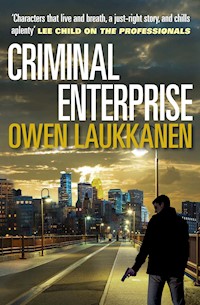
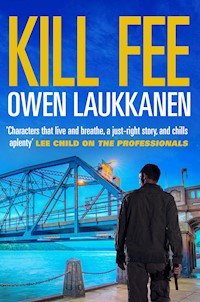
From the outside, Carter Tomlin's life looks perfect: a big house, a pretty wife, two kids - a St. Paul success story. But Tomlin has a secret. He's lost his job, the bills are mounting, and that perfect life is hanging by a thread. Desperate, he robs a bank. Then he robs another. As the red flags start to go up, FBI Special Agent Carla Windermere hones in on Tomlin from one direction, while Minnesota state investigator Kirk Stevens picks up the trail from another. The two cops haven't talked since their first case together, but that's all going to change very quickly. Because Carter Tomlin's decided he likes robbing banks. And it's not because of the money, not anymore. Tomlin has guns and a new taste for violence. And he's not quitting anytime soon...
Sie lesen das E-Book in den Legimi-Apps auf:
Seitenzahl: 458
Veröffentlichungsjahr: 2013
Das E-Book (TTS) können Sie hören im Abo „Legimi Premium” in Legimi-Apps auf:
Ähnliche















A graduate of the University of British Columbia’s creative writing program, Owen Laukkanen spent three years in the world of professional poker reporting before turning to fiction. He currently lives in Vancouver, where he’s hard at work on the third and fourth installments in the Stevens and Windermere series.
Praise for Owen Laukkanen:
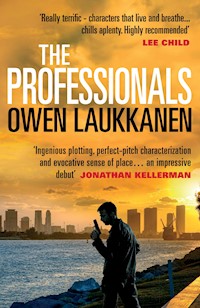
‘Really terrific – characters that live and breathe, a just-right story, and chills aplenty. Highly recommended’ Lee Child
‘A page-turning blend of classic suspense fiction and chillingly postmodern amorality. Ingenious plotting, perfect-pitch characterization and evocative sense of place combine to create an impressive debut’ Jonathan Kellerman
‘The Professionals is a high-octane adrenaline and gunpowder-fueled rocket ride across the country from Seattle to Miami to Detroit and points in-between. What is remarkable about Owen Laukkanen’s debut is how skillfully he makes the reader care for his characters on both sides of the law. An excellent first novel!’ C.J. Box
‘The Professionals grips you on page one and doesn’t let go until the last, satisfying page. Laukkanen provides plenty of twists along the way while developing a well-juggled array of complex and evolving characters’ Alafair Burke
‘Fasten your seat belts, Owen Laukkanen’s The Professionals is one heck of a wild ride. A first-class thriller by a terrific new voice’ John Lescroart
‘Smoothly written, with a slam-bang ending, The Professionals is a brutally beautiful piece of work’ John Sandford
‘A coiling plot, insightful characters, and a tale fraught with danger. What more could any thriller reader want? The Professionals has it all. It’s top-notch entertainment’ Steve Berry
‘A fast-moving debut thriller with enough twists to fill a pretzel bag... The characters are as much fun as the plot... Let’s hope Laukkanen writes more thrillers like this one’ Kirkus Reviews
‘Laukkanen’s clever debut, the first in a new crime thriller series, compares favorably to Scott Smith’s classic caper novel, A Simple Plan... the story’s breakneck pace will carry most readers along’ Publishers Weekly
First published in the United States in 2013 by G. P. Putnam’s Sons, a division of the Penguin group.
Published in e-book in 2013 and paperback in 2014 in Great Britain by Corvus, an imprint of Atlantic Books Ltd.
Copyright © Owen Laukkanen, 2013
The moral right of Owen Laukkanen to be identified as the author of this work has been asserted by him in accordance with the Copyright, Designs and Patents Act of 1988.
All rights reserved. No part of this publication may be reproduced, stored in a retrieval system, or transmitted in any form or by any means, electronic, mechanical, photocopying, recording, or otherwise, without the prior permission of both the copyright owner and the above publisher of this book.
This novel is entirely a work of fiction. The names, characters and incidents portrayed in it are the work of the author’s imagination. Any resemblance to actual persons, living or dead, events or localities, is entirely coincidental.
Book design by Katy Riegel
10 9 8 7 6 5 4 3 2 1
A CIP catalogue record for this book is available from the British Library.
Paperback ISBN: 978 1 78239 368 9 E-book ISBN: 978 1 78239 369 6
Printed in Great Britain.
Corvus An imprint of Atlantic Books Ltd Ormond House 26–27 Boswell Street London WC1N 3JZ
www.corvus-books.co.uk
For Line D’Onofiro, in loving memory
CONTENTS
1
2
3
4
5
6
7
8
9
10
11
12
13
14
15
16
17
18
19
20
21
22
23
24
25
26
27
28
29
30
31
32
33
34
35
36
37
38
39
40
41
42
43
44
45
46
47
48
49
50
51
52
53
54
55
56
57
58
59
60
61
62
63
64
65
66
67
68
69
70
71
72
73
74
75
76
77
78
79
80
81
82
83
84
85
86
87
88
89
90
91
92
93
94
95
96
97
98
99
100
101
102
103
104
105
106
107
108
109
110
111
112
113
114
115
116
117
118
119
120
121
122
123
124
125
126
127
128
129
130
131
132
133
134
135
136
137
ACKNOWLEDGMENTS
THEY CAME INTO the bank around one-thirty, a man and a woman. Both of them wore ski masks, and both carried guns. The teller was busy with a customer, the last of the lunchtime rush. She didn’t see them come in. She helped her customer cash his paycheck, and when she looked up, they were there.
Two of them. The man about six feet tall, the woman almost a full foot shorter. The woman carried a shotgun, sawed off and menacing, the man an assault rifle. Bank robbers. Just like in the movies.
They swept in to the middle of the bank before Larry, the big guard, could react from the door. The man fired a burst with his machine gun through the ceiling, and customers screamed and scattered. Larry half stood at the door, his hand on his radio. The woman pointed the shotgun at him. “On the ground.” Her voice was hard. “Don’t be a hero.”
The man with the rifle carried a duffel bag. He tossed it to his partner, who held her shotgun on Larry, waiting as he sunk, sheepish, to the floor. “Everybody on the ground,” the man said. “Whatever you’re thinking you’ll try, it’s not worth it.”
The customers hit the floor, all of them, ducking for cover in their suits and heels and nylons, hiding where they could behind countertops and in doorways. The teller snuck a glance at Cindy beside her. Cindy was shaking, staring hard at the man and his big machine gun, her hand on the silent alarm.
The man caught her gaze and walked over. “I said get down.” Cindy shook harder, tears in her eyes. The man hit her, hard, with the butt end of his rifle, and Cindy made a little grunt and went down. Sprawled out on the floor behind her station, her nose bloody, her breathing fast and panicked. She stared up at the teller, but she didn’t move.
Down the line of tellers, the woman was emptying the tills, filling her duffel bag with cash. The man with the machine gun turned, and the teller started to duck away. “Wait,” the man said. The teller flinched, stuck halfway between standing and kneeling. The gunman came closer. “Stand up.”
The teller obeyed. “Please don’t hurt me.”
The man studied her as his partner worked her way down the long row of tellers. He had blue eyes behind the mask, icy blue. Unnatural. He looked like he might be smiling, but there was no warmth in his eyes.
“I could kill you,” he said. He leveled the big gun at her chest, and she watched it, surreal. Felt her legs start to give, and reached for the counter to steady herself. “I could just pull the trigger,” he said. “It would be easy, wouldn’t it?”
She nodded.
He stared at her for another moment. His partner had reached Cindy’s station. The man gestured to Cindy’s till with the gun. “Open it.”
The teller obeyed.
The woman with the shotgun put the duffel bag on the counter, and the teller reached inside Cindy’s till and took out a stack of twenty-dollar bills. Mechanically, she started to count them. A reflex. “Don’t count the money,” the man told her. “Just put it in the bag.”
She cursed herself. Of course you don’t have to count it. She put the stack in the duffel bag and reached back into the till. Took out the last of the money.
“Good,” the man told her. “Now yours.” The teller crossed to her own till and started to empty it. The man walked to the middle of the lobby as she worked, swinging his machine gun on his hip, watching the customers on the floor. In the distance, the first sirens started to sound.
The woman with the shotgun watched the teller. “Hurry up.” There was nothing kind in her voice, nothing human. The teller kept her head down until she’d removed the last of the money from her till. Then she dared to look up.
“There’s no more,” she said.
The woman glanced in the till. Zipped the bag closed and turned back to the man. “Let’s go.” The man picked up the bag as the woman started for the door. The teller waited for the man to follow. He didn’t. He stared at the teller until she met his gaze. Then he leveled his gun at her chest again. He winked at her.
“Pow,” he said. Then he turned and walked out the door. The teller watched him until he disappeared into the sunlight. Then she sunk down beside Cindy, shaking and sobbing, her knees to her chest. She didn’t look up until the police arrived.
CARTER TOMLIN IGNORED the sirens in the distance as he walked, slow as he dared, to the Camry parked at the curb. Ahead of him, Tricia had the backseat door open and was sliding inside. Tomlin closed the last few feet of sidewalk and dropped the money bag in behind her, then slammed the door closed and climbed in the passenger seat as Dragan pulled away from the bank.
“Go slow,” Tomlin told him, twisting in his seat to watch the first police cars slam to a stop behind them. “We need to blend in.”
Tomlin sank low in his seat, sweating through his clothes. He pulled off his ski mask and rolled down the window, savoring the cool air as Dragan made for the highway.
Tricia peeled off her own ski mask. “Holy shit,” she said, her face flushed. “That was awesome.”
Outside, two more police cars sped past, their cherry bomb blinkers clearing a path down the wide street. Dragan pulled over with the rest of the traffic. Neither cop glanced in their direction.
When the police cars were gone, Dragan pulled out toward the highway. Made the Interstate on-ramp and did the speed limit up the west side of downtown Minneapolis, everything calm, just three everyday rubes in a midsize sedan.
In the backseat, Tricia unzipped the duffel bag. “Jackpot.” She looked up at Tomlin. Smiled at him, big. “Must be thirty grand, boss. And no dye packs.”
“Thirty grand,” Tomlin said. He was shaking.
DRAGAN TOOK the Washington Avenue exit and headed south into downtown Minneapolis. Drove into a pay parking garage a few blocks from the downtown core, and parked on the fourth level, between a black Jaguar sedan and a silver street-racer Civic. Tomlin climbed out of the Camry, and Tricia followed, dragging the duffel bag with her. “It’s heavy,” she said. “Thirty grand, easy.”
Tomlin took the bag from Tricia and opened it on the hood of the Camry. Peered in at the money and felt an electric thrill. Thirty grand, he thought. Easy money. He took out a stack of bills and handed them to Dragan. “Here’s a down payment,” he said. “Tricia will settle up when we get a count.”
Dragan thumbed through the bills. “Tomorrow,” he said.
Tricia kissed him. “Tomorrow, babe. Promise.”
Dragan glanced at the money again. “Thirty grand,” he said. “Rock and roll.” He kissed Tricia and climbed in the Civic. Backed out of the stall and drove off.
Tomlin unlocked the Jaguar. Stowed the money in the backseat while Tricia hid the guns in the trunk. Then he slid behind the wheel and fired up the engine and drove out of the garage with Tricia.
They took the Interstate east to downtown Saint Paul, Lowertown. Tomlin parked on the street in front of a squat office building and exhaled, long and smooth. He closed his eyes and inhaled. Exhaled again. Then he opened his eyes and tied his tie in the rearview mirror, fixed his hair. Reached in the backseat for his briefcase and glanced at Tricia. “You ready?”
She grinned. “Just waiting on you.”
They walked into the building, carrying the duffel bag with them. Took three flights of stairs and a featureless hallway and stopped in front of a frosted-glass door. Tomlin fumbled with the key, pushed the door open, and ushered Tricia inside.
Tricia waited until he’d locked the door behind them. Then she squealed, and her arms were around him. “We did it,” she said, squeezing him tight. “Didn’t I fucking tell you we would?”
Tomlin let her hug him. He could smell her shampoo, feel her warmth. “You told me,” he said. He nudged her away and walked to his inner office, where he unzipped the duffel bag and dumped the money onto his desk.
Tricia squealed again. “Look at that cash.”
Piles of bills—twenties, tens, some bigger, some smaller. Rumpled, well used, untraceable. And lots of it. Tricia hugged him again. Kissed his cheek. “Let’s count it.”
They counted. Tricia was close: thirty-two thousand and change. Fifteen each for Tomlin and Tricia. The rest a bonus for Dragan tomorrow. Tomlin shoved his share into the bottom drawer of his desk, locked the drawer closed. Tricia gathered her money and disappeared with it.
Tomlin sat down and turned on his computer. Fifteen grand, he thought, as the machine booted up. Not bad for a few hours’ work.
Tricia poked her head back into his office. She’d calmed her pixie pink hair and looked presentable again. Professional, even. “Don’t forget, you have a three o’clock with Mr. Cook.”
Tomlin frowned. “Cook.”
“The hypochondriac with estate-planning problems, remember?” She winked at him. “And your wife called. Wants you to pick up your Madeleine from dance.”
Tomlin inhaled deeply, then exhaled again, a regular guy now, the money and the guns forgotten. “Cook,” he said. “Dance class. I’m on it.”
TWO HOURS AFTER Carter Tomlin and his gang walked out of the First Minnesota branch in Stevens Square, Carla Windermere stood in the middle of the bank’s tiny lobby, surveying the now-chaotic crime scene. The thirty-two-year-old FBI Special Agent cut an unusual figure amid the confusion: tall and slender, dressed smartly in a white blouse and razor-crisp pantsuit, Windermere looked more like a TV news anchor than a successful investigator.
Her eyes, however, were a cop’s eyes. They were drawn tight and narrowed, calculating as she looked over the bank lobby.
The place was a mess. The whole building was packed full of law enforcement—mostly Minneapolis city cops, first responders—standing in corners and doorways, drinking coffee and bumming cigarettes, shooting the shit and getting in her way. Here and there, a plainclothes cop poked his nose into something—the fingerprints on the tellers’ counter, the bank manager’s office—steadfastly ignoring Windermere and the rest of the FBI investigators who’d taken over the scene.
Windermere looked around the bank, then out into the street. “Eat Street,” they called this place. A couple of miles of trendy restaurants a few minutes south of downtown Minneapolis and conveniently located near Interstates 94 and 35, two quick getaways for bank robbers with wheels.
Windermere caught the eye of a technician kneeling on the floor over a bunch of shell casings nearby.
“What’s up, Laurie?” she said, her voice still betraying the last vestiges of a southern accent. The accent had accompanied her from Mississippi to her first FBI posting in Miami; despite her best efforts, it had followed her north to Minnesota five years later. Along with her cool demeanor, and, she sometimes suspected, the color of her skin, it served only to reinforce her position as an outsider within the Bureau.
The tech didn’t look up. “Two-twenty-three Remingtons,” she said. “Probably an assault rifle. His partner had a sawed-off shotgun.”
Windermere ran her hand through her hair. “An assault rifle,” she said. “Shit.”
“Probably an AR-15.” Laurie looked up at Windermere, caught her blank expression. “It’s like an army M-16, but for personal use. Hunting, home defense.”
“Bank robberies.”
Laurie shrugged. “Hubby keeps one around. Says it’s for deer season. I figure he just likes to play army with the boys. Men and their guns, right?”
Windermere studied the shells and didn’t like what they told her. Most bank robbers were amateurs, impulsive degenerates, for the most part unarmed. The Bureau tended to catch up with their lot pretty quickly. Kept a high clearance rate. Today’s contestants, though, didn’t look quite so primitive. Assault rifles and sawed-off shotguns hardly ever meant amateur hour.
Windermere straightened again, and looked across the lobby to where the bank tellers stood huddled in the corner. She locked eyes with the youngest of the bunch, a pretty little twentysomething who kept looking at Windermere like she wanted to talk. Your witness, Windermere thought, and she started over.
The teller shrank like a scared kitten as Windermere approached. Not uncommon. Witnesses, suspects, cops, hardened criminals, male and female alike: They all tended to take a step backward when Windermere turned her gaze on them. Most of the time, she didn’t mind it. Most of the time, she let someone else coddle the wallflower witnesses. Focused her efforts on breaking down suspects.
No such luck today, though. Windermere forced a sympathetic smile and tried to look warm and fuzzy. “What’s your name, hon?”
The teller looked away. “Nicole.”
“Nicole,” said Windermere. “Okay. So what happened, Nicole?”
Nicole took a deep breath and wiped her eyes. “I don’t know,” she said. “They came in, the two of them. You probably know this stuff already.”
Windermere shook her head. “Tell me.”
“It was a man and a woman,” Nicole told her. “They came in with guns. He told everyone get down on the floor and Cindy and I didn’t, so he hit Cindy with his gun.”
Windermere glanced around the group of tellers and found Cindy, a middle-aged redhead with a black eye and an ice pack pressed to her forehead. Cindy gave her a weak smile.
“I thought he would hit me, but I couldn’t move,” said Nicole. “But he didn’t hit me. He just looked at me with these intense blue eyes. He said he could kill me and it would be easy.”
The teller exhaled. “I told him don’t hurt me,” she said. “Then he made me empty the tills into a big duffel bag. When I was done, he made like to shoot me.”
Windermere frowned. “What do you mean?”
“Aimed his gun at me and smiled, really creepy. ‘Pow,’ he said.”
“Pow.”
“Pow.” Nicole nodded. “Like he wanted me to know he could do it.”
“Probably just keeping you in line.” Windermere glanced at the front door, the street outside. “You see where they went when they walked out of here?”
The teller shook her head. “I was scared. I didn’t want to know.”
Windermere studied her. Okay, she thought. Good enough. Some creep with blue eyes and an AR-15 assault rifle. A woman with a sawed-off shotgun. A duffel bag full of money, and a power fetish. Windermere thanked the teller and turned back into the chaos. Someone, she thought, must have seen these guys leave.
IN CARTER TOMLIN’S WORLD, a man provided for his family.
He’d never considered himself a violent person. He wasn’t a drug addict or a gambler, didn’t cheat on his wife or his taxes. Until the layoff, he was a respectable man. A husband and a father and a decision-maker at the firm, a corner-office man on the executive track.
In Tomlin’s mind, real men dealt with adversity. They didn’t complain or talk about fairness. They didn’t take handouts; they solved their own problems. They provided.
He’d robbed his first bank a few months after the layoff. A Bank of America branch in Midway. He’d been waiting to talk to a loan officer. Hating himself, but needing something to help him keep up with the mortgage, the car payments. The groceries and the phone.
He left the bank without ever meeting the loan officer. Hurried into the Walmart next door and bought a clumsy disguise, then came back and shoved a hastily scribbled note into the teller’s hands, wondering what the hell he was doing as she emptied the till. Bugged out like a scared rabbit and walked with an envelope full of cash.
IT WAS HIS OWN FAULT, most of it. The mortgage, for sure. Tomlin had known deep inside that they couldn’t afford half of what the broker promised to lend him. The accountant in him had screamed when he’d signed the papers.
But how could he say no? The way Becca smiled when she talked about a Summit Avenue address, a beautiful Victorian dream home surrounded by trees and green space, away from the crush of the city. The way Heather and Maddy laughed as they chased each other around the picture-perfect front lawn. Bill Carver and Chuck Lawson had both taken the plunge, purchased homes for their families nearby. Now they came to work talking about riding lawn mowers and neighborhood cookouts, family trips out to the lakes.
This was what a man was supposed to do for his family. This was how life was supposed to turn out. A big house on a tree-lined street, happy kids and good neighbors, and hell, even a puppy. So what if it meant taking on a little debt? A mortgage was a fact of life. Home ownership was the American Dream. Of course, this was before the whole economy imploded. Before housing prices collapsed. Before the firm decided to downsize.
“I’ve given this company twenty good years,” he told Carver and Lawson on the day the guillotine dropped its blade. “Now you’re just going to kick me to the curb?”
“We’ve got a great package for you, Carter,” Lawson told him. “Very generous. A golden-parachute deal.”
“And we’re happy to provide a reference,” said Carver. “You’ve been a great employee here. This wasn’t an easy decision.”
He’d called the recruiter the next day. Met her in a swanky suburban office. She was about twenty-five, he figured. Her haircut looked like it cost more than his watch. She’d looked over his CV and then studied his face. “No offense,” she said, frowning. “My clients are paying me to cherry-pick the best.”
“Twenty years at one of the best firms in the state,” Tomlin said. “You don’t think I can cut it?”
The recruiter shrugged. “My clients make the rules. And they’re not looking to hire from the unemployment lines.”
“You think I’m not worth your time,” he said. “Because I’m laid off. So what the hell am I supposed to do?”
She shrugged again, and handed back his CV. “Maybe take a class?”
He’d forced himself to thank her and drove home, where he sat in his car in the driveway so long that Becca came out to see what was the matter. She sat in the passenger seat and held his hand. “We’ll sell the house,” she said. “The cars. Whatever it takes. We’ll get through this.”
He stared through the front windshield up at the house. It stared back as though mocking him. He counted six rooms with lights on, probably more in the back. All that wasted electricity. Money frittered away. “We’re underwater,” he told her. “We can’t sell.”
“The cars, anyway.”
“Resale on these things is criminal,” he said, shaking his head. “We’d be lucky to get pennies on the dollar.”
Becca squeezed his hand. “What about bankruptcy?”
She might as well have said suicide. “We’re not declaring bankruptcy,” Tomlin told her. “I’m solving this thing on my own.”
BECCA TOOK a maternity-leave position at the local middle school. “Just until you find work,” she told Tomlin. “Let me do my part.”
Tomlin fought her as long as he could. He’d sworn when they’d married she would never work again. But the firm’s severance money dwindled. Every month another chunk disappeared, to the mortgage and car payments and the rest. They switched to basic cable and canceled their cell phones. Didn’t eat out anymore, or go to the movies. Becca started to shop at the discount grocery store.
Finally, Tomlin gave in. “Just for the short term,” he told her. “Not forever.”
She came home after the first week exhausted. “Those kids are a handful,” she told him, her jaw set. “I forgot how awful they could be.”
The next weeks were worse. Tomlin felt like he was watching her age in front of his eyes. Her beautiful blond hair now hung unkempt and stringy; her blue eyes were perennially shadowed and dark.
Then they stopped making love. Becca swore nothing was wrong, but she stiffened when he touched her, turned away in the night. Sometimes she relented, but even then Tomlin was distracted, unable to focus. He lay awake while Becca slept fitfully beside him, and in the morning he would try not to notice the rings under her eyes. They spent long hours in silence, and when they did talk, they fought. Even the kids could sense something was wrong.
Finally, Becca sat him down. “We should think about bankruptcy,” she said.
He felt choked, suffocated. He didn’t say anything.
“We’re dying here,” she said. “We need a lifeline.”
“It’s not bankruptcy,” he told her. “I’ll find another way.”
“There’s no other way, Carter.” Her face was stony, and her eyes hard. “We can’t live like this anymore.”
TOMLIN WENT TO the bank the next day. He wasn’t sure what he was doing, but he knew he needed help. Christmas was coming. The car loans. The mortgage. A mountain of unpaid bills and unrealistic demands.
He looked around the bank as he waited to talk to the loan officer. The tellers, the customers, all of them living their lives while he watched from the margins, an invalid. An impotent man, a failure.
He could already predict the loan officer’s response.
He glanced at the bank tellers again, at the customers cashing their paychecks. The robbery idea seemed to worm its way into his brain. You could do it, he thought, searching almost reflexively for the security cameras. Four of them, no, five. The bank didn’t even have a security guard.
You could rob this bank, he thought. Easy.
Tomlin thought about Carver and Lawson, both of them buying up Xboxes and diamond earrings for Christmas. He saw Becca’s face on Christmas morning, Heather’s and Madeleine’s. He saw the house up for sale, the cars repossessed. He thought about walking into that loan officer’s little room and begging for more money he couldn’t afford.
Forget that, he thought.
He looked in once more at the loan officer in his office—a skinny, balding man with thin glasses and an ill-fitting shirt. Then he turned and walked out to the parking lot. Twenty-five minutes later, he walked back through the bank doors, wearing a clumsy Walmart disguise and clutching his note.
This time, he walked out with cash.
WINDERMERE INTERVIEWED the bank manager, a middle-aged mouse who’d been out on his lunch break when the robbers came in. He was sweating, kept pushing his glasses up his nose, and, for a moment, Windermere thought maybe he was involved. Then she chased the thought from her mind. The guy was about five-five. Had a half-eaten Subway sandwich on his desk. Besides, he looked almost as terrified as Nicole, the poor teller.
Windermere threw a couple curveball questions at the guy, just to keep him honest. Then she thanked him and walked from his office, locking eyes with a plainclothes cop skulking toward the coffee machine. “You city?” she asked him.
The guy looked longingly toward the coffee. “Yeah,” he said, sighing. “Fifth Precinct.”
“FBI’s got this place covered,” she told him. “You want to help out, get some patrol cars and some uniforms knocking on doors. Maybe we get lucky and this crew is local.”
The cop made one last play for the coffee. “Go,” Windermere told him. “I’ll buy you all Frappuccinos when you bring me a suspect.”
The cop glared at her and slunk off toward a bunch of uniforms at the exit. He said something and they all looked her way, then turned like a troop of sullen tenth-graders and made for the sidewalk. Windermere held her gaze on them until they’d all disappeared.
“Carla.” Bob Doughty, her latest partner, coming her way. A plastic smile and a size-forty-eight suit. “You figure this thing out yet?”
Windermere shrugged. “Some goofs get a bright idea they’re going to rob the neighborhood bank, easy money. Sooner or later, someone rats them out for two hundred dollars in a Crime Stoppers payoff. The end.”
Doughty frowned and pretended to think about it. “That’s how it plays, huh?”
“In general, yeah.”
“Well, fingers crossed,” Doughty said. “Want to watch some tape while we wait for that call? I just hooked up the security footage.”
Windermere looked around the bank. No city cops to chase out, no more tellers to scare. Even Laurie looked about ready to go. “Why not?” she said. “Let’s see how these guys operate.”
She followed Doughty into the bank’s small back room. There was a desk and a chair and a monitor showing split-screen security cam footage. Doughty gestured to the chair. “Have a seat.”
Windermere sat and leaned toward the monitor. The footage showed four camera angles: three from the lobby and one from the vault. The time stamp read a quarter past one.
Doughty dragged another chair into the room and sat down, pressed close to Windermere in the cramped little room. Windermere felt the big man shift beside her, and for a second, she felt déjà vu, remembering another bank of security monitors and another tiny back room, a grocery store in Seattle and an unlikely partner.
Stevens. She felt something twinge inside her, nostalgia or something, and then she felt Doughty shift and she realized he was looking at her. “You okay?”
Windermere shook her head and the grocery store vanished. “I’m cool,” she said. “Roll the tape.”
Doughty fiddled with the mouse, and the screens came to life. A series of customers filed through the front doors, past the big security guard, and lined up, bored, before the bank teller’s window. A couple minutes passed. More customers walked in. More walked out. Business was steady for a Tuesday afternoon. The bank manager emerged from his office and walked out to lunch. Then Doughty pointed. “There.”
Moments after the manager disappeared, the stickup crew came through the front doors. Windermere watched as they walked past the guard, the big rent-a-cop barely registering their presence. Come on, Larry, she thought. Hone those crime-fighter instincts.
The man on the screen held an assault rifle, just like Laurie said. The gun looked big enough to mow down a platoon, forget the deer. Windermere watched as the man fired a burst into the ceiling, sparking chaos.
The hit played like the tellers described it. The female robber filled the duffel bag while the man focused on Cindy first, then Nicole. Typical, Windermere thought. Guy’s flirting with the bank tellers, making his woman do the work. She watched as the man leveled his gun at Nicole. Watched her stiffen as she stared down the barrel. Then she emptied her till, and her partner’s beside her, and the man pointed the gun at her once more and was gone. Windermere stopped the tape.
“You talked to the teller,” Doughty said. “What was that guy doing?”
“Creep stuff,” she told him. “Some power game. Who knows?”
Someone knocked on the door behind them, and Windermere turned around. Laurie. She smiled at Windermere and then spoke to Doughty. “Got someone outside wants to speak to you guys.”
“Who?” Windermere said.
“Some kind of witness,” she said, shrugging. “Said he saw the getaway car drive off. Should I bring him back here?”
Doughty shook his head. “We’ll come out.”
Laurie had the kid waiting in the lobby. He wore a fitted Twins cap and saggy jeans. Looked about twenty. He glanced at Doughty as they approached and then fixed his eyes on Windermere. “Damn, sister,” he said. “You’re a cop, huh? Maybe you want to put the cuffs on me?”
Windermere shook her head. “I think I’d rather use a Taser,” she said. “You see something out there or what?”
“Yeah, I saw something.” The kid let his eyes roam her body. “Saw the getaway car. Didn’t that other girl tell you?”
“Agent Tremain told us, yeah. Describe the car.”
The kid grinned at Doughty. “She always this pissy?”
Doughty played along. Shrugged and smiled. Shit, Windermere thought. “The car, man. Come on.”
“All right, chill,” he said. “It was a Toyota Camry. Gold. I saw those armed motherfuckers run out the bank and jump in the backseat.”
A gold Camry. Had to be thousands of those cars in the Twin Cities. Blending right into the background. “Where were you?” she said.
“Down the block, waiting on a delivery.” The kid suddenly looked sheepish. “I’m a pizza guy.”
“Good for you,” she said. “So you watched them run out to this gold Camry. Then you saw them drive away.”
“Like it was nothing. Real slow.”
Windermere looked at Doughty. “Everyone and their sister has a Camry.”
Doughty nodded. “Good cars.”
“So how do we go about finding this particular vehicle?”
The kid shifted his weight again. “You guys want the plate number?” He dug in his pocket and handed over a notepad. Flipped it open to a couple drawings of muscle cars and half a naked woman. And at the bottom of the page, scrawled real quick, three digits, three letters.
Windermere looked at the notepad. Then she looked at the kid. The kid shrugged. “I was bored.”
“Yeah, I guess so.” Windermere tore the page from the notepad. “You can’t draw for shit,” she said. “You get sick of pizza, think law enforcement, not art.” She turned back to Doughty. “Let’s dig up that car.”
TOMLIN’S FIRST SCORE wasn’t exactly textbook.
He parked the Jaguar in the Walmart lot across from the bank and bought a cheap disguise inside, a pair of winter gloves and aviator sunglasses. Found a scrap of paper in his glove box and scrawled out a note. “I have a gun. Empty the till.”
Keep it simple, he figured.
He stared at the note for a few long minutes. Almost tore it up. Then he thought about Becca again, about the way she looked at him lately. Weary, disappointed. Like he wasn’t the man she’d once thought he was.
Just do it, he thought. Your kids need to eat.
He left the Jaguar in the Walmart lot and crossed back to the bank on foot, his whole body shaking. Every step seemed surreal, like a bad dream. He paused at the front doors and then urged himself inside. Walked straight to the short line of customers and looked around at the security cameras and back to the front door as he waited. He couldn’t stop shaking. The line took forever.
Then he was next. A young brunette teller waved at him from the end of the row. She smiled as he approached. “Can I help you?”
Tomlin stared at her, unable to move. Steadied himself on the counter and reached into his jacket and fumbled out the note. Slammed it down on the counter, too hard. The teller picked up the note, read it. Her eyes went wide.
“Don’t say a word,” Tomlin told her. Even his voice sounded alien. “Don’t say a word, or I’ll hurt you.”
The teller stared down at the note. She was a pretty girl. Big eyes and a kind face. Innocent. He felt like a monster. She swallowed and reached beneath the counter. “Wait,” he said. “What the hell are you doing?”
“I’m opening the till.” She couldn’t hide the shake in her voice. “Isn’t that what you wanted?”
“Yeah,” he said. “Yes. Hurry up.”
She opened the till and took out a stack of money and dropped it into an envelope. All twenties, and lots of them. “Hurry up,” he said. “Faster.”
She stuffed another stack of twenties in the envelope. Was that a siren outside? Tomlin spun and stared out at the street. Felt like the whole bank was watching. He turned back to the teller. “You pushed the alarm.”
She shook her head. “No.”
“I said, hurry up.” Tomlin’s pulse pounded. He snatched for the envelope. “Just give me the money.” He turned for the door. Started to run and couldn’t make himself stop. Burst out of the bank and into the parking lot, slipped in a slush pile but stayed up and kept going. Cut across the lot toward Walmart, dodging a minivan and a Lexus as horns blared. He didn’t hear any sirens, not yet.
He reached the Jag. Unlocked the doors and pulled off his jacket and shades. Stuffed the cash in the glove box and climbed behind the wheel. The bank was a red-and-blue light show behind him, two Saint Paul city cruisers angled outside the front doors. Tomlin forced himself to drive away slow. You’re in a ninety-thousand-dollar car. Bank robbers don’t drive Jaguars.
He did the speed limit for three or four miles. Then he pulled into a Burger King lot and parked. Opened his door and puked onto the pavement.
THAT FIRST FUMBLED score netted eighteen hundred dollars. A pittance. Tomlin drove home and didn’t sleep and searched for his face in the newspaper the next morning. The Star Tribune did a story, four paragraphs. A blurry security camera shot. Tomlin stared at it a long time and could barely tell the subject was human, let alone a white male.
The heist money didn’t go far. Didn’t even cover the mortgage. Tomlin saw Christmas coming like a shark in the water. He waited a few weeks, and then he robbed again. Had to do it. No choice.
He was calmer this time. Walked into the bank and showed the teller the note. Walked out with three grand and drove away in the Jaguar. Stashed the money in the basement and still didn’t get caught. Even three grand, though, just wasn’t enough.
Tomlin did some research. The FBI’s clearance rate on bank robberies hovered around sixty percent, mostly from dumb-schmuck, single-shot impulse robberies. The guys with the machine guns, the action-movie crews, those guys could skate with a hundred grand in one pull, a million or more if they hit an armored car. And if the stats were any indication, they hardly ever got caught.
Two scores, he’d pulled. Scared the shit out of himself and hadn’t even made five grand. The risks just weren’t worth the rewards, not at these stakes. He kept looking for work. Called old friends, shared his story. Whatever you have, he told them. Pay me what you can. I need something right now, anything.
His friends shook their heads. Couldn’t meet his eyes. Picked up the lunch tab and disappeared to their offices. Finally, someone took him aside. Dan Rydin, at North Star Investors. They’d played hockey together in college. “Carter,” Rydin said. “You’re just—you look desperate, man.”
“I am desperate,” Tomlin told him. “I have a family to feed.”
Rydin looked him up and down. “I mean your suit, your shoes. Your whole personality. You look like you’re a bounced check away from giving hand jobs for cab fare.”
“Fuck you,” said Tomlin. “You think this is funny?”
Rydin held up his hands. “No offense, man. I really wish I could help.”
Rydin promised to try and send some freelance work Tomlin’s way. No guarantees, though. In the meantime, Becca’s teaching gig was about to expire. The kids wanted Santa Claus to bring them a Wii.
Short of packing up his balls and declaring bankruptcy, Tomlin only had one real choice if he wanted his family to survive.
Bank robbery, and no more petty shit this time. It was time to get his hands on a gun.
THE PIZZA BOY’S license number was a dead end, literally.
Doughty and Windermere traced the plates through the DMV system to an address in Merriam Park. They trekked out with a tactical team in tow, swept down a quiet residential street to a little bungalow a couple blocks from the river, where they scared the shit out of a middle-aged woman shoveling snow off her front steps.
“The Toyota,” the woman said, when the tactical guys had backed off and everyone had calmed down. “My mother’s.”
She was a tired-looking woman with tangled gray hair bursting out of the bandanna she wore. She leaned on the porch railing and squinted at Windermere and Doughty. “This was her house,” she told them. “My mother’s. Died a couple months back and left it to me and my sister. Course, we can’t afford it, but with the housing market how it is . . .” She sighed. “I don’t know.”
Windermere looked around the neighborhood. It was a pretty place, quiet. Not exactly bank robber territory. “The Toyota,” she said, turning back to the woman. “You said it was also your mother’s.”
“Was, yeah. That’s the operative word.”
“Because she died.”
“Because she sold it. A couple months before she died.”
Windermere frowned. “She didn’t file any papers. Neither did the purchaser.”
The woman sighed again. “This is an eighty-year-old woman we’re talking about. She could barely remember whether she’d eaten breakfast, much less figure out how to process a used-car sale.”
“Still,” Doughty said. “There’s no record of a sale.”
“You see a Toyota?” The woman gestured around the yard. “There’s your record of sale.”
Doughty glanced at Windermere. Windermere shrugged. “No,” the woman continued, “she sold it. We told her she could have given it to us, something useful, but she said she needed the money.” A rueful laugh. “Not that it was much of a payday. Guy gave her a thousand bucks, cash.”
“Guy ripped her off.”
“Bet your ass he did. My dad bought the thing for twenty-five grand. Barely drove it.”
“The buyer,” said Windermere. “You know him? He a neighbor or something?”
“No,” the woman replied. “She put an ad in the paper. Kind of wish I did know him, though. It’s practically robbery.”
“Robbery.” Windermere smiled, small. “That’s our guy.”
“Well, he’s a lowlife, whoever he is.” The woman stood up and leaned on her shovel. “Is that it?”
Windermere gave her a business card. “Call us,” she said, “if you remember anything else.”
THE BULL PEN was chaos when Windermere returned to the Criminal Investigative Division (CID), all clamoring phones and rattling keyboards, a couple of junior agents playing catch with a Nerf football. Windermere waded through the mess to her tiny cubicle, sat and stared at her computer, wondering where to look next.
These Eat Street guys were pros, she figured. People didn’t just walk into a bank with assault rifles and shotguns and that kind of poise. From the bank tellers’ statements, the guy with the rifle was dead calm, almost playful. He’d taken the time to play his cruel prank on Nicole, scared the wits out of her. He was comfortable with what he was doing. Meant he’d probably done it before.
Statewide, Minnesota averaged between fifty and seventy-five bank robberies every year. Most of the heists took place in Minneapolis or Saint Paul; in the last eighteen months, there had been sixty-six robberies in the Twin Cities region. Twenty had been solved, and eighteen people arrested. Somewhere in those unsolved forty-six, Windermere figured, the Eat Street crew had pulled another job. The trick would be finding the thing.
But if they had, in fact, pulled jobs in the past—and if they weren’t, say, a traveling road show like the Pender gang last year—they hadn’t been so ambitious the first time around. Windermere’s first glance through the unsolved case files bore no similar jobs, no male/female assault-rifle/shotgun combinations, no really professional hits. Didn’t mean they weren’t in there, just meant Windermere would have to do some real looking.
The football whizzed by her ear and landed a few feet away. Windermere straightened and looked around, frowning. “Sorry, Supercop.” Derek Mathers jogged past and retrieved the football. “The balls are bigger in college.”
Windermere rolled her eyes. “Cute,” she said. “Screw off with that Supercop crap, would you?”
Mathers flashed her a goofy grin and ran a post route through the maze of cubicles. Windermere watched him, resisting the urge to nail him with an open-field tackle. Maybe shut him up about Supercop once and for all.
It had started a year ago, after she’d closed down Arthur Pender’s gang of professional kidnappers in Detroit. Someone saw her picture in the paper, taped it to her cubicle with Supercop scrawled across, highlighted in pink. Soon every G-man and -woman in the Minneapolis office had picked up the nickname. Whether it was meant to be praise or an insult, Windermere wasn’t sure, and after two years in Minnesota she still didn’t know anyone well enough to find out.
She turned back to her computer, paged through more open-case files. This would be easier, she thought, if I’d worked any of these cases before. She hadn’t. Rachel Hill, the Minneapolis office’s bank robbery whiz, was off on some vacation cruise on the Mayan Riviera, and Drew Harris, Special Agent in Charge of Criminal Investigations, had dumped Windermere in bank robberies until Hill returned. “Or,” Harris had said, winking, “another Supercop case emerges.”
Windermere sighed and looked up from her computer again. For all of the Supercop bullshit, the Pender case remained her proudest achievement as an FBI agent. For weeks straight, almost a month, she’d tracked Arthur Pender and his roving group of kidnappers, teaming up with a Minnesota state cop named Kirk Stevens as she followed Pender and his gang from Minneapolis through Seattle and Florida toward a bloody shoot-out in Detroit. It had been a blockbuster case, a career-maker, and working thirty-five-thousand-dollar bank scores seemed a tedious anticlimax, even with assault rifles and ski masks thrown into the mix.
And she still missed Kirk Stevens. The security office in the Bank of America had triggered a memory that Windermere had since been unable to shake. She’d grown fond of her colleague, though he was more than a decade her senior and happily married, and kind of corny besides. He was a hell of a cop when it mattered, insightful and decisive and brave, the rare kind of partner Windermere could trust. They had promised to keep in touch after the Pender case ended, but they’d broken that promise quickly; apart from a quick, awkward cup of coffee a month or so later, they’d fallen out of contact.
Of course they had. Stevens was married and had his family to take care of. And Windermere, face it, had dedicated her life to the Bureau in the year since Mark, her last boyfriend, had finally walked out the door. She’d kept herself busy, took on as many cases as possible, and worked hard to keep the past from her mind. Now, though, holed up in her tiny cubicle and enduring Mathers’s FBI Super Bowl while she paged through a seemingly endless string of wanted-bank-robber pictures, Windermere let her mind wander to Stevens again and wondered if he ever longed for another shot at the glamorous life.
KIRK STEVENS SAT at his desk in the Bureau of Criminal Apprehension headquarters in Saint Paul, staring at the stack of cold homicide files on his desk and trying to dredge up some enthusiasm.
It wasn’t that he didn’t like working cold cases. In his fifteen years as a BCA agent, Stevens had learned to enjoy the challenges they presented. They were puzzles, all of them, old and dusty, invariably missing a couple key pieces. If you had the time and a little bit of luck, you could sometimes put something together that looked right. And when you did manage to solve a cold homicide, well, the feeling of accomplishment almost matched the satisfaction of taking down an Arthur Pender. Almost.
These files, though, these ones on his desk, were the oldest, dustiest cases on the shelf, the puzzles missing half of their pieces. The unidentified, buckshot-filled bodies pulled from some godforsaken northern lake. The severed hand in a mailbox in Monticello. These were the puzzles nobody could solve.
Stevens paged through another cold file, a fifteen-year-old homicide. A drifter with his throat cut behind a liquor store outside Detroit Lakes. No witnesses. No murder weapon. No suspects. Stevens flipped through the slim file. Then he closed it and threw it on his desk with the others.
So you’re a little bored, he thought. It’s your own damn fault.
The Arthur Pender case, with its sensational premise and its bloody, made-for-TV finale, had made Kirk Stevens something of a minor celebrity. His face—alongside Carla Windermere’s—had appeared on news broadcasts across the country. His name was in newspapers for weeks as the full scope of Pender’s audacious scheme gradually was revealed, and then again as the ringleader’s accomplices stood trial. There were interviews, and award ceremonies.
And there were job offers.
There were job offers from police departments all over the map, many of them quite generous. A few of them really tempting. The BCA, anxious to protect its star agent, had offered Stevens a plum position at the head of a newly founded Major Crimes task force. It was a compelling offer, a career-making promotion, and Stevens turned it down. He turned them all down.
That final Detroit shoot-out with Pender had been an incredible thrill. It had also been incredibly stupid. He’d risked his life like a cowboy, and Carla Windermere’s, too. Put his life in the hands of a madman when he could have stepped back and let the FBI’s hostage team do their job.
“If you died,” his wife had told him. “If you died, Agent Stevens, this whole family would be ruined.”
He’d shaken his head, played it tough. “I wasn’t going to die, Nancy.”
“That man had a machine gun pointed at your head,” Nancy Stevens retorted. “You and your little friend Windermere both could have been shot. And where would that have left me?”
Newly minted hero he might have been, but Kirk Stevens’s tough act played only so far where his wife was involved. And Nancy had a point. She’d struggled to manage the family alone while he chased Arthur Pender—wrangling the children to doctors’ appointments and volleyball games while keeping up with her own responsibilities at the Legal Aid office, all so her husband could get his rocks off playing action-movie hero.
“I married a cop,” Nancy told him. “I knew what I was getting into. But this hero stuff doesn’t work. Not for me, Kirk. I need you.”
He’d thought about it for a long time. Had weighed the Pender-fueled adrenaline rush against the tedious, day-to-day work inside the BCA, and he’d known which lifestyle he preferred. A part of him longed for that excitement again.
In the end, though, he was a family man first, and his wife and kids needed him more than the BCA did. So he’d sighed and looked Nancy in the eye and told her he was sorry, had turned down the bureau’s promotion, and let the phone ring unanswered when the job offers came through. Soon enough, the calls slowed, and then they stopped altogether, and Stevens had settled into a quiet existence working cold cases and coming home nights. It was a good life, and satisfying, most of the time.
Except now, one year after Arthur Pender, Stevens could feel that old restlessness returning. It was the same itch he’d felt as a Duluth city cop, looking for something more than convenience-store burglaries and domestic disputes. It was the same itch he’d felt after ten years with the bureau, the itch that the Pender case had satisfied—briefly.
Stevens leaned back in his chair and stared across the BCA office, letting his thoughts settle on Carla Windermere. He’d seen her picture in the Star Tribune a few days back; she was working some bank robbery in Minneapolis, glamorous stuff.
Windermere looked the same in the picture as she had the last time he’d seen her, a beautiful woman and a competent, kick-ass cop. Sent a little jolt through his body, seeing her like that, along with the same vague sense of guilt. The guilt didn’t make any sense—Stevens’s relationship with his young colleague had never been anything but professional—but then again, neither did the thrill.
Stevens wondered what Windermere was up to right now, whether that boyfriend of hers—Mark—had stuck around. Wondered about her bank robbery case and if she ever got bored working the high-octane stuff. If she ever longed for something slow-moving, low-pressure. Knowing Windermere, the answer was no. The woman ate, slept, and breathed in the fast lane.
Stevens picked up another cold case file and flipped it open. Chased Windermere from his mind and started to read.
This one was a middle-aged couple out of Saint Cloud, the Danzers. Vanished around Christmas a couple years back. Stevens remembered the case from the newspapers. They’d been driving to Duluth to visit relatives for the holidays. The man’s body turned up behind a rest stop in Moose Lake; he’d been stabbed. The papers figured the wife did it, had murdered hubby and disappeared. But officially, the investigation had produced nothing. A statewide manhunt hadn’t found the missing wife or the beat-up Thunderbird she’d been driving.
Stevens studied the pictures in the file, the dead husband and his missing wife. Elliott Danzer had a mess of gray hair and a wide smile. Sylvia Danzer was regal, an arched eyebrow and a twinkle in her eye. They were in their mid-fifties, had been married thirty years.
Just a few years older than me and Nancy, Stevens thought. Not even a decade. He looked at the pictures some more, flipped through the file. Then he turned back to his computer and typed in the case code.
Let Windermere have her fast lane, he thought, settling in. I can do slow and steady just fine.
TOMLIN FOUND the gun he wanted a week before Christmas.
Finding the gun was easy; obtaining the gun was a pain in the ass. The state of Minnesota prided itself on honoring its citizens’ Second Amendment rights, and Tomlin found truckloads of weapons for sale online, from pistols to all-out assault rifles. Every seller, however, wanted proof of a police-issued purchase permit, and the last thing Tomlin wanted was a record of sale.




